
Tabla de contenidos
Si ya tienes el B2 y estás preparando el C1 Advanced, habrás notado que los phrasal verbs cambian de liga. Ya no basta con saber que give up es «rendirse» o que look forward to va con -ing. En el C1 te vas a encontrar cosas como the plan fell through, this accounts for the rise in prices o the police have ruled out foul play, y si no los conoces, se te escapa media frase. En mis clases del Advanced lo veo cada año: los alumnos que se defienden bien en el B2 se atascan justo aquí.
No te preocupes, que tiene solución. En este post te dejo los 60 phrasal verbs de nivel C1 más útiles, ordenados por temas, con su significado en español y un ejemplo de cada uno. Son distintos de los de mi lista de phrasal verbs B2, así que si vienes de ahí, aquí das el siguiente paso. Además, te explico los sustantivos que salen de ellos (outbreak, setback, breakthrough), sus equivalentes formales para el Writing, los errores típicos, cómo aparecen en cada parte del examen de Cambridge y tienes treinta frases de ejercicios con soluciones. ¡Vamos allá! 🙂
¿Qué cambia en los phrasal verbs del C1?
En el B2 se espera que domines los phrasal verbs del día a día y los más frecuentes del examen: put off, turn down, come up with, run out of. En el C1 el salto está en cuatro cosas:
- Temas más abstractos: ya no hablas solo de tus planes o tu familia, sino de causas, consecuencias, cambios sociales o argumentos. Ahí aparecen bring about (provocar), stem from (tener su origen en) o boil down to (reducirse a).
- Un registro más neutro y escrito: muchos de los phrasal verbs del C1 se usan en prensa, informes y textos académicos, no solo en conversación. Carry out research o draw up a plan quedan perfectos en un report.
- Los sustantivos derivados: break out da outbreak, set back da setback. Salen muchísimo en la Part 3 del Use of English.
- Precisión: en el C1 se nota la diferencia entre fall through (un plan que no sale) y fall apart (algo que se desmorona), o entre rule out (descartar) y call off (cancelar).
Si todavía dudas con la teoría (separables, inseparables, de tres partes), repasa antes mi guía de los phrasal verbs en inglés. Aquí damos por hecho lo básico y vamos a por nota.
Una regla que no cambia: el pronombre en medio
Aunque subas de nivel, el error más común sigue siendo el mismo. Con los phrasal verbs separables, si el objeto es un pronombre, va en medio: They laid them off, nunca They laid off them. En las tablas te marco con sb (somebody) o sth (something) dónde va el objeto cuando el verbo se puede separar.
Phrasal verbs C1 por temas
Igual que en el B2, aprenderlos por temas funciona mucho mejor que memorizar una lista alfabética, porque así los relacionas con lo que vas a tener que contar en el Writing y el Speaking. Estos son los seis temas que más salen en el Advanced.
Trabajo y proyectos
| 🇬🇧 Phrasal verb | 🇪🇸 Significado | Ejemplo |
|---|---|---|
| carry sth out | llevar a cabo, realizar | The survey was carried out by an independent company. |
| draw sth up | redactar, elaborar (un plan, un contrato) | Our lawyer drew up the contract in a week. |
| take over (sth) | hacerse cargo, tomar el control | She took over the department when her boss retired. |
| step down | dimitir, dejar un cargo | The director stepped down after the scandal. |
| lay sb off | despedir (por falta de trabajo) | The factory laid off two hundred workers. |
| phase sth out | retirar poco a poco | Plastic bags are being phased out in most supermarkets. |
| follow sth up | hacer seguimiento de | I’ll follow up the interview with an email. |
| iron sth out | limar, resolver (detalles, problemas) | We still need to iron out a few problems. |
| see sth through | llevar hasta el final | It won’t be easy, but I’m going to see this project through. |
| wind sth down | ir cerrando, reducir la actividad | The company is winding down its operations in Asia. |
Fíjate en carry out: es probablemente el phrasal verb más útil de todo el C1 para el Writing. Carry out research, a survey, an experiment, a plan. Y en pasiva queda todavía mejor: A study was carried out to find out… Si te cuesta la pasiva con phrasal verbs, la tienes explicada en mi post sobre la voz pasiva en inglés.
Ideas y argumentos
| 🇬🇧 Phrasal verb | 🇪🇸 Significado | Ejemplo |
|---|---|---|
| account for | explicar, justificar; representar (un porcentaje) | Tourism accounts for 12% of the country’s income. |
| bear sth out | confirmar, corroborar | The results bear out our original theory. |
| rule sth out | descartar | The doctors have ruled out a serious infection. |
| get sth across | transmitir, hacer entender | He’s clever, but he struggles to get his ideas across. |
| spell sth out | explicar con todo detalle | Do I have to spell it out for you? |
| stem from | tener su origen en, derivarse de | Most of her problems stem from a lack of confidence. |
| touch on | mencionar, tocar (un tema) por encima | The talk only touched on the issue of cost. |
| weigh sth up | sopesar | You need to weigh up the pros and cons before you decide. |
| boil down to | reducirse a, resumirse en | In the end, it all boils down to money. |
| hinge on | depender de | Everything hinges on the result of the vote. |
Este grupo es oro para el essay. This can be accounted for by…, The figures bear this out o It all boils down to… suenan naturales y muy de C1. Combínalos con los conectores de nivel avanzado de mi post de conectores en inglés para el C1 y tus argumentos van a ganar muchísimo.
Cambios y problemas
| 🇬🇧 Phrasal verb | 🇪🇸 Significado | Ejemplo |
|---|---|---|
| bring sth about | provocar, ocasionar | The internet has brought about huge changes in education. |
| come about | ocurrir, producirse | How did the misunderstanding come about? |
| crop up | surgir (de forma inesperada) | A few problems cropped up during the move. |
| come up against | toparse con, enfrentarse a | The project came up against strong opposition. |
| set sb/sth back | retrasar, hacer retroceder | The injury set her back several months. |
| fall through | fracasar, no llegar a realizarse (un plan) | The deal fell through at the last minute. |
| get round sth | sortear, esquivar (un problema, una norma) | There’s always a way to get round the rules. |
| do away with | abolir, eliminar | The school has done away with uniforms. |
| pan out | salir, resultar | Let’s see how things pan out before we decide. |
| scale sth back | reducir (planes, gastos) | The council has scaled back its plans for the new park. |
Cuidado con la pareja bring about / come about, que se lían mucho. Bring about lleva objeto y significa «provocar» (The crisis brought about many changes). Come about no lleva objeto y significa «producirse» (How did these changes come about?). Es la misma idea que «causar» frente a «ocurrir».
Relaciones y personas
| 🇬🇧 Phrasal verb | 🇪🇸 Significado | Ejemplo |
|---|---|---|
| stand by sb | apoyar, no abandonar | Her family stood by her through the whole trial. |
| stick up for | defender, dar la cara por | Thanks for sticking up for me in the meeting. |
| fall for | enamorarse de; tragarse (un engaño) | He fell for her the moment they met. / I can’t believe I fell for that trick. |
| drift apart | distanciarse | We were close at school, but we drifted apart. |
| look down on | menospreciar, mirar por encima del hombro | She looks down on anyone who didn’t go to university. |
| talk down to | hablar con condescendencia | I hate it when doctors talk down to their patients. |
| open up | abrirse, sincerarse | It took him a long time to open up about his past. |
| warm to | coger cariño, empezar a simpatizar con | I didn’t like her at first, but I soon warmed to her. |
| live up to | estar a la altura de | The film didn’t live up to my expectations. |
| come round | cambiar de opinión, acabar aceptando | My dad hated the idea, but he came round in the end. |
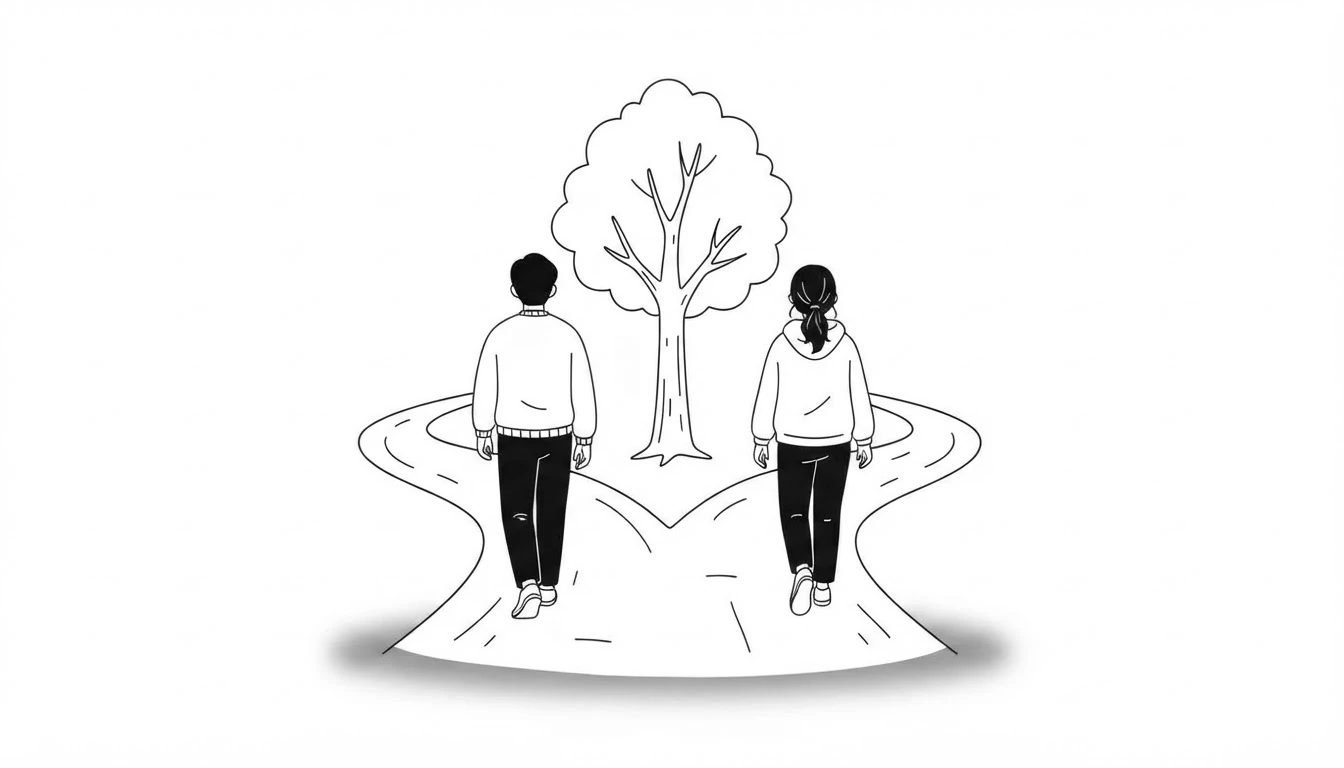
Si en el B2 aprendiste look up to (admirar), aquí tienes su contrario: look down on (menospreciar). Aprenderlos juntos es la mejor forma de no confundirlos. Y live up to es un fijo de las reviews: The hotel didn’t live up to the hype es una frase de C1 de manual.
Emociones y reacciones
| 🇬🇧 Phrasal verb | 🇪🇸 Significado | Ejemplo |
|---|---|---|
| dwell on | darle vueltas a, recrearse en | Don’t dwell on the past. Focus on what you can change. |
| bottle sth up | reprimir, guardarse (los sentimientos) | It’s not healthy to bottle up your anger. |
| lash out (at) | arremeter contra, atacar (física o verbalmente) | When he’s stressed, he lashes out at everyone. |
| flare up | estallar, recrudecerse (una discusión, un dolor) | Tempers flared up during the debate. |
| get sb down | deprimir, desanimar | This rainy weather is really getting me down. |
| snap out of it | salir de (un estado de ánimo), espabilar | Come on, snap out of it! It’s only an exam. |
| pluck up (the courage) | armarse de valor | I finally plucked up the courage to ask her out. |
| shrug sth off | quitar importancia a | He shrugged off the criticism and carried on. |
| wind sb up | sacar de quicio; tomar el pelo | Stop winding your sister up! |
| well up | saltarse las lágrimas | Tears welled up in her eyes when she read the letter. |
Estos dan mucha vida a la historia o al artículo, y también al Speaking cuando tienes que hablar de experiencias personales. Eso sí, wind sb up es muy británico y coloquial: perfecto para hablar con un amigo, no tanto para un report. 😄
Sociedad y noticias
| 🇬🇧 Phrasal verb | 🇪🇸 Significado | Ejemplo |
|---|---|---|
| break out | estallar (una guerra, un incendio, una epidemia) | A fire broke out in the early hours of the morning. |
| crack down on | tomar medidas duras contra | The police are cracking down on drink-driving. |
| step sth up | intensificar, aumentar | The government has stepped up security at airports. |
| die out | extinguirse, desaparecer | Many traditional crafts are dying out. |
| spring up | surgir de repente, brotar | New cafés have sprung up all over the city. |
| stand out | destacar | Her CV really stood out from the rest. |
| speak out (against) | alzar la voz (contra), denunciar públicamente | Several doctors have spoken out against the new law. |
| cover sth up | encubrir, ocultar | The company tried to cover up the mistake. |
| own up (to) | confesar, reconocer (una culpa) | Nobody owned up to breaking the window. |
| usher sth in | marcar el comienzo de | The smartphone ushered in a new era of communication. |
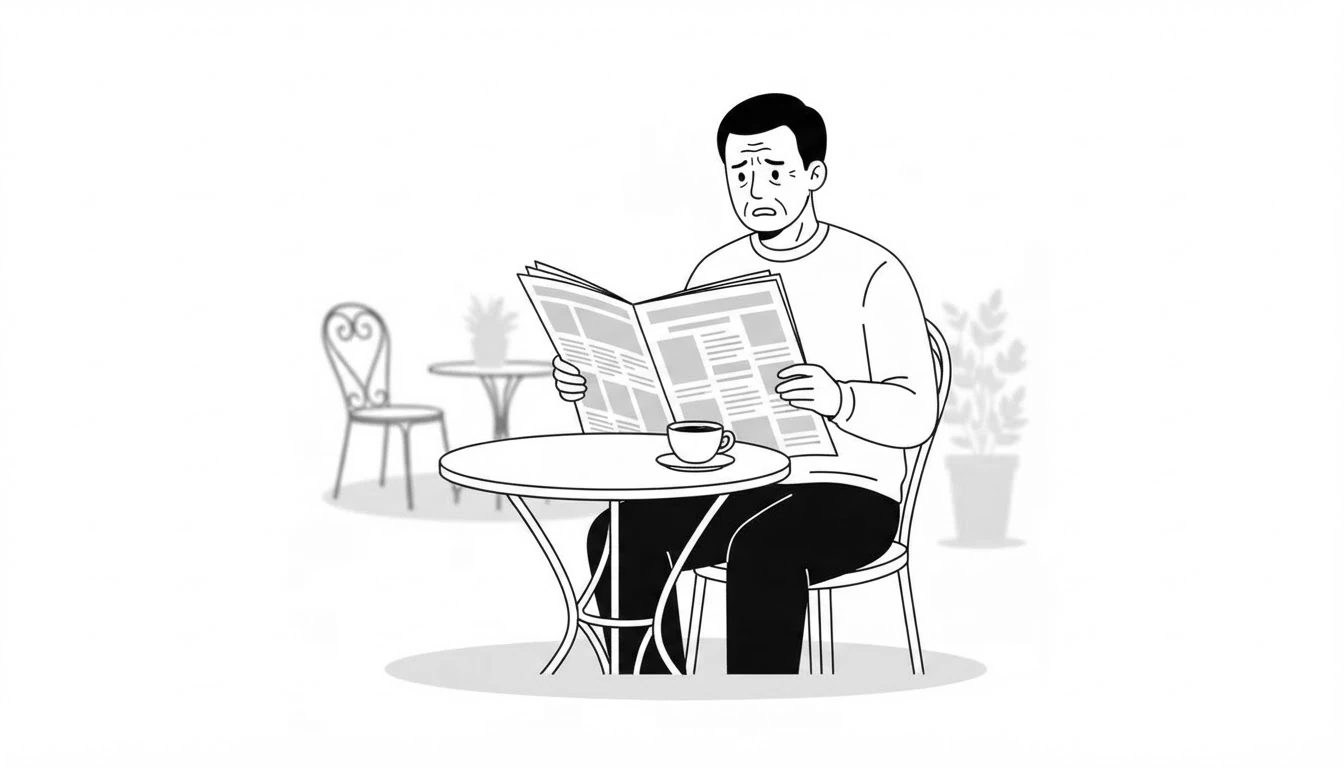
Este es el vocabulario de las noticias, y por eso sale tanto en el Reading y el Use of English del Advanced, que usan textos de prensa. Si lees un periódico británico durante una semana, vas a encontrar break out, crack down on y speak out casi a diario.
Phrasal verbs que se convierten en sustantivos
Aquí está uno de los secretos del C1. Muchos phrasal verbs tienen un sustantivo derivado, y a veces la partícula cambia de sitio. Estos son los que más vas a ver en el examen, sobre todo en la Part 3 del Use of English (word formation):
| 🇬🇧 Phrasal verb | 🇬🇧 Sustantivo | 🇪🇸 Significado |
|---|---|---|
| break out | outbreak | brote, estallido |
| break through | breakthrough | avance, descubrimiento importante |
| set back | setback | revés, contratiempo |
| turn out | turnout | participación, asistencia |
| bring up | upbringing | educación, crianza |
| take over | takeover | adquisición, toma de control |
| cover up | cover-up | encubrimiento |
| follow up | follow-up | seguimiento |
| lay off | layoff | despido (colectivo) |
| draw back | drawback | inconveniente, desventaja |
Fíjate en que en outbreak y upbringing la partícula pasa delante. Por eso, en la Part 3, cuando la palabra que te dan es BREAK y el hueco pide un sustantivo después de an, piensa en outbreak: There has been an outbreak of flu in the city. Y drawback es casi obligatorio en un essay con ventajas e inconvenientes: The main drawback of this proposal is…
Phrasal verbs y sus equivalentes formales
En el C1 se valora mucho que sepas adaptar el registro. Un email a un amigo admite casi cualquier phrasal verb, pero en un essay, un report o un proposal a veces queda mejor el verbo formal de una sola palabra, que además suele parecerse al español. Esta tabla te sirve en las dos direcciones: para el Writing y para las transformaciones de la Part 4.
| 🇬🇧 Phrasal verb | 🇬🇧 Equivalente formal | 🇪🇸 Significado |
|---|---|---|
| carry out | conduct | realizar |
| bring about | cause / bring | provocar |
| come about | arise / occur | producirse |
| rule out | exclude / dismiss | descartar |
| do away with | abolish | abolir |
| account for | explain / represent | explicar; representar |
| set back | delay | retrasar |
| step down | resign | dimitir |
| draw up | draft | redactar |
| step up | increase / intensify | intensificar |
Ahora bien, no caigas en el error de pensar que en un texto formal están prohibidos. Carry out, account for, bring about o rule out son totalmente neutros y aparecen en artículos científicos. Lo que conviene evitar en un essay son los coloquiales: pan out, wind sb up o snap out of it.
Errores típicos con los phrasal verbs del C1
Estos son los fallos que más corrijo en los Writings de mis alumnos de Advanced. Casi todos vienen de traducir del español o de olvidar una partícula:
| ❌ Incorrecto | ✅ Correcto | Por qué |
|---|---|---|
| The war broke up in 1939. | The war broke out in 1939. | Break up es romper una relación o disolverse. |
| This accounts the increase. | This accounts for the increase. | Sin for no tiene sentido. |
| Her fear stems of her childhood. | Her fear stems from her childhood. | Calco de «deriva de»: es from. |
| The hotel didn’t live up our expectations. | The hotel didn’t live up to our expectations. | Es un phrasal verb de tres partes. |
| They did away the old law. | They did away with the old law. | Falta la tercera partícula. |
| A survey was carried. | A survey was carried out. | En pasiva la partícula se mantiene. |
| They laid off them. | They laid them off. | Con pronombre, el objeto va en medio. |
| We ruled out the meeting. (si no va a haber reunión) | We called off the meeting. | Rule out es descartar una posibilidad; call off, cancelar. |
Los phrasal verbs en el C1 Advanced
En el Advanced los phrasal verbs están por todas partes, pero hay cuatro sitios del Use of English y del Writing donde te los vas a encontrar seguro.
Use of English Part 1 y Part 2
En la Part 1 (multiple-choice cloze) te suelen pedir el verbo correcto de un phrasal verb, y las cuatro opciones parecen posibles si no lo conoces:
- The new law is expected to ______ about major changes. A) take B) bring C) put D) make → bring
En la Part 2 (open cloze), en cambio, el hueco suele ser la partícula:
- Nobody knows exactly how the fire broke ______. → out
- The success of the plan hinges ______ the support of local people. → on
Use of English Part 3: word formation
Aquí entran en juego los sustantivos de la tabla anterior. Te dan la palabra base y tienes que transformarla:
- Scientists have made an important ______ in cancer research. (BREAK) → breakthrough
- The ______ in the elections was lower than expected. (TURN) → turnout
Use of English Part 4: las transformaciones
En la Part 4 (key word transformation) del C1 tienes que escribir entre tres y seis palabras, y cambiar un verbo formal por un phrasal verb (o al revés) es uno de los trucos más habituales:
- The plan failed because of a lack of money. THROUGH → The plan fell through because of a lack of money.
- The police have excluded the possibility of murder. RULED → The police have ruled out the possibility of murder.
- I’m sure the hotel will meet your expectations. LIVE → I’m sure the hotel will live up to your expectations.
Fíjate en que muchas veces la transformación combina el phrasal verb con otra cosa: una pasiva, un sustantivo o una preposición extra. Por eso los ejercicios del final están pensados justo para practicar esto.
Writing y Speaking
En el Writing del C1, los examinadores valoran el vocabulario «menos común» usado con precisión. Un A study was carried out o un This can largely be accounted for by… en tu essay dicen mucho de tu nivel. En el Speaking, los de emociones y relaciones (we drifted apart, it really gets me down, I finally plucked up the courage) te ayudan a sonar natural sin forzar. Solo una regla: úsalos cuando encajen, no para rellenar.
Consejos para aprender los phrasal verbs del C1
- Apréndelos por familias de significado. Bring about, come about, stem from y account for son todos de causas y consecuencias: juntos se recuerdan mucho mejor.
- Siempre con su colocación. No apuntes solo carry out, sino carry out research / a survey / an experiment. En el C1 la colocación es la mitad del trabajo.
- Apunta el sustantivo si lo tiene. Set back → setback, break out → outbreak. Te ahorrarás muchos puntos en la Part 3.
- Lee prensa en inglés. Es la fuente número uno de estos phrasal verbs. Diez minutos al día de noticias valen más que una lista entera.
- Repasa con espacio. Lo que ves una vez se olvida. Te cuento cómo organizarlo en mi post sobre cómo memorizar vocabulario en inglés.
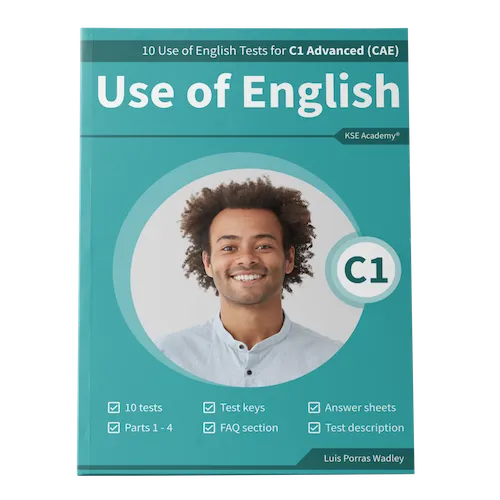
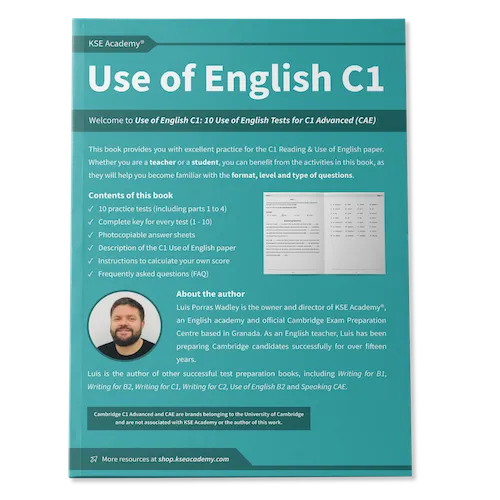
Y si quieres ver todo esto en acción en exámenes reales, en mi libro Use of English C1 tienes diez tests completos del Use of English del Advanced, con todas las partes del examen, sus soluciones y explicaciones. Es la mejor forma de comprobar si estos phrasal verbs ya te salen solos. 👉🏻 Ver el libro
Preguntas frecuentes sobre los phrasal verbs del C1
¿Cuántos phrasal verbs hay que saber para el C1?
Cambridge no publica una lista oficial, pero yo calculo que con los 150 o 200 phrasal verbs más frecuentes (los básicos, los de mi lista de B2 y los de esta) estás muy bien preparado para el Advanced. A partir de ahí, lo que marca la diferencia es saber usarlos con precisión y con sus colocaciones.
¿Qué diferencia hay entre los phrasal verbs de B2 y de C1?
Los de B2 son sobre todo cotidianos y de conversación (put off, turn down, run out of). Los de C1 son más abstractos y frecuentes en textos escritos (bring about, account for, stem from), tienen más sustantivos derivados y exigen distinguir matices entre verbos parecidos.
¿Se pueden usar phrasal verbs en un essay formal?
Sí. Los neutros (carry out, account for, bring about, rule out) quedan perfectos incluso en textos académicos. Lo que conviene evitar son los coloquiales, como pan out o wind sb up, que reservarías para un email informal.
¿Hay phrasal verbs en el C2?
Muchísimos, y más idiomáticos todavía. Pero la base es esta: si dominas los de esta lista, el salto al C2 Proficiency es mucho más llevadero. Para seguir ampliando, tienes mis 200 phrasal verbs con ejemplos en inglés y español y mi diccionario de phrasal verbs.
¿Hay una lista de phrasal verbs C1 en PDF?
Sí: este mismo post se puede descargar en PDF con el botón de descarga, con todas las tablas y los ejercicios incluidos, para que lo imprimas o lo repases donde quieras.
Ejercicios de phrasal verbs C1
Treinta frases para comprobar que lo tienes claro. Aquí abajo tienes tres ejercicios interactivos que se corrigen solos, así que sabrás al momento qué tal lo has hecho.
Y si quieres estos ejercicios en texto para copiarlos, pegarlos o adaptarlos a tus clases, aquí abajo los tienes con sus soluciones 👇
Exercise 1: choose the correct particle
Choose the correct option to complete each phrasal verb.
- War broke (out / up / off) in 1939.
- The rise in prices can be partly accounted (for / to / with) by the cost of energy.
- The police have ruled (out / off / down) the possibility of murder.
- The deal fell (through / out / off) at the last minute, so we had to start again.
- Many of his problems stem (from / of / out) his childhood.
- The new system failed to live up (to / with / for) our expectations.
- The government is cracking (down / up / out) on tax fraud.
- She finally plucked (up / out / on) the courage to ask for a pay rise.
- Try not to dwell (on / in / at) your mistakes. Learn from them and move on.
- It took months to iron (out / off / up) all the details of the contract.
Ver respuestas
- out
- for
- out
- through
- from
- to
- down
- up
- on
- out
Exercise 2: complete with the phrasal verbs in the box
Complete each sentence with the correct form of a phrasal verb from the box: bottle up, bring about, come about, die out, drift apart, lay off, set back, stand out, step down, weigh up.
- The minister was forced to _______________ after the scandal.
- Hundreds of workers were _______________ when the factory closed.
- Nobody knows exactly how the misunderstanding _______________.
- Last year’s reform _______________ major changes in the education system.
- The strike has _______________ the project by several weeks.
- Before deciding, she carefully _______________ the pros and cons.
- We were best friends at school, but we _______________ after university.
- Many local languages are _______________ because young people no longer speak them.
- It isn’t healthy to _______________ your feelings like that. Talk to someone.
- Her application _______________ from all the others, so we invited her for an interview.
Ver respuestas
- step down
- laid off
- came about
- brought about
- set back
- weighed up
- drifted apart
- dying out
- bottle up
- stood out
Exercise 3: key word transformations
Complete the second sentence so that it has a similar meaning to the first sentence, using the word given in capitals. Use between three and six words, including the word given.
- The company decided to stop selling the old model gradually. (PHASE)
The company decided _______________ the old model. - The project failed because of a lack of funding. (THROUGH)
The project _______________ a lack of funding. - Nobody can explain the sudden drop in sales. (ACCOUNT)
Nobody _______________ the sudden drop in sales. - The police have excluded the possibility of an accident. (RULED)
The police have _______________ of an accident. - I’m sure the hotel will meet your expectations. (LIVE)
I’m sure the hotel will _______________ expectations. - The president resigned after the scandal. (STEPPED)
The president _______________ the scandal. - What caused all these changes? (BROUGHT)
What _______________ changes? - The government is going to deal very severely with drink-driving. (CRACK)
The government is going to _______________ drink-driving. - She found the courage to tell him the truth. (PLUCKED)
She _______________ to tell him the truth. - The problem was caused by poor communication. (STEMMED)
The problem _______________ communication.
Ver respuestas
- to phase out
- fell through because of
- can account for
- ruled out the possibility
- live up to your
- stepped down after
- brought about all these
- crack down on
- plucked up the courage
- stemmed from poor
Conclusión
Los phrasal verbs del C1 dan más respeto que los del B2, pero con estos 60 bien trabajados tienes justo lo que te van a pedir en el Advanced. Recuerda las tres claves: apréndelos por temas y con su colocación, apunta el sustantivo cuando lo tengan (setback, outbreak, breakthrough) y relaciona cada uno con su equivalente formal para el Writing y la Part 4.
Si quieres repasar la base, vuelve a mi lista de phrasal verbs B2 o a los posts de los verbos que más dan de sí: GET, TAKE, COME y BREAK. ¿Tienes dudas con alguno? Escríbeme y te ayudo.
¿Te ha parecido útil este post? Compártelo con otros estudiantes y profesores de inglés. Y si quieres más contenido como este, suscríbete a mi newsletter y sígueme en Facebook, Twitter, Pinterest, Instagram y YouTube.
Nos vemos en el próximo post. Hasta entonces, don’t forget to keep smiling! 🙂
