

Tabla de contenidos
Si estás preparando el B2 First, seguro que los phrasal verbs te han dado algún que otro dolor de cabeza. Son esos verbos que, con una partícula detrás, cambian de significado por completo: give es «dar», pero give up es «rendirse» o «dejar de hacer algo», y give in es «ceder». Y claro, no hay forma lógica de adivinarlo. En mis clases de preparación del First siempre digo lo mismo: los phrasal verbs no se entienden, se aprenden. Y cuanto antes te pongas, mejor.
No te preocupes, porque no hace falta que te sepas los cinco mil que existen. En este post te dejo los 60 phrasal verbs de nivel B2 más útiles, ordenados por temas, con su significado en español y un ejemplo de cada uno. Además, te explico los que tienen varios significados, los errores típicos de los hispanohablantes, cómo aparecen en cada parte del examen de Cambridge y tienes treinta frases de ejercicios con soluciones para practicar. ¡Vamos allá! 🙂
¿Qué phrasal verbs necesitas para el B2?
En el B1 se espera que conozcas los phrasal verbs más básicos y literales, los del día a día: get up, sit down, turn on, put on, come back. Si todavía dudas con estos, empieza por mi lista de 50 phrasal verbs comunes.
En el B2 el salto está en tres cosas:
- Significados menos literales: put up with (aguantar), look up to (admirar) o turn out (resultar) no se deducen de sus partes.
- Phrasal verbs de tres partes: verbo + adverbio + preposición, como run out of, come up with o cut down on.
- Saber cuándo usarlos: en un email a un amigo quedan perfectos, pero en un essay formal a veces es mejor un verbo de una sola palabra (postpone en lugar de put off).
Si te pierdes con la teoría (qué es exactamente un phrasal verb, cuáles son separables y cuáles no), tienes todo explicado en mi guía de los phrasal verbs en inglés. Aquí vamos directamente a la práctica.
Un repaso rápido: separables e inseparables
Antes de la lista, una regla que vas a necesitar en todo momento. Algunos phrasal verbs son separables: el objeto puede ir en medio o al final (turn the music down o turn down the music). Pero si el objeto es un pronombre, tiene que ir en medio: turn it down, nunca turn down it.
Otros son inseparables: el objeto siempre va detrás (look after the children, look after them). Y los de tres partes casi nunca se separan: I can’t put up with him. En las tablas te marco con sb (somebody) o sth (something) dónde va el objeto cuando es separable.
Phrasal verbs B2 por temas
Aprender los phrasal verbs por temas funciona mucho mejor que memorizar una lista alfabética, porque así los recuerdas en contexto y los puedes usar en el Speaking y en el Writing. Estos son los seis temas que más salen en el First.
Relaciones personales
| 🇬🇧 Phrasal verb | 🇪🇸 Significado | Ejemplo |
|---|---|---|
| get on (well) with | llevarse bien con | I get on really well with my sister. |
| fall out (with) | pelearse, enfadarse con | Tom and Jack fell out over money. |
| make up (with) | reconciliarse, hacer las paces | They had an argument, but they made up the next day. |
| break up (with) | romper (una relación) | She broke up with her boyfriend last month. |
| look up to | admirar | I’ve always looked up to my grandfather. |
| let sb down | decepcionar, fallar a alguien | Please don’t let me down this time. |
| count on | contar con | You can always count on me. |
| put up with | aguantar, soportar | I can’t put up with this noise any longer. |
| bring sb up | criar | She was brought up by her grandparents. |
| take after | parecerse a (un familiar) | He takes after his father: they’re both very stubborn. |
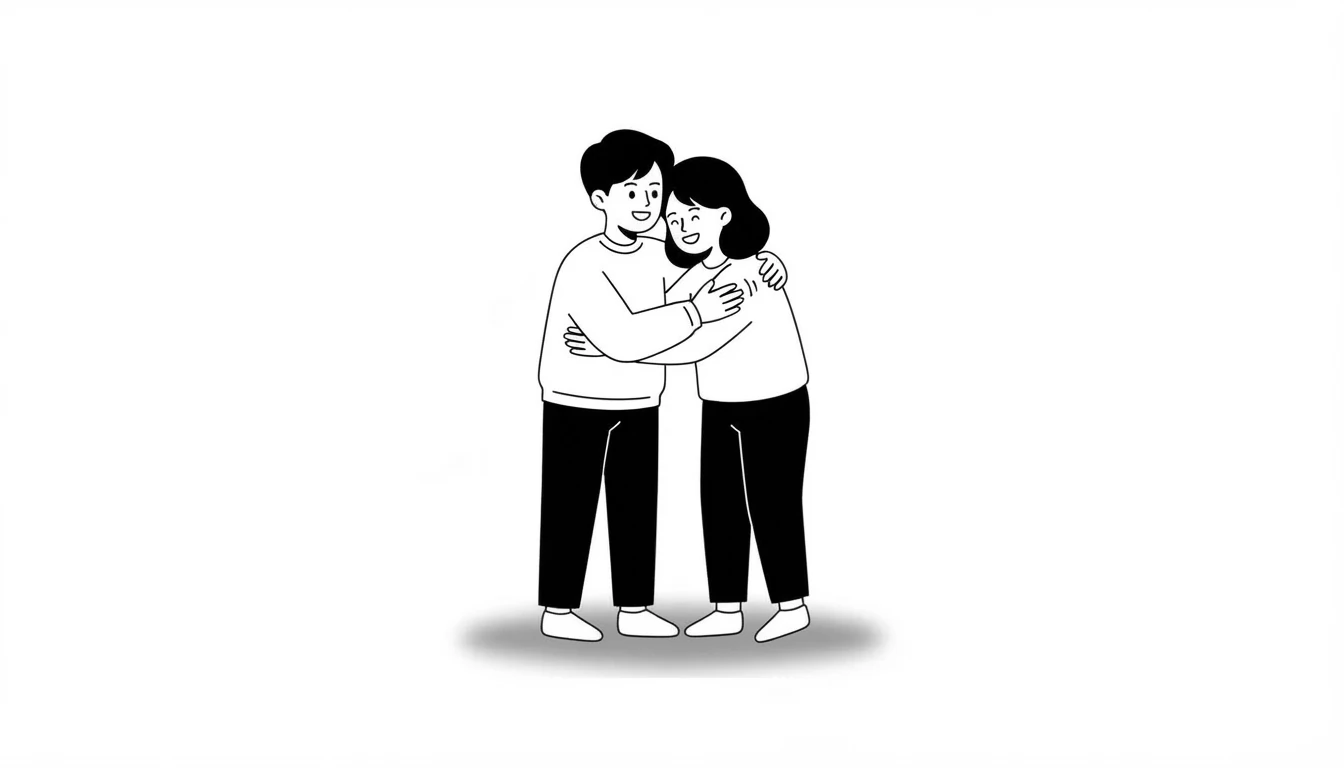
Fíjate en la pareja fall out / make up: es muy típica en las historias del Writing. They fell out over something silly, but they soon made up. Y ojo con take after: solo se usa con familiares. Si te pareces a un amigo, es you look like him.
Trabajo y estudios
| 🇬🇧 Phrasal verb | 🇪🇸 Significado | Ejemplo |
|---|---|---|
| take sb on | contratar | The company is taking on new staff for the summer. |
| set sth up | montar, fundar | She set up her own business two years ago. |
| turn sth down | rechazar | He turned down the job because the salary was too low. |
| hand sth in | entregar | Please hand in your essays on Friday. |
| fill sth in | rellenar (un formulario) | Fill in the form with your personal details. |
| catch up (with / on) | ponerse al día | I missed a week of classes, so I need to catch up. |
| keep up with | seguir el ritmo de | It’s hard to keep up with the rest of the class. |
| drop out (of) | dejar (los estudios) | He dropped out of university after a year. |
| go over sth | repasar | Let’s go over the main points again before the exam. |
| carry on | continuar, seguir | Carry on with your work, please. |
Un clásico de los exámenes: turn down significa «rechazar», además de «bajar» (el volumen, la calefacción). She turned down the offer no tiene nada que ver con bajar nada. 😄
Problemas y soluciones
| 🇬🇧 Phrasal verb | 🇪🇸 Significado | Ejemplo |
|---|---|---|
| come up with | idear, ocurrírsele a alguien | She came up with a brilliant idea. |
| work sth out | resolver, averiguar | I can’t work out the answer to this question. |
| sort sth out | solucionar, arreglar | Don’t worry, we’ll sort it out tomorrow. |
| figure sth out | entender, descubrir cómo | I can’t figure out how this machine works. |
| look into | investigar, estudiar | The police are looking into the robbery. |
| run out of | quedarse sin | We’ve run out of milk. |
| come across | encontrarse con (por casualidad) | I came across some old photos while I was tidying up. |
| get over | superar, recuperarse de | It took her months to get over the break-up. |
| give up | rendirse; dejar (un hábito) | Don’t give up! / He gave up smoking last year. |
| break down | averiarse; venirse abajo | Our car broke down on the motorway. |
Si te gusta el break down, la familia de break da para mucho: la tienes entera en mi post de phrasal verbs con BREAK. Y lo mismo con come up with y come across, que están en el de phrasal verbs con COME.
Planes, viajes y tiempo libre
| 🇬🇧 Phrasal verb | 🇪🇸 Significado | Ejemplo |
|---|---|---|
| call sth off | cancelar | The match was called off because of the rain. |
| put sth off | aplazar, posponer | We’ve put off the meeting until next week. |
| set off | salir (de viaje), ponerse en camino | We set off at six in the morning. |
| check in / check out | registrarse / dejar (el hotel) | We checked in at noon and checked out on Sunday. |
| get away | escaparse (de vacaciones) | We’re hoping to get away for a few days in May. |
| look forward to | tener ganas de, esperar con ilusión | I’m really looking forward to seeing you. |
| pick sb up | recoger (a alguien) | I’ll pick you up at the station. |
| see sb off | despedir (a alguien que se va) | My parents came to the airport to see me off. |
| turn up | aparecer, presentarse | He turned up an hour late, as usual. |
| put sb up | alojar (a alguien en tu casa) | My cousin put us up for the weekend. |
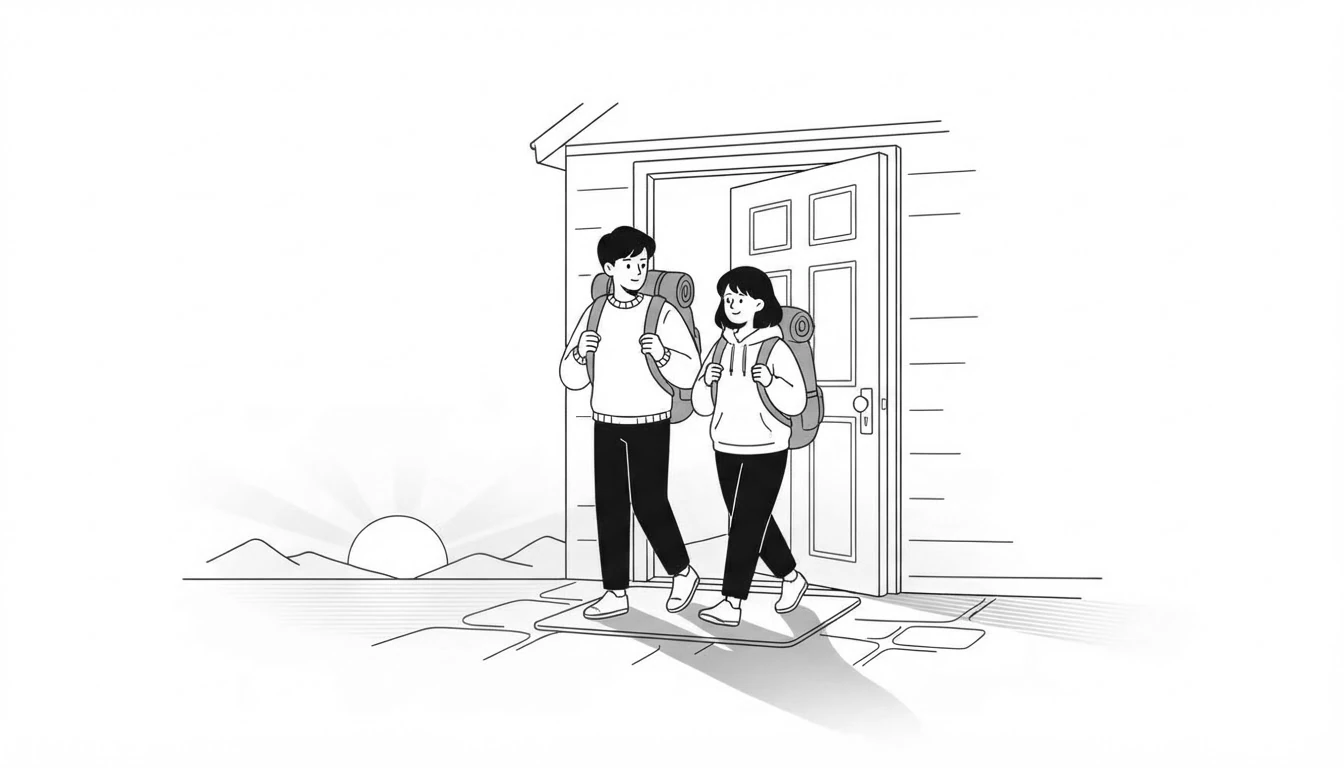
Mucho cuidado con call off y put off, que se confunden muchísimo: call off es cancelar (no va a haber partido), y put off es aplazar (habrá partido, pero otro día).
Comunicación y opiniones
| 🇬🇧 Phrasal verb | 🇪🇸 Significado | Ejemplo |
|---|---|---|
| point sth out | señalar, hacer notar | She pointed out a mistake in my essay. |
| bring sth up | sacar (un tema) | Please don’t bring up politics at dinner. |
| come up | surgir | Something has come up, so I can’t go tonight. |
| turn out | resultar | The film turned out to be really good. |
| make sth out | entender, distinguir | I couldn’t make out what he was saying. |
| talk sb into | convencer a alguien para | She talked me into joining the gym. |
| back sb up | apoyar, respaldar | Will you back me up in the meeting? |
| sum up | resumir | To sum up, I think the plan is a good idea. |
| put sth forward | proponer | He put forward a new plan for the school. |
| go on (about) | no parar de hablar de | He keeps going on about his new car. |
Sum up y point out te los recomiendo especialmente para el Writing: To sum up, … es una forma muy natural de empezar la conclusión, y It is worth pointing out that… queda genial en un essay o un report.
Salud y estilo de vida
| 🇬🇧 Phrasal verb | 🇪🇸 Significado | Ejemplo |
|---|---|---|
| take sth up | empezar (una afición, un deporte) | I’ve just taken up yoga. |
| get into | aficionarse a | I got into running during the lockdown. |
| cut down on | reducir (el consumo de) | I’m trying to cut down on sugar. |
| work out | hacer ejercicio | I work out at the gym three times a week. |
| come down with | caer enfermo de | I think I’m coming down with a cold. |
| pass out | desmayarse | He passed out because of the heat. |
| wear off | pasarse (un efecto) | The painkillers are starting to wear off. |
| stay up | quedarse despierto | We stayed up until two in the morning. |
| put on (weight) | engordar | I put on three kilos over Christmas. |
| eat out | comer o cenar fuera | We usually eat out on Saturdays. |
Phrasal verbs con varios significados
Aquí está la parte más traicionera. Muchos phrasal verbs tienen dos, tres o más significados, y solo el contexto te dice cuál es. Estos son los que más vas a encontrar en el B2:
| 🇬🇧 Phrasal verb | 🇪🇸 Significados | Ejemplos |
|---|---|---|
| work out | resolver · hacer ejercicio · salir bien | I worked out the answer. / I work out every day. / Everything worked out in the end. |
| pick up | recoger · aprender (sin estudiar) · mejorar | I’ll pick you up at eight. / I picked up some Italian on holiday. / Sales are picking up. |
| take off | despegar · quitarse (ropa) · tener éxito de repente | The plane took off late. / Take off your shoes. / Her career really took off. |
| turn up | aparecer · subir (el volumen) | She turned up late. / Can you turn up the music? |
| put up | alojar · subir (precios) · montar (una tienda, un cartel) | They put us up for the night. / They’ve put up the rent. / We put up the tent. |
| bring up | criar · sacar (un tema) | I was brought up in Granada. / She brought up an interesting point. |
| make up | reconciliarse · inventarse · maquillarse · formar | They made up. / He made up an excuse. / Women make up 60% of the staff. |
| break down | averiarse · venirse abajo (emocionalmente) | The lift broke down. / She broke down in tears. |
Mi consejo: cuando aprendas un phrasal verb nuevo, apunta una frase de ejemplo para cada significado, no solo la traducción. Te lo cuento con más detalle en mi post sobre cómo memorizar vocabulario en inglés.
Errores típicos con los phrasal verbs
Estos son los errores que más veo en los Writings de mis alumnos de B2. La buena noticia es que todos tienen arreglo fácil:
| ❌ Incorrecto | ✅ Correcto | Por qué |
|---|---|---|
| Can you pick up it? | Can you pick it up? | Con pronombre, el objeto va en medio. |
| I look forward to see you. | I look forward to seeing you. | Aquí to es preposición: va seguido de -ing. |
| We’ve run out milk. | We’ve run out of milk. | Falta la tercera partícula. |
| I can’t put up this noise. | I can’t put up with this noise. | Put up sin with significa otra cosa. |
| She looks after of her brother. | She looks after her brother. | Calco de «cuida de»: sobra el of. |
| I got over of the flu. | I got over the flu. | Calco de «recuperarse de». |
| Please look the children after. | Please look after the children. | Look after es inseparable. |
| They put off the concert. (si no va a haber concierto) | They called off the concert. | Put off es aplazar; call off, cancelar. |
El de look forward to + -ing es tan frecuente que merece post propio: si te lías con el -ing y el infinitivo, mira mi explicación del gerundio y el infinitivo en inglés.
Los phrasal verbs en el B2 First
Los phrasal verbs aparecen por todo el examen, pero hay tres sitios donde te los vas a encontrar seguro.
Use of English Part 1 y Part 2
En la Part 1 (multiple-choice cloze) es habitual que tengas que elegir el verbo o la partícula correcta:
- The concert was ______ off because of the storm. A) put B) called C) set D) taken → called
Y en la Part 2 (open cloze) el hueco puede ser directamente la partícula:
- We decided to set ______ early to avoid the traffic. → off
Use of English Part 4: las transformaciones
Aquí es donde más brillan. En la Part 4 (key word transformation) tienes que reescribir una frase con una palabra dada, y muchísimas veces la clave es cambiar un verbo de una palabra por un phrasal verb, o al revés:
- They postponed the meeting until Friday. OFF → The meeting was put off until Friday.
- I can’t tolerate his behaviour any more. PUT → I can’t put up with his behaviour any more.
- She is very similar to her mother. TAKES → She takes after her mother.
Por eso te recomiendo aprender cada phrasal verb junto con su «equivalente formal»: put off = postpone, call off = cancel, put up with = tolerate, look into = investigate, turn down = refuse / reject. Los ejercicios del final están pensados justo para practicar esto.
Writing y Speaking
En el Speaking y en los textos informales del Writing (el email a un amigo, el artículo, la historia, la review), usar unos cuantos phrasal verbs bien colocados demuestra un vocabulario natural, y eso los examinadores lo valoran. En el essay o en el report, en cambio, el registro es más formal, así que es mejor elegir con cuidado: point out, sum up o carry out quedan bien, pero chill out o go on about no.
Consejos para aprender los phrasal verbs del B2
- Apréndelos por temas, no por verbo. Es mucho más fácil recordar set off, check in y see off juntos en una historia de viajes que set off, set up, set out, set back en una lista.
- Siempre con una frase de ejemplo. La traducción sola se olvida; la frase te ayuda a recordar también la estructura (si es separable, si lleva sb o sth).
- Personaliza. Escribe frases sobre tu vida: I took up running last year, I get on really well with my cousin. Lo que te importa se queda.
- Pocos y bien. Diez a la semana, repasados varias veces, valen más que sesenta en una tarde.
- Úsalos. En cada Writing de práctica, intenta meter dos o tres phrasal verbs nuevos. Al principio cuesta, pero luego salen solos.
Y si quieres practicar con muchos más ejercicios, en mi libro Phrasal Verbs B2 tienes los phrasal verbs esenciales para el First organizados por temas, con ejercicios de todo tipo y sus soluciones. 👉🏻 Ver el libro
Preguntas frecuentes sobre los phrasal verbs del B2
¿Cuántos phrasal verbs hay que saber para el B2?
Cambridge no publica una lista oficial, pero con unos 100 o 150 phrasal verbs bien aprendidos (los de esta lista más los básicos del B1) vas más que preparado para el First. Lo importante no es la cantidad, sino saber usarlos.
¿Se pueden usar phrasal verbs en el Writing del First?
Sí, y es recomendable. En los textos informales y semiformales quedan muy naturales. En un essay o un report, elige los más neutros (point out, carry out, sum up) y evita los muy coloquiales.
¿Qué diferencia hay entre los phrasal verbs de B1 y de B2?
Los de B1 suelen ser literales y cotidianos (get up, turn off, sit down). Los de B2 tienen significados más abstractos (turn out, look up to), incluyen más verbos de tres partes (run out of, cut down on) y exigen saber varios significados del mismo verbo.
¿Cómo sé si un phrasal verb es separable?
Fíjate en cómo aparece en el diccionario: si pone turn sth down, con el objeto en medio, es separable; si pone look after sb, con el objeto detrás, es inseparable. Mi diccionario de phrasal verbs te puede ayudar.
¿Hay una lista de phrasal verbs B2 en PDF?
Sí: este mismo post se puede descargar en PDF con el botón de descarga, con las tablas y los ejercicios incluidos. Y si quieres muchos más ejemplos, tienes mis 200 phrasal verbs con ejemplos en inglés y español.
Ejercicios de phrasal verbs B2
Treinta frases para comprobar que lo tienes claro. Aquí abajo tienes tres ejercicios interactivos que se corrigen solos, así que sabrás al momento qué tal lo has hecho.
Y si quieres estos ejercicios en texto para copiarlos, pegarlos o adaptarlos a tus clases, aquí abajo los tienes con sus soluciones 👇
Exercise 1: choose the correct particle
Choose the correct option to complete each phrasal verb.
- We’ve run (out / off) of coffee, so I’ll buy some more.
- I’m really looking forward (to / for) the holidays.
- The match was called (off / out) because of the snow.
- Can you pick me (up / on) from the airport tomorrow?
- She takes (after / over) her mother: they have the same smile.
- He turned (down / off) the job because the salary was too low.
- I can’t put up (with / to) his jokes any more.
- It took me two weeks to get (over / across) the flu.
- We set (off / up) at dawn to avoid the traffic.
- Our car broke (down / up) on the way to Madrid.
Ver respuestas
- out
- to
- off
- up
- after
- down
- with
- over
- off
- down
Exercise 2: complete with the phrasal verbs in the box
Complete each sentence with the correct form of a phrasal verb from the box: come up with, cut down, drop out of, fall out, fill in, put off, sort out, take up, turn out, turn up.
- I’ve just _______________ yoga and I love it.
- Sam and Leo _______________ after a big argument about football.
- Could you _______________ this form, please?
- She _______________ a brilliant idea for the school project.
- He _______________ university after his first year.
- My doctor told me to _______________ on salt.
- Don’t worry about the problem. I’ll _______________ tomorrow.
- We had to _______________ our trip because my mother was ill.
- The film _______________ to be much better than I expected.
- He _______________ an hour late, as usual.
Ver respuestas
- taken up
- fell out
- fill in
- came up with
- dropped out of
- cut down
- sort it out
- put off
- turned out
- turned up
Exercise 3: key word transformations
Complete the second sentence so that it has a similar meaning to the first sentence, using the word given in capitals. Use between two and five words, including the word given.
- They cancelled the match because of the rain. (OFF)
The match _______________ because of the rain. - I really want to see you next week. (FORWARD)
I’m really _______________ you next week. - I can’t tolerate this noise any more. (PUT)
I can’t _______________ this noise any more. - We have no bread left. (RUN)
We have _______________ bread. - She is very similar to her father. (TAKES)
She _______________ her father. - They postponed the trip until the summer. (PUT)
They _______________ until the summer. - He refused the offer of a new job. (TURNED)
He _______________ of a new job. - I admire my older sister a lot. (UP)
I really _______________ my older sister. - Who raised you when you were a child? (BROUGHT)
Who _______________ when you were a child? - The police are investigating the robbery. (LOOKING)
The police _______________ the robbery.
Ver respuestas
- was called off
- looking forward to seeing
- put up with
- run out of
- takes after
- put off the trip / put the trip off
- turned down the offer
- look up to
- brought you up
- are looking into
Conclusión
Los phrasal verbs no se aprenden en un día, pero con estos 60 bien trabajados tienes una base sólida para el B2 First. Recuerda las tres claves: apréndelos por temas y con una frase de ejemplo, ojo con el pronombre en los separables (pick it up) y relaciona cada uno con su equivalente formal para la Part 4 del Use of English.
Si quieres seguir, échale un ojo a mis posts sobre los phrasal verbs con GET y con TAKE, dos de los verbos que más dan de sí. ¿Tienes dudas con alguno? Escríbeme y te ayudo.
¿Te ha parecido útil este post? Compártelo con otros estudiantes y profesores de inglés. Y si quieres más contenido como este, suscríbete a mi newsletter y sígueme en Facebook, Twitter, Pinterest, Instagram y YouTube.
Nos vemos en el próximo post. Hasta entonces, don’t forget to keep smiling! 🙂
