

Table of contents
If you’re preparing for B2 First, phrasal verbs have probably given you the odd headache. They’re those verbs that completely change their meaning when you add a particle: give is easy, but give up means «stop trying» or «stop doing something», and give in means «surrender». And of course, there’s no logical way to guess it. In my First preparation classes I always say the same thing: you don’t work phrasal verbs out, you learn them. And the sooner you start, the better.
Don’t worry, because you don’t need to know all five thousand of them. In this post I’ve put together the 60 most useful B2 phrasal verbs, organised by topic, each with its meaning in Spanish and an example. I also explain the ones with several meanings, the typical mistakes Spanish speakers make, how they come up in each part of the Cambridge exam, and you’ve got thirty sentences of exercises with answers to practise. Let’s get started! 🙂
Which phrasal verbs do you need for B2?
At B1, you’re expected to know the most basic, literal phrasal verbs, the everyday ones: get up, sit down, turn on, put on, come back. If you’re still unsure about those, start with my list of 50 common phrasal verbs.
At B2, the jump comes in three areas:
- Less literal meanings: put up with (tolerate), look up to (admire) or turn out (prove to be) can’t be worked out from their parts.
- Three-part phrasal verbs: verb + adverb + preposition, such as run out of, come up with or cut down on.
- Knowing when to use them: they’re perfect in an email to a friend, but in a formal essay a one-word verb is sometimes better (postpone rather than put off).
If you get lost in the theory (what exactly a phrasal verb is, which ones are separable and which aren’t), it’s all explained in my guide to phrasal verbs in English. Here we’ll go straight to practice.
A quick reminder: separable and inseparable
Before the list, here’s a rule you’ll need all the time. Some phrasal verbs are separable: the object can go in the middle or at the end (turn the music down or turn down the music). But if the object is a pronoun, it has to go in the middle: turn it down, never turn down it.
Others are inseparable: the object always goes after them (look after the children, look after them). And three-part verbs hardly ever separate: I can’t put up with him. In the tables, I’ve used sb (somebody) or sth (something) to show where the object goes when the verb is separable.
B2 phrasal verbs by topic
Learning phrasal verbs by topic works much better than memorising an alphabetical list, because you remember them in context and can use them in Speaking and Writing. These are the six topics that come up most in the First.
Relationships
| 🇬🇧 Phrasal verb | 🇪🇸 Spanish | Example |
|---|---|---|
| get on (well) with | llevarse bien con | I get on really well with my sister. |
| fall out (with) | pelearse, enfadarse con | Tom and Jack fell out over money. |
| make up (with) | reconciliarse, hacer las paces | They had an argument, but they made up the next day. |
| break up (with) | romper (una relación) | She broke up with her boyfriend last month. |
| look up to | admirar | I’ve always looked up to my grandfather. |
| let sb down | decepcionar, fallar a alguien | Please don’t let me down this time. |
| count on | contar con | You can always count on me. |
| put up with | aguantar, soportar | I can’t put up with this noise any longer. |
| bring sb up | criar | She was brought up by her grandparents. |
| take after | parecerse a (un familiar) | He takes after his father: they’re both very stubborn. |
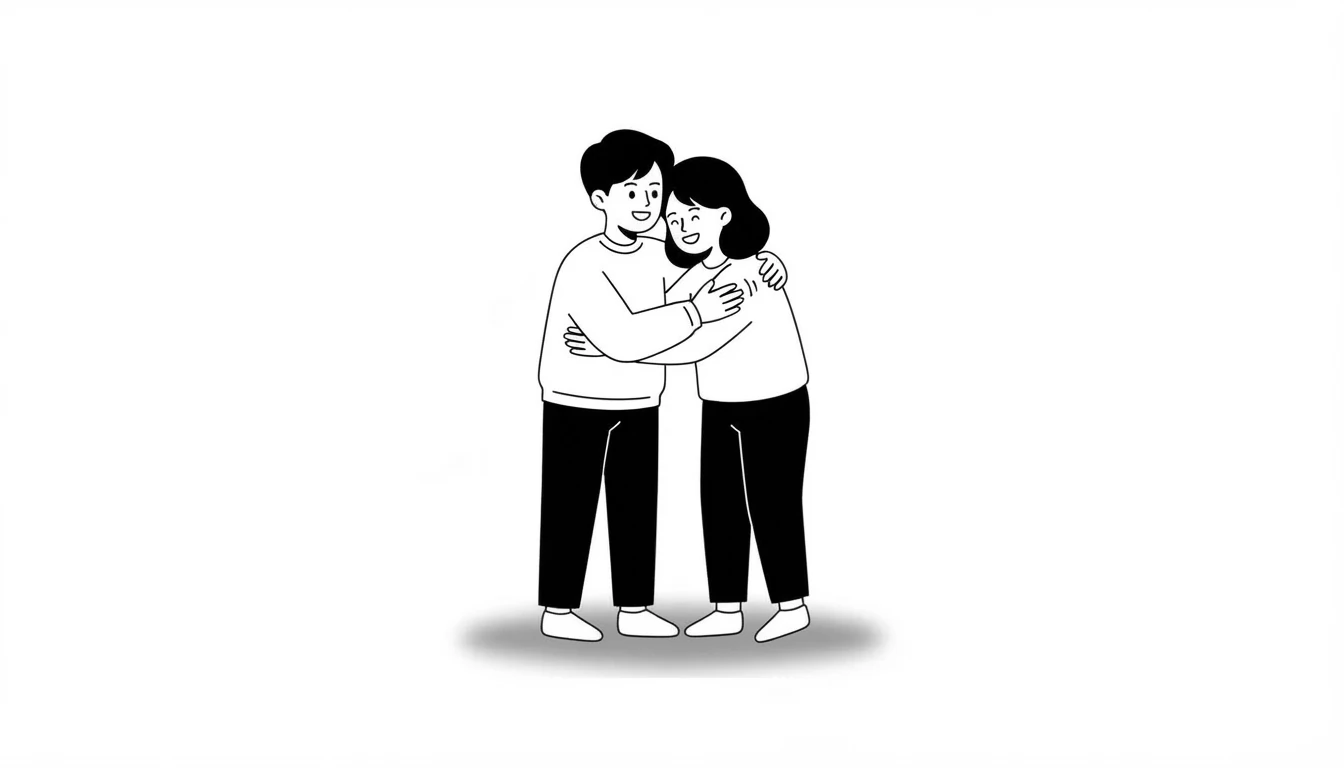
Notice the pair fall out / make up: it’s a classic in Writing stories. They fell out over something silly, but they soon made up. And be careful with take after: we only use it for family members. If you resemble a friend, it’s you look like him.
Work and studies
| 🇬🇧 Phrasal verb | 🇪🇸 Spanish | Example |
|---|---|---|
| take sb on | contratar | The company is taking on new staff for the summer. |
| set sth up | montar, fundar | She set up her own business two years ago. |
| turn sth down | rechazar | He turned down the job because the salary was too low. |
| hand sth in | entregar | Please hand in your essays on Friday. |
| fill sth in | rellenar (un formulario) | Fill in the form with your personal details. |
| catch up (with / on) | ponerse al día | I missed a week of classes, so I need to catch up. |
| keep up with | seguir el ritmo de | It’s hard to keep up with the rest of the class. |
| drop out (of) | dejar (los estudios) | He dropped out of university after a year. |
| go over sth | repasar | Let’s go over the main points again before the exam. |
| carry on | continuar, seguir | Carry on with your work, please. |
A favourite in exams: turn down means «refuse», as well as «lower» (the volume, the heating). She turned down the offer has nothing to do with lowering anything. 😄
Problems and solutions
| 🇬🇧 Phrasal verb | 🇪🇸 Spanish | Example |
|---|---|---|
| come up with | idear, ocurrírsele a alguien | She came up with a brilliant idea. |
| work sth out | resolver, averiguar | I can’t work out the answer to this question. |
| sort sth out | solucionar, arreglar | Don’t worry, we’ll sort it out tomorrow. |
| figure sth out | entender, descubrir cómo | I can’t figure out how this machine works. |
| look into | investigar, estudiar | The police are looking into the robbery. |
| run out of | quedarse sin | We’ve run out of milk. |
| come across | encontrarse con (por casualidad) | I came across some old photos while I was tidying up. |
| get over | superar, recuperarse de | It took her months to get over the break-up. |
| give up | rendirse; dejar (un hábito) | Don’t give up! / He gave up smoking last year. |
| break down | averiarse; venirse abajo | Our car broke down on the motorway. |
If you like break down, the break family has plenty more to offer: you’ll find them all in my post on phrasal verbs with BREAK. The same goes for come up with and come across, which are in the one on phrasal verbs with COME.
Plans, travel and free time
| 🇬🇧 Phrasal verb | 🇪🇸 Spanish | Example |
|---|---|---|
| call sth off | cancelar | The match was called off because of the rain. |
| put sth off | aplazar, posponer | We’ve put off the meeting until next week. |
| set off | salir (de viaje), ponerse en camino | We set off at six in the morning. |
| check in / check out | registrarse / dejar (el hotel) | We checked in at noon and checked out on Sunday. |
| get away | escaparse (de vacaciones) | We’re hoping to get away for a few days in May. |
| look forward to | tener ganas de, esperar con ilusión | I’m really looking forward to seeing you. |
| pick sb up | recoger (a alguien) | I’ll pick you up at the station. |
| see sb off | despedir (a alguien que se va) | My parents came to the airport to see me off. |
| turn up | aparecer, presentarse | He turned up an hour late, as usual. |
| put sb up | alojar (a alguien en tu casa) | My cousin put us up for the weekend. |
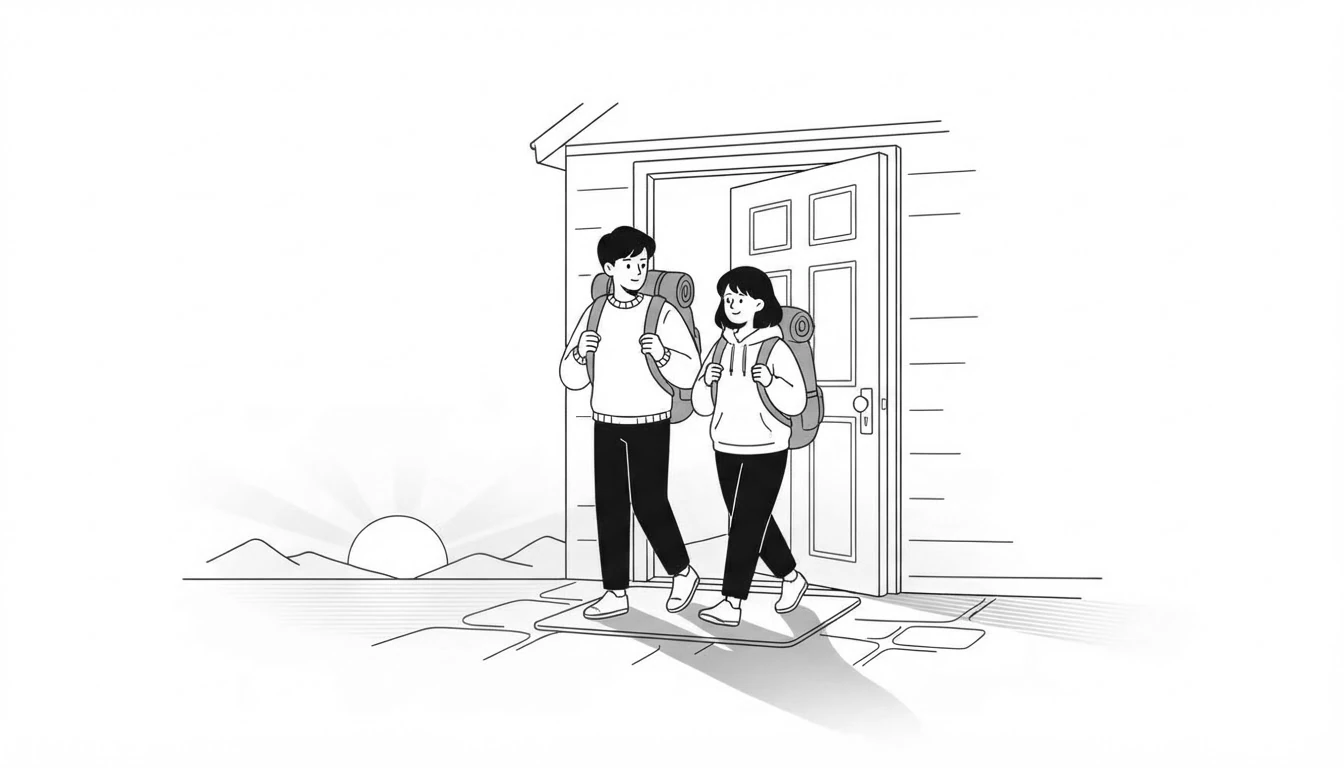
Be very careful with call off and put off, which get mixed up all the time: call off means cancel (there won’t be a match), and put off means postpone (there will be a match, just on another day).
Communication and opinions
| 🇬🇧 Phrasal verb | 🇪🇸 Spanish | Example |
|---|---|---|
| point sth out | señalar, hacer notar | She pointed out a mistake in my essay. |
| bring sth up | sacar (un tema) | Please don’t bring up politics at dinner. |
| come up | surgir | Something has come up, so I can’t go tonight. |
| turn out | resultar | The film turned out to be really good. |
| make sth out | entender, distinguir | I couldn’t make out what he was saying. |
| talk sb into | convencer a alguien para | She talked me into joining the gym. |
| back sb up | apoyar, respaldar | Will you back me up in the meeting? |
| sum up | resumir | To sum up, I think the plan is a good idea. |
| put sth forward | proponer | He put forward a new plan for the school. |
| go on (about) | no parar de hablar de | He keeps going on about his new car. |
I particularly recommend sum up and point out for Writing: To sum up, … is a very natural way to start a conclusion, and It is worth pointing out that… works brilliantly in an essay or a report.
Health and lifestyle
| 🇬🇧 Phrasal verb | 🇪🇸 Spanish | Example |
|---|---|---|
| take sth up | empezar (una afición, un deporte) | I’ve just taken up yoga. |
| get into | aficionarse a | I got into running during the lockdown. |
| cut down on | reducir (el consumo de) | I’m trying to cut down on sugar. |
| work out | hacer ejercicio | I work out at the gym three times a week. |
| come down with | caer enfermo de | I think I’m coming down with a cold. |
| pass out | desmayarse | He passed out because of the heat. |
| wear off | pasarse (un efecto) | The painkillers are starting to wear off. |
| stay up | quedarse despierto | We stayed up until two in the morning. |
| put on (weight) | engordar | I put on three kilos over Christmas. |
| eat out | comer o cenar fuera | We usually eat out on Saturdays. |
Phrasal verbs with several meanings
Here’s the trickiest part. Many phrasal verbs have two, three or more meanings, and only the context tells you which one it is. These are the ones you’ll come across most at B2:
| 🇬🇧 Phrasal verb | 🇪🇸 Meanings | Examples |
|---|---|---|
| work out | resolver · hacer ejercicio · salir bien | I worked out the answer. / I work out every day. / Everything worked out in the end. |
| pick up | recoger · aprender (sin estudiar) · mejorar | I’ll pick you up at eight. / I picked up some Italian on holiday. / Sales are picking up. |
| take off | despegar · quitarse (ropa) · tener éxito de repente | The plane took off late. / Take off your shoes. / Her career really took off. |
| turn up | aparecer · subir (el volumen) | She turned up late. / Can you turn up the music? |
| put up | alojar · subir (precios) · montar (una tienda, un cartel) | They put us up for the night. / They’ve put up the rent. / We put up the tent. |
| bring up | criar · sacar (un tema) | I was brought up in Granada. / She brought up an interesting point. |
| make up | reconciliarse · inventarse · maquillarse · formar | They made up. / He made up an excuse. / Women make up 60% of the staff. |
| break down | averiarse · venirse abajo (emocionalmente) | The lift broke down. / She broke down in tears. |
My advice: whenever you learn a new phrasal verb, write down an example sentence for each meaning, not just the translation. I go into this in more detail in my post on how to memorise English vocabulary.
Common mistakes with phrasal verbs
These are the mistakes I see most often in my B2 students’ writing. The good news is that they’re all easy to fix:
| ❌ Incorrect | ✅ Correct | Why |
|---|---|---|
| Can you pick up it? | Can you pick it up? | With a pronoun, the object goes in the middle. |
| I look forward to see you. | I look forward to seeing you. | Here to is a preposition, so it’s followed by -ing. |
| We’ve run out milk. | We’ve run out of milk. | The third particle is missing. |
| I can’t put up this noise. | I can’t put up with this noise. | Put up without with means something else. |
| She looks after of her brother. | She looks after her brother. | A literal copy of «cuida de»: no of. |
| I got over of the flu. | I got over the flu. | A literal copy of «recuperarse de». |
| Please look the children after. | Please look after the children. | Look after is inseparable. |
| They put off the concert. (if there won’t be a concert) | They called off the concert. | Put off means postpone; call off, cancel. |
The look forward to + -ing one is so common that it deserves its own post: if -ing and the infinitive confuse you, have a look at my explanation of gerunds and infinitives in English.
Phrasal verbs in B2 First
Phrasal verbs pop up all over the exam, but there are three places where you’re bound to find them.
Use of English Part 1 and Part 2
In Part 1 (multiple-choice cloze) you often have to choose the right verb or particle:
- The concert was ______ off because of the storm. A) put B) called C) set D) taken → called
And in Part 2 (open cloze) the gap can be the particle itself:
- We decided to set ______ early to avoid the traffic. → off
Use of English Part 4: key word transformations
This is where they really shine. In Part 4 (key word transformation) you have to rewrite a sentence using a given word, and very often the key is to swap a one-word verb for a phrasal verb, or the other way round:
- They postponed the meeting until Friday. OFF → The meeting was put off until Friday.
- I can’t tolerate his behaviour any more. PUT → I can’t put up with his behaviour any more.
- She is very similar to her mother. TAKES → She takes after her mother.
That’s why I recommend learning each phrasal verb together with its «formal equivalent»: put off = postpone, call off = cancel, put up with = tolerate, look into = investigate, turn down = refuse / reject. The exercises at the end are designed to practise exactly this.
Writing and Speaking
In Speaking and in the informal tasks in Writing (an email to a friend, an article, a story, a review), a few well-placed phrasal verbs show a natural range of vocabulary, and examiners appreciate that. In an essay or a report, on the other hand, the register is more formal, so choose carefully: point out, sum up or carry out work well, but chill out or go on about don’t.
Tips for learning B2 phrasal verbs
- Learn them by topic, not by verb. It’s much easier to remember set off, check in and see off together in a travel story than set off, set up, set out, set back in a list.
- Always with an example sentence. A translation on its own is easily forgotten; a sentence also helps you remember the structure (whether it’s separable, whether it takes sb or sth).
- Make it personal. Write sentences about your own life: I took up running last year, I get on really well with my cousin. What matters to you sticks.
- Few but well learnt. Ten a week, revised several times, are worth more than sixty in one afternoon.
- Use them. In every practice piece of writing, try to include two or three new phrasal verbs. It’s hard at first, but soon they’ll come naturally.
And if you’d like to practise with many more exercises, my book Phrasal Verbs B2 has the essential phrasal verbs for the First organised by topic, with all kinds of exercises and their answers. 👉🏻 See the book
Frequently asked questions about B2 phrasal verbs
How many phrasal verbs do you need to know for B2?
Cambridge doesn’t publish an official list, but with around 100 to 150 well-learnt phrasal verbs (the ones in this list plus the basic B1 ones) you’re more than ready for the First. What matters isn’t how many you know, but whether you can use them.
Can you use phrasal verbs in the First Writing paper?
Yes, and it’s a good idea. In informal and semi-formal tasks they sound very natural. In an essay or a report, choose the more neutral ones (point out, carry out, sum up) and avoid very colloquial ones.
What’s the difference between B1 and B2 phrasal verbs?
B1 phrasal verbs are usually literal and everyday (get up, turn off, sit down). B2 ones have more abstract meanings (turn out, look up to), include more three-part verbs (run out of, cut down on) and require you to know several meanings of the same verb.
How do I know if a phrasal verb is separable?
Look at how it appears in the dictionary: if it says turn sth down, with the object in the middle, it’s separable; if it says look after sb, with the object after it, it’s inseparable. My phrasal verbs dictionary can help.
Is there a list of B2 phrasal verbs in PDF?
Yes: you can download this very post as a PDF with the download button, tables and exercises included. And if you want lots more examples, have a look at my 200 phrasal verbs with examples in English and Spanish.
B2 phrasal verbs exercises
Thirty sentences to check you’ve got it. Below you have three interactive exercises that mark themselves, so you’ll know straight away how you’ve done.
And if you’d like these exercises as text to copy, paste or adapt for your classes, here they are below with the answers 👇
Exercise 1: choose the correct particle
Choose the correct option to complete each phrasal verb.
- We’ve run (out / off) of coffee, so I’ll buy some more.
- I’m really looking forward (to / for) the holidays.
- The match was called (off / out) because of the snow.
- Can you pick me (up / on) from the airport tomorrow?
- She takes (after / over) her mother: they have the same smile.
- He turned (down / off) the job because the salary was too low.
- I can’t put up (with / to) his jokes any more.
- It took me two weeks to get (over / across) the flu.
- We set (off / up) at dawn to avoid the traffic.
- Our car broke (down / up) on the way to Madrid.
Show answers
- out
- to
- off
- up
- after
- down
- with
- over
- off
- down
Exercise 2: complete with the phrasal verbs in the box
Complete each sentence with the correct form of a phrasal verb from the box: come up with, cut down, drop out of, fall out, fill in, put off, sort out, take up, turn out, turn up.
- I’ve just _______________ yoga and I love it.
- Sam and Leo _______________ after a big argument about football.
- Could you _______________ this form, please?
- She _______________ a brilliant idea for the school project.
- He _______________ university after his first year.
- My doctor told me to _______________ on salt.
- Don’t worry about the problem. I’ll _______________ tomorrow.
- We had to _______________ our trip because my mother was ill.
- The film _______________ to be much better than I expected.
- He _______________ an hour late, as usual.
Show answers
- taken up
- fell out
- fill in
- came up with
- dropped out of
- cut down
- sort it out
- put off
- turned out
- turned up
Exercise 3: key word transformations
Complete the second sentence so that it has a similar meaning to the first sentence, using the word given in capitals. Use between two and five words, including the word given.
- They cancelled the match because of the rain. (OFF)
The match _______________ because of the rain. - I really want to see you next week. (FORWARD)
I’m really _______________ you next week. - I can’t tolerate this noise any more. (PUT)
I can’t _______________ this noise any more. - We have no bread left. (RUN)
We have _______________ bread. - She is very similar to her father. (TAKES)
She _______________ her father. - They postponed the trip until the summer. (PUT)
They _______________ until the summer. - He refused the offer of a new job. (TURNED)
He _______________ of a new job. - I admire my older sister a lot. (UP)
I really _______________ my older sister. - Who raised you when you were a child? (BROUGHT)
Who _______________ when you were a child? - The police are investigating the robbery. (LOOKING)
The police _______________ the robbery.
Show answers
- was called off
- looking forward to seeing
- put up with
- run out of
- takes after
- put off the trip / put the trip off
- turned down the offer
- look up to
- brought you up
- are looking into
Conclusion
You won’t learn phrasal verbs in a day, but with these 60 well practised you’ve got a solid base for B2 First. Remember the three keys: learn them by topic and with an example sentence, watch the pronoun with separable verbs (pick it up) and link each one to its formal equivalent for Use of English Part 4.
If you want to carry on, have a look at my posts on phrasal verbs with GET and with TAKE, two of the verbs with the most combinations. Have you got questions about any of them? Write to me and I’ll help.
Did you find this post useful? Share it with other English students and teachers. And if you want more content like this, subscribe to my newsletter and follow me on Facebook, Twitter, Pinterest, Instagram and YouTube.
See you in the next post. Until then, don’t forget to keep smiling! 🙂
