

Table of contents
In this post, you will learn everything about the C2 Proficiency (CPE) oral examination from Cambridge Assessment English, also known as the C2 Speaking. At KSE Academy, we specialise in preparing candidates for the highest levels of the Cambridge English scales, and the C2 Proficiency is the ultimate challenge. The Speaking paper is a crucial component of this exam. In this article, I will explain the 3 parts into which the C2 Proficiency oral examination is divided. Furthermore, I will provide you with a video of a real exam and example materials for each part to ensure you are fully prepared.
Speaking C2 Proficiency: General Aspects
- The speaking exam has 3 parts.
- It is normally taken in pairs (occasionally in a group of three if there is an odd number of candidates).
- There are 2 examiners: the interlocutor (who speaks to you) and the assessor (who sits to the side and takes notes).
- The test lasts approximately 16 minutes per pair (24 minutes for a group of three).
- You are assessed on your grammatical and lexical resource, discourse management, pronunciation, and interactive communication.
Speaking C2 Part 1: Interview (2 minutes)
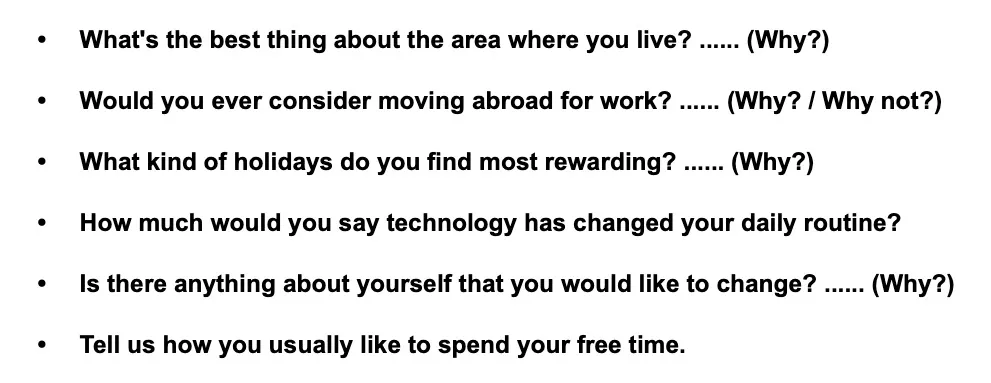
During the first part of the C2 Speaking test, the interlocutor addresses each candidate individually. You will be asked questions about your personal life, your interests, your work or studies, and your opinions on more abstract topics. At this level, the examiners expect more than just basic information; you should be able to provide sophisticated answers, speculate about the future, or justify your viewpoints with precision. Here is an example of the types of questions you might encounter:
Speaking C2: The Ultimate CPE Speaking Guide
Bridge the gap to mastery with our comprehensive guide, which includes 10 full practice tests, sample answers for every part, and over 120 pages of expert strategies and useful language lists specifically designed for the C2 Proficiency Speaking test. Get your copy of Speaking C2 today!
Speaking C2 Part 2: Collaborative Task (4 minutes)
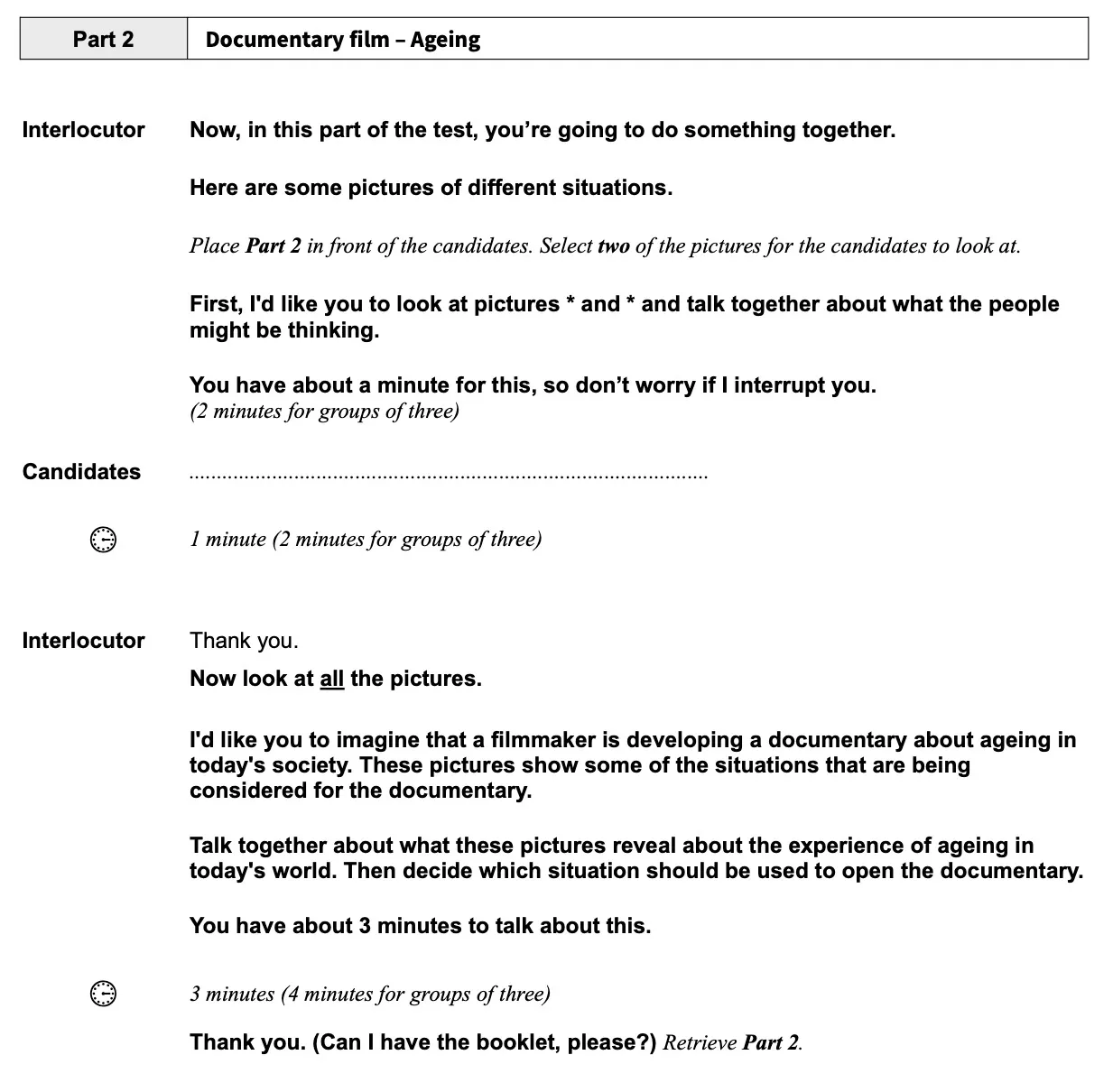
In Part 2, you and your partner work together. The examiner will give you one or more photographs and a set of instructions. This part is divided into two phases:
- Phase 1 (1 minute): You and your partner answer a question based on two of the pictures.
- Phase 2 (3 minutes): You are given a decision-making task related to all the images. You must discuss the topic, exchange ideas, and try to reach a negotiated conclusion.
The goal is to demonstrate your ability to sustain an interaction, evaluate different options, and use language to suggest or speculate. Below you can see the instructions and the visual prompts for this part:
Here’s a sample of the instructions for Part 2:
And here are the visual prompts that the Interlocutor will give to the candidates for their discussions:
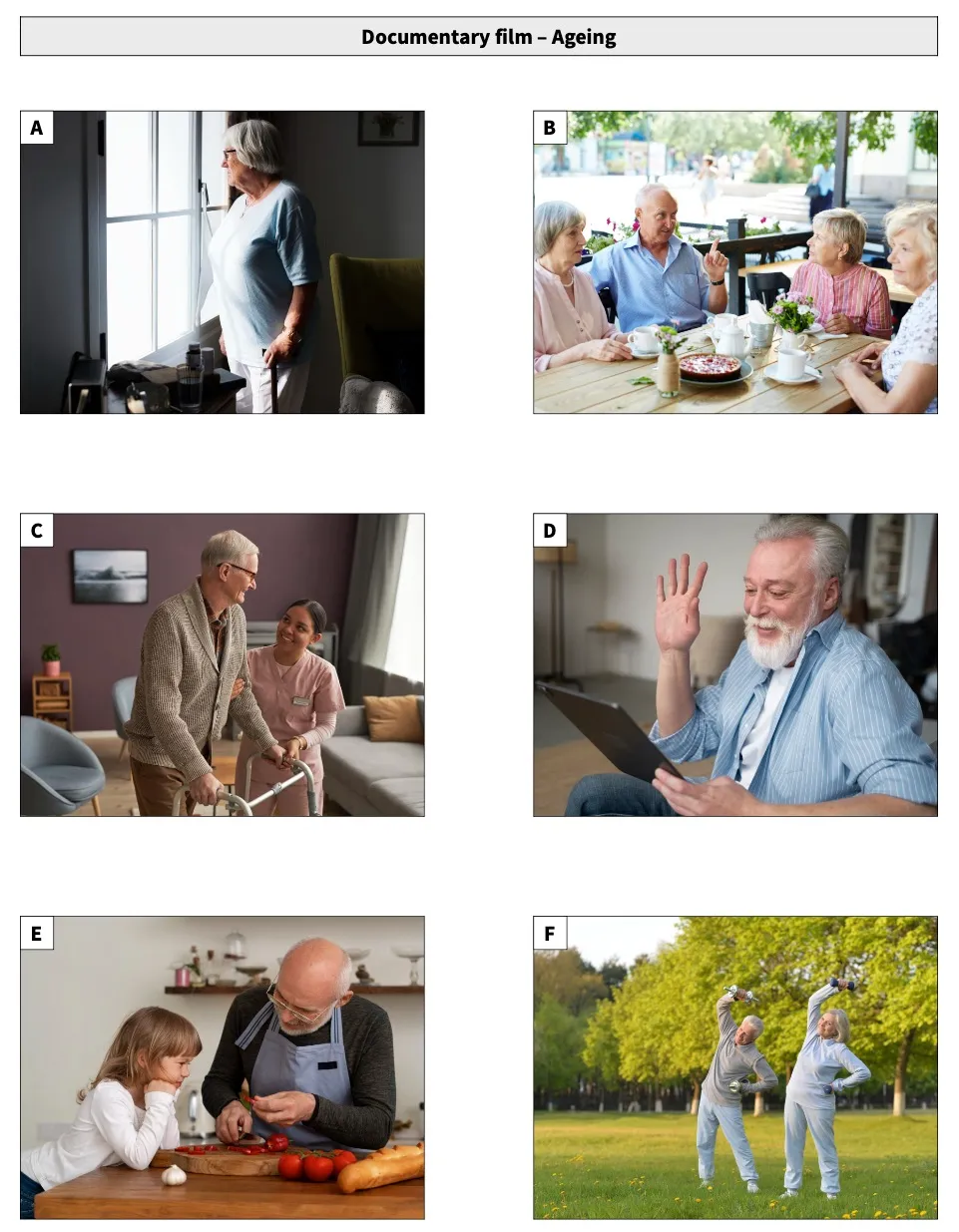
Speaking C2: The Ultimate CPE Speaking Guide
Bridge the gap to mastery with our comprehensive guide, which includes 10 full practice tests, sample answers for every part, and over 120 pages of expert strategies and useful language lists specifically designed for the C2 Proficiency Speaking test. Get your copy of Speaking C2 today!
Speaking C2 Part 3: Long Turn and Discussion (10 minutes)
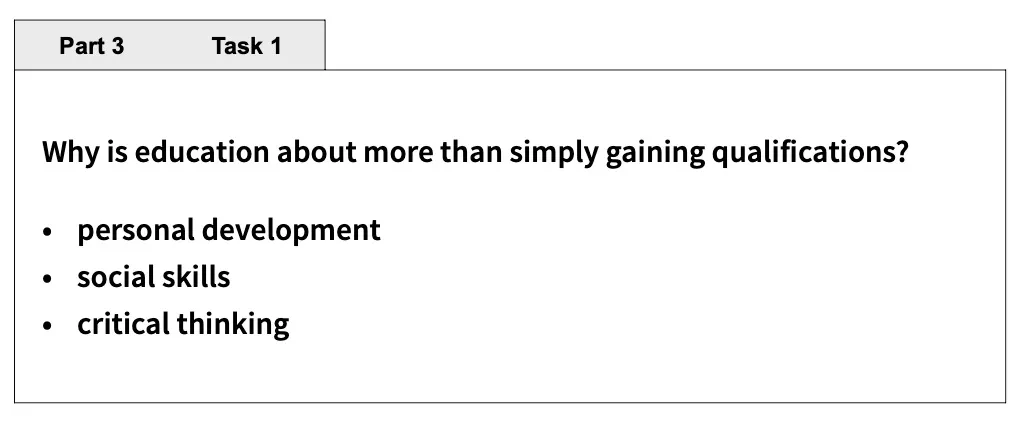
This is probably the most challenging part of the exam. Each candidate is given a prompt card with a question and some ideas to help them. You must speak for 2 minutes without interruption. After your «long turn», your partner must comment for about 30 seconds on what you said, and then the examiner asks a follow-up question to both of you.
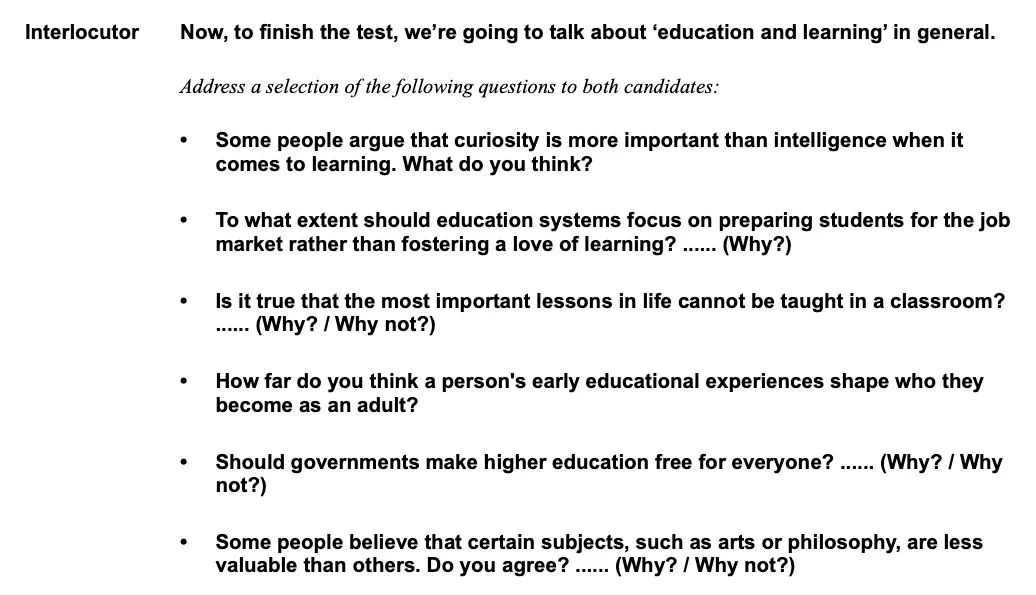
Once both candidates have finished their individual turns, the test concludes with a 6-minute discussion (the «General Discussion») where the interlocutor asks questions that broaden the topic even further. This is your chance to show your mastery of complex arguments.
Here are the initial instructions that the Interlocutor will give to the candidates for the first task in Part 3:
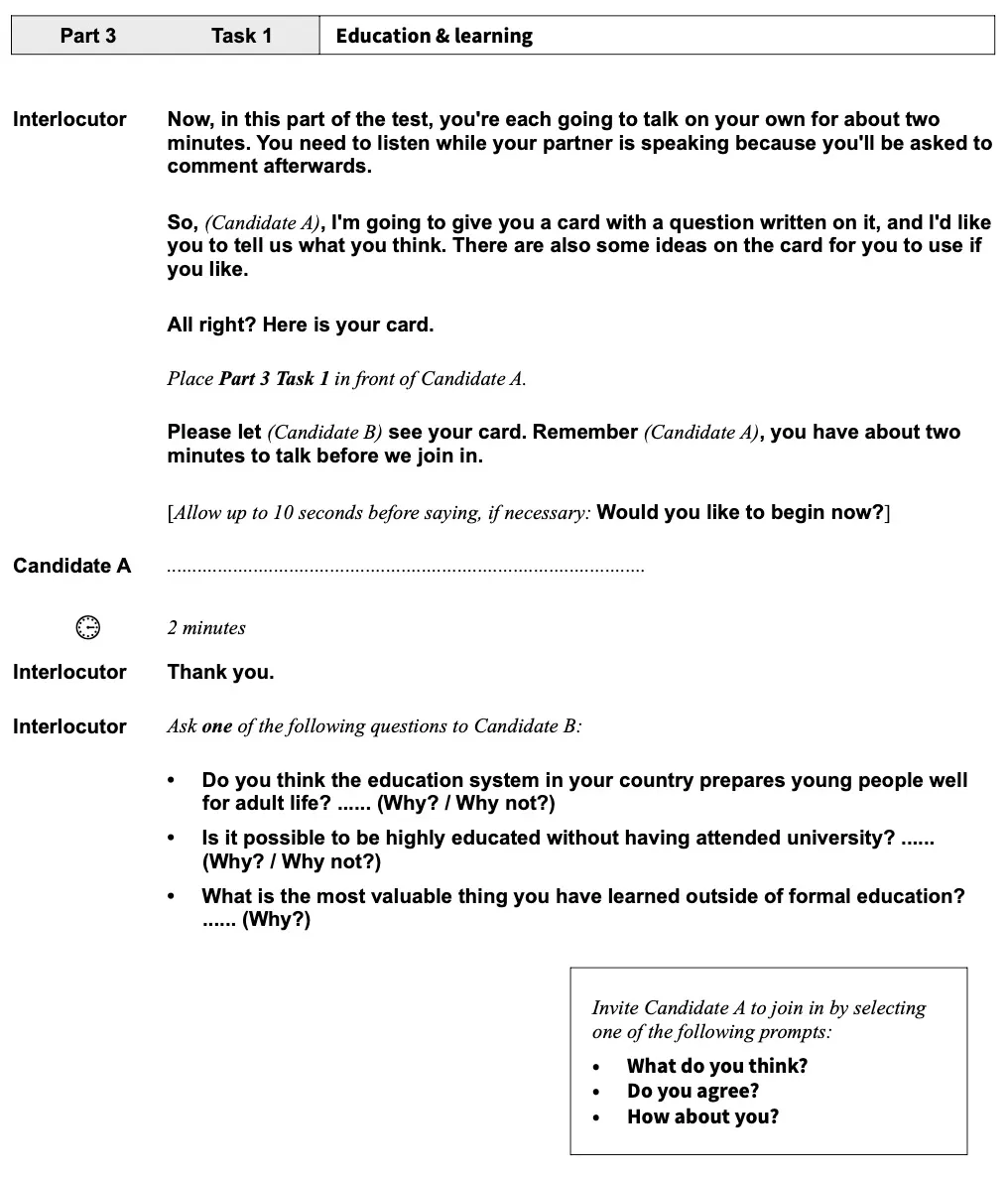
Here’s the prompt card that would be given to Candidate A:
And, after both candidates have had their long turn and the quick follow-up discussion, these would be the questions for the final follow-up discussion. The interlocutor would ask a few of them, as appropriate:
Example of C2 Proficiency Speaking [VIDEO]
To give you a better idea of the expected level and how the interaction flows, here is a video of a real C2 Proficiency Speaking test. Watch how the candidates manage their turns and the sophistication of their vocabulary.
General Tips for C2 Proficiency Speaking
Achieving a pass at C2 level requires more than just «speaking well». You need to exhibit precision, flexibility, and a high degree of control. Here are some essential tips:
- Use a wide range of vocabulary: At this level, you should use idiomatic expressions, collocations, and precise terminology. Avoid «overused» words like «good» or «bad».
- Organise your discourse: In the long turn (Part 3), use discourse markers to structure your speech (e.g., «Conversely…», «In light of the above…», «To further illustrate this point…»).
- Interaction is key: In Part 2 and the final discussion of Part 3, show that you are listening to your partner. Respond to their points before introducing your own.
- Self-correction: If you make a mistake, don’t panic. If you can correct yourself fluently, it shows a high level of awareness and control, which is valued at C2.
- Speculate and evaluate: Don’t just describe what you see. The examiners want to hear you discuss hypothetical situations and evaluate different perspectives on abstract issues.
- Keep the flow: Try to avoid long pauses. If you need a moment to think, use fillers like «That’s a rather intriguing question…» or «I’ve never really considered it from that angle before…».
- Smile and be confident: A positive attitude helps the interaction feel more natural and can help you feel more relaxed.
Do you have any questions? Leave a comment below! 👇
And until the next article, don’t forget to keep smiling!
