
Table of contents
«Do I say I enjoy to swim or I enjoy swimming?» If you have ever hesitated between the infinitive and the -ing form after a verb, you are not alone: it is one of the doubts that gives English learners the biggest headaches, and no wonder. To begin with, there is no single rule that explains why some verbs take one form and others take the other, so a lot of it simply has to be learnt. And on top of that, many languages, Spanish included, have nothing quite like it: the Spanish «gerundio» is not the same thing as the English gerund.
The good news is that verbs can be sorted into five groups, and that within one of them (the verbs that change meaning) there is a very clear logic. In this guide I give you the general rules, the list of verbs in each group with examples, the seven verbs that change meaning, the most common mistakes, how this helps you in the Cambridge exams and thirty sentences of exercises with answers. Let’s get started! 🙂
Gerund or infinitive: the general rules
Before going verb by verb, there are some general rules that cover many situations. We use the gerund (-ing) in these cases:
- When it is the subject of the sentence or part of it: Exercising every morning is the best way to keep fit!
- After a preposition and after a phrasal verb: We are really looking forward to hearing from you. Notice that here to is a preposition, not the to of the infinitive. There is more about this in my guides to instead of and to despite, in spite of and although.
- After certain verbs (see below): We should really avoid driving through the city centre in the rush hour.
And we use the to-infinitive in these others:
- After the verb to be + some adjectives: I am happy to give you a hand with your homework. / She is a rather amusing person to spend time with.
- In constructions with too and enough: He spoke too quickly for anyone to understand. / I didn’t have enough money to buy the house.
- To express purpose: I decided to go to England to learn English.
- After certain verbs: I expect to get good grades this year.
How to form the gerund (-ing)
Before going on, a quick reminder of how the -ing form is spelt, because it has its traps:
| Rule | Examples |
|---|---|
| Usually you just add -ing | work → working, enjoy → enjoying |
| Verbs ending in -e: drop the e | make → making, write → writing |
| One stressed syllable with vowel + consonant: double the consonant | run → running, stop → stopping, swim → swimming |
| Verbs ending in -ie: -ie becomes -y | lie → lying, die → dying, tie → tying |
| Verbs ending in -y: keep the y | study → studying, try → trying |
If you get mixed up with lying and laying, have a look at my guide to lie and lay, where you have the three verbs with all their forms.
The 5 groups of verbs
When a verb is followed by another verb, the second one can be an infinitive or an -ing form. All verbs can be sorted into five groups:
| Group | What follows | Examples |
|---|---|---|
| 1 | always -ing | enjoy, avoid, finish, mind |
| 2 | always to-infinitive | decide, hope, manage, refuse |
| 3 | bare infinitive (without to) | make, let, modal verbs |
| 4 | -ing or infinitive, same meaning | like, love, hate, start, begin |
| 5 | -ing or infinitive, different meaning | remember, forget, try, stop, regret |
Group 1: verbs always followed by -ing
appreciate, avoid, contemplate, delay, deny, detest, dislike, endure, enjoy, escape, excuse, face, fancy, finish, involve, mention, mind, miss, postpone, practise, resent, risk, suggest. And these expressions: it’s no good, it’s no use, feel like, spend time, waste time, it’s worth, there’s no point, can’t help.
- It’s no good studying everything by heart. It’s far more important to understand things.
- He denied stealing the computer. In fact, he accused one of his colleagues.
- I don’t mind waiting for a few minutes.
A practical clue: many of these verbs express liking, disliking or avoiding something (enjoy, dislike, avoid, miss, risk). For suggest and recommend, which have other structures besides -ing, you have everything in my post on suggest vs recommend.
Group 2: verbs always followed by the to-infinitive
can’t afford, agree, appear, arrange, attempt, ask, choose, dare, decide, demand, deserve, expect, fail, grow, hasten, happen, hope, hurry, learn, long, manage, neglect, offer, pay, plan, pledge, pretend, promise, refuse, resolve, seek, seem, struggle, swear, threaten, vow, wish.
- He couldn’t even afford to buy a pair of shoes after his business went bust.
- She offered to pay for dinner, but Mike refused to let her.
- I hope to see you soon.
The clue here is the opposite one: almost all of them are verbs of plans, decisions, intentions and wishes (decide, hope, plan, promise, refuse), that is, of things that haven’t happened yet. For hope and expect in particular, see the difference in my post on hope and expect.
Group 3: verbs followed by the bare infinitive
These are make, let, have (meaning «cause someone to do something»), feel, hear, see plus an object, and all modal verbs except ought to:
- I heard you come into the room late last night.
- My parents will never let me go out on a weekday.
- You should wait and see which way the wind blows.
With hear and see you can also use the -ing form: I heard you arriving late. / I saw you talking to her yesterday. If you want to review modals, have a look at my guide to modal verbs in English.
Group 4: -ing or infinitive, with no change in meaning
can’t bear, hate, like, love, prefer, begin, continue, intend, plan, propose, can’t stand, start:
- I can’t bear to watch / watching horror movies.
- I love to go / going to the cinema on Saturdays.
- It started to rain / raining.
Three quick notes on this group:
- If the verb itself is already in -ing, avoid repeating it: It’s starting to rain is better than It’s starting raining.
- With would like, would love, would hate and would prefer we always use the to-infinitive: I’d love to visit Japan one day.
- With like there is a nuance: I like to get up early (it suits me, I choose it) versus I like getting up early (I enjoy it in general).
Group 5: -ing or infinitive, with a change in meaning
Here comes the most interesting part: the meaning changes depending on the form you choose. There is a logic behind it: the infinitive usually looks forward (something still to be done, an intention, an attempt), and the gerund looks back or at something real (a memory, something that was done, a habit). These are the seven most common verbs:
| Verb | + infinitive | + gerund (-ing) |
|---|---|---|
| remember | not to forget to do something (obligation) | to recall something that happened |
| forget | to fail to do something | to forget something that happened |
| try | to attempt (maybe without success) | to try something as an experiment |
| go on | to move on to do something else | to continue with the same thing |
| mean | to intend to | to involve, to imply |
| regret | to be sorry to have to (formal) | to feel sorry about something you did |
| stop | to pause in order to do something | to quit doing something |
1. Remember and forget
If we remember to do something, we are talking about something we have to do, a sort of obligation. If we remember doing something, we are referring to a memory of a moment or an event. With forget it is exactly the same, but with the opposite meaning:
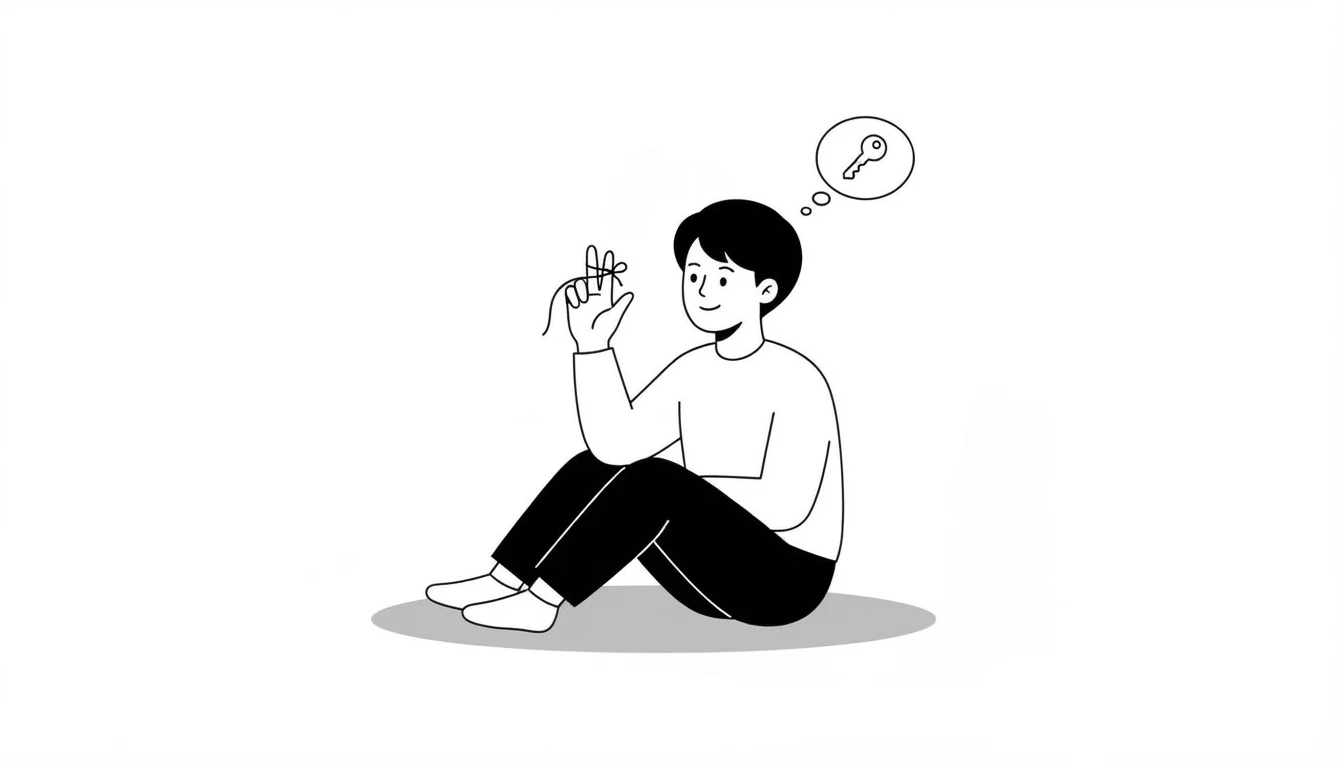
- Did you remember to pick up my suit from the dry-cleaner’s? (did you remember to do it?)
- I will always remember kissing you for the first time. (I remember that moment)
- I forgot to get some bread on my way home. (something I had to do)
- I’ll never forget visiting Disneyland when I was a kid. (a memory I have)
2. Try
The difference with this verb is probably the trickiest for learners. Try to do something means to attempt it, presumably without succeeding. Try doing refers to something you actually did, as an experiment, to see what happens:
- Last night I tried to sleep for hours, but I simply couldn’t. I was so desperate that I even tried counting sheep! (I attempted to sleep, without success; and I did count sheep, as a test)
- Have you tried restarting it? That’ll probably do the trick.
3. Go on
- After listening to me closely, Tim went on to read his newspaper. (first he listened, then he moved on to reading)
- Tim wasn’t really listening to me, he simply went on reading his newspaper. (he carried on reading, without interrupting himself)
4. Mean
- I didn’t mean to hurt you. I’m really sorry. (it wasn’t my intention)
- Putting your name down for that competition will mean training at least twice a week. (it will involve training)
5. Regret
Regret doing is by far the more common form. Regret to do is used almost only to give bad news in a formal context:
- I honestly regret not studying harder for my final exams. (I wish I had studied more)
- We regret to inform you that you have not been selected for the job. (we are sorry to tell you)
6. Stop
A good way to understand the difference: which is healthier, stop to smoke or stop smoking? In the first case you interrupt what you are doing in order to smoke; in the second, you quit an unhealthy habit. Stopping smoking is healthier than stopping to smoke:
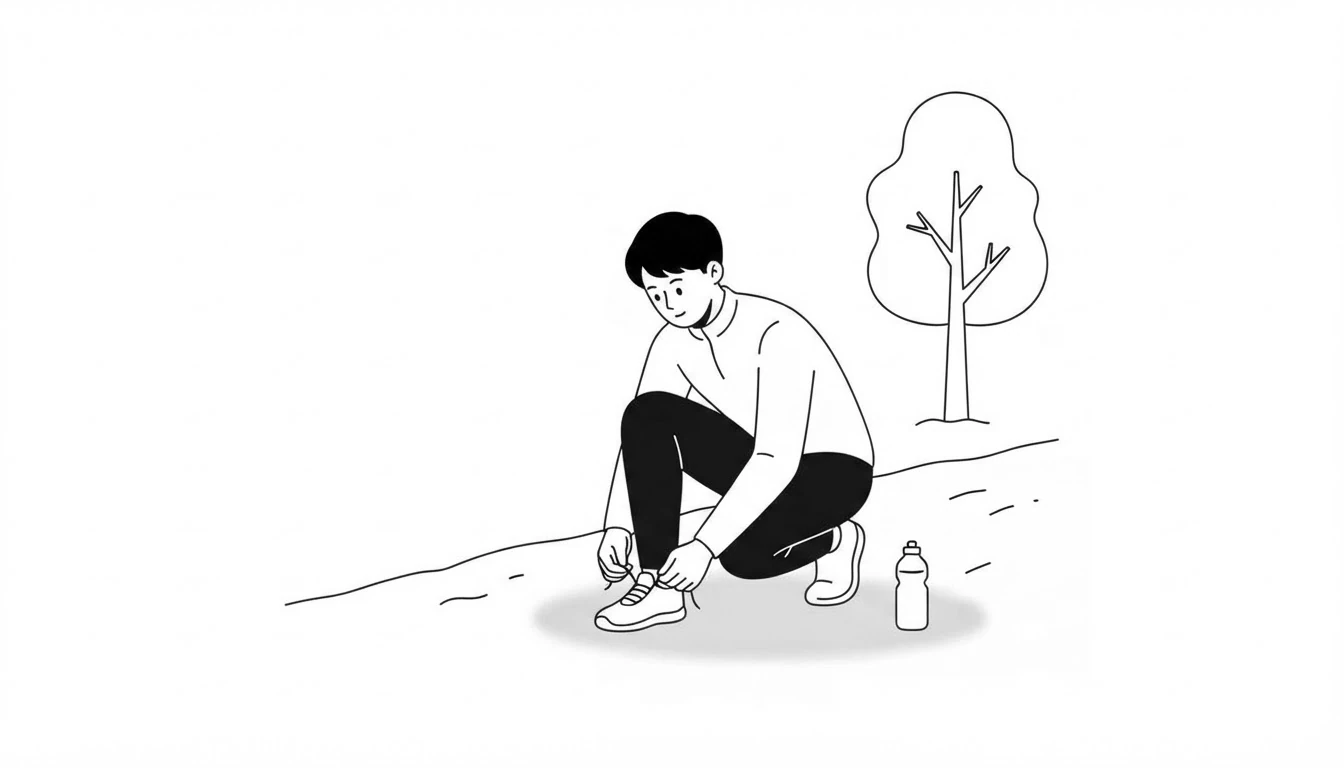
- I stopped to tie my shoelace. (I paused in order to tie it)
- She stopped smoking last year. (she quit)
And one extra: need
Need also changes: need + gerund has a passive meaning. The car needs washing means the same as The car needs to be washed.
Common mistakes with gerund and infinitive
| ❌ Incorrect | ✅ Correct | Why |
|---|---|---|
| I enjoy to swim. | I enjoy swimming. | Enjoy is always followed by -ing. |
| She decided leaving. | She decided to leave. | Decide is always followed by the to-infinitive. |
| I look forward to see you. | I look forward to seeing you. | Here to is a preposition and needs -ing. |
| My parents let me to go out. | My parents let me go out. | Let takes the bare infinitive. |
| He stopped to smoke last year. | He stopped smoking last year. | To say «quit», stop + -ing. |
| I want going home. | I want to go home. | Want takes the to-infinitive. |
Gerund or infinitive in the Cambridge exams
This is a topic that comes up again and again in the Use of English paper of B2 First and C1 Advanced. In Part 1 (multiple-choice cloze) and in Part 2 (open cloze) it is very common for the gap to depend on whether the following verb takes to or -ing. And in Part 4 (key word transformation) they often ask for a sentence with a verb of this kind. For example:
- I’m sorry I didn’t study harder. REGRET
I ______ harder. → regret not studying - He gave up smoking last year. STOPPED
He ______ last year. → stopped smoking
Notice that in both you have to get the form after the verb right. In Writing and Speaking, too, using these structures naturally is one of the features that set a B2 apart from a lower level.
Summary table
| Group | Structure | Key verbs |
|---|---|---|
| 1 | verb + -ing | enjoy, avoid, finish, mind, miss, risk |
| 2 | verb + to + infinitive | decide, hope, plan, promise, refuse, manage |
| 3 | verb + bare infinitive | make, let, modal verbs |
| 4 | verb + -ing / to + infinitive (same) | like, love, hate, start, begin, continue |
| 5 | verb + -ing / to + infinitive (different) | remember, forget, try, stop, regret, mean, go on |
Is the Spanish «gerundio» the same as the English gerund?
No. The Spanish gerundio (-ando, -iendo) is used mostly for actions in progress («estoy comiendo»). The English gerund (-ing) also works as a noun: it can be the subject (Swimming is fun) or follow a preposition. That is why it is sometimes translated as a Spanish infinitive: I enjoy swimming = «Me gusta nadar».
How do I know if a verb takes -ing or to?
There is no rule that works for all of them. My advice is to learn the verbs in groups and use the clue: verbs of liking and avoiding usually take -ing; verbs of plans, decisions and wishes usually take to + infinitive.
Why «look forward to seeing»?
Because in look forward to the to is a preposition, not part of the infinitive, and after prepositions we always use the -ing form. The same happens with be used to, object to or in addition to.
Gerund and infinitive exercises
Thirty sentences to check that you’ve got it. Below you have three interactive exercises that mark themselves, so you will know straight away how you did.
And if you prefer a version in text that you can copy and paste, you have it down here 👇
Exercise 1: gerund or infinitive?
Choose the correct form to complete each sentence.
- I enjoy (to swim / swimming) in the sea.
- She decided (to leave / leaving) early.
- We are looking forward to (see / seeing) you.
- He can’t afford (to buy / buying) a new car.
- My parents never let me (go / to go) out on school nights.
- I’d love (to visit / visiting) Japan one day.
- They finished (to paint / painting) the house.
- He promised (to help / helping) me with my homework.
- I don’t mind (to wait / waiting) for a few minutes.
- It’s no use (to cry / crying) about it.
Show answers
- swimming
- to leave
- seeing
- to buy
- go
- to visit
- painting
- to help
- waiting
- crying
Exercise 2: complete the sentences
Write the correct form of the verb in brackets: infinitive (with or without to) or -ing.
- Would you mind _______________ (open) the window?
- I hope _______________ (see) you soon.
- She avoided _______________ (answer) my question.
- He refused _______________ (pay) the bill.
- We enjoyed _______________ (walk) along the beach.
- They managed _______________ (finish) before the deadline.
- I can’t help _______________ (laugh) when I see him.
- My boss made me _______________ (work) late yesterday.
- She is learning _______________ (play) the guitar.
- I’m thinking of _______________ (change) jobs.
Show answers
- opening
- to see
- answering
- to pay
- walking
- to finish
- laughing
- work
- to play
- changing
Exercise 3: same verb, different meaning
Choose the form that matches the meaning of each sentence.
- I’ll never forget (to meet / meeting) the president. I still remember it.
- Don’t forget (to lock / locking) the door when you leave.
- He stopped (to buy / buying) a coffee on the way to work. Then he continued walking.
- She stopped (to smoke / smoking) last year, and she feels much healthier.
- I tried (to open / opening) the window, but it was stuck.
- If you have a headache, try (to drink / drinking) more water. It might help.
- I regret (to tell / telling) you that your application was unsuccessful.
- I regret (to tell / telling) him my secret. I shouldn’t have said anything.
- I didn’t mean (to hurt / hurting) you. It was an accident.
- Changing jobs will mean (to move / moving) to another city.
Show answers
- meeting
- to lock
- to buy
- smoking
- to open
- drinking
- to tell
- telling
- to hurt
- moving
Conclusion
To sum up in three ideas: there is no single rule, so learn the verbs in groups; use the clue (liking and avoiding usually take -ing; plans and decisions usually take to); and watch out for the seven verbs that change meaning, because there a mistake makes you say something different from what you meant.
If you want to carry on with similar structures, have a look at my guide to reporting verbs, where many verbs have their own structures with an infinitive, a gerund or that.
Did you find this post useful? Share it with other students and English teachers. And if you want more content like this, subscribe to my newsletter and follow me on Facebook, Twitter, Pinterest, Instagram and YouTube.
See you in the next post. Until then, don’t forget to keep smiling! 🙂
