
Table of contents
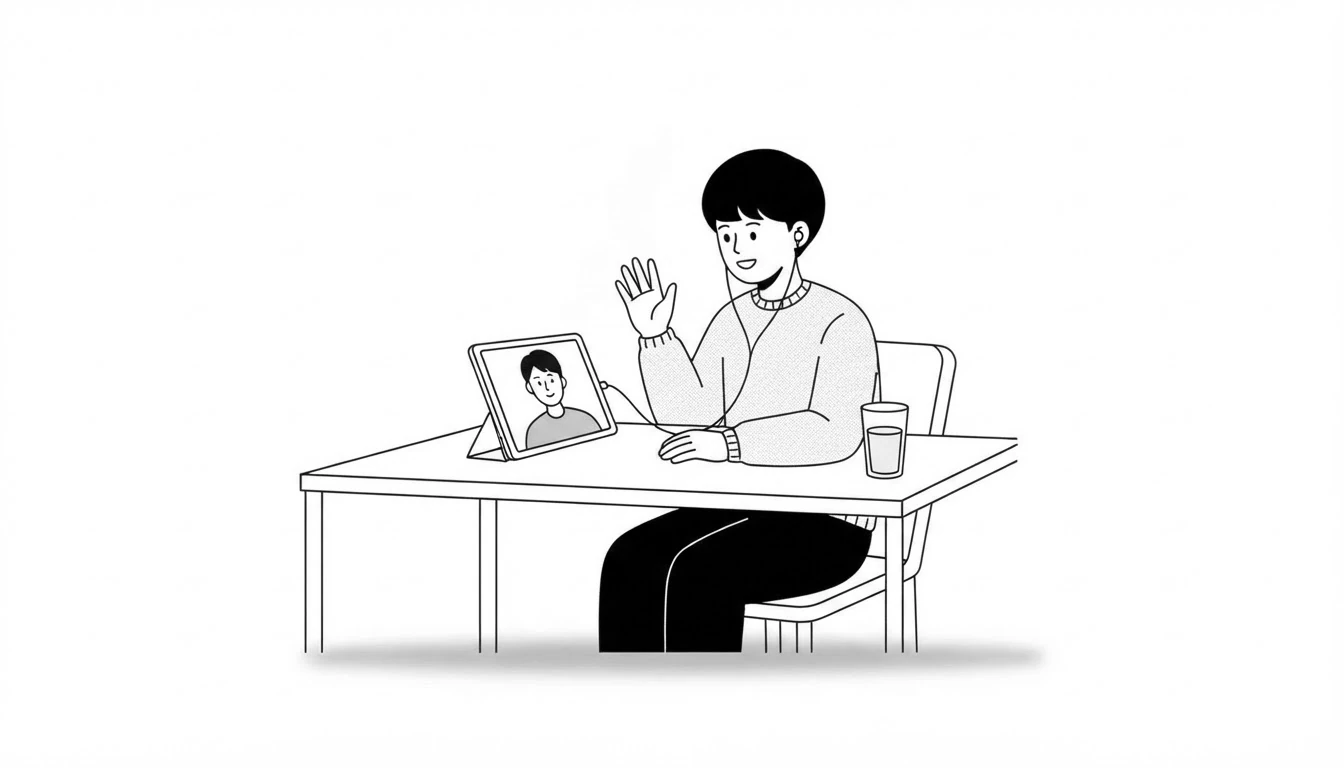
LanguageCert A2 Access Speaking lasts 9 minutes and you take it on your own with an interlocutor, with no partner. It has the same four parts as A1, but now you’re expected to say a little more: to give some detail, to say what you did at the weekend or to talk about a topic for a whole minute.
In my experience as an exam trainer, A2 is the level where practising the format makes the biggest difference, because it’s easy to get stuck in one-word answers. That’s why in this guide I explain what A2 Access Speaking is like, what you have to do in each of its four parts, how it’s marked and, most importantly, I show you an example of every part with an A2 model answer and a short analysis. Let’s get started!
A2 Access Speaking: what A2 level means
A2 Access certifies A2 level on the Common European Framework of Reference for Languages (CEFR), known as elementary level. When it comes to conversation, the CEFR says an A2 speaker:
Can communicate in simple and routine tasks requiring a simple and direct exchange of information on familiar topics and activities. Can handle very short social exchanges, even though they can’t usually understand enough to keep the conversation going themselves.
In exam terms, in A2 Access Speaking you need to be able to:
- Talk about yourself, your family, your job or studies and your free time, with some detail.
- Talk about things that have already happened: your last holiday, the weekend, a birthday…
- Cope with everyday situations: buying a ticket, asking a favour, arranging to meet someone…
- Ask and answer questions to find the differences between two pictures.
- Talk for a minute without stopping about a familiar topic.
You don’t need complicated structures. Simple sentences linked well (and, but, because, then) and the past tense of the most common verbs will do the job perfectly.
What A2 Access Speaking is like
Speaking is the Spoken Exam of A2 Access and it’s separate from the Written Exam (Listening, Reading and Writing), so you can take it on a different day. These are its main features:
- It’s one to one: just you and an interlocutor, with no partner.
- It lasts 9 minutes and has four parts.
- You can take it at a centre, face to face, or online from home. Either way, the interlocutor is with you live.
- It’s recorded, and you aren’t marked by the interlocutor but by a LanguageCert examiner who listens to the recording later.
- In Part 2 the interlocutor plays a role (someone who works in a shop, a friend…), but you never have to play anyone else: you always speak as yourself.
- At A2, the interlocutor guides and supports you if you need it.
| Part | Time | What you have to do |
|---|---|---|
| Part 1 | 2 minutes | Spell your surname, say where you’re from and answer up to 5 questions on everyday topics. |
| Part 2 | 2 minutes | Two short situations: in one the interlocutor starts and in the other you start. |
| Part 3 | 2 minutes | Ask and answer questions to find the differences between your picture and the interlocutor’s. |
| Part 4 | 3 minutes | After 30 seconds to make notes, talk for one minute about a topic and answer follow-up questions. |
The four parts of A2 Access Speaking
Part 1
This is the ice-breaker. The interlocutor asks you to spell your surname and asks where you’re from. Then you’re asked up to five questions, each on a different topic (the weather, holidays, friends, work…). At A2 one sentence isn’t really enough: try to answer and add a detail or a reason.
Part 2
Here you have to cope with real-life situations. The interlocutor sets up two situations:
- In the first, the interlocutor starts («I start.») and you respond.
- In the second, you start («You start.»), so you’re the one who opens the conversation.
Each situation lasts about two turns each, and if there’s time there may be a third. What counts is using useful phrases to ask for things, offer, invite, apologise or say thank you.
Part 3
As at A1, this is a spot-the-difference game: you have a picture and the interlocutor has a similar one, and you ask each other questions to find out what’s different. At A2 the pictures have more detail, so you’ll need to describe what people are doing (They’re playing…, He’s reading…), not just what’s there. The interlocutor starts.
Part 4
This is your long turn. The interlocutor chooses one of three topics and gives you paper and a pen so you can make notes for 30 seconds. Then you talk for one minute and, when you finish, answer a few follow-up questions on the same topic.
A2 Access Speaking examples
Now for the practical part. Here’s a task for every part, written by me following the exam format, with an A2 model answer and an analysis of why it works. In the real exam you’ll be speaking, so the idea isn’t to memorise these answers but to notice how they’re built.
A2 Access Speaking example: Part 1
These could be the Part 1 questions:
Part 1. The interlocutor asks you to spell your surname and says Where are you from? Then you’ll be asked up to five questions on different topics, for example:
- The weather: What’s the weather like in your town in winter?
- Holidays: Where did you go on your last holiday?
- Friends: What do you usually do with your friends?
- Technology: What do you use your phone for?
- Work or studies: Do you like your job? Why?
And this is how an A2 candidate might answer them:
Interlocutor: What’s the weather like in your town in winter?
Candidate: It’s quite cold, but it doesn’t rain very much. Sometimes it snows in January, and I love it.
Interlocutor: Where did you go on your last holiday?
Candidate: I went to Lisbon with my husband. We visited the old town and we ate a lot of fish. It was great.
Interlocutor: What do you usually do with your friends?
Candidate: We usually go for a walk on Saturday morning, and then we have lunch together in a small restaurant.
Interlocutor: What do you use your phone for?
Candidate: I use it for everything: messages, photos and music. I also read the news on it every morning.
Interlocutor: Do you like your job? Why?
Candidate: Yes, I do. I work in a supermarket and my colleagues are very friendly. But I start very early, at six o’clock.
Why it works:
Why it works:
Why it works:
Why it works:
- Two sentences per answer: the answer plus a detail (Sometimes it snows in January, and I love it.).
- It uses the past when the question needs it: I went…, We visited…, It was great.
- It links ideas with simple connectors: and, but, then, also.
Useful expressions: It’s quite…, We usually…, I use it for…, Yes, I do, because…, But…
A2 Access Speaking example: Part 2
In the first situation, the interlocutor starts:
Part 2, first situation. I work at the train station ticket office. I start.
Good morning. Where would you like to go?
Interlocutor: Good morning. Where would you like to go?
Candidate: Good morning. I’d like a return ticket to Madrid, please.
Interlocutor: For today?
Candidate: Yes, for the next train. What time does it leave, and how much is it?
In the second, you’re the one who has to start:
Part 2, second situation. We’re friends. You want to borrow my bike this weekend. You start.
Candidate: Hi, Tom. Can I ask you a favour? Can I borrow your bike this weekend? I want to go to the lake with my sister.
Interlocutor: Sure. When do you need it?
Candidate: On Saturday morning, please. I can bring it back on Sunday evening. Thank you very much!
Interlocutor: No problem.
- At the station, the candidate asks for exactly what’s needed (a return ticket to Madrid) and asks the two useful questions: the time and the price.
- With the friend, the candidate starts with a polite phrase (Can I ask you a favour?), explains why they need the bike and offers to bring it back on a specific day.
- The candidate says thank you at the end, a small thing that makes the conversation sound natural.
Useful expressions: I’d like…, please., What time does it leave?, How much is it?, Can I ask you a favour?, Can I borrow…?, I can bring it back…
A2 Access Speaking example: Part 3
In Part 3 each of you only sees your own picture. Here are both of them together, as a table, so you can see the differences:
Part 3. We both have a picture of a park, but they’re a little different. Ask me questions about my picture and answer my questions about yours, so we can find what’s different.
| In the park | Your picture | The interlocutor’s picture |
|---|---|---|
| The weather | sunny | cloudy |
| Some children | playing football | playing basketball |
| On the bench | two women talking | one man reading a newspaper |
| A man with a dog | a big black dog | a small white dog |
| Next to the gate | an ice cream van | a coffee stall |
Interlocutor: In my picture, the weather is cloudy. What’s the weather like in your picture?
Candidate: It’s sunny. There are some children in my picture. They’re playing football. What are the children doing in your picture?
Interlocutor: They’re playing basketball.
Candidate: OK. Who is sitting on the bench in your picture?
Interlocutor: There’s one man. He’s reading a newspaper.
Candidate: In my picture there are two women on the bench. They’re talking. Is there a dog in your picture?
Interlocutor: Yes, there’s a man with a small white dog.
Candidate: In my picture the dog is big and black. And what can you see next to the gate?
Interlocutor: A coffee stall.
Candidate: In my picture there’s an ice cream van next to the gate.
- The candidate describes actions with the present continuous: They’re playing football., They’re talking.
- The candidate answers and asks in the same turn, so the conversation keeps moving without the interlocutor having to push it.
- The candidate compares naturally: In my picture the dog is big and black.
Useful expressions: What are… doing?, Who is sitting on…?, What can you see next to…?, In my picture there’s…, Is there a… in your picture?
A2 Access Speaking example: Part 4
These could be the three Part 4 topics:
Part 4. The interlocutor chooses one of these topics, gives you paper and a pen, and you have thirty seconds to write some notes:
- A A place you like in your town
- B Your last birthday
- C Your favourite way to relax
Talk for one minute. Then answer some questions.
Let’s say you get topic B. This is what an A2 candidate’s notes and talk might look like, with the follow-up questions at the end:
Notes (30 seconds): May / 35 / restaurant / family + friends / cake / present: concert tickets / happy
Candidate: I’m going to talk about my last birthday. It was in May and I was thirty-five years old. I had a party in an Italian restaurant near my house. My family was there, and some of my friends from work came too. We had pizza and pasta, and at the end the waiters brought a big chocolate cake. Everybody sang Happy Birthday and I felt a bit embarrassed, but it was very funny. My friends gave me two tickets for a concert, so I went with my brother last month. It was a really happy day, and I want to have a party like that again next year.
Interlocutor: Thank you. Do you usually have a party on your birthday?
Candidate: Not every year. Sometimes I just have dinner at home with my family.
Interlocutor: What’s the best present you ever got?
Candidate: A bike. My parents gave it to me when I was ten, and I used it every day.
- The notes follow the order of the story: when, where, who with, what happened and how it felt.
- It uses the past of very common verbs (was, had, came, brought, gave, went), which is exactly what’s expected at A2.
- It finishes with a closing sentence that looks ahead: I want to have a party like that again next year.
Useful expressions: I’m going to talk about…, It was in…, At the end…, so I…, It was a really… day.
How A2 Access Speaking is marked
The examiner listens to the recording and gives you a mark for four criteria, each from 0 to 3, based on your performance across the whole exam:
| Criterion | What is assessed |
|---|---|
| Task Fulfilment and Coherence | Whether you do what each task asks, whether you communicate with a little help from the interlocutor and whether you link ideas simply. |
| Accuracy and Range of Grammar | Whether you use A2 structures (present, past, can, going to…) accurately enough. |
| Accuracy and Range of Vocabulary | Whether you have enough vocabulary for the exam tasks. |
| Pronunciation, Intonation and Fluency | Whether you can generally be understood, even if your accent shows and there are some pauses. |
So the top mark is 12, which is then converted to a score out of 50. To pass you need 25 out of 50 (Pass), and from 38 out of 50 you get a High Pass.
Tips for A2 Access Speaking
These are the tips I give my students for A2 Access Speaking:
- Answer and add something. A one-word answer gives the examiner nothing to mark. Answer and add a detail or a reason with because.
- Revise the past of the most common verbs. Went, had, saw, bought, ate… You’ll need them in Part 1 and Part 4.
- Practise the present continuous for Part 3: He’s reading, They’re playing, She’s wearing.
- Time yourself talking for a minute. A minute sounds short until you try it. Record yourself on your phone and listen back.
- Make good use of the 30 seconds in Part 4. Jot down five or six key words in the order you’ll say them.
- If you don’t understand, ask them to repeat. Sorry, could you say that again? is perfectly fine.
If you’d like to compare it with the equivalent Cambridge exam, there’s also my guide to A2 Key Speaking. And to see the whole exam, here’s my guide to LanguageCert A2 Access.
Next step: A2 Writing and B1 Speaking
If you’re also preparing the written part of the exam, there’s my guide to A2 Access Writing, with an example of every task type. And when you’re ready for the next level, my guide to B1 Achiever Speaking shows you what changes: more time for each part and a Part 3 where you need to reach an agreement with the interlocutor.
And that’s everything you need to know about A2 Access Speaking. If you still have any questions, leave me a comment and I’ll be happy to help. 🙂
