
Table of contents
If you’ve ever written Despite of the rain or hesitated between Despite it was raining and Although it was raining, you’re not alone. All three words translate into one or two expressions in many languages, so it’s hard to know which word goes with which structure. And it isn’t a minor point: despite, in spite of and although are among the connectors learners confuse most in the Cambridge exams.
Don’t worry, because the rule is simple and you only have to look at what comes next. In this guide I explain what each one means, when to use despite and in spite of (and why despite of is a mistake), when to use although, even though and though, how to change from one structure to another, and the mistakes I see most often in class. At the end there are thirty practice sentences with answers. Let’s get started! 🙂
What do despite, in spite of and although mean?
All three express contrast: something happens although you’d expect the opposite. The difference isn’t in the meaning but in the grammar:
- Despite and in spite of are prepositions. They’re followed by a noun, a pronoun or a verb in the -ing form.
- Although, even though and though are conjunctions. They’re followed by a subject and a verb, that is, a full clause.
| Despite / in spite of | Although / even though / though | |
|---|---|---|
| Type of word | Preposition | Conjunction |
| Followed by… | Noun, pronoun or -ing | Subject + verb |
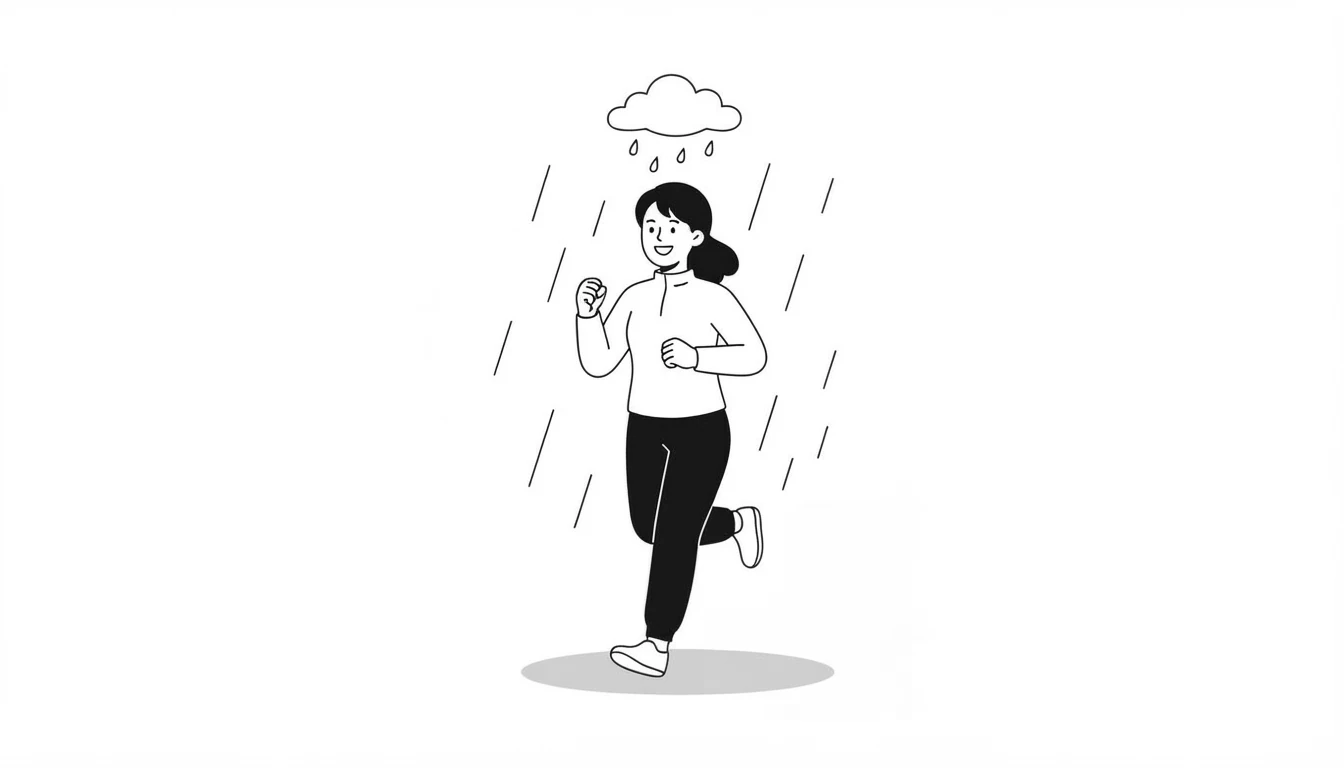
| Example | Despite the rain, we went out. | Although it was raining, we went out. |
If you remember only one idea from this post, make it this one: after despite there’s no subject and conjugated verb; after although there always is.
Despite and in spite of: meaning and structure
Is there any difference between despite and in spite of?
In meaning, none: He got the job despite his lack of experience and He got the job in spite of his lack of experience mean exactly the same. Despite is shorter and slightly more formal; in spite of is more common in conversation. The only practical difference is that in spite of always has of and despite never does.
Despite / in spite of + noun or pronoun
The most frequent structure is despite / in spite of + noun:
- Despite the rain, we had a great picnic.
- She passed the exam in spite of her nerves.
- Despite this, I still think it’s a good idea. (this, that, it, them… work as pronouns.)
Despite / in spite of + -ing
When a verb would follow, we use the -ing form:
- Despite feeling tired, she kept working.
- He didn’t stop in spite of having a headache.
- Despite being only sixteen, she speaks four languages.
One detail: when you use -ing, the subject is normally the same as in the main clause (she feeling tired → she kept working). If the subjects are different, it’s better to use the next structure.
Despite / in spite of the fact that + clause
If you want a subject and a conjugated verb after despite or in spite of, you need to add the fact that:
- Despite the fact that it was raining, we went out.
- In spite of the fact that he is very rich, he lives simply.
It’s longer and more formal, but very useful for Writing. ✅ Despite the fact that it was late… ❌ Despite that it was late….
The mistake «despite of»
This is the most frequent mistake with these words, and I understand why it happens: despite and in spite of mean the same and get mixed up in your head. The result is a hybrid that doesn’t exist:
- ❌ Despite of the rain, we went out. → ✅ Despite the rain, we went out.
- ❌ In spite the rain, we went out. → ✅ In spite of the rain, we went out.
- ❌ Inspite of the rain, we went out. → ✅ In spite of the rain, we went out. (It’s three words.)
A trick to get it right: despite is a single word and needs nothing else; in spite of is three words and always ends in of. If you write both, one is too many.
Although, even though and though
Although + subject + verb
To join two full clauses with a contrast, use although + subject + verb:
- Although it was raining, we went out.
- I like her, although she can be quite rude.
And here’s a very typical learner mistake, because in some languages you can say «although… but»: in English you never use but in the same sentence. ❌ Although it was raining, but we went out → ✅ Although it was raining, we went out.
Even though: although with more emphasis
Even though means the same as although, but it adds emphasis. It’s used when the contrast is surprising:
- She stayed in the race even though she had hurt her ankle.
Remember that the correct form is always even though: ❌ Even although → ✅ Even though.
Though: the informal version
Though is used like although and is more informal. It also has a special use the others don’t: it can go at the end of a sentence, meaning «however», which is typical of spoken English:
- I like her, though she can be rude. (Like although.)
- The film was long. I enjoyed it, though. (At the end, meaning «all the same».)
Although with adjectives
In slightly more formal writing, although can be followed by an adjective or a participle, without a subject or verb, when the subject is the same as in the main clause: Although tired, she went to the party. (It means Although she was tired….) It’s an elegant structure for B2 and C1 Writing.
Position and punctuation
All these structures can go at the beginning or in the middle of the sentence. The difference is the comma:
- At the beginning: there’s a comma after the first part: Although it was raining, we went out. / Despite the rain, we went out.
- In the middle: normally no comma: We went out although it was raining. / We went out despite the rain.
With though at the end of a sentence, there is a comma before it: It was cold, though.
How to change an although sentence into a despite sentence
This is the skill the exams ask for most. We start from a sentence with although and turn it into despite or in spite of using the three methods:
| Method | Example |
|---|---|
| Original sentence | Although the weather was terrible, we enjoyed the trip. |
| 1. Noun | Despite the terrible weather, we enjoyed the trip. |
| 2. The fact that + clause | Despite the fact that the weather was terrible, we enjoyed the trip. |
| 3. -ing (same subject) | Although she was tired, she kept working. → Despite being tired, she kept working. |
To choose a method, ask yourself: can I turn the clause into a noun (the weather was terrible → the terrible weather)? If so, use method 1. If the subject is the same in both parts, method 3. And if neither works, method 2 always does.
Despite and although compared with but and however
But and however also express contrast, but with different grammar. They aren’t combined with although in the same sentence:
| Connector | Structure | Example |
|---|---|---|
| although / even though | + subject + verb | Although it was late, we kept talking. |
| despite / in spite of | + noun / -ing | Despite the late hour, we kept talking. |
| but | between two clauses, with a comma | It was late, but we kept talking. |
| however / nevertheless | start of a sentence, with a comma | It was late. However, we kept talking. |
To see how they combine with the rest of the connectors at this level, have a look at my guide to B2 connectors and my guide to C1 linkers.
Common mistakes with despite, in spite of and although
- ❌ Despite of the rain… → ✅ Despite the rain… (despite never takes of.)
- ❌ In spite the rain… → ✅ In spite of the rain…
- ❌ Despite it was raining… → ✅ Although it was raining… (After despite, no subject + verb.)
- ❌ Although the rain, we went out. → ✅ Despite the rain, we went out. (After although, no bare noun.)
- ❌ Although it was raining, but we went out. → ✅ Although it was raining, we went out.
- ❌ Despite to be tired… → ✅ Despite being tired… (With -ing, not to.)
- ❌ Despite that it was late… → ✅ Despite the fact that it was late…
- ❌ Even although he was late… → ✅ Even though he was late…
Despite, in spite of and although in the Cambridge exams
Connectors of contrast are core content for B2 First and C1 Advanced, and these structures appear mainly in three places:
- Use of English. Key word transformations often include despite, in spite of or although, and the task is exactly what we’ve seen: moving from one structure to another. An exam-style example:
- Maria went to work although she had a cold. DESPITE → Maria went to work despite having a cold.
- Writing. Using although, despite and even though instead of repeating but shows grammatical range, which is one of the assessment criteria. A B2 or C1 essay with a well-used Despite the fact that… sounds much more polished.
- Speaking. When you compare photos or give your opinion, Although it looks expensive, I think… lets you add nuance and develop your answer.
Summary table
Connector Structure Register Example despite + noun / pronoun / -ing Slightly formal Despite the rain, we went out. in spite of + noun / pronoun / -ing Neutral In spite of feeling ill, he went to work. despite / in spite of the fact that + subject + verb Formal Despite the fact that it was late, we stayed. although + subject + verb Neutral Although it was late, we stayed. even though + subject + verb (more emphasis) Neutral Even though it was late, we stayed. though + subject + verb, or at the end of a sentence Informal It was late, though. Frequently asked questions about despite, in spite of and although
Can you say «despite of»?
No. Despite never takes of. If you want to use of, the correct expression is in spite of.
What’s the difference between despite and in spite of?
None in meaning. Despite is one word and slightly more formal; in spite of is three words and is heard more in conversation. Both are followed by a noun, pronoun or -ing.
Can you use although with a noun?
No. Although needs a subject and a verb. If what follows is just a noun (the rain), use despite or in spite of.
What’s the difference between although and even though?
The meaning is the same, but even though is more emphatic. Use it when the contrast is more surprising or you want to stress it.
Do you put a comma after despite?
Only when the phrase comes at the beginning of the sentence: Despite the rain, we went out. If it comes in the middle, normally not: We went out despite the rain.
Can I use «but» with although?
No. In English you use one or the other: Although it was raining, we went out or It was raining, but we went out.
Despite, in spite of and although exercises
Thirty sentences to check you’ve got it. Below you’ll find three interactive exercises that mark themselves, so you’ll know straight away how you did.
And if you prefer a version in text that you can copy and paste, you have it down here 👇
Exercise 1: despite or although?
Choose the correct option in each sentence.
- _______________ (Despite / Although) the rain, we had a great picnic.
- _______________ (Despite / Although) it was raining, we had a great picnic.
- She passed the exam _______________ (in spite of / despite of) studying very little.
- _______________ (Although / Despite) feeling ill, he went to work.
- He kept smiling _______________ (even though / in spite of) he was very nervous.
- _______________ (Despite / Although) the fact that it was expensive, we bought it.
- I like her, _______________ (though / despite) she can be quite rude.
- We enjoyed the trip, _______________ (despite / although) the long journey.
- The film was boring. We stayed until the end, _______________ (though / despite).
- _______________ (In spite of / Although) she is only sixteen, she speaks four languages.
Show answers
- Despite
- Although
- in spite of
- Despite
- even though
- Despite
- though
- despite
- though
- Although
Exercise 2: complete the sentences
Complete each sentence with despite, in spite of, although or even though. Sometimes more than one answer is possible.
- We went for a walk _______________ the cold weather.
- _______________ he has a good salary, he never saves any money.
- She got the job _______________ having no experience.
- I went to the party _______________ I felt really tired.
- _______________ his injury, he finished the race.
- He is very generous _______________ he doesn’t have much money.
- They bought the house _______________ the fact that it was far from the city.
- _______________ it was my birthday, I had to work all day.
- She is always cheerful, _______________ all her problems.
- The match went ahead _______________ the heavy rain.
Show answers
- despite / in spite of
- Although / Even though
- despite / in spite of
- although / even though
- Despite / In spite of
- although / even though
- despite / in spite of
- Although / Even though
- despite / in spite of
- despite / in spite of
Exercise 3: right or wrong?
Decide whether each sentence is correct. If it’s wrong, correct it.
- Despite of the rain, we went out.
- Although it was cold, we went swimming.
- In spite the traffic, we arrived on time.
- Although he was tired, but he kept working.
- She went to work despite being ill.
- Despite he was ill, he went to work.
- Inspite of the rain, we had fun.
- Despite the fact that it was late, we kept talking.
- Although of the rain, the match went ahead.
- In spite of studying hard, he failed.
Show answers
- Wrong: Despite the rain, we went out. (or: In spite of the rain, …)
- Right.
- Wrong: In spite of the traffic, we arrived on time. (or: Despite the traffic, …)
- Wrong: Although he was tired, he kept working. (or: He was tired, but he kept working.)
- Right.
- Wrong: Although he was ill, he went to work. (or: Despite being ill, / Despite the fact that he was ill, …)
- Wrong: In spite of the rain, we had fun. (or: Despite the rain, …)
- Right.
- Wrong: Despite the rain, the match went ahead. (or: Although it was raining, …)
- Right.
Conclusion
To sum up in three ideas: despite and in spite of take a noun, pronoun or -ing and mean the same; although, even though and though take subject + verb and never go with but; and despite of doesn’t exist: it’s either despite or in spite of.
If you want to keep going with this topic, the natural next step is my guide to B2 connectors.
Did you find this post useful? Share it with other students and English teachers. And if you’d like more content like this, subscribe to my newsletter and follow me on Facebook, Twitter, Pinterest, Instagram and YouTube.
See you in the next post. Until then, don’t forget to keep smiling! 🙂
