
Tabla de contenidos
El Speaking del C1 Expert de LanguageCert es uno de los más particulares que te vas a encontrar: lo haces tú solo con un interlocutor, sin compañero, y quien te pone la nota no está en la sala, porque el examen se graba y lo corrige un examinador después. En el C1, además, el interlocutor te deja llevar la conversación, así que buena parte del trabajo depende de ti.
Desde mi experiencia como preparador de exámenes, la diferencia entre aprobar el Speaking del C1 con holgura o quedarse por el camino está en saber exactamente qué se espera en cada parte. Por eso, en esta guía te explico cómo es el Speaking del C1 Expert, qué tienes que hacer en cada una de sus cuatro partes, cómo se corrige y, lo más importante, te enseño un ejemplo de cada parte con una respuesta modelo de nivel C1 y un breve análisis. ¡Vamos allá!
Speaking C1 Expert: qué es el nivel C1
El C1 Expert certifica un nivel C1 del Marco Común Europeo de Referencia para las Lenguas (MCER), un nivel avanzado. En lo que a expresión oral se refiere, el MCER dice que un hablante de C1:
Se expresa con fluidez y espontaneidad sin tener que buscar de forma muy evidente las expresiones adecuadas, utiliza el idioma con flexibilidad y eficacia para fines sociales y profesionales, y presenta descripciones claras y detalladas sobre temas complejos, desarrollando ideas concretas y terminando con una conclusión apropiada.
Traducido al examen, en el Speaking del C1 Expert tienes que ser capaz de:
- Dar opiniones elaboradas sobre temas de actualidad, no solo sobre tu vida.
- Adaptar el registro y el tono a cada situación: no le hablas igual a tu jefe que a un amigo, ni pides un favor igual que presentas una queja.
- Debatir: justificar, rebatir, persuadir y pedir aclaraciones.
- Hablar en profundidad durante dos minutos sobre un tema abstracto o complejo, con un discurso bien estructurado.
Como ves, el salto respecto al B2 no está tanto en el formato, que es muy parecido, como en la profundidad de lo que dices, la precisión del vocabulario y la naturalidad con la que llevas la conversación.
Cómo es el Speaking del C1 Expert
El Speaking es el Spoken Exam del C1 Expert y es un examen independiente del Written Exam (Listening, Reading y Writing), así que puedes hacerlo otro día. Estas son sus características principales:
- Es individual: estáis tú y un interlocutor, sin compañero.
- Dura 15 minutos y tiene cuatro partes.
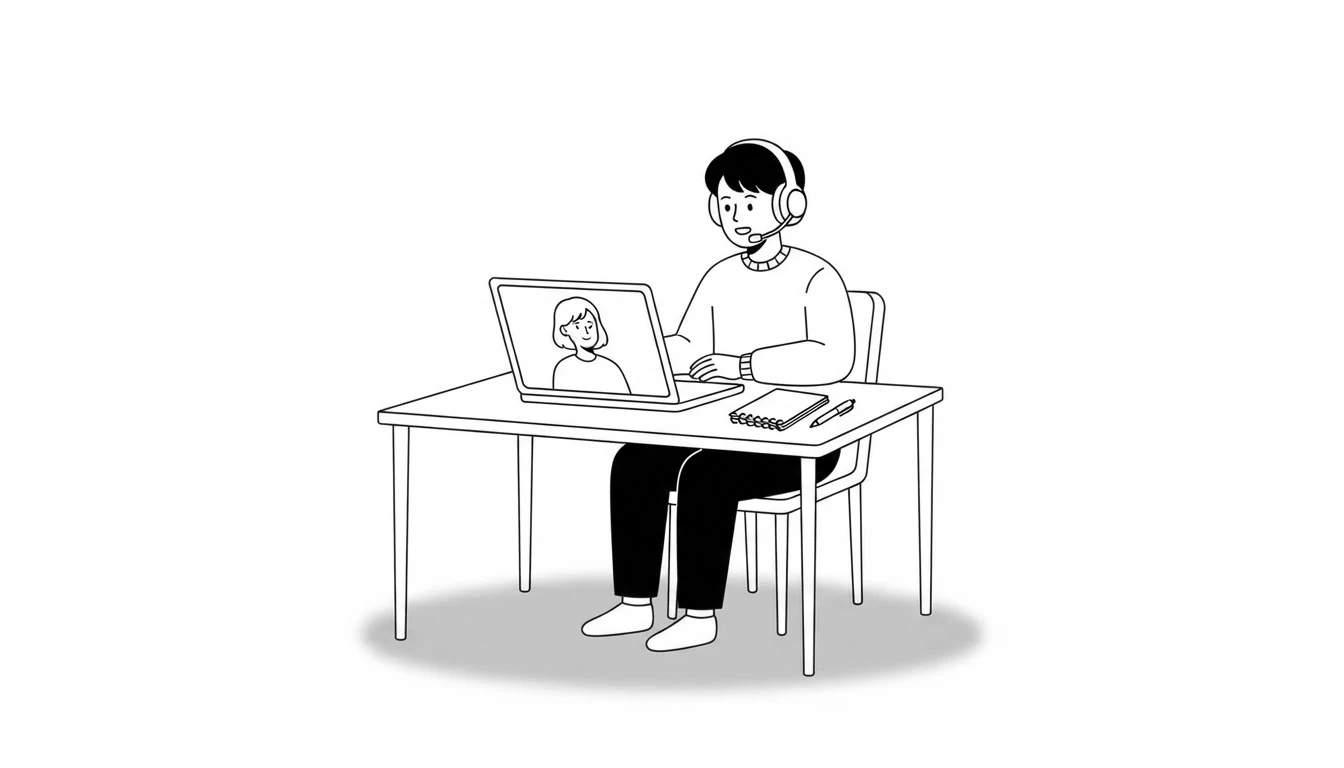
- Puedes hacerlo en un centro, cara a cara, o online desde casa. En los dos casos, el interlocutor está contigo en directo.
- Se graba, y no te evalúa el interlocutor, sino un examinador de LanguageCert que escucha la grabación después.
- En algunas partes el interlocutor interpreta un papel (tu jefe, tu vecino…), pero tú nunca tienes que hacer de otra persona: siempre hablas como tú mismo.
| Parte | Duración | Qué tienes que hacer |
|---|---|---|
| Part 1 | 3 minutos | Deletrear tu apellido, decir de dónde eres y responder hasta 5 preguntas sobre temas variados y de actualidad. |
| Part 2 | 3 minutos | Role plays en los que cuentan el registro y el tono: en uno empieza el interlocutor y en el otro empiezas tú. |
| Part 3 | 4 minutos | Tras 20 segundos para pensar, debatir con el interlocutor a partir de una lista para ordenar o priorizar opciones. |
| Part 4 | 5 minutos | Tras 30 segundos para tomar notas, hablar 2 minutos sobre un tema y responder preguntas de seguimiento. |
Las cuatro partes del Speaking C1 Expert
Part 1
Empieza igual que en otros niveles: el interlocutor te pide que deletrees tu apellido y te pregunta de dónde eres. Después te hace hasta cinco preguntas, cada una de un tema distinto. La diferencia es que en el C1 las preguntas van más allá de tu vida personal y te piden opinar sobre asuntos de actualidad: la publicidad, las redes sociales, cómo cambian las ciudades… El interlocutor puede, además, tirar del hilo con alguna pregunta más.
Part 2
Son role plays de situaciones reales, igual que en el B2, pero más largos y exigentes. En la primera situación empieza el interlocutor y en la segunda empiezas tú. Lo que marca la diferencia en el C1 es el registro: tienes que saber pedir un favor delicado, quejarte con tacto o hablar con un superior sin sonar ni brusco ni demasiado servil. Y aquí el interlocutor espera que seas tú quien lleve la conversación.
Part 3
Aquí ya no se trata de hacer un plan, como en el B2, sino de debatir. El interlocutor te da una hoja con una lista de opciones (formas de combatir un problema, factores a tener en cuenta…) y tenéis que ordenarlas, priorizarlas o descartar alguna. Tienes 20 segundos para pensar y luego se espera que justifiques tu postura, rebatas la del interlocutor, pongas ejemplos y le pidas aclaraciones. Como en el B2, importa más cómo debates que llegar a un acuerdo completo.
Part 4
Es tu turno largo. El interlocutor elige uno de tres temas, normalmente abstractos o complejos, y te da papel y bolígrafo para tomar notas durante 30 segundos. Después tienes que hablar dos minutos y responder a preguntas de seguimiento (follow-up questions), que en el C1 suelen pedirte que profundices o que defiendas lo que has dicho.
Ejemplos de Speaking C1 Expert
Vamos a lo práctico. Te enseño una tarea de cada parte, escrita por mí siguiendo el formato del examen, con una respuesta modelo de nivel C1 y un análisis de por qué funciona. No se trata de memorizar estas respuestas, sino de fijarte en cómo están construidas, porque en el examen real todo será espontáneo.
Ejemplo de Speaking C1 Expert: Part 1
Estas serían las preguntas de la Part 1:
Part 1. The interlocutor asks you to spell your surname and says Where are you from? Then you’ll be asked up to five questions on different topics, for example:
- Cities: In what ways has your city changed over the last ten years?
- Advertising: Do you think advertising influences you more than you’d like to admit?
- Reading: Has the way people read changed, in your view?
- Volunteering: Should young people be encouraged to do voluntary work?
- Social media: How has social media changed the way we keep in touch?
Y así podría responderlas un candidato de nivel C1:
Interlocutor: In what ways has your city changed over the last ten years?
Candidate: Quite dramatically, actually. The old town has been almost entirely pedestrianised, which has made it far more pleasant to walk around, but it’s also pushed rents up, so a lot of the small family-run shops have been replaced by chains and tourist flats.
Interlocutor: Do you think advertising influences you more than you’d like to admit?
Candidate: Almost certainly. I like to think I’m immune to it, but every now and then I catch myself buying a brand simply because it feels familiar, and that familiarity is exactly what advertisers are paying for.
Interlocutor: Has the way people read changed, in your view?
Candidate: I’d say we read more than ever, but in much shorter bursts. We skim headlines, posts and messages all day long, whereas sitting down with a book for an hour has become something you have to make a conscious effort to do.
Interlocutor: Should young people be encouraged to do voluntary work?
Candidate: Encouraged, yes, but not forced. Volunteering can open young people’s eyes to realities they’d never otherwise come across, but if it becomes compulsory, it risks turning into just another box to tick on a CV.
Interlocutor: How has social media changed the way we keep in touch?
Candidate: It’s made it effortless to keep up with people’s lives, but I’m not convinced it’s made us any closer. Liking someone’s photo isn’t quite the same as picking up the phone, and I suspect many friendships now survive on very little real contact.
Por qué funciona:
Por qué funciona:
Por qué funciona:
Por qué funciona:
- Opiniones matizadas, no respuestas de sí o no: Encouraged, yes, but not forced.
- Cada respuesta incluye un contraste o una consecuencia, que es lo que da profundidad.
- Vocabulario preciso de C1: pedestrianised, immune to, in short bursts, another box to tick, keep up with.
Expresiones útiles: Quite dramatically, actually., I like to think…, but…, I’d say…, whereas…, I’m not convinced…, I suspect…
Ejemplo de Speaking C1 Expert: Part 2
En la primera situación empieza el interlocutor, que hace de tu jefe:
Part 2, first situation. I’m your manager. I start.
I’ve noticed you’ve been staying late almost every evening this week. Is everything all right?
Interlocutor: I’ve noticed you’ve been staying late almost every evening this week. Is everything all right?
Candidate: Thanks for asking. To be honest, I’ve been struggling to keep on top of things since the Hamilton project was brought forward. I didn’t want to make a fuss, but the new deadline is a bit tight for one person.
Interlocutor: I see. Why didn’t you say something earlier?
Candidate: I suppose I thought I could handle it on my own, and I didn’t want to give the impression I wasn’t coping. But if it’s at all possible, it would make a huge difference if someone from the team could take over the reporting side, at least until the end of the month.
En la segunda, eres tú quien tiene que empezar:
Part 2, second situation. We’re flatmates. You’d like me to stop practising the drums late at night. You start.
Candidate: Hey, Sam, have you got a minute? There’s something I’ve been meaning to mention. I really don’t want to make a big deal of it, but would you mind not practising the drums after about ten at night?
Interlocutor: Oh. Is it that loud?
Candidate: I’m afraid it is, yes. My room’s right next to yours, and with my early shifts I’m up at six, so I’ve been finding it really hard to get to sleep. I know you’ve got the gig coming up, though, so I’m not asking you to stop altogether.
Interlocutor: But the evenings are the only time I can practise.
Candidate: I completely understand. How about this, then: you practise as much as you like until ten, and at weekends it doesn’t matter so much. Or, if you’re up for it, we could look into those rubber pads that muffle the sound. I’d happily chip in.
- Con el jefe, el registro es profesional pero sincero: reconoce el problema sin quejarse y propone una solución concreta (if it’s at all possible…).
- Con el compañero de piso, la queja va suavizada (I really don’t want to make a big deal of it), se muestra comprensivo y ofrece alternativas cuando el otro pone una objeción.
- En las dos situaciones, el candidato lleva la conversación, que es justo lo que se espera en el C1.
Expresiones útiles: To be honest, I’ve been struggling to…, It would make a huge difference if…, There’s something I’ve been meaning to mention., Would you mind…?, How about this, then:…
Ejemplo de Speaking C1 Expert: Part 3
En la Part 3, el candidato y el interlocutor tienen la misma lista, y tienen que ordenarla:
Part 3. We’ve been asked to rank some ideas for encouraging people in our town to leave their cars at home. We need to agree on which would work best and which would make the least difference. You have twenty seconds to prepare before we begin.
How can we get people out of their cars?
- cheaper public transport
- more cycle lanes
- higher parking charges in the centre
- a car-free day once a month
- a park-and-ride scheme
- more people working from home
Candidate: Well, for me, the most effective measure would have to be cheaper public transport. Most people don’t drive because they love driving; they drive because it’s the most convenient or the cheapest option. If buses and trains cost less, a lot of them would switch overnight.
Interlocutor: I’m not so sure. Cheap transport doesn’t help if the buses are slow or don’t go where you need them.
Candidate: That’s a fair point, although I’d argue the two go hand in hand. If more people used public transport, the town would have the money to improve the service. But tell me, which one would you put first?
Interlocutor: Higher parking charges. People only change their habits when it hits their pocket.
Candidate: I can see the logic, but wouldn’t that be rather unfair on people who have no alternative? Think of someone who works night shifts, for instance. I’d rather reward people for leaving the car at home than punish those who can’t. So I’d put parking charges somewhere in the middle, and only once the alternatives are in place.
Interlocutor: And the car-free day?
Candidate: Personally, I’d rank that last. It’s a nice symbolic gesture and it raises awareness, but one day a month doesn’t change anyone’s daily routine. A park-and-ride scheme, on the other hand, tackles the real problem, which is people driving into the centre, so I’d put that second, just after cheap transport.
Interlocutor: What about cycle lanes and working from home?
Candidate: Cycle lanes are essential, but they only work for shorter journeys and for people who feel safe on a bike, so third or fourth. As for working from home, it’s effective, but it isn’t really something a town council can control. So, if we’re agreed: cheaper transport first, park-and-ride second, then cycle lanes, working from home, parking charges, and the car-free day last?
Interlocutor: I can live with that.
- Cada posición va justificada con un argumento, no solo con un «I think».
- Rebate con educación (I can see the logic, but wouldn’t that be…?) y usa ejemplos para apoyar su postura.
- Le pide su opinión al interlocutor (which one would you put first?), así que la conversación es un debate de verdad.
- Cierra proponiendo un orden final y comprobando que están de acuerdo.
Expresiones útiles: For me, the most effective… would have to be…, That’s a fair point, although I’d argue…, I can see the logic, but…, I’d rather… than…, On the other hand,…, So, if we’re agreed:…
Ejemplo de Speaking C1 Expert: Part 4
Estos serían los tres temas de la Part 4:
Part 4. Now it’s your long turn. The interlocutor picks one of these topics and hands you paper and a pen, and you get thirty seconds to jot down some notes:
- A The role of museums today
- B Whether fame is worth the price
- C Why people take risks
Talk for two minutes. Then answer the interlocutor’s follow-up questions.
Supongamos que te toca el tema A. Así podrían ser las notas y la charla de un candidato de nivel C1, con las preguntas de seguimiento al final:
Notes (30 seconds): museums: not dusty / education + identity / competition: internet, screens / must adapt: interactive, free days / but: not theme parks / conclusion
Candidate: I’ve chosen to talk about the role of museums today, which I think is a more interesting question than it might first appear.
Candidate: There’s a widespread idea that museums are dusty, silent places that only appeal to tourists and school trips, but I’d say they matter more now than ever. In an age when we’re bombarded with images on our screens, a museum is one of the few places where you can stand in front of the real thing, whether it’s a painting, a fossil or a piece of machinery, and that experience is very hard to replicate online.
Candidate: Museums also play a crucial role in preserving a community’s identity. They tell us where we come from and, just as importantly, they can challenge the version of history we were taught at school.
Candidate: That said, museums are undeniably competing for people’s attention with streaming platforms and social media, so they’ve had to adapt. Many have introduced interactive exhibits, late-night openings or free entry on certain days, and I think that’s largely positive, especially if it attracts people who would never have set foot in one otherwise.
Candidate: Where I’d draw the line, though, is when a museum starts behaving like a theme park. If everything has to be entertaining and photographable, there’s a risk that the content becomes secondary and visitors leave having taken plenty of selfies but having learnt very little.
Candidate: So, on balance, I’d say museums are as relevant as ever, provided they manage to strike a balance between reaching new audiences and staying true to their purpose.
Interlocutor: Thank you. Should entry to national museums be free?
Candidate: Ideally, yes. Free entry sends the message that culture belongs to everyone, not just to those who can afford it. The obvious drawback is funding, but a voluntary donation system seems to work reasonably well in countries like the UK.
Interlocutor: Do you think virtual tours could ever replace a real visit?
Candidate: They’re a wonderful complement, particularly for people who can’t travel, but I doubt they’ll ever replace the real thing. Seeing the actual scale and texture of an object is something a screen simply can’t convey.
- Presenta el tema y plantea una tesis desde el principio: los museos importan más que nunca.
- Desarrolla las ideas y considera el otro lado (That said…, Where I’d draw the line, though…), que es lo que distingue un discurso de C1.
- Termina con una conclusión que recoge la idea principal (So, on balance…).
- Gramática y vocabulario de C1 con naturalidad: would never have set foot in one, having taken plenty of selfies but having learnt very little, strike a balance.
Expresiones útiles: I’ve chosen to talk about…, There’s a widespread idea that…, but…, That said,…, Where I’d draw the line, though, is…, So, on balance,…, provided that…
Vídeo de ejemplo del Speaking C1 Expert
LanguageCert ha publicado un examen de Speaking C1 real, grabado con un candidato, Aron, junto con la nota que le puso el examinador. Obtiene un High Pass: 9 de 12 puntos, que equivalen a 38 de 50, justo en el límite del High Pass. Destaca en el cumplimiento de las tareas, con intervenciones relevantes, flexibles y bien estructuradas. Usa una buena variedad de gramática y vocabulario de C1, aunque comete algunos errores (y corrige unos cuantos), y su pronunciación y fluidez son buenas, sin apenas dudas.
Fíjate en que no hace falta un inglés perfecto para conseguir un High Pass en el C1: lo que cuenta es la flexibilidad y la organización del discurso.
Cómo se evalúa el Speaking del C1 Expert
El examinador escucha la grabación y te puntúa en cuatro criterios, cada uno de 0 a 3 puntos, teniendo en cuenta tu actuación en todo el examen:
| Criterio | Qué se valora |
|---|---|
| Task Fulfilment and Coherence | Si haces lo que pide cada tarea con flexibilidad, si tus intervenciones son relevantes y si tu discurso está bien estructurado. |
| Accuracy and Range of Grammar | Si usas una amplia variedad de estructuras de C1 con buen control. |
| Accuracy and Range of Vocabulary | Si tu vocabulario es amplio y preciso, y si eliges bien las palabras para cada contexto. |
| Pronunciation, Intonation and Fluency | Si se te entiende con facilidad, si usas bien la entonación y si hablas sin esfuerzo aparente. |
Así que la nota máxima es de 12 puntos, que luego se convierten a una puntuación sobre 50. Para aprobar necesitas 25 sobre 50 (Pass), y a partir de 38 sobre 50 obtienes un High Pass.
Consejos para el Speaking del C1 Expert
Estos son los consejos que doy a mis alumnos para el Speaking del C1 Expert:
- Lleva tú la conversación. En el C1 el interlocutor te deja hacerlo, así que propón, pregunta y amplía sin esperar a que te guíen.
- Cuida el registro en la Part 2. Antes de hablar, piensa con quién estás hablando y cómo de directo debes ser.
- Justifica todo en la Part 3. Un orden sin argumentos no demuestra nada. Usa ejemplos y pide al interlocutor que justifique lo suyo.
- Estructura los dos minutos de la Part 4. Presentación, dos o tres ideas desarrolladas, el otro lado del tema y una conclusión.
- Infórmate sobre temas de actualidad. No necesitas ser experto, pero sí tener una opinión sobre la tecnología, el medio ambiente, el trabajo o la sociedad.
- No persigas la perfección. Corregirte de vez en cuando es natural y no te resta puntos. Pararte en cada frase, sí.
- Si haces el examen online, prepara el equipo. Comprueba la conexión, el micrófono y la cámara antes de empezar, y busca un sitio sin ruido.
Si dudas entre exámenes, también tienes mi guía del Speaking del C1 Advanced de Cambridge, para que compares los dos formatos. Y para ver el examen completo, aquí tienes la guía del LanguageCert C1 Expert.
Y para el Writing del C1 Expert…
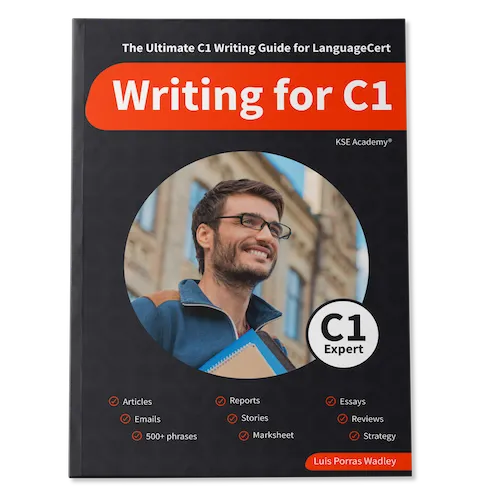
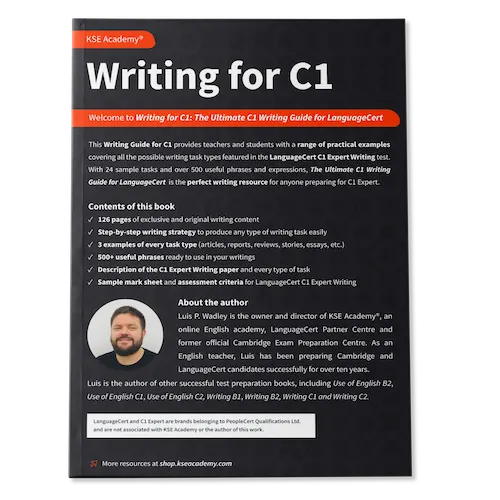
Para el Speaking no hay nada como practicar en voz alta, pero si también te estás preparando la parte escrita del examen, tienes mi guía del Writing del C1 Expert y el libro de KSE Academy para el Writing C1 de LanguageCert, con todos los tipos de tarea, respuestas modelo y más de 500 expresiones útiles. Te servirá también para el Speaking, porque buena parte de ese vocabulario y de esos conectores de C1 los puedes usar al hablar.
Y con esto ya tienes todo lo que necesitas saber del Speaking del C1 Expert. Si te queda alguna duda, déjame un comentario y te respondo encantado. 🙂
