
Tabla de contenidos
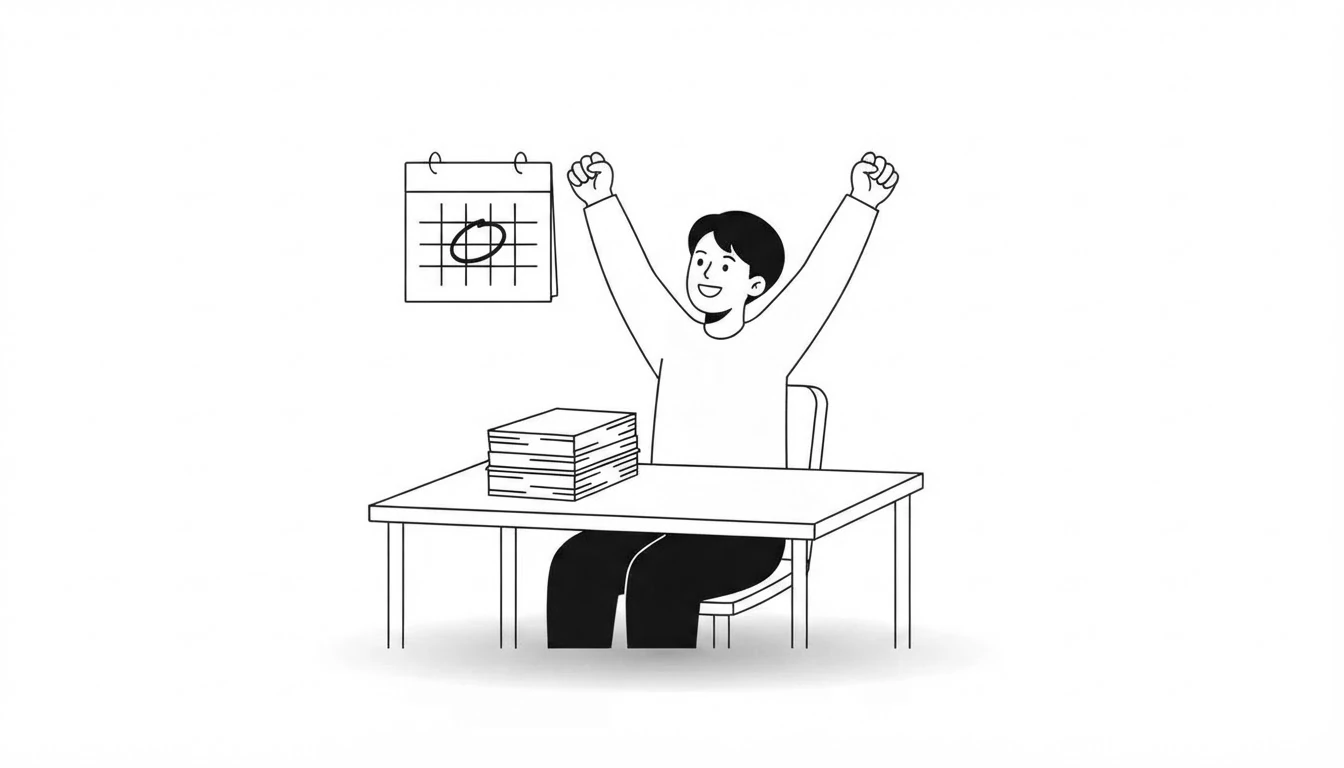
Un dato curioso: cuando termines de leer este post, habrás aprendido el future perfect. Y en inglés se dice así: By the time you finish this post, you will have learned the future perfect. Fíjate en la jugada: ahora mismo estás en el presente, estás leyendo, pero yo me coloco en un punto del futuro (cuando termines) y desde ahí miro atrás para decirte que ya estará hecho. Eso es el future perfect (en español, futuro perfecto): el tiempo para hablar de lo que ya habrá terminado antes de un momento del futuro.
Se parece muchísimo al español («habré terminado», «habrás aprendido»), así que es de los tiempos más amables para un hispanohablante. En esta guía te explico cómo se forma, cuándo se usa (seis usos con ejemplos), en qué se diferencia del future simple, del present perfect y del future continuous, los errores típicos, cómo te ayuda en los exámenes de Cambridge y cómo usarlo para hablar de plazos, metas y buenos propósitos que nunca cumples. Al final hay treinta frases de ejercicios con soluciones. ¡Vamos allá! 🙂
El future perfect de un vistazo
| Future perfect | |
|---|---|
| Forma | will have + participio pasado |
| Para qué sirve | Hablar de algo que ya habrá terminado antes de un momento del futuro |
| Ejemplo | I will have finished the report by Friday. |
| Español | futuro perfecto: «Para el viernes habré terminado el informe» |
| Palabras que lo acompañan | by, by then, by the time, before, in two years’ time, until |
Qué es el future perfect
Con el future perfect eliges un punto del futuro (una fecha, una hora, un acontecimiento) y miras hacia atrás desde ese punto. Lo que cuentas ya estará completo cuando llegue ese momento:
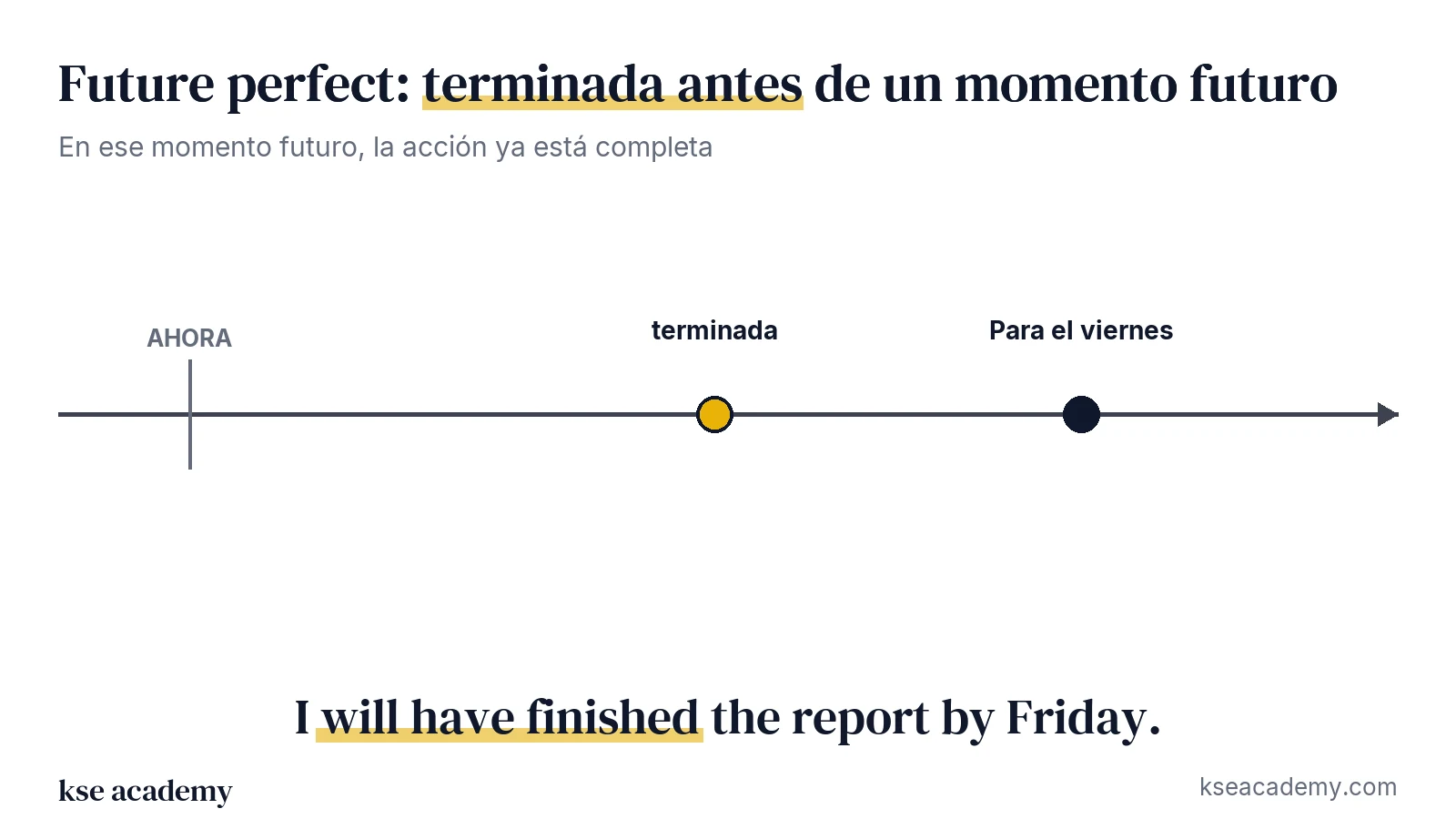
No te dice cuándo terminará exactamente. Solo asegura que, para ese momento, ya estará hecho. Por eso va casi siempre con expresiones como by Friday, by then o by the time.
Cómo se forma el future perfect
La forma es siempre will have + participio pasado, para todas las personas. Es el mismo participio del present perfect y del past perfect.
Afirmativa, negativa y pregunta
| Forma | Estructura | Ejemplo |
|---|---|---|
| Afirmativa | sujeto + will have + participio | I will have finished. |
| Negativa | sujeto + won’t have + participio | I won’t have finished. |
| Pregunta | Will + sujeto + have + participio…? | Will you have finished? |
| Con palabra interrogativa | palabra interrogativa + will + sujeto + have + participio…? | What will you have done by then? |
| Respuesta corta | Yes, I will. / No, I won’t. | Will you have finished? Yes, I will. |
Contracciones
| Forma completa | Contracción |
|---|---|
| I will have finished | I’ll have finished |
| She will have arrived | She’ll have arrived |
| They will not have left | They won’t have left |
El participio: regulares e irregulares
Los regulares terminan en -ed (finished, arrived, worked) y los irregulares tienen su propia forma (go → gone, see → seen, do → done, write → written). Si necesitas repasarlos, tienes mi lista de verbos irregulares con pronunciación y PDF.
Cuándo se usa el future perfect
1. Una acción que habrá terminado antes de un momento futuro
Es el uso principal:
- By 8 o’clock, she will have finished dinner. (Para las 8, ya habrá cenado.)
- By the time we get there, the film will have started.
- In two years’ time, I will have finished my degree.
2. Plazos y objetivos
Muy habitual en el trabajo y en los estudios, para hablar de lo que tiene que estar hecho para una fecha:
- I’ll have finished the report by Friday.
- We will have completed the project by the end of the month.
- Will you have sent the invoice by tomorrow?
3. Metas y logros a largo plazo
- By 2030, we will have built 100 new schools.
- By the time I’m forty, I will have travelled to every continent.
4. Suposiciones sobre lo que ya ha ocurrido
Igual que en español («habrán llegado ya»), el future perfect se usa para suponer algo del presente o del pasado reciente:
- It’s nine o’clock. They will have arrived by now. (Ya habrán llegado.)
- You will have heard the news already. (Supongo que ya te habrás enterado.)
5. Duración hasta un momento futuro (con verbos de estado)
Para decir «llevará X tiempo» hasta un punto del futuro con verbos de estado (be, know, have, live…), que no admiten el continuous:
- In June, we will have been married for ten years.
- By the end of the year, I will have known him for a decade.
6. Con «before», «by the time» y «until» + presente
En las frases con dos hechos futuros, solo el primero lleva future perfect, y el segundo va en presente simple (nunca will):
- By the time you arrive, I will have left.
- I won’t have finished until you get back.
- Before you wake up, I’ll have made breakfast.
Expresiones de tiempo que acompañan al future perfect
| Expresión | Significado | Ejemplo |
|---|---|---|
| by + fecha u hora | para (antes de o justo en) | I’ll have finished by Friday. |
| by then / by that time | para entonces | By then, she’ll have left. |
| by the time + presente | para cuando | By the time you call, I’ll have gone. |
| before | antes de | She’ll have left before you arrive. |
| in two years’ time | dentro de dos años | In two years’ time, I’ll have graduated. |
| until / not until | hasta que | I won’t have finished until Monday. |
| by now / already | ya (suposición) | They’ll have arrived by now. |
Future perfect frente a future simple (will)
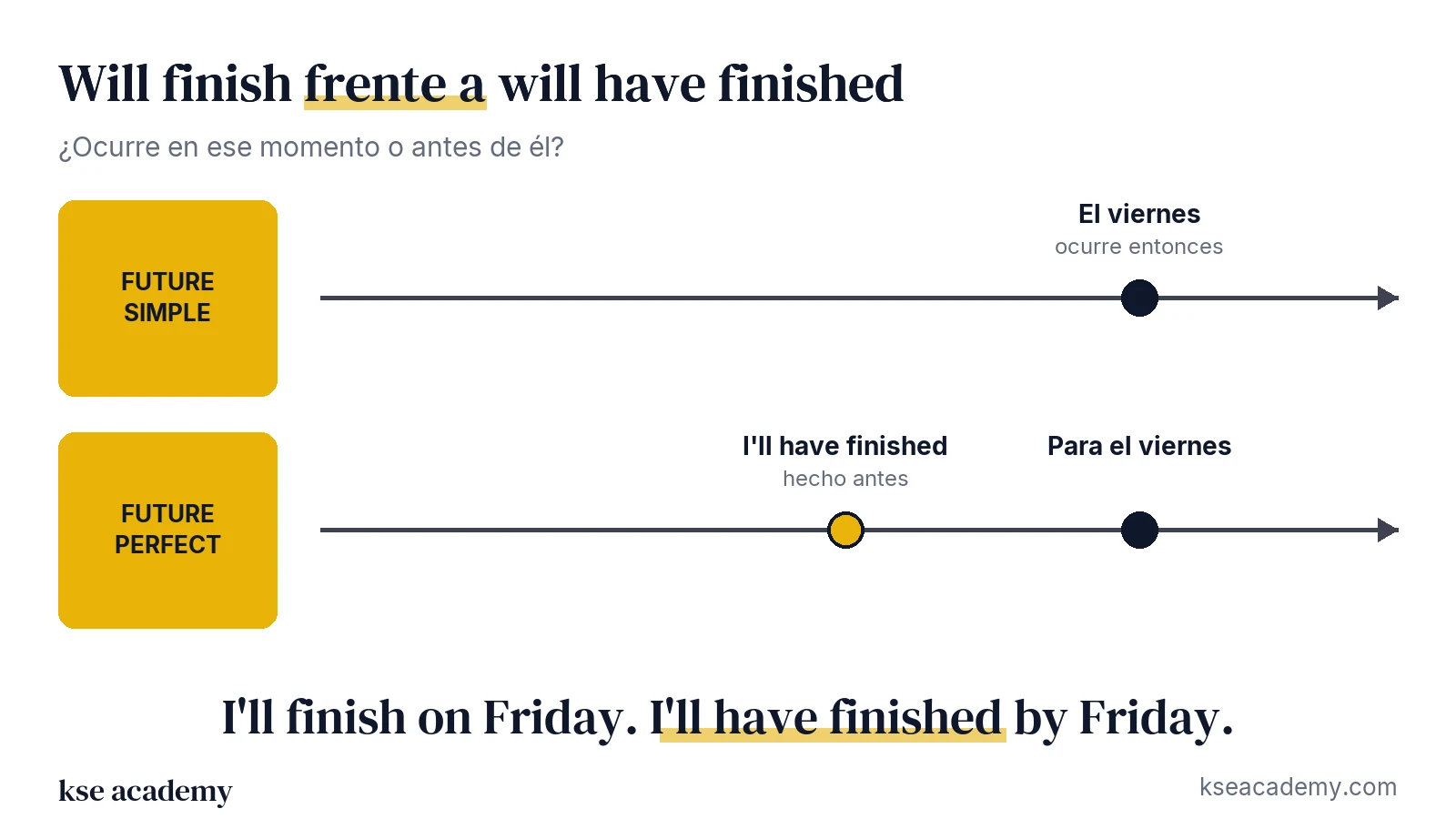
La diferencia está en cuándo ocurre. Con will hablas de algo que ocurrirá en ese momento; con will have + participio, antes de ese momento, y ya estará hecho:
| Future simple | Future perfect |
|---|---|
| I’ll finish the report on Friday. (Lo termino el viernes.) | I’ll have finished the report by Friday. (Para el viernes ya estará terminado.) |
| She’ll leave at six. (Se va a las seis.) | She’ll have left by six. (A las seis ya se habrá ido.) |
| They’ll arrive at eight. (Llegan a las ocho.) | They’ll have arrived by eight. (A las ocho ya habrán llegado.) |
Future perfect frente a present perfect
Los dos usan have + participio y miran una acción terminada, pero desde un punto distinto: el present perfect mira desde ahora; el future perfect, desde un momento del futuro:
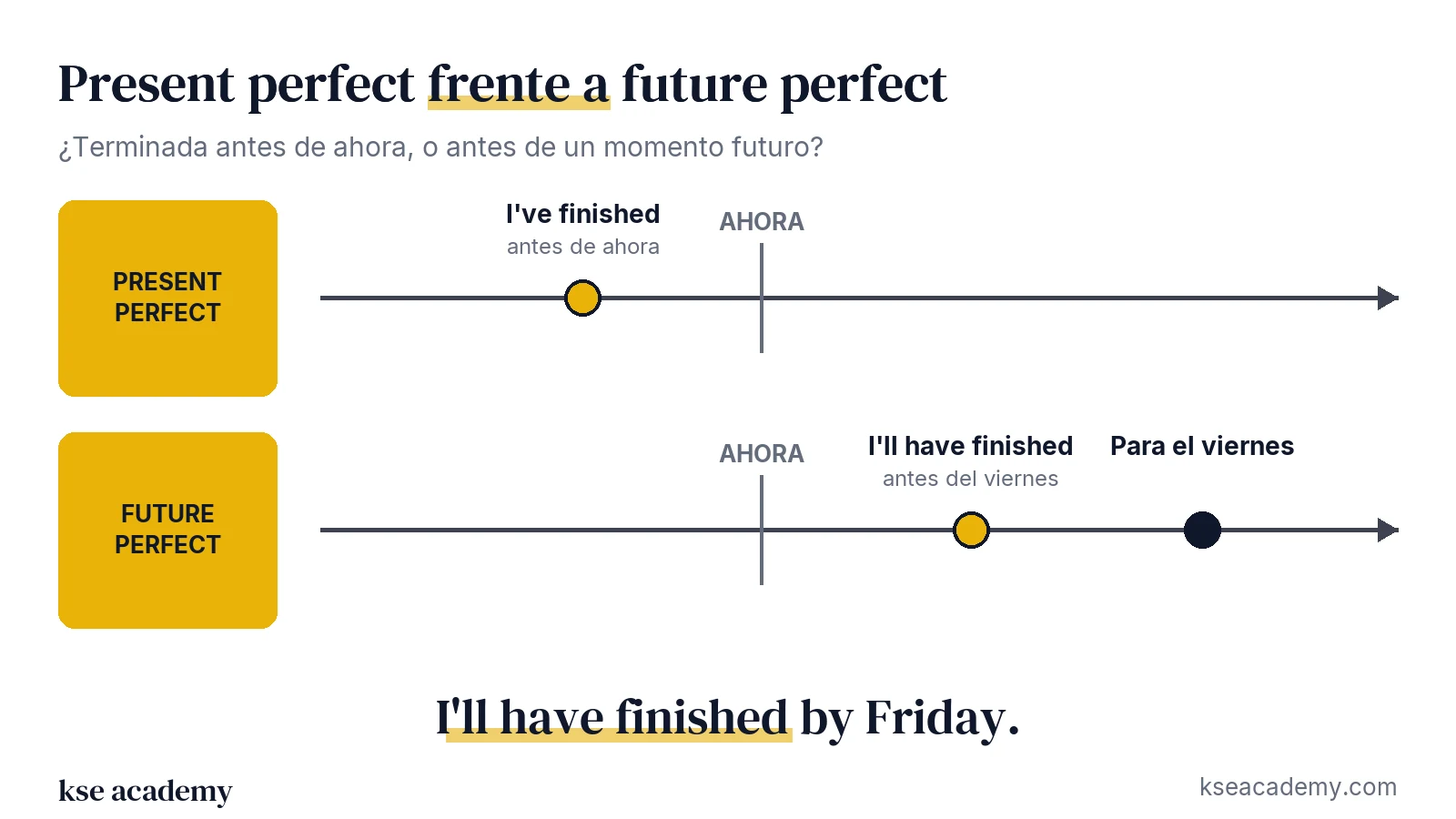
| Tiempo | Ejemplo | Significado |
|---|---|---|
| Present perfect | I have finished the report. | Ya lo he terminado (ahora). |
| Future perfect | I will have finished the report by Friday. | Para el viernes ya lo habré terminado. |
Future perfect frente a future continuous
Si pienso en un momento futuro, el future continuous habla de lo que estará en curso en ese momento, y el future perfect, de lo que ya habrá terminado: At 8 I’ll be cooking (a las 8 estaré cocinando) frente a By 8 I’ll have cooked (para las 8 ya habré cocinado).
Español frente a inglés: dónde nos confundimos
La buena noticia: el español tiene el mismo tiempo («habré terminado») y se usa casi igual. Estas son las equivalencias y las trampas:
| 🇪🇸 Español | 🇬🇧 Inglés | Qué pasa |
|---|---|---|
| Para el viernes habré terminado el informe. | By Friday I will have finished the report. | Equivalencia directa: will have + participio. |
| Ya habrán llegado. | They will have arrived by now. | El futuro perfecto español también sirve para suponer. |
| Cuando llegues, ya me habré ido. | By the time you arrive, I will have left. | Después de by the time va presente (en español, subjuntivo). |
| Habré terminado para el viernes. | I will have finished by Friday. | No es lo mismo que «habría terminado» (I would have finished), que es condicional. |
Errores comunes con el future perfect
| ❌ Incorrecto | ✅ Correcto | Por qué |
|---|---|---|
| By Friday I will have finish the report. | By Friday I will have finished the report. | Después de have va el participio, no el infinitivo. |
| They will have went home. | They will have gone home. | Participio, no past simple. |
| By the time you will arrive, I will have left. | By the time you arrive, I will have left. | Después de by the time, presente, no will. |
| She will has finished before noon. | She will have finished before noon. | Después de will, siempre have (nunca has). |
| They will have been arrived by now. | They will have arrived by now. | Sobra been: es will have + participio. |
| He will have not finished by Friday. | He won’t have finished by Friday. | La negación va con will: won’t have o will not have. |
| I will finish the book by Sunday. (quieres decir «ya lo habré terminado») | I will have finished the book by Sunday. | Con by + fecha, suele pedirse future perfect. |
El future perfect en los exámenes de Cambridge
Es un tiempo que se espera que domines a partir del B2 First y que se pregunta con frecuencia en el C1 Advanced:
- Use of English (Part 4, key word transformations) en B2 First y C1 Advanced: con palabras clave como WILL, BY o BEFORE.
- Writing en B2 First y C1 Advanced: en ensayos sobre el futuro (By 2050, technology will have changed…), el future perfect da precisión.
- Speaking: para hablar de tus metas («By this time next year, I will have passed the exam»).
Dos ejemplos del estilo del Use of English Part 4:
- She will finish her degree before the end of the year. HAVE
She ______ her degree before the end of the year. → will have finished - I’m sure they have arrived at the hotel by now. WILL
I’m sure they ______ at the hotel by now. → will have arrived
Usos divertidos: el future perfect del procrastinador
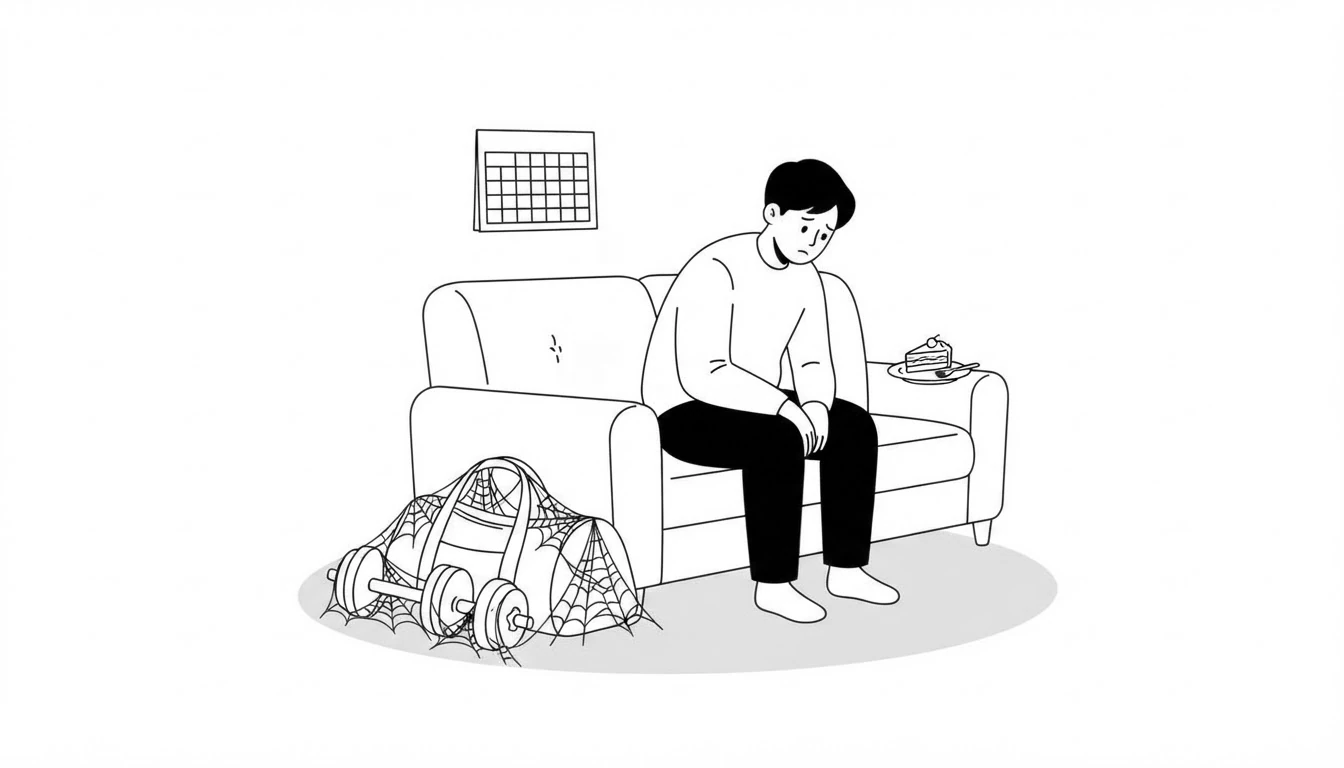
El future perfect es el tiempo favorito de quien promete mucho. Un pequeño repertorio de buenos propósitos:
| Situación | Frase |
|---|---|
| Año Nuevo | By December, I will have learned Chinese. (Spoiler: I won’t have.) |
| El gimnasio | By March, I will have lost ten kilos. Or at least I’ll have paid for the gym. |
| El examen | By the time the exam arrives, I will have studied everything. (I really will.) |
| El trabajo | By the time my boss notices, I’ll have left. |
| La pizza | By the time you get home, I will have eaten the whole pizza. |
| El deber | I’ll have done the dishes by tomorrow. Probably. |
Tabla resumen del future perfect
| Qué | Cómo | Ejemplo |
|---|---|---|
| Forma | will have + participio | I’ll have finished. |
| Negativa | won’t have + participio | I won’t have finished. |
| Pregunta | Will + sujeto + have + participio | Will you have finished? |
| Uso principal | Terminada antes de un momento futuro | By Friday I’ll have finished. |
| Suposición | Lo que ya habrá pasado | They’ll have arrived by now. |
| Duración | Con verbos de estado | I’ll have known her for ten years. |
Preguntas frecuentes sobre el future perfect
¿Cuándo se usa el future perfect?
Para hablar de algo que ya habrá terminado antes de un momento del futuro, para plazos y metas, para suponer lo que ya ha pasado y para duraciones hasta un punto futuro con verbos de estado.
¿Cómo se forma el future perfect?
Con will have + participio pasado: I will have finished. Para negar, won’t have; para preguntar, Will you have finished?
¿Cuál es la diferencia entre future simple y future perfect?
I’ll finish on Friday: el hecho ocurre el viernes. I’ll have finished by Friday: para el viernes ya estará hecho.
¿Se dice «by the time you will arrive»?
No. Después de by the time, before, when o until se usa el presente: By the time you arrive, I’ll have left.
¿Es lo mismo que el future continuous?
No. El future continuous habla de lo que estará en curso en un momento; el future perfect, de lo que ya habrá terminado antes. At 8 I’ll be cooking frente a By 8 I’ll have cooked.
¿Qué es el future perfect continuous?
Es will have been + -ing: By June I will have been working here for five years. Se usa cuando importa la duración de una actividad hasta un punto futuro. Lo tienes en la guía del future perfect continuous.
¿Se puede usar con «going to»?
Sí: I’m going to have finished by Friday es posible, aunque es mucho menos habitual. Lo normal es will have.
Ejercicios de future perfect
Treinta frases para comprobar que lo tienes claro. Aquí abajo tienes tres ejercicios interactivos que se corrigen solos, así que sabrás al momento qué tal lo has hecho.
Y si prefieres una versión en texto que puedas copiar y pegar, la tienes aquí abajo 👇
Exercise 1: choose the correct form
Choose the correct option to complete each sentence.
- By 2030, I (will finish / will have finished) my degree.
- I (will finish / will have finished) the report on Friday. I promise.
- By the time you arrive, I (will cook / will have cooked) dinner.
- It’s 9 p.m. They (will arrive / will have arrived) by now.
- This time next week, I (will lie / will be lying) on the beach.
- In June, we (will be / will have been) married for ten years.
- By the time she gets home, her kids (will go / will have gone) to bed.
- When you (will arrive / arrive), I will have left.
- By next year, she (will have lived / will live) here for twenty years.
- At nine tomorrow morning, I (will have taken / will be taking) my exam.
Ver respuestas
- will have finished
- will finish
- will have cooked
- will have arrived
- will be lying
- will have been
- will have gone
- arrive
- will have lived
- will be taking
Exercise 2: complete the sentences
Complete each sentence with the future perfect of the verb in brackets. Write only the missing words.
- By the end of the year, she _______________ (save) enough money to travel.
- I _______________ (finish) the book by Sunday.
- _______________ (you / complete) the form by tomorrow?
- They _______________ (not / arrive) before eight.
- By the time we get there, the film _______________ (start).
- In May, he _______________ (work) here for five years.
- By 2040, scientists _______________ (find) a cure.
- We _______________ (spend) all our money by the end of the holiday.
- By midnight, the guests _______________ (leave).
- She _______________ (not / do) her homework by tonight, I’m sure.
Ver respuestas
- will have saved
- will have finished
- Will you have completed
- won’t have arrived
- will have started
- will have worked
- will have found
- will have spent
- will have left
- won’t have done
Exercise 3: correct or incorrect?
Decide whether each sentence is correct. If it is incorrect, rewrite it correctly.
- By Friday, I will have finished the report.
- By Friday, I will have finish the report.
- By the time you arrive, I will have left.
- By the time you will arrive, I will have left.
- They will have been arrived by now.
- Will you have finished by six?
- I will have went home before dinner.
- She will has finished before noon.
- By next June, we will have lived here for ten years.
- He will have not finished by Friday.
Ver respuestas
- Correct
- By Friday, I will have finished the report.
- Correct
- By the time you arrive, I will have left.
- They will have arrived by now.
- Correct
- I will have gone home before dinner.
- She will have finished before noon.
- Correct
- He won’t have finished by Friday.
Conclusión
Resumiendo en tres ideas: el future perfect (will have + participio) habla de lo que ya habrá terminado antes de un momento del futuro; se usa para plazos, metas y suposiciones, casi siempre con by, by then o by the time + presente; y no es lo mismo que will + verbo (ocurre en ese momento) ni que el future continuous (en curso en ese momento).
Si quieres seguir con los tiempos verbales, tienes las guías del Future Continuous, del Past Perfect y del futuro en inglés. ¿Tienes dudas con el future perfect? Escríbeme y te ayudo.
¿Te ha parecido útil este post? Compártelo con otros estudiantes y profesores de inglés. Y si quieres más contenido como este, suscríbete a mi newsletter y sígueme en Facebook, Twitter, Pinterest, Instagram y YouTube.
Nos vemos en el próximo post. Hasta entonces, don’t forget to keep smiling! 🙂
