
Tabla de contenidos
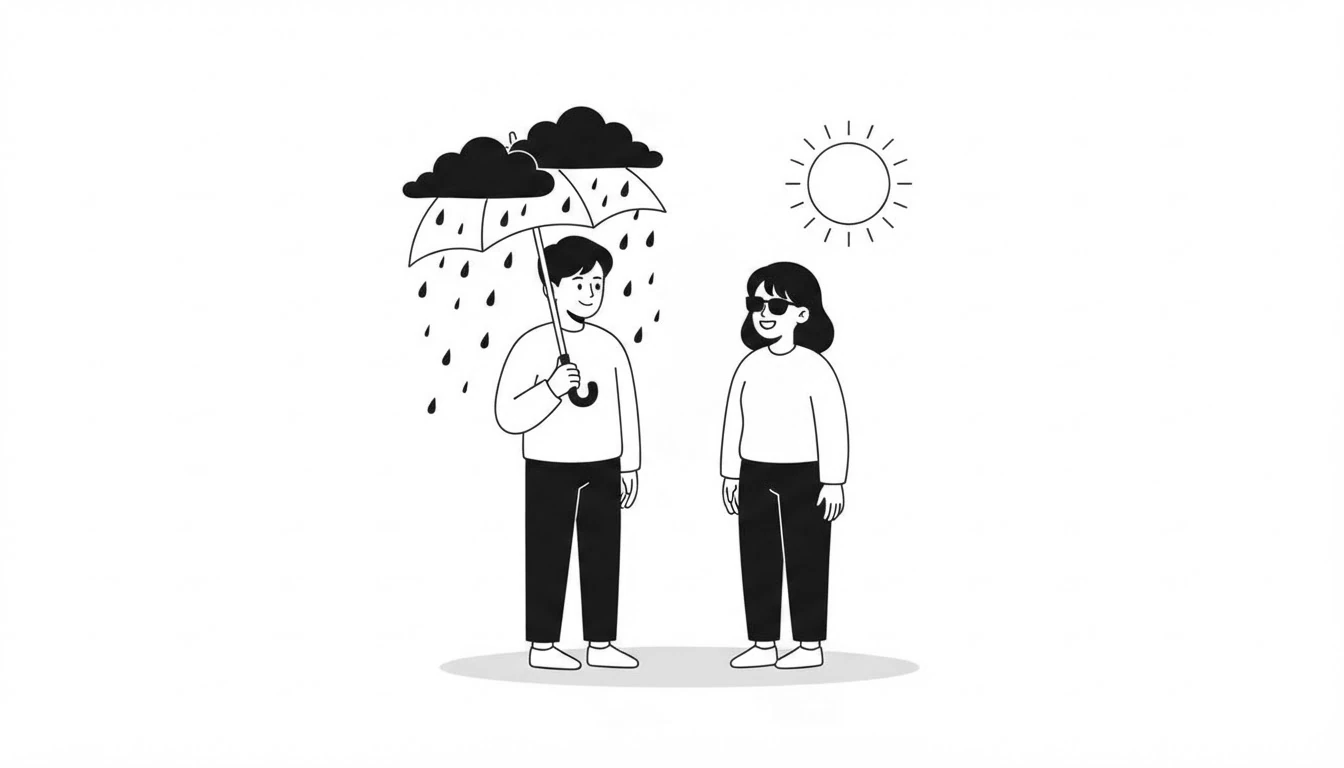
Si has estado alguna vez en el Reino Unido, ya sabrás que allí hablar del tiempo es casi un deporte nacional. Te subes a un autobús, entras en una tienda o te cruzas con un vecino, y lo primero que oyes es «Lovely day, isn’t it?» o «Bit chilly today!». Y si no sabes qué contestar, la conversación se acaba ahí mismo.
Además, el tiempo en inglés esconde varias trampas para los hispanohablantes: no se dice it makes cold, weather no lleva a y «tiempo» se puede traducir de tres maneras distintas. No te preocupes, que en este post te lo dejo todo claro.
Vas a encontrar cómo preguntar y describir el tiempo, el vocabulario básico con su pronunciación, la escala de temperaturas (de boiling a freezing), las frases del parte del tiempo, cómo hacer small talk como un británico, cómo sale todo esto en los exámenes de Cambridge y, al final, ejercicios con solucionario.
¡Vamos allá! 🙂
Weather, time o tense: cómo se dice «tiempo» en inglés
Antes de empezar, una aclaración que ahorra muchos errores. La palabra española «tiempo» tiene tres traducciones en inglés, según lo que quieras decir:
| 🇬🇧 Inglés | Pronunciación | 🇪🇸 Español | Ejemplo |
|---|---|---|---|
| weather | /ˈweðə/ | el tiempo (meteorológico) | The weather is lovely today. |
| time | /taɪm/ | el tiempo (que pasa) | I don’t have time. |
| tense | /tens/ | el tiempo verbal | The past simple is a tense. |
Y luego está climate /ˈklaɪmət/, que es el «clima» en sentido estricto: el tiempo típico de un lugar a lo largo de los años. Spain has a warm climate (clima), pero the weather is awful today (el tiempo de hoy). En español solemos usar «clima» para las dos cosas, pero en inglés conviene separarlas.
Ojo también con la pronunciación: weather suena exactamente igual que whether («si»), y no tiene nada que ver con water. 😉
Cómo preguntar qué tiempo hace
Estas son las preguntas que más vas a oír y usar:
| 🇬🇧 Inglés | 🇪🇸 Español |
|---|---|
| What’s the weather like (today)? | ¿Qué tiempo hace (hoy)? |
| How’s the weather? | ¿Qué tal el tiempo? |
| What’s it like outside? | ¿Qué tal se está fuera? |
| What’s the weather going to be like at the weekend? | ¿Qué tiempo va a hacer el fin de semana? |
| What’s the forecast for tomorrow? | ¿Qué dice la previsión para mañana? |
| What’s the temperature? | ¿Qué temperatura hace? |
Un error muy típico: mezclar las dos primeras y decir How is the weather like? ❌. O usas What… like? o usas How…?, pero no las dos a la vez. En What’s the weather like?, like no significa «gustar», sino «cómo es».
Cómo describir el tiempo: It’s…
Aquí está la clave de todo. En español decimos «hace frío», «hace sol» o «está lloviendo». En inglés casi siempre empezamos con It’s, porque toda frase en inglés necesita un sujeto, aunque no signifique nada:
- It’s + adjetivo para describir cómo está el tiempo: It’s cold. It’s sunny. It’s windy.
- It’s + verbo en -ing para lo que está pasando ahora mismo: It’s raining. It’s snowing.
- It + verbo en present simple para lo habitual: It rains a lot in Galicia. It never snows in Seville.
Por eso, «hace frío» es It’s cold y nunca It makes cold ❌ ni Is cold ❌. Te parecerá obvio, pero es probablemente el error número uno de los hispanohablantes con este tema.
Sustantivo, adjetivo y verbo
Muchas palabras del tiempo tienen tres formas, y es importante no confundirlas. Fíjate en que el adjetivo suele formarse añadiendo -y al sustantivo:
| 🇬🇧 Sustantivo | Adjetivo | Verbo | 🇪🇸 Español |
|---|---|---|---|
| sun /sʌn/ | sunny | shine (the sun is shining) | sol / soleado |
| rain /reɪn/ | rainy | rain (it’s raining) | lluvia / lluvioso / llover |
| snow /snəʊ/ | snowy | snow (it’s snowing) | nieve / nevado / nevar |
| cloud /klaʊd/ | cloudy | cloud over | nube / nublado / nublarse |
| wind /wɪnd/ | windy | blow (the wind is blowing) | viento / ventoso / soplar |
| fog /fɒɡ/ | foggy | – | niebla / con niebla |
| mist /mɪst/ | misty | – | neblina / con neblina |
| storm /stɔːm/ | stormy | – | tormenta / tormentoso |
| ice /aɪs/ | icy | freeze | hielo / helado / helar |
| frost /frɒst/ | frosty | – | escarcha / con escarcha |
Observa la consonante doble de sunny y foggy, y que ice pierde la «e»: icy.
Vocabulario del tiempo en inglés
Ahora sí, el resto del vocabulario que vas a necesitar para hablar del tiempo con soltura.
| 🇬🇧 Inglés | Pronunciación | 🇪🇸 Español |
|---|---|---|
| shower | /ˈʃaʊə/ | chubasco |
| drizzle | /ˈdrɪzl/ | llovizna |
| downpour | /ˈdaʊnpɔː/ | aguacero, chaparrón |
| thunder | /ˈθʌndə/ | trueno |
| lightning | /ˈlaɪtnɪŋ/ | relámpago, rayo |
| hail | /heɪl/ | granizo |
| breeze | /briːz/ | brisa |
| rainbow | /ˈreɪnbəʊ/ | arcoíris |
| heatwave | /ˈhiːtweɪv/ | ola de calor |
| flood | /flʌd/ | inundación |
| sunshine | /ˈsʌnʃaɪn/ | sol, luz del sol |
| humid | /ˈhjuːmɪd/ | húmedo (calor pegajoso) |
| dry | /draɪ/ | seco |
| clear | /klɪə/ | despejado |
| overcast | /ˌəʊvəˈkɑːst/ | cubierto, encapotado |
Dos detalles de pronunciación: lightning (relámpago) no lleva «e», a diferencia de lightening (aclarar); y thunder empieza con el sonido /θ/, como nuestra «z». Si te cuesta, échale un ojo a mi post sobre la pronunciación de TH.
La temperatura: de boiling a freezing
En inglés hay una escala bastante precisa para hablar de la temperatura. De más calor a más frío:
| 🇬🇧 Inglés | Pronunciación | 🇪🇸 Español |
|---|---|---|
| boiling (hot) | /ˈbɔɪlɪŋ/ | hace un calor horrible |
| hot | /hɒt/ | hace calor |
| warm | /wɔːm/ | hace buena temperatura, calorcito |
| mild | /maɪld/ | templado, suave |
| cool | /kuːl/ | fresco |
| chilly | /ˈtʃɪli/ | fresquito, hace algo de frío |
| cold | /kəʊld/ | hace frío |
| freezing (cold) | /ˈfriːzɪŋ/ | hace un frío que pela |
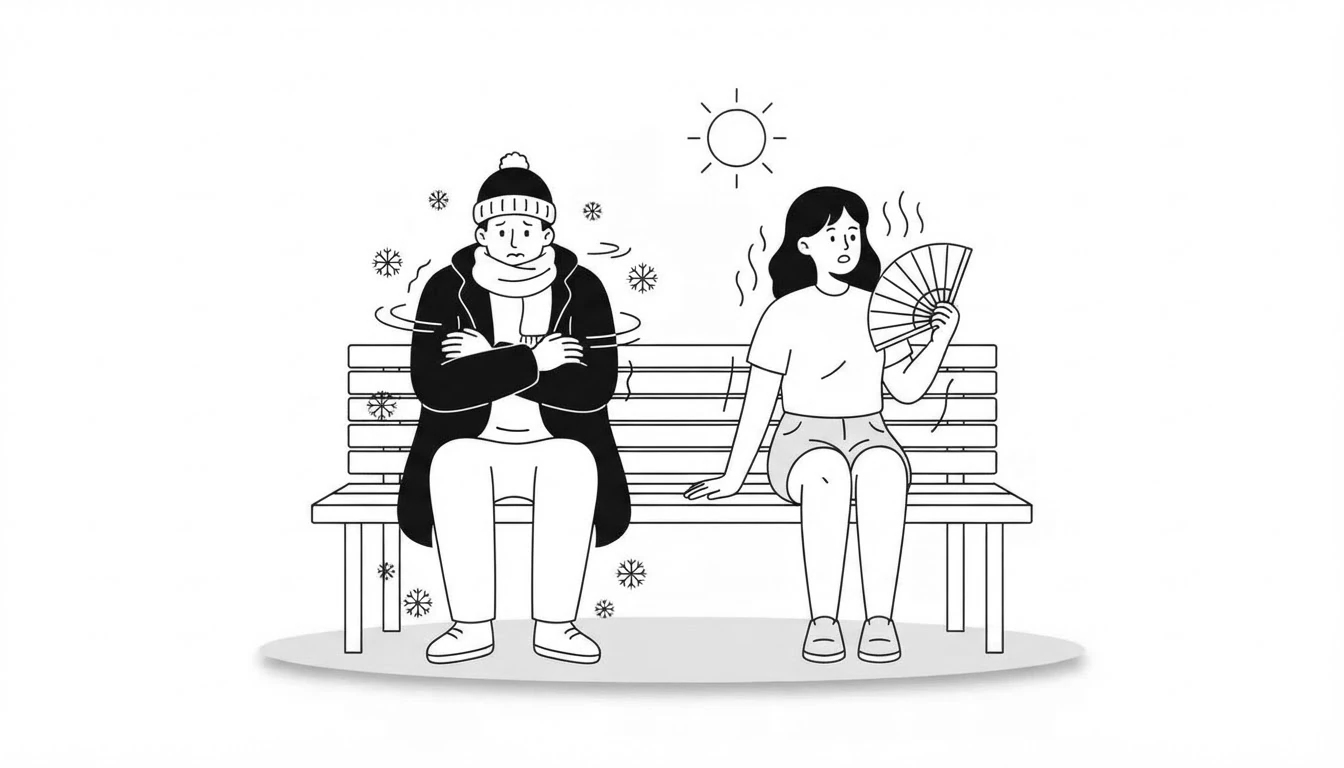
La diferencia que más cuesta es la de hot y warm, y la de cold y cool. Warm es un calor agradable (positivo); hot es calor de verdad, a veces demasiado. Igual con el frío: cool es un fresquito agradable, cold es frío que molesta. Mi truco: si llevarías una chaqueta ligera, es chilly; si te pones el abrigo, es cold; y si no quieres salir de casa, es freezing. Para quejarte del frío con más gracia, tienes un post entero con expresiones para quejarte del frío.
Cómo decir los grados
- It’s 25 degrees. (Hace 25 grados.) Se dice degrees, nunca grades ❌.
- It’s minus five. / It’s five below zero. (Estamos a cinco bajo cero.)
- It’s going to reach 40 degrees. (Va a llegar a 40 grados.)
En el Reino Unido se usan los grados Celsius (también llamados centigrade), pero en Estados Unidos se usa Fahrenheit. Así que si un americano te dice que mañana estarán a 90 grados, no te asustes: son unos 32 °C. 😅
Weather es incontable
Esta es una de las trampas gramaticales más típicas. Weather es un sustantivo incontable: no tiene plural y no lleva el artículo a.
- ✅ What lovely weather! ❌ What a lovely weather!
- ✅ We had good weather in Italy. ❌ We had good weathers in Italy.
- ✅ The weather is terrible this week. ❌ The weather are terrible this week.
Si quieres hablar de «un día» concreto, usa day: What a lovely day! Ahí sí lleva a, porque day es contable.
Expresiones para cuando hace mal tiempo
Y como en inglés se habla mucho del mal tiempo (por algo será), aquí tienes las expresiones más naturales:
| 🇬🇧 Inglés | 🇪🇸 Español |
|---|---|
| It’s pouring (down). | Está diluviando. |
| It’s spitting. (UK) | Están cayendo cuatro gotas. |
| I got caught in the rain. | Me pilló la lluvia. |
| I’m soaked! / I’m soaking wet! | ¡Estoy empapado! |
| It’s clouding over. | Se está nublando. |
| It’s going to clear up later. | Va a despejar más tarde. |
| The sun has come out. | Ha salido el sol. |
| It’s blowing a gale. | Hace un viento tremendo. |
Y si te apetecen expresiones más idiomáticas, como it’s raining cats and dogs o under the weather, te las explico en mis 10 idioms sobre el tiempo.
El parte del tiempo en inglés (weather forecast)
Si ves el weather forecast en la BBC o consultas una app en inglés, te vas a encontrar con un vocabulario un poco más técnico:
- sunny spells: ratos de sol, intervalos soleados
- scattered showers: chubascos dispersos
- outbreaks of rain: episodios de lluvia
- highs of 22 / lows of 8: máximas de 22 / mínimas de 8
- a 60% chance of rain: un 60 % de probabilidad de lluvia
- a cold front: un frente frío
Para hablar de la previsión, lo normal es usar el futuro: It will be cloudy in the morning, It’s going to rain later o, si no está tan claro, It might snow tonight. Si dudas entre will y going to, tienes un post sobre la diferencia entre will y going to.

Small talk: hablar del tiempo como un británico
Para los británicos, el tiempo no es solo información: es la forma más fácil de empezar una conversación con cualquiera. La fórmula estrella es un comentario con question tag, al que el otro responde con otro comentario:
- A: Lovely day, isn’t it? B: Gorgeous! Let’s hope it lasts.
- A: Bit chilly today, isn’t it? B: Freezing! I should’ve brought a coat.
- A: Horrible weather, isn’t it? B: Awful. Typical British summer!
No hace falta que des una respuesta larga: con estar de acuerdo y añadir algo pequeño, ya estás participando. Y si quieres sonar aún más natural, aprende el typical! con resignación: es muy británico. 🙂

Errores típicos de los hispanohablantes
| Error | ❌ Incorrecto | ✅ Correcto |
|---|---|---|
| Traducir «hace» literalmente | It makes cold | It’s cold |
| Olvidar el sujeto | Is very hot | It’s very hot |
| Poner a delante de weather | What a horrible weather! | What horrible weather! |
| Usar el present simple para lo que pasa ahora | Look, it rains! | Look, it’s raining! |
| Confundir sustantivo y adjetivo | It’s very sun | It’s very sunny |
| Mezclar how y like | How is the weather like? | What’s the weather like? |
| Decir grades por grados | 30 grades | 30 degrees |
El tiempo en los exámenes de Cambridge
El tiempo es uno de esos temas «comodín» que aparecen en todos los niveles:
- Speaking Part 1 (A2 Key, B1 Preliminary, B2 First): preguntas como What’s the weather like where you live?, What kind of weather do you like best? o What do you like doing when it’s sunny? son muy habituales.
- Writing: en un email o una postal contándole a un amigo tus vacaciones, describir el tiempo es casi obligatorio. Y en un story, una tormenta o un día de niebla dan mucho juego para crear ambiente.
- Listening: no es raro oír una previsión del tiempo o a alguien decidiendo un plan según el tiempo que va a hacer.
Para que veas cómo se puede responder en el Speaking, aquí tienes un ejemplo de respuesta a What kind of weather do you like best? escrito para simular un nivel B1, sin llegar a B2:
I really like warm weather, but not when it’s too hot. In my city it’s boiling in August, so I prefer spring, when it’s sunny and about 20 degrees. Then I can go for a walk or have lunch outside with my friends. I don’t like rainy days very much because I have to stay at home.
Fíjate en lo que la hace funcionar: contraste con but (warm, but not too hot), una razón con because y so, la escala de temperatura bien usada (warm, hot, boiling), un dato concreto (about 20 degrees) y un ejemplo personal. Es sencilla, pero completa y bien conectada, que es justo lo que se pide en un B1.
Ejercicios del tiempo en inglés
Ha llegado el momento de practicar. Aquí abajo tienes tres ejercicios interactivos que se corrigen solos, así que sabrás al momento qué tal lo has hecho. Intenta hacerlos sin mirar el post.
Y si prefieres una versión en texto que puedas copiar y pegar, la tienes aquí abajo 👇
Ejercicio 1. Elige la opción correcta
Elige la palabra o expresión correcta en cada frase.
- What’s the weather (like / as) in Madrid today?
- It’s (raining / rains) at the moment, so take an umbrella.
- We had (a lovely weather / lovely weather) on holiday.
- It isn’t cold, but it’s a bit (freezing / chilly). Take a jacket.
- Spring here is (warm / boiling): about 20 degrees, perfect for a walk.
- Turn the heating on, it’s (cool / freezing) in here!
- Look at those dark clouds. I think there’s going to be a (breeze / storm).
- The (weather / forecast) says it will snow tomorrow.
- It’s very (fog / foggy) this morning, so drive carefully.
- I can’t believe it’s 25 (grades / degrees) in November!
Ver respuestas
- like
- raining
- lovely weather
- chilly
- warm
- freezing
- storm
- forecast
- foggy
- degrees
Ejercicio 2. Forma el adjetivo
Completa cada frase con el adjetivo que se forma a partir de la palabra entre paréntesis.
- It’s very _______________ (wind) today. My umbrella broke!
- Take your sunglasses, it’s really _______________ (sun).
- The sky is grey and _______________ (cloud), but it isn’t raining.
- Be careful, the roads are _______________ (ice) this morning.
- It was a cold, _______________ (frost) morning and all the cars were white.
- I hate _______________ (rain) days. I just want to stay at home.
- The sea was very rough because the weather was _______________ (storm).
- We couldn’t see the mountains because it was so _______________ (fog).
- In winter the north of the country is quite _______________ (snow).
- It was a _______________ (mist) morning by the lake.
Ver respuestas
- windy
- sunny
- cloudy
- icy
- frosty
- rainy
- stormy
- foggy
- snowy
- misty
Ejercicio 3. Corrige el error
Cada frase tiene un error. Escríbela bien.
- Today makes very cold.
- What a horrible weather!
- Look, it rains!
- Yesterday was very sun.
- Is very hot in August.
- How is the weather like?
- It’s 30 grades today.
- It was a lot of fog this morning.
- We had good weathers in Italy.
- The weather are terrible this week.
Ver respuestas
- It’s very cold today.
- What horrible weather!
- Look, it’s raining!
- Yesterday was very sunny.
- It’s very hot in August.
- What’s the weather like?
- It’s 30 degrees today.
- There was a lot of fog this morning.
- We had good weather in Italy.
- The weather is terrible this week.
Conclusión
Resumiendo: para hablar del tiempo en inglés empieza con It’s (It’s cold, It’s raining), recuerda que weather es incontable, distingue weather, time y tense, y usa la escala de temperatura con precisión: no es lo mismo warm que hot, ni cool que cold. Con eso, la próxima vez que alguien te diga Lovely day, isn’t it?, vas a saber exactamente qué contestar.
Si quieres seguir con temas relacionados, mira mi post sobre los días de la semana, los meses y las estaciones del año en inglés.
¿Te ha parecido útil este post? Compártelo con otros estudiantes y profesores de inglés. Y si quieres más contenido como este, suscríbete a mi newsletter y sígueme en Facebook, Twitter, Pinterest, Instagram y YouTube.
Nos vemos en el próximo post. Hasta entonces, don’t forget to keep smiling! 🙂
