
Table of contents
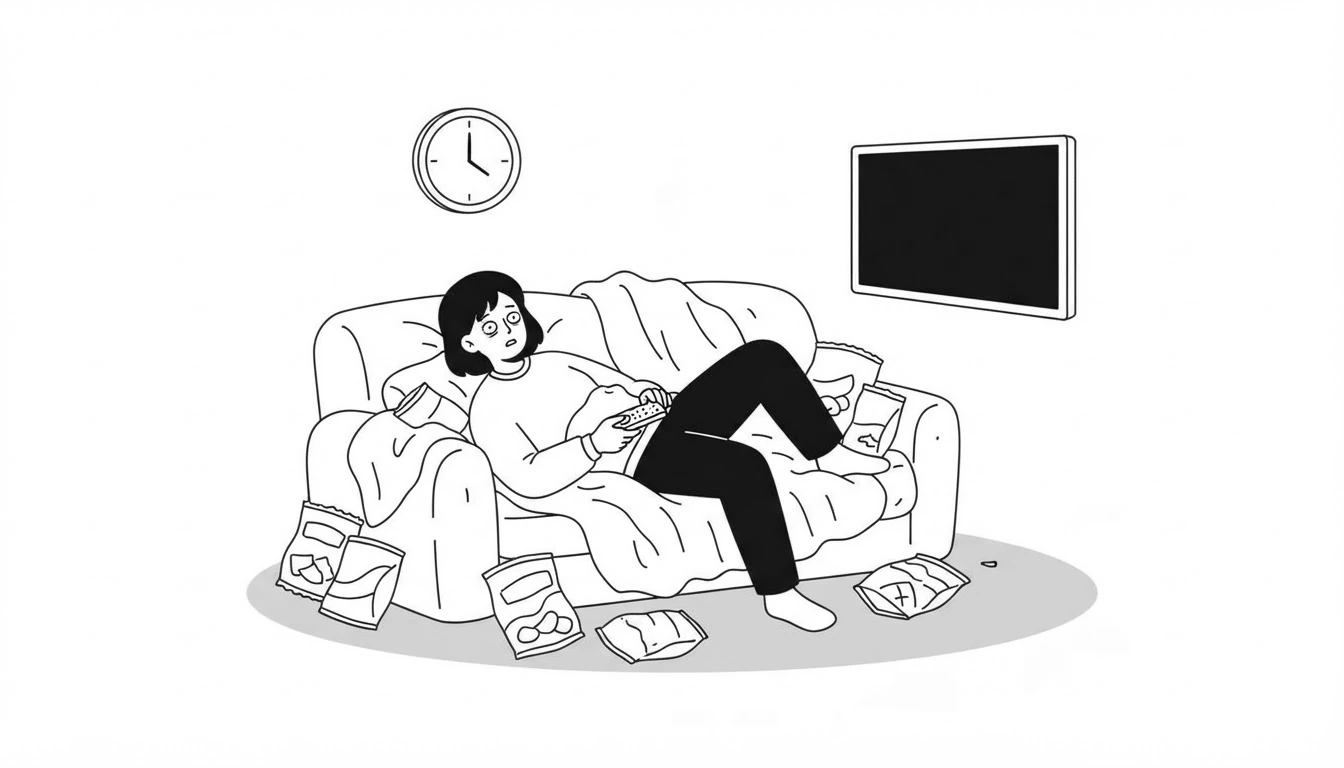
You start the new season of your favourite series today. It has forty episodes. If you do not stop, by the time you get to the end, you will have spent thirty hours in a row in front of the screen. In English, that feat is told like this: By the time I finish the series, I will have been watching it for thirty hours. What matters is not what you will watch, but how long you will have been doing it when you get to that moment. That is the future perfect continuous (in Spanish, futuro perfecto continuo): the tense we use to say how long an activity will have lasted up to a moment in the future.
It is the longest tense of all (will have been doing, four words), the least frequent and the one that scares people most. But it is simple if you already know its pieces: will have (from the future perfect) and been + -ing (from the present perfect continuous). In this guide I explain how it is formed, when it is really used, how it differs from the future perfect simple, the future continuous and the present perfect continuous, the typical mistakes, how it helps you in Cambridge exams and how to use it to boast about anniversaries (and series marathons). At the end there are thirty practice sentences with answers. Let’s get started! 🙂
The future perfect continuous at a glance
| Future perfect continuous | |
|---|---|
| Form | will have been + verb + -ing |
| What it is for | Talking about how long an activity will have lasted up to a moment in the future |
| Example | By June, I will have been working here for five years. |
| Spanish | «En junio llevaré cinco años trabajando aquí» (habré estado trabajando) |
| Words that go with it | for, since, how long, by, by the time, when, next month / year |
What the future perfect continuous is
It is the present perfect continuous (I have been working) and the past perfect continuous (I had been working) taken to the future. You choose a point in the future and say how long an activity will have been going on by then. The activity starts in the past or the present and reaches that point, and it may go on afterwards:
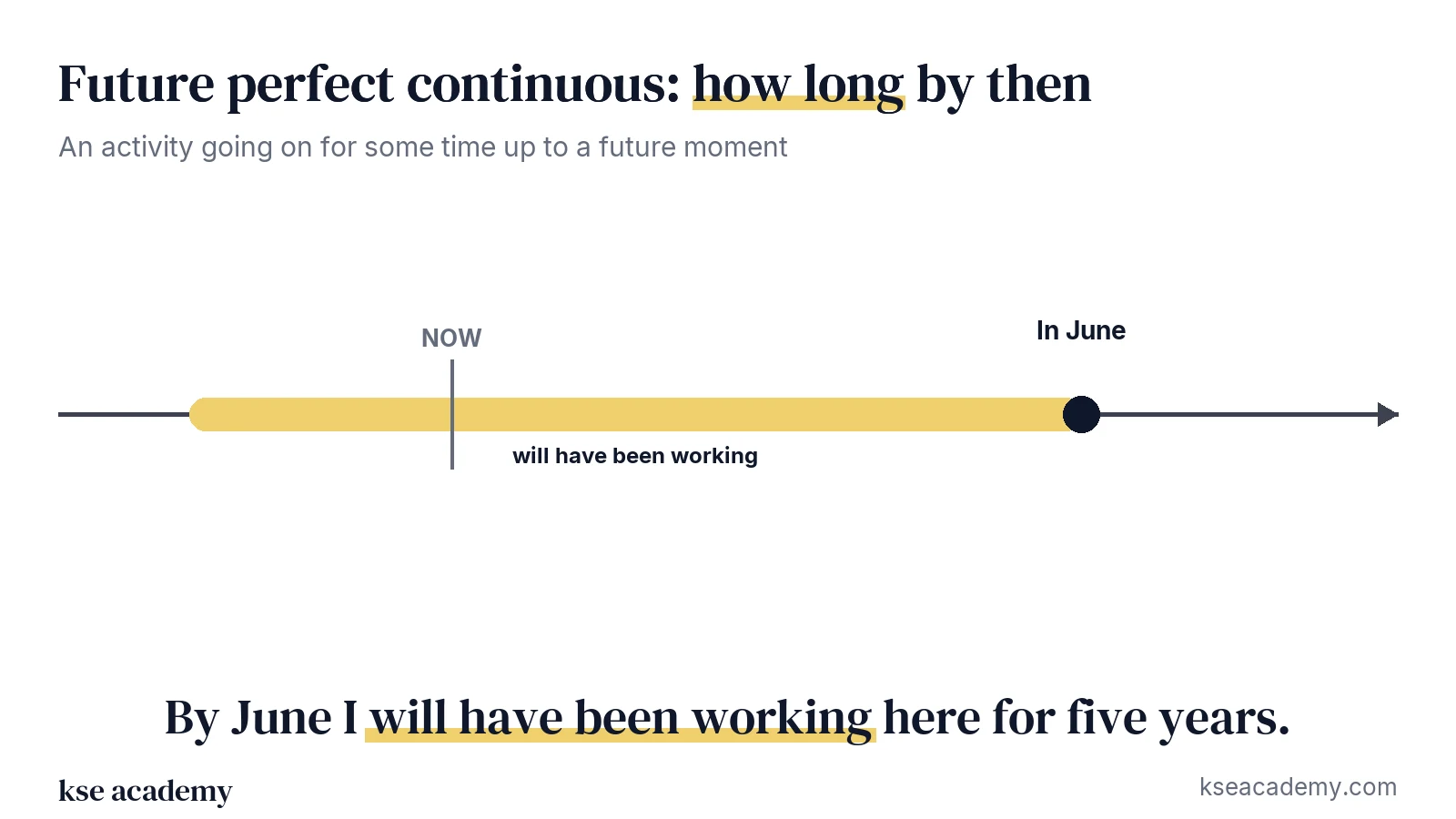
What stands out is the duration: it is not about whether you will have finished, but about how long you will have been doing it.
How the future perfect continuous is formed
The form is always will have been + verb with -ing, for all persons.
Affirmative, negative and questions
| Form | Structure | Example |
|---|---|---|
| Affirmative | subject + will have been + -ing | She will have been working. |
| Negative | subject + won’t have been + -ing | She won’t have been working. |
| Question | Will + subject + have been + -ing…? | Will she have been working? |
| With a question word | question word + will + subject + have been + -ing…? | How long will she have been working? |
| Short answer | Yes, she will. / No, she won’t. | Will you have been waiting long? Yes, I will. |
Contractions and pronunciation
| Full form | Contraction |
|---|---|
| I will have been waiting | I’ll have been waiting |
| She will have been sleeping | She’ll have been sleeping |
| They will not have been working | They won’t have been working |
In speech, function words are reduced: I’ll have been waiting sounds roughly like /aɪl əv bɪn ˈweɪtɪŋ/, with have as /əv/ and been as /bɪn/ (the schwa and weak forms). If you pronounce all four words clearly, it sounds slow and unnatural.
When the future perfect continuous is used
1. The duration of an activity up to a future moment
This is the main use. It almost always goes with for and a future moment (by June, by the time, when…):
- By June, I will have been working here for five years.
- When I finish this course, I will have been learning English for twenty years.
- By 10 p.m., they will have been driving for eight hours.
2. The cause of a future result
We use it to anticipate the state someone will be in because of what they will have been doing:
- When he arrives, he’ll be exhausted. He will have been driving for ten hours.
- She’ll be starving by lunch: she will have been working since six.
3. Anniversaries and milestones
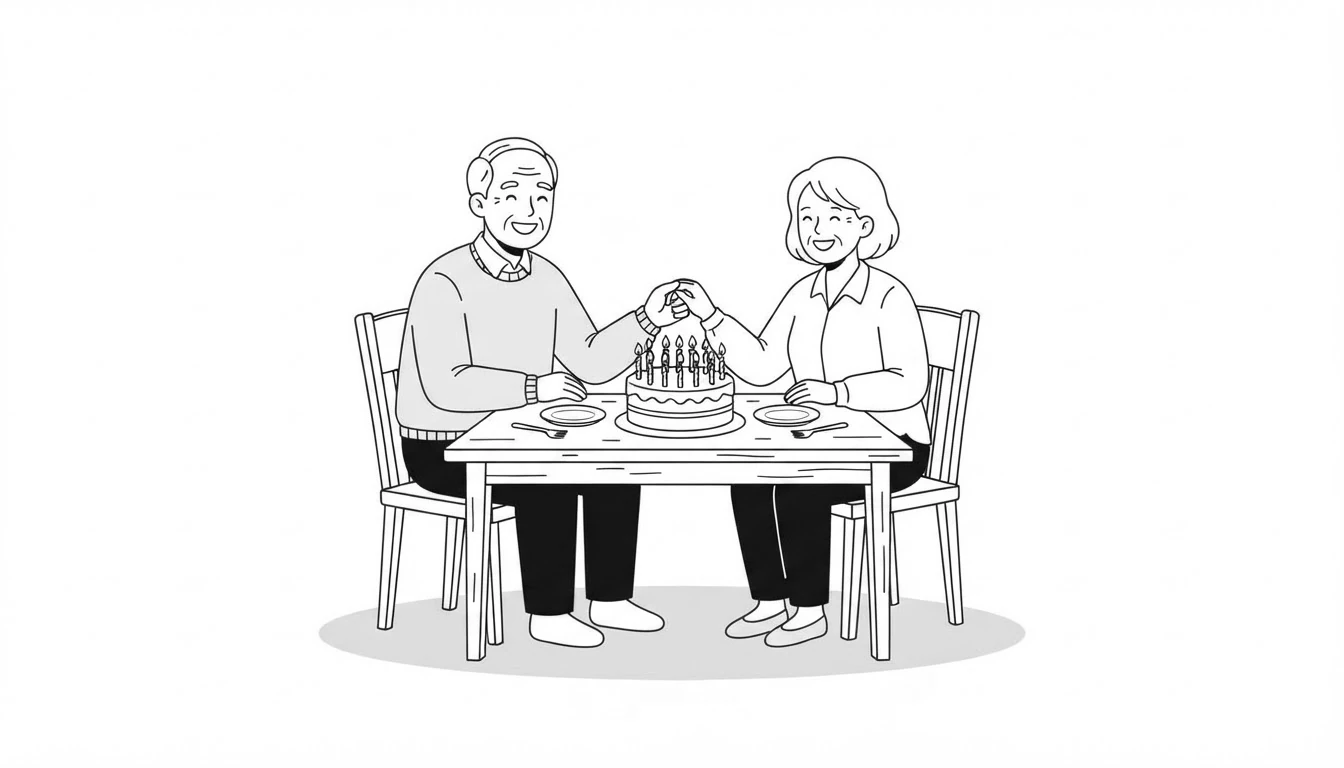
- Next month, we will have been married for twenty years.
- In March, the company will have been operating for a decade.
4. Asking how long it will have been
- How long will you have been working here by the time you retire?
- How long will they have been waiting when the train finally arrives?
5. With «for» and «since»
- By next week, I will have been waiting for the parcel for a month.
- By September, she will have been studying since January.
Time expressions that go with the future perfect continuous
| Expression | What it shows | Example |
|---|---|---|
| for + period | how long | I’ll have been working for five years. |
| since + moment | since when | I’ll have been working since 2021. |
| by + future moment | by then | By June, I’ll have been here for a year. |
| by the time + present | when | By the time you arrive, I’ll have been waiting for an hour. |
| when + present | when | When he retires, he’ll have been teaching for forty years. |
| how long | asks about duration | How long will you have been living here? |
| next month / next year | the reference moment | Next year, we’ll have been together for ten years. |
Future perfect continuous versus future perfect simple
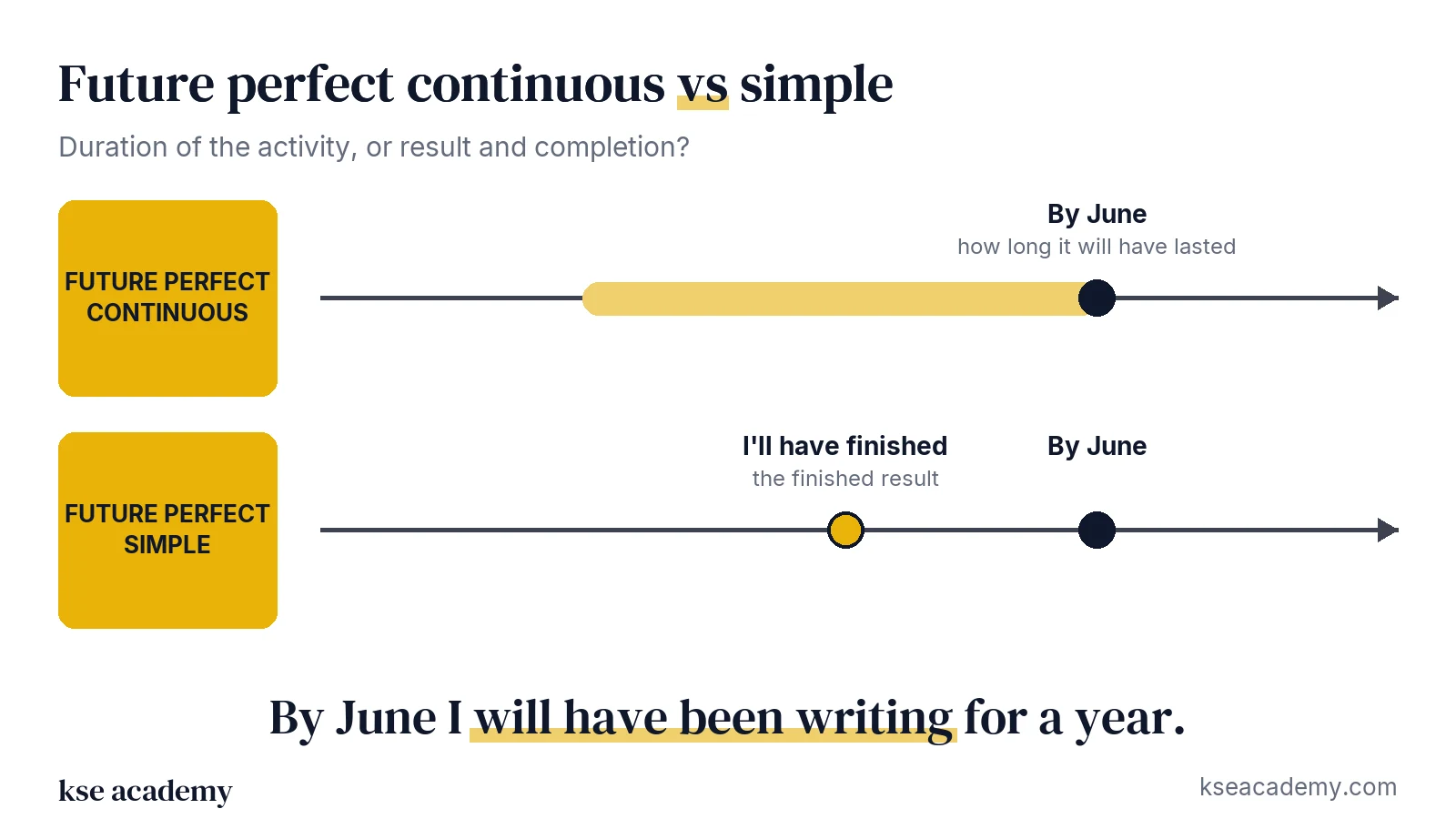
This comparison has a lot of searches, and it is solved with one question. If you care about the duration or the activity, use the continuous. If you care about the result or the quantity, use the simple:
| Future perfect continuous | Future perfect simple |
|---|---|
| By June, I will have been writing this book for two years. (Duration: two years.) | By June, I will have written three chapters. (Result: three chapters.) |
| How long will you have been working? (How long?) | How many reports will you have written? (How many?) |
| By then, she’ll have been painting all day. (The activity.) | By then, she’ll have painted the whole room. (Finished.) |
And with state verbs (know, be, have, like, want…), always the simple: By next year, I will have known her for ten years (and not will have been knowing). See the guide to stative and dynamic verbs.
Future perfect continuous versus future continuous
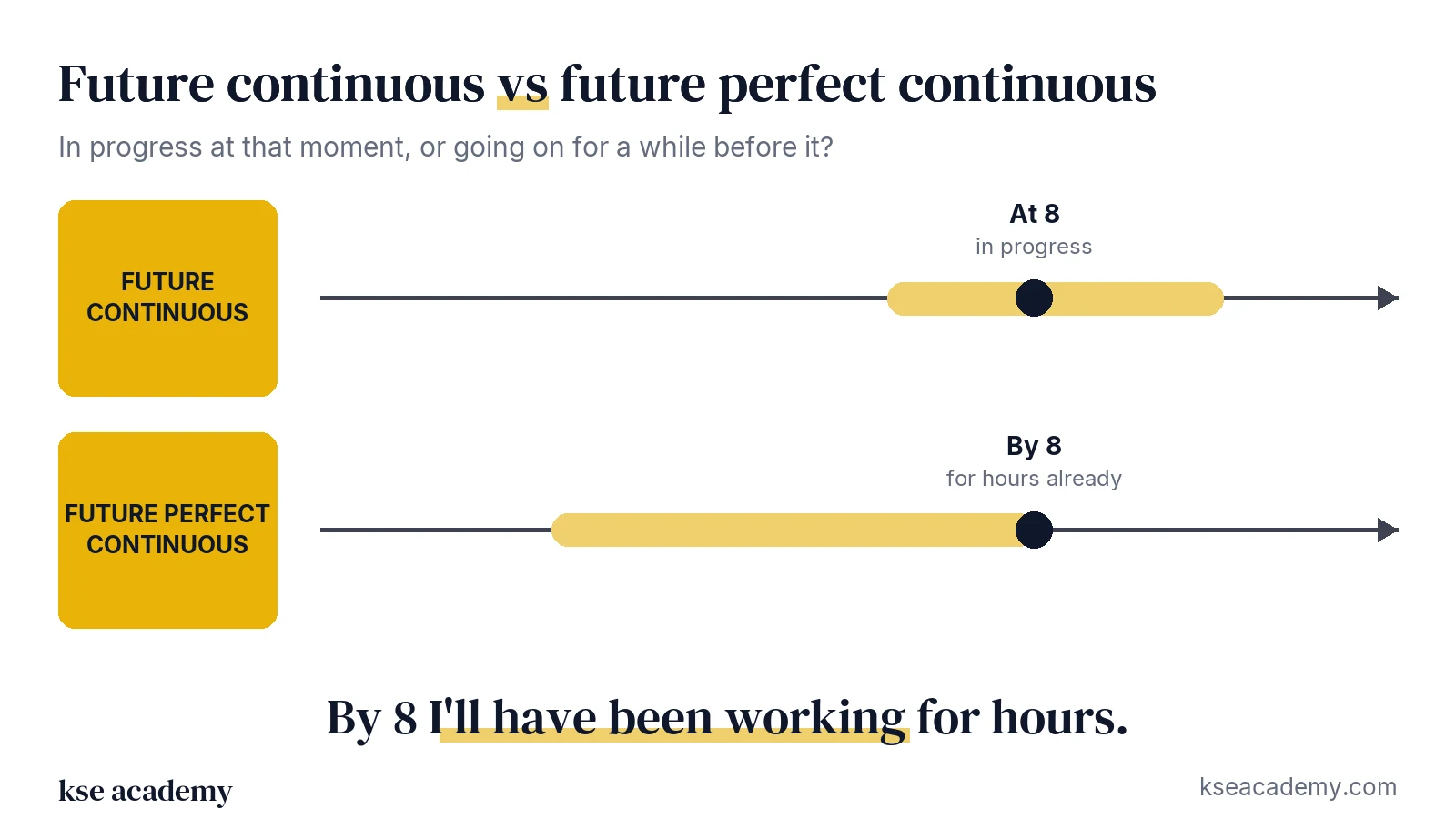
The future continuous talks about what will be in progress at a moment; the future perfect continuous adds that it will already have been going on for a while:
| Tense | Example | Meaning |
|---|---|---|
| Future continuous | At 8 I’ll be working. | At 8 I’ll be in the middle of working. |
| Future perfect continuous | By 8 I’ll have been working for hours. | By 8 I’ll have been working for hours. |
Future perfect continuous versus present perfect continuous
Both talk about how long something has been going on, but from a different point. The present perfect continuous measures it up to now; the future perfect continuous, up to a future moment:
| Tense | Example | Meaning |
|---|---|---|
| Present perfect continuous | I have been working here for four years. | I have been working here for four years (up to now). |
| Future perfect continuous | By June, I will have been working here for five years. | In June it will be five years. |
The four futures at a glance
You have now seen the future simple, the continuous, the perfect and the perfect continuous. Here they are together, with a sentence for each:
| Tense | Example | What it is for |
|---|---|---|
| Future simple | I will finish. | The event, a decision or a promise. |
| Future continuous | At 8 I will be working. | In progress at that moment. |
| Future perfect | By 8 I will have finished. | Finished before that moment. |
| Future perfect continuous | By 8 I will have been working for hours. | How long it will have been going on. |
Spanish versus English: where we get confused
Spanish does not usually use «habré estado + gerundio» (it sounds forced) and says the same thing with «llevaré + gerundio». It is the most useful equivalence:
| 🇪🇸 Spanish | 🇬🇧 English | What happens |
|---|---|---|
| En junio llevaré cinco años trabajando aquí. | By June I will have been working here for five years. | «Llevaré + gerundio» equals will have been + -ing. |
| Cuando llegues, ya llevaré una hora esperando. | By the time you arrive, I will have been waiting for an hour. | After by the time, present. |
| El mes que viene hará veinte años que estamos casados. | Next month we will have been married for twenty years. | State verb (be married): will have been, no -ing. |
| Para entonces ya conocerás a Ana desde hace diez años. | By then you will have known Ana for ten years. | State verbs: future perfect simple, not continuous. |
Common mistakes with the future perfect continuous
| ❌ Incorrect | ✅ Correct | Why |
|---|---|---|
| By June I will have been work here. | By June I will have been working here. | After been, the verb takes -ing. |
| She will have being waiting. | She will have been waiting. | It is been, not being. |
| I will been working all day. | I will have been working all day. | Have is missing: it is will have been. |
| We will have been knowing each other for ten years. | We will have known each other for ten years. | Know is a state verb: simple. |
| By the time you will get home, I’ll have been cooking. | By the time you get home, I’ll have been cooking. | After by the time, present. |
| Will have you been studying? | Will you have been studying? | In questions: Will + subject + have been. |
| I will have been reading three books by June. | I will have read three books by June. | With quantities (three) the simple is used. |
The future perfect continuous in Cambridge exams
It is the least frequent tense, but you are expected to recognise it and use it from B2 First onwards, and above all in C1 Advanced:
- Use of English (Part 4, key word transformations) in B2 First and C1 Advanced: with key words such as BEEN, FOR or the -ing verb.
- Writing in B2 First and C1 Advanced: in essays and letters, to stress a duration («By then, the problem will have been growing for decades»).
- Speaking: to boast about experience («By next year I will have been teaching for ten years»).
Two examples in the style of Use of English Part 4:
- I started working here in 2020. In 2025 it will be five years. BEEN
By 2025 I ______ working here for five years. → will have been - We left at six this morning and we will arrive at four. DRIVING
By the time we arrive, we ______ for ten hours. → will have been driving
Fun uses: marathons, queues and anniversaries
The future perfect continuous is perfect for exaggerating how long you will have been doing something (and for making sure everybody knows):
| Situation | Sentence |
|---|---|
| The series | By the time the finale starts, I will have been watching for fourteen hours. |
| The queue | By the time they open the doors, I will have been standing here for three hours. |
| The anniversary | Next month my sofa and I will have been together for ten years. |
| The exam | By the time the exam starts, I will have been studying for six hours. And I still won’t know anything. |
| The parents | By Christmas, my parents will have been asking when I’ll get married for twelve years. |
| Work | By Friday, I will have been pretending to work for a whole week. |
Future perfect continuous summary table
| What | How | Example |
|---|---|---|
| Form | will have been + -ing | I’ll have been working. |
| Negative | won’t have been + -ing | I won’t have been working. |
| Question | Will + subject + have been + -ing | Will you have been working? |
| Main use | Duration up to a future moment | By June I’ll have been working here for five years. |
| Cause | Anticipating someone’s state | He’ll be exhausted: he’ll have been driving for ten hours. |
| Anniversaries | Milestones with duration | We’ll have been married for twenty years. |
FAQ: the future perfect continuous
When is the future perfect continuous used?
To talk about how long an activity will have lasted up to a moment in the future, to anticipate someone’s state from what they will have been doing and to mark anniversaries and milestones.
How is the future perfect continuous formed?
With will have been + verb + -ing: I will have been working. For the negative, won’t have been; for questions, Will you have been working?
What is the difference between the future perfect simple and continuous?
The simple focuses on the result or the quantity (I’ll have written three chapters); the continuous, on the activity and its duration (I’ll have been writing for two years).
Can it be used with state verbs?
No. With know, be, have, like, want, understand… the future perfect simple is used: I’ll have known her for ten years.
Is it the same as the future continuous?
No. The future continuous talks about what will be in progress at a moment (At 8 I’ll be working). The future perfect continuous adds how long it will have been going on (By 8 I’ll have been working for hours).
Is it a much-used tense?
No: it is one of the least frequent. But it appears in exams (above all in C1) and it is worth recognising. In practice, you will almost always see it with for and a future moment.
How is it translated into Spanish?
Almost always with «llevaré + gerundio»: By June I will have been working here for five years = «En junio llevaré cinco años trabajando aquí».
Future perfect continuous exercises
Thirty sentences to check you have understood. Below you have three interactive exercises that mark themselves, so you will know straight away how you did.
And if you prefer a version in text that you can copy and paste, you have it down here 👇
Exercise 1: choose the correct form
Choose the correct option to complete each sentence.
- By the end of the month, I (will have read / will have been reading) three novels.
- By June, I (will have finished / will have been finishing) my thesis.
- When she arrives, she (will have been driving / will have driven) for ten hours, so she’ll be exhausted.
- In May, they (will have been living / will have been lived) here for twenty years.
- By next year, he (will have been knowing / will have known) her for a decade.
- By eight o’clock, I (will be cooking / will have been cooking) for two hours.
- How long (will you have been working / will you work) here when you retire?
- By the time you get home, the kids (will have been playing / will have played) outside all afternoon, so they’ll be tired.
- I (will have been waiting / will have waited) here since six, so I’ll be furious when you arrive.
- By the time I finish this course, I (will have learned / will have been learning) 500 new words.
Show answers
- will have read
- will have finished
- will have been driving
- will have been living
- will have known
- will have been cooking
- will you have been working
- will have been playing
- will have been waiting
- will have learned
Exercise 2: complete the sentences
Complete each sentence with the future perfect continuous of the verb in brackets. Write only the missing words.
- By June, I _______________ (work) here for five years.
- By the time he arrives, he _______________ (drive) for ten hours.
- In July, they _______________ (live) in Madrid for a decade.
- By midnight, we _______________ (dance) for four hours.
- How long _______________ (you / study) when the exam starts?
- She _______________ (not / sleep) much by then, so she’ll be exhausted.
- By next week, I _______________ (wait) for the parcel for a month.
- By the end of the film, the children _______________ (sit) still for three hours.
- _______________ (they / negotiate) for long when the deal is signed?
- By Christmas, he _______________ (learn) English for two years.
Show answers
- will have been working
- will have been driving
- will have been living
- will have been dancing
- will you have been studying
- won’t have been sleeping
- will have been waiting
- will have been sitting
- Will they have been negotiating
- will have been learning
Exercise 3: correct or incorrect?
Decide whether each sentence is correct. If it is incorrect, rewrite it correctly.
- By June, I will have been working here for five years.
- By June, I will have been work here for five years.
- By next year, we will have been knowing each other for ten years.
- How long will you have been living here by then?
- She will have being waiting for hours.
- By the time you arrive, I will been working all day.
- They will have been playing for two hours by five o’clock.
- By the time you will get home, I’ll have been cooking for an hour.
- By midnight, I will have been sleeping for three hours.
- Will have you been studying?
Show answers
- Correct
- By June, I will have been working here for five years.
- By next year, we will have known each other for ten years.
- Correct
- She will have been waiting for hours.
- By the time you arrive, I will have been working all day.
- Correct
- By the time you get home, I’ll have been cooking for an hour.
- Correct
- Will you have been studying?
Conclusion
To sum up in three ideas: the future perfect continuous (will have been + -ing) talks about how long an activity will have lasted up to a moment in the future; it is used with for, by and by the time, and in Spanish almost always corresponds to «llevaré + gerundio»; and the simple focuses on the result, the continuous on the duration, and with state verbs the simple is always used.
With this tense you complete the twelve English verb tenses. If you want to review them, see the guides to the Future Perfect, the Future Continuous and the Past Perfect Continuous. Do you have doubts about the future perfect continuous? Write to me and I will help.
Did you find this post useful? Share it with other English students and teachers. And if you want more content like this, subscribe to my newsletter and follow me on Facebook, Twitter, Pinterest, Instagram and YouTube.
See you in the next post. Until then, don’t forget to keep smiling! 🙂
