
Table of contents
Pronouns are among the first things you learn in English: I, you, he, she, it, we, they. It looks easy, and partly it is. But then come me and mine, his and her, its and it’s, myself and each other… and suddenly there are five forms for each person. On top of that, if your first language is Spanish, you’re used to dropping the subject altogether («llueve», «es importante»), which English never allows. That’s why, even at higher levels, I still find pronoun mistakes in almost every piece of writing I mark.
Don’t worry, because in this guide you have everything in order: a table with all the English pronouns, every type explained with examples (subject, object, possessive, reflexive, demonstrative, indefinite, interrogative, relative and reciprocal), the typical mistakes Spanish speakers make, how pronouns come up in the Cambridge exams, and thirty sentences of exercises with answers. Let’s get started! 🙂
What are pronouns in English?
A pronoun is a word that replaces a noun so that we don’t have to repeat it. Instead of saying Sarah is my friend. Sarah lives in London. I visit Sarah every summer, we say Sarah is my friend. She lives in London. I visit her every summer.
English has several types of pronouns, depending on what they do in the sentence:
- Subject pronouns: I, you, he, she, it, we, they.
- Object pronouns: me, you, him, her, it, us, them.
- Possessive pronouns: mine, yours, his, hers, ours, theirs. They go hand in hand with possessive adjectives (my, your, his, her, its, our, their).
- Reflexive pronouns: myself, yourself, himself, herself, itself, ourselves, yourselves, themselves.
- Demonstrative pronouns: this, that, these, those.
- Indefinite pronouns: somebody, anything, nobody, everyone…
- Interrogative pronouns: who, what, which, whose, whom.
- Relative pronouns: who, which, that, whose, whom.
- Reciprocal pronouns: each other, one another.
English pronouns table with Spanish translations
This is the table I recommend keeping close at hand. It shows the five forms of each person, which are the ones that get mixed up most often:
| 🇪🇸 Spanish | 🇬🇧 Subject | 🇬🇧 Object | 🇬🇧 Possessive adjective | 🇬🇧 Possessive pronoun | 🇬🇧 Reflexive |
|---|---|---|---|---|---|
| yo | I | me | my | mine | myself |
| tú / usted | you | you | your | yours | yourself |
| él | he | him | his | his | himself |
| ella | she | her | her | hers | herself |
| ello (thing, animal) | it | it | its | (not used) | itself |
| nosotros/as | we | us | our | ours | ourselves |
| vosotros/as / ustedes | you | you | your | yours | yourselves |
| ellos/as | they | them | their | theirs | themselves |
Here’s an example with every first-person form: I made this cake myself. Do you like my cake? Give me a piece of yours and I’ll give you a piece of mine.
Subject pronouns: I, you, he, she, it, we, they
Subject pronouns tell us who does the action, and they go before the verb:
- I work in a bank.
- She doesn’t like coffee.
- We are going to the cinema tonight.
- They live in Manchester.
One detail that surprises many learners: I is always written with a capital letter, wherever it appears in the sentence (My sister and I). If you want to review how they combine with the most basic verb, have a look at my post on the verb to be.
In English, the subject can’t be left out
This is probably the biggest difference between English and Spanish. In Spanish, the verb ending already shows who the subject is («trabajo», «vivimos»), so the pronoun can be dropped. In English it can’t: the verb hardly changes, so the subject must always be there.
- ❌ Is my brother. Works in Madrid.
- ✅ He‘s my brother. He works in Madrid.
The same happens when Spanish has no subject at all. For the weather, the time, distances or phrases like «it’s important», English uses it as an empty subject (a dummy subject):
- It‘s raining. (Llueve.)
- It‘s ten o’clock. (Son las diez.)
- It‘s 20 kilometres to the beach.
- It‘s important to sleep well. (Es importante dormir bien.)
- It‘s a pity you can’t come.
And to say that something exists, we use there is / there are, not it: There is a supermarket near my house. You’ll find it all in my post on there is and there are.
You: one word for tú, usted, vosotros and ustedes
In English, you covers everything: singular and plural, informal and formal. There’s no special polite form; formality shows in other ways, such as Could you…? instead of Can you…?, or using Mr or Ms with the surname. If you need to make it clear that you’re talking to several people, you can say you all, you two or both of you.
You is also used for people in general: You can’t smoke here. In very formal English there’s also one (One should always be polite), but in everyday life it sounds old-fashioned.
He, she, it: people, things and animals
For people we use he (a man) and she (a woman). For things, it’s always it, because objects have no gender in English: The table is new. It is made of wood. Spanish speakers sometimes say she for «la mesa», but that’s never right.
With animals, it is the norm, but with our pets, or when we know whether it’s male or female, we use he or she: This is my cat, Luna. She‘s three years old.
They for one person
Nowadays it’s perfectly normal to use they for one person whose gender we don’t know or which doesn’t matter, or for someone who prefers not to use he or she. Even though it refers to one person, the verb is plural:
- Someone left their umbrella in the classroom. I hope they come back for it.
- If a student is late, they have to wait outside.
It isn’t a recent trend: English speakers have been using it this way for centuries, and Cambridge accepts it in the exams without any problem.
Object pronouns: me, you, him, her, it, us, them
Object pronouns are used when the person or thing receives the action. They go after the verb or after a preposition:
- Can you help me?
- I love her.
- We called them yesterday.
- This present is for you.
- Come with us!
Notice that in Spanish the pronoun goes before the verb («te quiero», «me ayudas»), whereas in English it goes after it: I love you, you help me. Also, English has just one form where Spanish distinguishes «lo, la, le, se».
Me too, it’s me and between you and me
In spoken English, object pronouns are used after to be and in short answers, even though traditional grammar asks for subject pronouns:
- Who’s there? It’s me. Saying It is I is perfectly correct, but it sounds like a line from an old play.
- I love pizza. Me too! I don’t like football. Me neither.
- Who wants an ice cream? Me!
And after a preposition, it’s always an object pronoun: Between you and me, I don’t think he’ll pass. You’ll hear between you and I a lot, even from native speakers, but it’s wrong.
With two objects: give it to me
When a verb has two objects (something and someone) and one of them is it or them, we normally put the thing first and then to + the person:
- Can you give it to me?
- I sent them to her yesterday.
If the object is a noun, both options work: Give me the book or Give the book to me.
Possessive adjectives and pronouns: my and mine
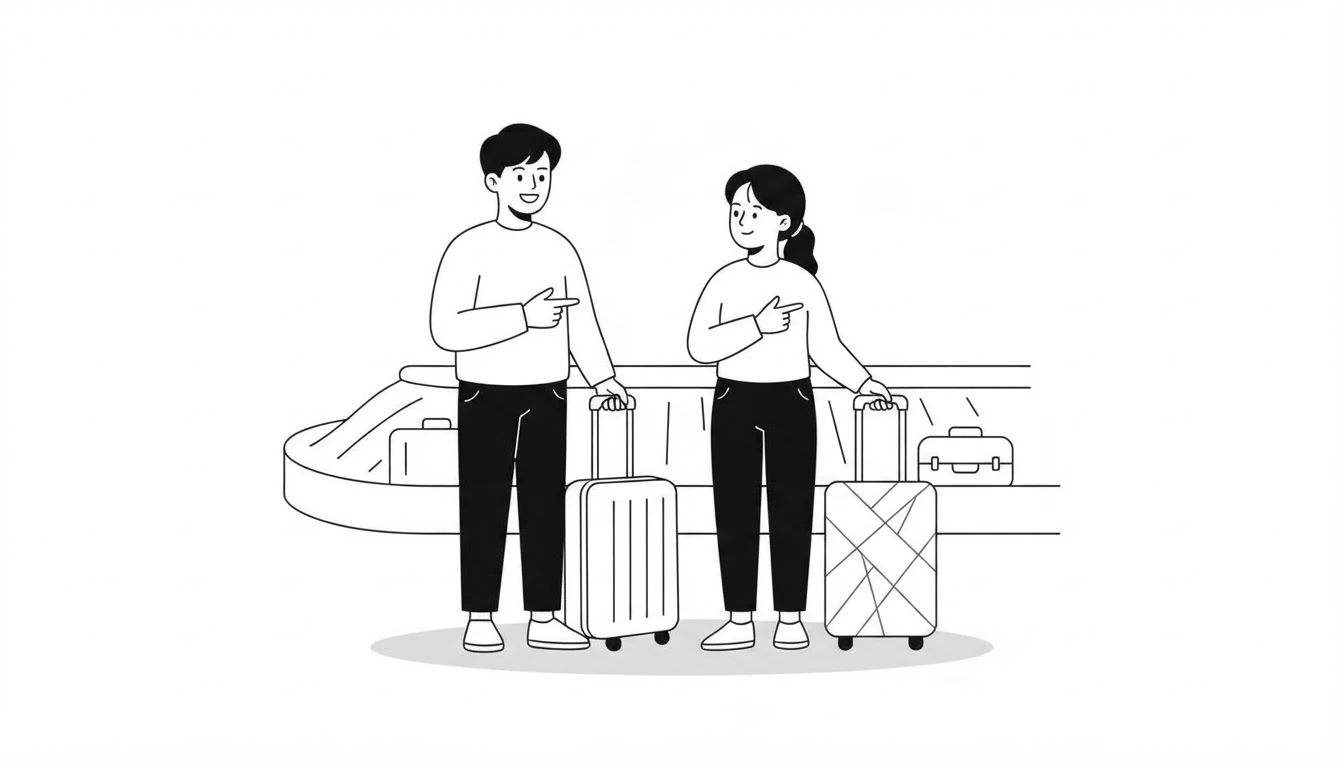
This is one of the most common mix-ups. English has two sets of possessives:
- Possessive adjectives (my, your, his, her, its, our, their) always go before a noun: This is my bag.
- Possessive pronouns (mine, yours, his, hers, ours, theirs) replace the noun, so they stand alone: This bag is mine.
| 🇬🇧 Adjective + noun | 🇬🇧 Pronoun | 🇪🇸 Spanish |
|---|---|---|
| It’s my phone. | It’s mine. | Es mío. |
| Is this your coat? | Is this yours? | ¿Es tuyo? |
| That’s his car. | That car is his. | Es suyo (de él). |
| It’s her house. | The house is hers. | Es suya (de ella). |
| It’s our dog. | The dog is ours. | Es nuestro. |
| They’re their keys. | The keys are theirs. | Son suyas (de ellos). |
Possessive adjectives don’t change in the plural (my friend, my friends), and English uses them much more than Spanish with parts of the body and clothes: I washed my hair (Me lavé el pelo), He put on his jacket (Se puso la chaqueta).
His or her: it depends on the owner
The Spanish «su» works for him, her, them and the polite «you», and it agrees with the thing owned («sus libros»). In English, the possessive depends on the owner, not on the thing:
- María lives with her parents. (María is a woman, so her, even though there are two parents.)
- Juan lives with his sister. (Juan is a man, so his, even though his sister is a woman.)
- The students forgot their books.
This mistake (María lives with his parents) is so typical of Spanish speakers that you’ll see it again in the table of mistakes below.
Its or it’s
Its (no apostrophe) is the possessive of it: The dog is wagging its tail. It’s (with an apostrophe) is short for it is or it has: It’s cold today. A quick test: if you can replace it with it is, it needs the apostrophe. No possessive pronoun ever has an apostrophe: yours, hers, ours, theirs, never your’s or their’s. If your and you’re trip you up too, I explain them in the difference between your and you’re.
A friend of mine
To say «un amigo mío» or «una prima suya», English uses a / an + noun + of + possessive pronoun: He’s a friend of mine, She’s a cousin of his. We don’t say a my friend or a friend of me.
Reflexive pronouns: myself, yourself, themselves…
Reflexive pronouns end in -self (singular) or -selves (plural). We use them:
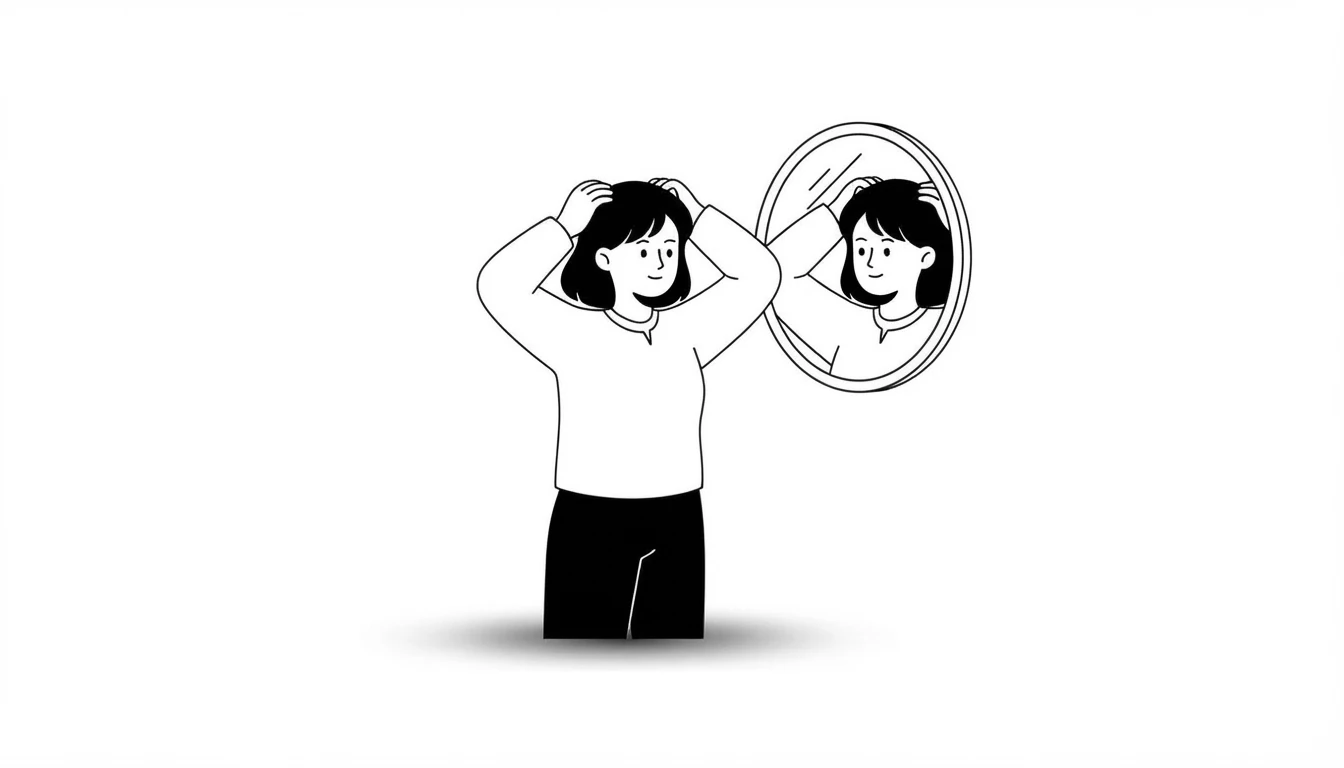
- When the subject and the object are the same person: She cut herself while she was cooking. Look at yourself in the mirror!
- For emphasis: I painted the house myself. (Nobody helped me.)
- With by, meaning «alone, without help»: He lives by himself.
- In some fixed expressions: Enjoy yourself!, Help yourself!, Behave yourself!, Make yourself at home.
Spanish reflexive verbs that aren’t reflexive in English
Here’s the trap. Many verbs that take «se» in Spanish (levantarse, ducharse, sentirse…) aren’t reflexive in English, and adding myself to them sounds very strange:
| 🇪🇸 Spanish | 🇬🇧 Correct English | ❌ Don’t say |
|---|---|---|
| Me levanto a las siete. | I get up at seven. | I get myself up |
| Me ducho por la mañana. | I have a shower in the morning. | I shower myself |
| Me siento cansado. | I feel tired. | I feel myself tired |
| Relájate. | Relax. | Relax yourself |
| Nos conocimos en 2020. | We met in 2020. | We met ourselves |
| Me visto deprisa. | I get dressed quickly. | I dress myself quickly |
| Me acuerdo de él. | I remember him. | I remember myself of him |
Reciprocal pronouns: each other and one another
Each other means the action goes both ways. It’s very different from themselves:
- Tom and Anna looked at each other. (Tom looked at Anna and Anna looked at Tom.)
- Tom and Anna looked at themselves in the mirror. (Each of them looked at their own reflection.)
The Spanish «se miraron» can mean either, so in English you have to choose. One another means the same as each other; some people prefer it for groups of more than two, but nowadays each other is used for everything and is far more common.
Demonstrative pronouns: this, that, these, those
Demonstratives show distance from the speaker:
| 🇬🇧 Near | 🇬🇧 Far | |
|---|---|---|
| Singular | this (este, esta, esto) | that (ese, aquel, eso) |
| Plural | these (estos, estas) | those (esos, aquellos) |
- This is my favourite song.
- Are those your shoes?
- Hello, this is Laura. On the phone, we introduce ourselves with this, not with I am.
Before a noun they work as adjectives (this book); on their own, as pronouns (I like this). To avoid repeating a countable noun, it’s very common to add one or ones: I don’t like this jacket. I prefer that one.
Indefinite pronouns: somebody, anything, nobody, everyone…
Indefinite pronouns refer to people, things or places without saying exactly which. They’re formed by combining some, any, no and every with -body / -one (people), -thing (things) and -where (places):
| 🇬🇧 People | 🇬🇧 Things | 🇬🇧 Places | |
|---|---|---|---|
| some- | somebody / someone (alguien) | something (algo) | somewhere (en algún sitio) |
| any- | anybody / anyone | anything | anywhere |
| no- | nobody / no one (nadie) | nothing (nada) | nowhere (en ningún sitio) |
| every- | everybody / everyone (todo el mundo) | everything (todo) | everywhere (en todas partes) |
-body and -one mean the same; -one is slightly more common in writing. Three rules worth remembering:
- The verb is singular, even though «everybody» sounds like a lot of people: Everybody is here. Nobody knows the answer.
- Only one negative per sentence. Spanish says «no conozco a nadie», with two negatives. In English it’s either I don’t know anybody or I know nobody, never I don’t know nobody.
- Some- in positive sentences and any- in negatives and questions, with the same exceptions as some and any (offers, requests…). It’s all in my post on the difference between some and any.
Interrogative and relative pronouns: who, what, which, whose
Interrogative pronouns are used to ask questions:
- Who is that man?
- What do you want?
- Which do you prefer, the red one or the blue one?
- Whose is this jacket?
- Whom did you invite? This is very formal; in conversation we say Who did you invite?
If you’re not sure whether to use what or which, I explain it in the difference between what and which.
Several of them are also relative pronouns, which join two clauses and refer back to something we’ve already mentioned: The woman who lives next door is a doctor. The book that I’m reading is great. As they have their own rules (when you can use that, when you can leave it out, commas…), I wrote a whole post about them: relative clauses in English.
Common mistakes with English pronouns
These are the mistakes I see most often in my Spanish-speaking students. Avoid them and your English will sound much more natural:
| ❌ Incorrect | ✅ Correct | Why |
|---|---|---|
| Is very important. | It’s very important. | English never drops the subject. |
| Is raining. | It’s raining. | The weather takes it as its subject. |
| María lives with his parents. | María lives with her parents. | The possessive depends on the owner. |
| My brother and me went out. | My brother and I went out. | Subject: I, not me. |
| This book is my. | This book is mine. | With no noun after it, use the pronoun. |
| The dog is wagging it’s tail. | The dog is wagging its tail. | It’s = it is. |
| I shower myself every morning. | I have a shower every morning. | Shower isn’t reflexive in English. |
| They love themselves. (meaning each other) | They love each other. | A mutual action: each other. |
| Everybody are happy. | Everybody is happy. | Indefinite pronouns take a singular verb. |
| I don’t know nobody. | I don’t know anybody. | Only one negative. |
| The table is new. She’s made of wood. | It’s made of wood. | Things are it. |
| He’s a friend of me. | He’s a friend of mine. | Of + possessive pronoun. |
Pronouns in the Cambridge exams
Pronouns come up at every level, but there are two places where they really make a difference:
- Use of English Part 2 (open cloze), the text with gaps that you fill with one word, in B2 First and C1 Advanced. A gap very often needs a pronoun, especially it as an empty subject, a reflexive or a relative pronoun. For example:
- ______ is often said that travel broadens the mind. → It
- The players were really proud of ______ after the match. → themselves
- She’s the only person ______ opinion I really trust. → whose
- Writing: using pronouns well is key to the cohesion of your text. Instead of repeating «the new sports centre» five times, examiners expect you to replace it with it, this or which. But be careful: an it or a they that could refer to anything confuses the reader. Before you hand in your text, check that every pronoun clearly points to something.
At A2 Key and B1 Preliminary, mistakes with his/her and missing subjects are among the ones that cost the most in Writing, because they’re so easy to spot.
Frequently asked questions about English pronouns
What are the personal pronouns in English?
The subject pronouns are I, you, he, she, it, we, they, and the object pronouns are me, you, him, her, it, us, them. The first go before the verb; the second go after the verb or after a preposition.
What’s the difference between my and mine?
My is a possessive adjective and goes before a noun (my car). Mine is a possessive pronoun and replaces the noun (The car is mine). The same goes for your/yours, her/hers, our/ours and their/theirs.
Is there a polite form of «you» in English?
No. You is the same for everyone. Politeness is shown with phrases like Could you…? and Would you mind…?, or by using Mr / Ms with the surname.
Can you leave out the subject in English?
Generally, no. The subject must always be there, even if it’s the empty it of It’s raining or It’s late. It’s only dropped in very informal writing (messages, notes: Hope you’re well!) and in commands: Sit down!
What’s the difference between themselves and each other?
Themselves is reflexive: each person does the action to himself or herself. Each other is reciprocal: one person to the other. They hurt themselves (each of them got hurt) versus They hurt each other (they hurt one another).
Does its have an apostrophe?
Not when it’s a possessive: its. Only it’s has an apostrophe, because it’s short for it is or it has.
English pronouns exercises
Thirty sentences to check you’ve got it. Below you have three interactive exercises that mark themselves, so you’ll know straight away how you’ve done.
And if you’d like these exercises as text to copy, paste or adapt for your classes, here they are below with the answers 👇
Exercise 1: choose the correct option
Choose the correct option to complete each sentence.
- Look outside! (It’s / Is) raining again.
- Can you help (I / me) with this box?
- This isn’t my phone. Is it (your / yours)?
- Laura is here with (her / his) brother.
- My dog loves (its / it’s) new bed.
- Carlos hurt (himself / herself) playing football.
- Ana and Marta always help (each other / themselves) with their homework.
- (This / These) shoes are really comfortable.
- I can’t find my keys (anywhere / somewhere).
- Pedro is a friend of (my / mine).
Show answers
- It’s
- me
- yours
- her
- its
- himself
- each other
- These
- anywhere
- mine
Exercise 2: complete with the correct pronoun
Complete each sentence with the correct form of the pronoun in brackets.
- I called Sarah, but she didn’t call _______________ (I) back.
- That isn’t John’s coat. _______________ (he) is the black one.
- We made the cake _______________ (we).
- Is this pen _______________ (you)?
- The children are playing in _______________ (they) room.
- Tell _______________ (they) to wait for me outside.
- Our house is smaller than _______________ (they).
- My sister taught _______________ (she) to play the guitar.
- Emma and _______________ (I) are going to the cinema tonight.
- The company has changed _______________ (it) logo.
Show answers
- me
- His
- ourselves
- yours
- their
- them
- theirs
- herself
- I
- its
Exercise 3: correct or incorrect?
Decide whether each sentence is correct. If it is incorrect, rewrite it correctly.
- Is very important to practise every day.
- My brother and me went to the beach.
- I always shower myself before breakfast.
- Between you and me, I don’t like her new boyfriend.
- Everybody are here, so we can start.
- María lives with his parents.
- They really enjoyed themselves at the party.
- The dog is wagging it’s tail.
- I don’t know nobody in this town.
- Is this umbrella yours or mine?
Show answers
- It is very important to practise every day.
- My brother and I went to the beach.
- I always shower before breakfast.
- Correct
- Everybody is here, so we can start.
- María lives with her parents.
- Correct
- The dog is wagging its tail.
- I don’t know anybody in this town.
- Correct
Conclusion
If you remember just three things, make them these: in English the subject is always there (even if it’s an empty it); possessives depend on the owner, not on the thing (María and her brother); and many Spanish verbs with «se» aren’t reflexive in English (I get up, I feel tired, we met). With the table at the top and these three rules, you’ve got 90% of cases covered.
If you’d like to carry on with basic grammar, I recommend my post on articles in English, another classic source of mistakes for Spanish speakers. Have you got questions about any pronoun? Write to me and I’ll help.
Did you find this post useful? Share it with other English students and teachers. And if you want more content like this, subscribe to my newsletter and follow me on Facebook, Twitter, Pinterest, Instagram and YouTube.
See you in the next post. Until then, don’t forget to keep smiling! 🙂
