
Table of contents
«Excuse me! What’s the difference between what and which?». Aren’t you tired of asking (if you are a student) or being asked (if you are a teacher) this question? I am, for sure. But it is perfectly understandable that many learners have problems with these two words, because they are, in truth, quite similar. And for Spanish speakers it doesn’t help: what is translated as «qué» or «cuál», and which as «cuál» or «qué» depending on the sentence. In other words, both can mean the same, and Spanish gives you no clue.
That is why this post is organised into similarities and differences of use and meaning. I explain when to use each one in questions, in indirect questions and as relative pronouns, give you tables with examples, the most typical mistakes, how it helps you in the Cambridge exams and thirty sentences of exercises with answers. Let’s get started! 🙂
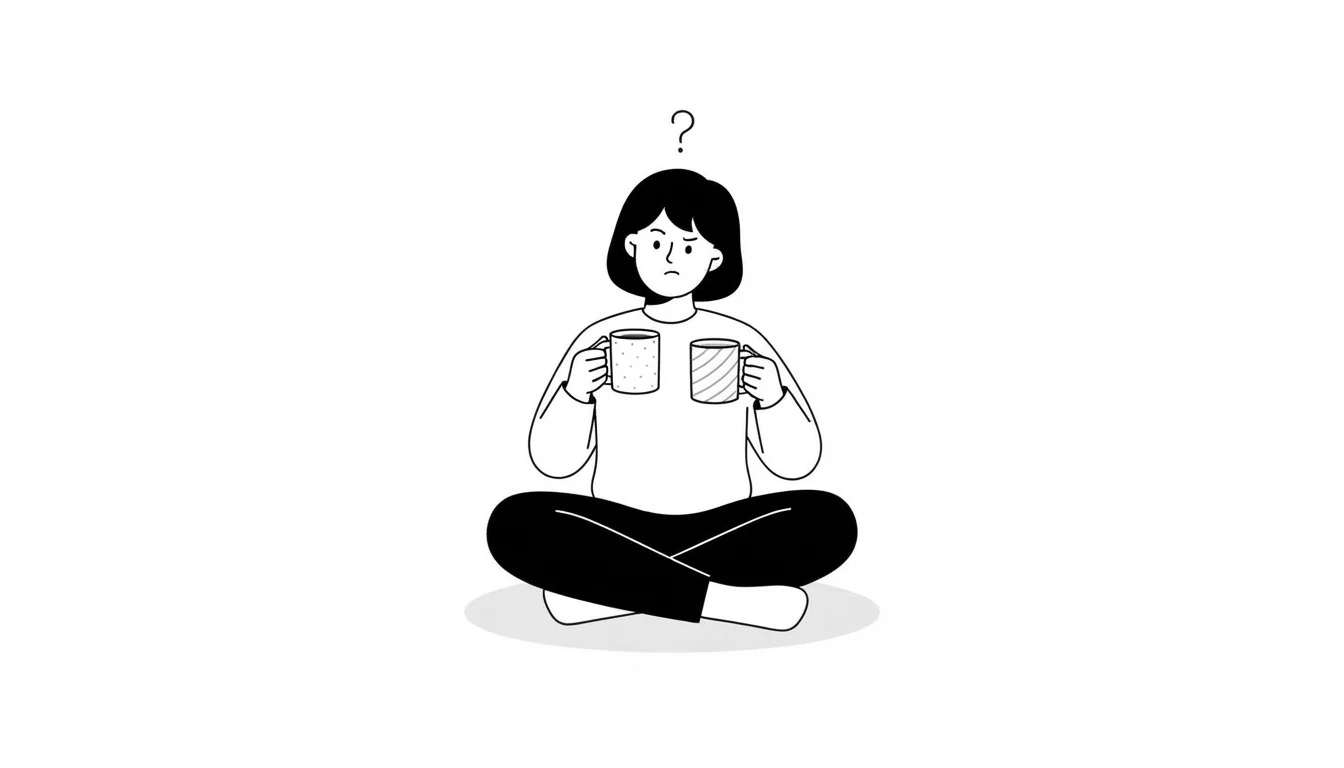
The rule in one sentence: what is open, which is limited
The most important difference, and the one that will help you most, is this:
- Use what when there is no specific set of options: the answer can be almost anything.
- Use which when there is a limited number of options (even if they are three or four, or a group you both already know).
Look at the example:
What would you like in your sandwich? I’ve got cheese or tuna. Which would you prefer?
In the first question we don’t know what is available, so we use what. In the second, the choice is limited to cheese and tuna, so which is compulsory, not what.
| 🇬🇧 WHAT | 🇬🇧 WHICH | |
|---|---|---|
| Options | open, no limit | limited, a specific group |
| 🇪🇸 Spanish | qué, cuál | cuál, qué |
| Example | What music do you like? | Which of these songs do you like? |
What and which in questions
When they work as interrogative pronouns, they can stand alone or go before a noun:
| Structure | 🇬🇧 WHAT (open) | 🇬🇧 WHICH (limited) |
|---|---|---|
| Alone | What’s your name? | Which is your car? The red one? |
| + noun | What kind of music do you like? | Which book did you read? The first one? |
| + of + pronoun/determiner | (not used) | Which of these two bags is yours? |

There is a very practical detail: after of we use which, never what: Which of your friends lives in Paris?, not What of your friends…?.
And there are questions that are always asked with what, because there is no list of options: What’s your phone number?, What time is it?, What’s the capital of France?, What do you do on Sundays?
When they are interchangeable
Sometimes both work and the difference is only one of nuance: with what you ask for an opinion without limits, and with which you ask about a group that is already in both people’s minds:
- Which / What would you say is the most beautiful city in the world?
- I’ve no idea which / what road to take to Jimmy’s place.
If you want to review all the question words (who, where, when, why, whose…), have a look at my guide to yes/no and wh- questions in English.
What and which in indirect questions
Both can go at the beginning of a direct question and also of an indirect (embedded) question. The «open» versus «limited» rule is still the same:
- I’m not sure what you mean.
- I don’t know which one to pick.
- Tell me what you want for your birthday.
What and which as relative pronouns
Both also work as relative pronouns, that is, they join two clauses. But here they are not interchangeable:
- Which refers to something you have already named (an antecedent): She went to a conference in Vienna which ended on Friday. / It was a crisis for which he was totally unprepared.
- What means «the thing(s) that» and doesn’t need an antecedent: What they needed was someone to clean their house. / «The Lord of the Rings» is what I am reading at the moment.
The difference, one could say, is that what is less specific than which. This is because what can normally be replaced by the thing which, where «the thing» can be anything. Compare:
- «The Lord of the Rings» is the book which I am reading at the moment. (the book that…)
- «The Lord of the Rings» is what I am reading at the moment. (the thing that…)
That is why I normally tell my students that you cannot use what if you have already specified what you are talking about:
- ✅ Ronda is the Spanish city which Hemingway fell in love with.
- ✅ This is the hammer which was used to kill the victim.
Two more details about which:
- After everything, all, something, nothing and anything we use that (or nothing), not what or which: Everything that he said was true.
- Which can refer to the whole previous clause, separated by a comma: He passed the exam, which surprised everyone.
Common mistakes with what and which
| ❌ Incorrect | ✅ Correct | Why |
|---|---|---|
| Which’s your name? | What’s your name? | There is no limited set of names. |
| What of these two shirts do you prefer? | Which of these two shirts do you prefer? | With of and a group, which. |
| Which time is it? | What time is it? | The time is not a limited choice. |
| Everything what he said was true. | Everything that he said was true. | After everything, that. |
| The book what I’m reading is great. | The book which I’m reading is great. | There is an antecedent (the book): which or that. |
| He was late, what annoyed me. | He was late, which annoyed me. | To refer to the whole clause: which. |
What and which in the Cambridge exams
These two words are very common in the Use of English paper of B2 First and C1 Advanced, especially in Part 2 (open cloze), where you have to fill a gap with one word, and that gap is often a relative pronoun. For example:
- He passed the exam, ______ surprised everyone. → which
- I’m afraid I don’t know ______ to say. → what
Using which to refer to the whole previous clause (…, which surprised everyone) is, in addition, a resource that helps in B2 and C1 Writing to connect ideas naturally.
Summary table
| 🇬🇧 WHAT | 🇬🇧 WHICH | |
|---|---|---|
| In questions | open options | limited options |
| With of | not used | which of… |
| As a relative | «the thing that», no antecedent | «the one that», with an antecedent |
| Whole clause | no | yes, after a comma |
| Example | What time is it? | Which of these is yours? |
Is «cuál» what or which?
It depends. If the answer is a choice among limited options, which; if there is no group of options, what. For example, «¿cuál es tu número de teléfono?» is What’s your phone number?, and «¿cuál de estos dos prefieres?» is Which of these two do you prefer?.
Is it «what time» or «which time»?
It is what time to ask the time (What time is it?). You would only use which time if you are choosing among specific times: Which time suits you better, five or six?
Can I use «which» to refer to people?
In questions with a choice among people, yes (Which of your teachers do you prefer?). As a relative pronoun for people, use who (or that), not which.
What and which exercises
Thirty sentences to check that you’ve got it. Below you have three interactive exercises that mark themselves, so you will know straight away how you did.
And if you prefer a version in text that you can copy and paste, you have it down here 👇
Exercise 1: what or which?
Choose the correct word to complete each sentence.
- (What / Which) is your name?
- I’ve got tea and coffee. (What / Which) would you like?
- (What / Which) kind of music do you like?
- (What / Which) of these two bags is yours?
- I’m not sure (what / which) you mean.
- There are three trains to Madrid. I don’t know (what / which) one to take.
- (What / Which) is the capital of France?
- (What / Which) time is it?
- Of all the cities you’ve visited, (what / which) is your favourite?
- He told me (what / which) he wanted for his birthday.
Show answers
- What
- Which
- What
- Which
- what
- which
- What
- What
- which
- what
Exercise 2: complete the sentences
Write what or which in each gap.
- _______________ is your phone number?
- _______________ of your brothers lives in London?
- _______________ they needed was a rest.
- He passed the exam, _______________ surprised everyone.
- It was a crisis for _______________ he was totally unprepared.
- I don’t know _______________ to say.
- _______________ colour do you prefer, red or blue?
- _______________ do you do on Sundays?
- She went to a conference in Vienna _______________ ended on Friday.
- I’ll show you _______________ I bought yesterday.
Show answers
- What
- Which
- What
- which
- which
- what
- Which
- What
- which
- what
Exercise 3: correct or incorrect?
Decide whether each sentence is correct. If it is incorrect, rewrite it correctly.
- Which’s your name?
- What of these two shirts do you prefer?
- Everything what he said was true.
- I don’t know what road to take.
- What is the best way to learn English?
- The book what I’m reading is great.
- She told me what she wanted.
- Which time is it?
- This is the hammer which was used in the crime.
- He was late, what annoyed me.
Show answers
- What’s your name?
- Which of these two shirts do you prefer?
- Everything that he said was true.
- Correct
- Correct
- The book which I’m reading is great.
- Correct
- What time is it?
- Correct
- He was late, which annoyed me.
Conclusion
To sum up in three ideas: what is for open options and which for limited options; after of, always which; and as relative pronouns they are not interchangeable: what means «the thing that» and which needs an antecedent (or the whole previous clause).
If you like these pairs of words that get confused, have a look at my posts on too and enough, say and tell and win and beat.
Did you find this post useful? Share it with other students and English teachers. And if you want more content like this, subscribe to my newsletter and follow me on Facebook, Twitter, Pinterest, Instagram and YouTube.
See you in the next post. Until then, don’t forget to keep smiling! 🙂
