
Table of contents
Are you a sports fan? What about any other kind of game? I suppose you like winning (so do I), but are you using the verb win correctly? Take a look at these two sentences and try to work out why they are wrong:
❌ I’m better than you at chess. I can win you any time!
❌ Manchester United won Liverpool 3-0 in the last game.
Did you spot it? Don’t worry if you didn’t, because this is one of the most common mistakes among learners, and there is a reason for it: many languages, Spanish included, use a single verb for almost everything (win a match, win against someone, win a prize), but in English there are two different verbs, win and beat, and each has its own place. In this guide I explain the difference with one simple rule, give you collocation tables, the irregular forms with their pronunciation, the other meanings of beat (which have nothing to do with winning), the most common mistakes and three exercises with answers. Let’s get started! 🙂
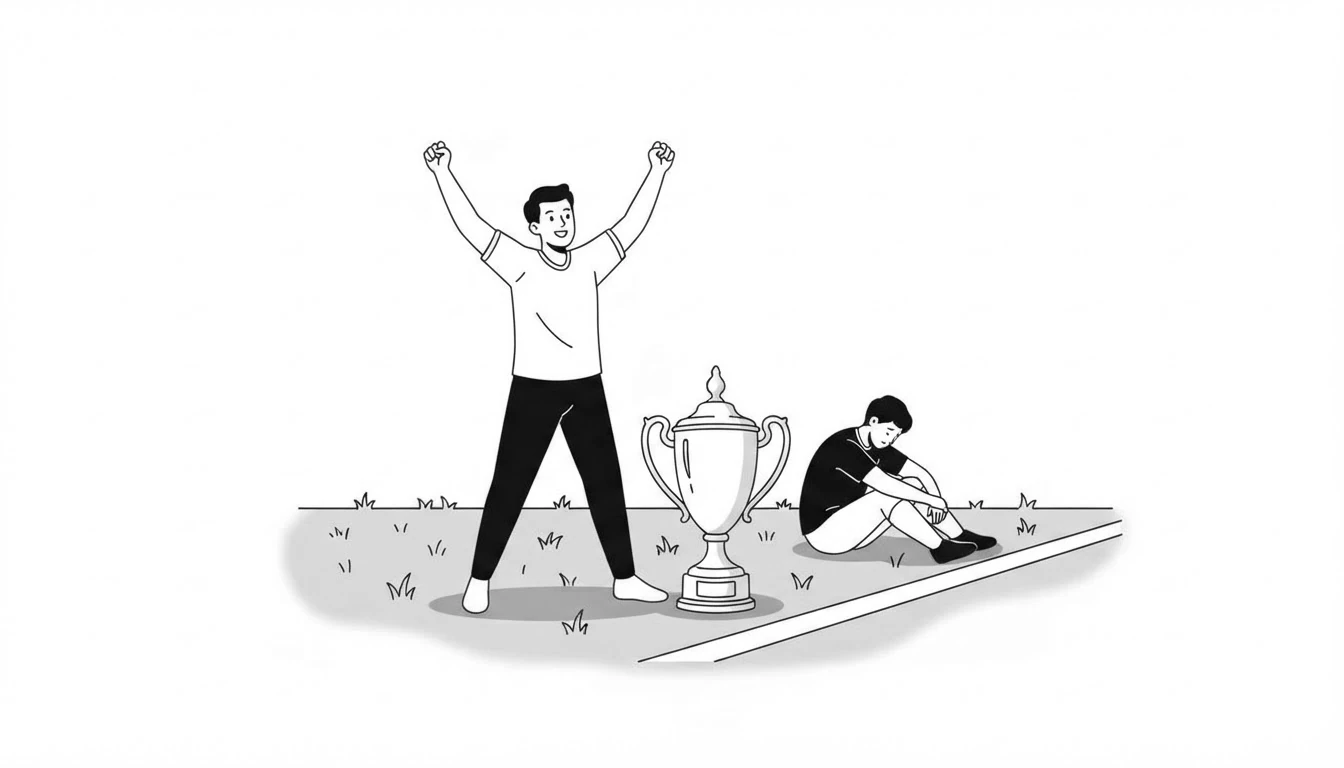
The rule in one sentence: you win a game, but you beat an opponent
The verb win is used for events and competitions: you win a game, a match, a tournament, a race. It is also used for prizes: a prize, a medal, the lottery. What you can’t do is win a person or a team. For that we have the verb beat, which means to defeat someone. If you remember only one thing from this post, make it this:
You WIN a GAME, but you BEAT an OPPONENT.
| Verb | Followed by… | Meaning | Example |
|---|---|---|---|
| win | an event, a competition or a prize | to come first in, to get | We won the match. |
| beat | a person, a team or an opponent | to defeat | We beat our rivals. |
See how the sentence changes with each verb while the meaning stays close:
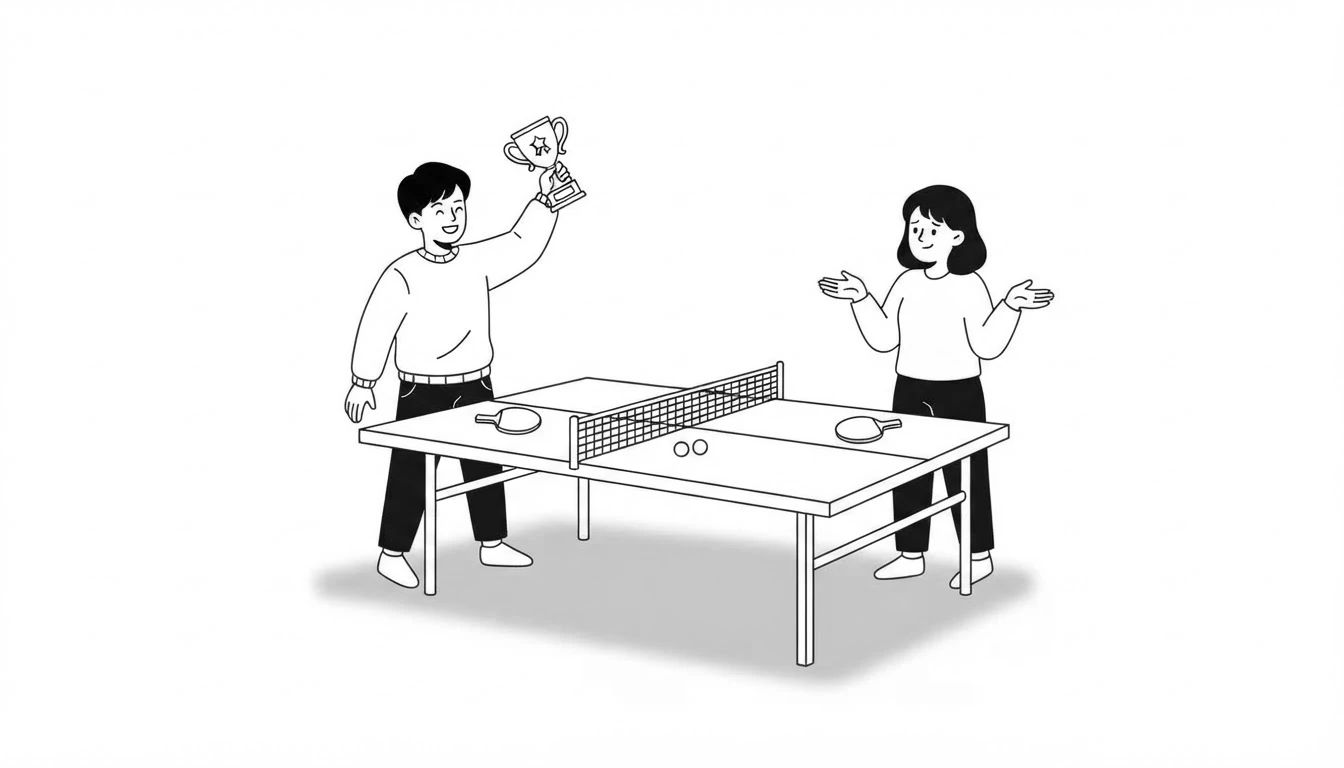
- My dad used to beat me at table tennis when I was younger.
- My dad used to win every table tennis game we played when I was younger.
- Big teams like Real Madrid usually beat smaller teams.
- Big teams like Real Madrid usually win matches against smaller teams.
And that is how the two sentences from the beginning get fixed: ✅ I can beat you any time! and ✅ Manchester United beat Liverpool 3-0 in the last game.
How to use WIN
Win is the verb of the result: what you get when you finish first or take something home. These are the most common collocations:
| 🇬🇧 win + | Meaning | Example |
|---|---|---|
| a game / a match | to come first in a game or match | They won the match on penalties. |
| a race / a competition | to come first in a race or contest | She won the race by two seconds. |
| a prize / a medal / a trophy | to be given an award | He won a gold medal. |
| the lottery | to get a prize in a draw | My cousin won the lottery last year. |
| an election | to get the most votes | Who do you think will win the election? |
| an argument | to prove your point | I never win arguments with my sister. |
| money / a fortune | to get money in a game or bet | He won €500 at the casino. |
Two more details about win that you will find useful:
- Win + against: if you want to say who you won against, you can use win against: We won against the best team in the league. It is correct and very common, especially in spoken English. What you can’t do is put the person straight after win.
- Win + person + thing: you can use a person, but as the one who receives what is won: That goal won us the match.
How to use BEAT
Beat is the verb of the confrontation: there is always someone (or something) on the other side. It is followed directly by the person, team or opponent you defeat, and we often add the game (at chess, at tennis) or the score (3-0).
| 🇬🇧 Structure | Example |
|---|---|
| beat + person / team | Spain beat Italy in the semi-final. |
| beat + person + at + game | I can’t beat my brother at chess. |
| beat + person + score | Liverpool beat Everton 3-0. |
| be beaten (by) (passive) | We were beaten by a much better team. |
| beat + record / time | She beat the world record. |
Notice that the score comes after the opponent: beat Everton 3-0, not «beat 3-0 Everton».
Irregular forms: win and beat
Both are irregular verbs, and both come with a trap:
| 🇬🇧 Infinitive | Past simple | Past participle | Meaning |
|---|---|---|---|
| win /wɪn/ | won /wʌn/ | won /wʌn/ | to come first |
| beat /biːt/ | beat /biːt/ | beaten /ˈbiːtn/ | to defeat |
- Won sounds exactly like one (/wʌn/): He won and He one sound the same. It doesn’t rhyme with on, it rhymes with sun.
- Beat has the same past simple as the infinitive (I beat him yesterday), but a different participle: beaten. The classic mistake is I have beat him: the correct form is I have beaten him. (You will sometimes see have beat in informal American English, but for study and for exams always use beaten.)
Other meanings of BEAT (nothing to do with winning)
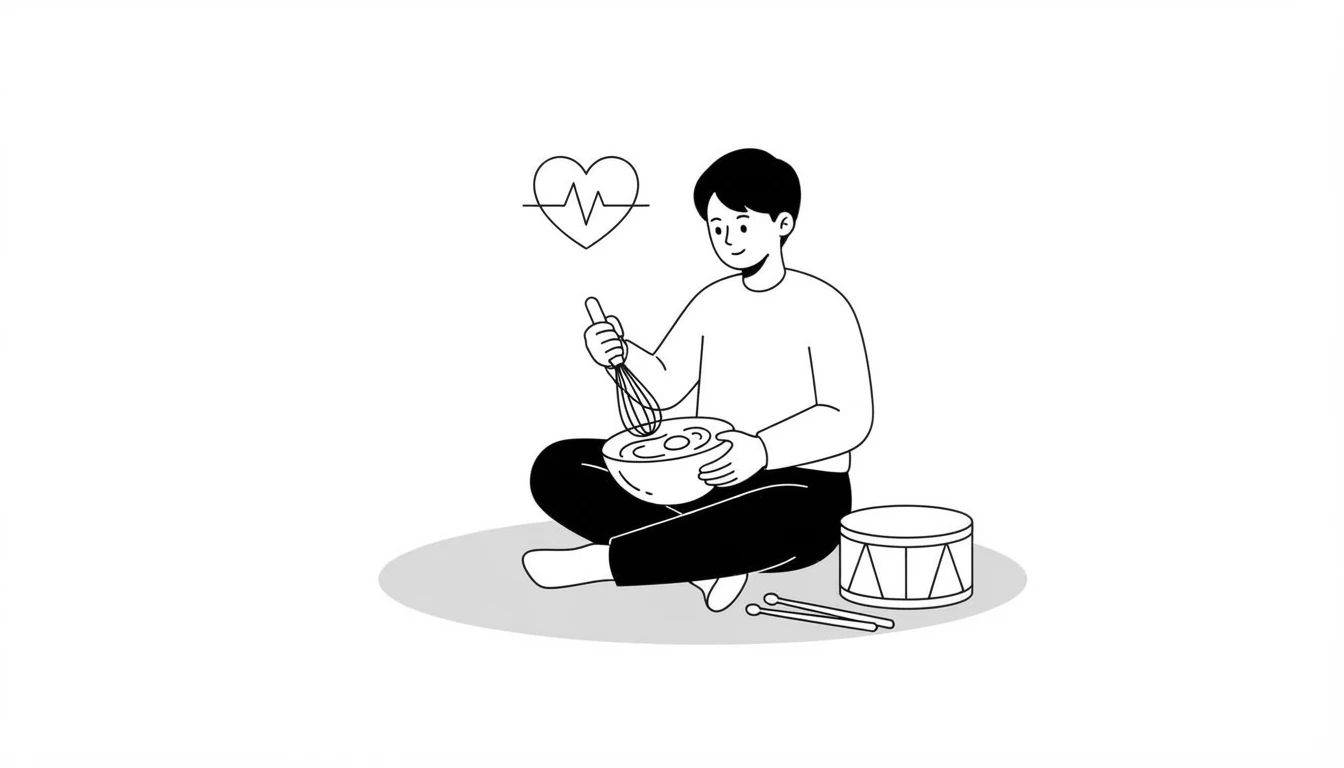
Beat is a verb with plenty of uses, and almost all of them show up in everyday English:
| 🇬🇧 Expression | Meaning | Example |
|---|---|---|
| beat the eggs | to whisk or mix quickly | Beat the eggs and add the sugar. |
| my heart is beating | to pulse, to throb | My heart was beating very fast. |
| beat a drum | to hit, to play a drum | He beat the drum in time with the music. |
| beat up (phrasal verb) | to attack and hurt someone | He was beaten up outside the bar. |
| beat the traffic / the queue | to avoid, to get ahead of | Let’s leave early to beat the traffic. |
| beat the clock | to finish before time runs out | They finished just in time, beating the clock. |
| beat around the bush | to avoid the main point | Stop beating around the bush and tell me. |
| It beats me. | I have no idea. | Why did he leave? It beats me. |
| Nothing beats… | Nothing is as good as… | Nothing beats a cup of tea on a rainy day. |
| I’m beat. | I’m exhausted (informal). | I’m beat. I need to sit down. |
| beat yourself up | to blame yourself | Don’t beat yourself up about it. |
| the beat (noun) | the rhythm | I love the beat of this song. |
Similar verbs: defeat, lose to, draw
Around win and beat there are other verbs worth having at hand when you talk about results:
| 🇬🇧 Verb | Meaning | Example |
|---|---|---|
| defeat | to beat (more formal, typical of news reports) | The champions were defeated in the final. |
| lose | to not win | We lost the game. |
| lose to | to be beaten by | Liverpool lost to Chelsea. |
| draw / tie | to finish with the same score | The match ended in a draw. |
| come first | to finish in first place | She came first in the race. |
A simple way to check you have chosen well: X beat Y means the same as Y lost to X. If the opponent swaps places, the sentence still means the same thing.
Common mistakes with win and beat
| ❌ Incorrect | ✅ Correct | Why |
|---|---|---|
| I won my brother at chess. | I beat my brother at chess. | A person can’t follow win. |
| Spain won Italy 2-1. | Spain beat Italy 2-1. | An opposing team needs beat. |
| We beat the match. | We won the match. | A match isn’t an opponent: you win it. |
| She has beat me twice. | She has beaten me twice. | The participle of beat is beaten. |
| He won to me. | He beat me. | There is no preposition after beat. |
| He wined the lottery. | He won the lottery. | The past of win is won, not wined. |
Win and beat in the Cambridge exams
This pair of verbs is a good candidate for the Use of English paper in B2 First and C1 Advanced. In Part 1 (multiple-choice cloze) you may get a gap with four options where you have to choose between win, beat, defeat or earn. And in Part 4 (key word transformation) it is very easy for the examiners to ask you to rewrite a sentence using beat or won as the key word. For example:
- Our team defeated them in the final. BEAT
Our team ______ in the final. → beat them - We lost to a much better team. BEATEN
We ______ a much better team. → were beaten by
In both you have to remember that the opponent goes straight after beat and that the participle is beaten. These are exactly the points you have seen in this post.
Summary table
| 🇬🇧 WIN | 🇬🇧 BEAT | |
|---|---|---|
| What you get | an event, a competition, a prize | an opponent (person or team), a record |
| What comes after | a match, a prize, the lottery | an opponent, a team, me |
| Past simple | won /wʌn/ | beat /biːt/ |
| Past participle | won /wʌn/ | beaten /ˈbiːtn/ |
| Example | We won the game. | We beat them. |
Can you say «win against»?
Yes. We won against Chelsea is correct and very common. If you prefer to put the opponent straight after the verb, use beat: We beat Chelsea. What doesn’t exist is win Chelsea.
What is the past of win and beat?
The past of win is won (and so is the participle). The past of beat is beat, and its participle is beaten.
Does «beat» only mean to defeat?
No. It also means to whisk, to pulse, to hit and lots of expressions besides. You will find them in the table of other meanings of beat.
Win and beat exercises
Thirty sentences to check that you’ve got it. Below you have three interactive exercises that mark themselves, so you will know straight away how you did.
And if you prefer a version in text that you can copy and paste, you have it down here 👇
Exercise 1: complete with win, won, winning, beat or beaten
Write the correct form of win or beat in each gap.
- Our team _______________ the final last year.
- Spain _______________ Italy 2-1 in the semi-final.
- I’ve never _______________ my sister at chess.
- Who do you think will _______________ the election?
- She _______________ me at tennis again yesterday.
- He dreams of _______________ a gold medal one day.
- We were _______________ by a much better team.
- Nobody can _______________ my dad at table tennis.
- My cousin _______________ €500 in the lottery last year.
- Real Madrid have _______________ Barcelona twice this season.
Show answers
- won
- beat
- beaten
- win
- beat
- winning
- beaten
- beat
- won
- beaten
Exercise 2: win or beat?
Choose the correct verb in each sentence.
- Brazil (won / beat) Germany in the final.
- Brazil (won / beat) the World Cup.
- I (won / beat) my brother at FIFA.
- She (won / beat) a free trip to Rome.
- They (won / beat) us by three goals.
- Which team (won / beat) the match?
- He tried to (win / beat) the world record.
- I never (win / beat) arguments with her.
- Can you (win / beat) me at chess?
- It’s hard to (win / beat) a team that never gives up.
Show answers
- beat
- won
- beat
- won
- beat
- won
- beat
- win
- beat
- beat
Exercise 3: complete the second sentence
Complete the second sentence so that it means the same as the first. Use win or beat in the correct form, and write only the missing words.
- Our team defeated them 3-0.
Our team _______________ 3-0. - We lost to a much better team.
We _______________ a much better team. - Liverpool were the winners of the match.
Liverpool _______________ the match. - Nobody has ever defeated him at chess.
He has never _______________ at chess. - My sister was given first prize in the competition.
My sister _______________ first prize in the competition. - I’m sure I’m a better tennis player than you.
I’m sure I can _______________ at tennis. - England were defeated by Spain in the final.
Spain _______________ in the final. - Who is going to be the winner of the race?
Who is going to _______________ the race? - Nobody defeated them last season.
They were not _______________ by anybody last season. - Their last victory in a league match was in March.
They haven’t _______________ a league match since March.
Show answers
- beat them / won against them
- were beaten by
- won
- been beaten
- won
- beat you
- beat England / won against England
- win
- beaten
- won
Conclusion
To sum up in three ideas: you win a game, but you beat an opponent (win for events and prizes, beat for people and teams); both are irregular, with won (which sounds like one) and beat-beaten; and beat has many more meanings than just defeating someone, so they are worth knowing.
If you like these confusing verb pairs, have a look at my posts on lie and lay and suggest and recommend. And if sport is your thing, there is my sports vocabulary and football vocabulary posts.
Did you find this post useful? Share it with other students and English teachers. And if you want more content like this, subscribe to my newsletter and follow me on Facebook, Twitter, Pinterest, Instagram and YouTube.
See you in the next post. Until then, don’t forget to keep smiling! 🙂
