

Table of contents
If you’ve ever hesitated between who and which, put that after a comma or said the thing what I want, don’t worry, you’re not alone. Relative pronouns (who, which, that, whose, whom…) and relative clauses are one of those topics that seem easy until you have to use them in an exam.
The good news is that there aren’t many rules, and they’re very logical. You just need to learn which word to choose and when to use commas. Once you see it clearly, you won’t forget it.
In this post I’ll explain what a relative clause is, which relative pronoun to use in each case (with a summary table), the difference between defining and non-defining relative clauses and the whole business of commas, when you can leave out the pronoun, what happens with prepositions, the which that refers to a whole sentence, the famous what, the typical mistakes learners make, how all this comes up in Cambridge exams and, at the end, exercises with answers. Let’s get started! 🙂
What is a relative clause?
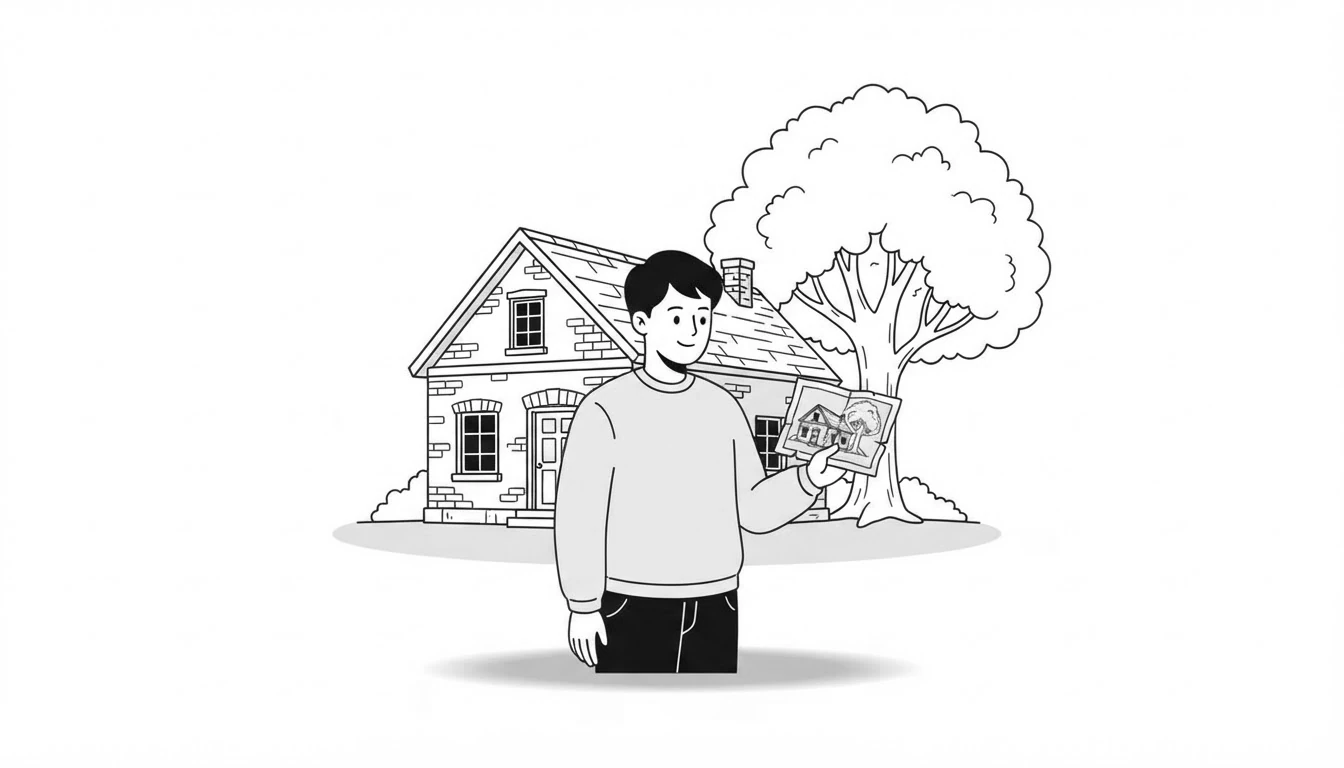
A relative clause is part of a sentence that gives information about a noun (a person, a thing, a place…) and begins with a relative pronoun. Above all, it lets you join two sentences without repeating words:
- I have a friend. She speaks Japanese. → I have a friend who speaks Japanese.
- This is the laptop. I bought it yesterday. → This is the laptop which I bought yesterday.
Notice that the relative pronoun replaces she and it. This matters, because one of the most common mistakes is keeping both (more on that later).
Relative pronouns in English and when to use each one
Who: for people
We use who for people (and for pets, if we treat them as one of the family):
- The woman who lives upstairs is a vet.
- Do you know anyone who can fix a bike?
Which: for things and animals
Which is used for things, ideas and animals. Never for people:
- The bus which goes to the airport leaves every hour.
- I’ve just finished a book which I think you’d love.
That: for people and things (with conditions)
That is the all-rounder: it works for people and things, and in spoken English it’s far more common than which. But it comes with two conditions you need to memorise:
- It never goes after a comma (so it isn’t used in non-defining clauses, which we’ll see in a moment).
- It never goes after a preposition: the house in which I live ✅, the house in that I live ❌.
Examples: The film that we watched last night was brilliant. / She’s the teacher that helped me most.
Whose: possession
Whose expresses possession. It’s always followed by a noun, and it works for both people and things:
- I met a girl whose father is a famous actor.
- It’s a company whose products are sold all over the world.
Many learners avoid it and use clumsier structures instead, but in English it’s completely normal.
Whom: the formal version of who
Whom is used for people when they’re the object of the relative clause, and above all after a preposition. It’s formal, and in everyday English it has almost disappeared:
- The candidate whom we interviewed yesterday was excellent. (formal; normally you’d use who or nothing)
- The person to whom I spoke was very kind. (after a preposition, always whom)
Where, when and why: place, time and reason
These three are actually relative adverbs, but they work in the same way:
- Where for places: This is the café where we first met.
- When for times: I’ll never forget the day when I passed my driving test.
- Why after the reason: That’s the reason why I left.
Be careful with where: it only works if the clause after it already has its object. The city where I was born ✅, but The city where I visited ❌, because visit needs an object: The city (that) I visited ✅.
Summary table of relative pronouns
| Pronoun | Used for | 🇬🇧 Example | 🇪🇸 Spanish |
|---|---|---|---|
| who | people | the man who called you | el hombre que te llamó |
| which | things and animals | the car which I bought | el coche que compré |
| that | people and things (no commas) | the song that I love | la canción que me encanta |
| whose | possession | the boy whose phone was stolen | el chico al que le robaron el móvil |
| whom | people (object, formal) | the people to whom I wrote | las personas a las que escribí |
| where | places | the town where I grew up | el pueblo donde crecí |
| when | times | the year when we met | el año en que nos conocimos |
| why | reasons (the reason why) | the reason why she left | el motivo por el que se fue |
| what | «the thing(s) that» (no noun before it) | What I need is a holiday. | Lo que necesito son unas vacaciones. |
Defining and non-defining relative clauses: the comma question
This is the key to the whole topic, and the part exams test most. There are two types of relative clause.
Defining relative clauses
They give essential information that tells us who or what we’re talking about. If you remove it, the sentence no longer makes sense. They don’t have commas, and here you can use that:
- The students who/that passed the exam got a certificate. (Only the ones who passed, not all of them.)
- The jacket which/that I bought online is too small.
Non-defining relative clauses
They add extra information that you could remove and the sentence would still be clear. They go between commas (in speech you can hear a short pause), you can’t use that and you can’t leave out the pronoun:
- My grandmother, who is 92, still goes swimming every day. (I’ve only got one grandmother like that; the information is extra.)
- Málaga, which is on the south coast, gets a lot of tourists.
Non-defining clauses are more typical of written, formal English, and they look great in a piece of writing.
A trick so you don’t get it wrong
Look at how commas change the meaning:
- My brother who lives in Dublin is a chef. → I’ve got several brothers, and I mean the one in Dublin.
- My brother, who lives in Dublin, is a chef. → I’ve only got one brother, and I’m also telling you he lives in Dublin.
My trick: cover the relative clause with your finger. If the sentence still makes sense and you know who it’s about, it’s non-defining: commas and no that. If you don’t know who it’s about, it’s defining: no commas, and that is allowed.
When you can leave out the relative pronoun
In defining clauses, you can drop the pronoun when it’s the object of the relative clause, that is, when another subject comes after it:
- The book (that) I’m reading is fantastic. (I, another subject, comes after that, so it can go)
- The people (who) we met on holiday were really friendly.
But you can’t leave it out when it’s the subject, that is, when the verb comes straight after it:
- The man who lives next door is a pilot. ✅ / The man lives next door is a pilot ❌
And remember: in non-defining clauses you never leave it out. My car, which I bought in 2019, has never broken down. You can’t drop the which.
Prepositions in relative clauses
When the verb in the relative clause takes a preposition, you have two options:
- Preposition at the end (the normal choice in speech): The girl (who) I was talking to is my cousin. / That’s the flat (that) we’re interested in.
- Preposition at the front (formal), only with whom or which: The girl to whom I was talking is my cousin. / That’s the flat in which we’re interested.
What you can’t do is put the preposition before who or that: the girl to who I was talking ❌, the flat in that we’re interested ❌.
One more detail: the house where I live means the same as the house in which I live or the house (that) I live in. That’s why in which and where are swapped so often in transformations.
Which referring to a whole clause
Sometimes which doesn’t refer to a noun but to everything that has been said before:
- He didn’t answer my messages, which really annoyed me.
- We missed the last train, which meant we had to get a taxi.
It always comes after a comma, and neither that nor what works here: He didn’t answer, what annoyed me ❌.
What: «the thing that»
What means «the thing(s) that» and, unlike the others, it has no noun before it, because what already includes «the thing»:
- What I need is a good night’s sleep.
- I didn’t understand what he said.
- Tell me what you want for your birthday.
So how do you know whether you need what or which? If it refers to the whole previous clause and comes after a comma, it’s which (She passed, which was great). If there’s nothing before it, it’s what (What she did was great). And if there’s already a noun, never what: the thing what I want ❌, the thing (that) I want ✅. If you want to review other differences between these two words, have a look at my post on what or which.
By the way, sentences that start with What… for emphasis (What I love about London is the parks) are cleft sentences, typical of C1. I explain them in my post on cleft sentences.
One step further (C1): all of which, some of whom and reduced clauses
If you’re aiming for C1, there are two structures that will earn you extra marks in writing:
- Quantifier + of whom / of which in non-defining clauses: I have three brothers, all of whom live abroad. / She gave us lots of advice, most of which was really useful.
- Reduced relative clauses with a participle: The man sitting next to me was snoring (= who was sitting). / The houses built after 2010 are more efficient (= which were built). If that last one rings a bell, it’s because it’s a passive; you’ll find it explained in my post on the passive voice in English.
Common mistakes with relative pronouns
- Using that after a comma: My sister, that is a nurse, works nights ❌, My sister, who is a nurse, works nights ✅.
- Using what when there’s a noun or a whole clause before it: The film what I saw ❌, The film (that) I saw ✅. She lied, what was terrible ❌, She lied, which was terrible ✅.
- Using which for people: The teacher which helped me ❌, The teacher who helped me ✅.
- Repeating the pronoun: The man who I met him ❌, The man (who) I met ✅.
- Confusing whose and who’s: The boy who’s bike was stolen ❌, The boy whose bike was stolen ✅ (who’s = who is).
- Leaving out the pronoun when it’s the subject: I have a friend lives in Rome ❌, I have a friend who lives in Rome ✅.
- Using where with a verb that needs an object: The museum where we visited ❌, The museum (that) we visited ✅.
- Putting the preposition before who or that: The man with who I work ❌, The man with whom I work ✅ or The man I work with ✅.
Relative clauses in Cambridge exams
Relative pronouns turn up all over the exams. In Use of English Part 2 (open cloze) of B2 First and C1 Advanced, who, which, whose and where are among the most common gaps. And in B2 First Use of English Part 4 (key word transformations) they come up again and again. Look at these three examples, written in exam style (between two and five words, without changing the key word):
- I know someone. His brother works for NASA. WHOSE
I know someone ______ for NASA.
Answer: I know someone whose brother works for NASA. - He didn’t apologise, and that made me really angry. WHICH
He didn’t apologise, ______ really angry.
Answer: He didn’t apologise, which made me really angry. - This is the hotel where we spent our honeymoon. WHICH
This is the hotel ______ our honeymoon.
Answer: This is the hotel in which we spent our honeymoon. (at which we spent is also correct)
If you’re preparing for the Spanish university entrance exam, joining two sentences with a relative pronoun is one of the fixed PAU transformations, and I explain it in my guide to the PAU English exam in Andalusia.
In writing, relative clauses are your best friend for building longer, better connected sentences, which is exactly what examiners look for under Organisation. Instead of I visited Seville. Seville is a beautiful city., write I visited Seville, which is a beautiful city. Combine them with good B2 connectors and you’ll notice the difference.
Frequently asked questions about relative pronouns
What’s the difference between that and which?
In defining clauses (no commas) you can use either for things, although that is more common in speech. In non-defining clauses (with commas) only which works. And after a preposition, it’s only which too.
Do I have to use whom?
It isn’t compulsory, except straight after a preposition (to whom, with whom). Everywhere else, who is perfectly correct and sounds more natural. In a very formal text, though, whom works well.
Can I use whose for things?
Yes. Whose works for people and things: a city whose streets are full of history. There’s an alternative with of which (a city the streets of which…), but it sounds far more stilted.
When can I leave out the relative pronoun?
Only in defining clauses and only when the pronoun is the object, that is, when a subject comes after it: the film (that) we saw. If the verb comes next, or if the clause is between commas, the pronoun is compulsory.
Relative pronouns exercises
Time to practise. Below you have three interactive exercises that mark themselves, so you’ll know straight away how you’ve done. Try to do them without looking back at the post.
And if you prefer a version in text that you can copy and paste, you have it down here 👇
Exercise 1. Choose the correct option
Choose the correct relative pronoun in each sentence.
- The woman (who / which) lives next door is a doctor.
- I’ve lost the book (who / which) you lent me.
- That’s the boy (whose / who’s) bike was stolen.
- This is the restaurant (where / which) we had our first date.
- My brother, (who / that) lives in London, is coming for Christmas.
- Do you remember the day (when / where) we met?
- She didn’t call me, (which / what) was a bit strange.
- (What / Which) I need is a long holiday.
- The man to (whom / who) I spoke was very helpful.
- I don’t know the reason (why / which) she left.
Show answers
- who
- which
- whose
- where
- who
- when
- which
- What
- whom
- why
Exercise 2. Complete with a relative pronoun
Complete each sentence with who, which, whose, where or when. Write one word only.
- Picasso, _______________ was born in Málaga, is one of the most famous painters in history.
- The film, _______________ lasted almost three hours, was really boring.
- I have a friend _______________ father is a pilot.
- Granada, _______________ my parents live, is a beautiful city.
- 2020 was the year _______________ everything changed.
- My new phone, _______________ I bought last week, has already broken.
- The hotel at _______________ we stayed was right next to the beach.
- Sarah, _______________ sister I met at your party, has just got a job in Madrid.
- He passed all his exams, _______________ surprised everyone.
- The students _______________ passed the exam will get a certificate.
Show answers
- who
- which
- whose
- where
- when
- which
- which
- whose
- which
- who
Exercise 3. Join the sentences
Join the two sentences into one using the word in brackets. Add commas where necessary.
- I met a man. He speaks six languages. (WHO)
- This is the café. We met here for the first time. (WHERE)
- The Alhambra is in Granada. It was built in the 13th and 14th centuries. (WHICH)
- That’s the girl. Her brother plays for Real Betis. (WHOSE)
- I’ll never forget that summer. We went to Ireland that summer. (WHEN)
- She lost her keys. This meant she couldn’t get into the house. (WHICH)
- The flat is very expensive. We’re interested in it. (IN WHICH)
- The thing that surprised me was his reaction. (WHAT)
- The man is a famous chef. You met him at the party. (WHO)
- The company has offices in ten countries. My father works for it. (FOR WHICH)
Show answers
- I met a man who speaks six languages.
- This is the café where we met for the first time.
- The Alhambra, which was built in the 13th and 14th centuries, is in Granada.
- That’s the girl whose brother plays for Real Betis.
- I’ll never forget the summer when we went to Ireland.
- She lost her keys, which meant she couldn’t get into the house.
- The flat in which we’re interested is very expensive.
- What surprised me was his reaction.
- The man who you met at the party is a famous chef.
- The company for which my father works has offices in ten countries.
Conclusion
To sum up: who for people, which for things, that for both but never after a comma or a preposition, whose for possession and where, when and why for places, times and reasons. Defining clauses have no commas and let you drop the pronoun when it’s the object; non-defining clauses go between commas and let you neither drop it nor use that. And when you need «the thing that», think: if it comes after a comma and refers to the whole sentence, which; if there’s nothing before it, what.
Did you find this post useful? Share it with other English students and teachers. And if you’d like more content like this, subscribe to my newsletter and follow me on Facebook, Twitter, Pinterest, Instagram and YouTube.
See you in the next post. Until then, don’t forget to keep smiling! 🙂
