
Table of contents
If you speak Spanish, articles seem like the easiest part of English: you go from el, la, los, las, un, una, unos, unas to just three words, a, an and the, and there is no gender. The problem is that English uses articles differently from Spanish. In Spanish we say «me gusta el café» and «la vida es corta»; in English, I like coffee and Life is short, with no article. And the other way round: in Spanish we say «soy profesora» and in English I’m a teacher, with an article. That is why articles are one of the most frequent (and most persistent) mistakes among Spanish speakers, even at higher levels.
In this guide I explain when to use a, an, the and the zero article (that is, when you use no article), with tables, the rules for place names, the typical mistakes of Spanish speakers, how articles help you in Cambridge exams and thirty practice sentences with answers. Let’s get started! 🙂
Articles in English at a glance
| Article | Pronunciation | When we use it | Example |
|---|---|---|---|
| a / an (indefinite) | /ə/, /ən/ | With a singular countable noun when it is new, any one, or when talking about a job. | I have a dog. She’s an engineer. |
| the (definite) | /ðə/, /ði/ | When we know which one: it has been mentioned, it is unique or we specify it. | The dog is black. The sun is hot. |
| Ø (zero article) | – | With plurals and uncountable nouns in general, and with many proper names and fixed expressions. | I like dogs. Money is useful. |
To choose well, there is one key question: is the noun countable or uncountable, singular or plural? Uncountable nouns are the ones you cannot count one by one (water, music, advice, information, luggage, furniture) and they are not used in the plural or with a/an. Further down there is a table that sums it all up.
A and an: the indefinite article
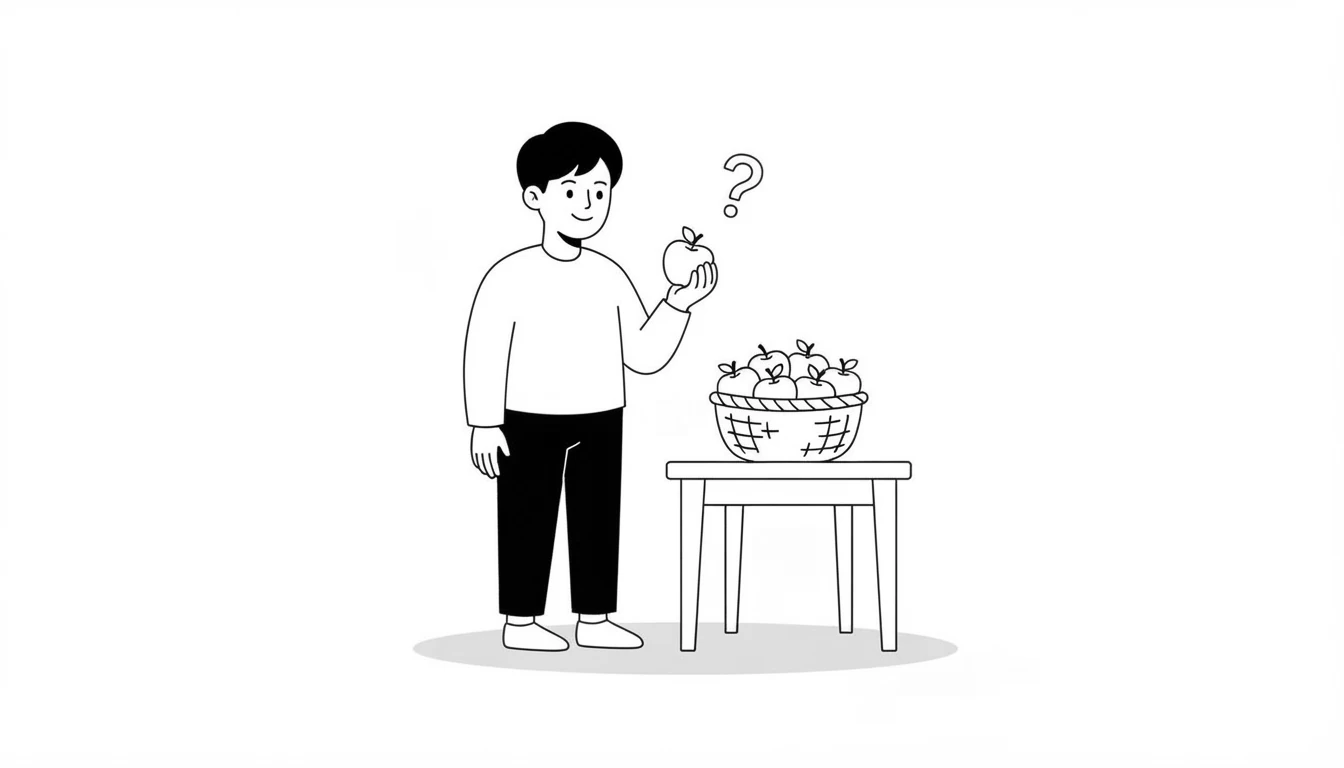
A and an mean «un/una» and are only used with singular countable nouns. They are the same word; the difference is one of sound.
A or an: it depends on the sound, not the letter
We use a before a consonant sound and an before a vowel sound. Notice that what counts is how the word is pronounced, not how it is spelt:
| With a (consonant sound) | With an (vowel sound) |
|---|---|
| a book, a car | an apple, an egg |
| a university /juː/ (starts with a «y» sound) | an umbrella /ʌ/ |
| a European country /jʊər/ | an hour (silent h) |
| a one-way ticket /w/ | an honest man (silent h) |
| a UFO /juː/ | an MBA (sounds like «em») |
When we use a / an
- Something new, or any one: I saw a dog in the park. (A dog, we do not know which.)
- Jobs and descriptions (where Spanish uses no article): She’s a nurse. He’s an actor. With an adjective, the same: She’s a very good nurse.
- Frequencies, speeds and prices: twice a week, 50 kilometres an hour, three euros a kilo.
- Exclamations with what: What a beautiful day!
- With such, quite and half: such a nice place, quite a long time, half an hour.
- With small quantities: a few friends, a little time. If these give you trouble, see my post on little, a little, few and a few.
We never use a/an with plurals or uncountable nouns. That is why a advice or an information are very common mistakes: we say some advice or a piece of advice, and some information or a piece of information.
The: the definite article
The means «el, la, los, las» and is used with any noun (singular, plural, countable or uncountable) when the speaker and the listener both know which one we mean.
When we use the
- Something already mentioned: I bought a jacket and a shirt. The jacket was expensive.
- Something we both know from the situation: Close the door, please. (The door of this room.)
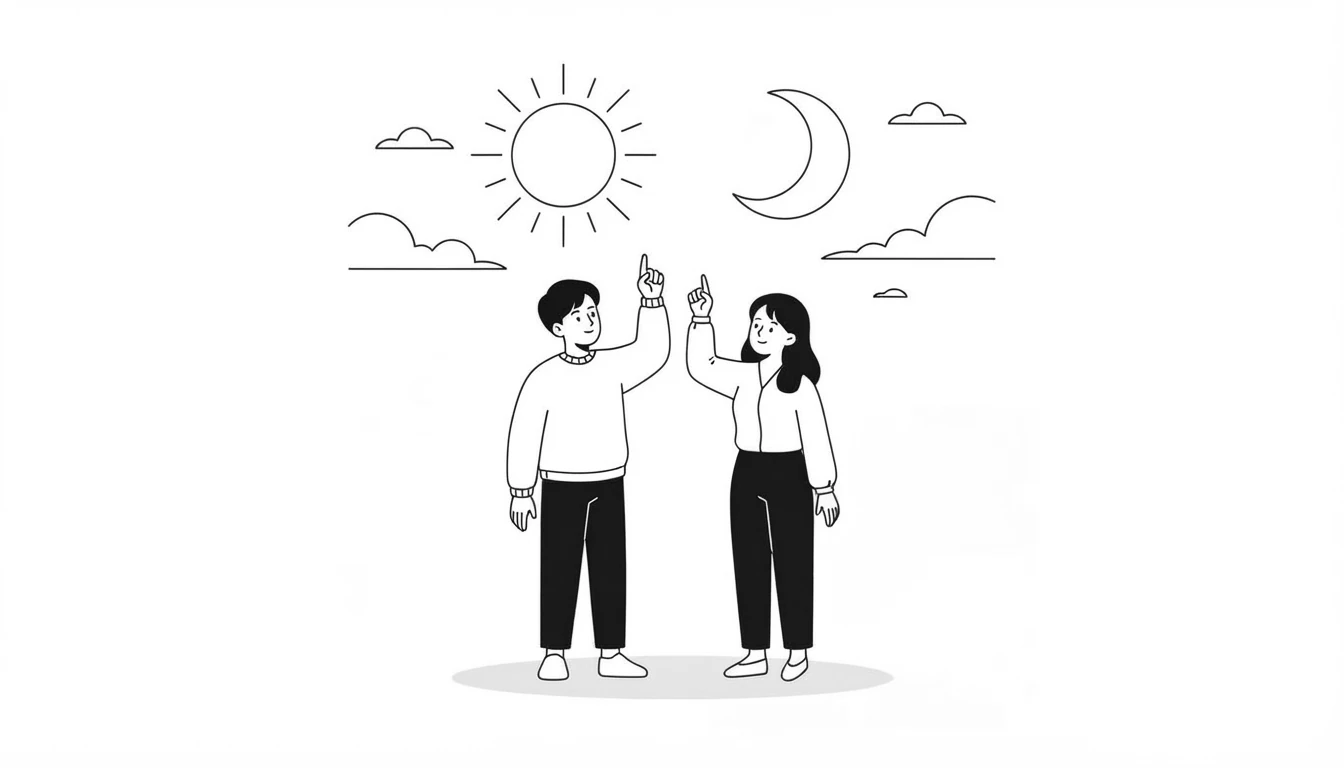
- Unique things: the sun, the moon, the sky, the world, the Internet.
- Superlatives and words such as first, last, next, same, only: the best film, the first time, the same problem, the only answer.
- When we specify which one we mean: The book on the table is mine. The people I met were very kind.
- Groups of people with an adjective: the rich, the young, the unemployed.
- Nationalities ending in -sh, -ch or -ese: the Spanish, the French, the Chinese.
- Musical instruments: She plays the piano. (Sports, on the other hand, take no article: He plays tennis.)
- Parts of the day: in the morning, in the afternoon, in the evening (but at night).
The has two pronunciations
The is pronounced /ðə/ before a consonant sound (the dog, the university) and /ði/ before a vowel sound (the apple, the hour). It is the same rule as a/an: sound decides, not spelling.
The with place names
This is where most doubts appear. This table covers the most common cases:
| ✅ With the | ❌ Without the |
|---|---|
| Oceans, seas and rivers: the Atlantic, the Mediterranean, the Thames, the Guadalquivir | Continents and cities: Europe, Asia, Granada, London |
| Mountain ranges: the Alps, the Pyrenees, the Sierra Nevada | Single mountains: Everest, Mount Teide |
| Groups of islands: the Canary Islands, the Balearic Islands | Single islands: Mallorca, Tenerife |
| Deserts: the Sahara | Lakes: Lake Geneva |
| Countries with a plural name or with Kingdom, States, Republic, Emirates: the United Kingdom, the United States, the Netherlands, the Philippines, the Czech Republic, the United Arab Emirates | Most countries: Spain, Italy, Japan, Mexico |
| Regions and geographical points: the Middle East, the North Pole | Streets, squares and parks: Oxford Street, Times Square, Hyde Park |
| Buildings and monuments: the Alhambra, the Eiffel Tower, the Prado Museum, the Hilton Hotel | Airports and stations: Heathrow, Victoria Station |
| Newspapers: The Guardian, The Times | People and proper names: Luis, Mr Brown |
The zero article: when we use no article
The zero article (written Ø) is the absence of an article. It is not an oversight: it is a normal part of English, and much more frequent than in Spanish. We use it in these cases:
- Plurals and uncountable nouns in general: Dogs are loyal. Music is my passion. Money doesn’t buy happiness. If you talk about something specific, the comes back: The dogs next door are loud.
- Abstract nouns: Life is short. Love is blind.
- Languages and school subjects: I study English and Maths. (With language it does take the: the English language.)
- Sports: She plays tennis. They love football.
- Meals: have breakfast, have lunch, have dinner. (If we add an adjective or specify, it changes: a big breakfast, the dinner we had was great.)
- Means of transport with by: by bus, by car, by train, by plane, on foot.
- Days, months and time expressions: on Monday, in July, next week, last year.
- People’s names and titles with a name: Maria, Doctor Smith.
Places used for their purpose: school, hospital, church…
With certain places, if we are talking about their purpose (studying, being a patient, praying…) we use no article. If we are talking about the building itself, we do:
| No article (purpose) | With the (the building) |
|---|---|
| The children are at school. (they are studying) | I went to the school to talk to the teacher. (I go to the building) |
| My father is in hospital. (he is a patient) | I went to the hospital to visit my father. (a visit) |
| They go to church on Sundays. (they pray) | We visited the church in the old town. (sightseeing) |
| He’s in prison. (he is serving a sentence) | The tour finishes at the prison. (the building) |
| She’s at university. (she is a student) | I met her at the university. (the place) |
The same goes for bed, work and home: go to bed, be at work, come home. In American English it is more common to say in the hospital or at the university; in British English, what you see above.
Summary table: a/an, the or Ø?
| New or in general | Specific or known | |
|---|---|---|
| Singular countable | a dog / an apple | the dog |
| Plural countable | Ø dogs (I like dogs.) | the dogs |
| Uncountable | Ø water (Water is essential.) | the water (The water in this glass is cold.) |
Spanish versus English: where the article changes
Most mistakes come from translating the Spanish article word for word. These are the differences to watch most closely:
| 🇪🇸 Spanish | 🇬🇧 English | What changes |
|---|---|---|
| Me gusta el café. | I like coffee. | General meaning: no article. |
| La vida es corta. | Life is short. | Abstract nouns: no article. |
| Los perros son leales. | Dogs are loyal. | Plural in general: no article. |
| Voy al colegio. | I go to school. | Purpose of the place: no article. |
| Estudio el inglés. / Estudio inglés. | I study English. | Languages: no article. |
| El lunes voy al gimnasio. | On Monday I go to the gym. | Days: no article, with on. |
| Soy profesora. | I’m a teacher. | Jobs: English does use an article. |
| ¡Qué día tan bonito! | What a lovely day! | Exclamation: a is compulsory. |
| Me duele la cabeza. | My head hurts. | Parts of the body: possessive, not article. |
Common mistakes with articles
| ❌ Incorrect | ✅ Correct | Why |
|---|---|---|
| I like the music. (in general) | I like music. | General meaning: zero article. |
| She is teacher. | She is a teacher. | Jobs take a/an. |
| The life is hard. | Life is hard. | Abstract noun in general. |
| I go to the school every day. (as a student) | I go to school every day. | Purpose of the place. |
| I’m studying the English. | I’m studying English. | Languages take no article. |
| She’s an university student. | She’s a university student. | Sound decides: /juː/ is a consonant. |
| He gave me a good advice. | He gave me good advice. / a good piece of advice | Advice is uncountable. |
| We live in United Kingdom. | We live in the United Kingdom. | Countries with Kingdom/States/Republic take the. |
| Spain is in the Europe. | Spain is in Europe. | Continents take no article. |
| I usually have the breakfast at eight. | I usually have breakfast at eight. | Meals take no article. |
| He plays the football. | He plays football. | Sports take no article (but the guitar). |
Articles in Cambridge exams
Articles are a classic of the Use of English, above all in Part 2 (the open cloze, a text with gaps you complete with a single word) of B2 First and C1 Advanced. Often one of the gaps is an article, and you need to know which one (or whether one is needed at all). For example:
- She works as ______ engineer for a company in Madrid. → an
- It was ______ first time I had ever seen snow. → the
- He was ______ only person who knew the answer. → the
In Writing and Speaking, a misplaced article rarely stops people understanding you, but it takes away precision and shows in the marking. Reviewing the rules above, and especially the zero article cases, is one of the most rewarding things you can do.
FAQ: articles in English
When do we use the in English?
When the speaker and the listener know which one we mean: because it has been mentioned, because it is unique (the sun), because we specify it (the book on the table) or because it is a superlative (the best).
Why do we say «an hour» but «a university»?
Because what matters is the sound, not the letter. Hour starts with a vowel sound (the h is silent) and university starts with /j/, which is a consonant sound.
Do we say «the Spain»?
No. Most countries take no article: Spain, France, Japan. Only those with a plural name or including Kingdom, States, Republic or Emirates take it: the United Kingdom, the Netherlands, the United States.
What is the zero article?
It is the absence of an article before a noun, written Ø. It is used with plurals and uncountable nouns in general (I like music), with languages, sports, meals, most proper names and many fixed expressions (at home, by bus).
Do we use an article with days of the week and months?
No: on Monday, in July. If you talk about a specific day that is already known or specified, the can appear, as in the Monday after the party.
What is the difference between «go to school» and «go to the school»?
Go to school is about the purpose: going to study (or to teach). Go to the school is about the building: for example, going to talk to a teacher or to pick something up. The same applies to hospital, church, prison and university.
Does a language take an article?
Not when we talk about the language itself: I speak English. Yes when we add language: the English language.
Articles exercises
Thirty sentences to check you have understood. Below you have three interactive exercises that mark themselves, so you will know straight away how you did.
And if you prefer a version in text that you can copy and paste, you have it down here 👇
Exercise 1: choose the correct option
Choose the correct option to complete each sentence.
- I bought (a / an / the) umbrella because it was raining.
- My sister is (a / an / the) university student.
- Granada is in (a / the / no article) south of Spain.
- I love (a / the / no article) chocolate.
- Lucía is (a / the / no article) best player in our team.
- The children are at (a / the / no article) school now.
- We went to Amsterdam, the capital of (a / the / no article) Netherlands.
- Could you close (a / the / no article) window, please? It’s cold.
- She plays (a / the / no article) guitar in a band.
- I usually go to work by (a / the / no article) bus.
Show answers
- an
- a
- the
- no article
- the
- no article
- the
- the
- the
- no article
Exercise 2: complete the sentences
Complete each sentence with a, an, the or – (no article). Write only the missing word.
- She’s _______________ honest person.
- We saw a film last night. _______________ film was really good.
- _______________ life is not always easy.
- _______________ information on this page is out of date.
- My father is _______________ doctor.
- They go to _______________ church every Sunday.
- We spent two weeks in _______________ Canary Islands.
- What _______________ beautiful view!
- I’d like _______________ glass of water, please.
- She earns twenty euros _______________ hour.
Show answers
- an
- The
- –
- The
- a
- –
- the
- a
- a
- an
Exercise 3: correct or incorrect?
Decide whether each sentence is correct. If it is incorrect, rewrite it correctly.
- I’m studying the English at university.
- She is an university student.
- The life is short, so enjoy it.
- We stayed at a hotel near the Alhambra.
- He gave me a good advice.
- I go to the school by bus every day.
- She’s the best friend I have.
- They live in United Kingdom.
- My mother is nurse.
- I usually have the breakfast at eight.
Show answers
- I’m studying English at university.
- She is a university student.
- Life is short, so enjoy it.
- Correct
- He gave me good advice.
- I go to school by bus every day.
- Correct
- They live in the United Kingdom.
- My mother is a nurse.
- I usually have breakfast at eight.
Conclusion
To sum up in three ideas: a/an is for something new or any one, and for jobs (and sound decides, not spelling); the is for something we already know which one it is; and the zero article is normal with plurals and uncountable nouns in general, languages, sports, meals and many places. When in doubt, ask yourself whether you are talking about something specific or about something in general.
If you want to continue with basic grammar, I recommend my posts on there is and there are and the difference between some and any. Do you have doubts about any case? Write to me and I will help.
Did you find this post useful? Share it with other English students and teachers. And if you want more content like this, subscribe to my newsletter and follow me on Facebook, Twitter, Pinterest, Instagram and YouTube.
See you in the next post. Until then, don’t forget to keep smiling! 🙂
