
Tabla de contenidos
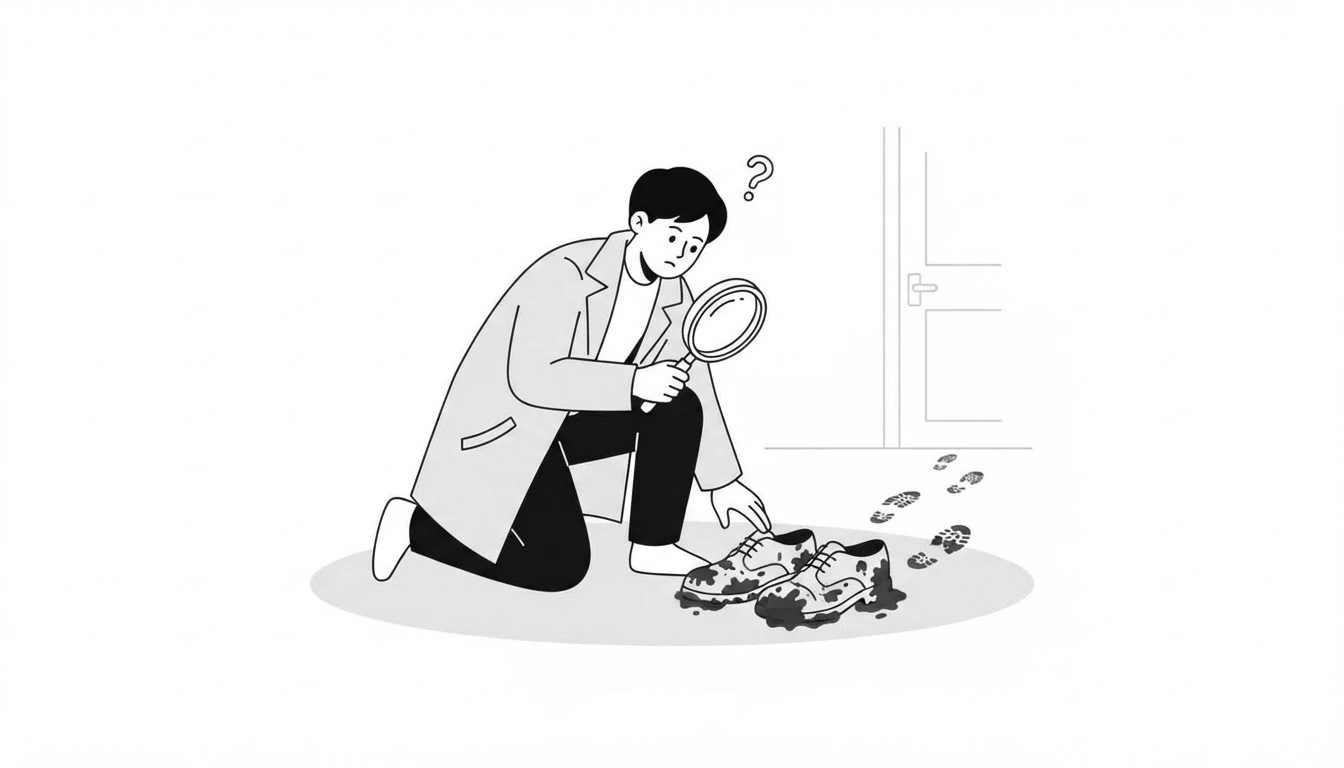
Llegas a casa y la cocina huele a quemado. Hay harina en el suelo, un delantal en el pomo de la puerta y una sartén en el fregadero. Nadie está cocinando ahora, pero está clarísimo qué ha pasado: Someone had been cooking. No sabes si terminaron o no, ni qué hicieron; lo que importa es la actividad y el tiempo que duró. Eso es el past perfect continuous (en español, pasado perfecto continuo): el tiempo para decir qué había estado ocurriendo durante un rato antes de otro momento del pasado.
Es un tiempo que asusta por el nombre (tres palabras: had been doing), pero es más fácil de lo que parece, porque ya conoces sus piezas: had (del past perfect) y been + -ing (del present perfect continuous). En esta guía te explico cómo se forma, cuándo se usa, en qué se diferencia del past perfect simple, del past continuous y del present perfect continuous, los errores típicos, cómo te ayuda en los exámenes de Cambridge y cómo usarlo para resolver misterios (y para justificar tus ojeras). Al final hay treinta frases de ejercicios con soluciones. ¡Vamos allá! 🙂
El past perfect continuous de un vistazo
| Past perfect continuous | |
|---|---|
| Forma | had been + verbo en -ing |
| Para qué sirve | Hablar de una actividad que llevaba un tiempo ocurriendo antes de otro momento pasado |
| Ejemplo | She had been waiting for two hours when the bus arrived. |
| Español | «Llevaba dos horas esperando cuando llegó el autobús» (había estado esperando) |
| Palabras que lo acompañan | for, since, how long, all day / morning, when, before, by the time |
Qué es el past perfect continuous
Es el present perfect continuous (I have been working) trasladado al pasado. Con el present perfect continuous miras atrás desde ahora; con el past perfect continuous miras atrás desde un momento del pasado. Importa lo que venía ocurriendo antes, durante cuánto tiempo, y muchas veces el resultado que se ve:
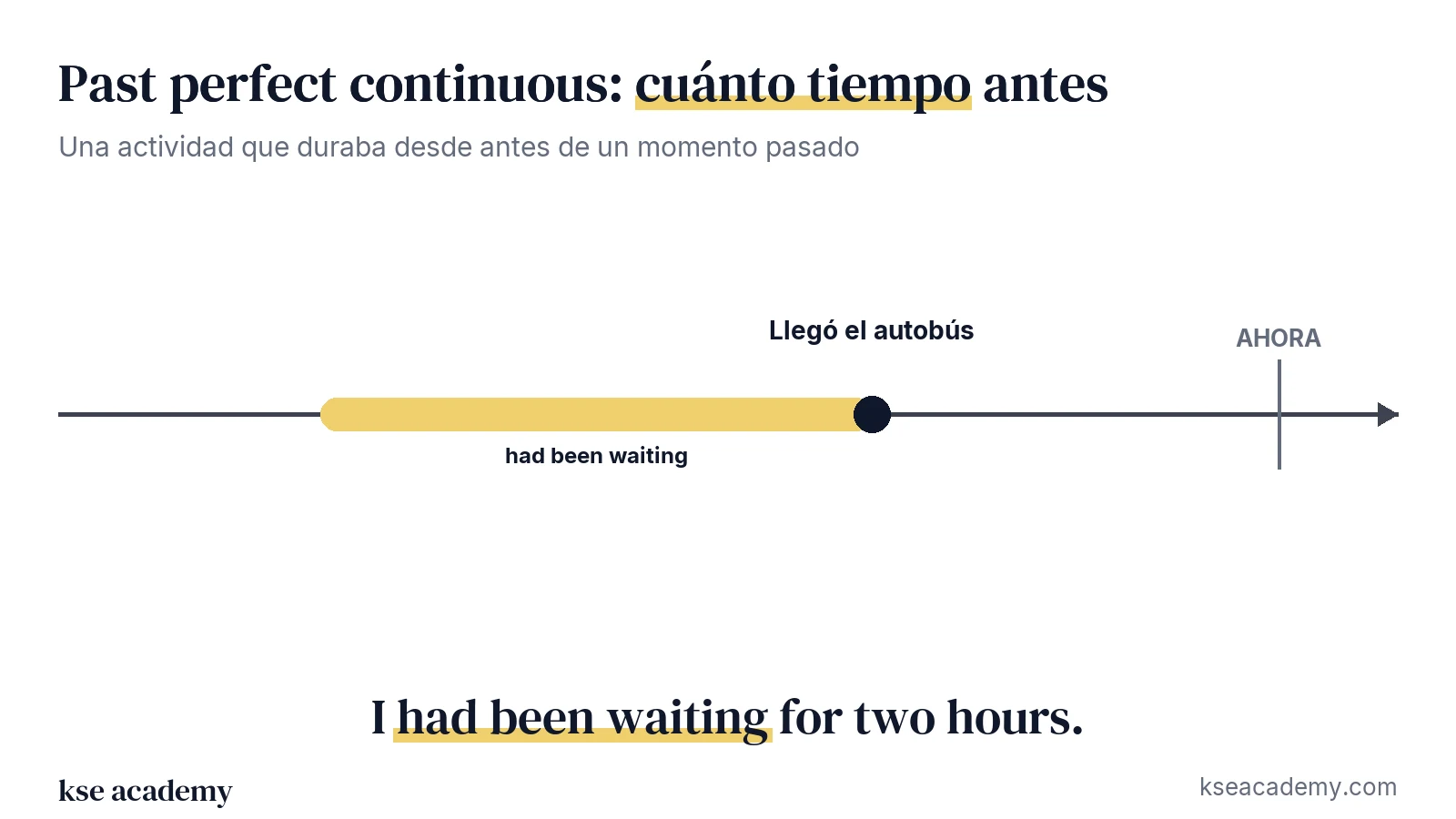
La actividad empieza antes del momento pasado y llega hasta él (o casi hasta él). Por eso es perfecto para decir «llevaba… haciendo algo cuando…».
Cómo se forma el past perfect continuous
La forma es siempre had been + verbo con -ing, y had es igual para todas las personas.
Afirmativa, negativa y pregunta
| Forma | Estructura | Ejemplo |
|---|---|---|
| Afirmativa | sujeto + had been + -ing | She had been working. |
| Negativa | sujeto + hadn’t been + -ing | She hadn’t been working. |
| Pregunta | Had + sujeto + been + -ing…? | Had she been working? |
| Con palabra interrogativa | palabra interrogativa + had + sujeto + been + -ing…? | How long had she been working? |
| Respuesta corta | Yes, she had. / No, she hadn’t. | Had you been waiting long? Yes, I had. |
Contracciones
| Forma completa | Contracción |
|---|---|
| I had been waiting | I’d been waiting |
| She had not been sleeping | She hadn’t been sleeping |
| They had been playing | They’d been playing |
Como en el past perfect, ‘d puede ser had o would. Si va seguido de been, es had.
Cuándo se usa el past perfect continuous
1. La duración de una actividad antes de un momento pasado
Es el uso principal. Quieres decir cuánto tiempo llevaba ocurriendo algo antes de otro hecho:
- She had been waiting for two hours when the bus finally arrived.
- We had been trying to open the door for five minutes when Jane found her key.
- By the time he got the job, he had been looking for work for almost a year.
2. La causa de algo que se veía en el pasado
Muy útil para explicar por qué había un resultado visible:
- His eyes were red because he had been crying.
- The ground was wet. It had been raining all night.
- She was covered in paint: she had been decorating the kitchen.
3. Con «for» y «since» para hablar de duración
- They had been living there for ten years when the factory closed.
- I had been working since six o’clock, so I was exhausted.
4. En el estilo indirecto
Cuando cuentas lo que alguien dijo, el present perfect continuous (y el past continuous) de sus palabras retroceden a past perfect continuous:
- «I have been working all day.» → She said she had been working all day.
- «I was waiting for you.» → He told me he had been waiting for me.
Lo trabajo a fondo en mi guía de reported speech.
5. Para contar historias
En una narración, el past perfect continuous da el trasfondo largo de lo que ocurría antes de que empiece la escena:
It was midnight. Anna was still awake. She had been reading since dinner, and she hadn’t noticed that the storm had started.
Palabras y expresiones que acompañan al past perfect continuous
| Palabra | Qué indica | Ejemplo |
|---|---|---|
| for | durante cuánto tiempo | They had been waiting for an hour. |
| since | desde cuándo | She had been studying since eight. |
| how long | pregunta por la duración | How long had you been waiting? |
| all day / all morning / all night | durante todo un periodo | He had been working all day. |
| when / before / by the time | el momento pasado de referencia | She had been crying when I came in. |
| recently / lately | en los últimos tiempos, antes de ese momento | He had been feeling tired lately. |
Past perfect continuous frente a past perfect simple
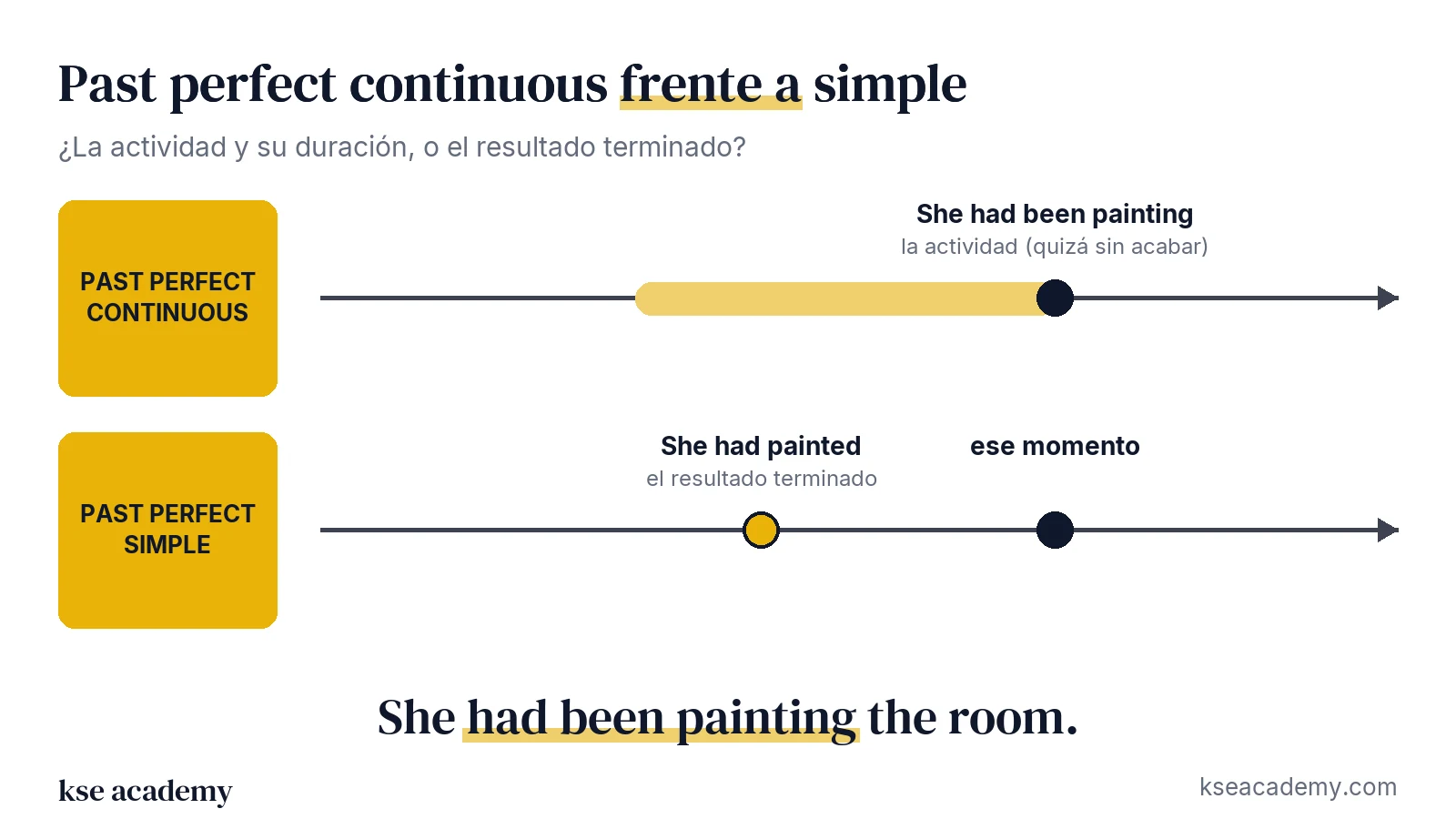
Es la duda más típica. La diferencia es de enfoque: el continuo pone el foco en la actividad y su duración; el simple, en el resultado o en lo terminado:
| Past perfect continuous | Past perfect simple |
|---|---|
| She had been painting the room. (La actividad; tal vez sin acabar.) | She had painted the room. (Terminó, está pintada.) |
| He had been eating for hours. (Duración.) | He had eaten all the food. (Resultado: no queda nada.) |
| How long had you been waiting? (¿Cuánto tiempo?) | How many emails had you written? (¿Cuántos?) |
| I had been reading that book. (Estaba en ello.) | I had read that book. (Lo terminé.) |
Una regla práctica: si la pregunta natural es «¿cuánto tiempo?», usa el continuo; si es «¿cuántos?» o «¿lo terminó?», el simple. Y con verbos de estado (know, be, have, like, want) se usa siempre el simple: She had known him for years (y no had been knowing). Tienes la lista en la guía de stative verbs y dynamic verbs.
Past perfect continuous frente a past continuous
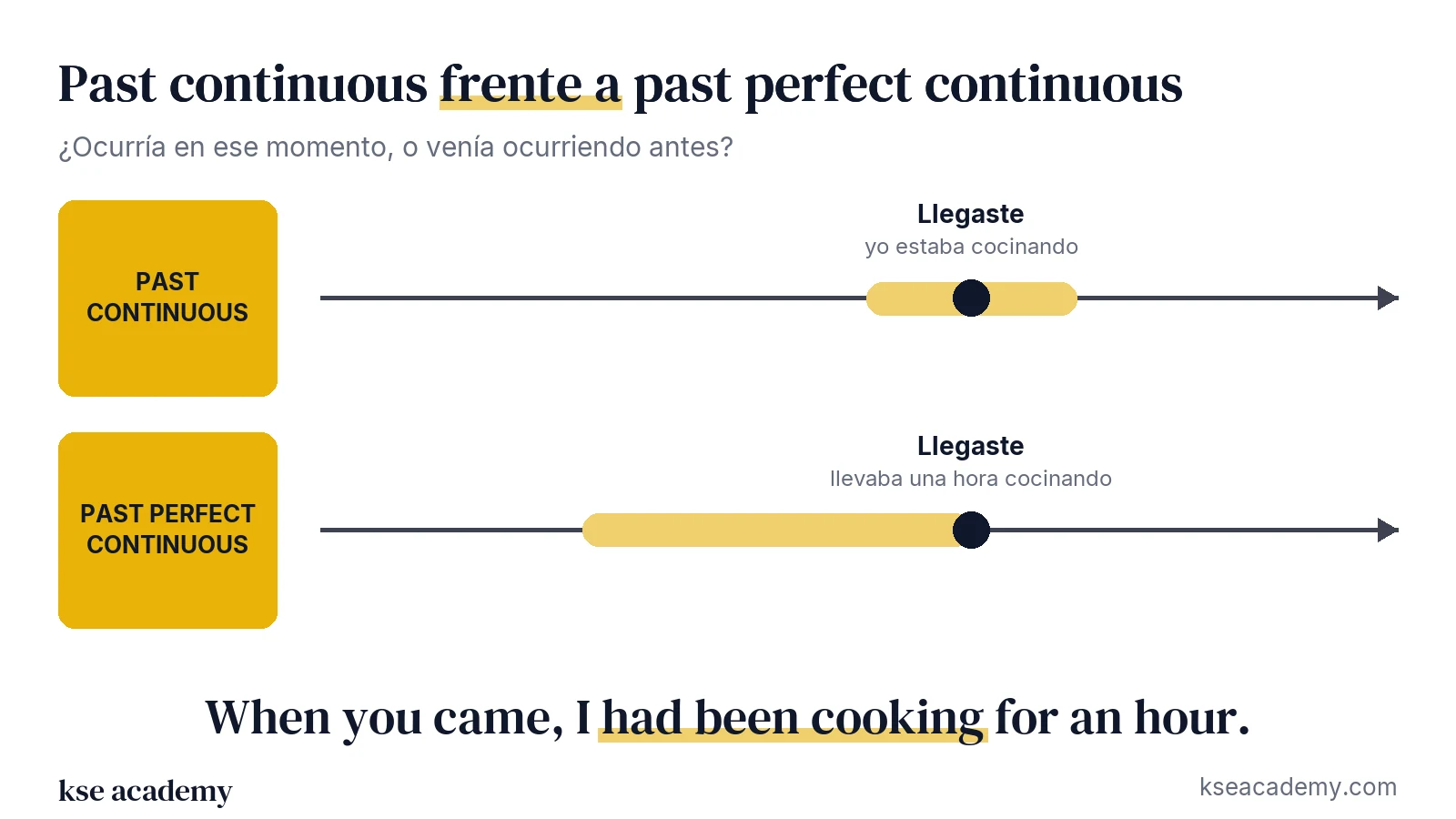
El past continuous habla de lo que ocurría en ese momento; el past perfect continuous, de lo que venía ocurriendo desde antes hasta ese momento:
| Tiempo | Ejemplo | Significado |
|---|---|---|
| Past continuous | When you came, I was cooking. | Cuando llegaste, estaba cocinando. |
| Past perfect continuous | When you came, I had been cooking for an hour. | Cuando llegaste, llevaba una hora cocinando. |
Past perfect continuous frente a present perfect continuous
Los dos hablan de una actividad en curso, pero desde un momento distinto. El present perfect continuous mira desde ahora; el past perfect continuous, desde un momento pasado:
| Tiempo | Ejemplo | Significado |
|---|---|---|
| Present perfect continuous | I have been waiting for two hours. | Llevo dos horas esperando (y sigo). |
| Past perfect continuous | I had been waiting for two hours when he arrived. | Llevaba dos horas esperando cuando llegó. |
Los tiempos del pasado, todos juntos
En una historia, los tiempos del pasado se turnan, cada uno con su papel. Mira cómo trabajan juntos en un solo párrafo:
It was a cold night. The streets were empty (past simple). Mark was walking home (past continuous: la acción en curso) when he realised that someone was following him. He had been working late (past perfect continuous: el trasfondo largo) and he had forgotten his phone at the office (past perfect simple: lo terminado antes). He turned round and saw the cat.
| Tiempo | Su papel en la historia |
|---|---|
| Past simple | Lo que ocurrió (la trama) |
| Past continuous | Lo que estaba en curso en la escena |
| Past perfect simple | Lo que ya había pasado (terminado) |
| Past perfect continuous | Lo que venía ocurriendo desde antes (duración) |
Español frente a inglés: dónde nos confundimos
En español, esta idea se expresa casi siempre con «llevaba + gerundio» o con el imperfecto; «había estado + gerundio» existe, pero se usa menos. Estas son las equivalencias más útiles:
| 🇪🇸 Español | 🇬🇧 Inglés | Qué pasa |
|---|---|---|
| Llevaba dos horas esperando cuando llegó. | I had been waiting for two hours when he arrived. | «Llevaba + gerundio» equivale a had been + -ing. |
| Estaba cansado porque había estado trabajando todo el día. | I was tired because I had been working all day. | Equivalencia directa («había estado + gerundio»). |
| Hacía diez años que vivían allí. | They had been living there for ten years. | «Hacía… que» se traduce con had been + -ing + for. |
| Hacía años que se conocían. | They had known each other for years. | Verbos de estado: simple, no had been knowing. |
Errores comunes con el past perfect continuous
| ❌ Incorrecto | ✅ Correcto | Por qué |
|---|---|---|
| I had been wait for an hour. | I had been waiting for an hour. | Después de been, el verbo lleva -ing. |
| She had waiting for two hours. | She had been waiting for two hours. | Falta been: es had been + -ing. |
| They had been knowing each other for years. | They had known each other for years. | Know es un verbo de estado: simple. |
| Had been you studying all night? | Had you been studying all night? | En preguntas: Had + sujeto + been. |
| He was tired because he has been working all night. | He was tired because he had been working all night. | Si la frase está en pasado, se usa had been. |
| I had been eating three sandwiches. | I had eaten three sandwiches. | Con cantidades (three) se usa el simple. |
| They had been been living there. | They had been living there. | Been aparece una sola vez. |
El past perfect continuous en los exámenes de Cambridge
Es un tiempo que se espera que domines a partir del B2 First y que es habitual en el C1 Advanced:
- Use of English (Part 4, key word transformations) en B2 First y C1 Advanced: con palabras clave como FOR, SINCE o el propio verbo en -ing.
- Writing en B2 First y C1 Advanced: en historias (stories), el past perfect continuous da el trasfondo y la causa de lo que ocurre.
- Speaking: contar una anécdota («I’d been waiting for hours when…») suena natural y preciso.
Dos ejemplos del estilo del Use of English Part 4:
- I started waiting at six and the bus arrived at eight. WAITING
I ______ for two hours when the bus arrived. → had been waiting - It started to rain at nine and we left at midnight. RAINING
It ______ for three hours when we left. → had been raining
Usos divertidos: el detective del past perfect continuous
Este tiempo es el favorito de los detectives: ve la prueba y deduce qué había estado pasando. Un pequeño repertorio de pistas:
| La pista | La deducción |
|---|---|
| Zapatos llenos de barro | He had been walking in the park. |
| Ojos rojos | She had been crying. (Or cutting onions.) |
| Harina por toda la cocina | The kids had been baking. |
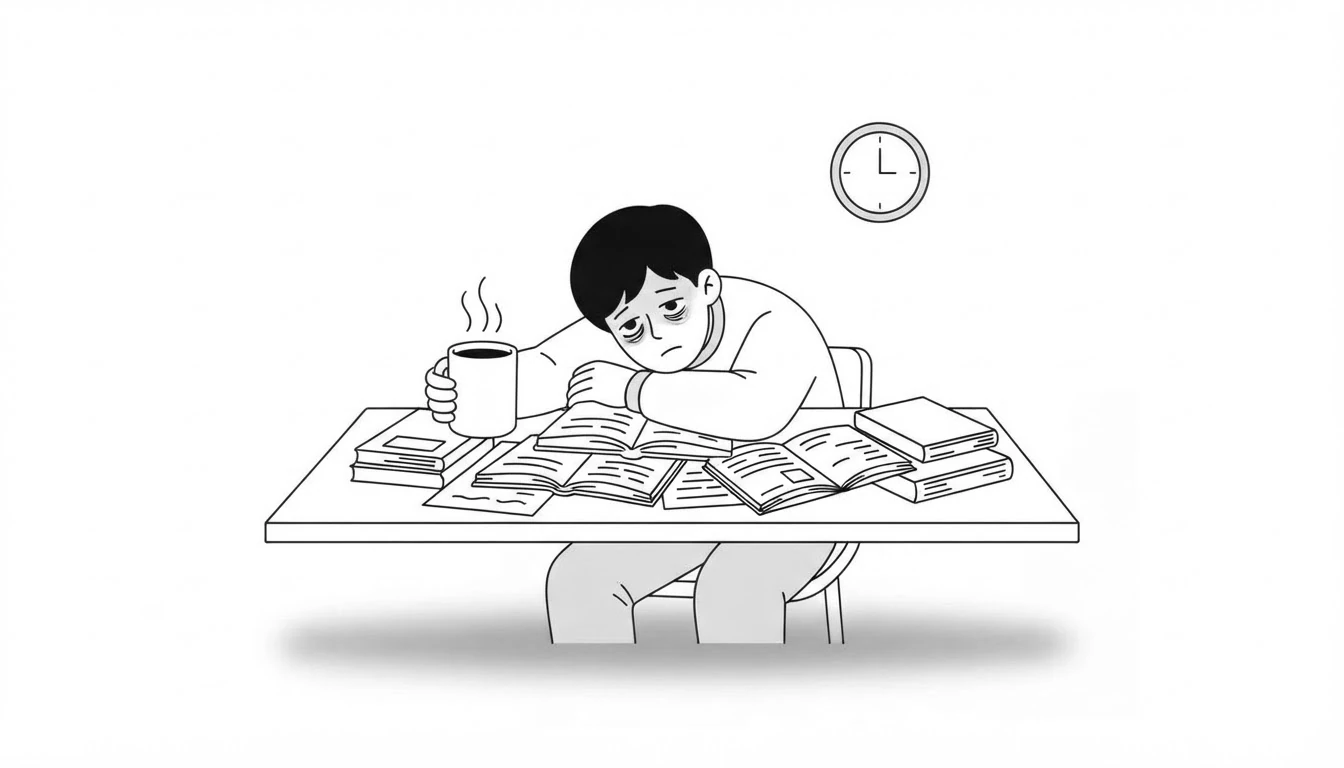
| Ojeras y un café enorme | I had been studying all night. |
| El pelo mojado | It had been raining. Or someone had been in the shower. |
| El sofá, deshecho | Someone had been sleeping here. |
Tabla resumen del past perfect continuous
| Qué | Cómo | Ejemplo |
|---|---|---|
| Forma | had been + -ing | She had been working. |
| Negativa | hadn’t been + -ing | She hadn’t been working. |
| Pregunta | Had + sujeto + been + -ing | Had she been working? |
| Uso principal | Duración de una actividad antes de un momento pasado | I had been waiting for two hours. |
| Causa | Explicar un resultado visible en el pasado | His eyes were red: he had been crying. |
| Estilo indirecto | Retroceso de tiempos | She said she had been working. |
Preguntas frecuentes sobre el past perfect continuous
¿Cuándo se usa el past perfect continuous?
Para hablar de una actividad que llevaba un tiempo ocurriendo antes de otro momento del pasado, para explicar la causa de un resultado visible y en el estilo indirecto.
¿Cómo se forma el past perfect continuous?
Con had been + verbo en -ing: She had been working. Para negar, hadn’t been; para preguntar, Had she been working?
¿Cuál es la diferencia entre past perfect simple y past perfect continuous?
El simple pone el foco en el resultado o en lo terminado (She had painted the room); el continuo, en la actividad y su duración (She had been painting the room).
¿Se puede usar con verbos de estado?
No. Con know, be, have, like, want, understand… se usa el past perfect simple: He had known her for years.
¿Qué diferencia hay entre «I had been waiting» y «I was waiting»?
I was waiting habla de lo que hacías en ese momento; I had been waiting añade que ya llevabas un tiempo haciéndolo antes de ese momento (for two hours).
¿Es lo mismo que el present perfect continuous?
No. El present perfect continuous mira atrás desde el presente (I have been waiting, llevo esperando). El past perfect continuous mira atrás desde un momento del pasado (I had been waiting, llevaba esperando).
Ejercicios de past perfect continuous
Treinta frases para comprobar que lo tienes claro. Aquí abajo tienes tres ejercicios interactivos que se corrigen solos, así que sabrás al momento qué tal lo has hecho.
Y si prefieres una versión en texto que puedas copiar y pegar, la tienes aquí abajo 👇
Exercise 1: choose the correct form
Choose the correct option to complete each sentence.
- She was exhausted because she (had run / had been running) for two hours.
- I (had read / had been reading) three chapters before dinner.
- Her eyes were red. She (cried / had been crying).
- How long (had you waited / had you been waiting) when the bus came?
- The room smelled of smoke. Someone (smoked / had been smoking).
- I (have been working / had been working) there for ten years when I was fired.
- He told me he (has been working / had been working) all morning.
- She (had known / had been knowing) him since 2010.
- They (had been building / had built) the house for months, but it still wasn’t finished.
- By nine o’clock, the children (were playing / had been playing) for three hours.
Ver respuestas
- had been running
- had read
- had been crying
- had you been waiting
- had been smoking
- had been working
- had been working
- had known
- had been building
- had been playing
Exercise 2: complete the sentences
Complete each sentence with the past perfect continuous of the verb in brackets. Write only the missing words.
- I was tired because I _______________ (work) all day.
- They _______________ (wait) for an hour when the bus finally arrived.
- _______________ (she / cry)? Her eyes were red.
- How long _______________ (you / learn) English before you moved to London?
- He _______________ (not / sleep) well, so he looked terrible.
- The ground was wet. It _______________ (rain) all night.
- We _______________ (drive) for six hours when the car broke down.
- She said she _______________ (study) since seven.
- My hands were covered in paint because I _______________ (paint) the kitchen.
- Why _______________ (they / argue)? Everyone was staring.
Ver respuestas
- had been working
- had been waiting
- Had she been crying
- had you been learning
- hadn’t been sleeping
- had been raining
- had been driving
- had been studying
- had been painting
- had they been arguing
Exercise 3: correct or incorrect?
Decide whether each sentence is correct. If it is incorrect, rewrite it correctly.
- She had been waiting for two hours when he arrived.
- I had been wait for an hour.
- They had been knowing each other for years.
- How long had you been working there?
- He was tired because he has been working all night.
- She hadn’t been sleeping well, so she looked tired.
- We had been walking since eight when it started to rain.
- I had been eating three sandwiches before the film.
- Had been you studying all night?
- They had been been living there for ten years.
Ver respuestas
- Correct
- I had been waiting for an hour.
- They had known each other for years.
- Correct
- He was tired because he had been working all night.
- Correct
- Correct
- I had eaten three sandwiches before the film.
- Had you been studying all night?
- They had been living there for ten years.
Conclusión
Resumiendo en tres ideas: el past perfect continuous (had been + -ing) habla de una actividad que llevaba un tiempo ocurriendo antes de un momento pasado; sirve para dar la duración, explicar la causa de algo que se veía y dar trasfondo en las historias; y el simple pone el foco en el resultado, el continuo en la actividad, y con verbos de estado se usa siempre el simple.
Si quieres seguir con los tiempos verbales, tienes las guías del Past Perfect, del Past Continuous y del Present Perfect Continuous. ¿Tienes dudas con el past perfect continuous? Escríbeme y te ayudo.
¿Te ha parecido útil este post? Compártelo con otros estudiantes y profesores de inglés. Y si quieres más contenido como este, suscríbete a mi newsletter y sígueme en Facebook, Twitter, Pinterest, Instagram y YouTube.
Nos vemos en el próximo post. Hasta entonces, don’t forget to keep smiling! 🙂
