
Table of contents
Black Friday is just around the corner and half the world is hunting for deals, so it’s the perfect moment to talk about shopping vocabulary in English. Buying something on an English website is one thing; walking into a shop in London and having to ask where the fitting rooms are, whether they’ve got a bigger size or if you can get your money back is quite another. That’s when the nerves kick in… along with the false friends: a library isn’t a bookshop, and if you ask for a devolution, nobody will understand you.
So let’s put it all in order. Here you’ll find how to say go shopping and do the shopping, the names of shops with their pronunciation, the vocabulary you see inside the shop, offers and sales (with Black Friday and Cyber Monday explained), how to pay, sizes and fitting rooms, returns and refunds, online shopping, the differences between British and American English, useful phrases for customers and shop assistants, the typical mistakes Spanish speakers make and, at the end, exercises with answers.
Let’s go! 🙂
Shopping: the basic words
The key word is shopping, but it depends a lot on the verb that goes with it. Look at the difference:
| 🇬🇧 English | Pronunciation | 🇪🇸 Spanish |
|---|---|---|
| shopping | /ˈʃɒpɪŋ/ | compras, las compras |
| go shopping | /ˌɡəʊ ˈʃɒpɪŋ/ | ir de compras (por placer) |
| do the shopping | /ˌduː ðə ˈʃɒpɪŋ/ | hacer la compra (la de la semana) |
| buy | /baɪ/ | comprar |
| shop | /ʃɒp/ | tienda; comprar (verbo) |
| customer | /ˈkʌstəmə/ | cliente |
| shop assistant | /ˈʃɒp əˌsɪstənt/ | dependiente/a |
| window shopping | /ˈwɪndəʊ ˌʃɒpɪŋ/ | mirar escaparates |
The pair learners mix up most is go shopping and do the shopping. I’m going shopping with my friends means wandering round the shops for fun. I do the shopping on Saturdays means buying the household food, the weekly supermarket shop. And in both cases shopping has no a and no plural: never a shopping or shoppings.
Shops in English
In British English, many shops are named after the person who works there, with ‘s at the end: the butcher’s is «the butcher’s shop». That’s why you say I’m going to the butcher’s or to the chemist’s. These are the most useful ones:
| 🇬🇧 English | Pronunciation | 🇪🇸 Spanish |
|---|---|---|
| supermarket | /ˈsuːpəˌmɑːkɪt/ | supermercado |
| baker’s / bakery | /ˈbeɪkəz/, /ˈbeɪkəri/ | panadería |
| butcher’s | /ˈbʊtʃəz/ | carnicería |
| fishmonger’s | /ˈfɪʃˌmʌŋɡəz/ | pescadería |
| greengrocer’s | /ˈɡriːnˌɡrəʊsəz/ | frutería |
| chemist’s / pharmacy | /ˈkemɪsts/, /ˈfɑːməsi/ | farmacia |
| bookshop | /ˈbʊkʃɒp/ | librería |
| newsagent’s | /ˈnjuːzˌeɪdʒənts/ | quiosco, tienda de prensa |
| stationer’s | /ˈsteɪʃənəz/ | papelería |
| hardware shop / DIY store | /ˈhɑːdweə ʃɒp/ | ferretería, tienda de bricolaje |
| jeweller’s | /ˈdʒuːələz/ | joyería |
| florist’s | /ˈflɒrɪsts/ | floristería |
| shoe shop | /ˈʃuː ʃɒp/ | zapatería |
| toy shop | /ˈtɔɪ ʃɒp/ | juguetería |
| department store | /dɪˈpɑːtmənt stɔː/ | grandes almacenes |
| shopping centre | /ˈʃɒpɪŋ ˌsentə/ | centro comercial |
| corner shop | /ˈkɔːnə ʃɒp/ | tienda de barrio, de ultramarinos |
| market | /ˈmɑːkɪt/ | mercado |
Two classic traps for Spanish speakers. First, a bookshop is where you buy books, while a library is where you borrow them (Spanish librería is a bookshop). Second, in the UK the traditional name for the pharmacy is the chemist’s, even if the counter says pharmacy. If you’re planning a trip, my post on travel vocabulary in English has much more to help you get around.
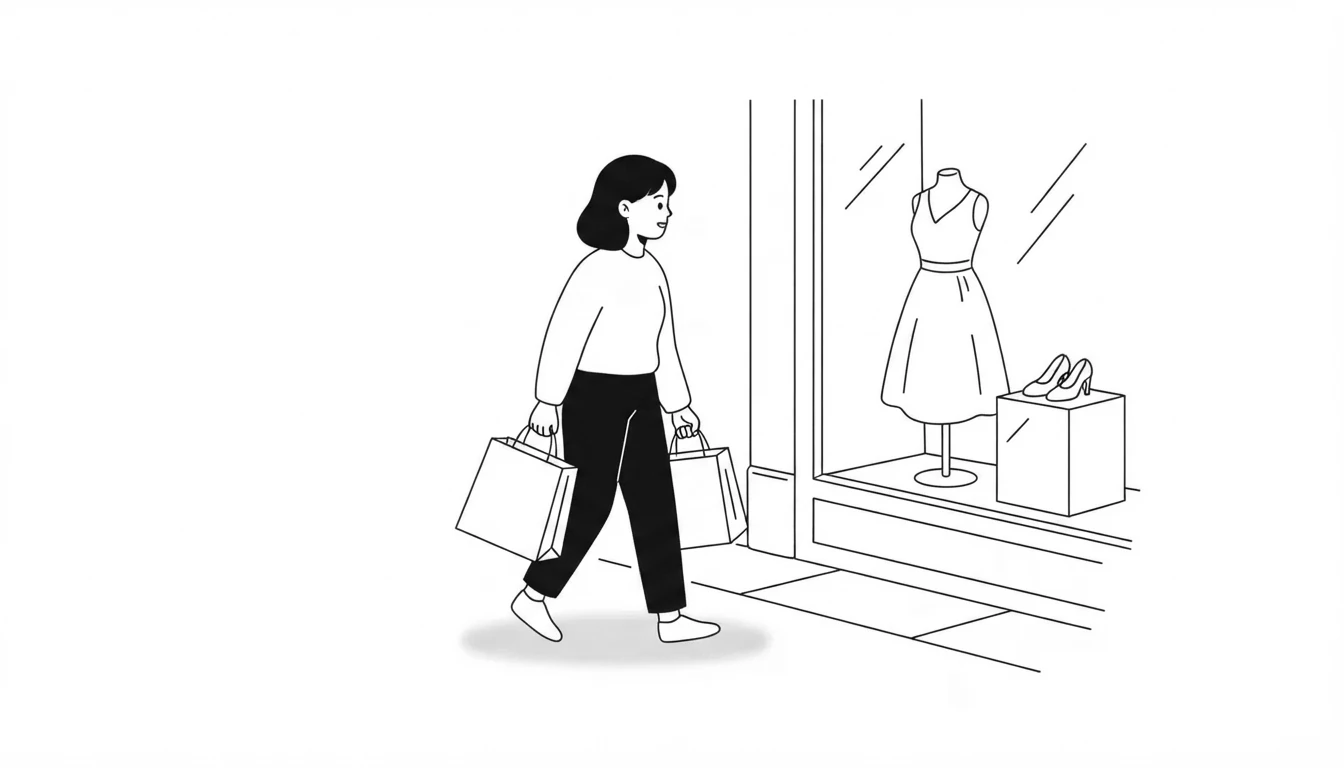
Inside the shop
You’re in. These are the words you’ll see on the signs and hear from the staff:
| 🇬🇧 English | Pronunciation | 🇪🇸 Spanish |
|---|---|---|
| aisle | /aɪl/ | pasillo (del súper) |
| shelf | /ʃelf/ | estante, balda |
| trolley | /ˈtrɒli/ | carro de la compra |
| basket | /ˈbɑːskɪt/ | cesta |
| till / checkout | /tɪl/, /ˈtʃekaʊt/ | caja |
| self-checkout | /ˌself ˈtʃekaʊt/ | caja de autopago |
| cashier | /kæˈʃɪə/ | cajero/a |
| queue | /kjuː/ | cola, fila |
| price tag | /ˈpraɪs tæɡ/ | etiqueta del precio |
| receipt | /rɪˈsiːt/ | tique, recibo |
| bag | /bæɡ/ | bolsa |
| opening hours | /ˈəʊpənɪŋ ˌaʊəz/ | horario |
Watch the pronunciation of two of them. In aisle the s is silent: it sounds like I’ll, /aɪl/. And in receipt the p is silent too, /rɪˈsiːt/. One cultural note: in the UK, queuing is almost sacred, so no jumping the queue. 🙂
Prices, offers and sales
This is the vocabulary people search for most, and no wonder, because it’s the vocabulary that saves you money:
| 🇬🇧 English | Pronunciation | 🇪🇸 Spanish |
|---|---|---|
| the sales | /ðə ˈseɪlz/ | las rebajas |
| in the sale / on sale | /ɪn ðə ˈseɪl/ | rebajado |
| offer / special offer | /ˈɒfə/ | oferta |
| discount | /ˈdɪskaʊnt/ | descuento |
| 20% off | /ˌtwenti pəˈsent ˈɒf/ | 20 % de descuento |
| half price | /ˌhɑːf ˈpraɪs/ | a mitad de precio |
| reduced | /rɪˈdjuːst/ | rebajado |
| bargain | /ˈbɑːɡɪn/ | ganga, chollo |
| buy one, get one free | /ˌbaɪ wʌn ˌɡet wʌn ˈfriː/ | 2 x 1 |
| voucher / coupon | /ˈvaʊtʃə/, /ˈkuːpɒn/ | vale, cupón |
| loyalty card | /ˈlɔɪəlti kɑːd/ | tarjeta de cliente |
| expensive / cheap | /ɪkˈspensɪv/, /tʃiːp/ | caro / barato |
Note that the sales is plural and takes the: The sales start in January. A reduced item is in the sale (British) or on sale (American). Be careful with on sale in the UK, where it often just means «available to buy».
And Black Friday? It’s the Friday after Thanksgiving (the fourth Thursday in November in the US), the day that opens the Christmas shopping season with big discounts. The most widespread explanation of the name is that it was the day shops went from the red into the black, in other words, started making a profit. The following Monday is Cyber Monday, when the deals focus on online shops. If you’d like more about the season, my post on Christmas vocabulary in English covers the rest of it.
Paying
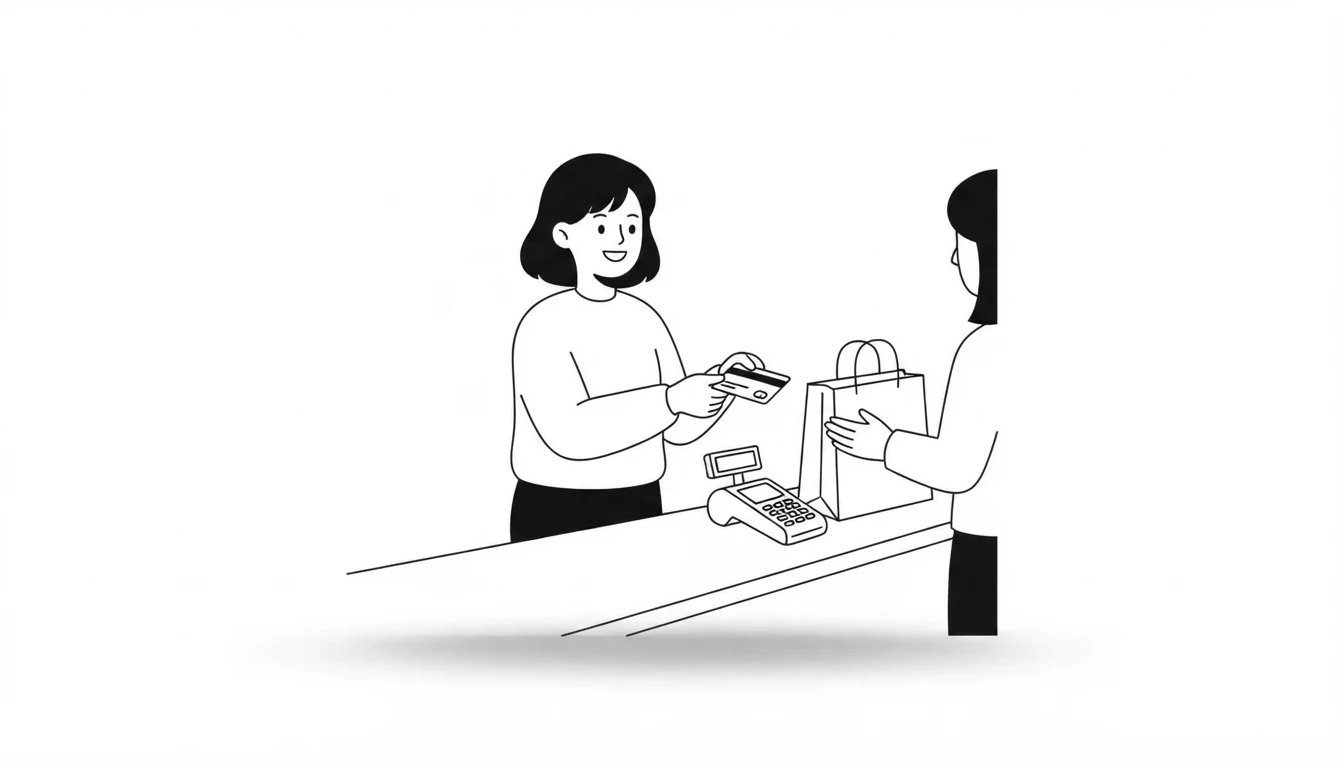
Time to go to the till. These are the phrases and words you’ll need:
| 🇬🇧 English | Pronunciation | 🇪🇸 Spanish |
|---|---|---|
| pay by card | /ˌpeɪ baɪ ˈkɑːd/ | pagar con tarjeta |
| pay in cash | /ˌpeɪ ɪn ˈkæʃ/ | pagar en efectivo |
| contactless | /ˈkɒntæktləs/ | sin contacto |
| enter your PIN | /ˌentə jɔː ˈpɪn/ | introducir el PIN |
| change | /tʃeɪndʒ/ | cambio, vuelta |
| total | /ˈtəʊtl/ | total |
The usual way to say it is Can I pay by card?, with by, and I’ll pay in cash, with in. If the cashier says That’s £12.50 and prices still slow you down, have a look at my post on numbers in English, and for banks, coins and payments, the one on money vocabulary.
Sizes and fitting rooms
If you’re buying clothes or shoes, these are the key words:
| 🇬🇧 English | Pronunciation | 🇪🇸 Spanish |
|---|---|---|
| size | /saɪz/ | talla, número |
| try on | /ˌtraɪ ˈɒn/ | probarse |
| fitting room / changing room | /ˈfɪtɪŋ ruːm/, /ˈtʃeɪndʒɪŋ ruːm/ | probador |
| fit | /fɪt/ | quedar bien (de talla) |
| suit | /suːt/ | favorecer, quedar bien (de estilo) |
| too big / too small | /ˌtuː ˈbɪɡ/ | demasiado grande / pequeño |
The difference between fit and suit is really useful: These jeans don’t fit me means they’re the wrong size; That colour really suits you means it looks great on you. And remember that it’s try on, never prove: Can I try these on? You’ll find many more items and expressions in my post on clothes vocabulary, and colours in the one on colours in English.
Returns and refunds
You bought it, got home and you’re not convinced. This is what you need:
| 🇬🇧 English | Pronunciation | 🇪🇸 Spanish |
|---|---|---|
| return | /rɪˈtɜːn/ | devolver; devolución |
| refund | /ˈriːfʌnd/ | reembolso |
| exchange | /ɪksˈtʃeɪndʒ/ | cambiar (por otra cosa) |
| faulty | /ˈfɔːlti/ | defectuoso |
| returns policy | /rɪˈtɜːnz ˌpɒləsi/ | política de devoluciones |
| store credit | /ˈstɔː ˌkredɪt/ | vale para gastar en la tienda |
The difference between the first two: you return the item, and the money you get back is a refund. So you’d say I’d like to return this jacket. Can I have a refund? And never devolution, which in English is about transferring power to a region. 😅
Online shopping
And if you’d rather shop from the sofa, this is the vocabulary of any English website:
| 🇬🇧 English | Pronunciation | 🇪🇸 Spanish |
|---|---|---|
| online shopping | /ˌɒnlaɪn ˈʃɒpɪŋ/ | compras por internet |
| add to basket | /ˌæd tə ˈbɑːskɪt/ | añadir a la cesta |
| checkout | /ˈtʃekaʊt/ | finalizar la compra |
| order | /ˈɔːdə/ | pedido; pedir |
| delivery | /dɪˈlɪvəri/ | envío, entrega |
| free delivery | /ˌfriː dɪˈlɪvəri/ | envío gratis |
| parcel | /ˈpɑːsl/ | paquete |
| tracking number | /ˈtrækɪŋ ˌnʌmbə/ | número de seguimiento |
| out of stock | /ˌaʊt əv ˈstɒk/ | agotado |
| review | /rɪˈvjuː/ | opinión, reseña |
One detail: British websites say basket, while American ones say cart. Same thing.
British and American English: shopping
There are quite a few differences here, so these are the most common ones:
| 🇬🇧 British English | 🇺🇸 American English | 🇪🇸 Spanish |
|---|---|---|
| shop | store | tienda |
| shopping centre | mall | centro comercial |
| trolley | cart | carro de la compra |
| queue | line | cola |
| till | register | caja |
| chemist’s | drugstore / pharmacy | farmacia |
| in the sale | on sale | rebajado |
| basket (online) | cart | cesta de la web |
Useful phrases for shopping in English
These are the phrases you’ll really use. First, the customer’s:
- Excuse me, where can I find the shampoo?
- How much is this? / How much does this cost?
- Do you have this in a medium? / in a bigger size?
- Can I try this on?
- I’m just looking, thanks.
- I’ll take it.
- Can I pay by card?
- I’d like to return this, please.
And now, the ones the shop assistant will say to you:
- Can I help you? / Are you looking for anything in particular?
- What size are you?
- The fitting rooms are over there.
- Would you like a bag?
- Do you have a loyalty card?
- Do you have the receipt?
Look how useful can and could are for asking politely: Could I see that one, please? If you want to review them, there’s my post on can, could and be able to. And to ask if they’ve got something, Do you have any…? takes any, as I explain in the one on some and any.
A sample conversation
Shop assistant: Hi there, can I help you?
Customer: Yes, please. Do you have this jumper in a large?
Shop assistant: Let me check… Yes, here you are. Would you like to try it on?
Customer: Yes, please. Where are the fitting rooms?
Shop assistant: Just over there, on the left.
Customer: It fits perfectly. How much is it?
Shop assistant: It’s £35, but it’s 20% off today, so that’s £28.
Customer: Great, I’ll take it. Can I pay by card?
Shop assistant: Of course. Would you like a bag?
Customer: No, thanks. I’ve got one.
Typical mistakes Spanish speakers make
| ❌ Incorrect | ✅ Correct | Why |
|---|---|---|
| I bought it in a library. | I bought it in a bookshop. | A library lends books. |
| Can I prove it? | Can I try it on? | For clothes, it’s try on. |
| I’m going to do shopping. | I’m going shopping. / I’m going to do the shopping. | For fun, go shopping; for the household, do the shopping. |
| How much is it cost? | How much is it? / How much does it cost? | Don’t mix is and cost. |
| I want a devolution. | I’d like a refund. | Devolution has nothing to do with shopping. |
| The rebajas start today. | The sales start today. | Spanish rebajas are the sales. |
| This shirt doesn’t fit with me. | This shirt doesn’t fit me. | Fit takes no preposition. |
| Can I pay with card? | Can I pay by card? | The natural forms are by card and in cash. |
If you enjoyed these false friends, my post on Spanish-English false friends has more than 60 of them.
Shopping in the Cambridge exams
Shopping is one of the star topics at A2 and B1:
- Speaking: in Part 1 of the A2 Key Speaking you may be asked Do you like shopping? or Where do you usually go shopping?, and in the B1 Preliminary Speaking describing a photo of a shop or a market is very common.
- Listening: at A2 and B1 there are lots of conversations in shops, with prices, discounts and opening hours you have to catch first time.
- Writing: an email telling a friend what you’ve bought, or complaining about an order that hasn’t arrived, is a classic.
Tips for learning shopping vocabulary
- Switch your shopping apps to English. If you shop on sites like Amazon, set them to English: you’ll see add to basket, checkout and delivery every day.
- Learn whole phrases. Don’t stop at try on: memorise Can I try this on? and it’ll be ready when you need it.
- Practise with prices. Reading prices aloud from a leaflet (nine ninety-nine, twelve fifty) helps a lot in the Listening.
- Act out the conversation. Read the dialogue above aloud, then change the item, the size and the price.
FAQs about shopping vocabulary
What’s the difference between a bookshop and a library?
A bookshop (American bookstore) sells books, and a library lends them. Spanish librería is a bookshop.
Is it shop or store?
Shop in British English and store in American English. In the UK, store is mostly used for big shops: department store.
What do you call the room where you try clothes on?
A fitting room or a changing room. In American English you’ll also hear dressing room.
What’s the difference between return and refund?
You return the item, and the refund is the money you get back: I returned the shoes and got a full refund.
How do you say «rebajas» and «oferta» in English?
Rebajas are the sales, and una oferta is an offer or a special offer. If it’s a great deal, a bargain.
Shopping vocabulary exercises
Before your next trip to a shop in London, put yourself to the test. Below you have three interactive exercises that mark themselves, so you’ll know straight away how you’ve done. Try to do them without looking back at the post.
And if you’d like these exercises as text to copy, paste or adapt for your classes, here they are below with the answers 👇
Exercise 1: choose the correct option
Choose the correct option to complete each sentence.
- Can I (try on / prove) this jacket?
- Excuse me, where are the (fitting rooms / probators)?
- I’d like to return this. Can I have a (refund / devolution)?
- Everything is 50% off. The (sales / rebates) start today.
- Excuse me, how much (is / costs) this bag?
- Do you have this in a bigger (size / measure)?
- I bought some medicine at the (chemist’s / library).
- I need some nails and a hammer. Let’s go to the (hardware shop / bookshop).
- Keep the (receipt / recipe) in case you want to change it.
- Can I pay (by / with) card?
Show answers
- try on
- fitting rooms
- refund
- sales
- is
- size
- chemist’s
- hardware shop
- receipt
- by
Exercise 2: complete the sentences
Complete each sentence with one of these words. Use each word only once: bargain, basket, cashier, checkout, delivery, discount, queue, receipt, trolley, window shopping.
- The supermarket was busy, so there was a long _______________ at the tills.
- I only need three things, so I’ll take a _______________ instead of a trolley.
- Free _______________ on all orders over £30!
- These boots were only £15. What a _______________!
- Students get a 10% _______________ with their student card.
- I added the shoes to my basket and went to the _______________ to pay.
- The _______________ asked me if I wanted a bag.
- We didn’t buy anything; we just went _______________.
- Can you push the _______________? It’s very heavy with all this food.
- Can I see your _______________? We need it to give you a refund.
Show answers
- queue
- basket
- delivery
- bargain
- discount
- checkout
- cashier
- window shopping
- trolley
- receipt
Exercise 3: correct or incorrect?
Decide whether each sentence is correct. If it is incorrect, rewrite it correctly.
- I bought this book in a library.
- Can I try it on?
- How much does it cost?
- The shop assistent was very helpful.
- I’m going to do shopping this afternoon.
- Is this jacket in sale?
- I want to return these shoes because they are too big.
- They gave me my money back, so I got a devolution.
- How much is it cost?
- This shirt doesn’t fit with me.
Show answers
- I bought this book in a bookshop.
- Correct
- Correct
- The shop assistant was very helpful.
- I’m going shopping this afternoon.
- Is this jacket in the sale?
- Correct
- They gave me my money back, so I got a refund.
- How much is it?
- This shirt doesn’t fit me.
Conclusion
Shopping in English goes far beyond How much is it?, but if you only keep four things in mind, make it these: a bookshop sells books; the sales are plural; you try on clothes; and you return an item to get a refund. With that, this Black Friday and any day of the year, you’ll shop in English like a native.
Did you find this post useful? Share it with other English learners and teachers. And if you’d like more content like this, subscribe to my newsletter and follow me on Facebook, Twitter, Pinterest, Instagram and YouTube.
See you in the next post. Until then, don’t forget to keep smiling! 🙂
