
Table of contents
Have you ever frozen at an airport check-in desk because you couldn’t remember the right word, or turned up at a hotel not quite sure whether to ask for a double room or a twin room? You’re not alone. Travelling is one of the situations where we really need our English, and it’s also one of the topics that comes up most in the Cambridge exams, from A2 Key all the way to C1 Advanced.
On top of that, this topic has a few traps: you don’t «lose» a plane, luggage can’t be counted, and travel, trip and journey aren’t synonyms. Don’t worry, though, because in this post I’ll make it all crystal clear.
You’ll find the difference between travel, trip, journey and voyage, the vocabulary for planning a trip, means of transport, everything you need at the airport and at the hotel, the language of sightseeing, what to say when there are problems while travelling, how to talk about mass tourism and sustainable tourism, the most useful collocations, idioms and phrasal verbs, typical mistakes, how all this appears in the exams and, at the end, exercises with answers.
Let’s get started! 🙂
Travel, trip, journey or voyage?
Let’s start with the most common question. All four words are about going from one place to another, but each one has its own use:
| 🇬🇧 English | Pronunciation | What it means | Example |
|---|---|---|---|
| travel | /ˈtrævl/ | The activity of travelling in general. As a noun it’s uncountable. | Travel broadens the mind. |
| trip | /trɪp/ | A specific visit somewhere and back, including the stay. | We went on a school trip to London. |
| journey | /ˈdʒɜːni/ | The act of getting from one place to another. | The journey to Madrid takes four hours. |
| voyage | /ˈvɔɪɪdʒ/ | A long journey by sea (or in space). It sounds rather literary. | The Titanic sank on its first voyage. |
Here’s my trick to remember it: travel is the activity, trip is the whole thing (your holiday in Rome) and journey is just the getting there (the hours on the plane or the train). That’s why, when someone comes back from holiday, we ask How was your trip?, not How was your travel? ❌.
And watch the verbs: we go on a trip or take a trip, never make a trip ❌. For the journey itself, make a journey is fine.
Planning a trip: bookings and documents
Before you leave home, there’s plenty to organise. This is the vocabulary you’ll need:
| 🇬🇧 English | Pronunciation | 🇪🇸 Spanish |
|---|---|---|
| to book | /bʊk/ | reservar |
| a booking / a reservation | /ˈbʊkɪŋ/, /ˌrezəˈveɪʃn/ | una reserva |
| a travel agency | /ˈtrævl ˈeɪdʒənsi/ | una agencia de viajes |
| a package holiday | /ˈpækɪdʒ ˈhɒlədeɪ/ | un viaje organizado (vuelo + hotel) |
| a single ticket | /ˈsɪŋɡl ˈtɪkɪt/ | un billete de ida |
| a return ticket | /rɪˈtɜːn ˈtɪkɪt/ | un billete de ida y vuelta |
| a passport | /ˈpɑːspɔːt/ | un pasaporte |
| an ID card | /ˌaɪ ˈdiː kɑːd/ | un DNI, un documento de identidad |
| a visa | /ˈviːzə/ | un visado |
| travel insurance | /ˈtrævl ɪnˈʃʊərəns/ | seguro de viaje |
| to pack / to unpack | /pæk/, /ʌnˈpæk/ | hacer / deshacer la maleta |
| luggage / baggage | /ˈlʌɡɪdʒ/, /ˈbæɡɪdʒ/ | equipaje |
| a suitcase | /ˈsuːtkeɪs/ | una maleta |
| a backpack / a rucksack | /ˈbækpæk/, /ˈrʌksæk/ | una mochila |
Notice two things. First, single and return are the British terms; in the US they say one-way and round-trip. Second, and this really matters: luggage and baggage are uncountable. You can say a lot of luggage or two pieces of luggage, but never two luggages ❌. If you want to count, count suitcases: two suitcases. And if you need to change money before you go, it’s all in my post on money vocabulary in English.
Means of transport
| 🇬🇧 English | Pronunciation | 🇪🇸 Spanish |
|---|---|---|
| a plane | /pleɪn/ | un avión |
| a train | /treɪn/ | un tren |
| a coach | /kəʊtʃ/ | un autocar (de largo recorrido) |
| a bus | /bʌs/ | un autobús (urbano) |
| the underground / the Tube | /ˈʌndəɡraʊnd/, /tjuːb/ | el metro (de Londres) |
| a ferry | /ˈferi/ | un ferry |
| a cruise ship | /kruːz ʃɪp/ | un crucero |
| a taxi / a cab | /ˈtæksi/, /kæb/ | un taxi |
| a hire car (UK) / a rental car (US) | /ˈhaɪə kɑː/ | un coche de alquiler |
| a platform | /ˈplætfɔːm/ | un andén |
| a timetable | /ˈtaɪmteɪbl/ | un horario |
| a ticket office | /ˈtɪkɪt ˈɒfɪs/ | una taquilla |
With means of transport we use by with no article: by plane, by train, by coach. The exception is walking, which is on foot. And choose your verbs carefully: for big vehicles you can stand up in (buses, trains, planes) we say get on / get off, and for cars and taxis, get in / get out of. For more uses of this verb, have a look at my post on phrasal verbs with GET.
At the airport
The airport is, without a doubt, where you’ll need the most specific vocabulary. Here it is, roughly in the order you’ll go through it, from arriving to collecting your bags:
| 🇬🇧 English | Pronunciation | 🇪🇸 Spanish |
|---|---|---|
| a flight | /flaɪt/ | un vuelo |
| an airline | /ˈeəlaɪn/ | una aerolínea |
| departures / arrivals | /dɪˈpɑːtʃəz/, /əˈraɪvlz/ | salidas / llegadas |
| the check-in desk | /ˈtʃek ɪn desk/ | el mostrador de facturación |
| to check in | /tʃek ˈɪn/ | facturar, hacer el check-in |
| hand luggage | /hænd ˈlʌɡɪdʒ/ | equipaje de mano |
| a boarding pass | /ˈbɔːdɪŋ pɑːs/ | una tarjeta de embarque |
| security | /sɪˈkjʊərəti/ | el control de seguridad |
| passport control | /ˈpɑːspɔːt kənˈtrəʊl/ | el control de pasaportes |
| the departure lounge | /dɪˈpɑːtʃə laʊndʒ/ | la sala de embarque |
| a gate | /ɡeɪt/ | una puerta de embarque |
| to board | /bɔːd/ | embarcar |
| an aisle seat / a window seat | /aɪl siːt/, /ˈwɪndəʊ siːt/ | un asiento de pasillo / de ventanilla |
| to take off / to land | /teɪk ˈɒf/, /lænd/ | despegar / aterrizar |
| a stopover / a layover | /ˈstɒpəʊvə/, /ˈleɪəʊvə/ | una escala |
| a connecting flight | /kəˈnektɪŋ flaɪt/ | un vuelo de conexión |
| baggage reclaim | /ˈbæɡɪdʒ ˈriːkleɪm/ | la recogida de equipajes |
| customs | /ˈkʌstəmz/ | la aduana |
| jet lag | /ˈdʒet læɡ/ | el desfase horario, el jet lag |
Be careful with the pronunciation of aisle: the s is silent and it sounds exactly like I’ll, /aɪl/. And notice that customs is always plural.
These are the phrases you’ll hear (and say) most at the airport:
- Can I see your passport and boarding pass, please?
- Did you pack your bags yourself?
- Could I have a window seat, please?
- Flight BA478 to London is now boarding at gate 12.
- Anything to declare?
Accommodation: at the hotel
| 🇬🇧 English | Pronunciation | 🇪🇸 Spanish |
|---|---|---|
| accommodation | /əˌkɒməˈdeɪʃn/ | alojamiento |
| a hotel | /həʊˈtel/ | un hotel |
| a hostel | /ˈhɒstl/ | un albergue |
| a B&B (bed and breakfast) | /ˌbiː ən ˈbiː/ | una casa de huéspedes con desayuno |
| a holiday let / a holiday apartment | /ˈhɒlədeɪ let/ | un piso turístico |
| a campsite | /ˈkæmpsaɪt/ | un camping |
| reception | /rɪˈsepʃn/ | la recepción |
| a receptionist | /rɪˈsepʃənɪst/ | un recepcionista |
| a single room | /ˈsɪŋɡl ruːm/ | una habitación individual |
| a double room | /ˈdʌbl ruːm/ | una habitación doble (cama de matrimonio) |
| a twin room | /twɪn ruːm/ | una habitación doble (dos camas) |
| a key card | /ˈkiː kɑːd/ | una tarjeta de la habitación |
| half board / full board | /hɑːf bɔːd/, /fʊl bɔːd/ | media pensión / pensión completa |
| all-inclusive | /ˌɔːl ɪnˈkluːsɪv/ | todo incluido |
| to check in / to check out | /tʃek ˈɪn/, /tʃek ˈaʊt/ | registrarse / dejar el hotel |
| room service | /ruːm ˈsɜːvɪs/ | servicio de habitaciones |

Mind the difference between a double room and a twin room: both are for two people, but a double has one big bed and a twin has two separate beds. If you’re travelling with a friend, make sure you know which one you’re booking. 😉
Some useful phrases at reception:
- I have a reservation in the name of García.
- Is breakfast included?
- What time is check-out?
- Could I leave my luggage here until this afternoon?
Sightseeing and tourism
You’ve arrived. Now it’s time to get out and explore:
| 🇬🇧 English | Pronunciation | 🇪🇸 Spanish |
|---|---|---|
| to go sightseeing | /ɡəʊ ˈsaɪtsiːɪŋ/ | hacer turismo, visitar los monumentos |
| a tourist attraction | /ˈtʊərɪst əˈtrækʃn/ | un lugar de interés turístico |
| a landmark | /ˈlændmɑːk/ | un monumento emblemático, un punto de referencia |
| a guided tour | /ˈɡaɪdɪd tʊə/ | una visita guiada |
| a tour guide | /ˈtʊə ɡaɪd/ | un guía turístico |
| a day trip | /ˈdeɪ trɪp/ | una excursión de un día |
| the old town | /ði əʊld taʊn/ | el casco antiguo |
| a souvenir | /ˌsuːvəˈnɪə/ | un recuerdo |
| a tourist information office | /ˈtʊərɪst ˌɪnfəˈmeɪʃn ˈɒfɪs/ | una oficina de turismo |
| off the beaten track | /ɒf ðə ˈbiːtn træk/ | poco turístico, lejos de las rutas habituales |
| a must-see | /ˈmʌst siː/ | una visita obligada |
| breathtaking | /ˈbreθteɪkɪŋ/ | impresionante, que quita el aliento |
An important detail: we go on a guided tour (not go to a guided tour ❌) and we go sightseeing, with no to, just like go shopping or go swimming. And for a one-day outing, the natural word is a day trip; excursion exists, but it sounds rather formal. Since the weather can ruin a day out, here’s my post on weather vocabulary in English too.
Problems while travelling
I hope you never need this section, but just in case, here are the words and phrases for when things go wrong:
| 🇬🇧 English | Pronunciation | 🇪🇸 Spanish |
|---|---|---|
| to miss a flight / a train | /mɪs ə flaɪt/ | perder un vuelo / un tren |
| a delay / to be delayed | /dɪˈleɪ/, /dɪˈleɪd/ | un retraso / sufrir un retraso |
| to be cancelled | /ˈkænsld/ | ser cancelado |
| lost luggage | /lɒst ˈlʌɡɪdʒ/ | equipaje perdido |
| to be overbooked | /ˌəʊvəˈbʊkt/ | tener overbooking |
| to get lost | /ɡet ˈlɒst/ | perderse |
| an expired passport | /ɪkˈspaɪəd ˈpɑːspɔːt/ | un pasaporte caducado |
| a strike | /straɪk/ | una huelga |
| to make a complaint | /meɪk ə kəmˈpleɪnt/ | poner una reclamación |
| a refund | /ˈriːfʌnd/ | un reembolso |
| to be ripped off | /rɪpt ˈɒf/ | que te timen, que te cobren de más |
For Spanish speakers, this is probably the most common mistake in the whole post: you don’t lose a flight, you miss it: We missed the flight because of the traffic. Lose is for something you can’t find any more: The airline lost my suitcase.
Mass tourism and sustainable tourism
This section is key if you’re preparing for an exam at B2 or above, because tourism is a very common opinion topic. And, living in Granada, I can tell you it’s a debate I know first-hand. 🙂
| 🇬🇧 English | Pronunciation | 🇪🇸 Spanish |
|---|---|---|
| mass tourism | /mæs ˈtʊərɪzəm/ | turismo masivo |
| overtourism | /ˌəʊvəˈtʊərɪzəm/ | masificación turística |
| sustainable tourism | /səˈsteɪnəbl ˈtʊərɪzəm/ | turismo sostenible |
| eco-friendly | /ˈiːkəʊ ˌfrendli/ | respetuoso con el medio ambiente |
| the tourist industry | /ðə ˈtʊərɪst ˈɪndəstri/ | el sector turístico |
| local residents | /ˈləʊkl ˈrezɪdənts/ | los vecinos, la población local |
| to create jobs | /kriˈeɪt dʒɒbz/ | crear empleo |
| to boost the economy | /buːst ði ɪˈkɒnəmi/ | impulsar la economía |
| rising rents | /ˈraɪzɪŋ rents/ | la subida de los alquileres |
| overcrowded | /ˌəʊvəˈkraʊdɪd/ | abarrotado, masificado |
| a tourist tax | /ˈtʊərɪst tæks/ | una tasa turística |
| carbon footprint | /ˈkɑːbən ˈfʊtprɪnt/ | huella de carbono |
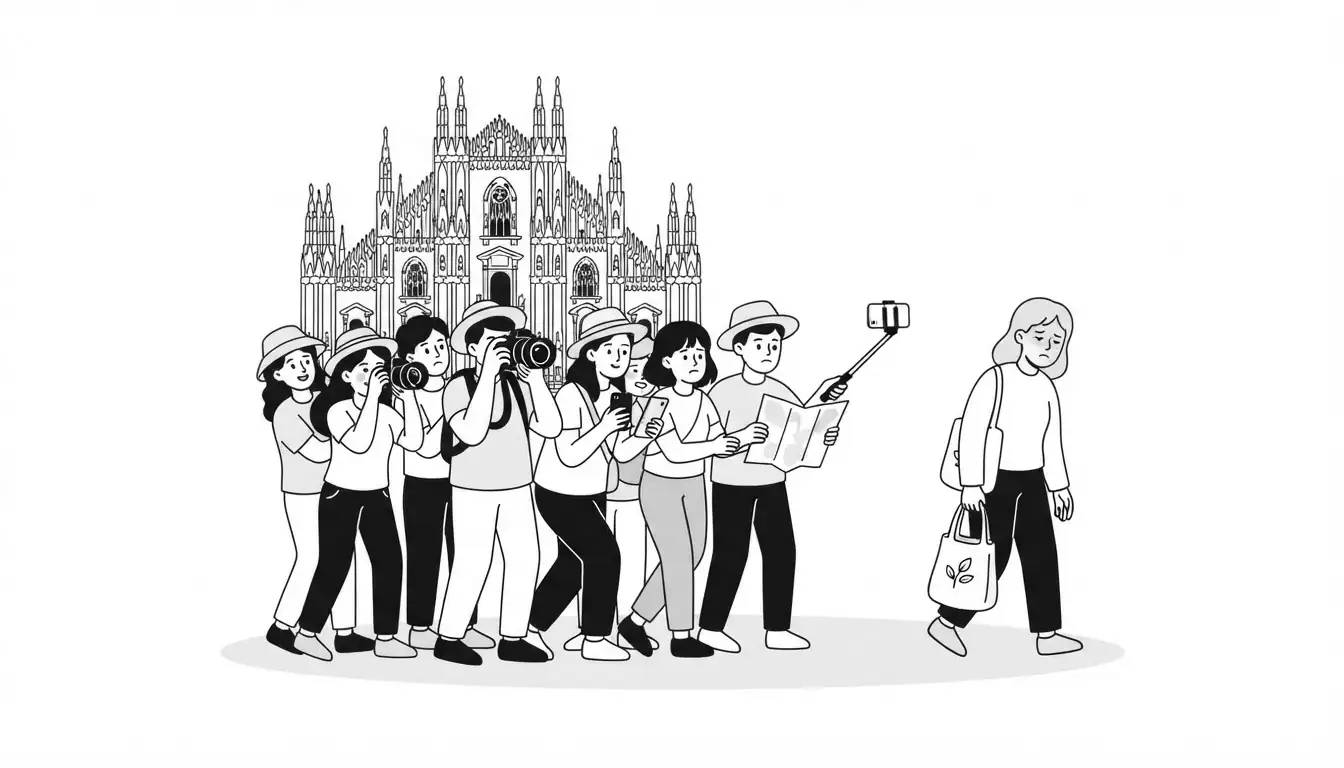
With this vocabulary you can argue both sides. For: Tourism creates jobs and boosts the local economy. Against: In some cities, rising rents are forcing local residents to move out. And if you want more words about the environment (pollution, climate change…), they’re in my post on environment vocabulary in English.
Travel collocations, idioms and phrasal verbs
Key collocations
| 🇬🇧 English | 🇪🇸 Spanish |
|---|---|
| go on holiday | irse de vacaciones |
| go on a trip / take a trip | hacer un viaje |
| book a flight / a room | reservar un vuelo / una habitación |
| catch a train / a bus | coger un tren / un autobús |
| miss a flight | perder un vuelo |
| travel light | viajar ligero de equipaje |
| a long-haul flight | un vuelo de largo recorrido |
| a short break / a city break | una escapada (de fin de semana) |
| a budget airline | una aerolínea de bajo coste |
| peak season / off-peak season | temporada alta / temporada baja |
Watch the first one: in British English it’s go on holiday, singular and with on. Go of holidays ❌ and go to holidays ❌ are very common mistakes. And while you’re there, you’re on holiday.
Travel idioms
| 🇬🇧 Idiom | Meaning | Example |
|---|---|---|
| catch the travel bug | to start loving travel and want to do more of it | She caught the travel bug after her first trip to Asia. |
| hit the road | to set off on a journey | It’s getting late, let’s hit the road. |
| off the beaten track | away from the usual tourist routes | We found a lovely village off the beaten track. |
| live out of a suitcase | to travel so much you never really unpack | I travel so much for work that I live out of a suitcase. |
| a tourist trap | a place designed to take tourists’ money | That restaurant is a real tourist trap. |
| itchy feet | a strong wish to travel or move on | After a few months at home I get itchy feet. |
Travel phrasal verbs
- set off / set out: to start a journey. We set off at six to avoid the traffic.
- check in / check out: to register at / leave a hotel; to check in at the airport. We checked out at eleven.
- take off: to leave the ground. The plane took off an hour late. There are many more in my post on phrasal verbs with TAKE.
- get on / get off: to board / leave a bus, train or plane. We got off the train at York.
- see someone off: to say goodbye to someone at the airport or station. My parents came to see me off.
- pick someone up: to collect someone. Can you pick me up at the airport?
- stop over: to break a long journey. We stopped over in Dubai on the way to Bangkok.
Typical mistakes and false friends
- Losing the plane: We lost the plane ❌, We missed the plane ✅.
- Asking about someone’s holiday: How was your travel? ❌, How was your trip? ✅.
- Making a trip: make a trip ❌, go on a trip / take a trip ✅.
- Counting luggage: two luggages ❌, two suitcases / two pieces of luggage ✅.
- Going on holiday: go of holidays ❌, go on holiday ✅.
- Arriving somewhere: arrive to the airport ❌, arrive at the airport ✅ (and arrive in with cities and countries: arrive in London).
- Asking for information: an information ❌, some information or a piece of information ✅. Like luggage, it’s uncountable.
- The false friend «camping»: in English, camping is the activity (We love camping). The place is a campsite: We stayed at a campsite.
- The false friend «parking»: the place to leave your car is a car park in British English (a parking lot in American English), not a parking ❌.
- Getting off the train: get down the train ❌, get off the train ✅.
Travel in the Cambridge exams
In my experience as an exam trainer, travel and holidays come up at every level:
- Speaking Part 1 (A2 Key, B1 Preliminary, B2 First): personal questions like Do you like travelling?, Where did you go on your last holiday? or Do you prefer travelling by plane or by train?
- Speaking Part 4 (B2 First, C1 Advanced): opinion questions like Is tourism good for a city like yours?, Why do some people prefer package holidays? or Should tourists pay a tourist tax?
- Writing: emails to a friend about a trip (A2 and B1), reviews of a hotel or an article about your town (B2) and essays on mass tourism. I explain how to write that last one in my guide to the B2 First essay.
- Reading and Listening: airport announcements, tourist leaflets and interviews with travellers are very common texts.
And if you’re preparing for the PAU, bear in mind that travel and tourism often come up in its texts and writing tasks; everything you need to know about the exam is in my guide to the PAU English exam in Andalusia.
Example Speaking answer
Here’s an answer to a typical Part 4 question, Do you think tourism does more good than harm to cities like yours?, written to simulate a B2 level, without reaching C1:
That’s a difficult question. On the one hand, tourism is really important for my city, Granada, because it creates a lot of jobs and boosts the local economy. Many restaurants and shops depend on visitors. On the other hand, the old town is often overcrowded in peak season, and rents have gone up so much that some local residents have had to move out. In my opinion, tourism is positive, but it needs to be more sustainable. For example, a small tourist tax could help to pay for cleaning the streets.
Here’s what makes it work: it opens with a phrase to buy time (That’s a difficult question), presents both sides with On the one hand… On the other hand, uses topic collocations (create jobs, boost the local economy, peak season, local residents) and ends with a clear opinion and a concrete example. It uses a natural present perfect (rents have gone up) and a result clause with so much that, but it doesn’t reach for complex structures or very sophisticated vocabulary. That’s exactly what’s expected at B2.
Useful vocabulary for Writing
If you have to write an essay or an article about tourism, these words will help you raise your level:
- a double-edged sword: something with both good and bad effects. Tourism is a double-edged sword for many coastal towns.
- to have an impact on: Cruise ships have a huge impact on small ports.
- to put pressure on: Millions of visitors put pressure on local services.
- the cost of living: Overtourism raises the cost of living.
- to preserve: We must preserve the historic centre.
- to limit the number of visitors: Some cities have decided to limit the number of visitors.
Tips for learning this vocabulary
- Learn it in the order of a trip: booking, airport, hotel, sightseeing. A word is easier to remember when you link it to a specific moment.
- Switch your travel apps to English. Booking a flight or a hotel in English means reading boarding pass, check-in or half board in a real context.
- Plan your next trip in English: write your packing list, the phrases you’ll need at the hotel or how you’ll ask for the bill. For that last one, my post on food vocabulary in English will help.
- Describe your last trip out loud: where you went, how you got there, where you stayed and whether anything went wrong. It’s the best practice there is for Speaking Part 1.
Travel vocabulary exercises
Time to practise. Below you have three interactive exercises that mark themselves, so you’ll know straight away how you’ve done. Try to do them without looking back at the post.
And if you prefer a version in text that you can copy and paste, you have it down here 👇
Exercise 1. Choose the correct option
Choose the correct word or phrase in each sentence.
- We went on a school (trip / travel) to London last year.
- The (journey / travel) from Granada to Madrid takes about four hours by train.
- The Titanic sank on its first (voyage / travel) in 1912.
- Hurry up or we’ll (miss / lose) the flight!
- How much (luggage / luggages) are you taking?
- Excuse me, where’s the nearest (car park / parking)? I need to leave the car.
- We stayed at a lovely (campsite / camping) near the beach.
- You have to (check out / check in) of the hotel before 11 a.m.
- Can I see your passport and boarding (pass / card), please?
- I’d like a (return / round) ticket to Edinburgh, please.
Show answers
- trip
- journey
- voyage
- miss
- luggage
- car park
- campsite
- check out
- pass
- return
Exercise 2. Complete the word
Complete each sentence with the missing word. The first letter is given in brackets.
- You can’t take liquids through airport _______ (s).
- We waited for an hour at baggage _______ (r) for our suitcases.
- Is breakfast _______ (i) in the price?
- I’d like to _______ (b) a double room for three nights.
- The plane took _______ (o) an hour late because of the storm.
- The flight to Rome is now _______ (b) at gate 12.
- Before you travel, check that your passport hasn’t _______ (e).
- We went _______ (s) in Rome and visited the Colosseum.
- The airline lost my suitcase, so I made a _______ (c).
- In some cities, local people can’t afford the _______ (r) any more because of tourist flats.
Show answers
- security
- reclaim
- included
- book
- off
- boarding
- expired
- sightseeing
- complaint
- rent
Exercise 3. Correct the mistake
Each sentence has one mistake. Rewrite it correctly.
- We lost the train because we were late.
- I’m going to make a trip to Scotland next summer.
- How was your travel to Paris?
- I have too many luggages.
- We’re going to go of holidays in August.
- We arrived to the airport at six.
- Can you give me an information about the tours?
- We stayed in a camping near the lake.
- We went to a guided tour of the old town.
- We got down the train at York.
Show answers
- We missed the train because we were late.
- I’m going to go on a trip to Scotland next summer.
- How was your trip to Paris?
- I have too much luggage.
- We’re going to go on holiday in August.
- We arrived at the airport at six.
- Can you give me some information about the tours?
- We stayed in a campsite near the lake.
- We went on a guided tour of the old town.
- We got off the train at York.
Conclusion
To sum up: travel is the activity, a trip is the whole visit and a journey is the getting there; you don’t lose a plane, you miss it; luggage and information can’t be counted; and you go on holiday, not of holidays. With the airport, hotel and sightseeing vocabulary in this post, your next trip in English will be much easier. And with the language of mass and sustainable tourism, you’ll have plenty of ideas for Speaking Part 4 and for Writing.
Did you find this post useful? Share it with other English students and teachers. And if you’d like more content like this, subscribe to my newsletter and follow me on Facebook, Twitter, Pinterest, Instagram and YouTube.
See you in the next post. Until then, don’t forget to keep smiling! 🙂
