
Table of contents
December is here, and with it comes the big question: is it Merry Christmas or Happy Christmas? And how on earth do you explain the Three Kings, turrón or the Spanish Christmas lottery to someone who has never heard of them? If you’ve ever gone blank while wishing a friend or a client a happy festive season, don’t worry: it happens to everyone, because Christmas in Britain and Christmas in Spain have less in common than you might think.
In this post I’ll give you everything you need to talk about Christmas in English: the key vocabulary with its pronunciation (decorations, characters, food and presents), what a British Christmas looks like and how to explain a Spanish Christmas, the best Christmas greetings depending on who you’re writing to, a sample Christmas card, the most famous carols, festive idioms and phrasal verbs, the typical mistakes Spanish speakers make, how all this can come up in the Cambridge exams and, at the end, exercises with an answer key.
Let’s get started! 🙂
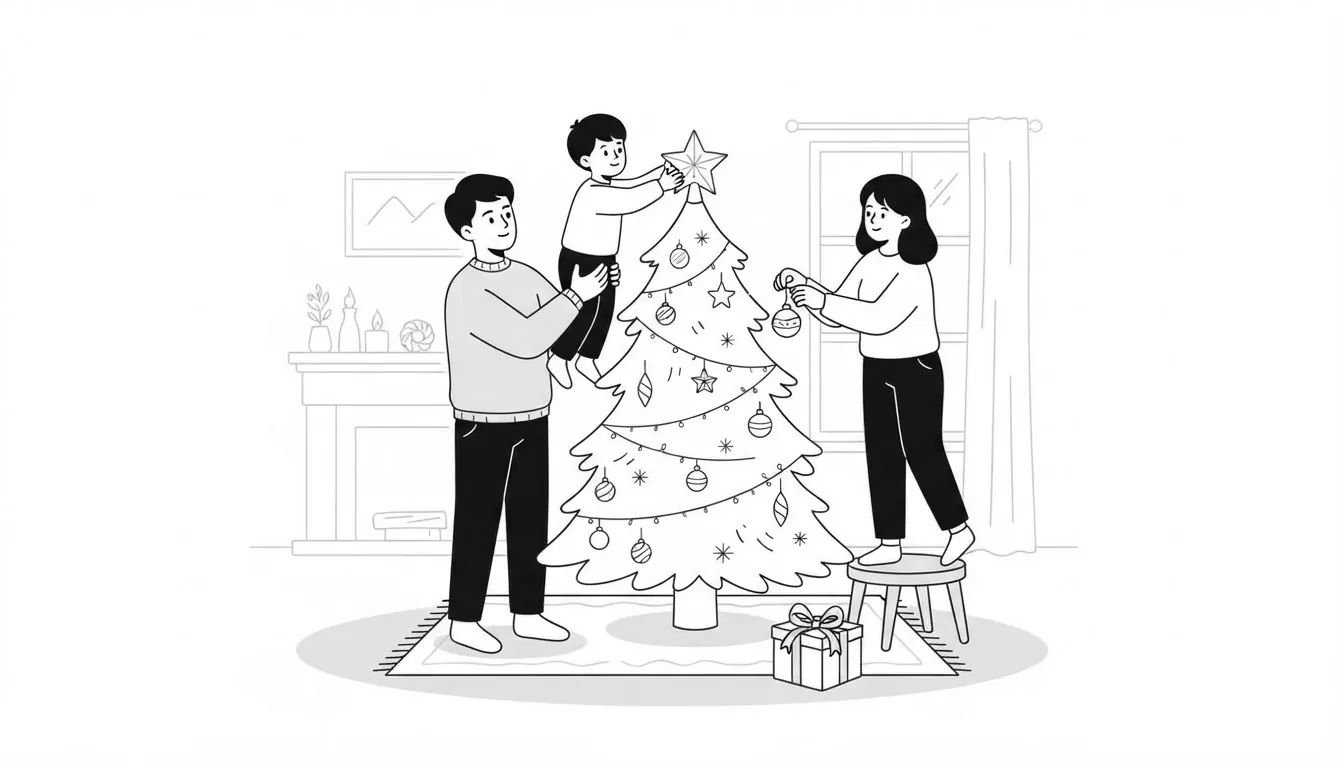
How do you say Navidad in English?
Navidad is Christmas, pronounced /ˈkrɪsməs/. Two things to notice: the t is silent (it isn’t «crist-mas»), and the word always takes a capital letter, because in English festivals are proper nouns: Christmas, Easter, New Year’s Eve.
You’ll also see Xmas, an informal abbreviation used in texts, adverts and cards (Merry Xmas!). It isn’t wrong, but in an exam or any formal text always write Christmas.
These are the key dates:
| 🇬🇧 English | Pronunciation | 🇪🇸 Spanish |
|---|---|---|
| Advent | /ˈædvent/ | Adviento (the four weeks before Christmas) |
| Christmas Eve | /ˌkrɪsməs ˈiːv/ | Nochebuena (24 December) |
| Christmas Day | /ˌkrɪsməs ˈdeɪ/ | día de Navidad (25 December) |
| Boxing Day | /ˈbɒksɪŋ deɪ/ | 26 December, a bank holiday in the UK |
| New Year’s Eve | /ˌnjuː jɪəz ˈiːv/ | Nochevieja |
| New Year’s Day | /ˌnjuː jɪəz ˈdeɪ/ | día de Año Nuevo |
| Twelfth Night | /ˌtwelfθ ˈnaɪt/ | Noche de Reyes |
| Epiphany | /ɪˈpɪfəni/ | día de Reyes (6 January) |
| the Christmas holidays / the festive season | /ˈhɒlədeɪz/, /ˈfestɪv ˈsiːzn/ | las vacaciones de Navidad, las fiestas |
If you’d like to brush up on how to say and write dates, it’s all explained in my post on dates in English.
Christmas vocabulary in English
Let’s go through the words in groups. My advice is not to try to learn them all at once: pick the ones you’d actually use to talk about your own Christmas.
Christmas decorations
| 🇬🇧 English | Pronunciation | 🇪🇸 Spanish |
|---|---|---|
| Christmas tree | /ˈkrɪsməs triː/ | árbol de Navidad |
| decorations | /ˌdekəˈreɪʃnz/ | adornos |
| bauble | /ˈbɔːbl/ | bola de Navidad (ornament in the US) |
| tinsel | /ˈtɪnsl/ | espumillón |
| fairy lights | /ˈfeəri laɪts/ | lucecitas de Navidad (Christmas lights in the US) |
| star | /stɑː/ | estrella |
| angel | /ˈeɪndʒl/ | ángel |
| wreath | /riːθ/ | corona de Navidad (the one on the door) |
| holly | /ˈhɒli/ | acebo |
| mistletoe | /ˈmɪsltəʊ/ | muérdago |
| candle | /ˈkændl/ | vela |
| stocking | /ˈstɒkɪŋ/ | calcetín de Navidad, where presents are left |
| Advent calendar | /ˈædvent ˌkælɪndə/ | calendario de Adviento |
| nativity scene | /nəˈtɪvəti siːn/ | belén, nacimiento |
| snowman / snowflake | /ˈsnəʊmæn/, /ˈsnəʊfleɪk/ | muñeco de nieve / copo de nieve |
A fun fact: in the UK people kiss under the mistletoe, so if someone at a party says Look up, you’re under the mistletoe!, you know what’s coming. 😉
Christmas characters
| 🇬🇧 English | Pronunciation | 🇪🇸 Spanish |
|---|---|---|
| Father Christmas / Santa Claus / Santa | /ˌfɑːðə ˈkrɪsməs/, /ˈsæntə klɔːz/ | Papá Noel |
| reindeer | /ˈreɪndɪə/ | reno (the plural is also reindeer) |
| sleigh | /sleɪ/ | trineo |
| elf / elves | /elf/, /elvz/ | elfo / elfos |
| the Three Wise Men / the Three Kings | /ˌθriː waɪz ˈmen/, /ˌθriː ˈkɪŋz/ | los Reyes Magos |
| Baby Jesus | /ˌbeɪbi ˈdʒiːzəs/ | el Niño Jesús |
| the Virgin Mary and Joseph | /ˈvɜːdʒɪn ˈmeəri/, /ˈdʒəʊzɪf/ | la Virgen María y San José |
| shepherd | /ˈʃepəd/ | pastor (the figures in a nativity scene) |
Father Christmas is the traditional British name and Santa Claus the American one, although both are used in the UK today. And watch the pronunciation of sleigh: it sounds exactly like slay, because the gh is silent (there are plenty more examples in my post on how to pronounce gh in English).
Christmas food and drink
This is where the two countries differ most. In the UK, the big meal is Christmas dinner on the 25th, usually eaten at lunchtime (yes, it’s still called dinner):
| 🇬🇧 English | Pronunciation | 🇪🇸 Spanish |
|---|---|---|
| roast turkey | /ˌrəʊst ˈtɜːki/ | pavo asado |
| stuffing | /ˈstʌfɪŋ/ | relleno |
| roast potatoes | /ˌrəʊst pəˈteɪtəʊz/ | patatas asadas |
| Brussels sprouts | /ˌbrʌslz ˈspraʊts/ | coles de Bruselas |
| gravy | /ˈɡreɪvi/ | salsa hecha con el jugo de la carne |
| cranberry sauce | /ˈkrænbəri sɔːs/ | salsa de arándanos rojos |
| Christmas pudding | /ˌkrɪsməs ˈpʊdɪŋ/ | pudin de Navidad, with dried fruit and spices |
| mince pies | /ˌmɪns ˈpaɪz/ | pastelitos rellenos de frutas secas |
| gingerbread | /ˈdʒɪndʒəbred/ | pan de jengibre |
| candy cane | /ˈkændi keɪn/ | bastón de caramelo |
| mulled wine | /ˌmʌld ˈwaɪn/ | vino caliente con especias |
| eggnog | /ˈeɡnɒɡ/ | ponche de huevo (more typical in the US) |
And for a Spanish Christmas table, which you’ll also want to be able to describe:
| 🇬🇧 English | Pronunciation | 🇪🇸 Spanish |
|---|---|---|
| nougat (turrón) | /ˈnuːɡɑː/ | turrón |
| marzipan | /ˈmɑːzɪpæn/ | mazapán |
| crumbly shortbread (polvorones) | /ˈkrʌmbli ˈʃɔːtbred/ | polvorones, mantecados |
| Three Kings’ cake (roscón) | /ˌθriː ˈkɪŋz keɪk/ | roscón de Reyes |
| seafood / prawns | /ˈsiːfuːd/, /prɔːnz/ | marisco / gambas |
| roast lamb | /ˌrəʊst ˈlæm/ | cordero asado |
| cured ham | /ˌkjʊəd ˈhæm/ | jamón serrano |
My tip for typical Spanish sweets: use the Spanish name and explain it. Most British people won’t recognise nougat as turrón, so something like We eat turrón, a sweet made with almonds and honey works much better. If you’re hungry for more cooking vocabulary, there’s loads in my post on food in English.
Presents
| 🇬🇧 English | Pronunciation | 🇪🇸 Spanish |
|---|---|---|
| present / gift | /ˈpreznt/, /ɡɪft/ | regalo |
| wrapping paper | /ˈræpɪŋ ˌpeɪpə/ | papel de regalo |
| ribbon / bow | /ˈrɪbən/, /bəʊ/ | cinta / lazo |
| to wrap / to unwrap | /ræp/, /ʌnˈræp/ | envolver / desenvolver |
| Christmas card | /ˈkrɪsməs kɑːd/ | tarjeta de Navidad, christmas |
| Secret Santa | /ˌsiːkrət ˈsæntə/ | amigo invisible |
| stocking filler | /ˈstɒkɪŋ ˌfɪlə/ | regalito, detalle |
| wish list / letter to Santa | /ˈwɪʃ lɪst/ | lista de deseos / carta a Papá Noel |
Present and gift mean the same thing; gift sounds slightly more formal and it’s the one you’ll see in shops (gift shop, gift card). And note that what Spanish speakers call «un christmas» is always a Christmas card in English.
What Christmas is like in the UK
If you ever spend Christmas in the UK, this is what you can expect:
- Presents arrive on the morning of the 25th. On the night of the 24th, children hang up their stocking and leave Father Christmas a mince pie and something to drink, plus a carrot for the reindeer. In the morning, everyone opens their presents in their pyjamas.
- Christmas crackers: cardboard tubes wrapped like giant sweets. Two people pull one end each, it goes off with a small bang, and inside there’s a paper crown, a terrible joke and a tiny gift. Everyone wears their paper crown during dinner.
- The King’s Christmas Message: at three o’clock on the 25th, many families watch the King’s speech on TV.
- Christmas jumpers: festive jumpers, the tackier the better. There’s even a special day for wearing them to work or school. If you’re interested in clothes vocabulary, have a look at my post on clothes in English.
- Pantomime: family plays based on fairy tales, full of slapstick, where the audience joins in by shouting lines like He’s behind you!
- Boxing Day: the 26th is a bank holiday too. It’s a day for leftovers, football matches and the sales.
- Christmas Number One: every year there’s huge interest in which song will top the charts at Christmas.
Why is it called Boxing Day?
Despite what many people think, Boxing Day has nothing to do with the sport of boxing. The box here is a container, and nobody knows for sure which box it refers to. These are the three best-known theories:
- The servants’ box: this is the most widely accepted explanation. In wealthy households, servants worked on Christmas Day and had the 26th off. On that day their employers gave them a box of money, presents or leftover food to take home to their families. That box was the Christmas box, and the custom spread to postmen, delivery boys and other workers who expected a Christmas tip.
- The church alms box: 26 December is St Stephen’s Day. During Advent, churches collected donations in alms boxes (alms means money or food given to the poor), and on that day the boxes were opened and the money shared out among the poor.
- The ship’s box: the least documented theory. The story goes that ships setting sail carried a sealed box of money for good luck. If they came home safely, the box was given to a priest, who opened it at Christmas and handed out what was inside.
What we do know is that the name is fairly recent: dictionaries record it from the 1830s, and in 1871 the 26th of December became an official bank holiday in the UK. Before that, it was simply called St Stephen’s Day, which is still its name in Ireland.
How to explain a Spanish Christmas in English
Now the other way round: this is the vocabulary you need to tell someone how Christmas is celebrated in Spain. Here are some ready-made sentences you can use as they are:
- Nochebuena: In Spain, the most important meal is on Christmas Eve. The whole family gets together for a big dinner, and some people go to Midnight Mass.
- The Christmas lottery: On 22 December there is a huge Christmas lottery. Almost everybody buys a ticket, and the top prize is called El Gordo, «the fat one».
- Santos Inocentes: On 28 December we play tricks on each other. It’s similar to April Fools’ Day.
- The grapes: On New Year’s Eve, we eat twelve grapes at midnight, one for each chime of the clock, to bring good luck.
- The Three Kings’ parade: On 5 January, there is a parade in every town. The Three Wise Men ride through the streets and throw sweets to the children.
- Three Kings’ Day: Children get their presents on the morning of 6 January. If they have been naughty, they get a piece of coal made of sugar.
- The roscón: We eat a ring-shaped cake with a small figure hidden inside. Whoever finds the dried bean has to pay for the cake!
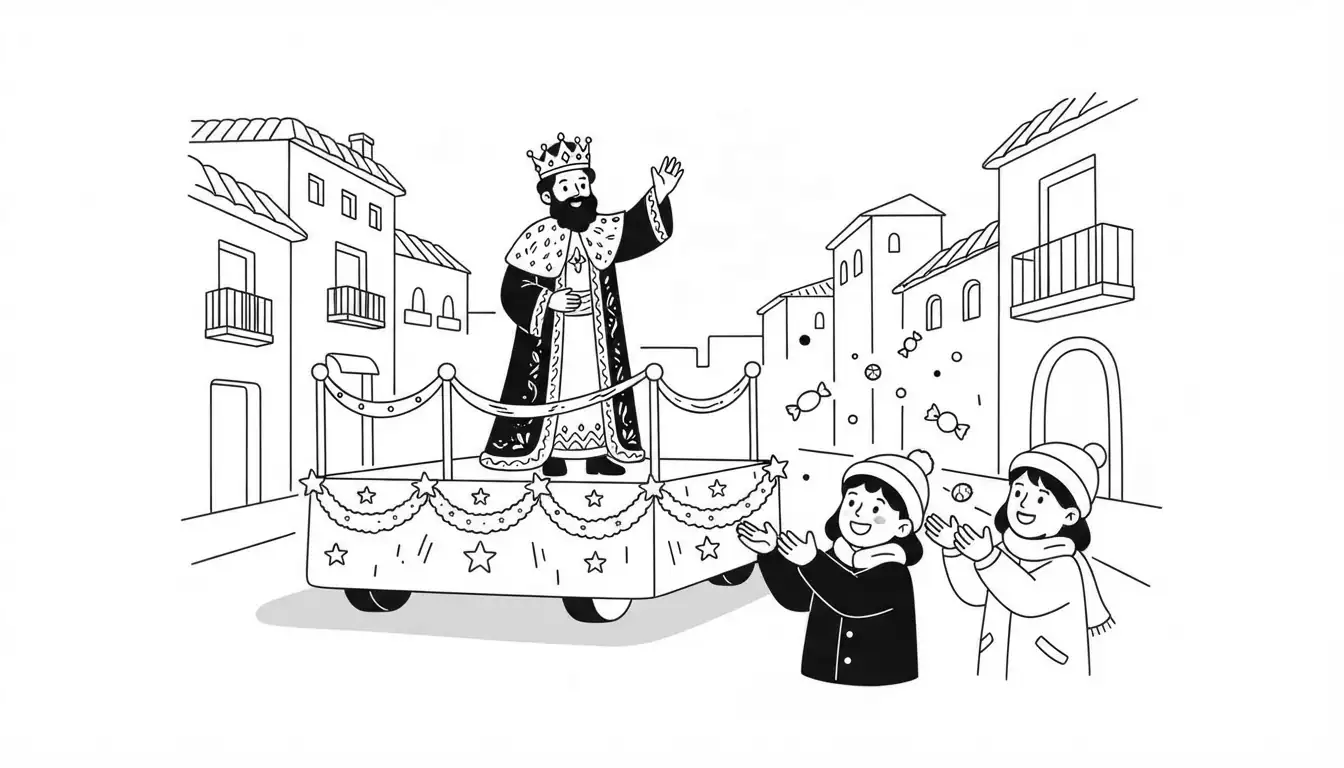
One important warning: the Reyes Magos are the Three Wise Men or the Three Kings, never the Three Magic Kings ❌. For other celebrations throughout the year, from birthdays to Holy Week, take a look at my post on celebrations and traditions in English.
Verbs for talking about Christmas
- to celebrate Christmas: How do you celebrate Christmas in your country?
- to spend Christmas: We always spend Christmas at my grandparents’. (Never pass Christmas ❌, a very common mistake for Spanish speakers.)
- to put up / to take down the decorations: We put up the tree in early December.
- to decorate the tree.
- to wrap presents.
- to give someone a present: My sister gave me a scarf.
- to get / to receive a present: What did you get for Christmas?
- to sing carols.
- to get together: The whole family gets together on Christmas Eve.
- to see in the New Year: We saw in the New Year in the main square.
And a preposition point that trips up a lot of learners: we say at Christmas for the season in general (We visit my aunt at Christmas), but on Christmas Day and on Christmas Eve for the specific days.
How to wish someone a Merry Christmas in English
Now for the part everyone looks for. Here are phrases for every situation, from the most informal to the most formal.
Merry Christmas or Happy Christmas?
Both are correct. Merry Christmas is the most widespread around the world and the one you’ll see on cards and in songs. Happy Christmas is very British and you’ll hear it a lot in the UK (it’s what Queen Elizabeth II used in her messages). What people don’t usually say is Merry birthday or Merry New Year: merry has been left almost exclusively for Christmas, while happy covers everything else.
If you’re not sure whether the other person celebrates Christmas (with international clients, for example), the neutral options are Happy holidays, which is more American, and Season’s greetings, very common on company cards.
Greetings for family and friends
- Merry Christmas and a Happy New Year!
- Have a lovely Christmas!
- Hope you have a great time with your family.
- Sending you lots of love this Christmas.
- Eat, drink and be merry! (a classic on cards)
- I can’t wait to see you over the holidays!
Formal and work greetings
- Season’s greetings and best wishes for the New Year.
- Wishing you a happy holiday season and a successful New Year.
- Thank you for your support this year. We look forward to working with you in 2027.
- All the best for the festive season.
How to reply to a Christmas greeting
If someone says Merry Christmas! to you, there’s no need to think too hard. The most natural replies are:
- You too! / And you!
- Same to you!
- Thanks, and a merry Christmas to you too!
Happy New Year and resolutions
For the New Year, the usual greeting is Happy New Year!, and as soon as the clock strikes midnight you’ll hear Cheers! as people raise their glasses. Resolutions are New Year’s resolutions, and they go with these verbs: make a resolution, keep a resolution and break a resolution. My New Year’s resolution is to read more books. Let’s see how long I keep it! 🙂
Sample Christmas card in English
If you’d like to write a friend a card or a slightly longer message, here’s a simple model you can adapt:
Dear Emma,
Merry Christmas! I hope you and your family are well and that you’re enjoying the holidays. Here in Granada it’s quite cold, but the streets look beautiful with all the lights. We’re spending Christmas Eve at my parents’ house, as usual, and on 6 January my little cousins are going to open their presents from the Three Kings. I can’t wait!
Thanks for being such a good friend this year. I really hope we can meet up in 2027.
Lots of love,
Lucía
Notice what makes it work: an opening (Dear Emma), the greeting right at the start, a bit of personal news (how you’re spending the holidays), a good wish for the year ahead and a warm sign-off (Lots of love, Love, Best wishes). And if you need to complain about the weather at this time of year, my post on cold weather vocabulary will come in handy.
Christmas carols to learn vocabulary
Traditional Christmas songs are called Christmas carols, and the modern ones Christmas songs. They’re a brilliant way to practise listening and pronunciation, and they’re played so often in December that they stick in your head on their own. These are the most famous ones, with a few words worth knowing before you listen:
| Carol | Key words |
|---|---|
| Jingle Bells | jingle (to make a light ringing sound), sleigh |
| Silent Night | silent, holy |
| We Wish You a Merry Christmas | wish, tidings (an old word for news) |
| Deck the Halls | deck (an old verb meaning to decorate), holly |
| O Come, All Ye Faithful | ye (an old form of you), faithful |
| The Twelve Days of Christmas | ordinal numbers (first, second, third…) |
| Rudolph the Red-Nosed Reindeer | reindeer, red-nosed |
| Last Christmas (Wham!) | the past simple in action (gave, gave away) |
| All I Want for Christmas Is You (Mariah Carey) | all I want (the only thing I want) |
To get the most out of them, look for versions with subtitles and follow the method I explain in my post on how to learn English with subtitled songs.
Christmas idioms and phrasal verbs
Christmas idioms
- Bah, humbug!: a grumpy exclamation used jokingly to complain about Christmas. It comes from Scrooge, the main character in Dickens’s A Christmas Carol.
- a Scrooge: a mean person, or someone who hates Christmas. Don’t be such a Scrooge, put some music on!
- Christmas came early: said when you get unexpected good news. They gave me Friday off. Christmas came early this year!
- like turkeys voting for Christmas: a British idiom for people supporting something that will harm them.
- to light up like a Christmas tree: to become very bright; also used for a face that lights up with joy.
- the more the merrier: Can I bring my cousin to dinner? Of course, the more the merrier!
- ‘Tis the season!: an old form of It is the season, used humorously for anything typical of this time of year, from shopping to overeating.
Useful phrasal verbs at Christmas
- put up: to put up decorations or the tree. When do you put up your tree?
- take down: to remove them. We take down the decorations after 6 January.
- wrap up: to wrap (and also to dress warmly). Wrap up warm, it’s freezing outside!
- tuck into: to start eating with enthusiasm. We tucked into the turkey as soon as it was ready.
- stay up: to go to bed late. We stayed up until three on New Year’s Eve.
- catch up with: to hear someone’s news. Christmas is a great time to catch up with old friends.
Typical mistakes when talking about Christmas in English
- ❌ I passed Christmas with my family. ✅ I spent Christmas with my family.
- ❌ In Christmas we eat turrón. ✅ At Christmas we eat turrón.
- ❌ The Three Magic Kings bring the presents. ✅ The Three Wise Men bring the presents.
- ❌ We eat the grapes on New Year’s Day. ✅ We eat the grapes on New Year’s Eve.
- ❌ My uncle presented me a watch. ✅ My uncle gave me a watch.
- ❌ Merry Christmas for you! ✅ Merry Christmas to you!
- ❌ I sent a christmas to my friends. ✅ I sent a Christmas card to my friends. (And always with a capital C.)
- ❌ We made Secret Friend at work. ✅ We did Secret Santa at work.
Christmas in the Cambridge exams
Festivals and traditions are a classic topic at every level, so having this vocabulary ready gives you a small advantage on exam day.
Typical Speaking questions
In the first part of the B1 Preliminary Speaking and the B2 First Speaking, you might be asked questions like these:
- What’s your favourite time of the year? Why?
- How do people in your country celebrate Christmas?
- What did you do last New Year’s Eve?
- Do you think people spend too much money at Christmas?
A good B1-level answer to the second question could be:
In Spain, Christmas is very much a family celebration. On Christmas Eve, we usually have a big dinner with my grandparents, and we eat a lot of seafood and turrón, which is a typical sweet. But for children, the most exciting day is 6 January, because that’s when the Three Wise Men bring the presents. I really love that tradition.
Here’s what makes it B1: clear, well-linked sentences (and, but, because), a simple relative clause (which is a typical sweet), a handy structure like that’s when…, specific topic vocabulary and a personal opinion at the end. At B2 you’d add more variety, for example: What makes it special for me is that… or Although it has become quite commercialised, I still think…
Useful vocabulary for the Writing paper
A very typical Writing task is an email from a friend abroad asking how Christmas is celebrated in your country, which is exactly the B1 Preliminary email task. And at B2 you’ll find essays on whether festivals have become too commercial. These expressions will serve you well:
- a family get-together
- the festive season
- to keep a tradition alive
- to become too commercialised
- to go over budget
- to look forward to something: Children look forward to Christmas all year.
- the true meaning of Christmas
Tips for learning this vocabulary
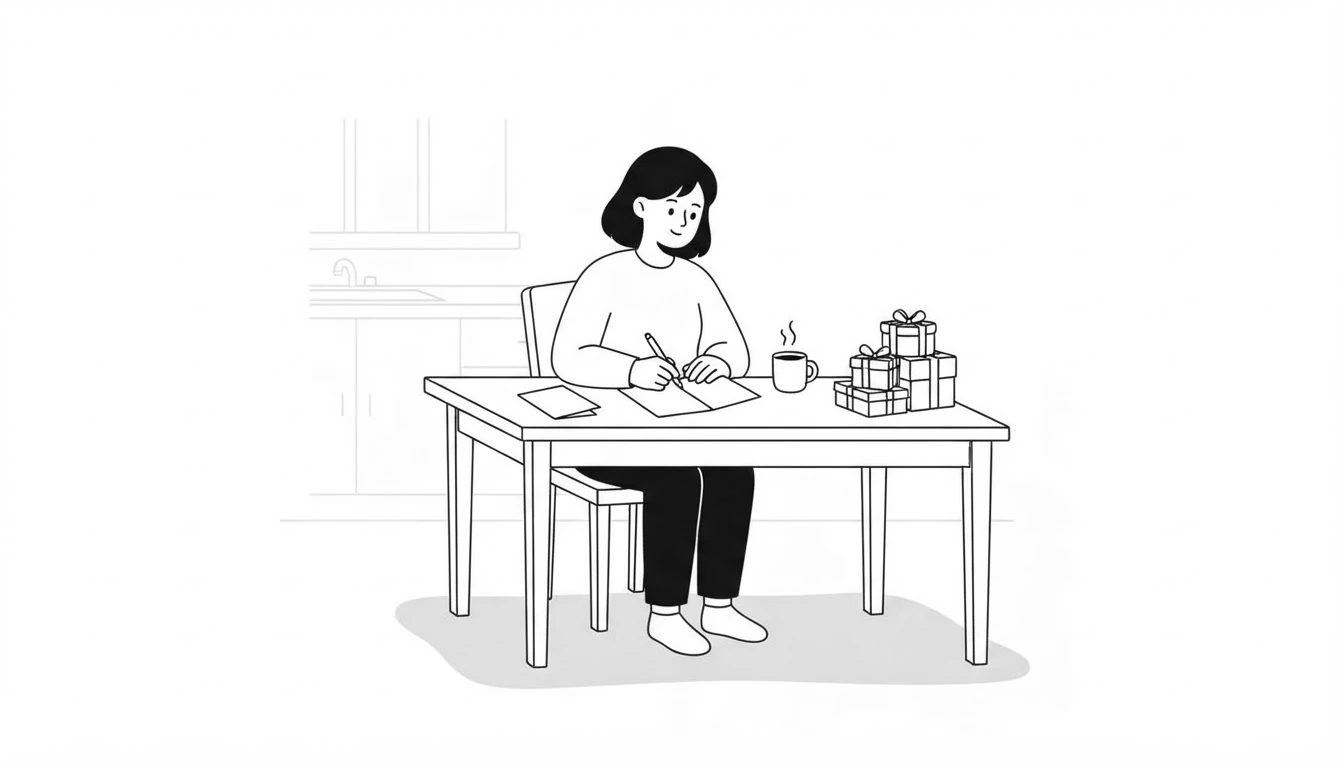
- Write your cards in English this year: even if it’s just to a couple of friends. It’s the most natural practice there is in December.
- Prepare your explanation of a Spanish Christmas: five or six sentences about Nochebuena, the grapes and the Three Kings. You’ll use them in conversations, on trips and in exams.
- Watch a Christmas film in the original version: there are hundreds and nearly all of them use the same vocabulary, so you’ll revise it without even noticing.
- Label your home: stick English sticky notes on the tree, the nativity scene and the decorations while they’re up.
- Tell someone about your Christmas out loud: record yourself for two minutes explaining what you did on the 24th and the 31st, using the days, months and seasons vocabulary and the past simple.
Frequently asked questions
How do you write «feliz Navidad» in English?
Merry Christmas, with a capital letter on both words when it stands alone as a greeting. In the UK, Happy Christmas is very common too.
What are the Reyes Magos in English?
The Three Wise Men or the Three Kings. Their day is Epiphany or, more simply, Three Kings’ Day.
What is turrón in English?
The closest translation is nougat, but it’s best to use the Spanish word and explain it: turrón, a typical Spanish sweet made with almonds and honey.
What is a belén in English?
A nativity scene. In the UK you’ll also hear crib, especially for the ones in churches.
Is it correct to write Xmas?
Yes, in informal messages and cards. In formal texts and in exams, write Christmas instead.
Christmas vocabulary exercises
Time to practise. Below you have three interactive exercises that mark themselves, so you’ll know straight away how you’ve done. Try to do them without looking back at the post.
And if you prefer a version in text that you can copy and paste, you have it down here 👇
Exercise 1. Choose the correct option
Choose the correct word or expression in each sentence.
- We always (spend / pass) Christmas at my grandparents’ house.
- In Spain, children get presents from the (Three Wise Men / Three Magic Kings) on 6 January.
- We visit my aunt (at / in) Christmas every year.
- My brother (gave me / presented me) a really nice scarf.
- Look up! You’re standing under the (mistletoe / holly)!
- When do you usually (put up / put on) the Christmas tree?
- Our company sends clients a card that says (Season’s greetings / Merry season).
- Father Christmas travels in a (sleigh / carriage) pulled by reindeer.
- We eat twelve grapes at midnight on (New Year’s Eve / New Year’s Day).
- A: Merry Christmas! B: (Same to you! / Equally!)
Show answers
- spend
- Three Wise Men
- at
- gave me
- mistletoe
- put up
- Season’s greetings
- sleigh
- New Year’s Eve
- Same to you!
Exercise 2. Complete with the correct word
Complete each sentence with one of these words. Use each word only once: baubles, carols, cracker, mistletoe, reindeer, resolution, sleigh, stocking, turkey, wrapping.
- We decorated the tree with red and gold _______________.
- The children hung a _______________ by the fireplace for Father Christmas.
- In the UK, the main dish of Christmas dinner is roast _______________.
- Santa’s _______________ have to fly all night to deliver the presents.
- We pulled a Christmas _______________ and a paper crown fell out.
- Every December, the school choir sings _______________ in the town square.
- I’ve bought the presents, but I still need some _______________ paper.
- My New Year’s _______________ is to go to the gym twice a week.
- People kiss under the _______________ at Christmas parties.
- Father Christmas arrives in his _______________ on Christmas Eve.
Show answers
- baubles
- stocking
- turkey
- reindeer
- cracker
- carols
- wrapping
- resolution
- mistletoe
- sleigh
Exercise 3. Correct the mistake
Each sentence has one mistake. Write it correctly.
- I passed Christmas with my cousins in Málaga.
- In Christmas we always eat too much.
- Merry Christmas for you and your family!
- My parents presented me a new phone.
- My birthday is in Christmas Day, so I only get one present!
- I sent a christmas to all my friends.
- Have a merry New Year!
- We did Secret Friend at the office this year.
- On Christmas Eve, my grandmother cooks seafoods.
- We stayed up until 3 a.m. at New Year’s Eve.
Show answers
- I spent Christmas with my cousins in Málaga.
- At Christmas we always eat too much.
- Merry Christmas to you and your family!
- My parents gave me a new phone.
- My birthday is on Christmas Day, so I only get one present!
- I sent a Christmas card to all my friends.
- Have a happy New Year!
- We did Secret Santa at the office this year.
- On Christmas Eve, my grandmother cooks seafood.
- We stayed up until 3 a.m. on New Year’s Eve.
Conclusion
To sum up: Navidad is Christmas, always with a capital letter and a silent t; it’s at Christmas but on Christmas Day; you spend Christmas, you don’t pass it; the Reyes Magos are the Three Wise Men; and for greetings both Merry Christmas and Happy Christmas are fine, with Season’s greetings for more formal cards. With this and the rest of the vocabulary in the post, this year you’ll be able to send your Christmas wishes in English with confidence and explain the roscón or the grapes to anyone.
Did you find this post useful? Share it with other English learners and teachers. And if you’d like more content like this, subscribe to my newsletter and follow me on Facebook, Twitter, Pinterest, Instagram and YouTube.
Merry Christmas! See you in the next post. Until then, don’t forget to keep smiling! 🙂
