
Table of contents
If you’ve ever tried to explain Las Fallas to a friend from abroad, or why we eat twelve grapes at midnight, or what half of Seville is doing dancing in a tent, you’ll know how it goes: you start full of enthusiasm and two sentences later you’ve run out of words. That’s a shame, because talking about celebrations and traditions in English is incredibly useful: it comes up in everyday conversation, when you travel and, above all, in the Cambridge exams, where «tell us about a celebration you remember» is a classic in both Speaking and Writing.
On top of that, this topic has a few traps for Spanish speakers: you don’t «celebrate a party», you don’t «assist» a wedding and a day off isn’t «a festive». Don’t worry, I’ll make it all clear in this post.
You’ll find the basic vocabulary of celebrations with its pronunciation, the words you need for birthdays, weddings, Christmas and New Year and other national holidays, how to explain Spanish festivals such as Holy Week, the Feria or Las Fallas in English, the most common verbs (celebrate, hold, take place, dress up…), the most useful collocations, idioms and phrasal verbs, the typical mistakes, how to describe a celebration you remember, how all this appears in the exams and, at the end, exercises with answers.
Let’s get started! 🙂
Basic vocabulary for celebrations in English
Let’s start with the general words. Pay close attention to the first three, because they’re the ones learners mix up most:
- Celebration is the general word: a family celebration, the celebrations for the town’s anniversary.
- Festival is a big event, usually popular or religious, that happens every year: Las Fallas is a famous festival in Valencia. It’s also used for music and film festivals.
- Party is a private event with friends or family: a birthday party, a leaving party.
And watch out for holiday: in British English it means time off work or school (We’re on holiday), but also a day when nobody works. To make it clear that it’s an official day off, British people say bank holiday, and the general term is public holiday (Monday is a bank holiday, so the shops will be closed.).
| 🇬🇧 English | Pronunciation | 🇪🇸 Spanish |
|---|---|---|
| celebration | /ˌselɪˈbreɪʃn/ | celebración |
| festival | /ˈfestɪvl/ | fiesta popular, festival |
| party | /ˈpɑːti/ | fiesta (privada) |
| bank holiday / public holiday | /ˌbæŋk ˈhɒlədeɪ/, /ˌpʌblɪk ˈhɒlədeɪ/ | día festivo |
| tradition | /trəˈdɪʃn/ | tradición |
| custom | /ˈkʌstəm/ | costumbre |
| anniversary | /ˌænɪˈvɜːsəri/ | aniversario |
| guest | /ɡest/ | invitado |
| host | /həʊst/ | anfitrión |
| invitation | /ˌɪnvɪˈteɪʃn/ | invitación |
| decorations | /ˌdekəˈreɪʃnz/ | adornos, decoración |
| present / gift | /ˈpreznt/, /ɡɪft/ | regalo |
| fireworks | /ˈfaɪəwɜːks/ | fuegos artificiales |
| parade | /pəˈreɪd/ | desfile, cabalgata |
| procession | /prəˈseʃn/ | procesión |
| costume | /ˈkɒstjuːm/ | disfraz; traje típico |
| fancy dress (UK) | /ˌfænsi ˈdres/ | disfraces (a fancy-dress party: una fiesta de disfraces) |
| fair / fairground | /feə/, /ˈfeəɡraʊnd/ | feria / recinto ferial |
A quick pronunciation note: in costume the stress falls on the first syllable, /ˈkɒstjuːm/, and it has nothing to do with custom, even though the two words look very similar. 😉
Birthdays and parties in English
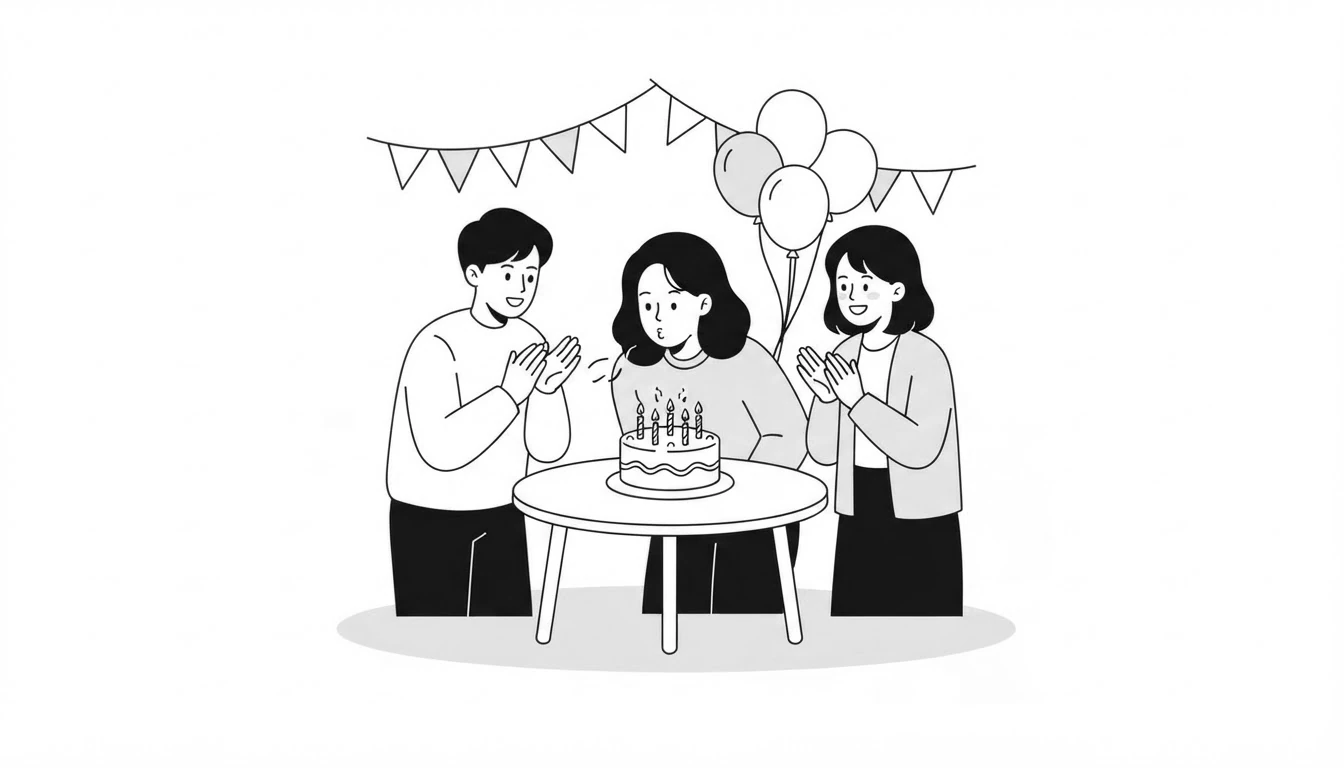
Birthdays are the most universal celebration of all, so it’s worth having this vocabulary at your fingertips:
| 🇬🇧 English | Pronunciation | 🇪🇸 Spanish |
|---|---|---|
| birthday cake | /ˈbɜːθdeɪ keɪk/ | tarta de cumpleaños |
| candles | /ˈkændlz/ | velas |
| blow out the candles | /ˌbləʊ ˈaʊt ðə ˈkændlz/ | soplar las velas |
| make a wish | /ˌmeɪk ə ˈwɪʃ/ | pedir un deseo |
| birthday card | /ˈbɜːθdeɪ kɑːd/ | tarjeta de felicitación |
| surprise party | /səˈpraɪz ˌpɑːti/ | fiesta sorpresa |
| balloons | /bəˈluːnz/ | globos |
| wrapping paper | /ˈræpɪŋ ˌpeɪpə/ | papel de regalo |
| the birthday girl / boy | /ˈbɜːθdeɪ ɡɜːl/, /bɔɪ/ | la cumpleañera / el cumpleañero |
| to turn 18, 30… | /tɜːn/ | cumplir 18, 30… años |
To wish someone well on their birthday, say Happy birthday!, and for any other special occasion (a wedding, a degree, a promotion), Congratulations!. Notice the preposition: Congratulations on your new job!, never for ❌.
To talk about someone’s age, the natural way is She’s turning 18 next week or He turned 40 yesterday. And for the date, remember to use on: My birthday is on 14 May. If dates are still a bit shaky, you’ll find everything in my post on the days of the week, months and seasons in English.
Weddings in English
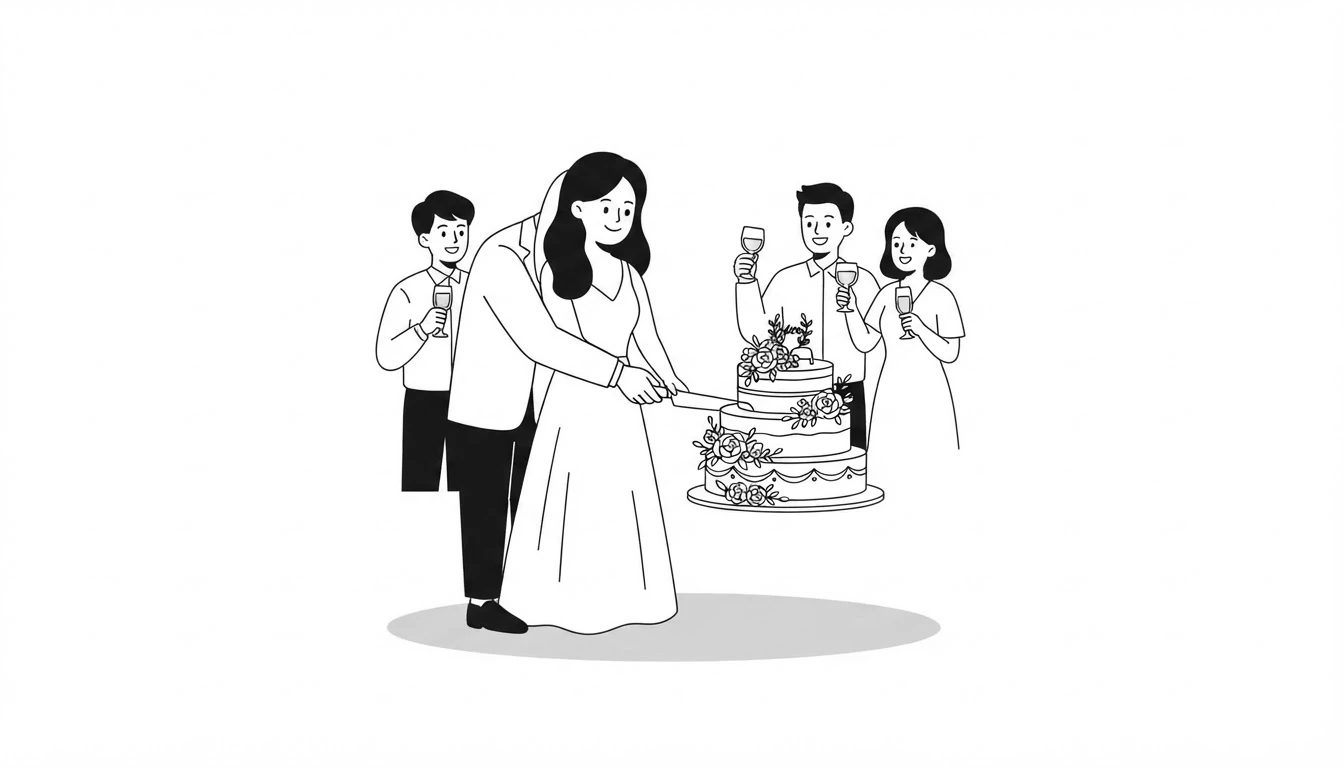
Weddings come up all the time too, especially when you have to tell a story about a family celebration. Here’s the essential vocabulary:
| 🇬🇧 English | Pronunciation | 🇪🇸 Spanish |
|---|---|---|
| wedding | /ˈwedɪŋ/ | boda |
| bride | /braɪd/ | novia (el día de la boda) |
| groom (bridegroom) | /ɡruːm/ | novio (el día de la boda) |
| bridesmaid | /ˈbraɪdzmeɪd/ | dama de honor |
| best man | /ˌbest ˈmæn/ | padrino (amigo del novio) |
| engagement | /ɪnˈɡeɪdʒmənt/ | compromiso, pedida |
| to get engaged | /ɪnˈɡeɪdʒd/ | prometerse |
| to get married | /ˈmærid/ | casarse |
| wedding ring | /ˈwedɪŋ rɪŋ/ | alianza |
| reception | /rɪˈsepʃn/ | banquete, convite |
| toast | /təʊst/ | brindis |
| speech | /spiːtʃ/ | discurso |
| honeymoon | /ˈhʌnimuːn/ | luna de miel |
| newlyweds | /ˈnjuːliwedz/ | recién casados |
Be careful with novio and novia in Spanish: bride and groom are only used on the wedding day. Your long-term partner is your boyfriend or girlfriend and, once you’re engaged, your fiancé or fiancée (both pronounced /fiˈɒnseɪ/). At a British wedding, it’s traditional for the best man to give a speech full of embarrassing stories about the groom. If you want the words for all the relatives who turn up at a wedding, have a look at my post on family vocabulary in English.
Christmas, New Year and Twelfth Night in English
There are quite a few cultural differences between Spain and the English-speaking world here, so the vocabulary comes with a couple of surprises:
| 🇬🇧 English | Pronunciation | 🇪🇸 Spanish |
|---|---|---|
| Christmas Eve | /ˌkrɪsməs ˈiːv/ | Nochebuena (24 de diciembre) |
| Christmas Day | /ˌkrɪsməs ˈdeɪ/ | día de Navidad (25 de diciembre) |
| Boxing Day | /ˈbɒksɪŋ deɪ/ | 26 de diciembre (festivo en el Reino Unido) |
| New Year’s Eve | /ˌnjuː jɪəz ˈiːv/ | Nochevieja |
| New Year’s Day | /ˌnjuː jɪəz ˈdeɪ/ | día de Año Nuevo |
| Twelfth Night | /ˌtwelfθ ˈnaɪt/ | Noche de Reyes (5 de enero) |
| Epiphany | /ɪˈpɪfəni/ | Epifanía, día de Reyes (6 de enero) |
| the Three Wise Men / the Three Kings | /ˌθriː waɪz ˈmen/ | los Reyes Magos |
| Father Christmas / Santa Claus | /ˌfɑːðə ˈkrɪsməs/, /ˈsæntə klɔːz/ | Papá Noel |
| Christmas tree | /ˈkrɪsməs triː/ | árbol de Navidad |
| nativity scene | /nəˈtɪvəti siːn/ | belén, nacimiento |
| carols | /ˈkærəlz/ | villancicos |
| stocking | /ˈstɒkɪŋ/ | calcetín donde se dejan los regalos |
| cracker | /ˈkrækə/ | tubo de cartón con sorpresa que se abre en la cena de Navidad |
| countdown | /ˈkaʊntdaʊn/ | cuenta atrás |
| New Year’s resolution | /ˌrezəˈluːʃn/ | propósito de Año Nuevo |
The big difference: in the UK, presents are brought by Father Christmas on the night of the 24th and opened on the morning of the 25th, whereas in Spain they’re mainly brought by the Three Wise Men. To explain it in English, you could say something like: In Spain, children get their presents from the Three Wise Men on 6 January. The night before, there is a big parade in every town. And please don’t call them the Magic Kings ❌!
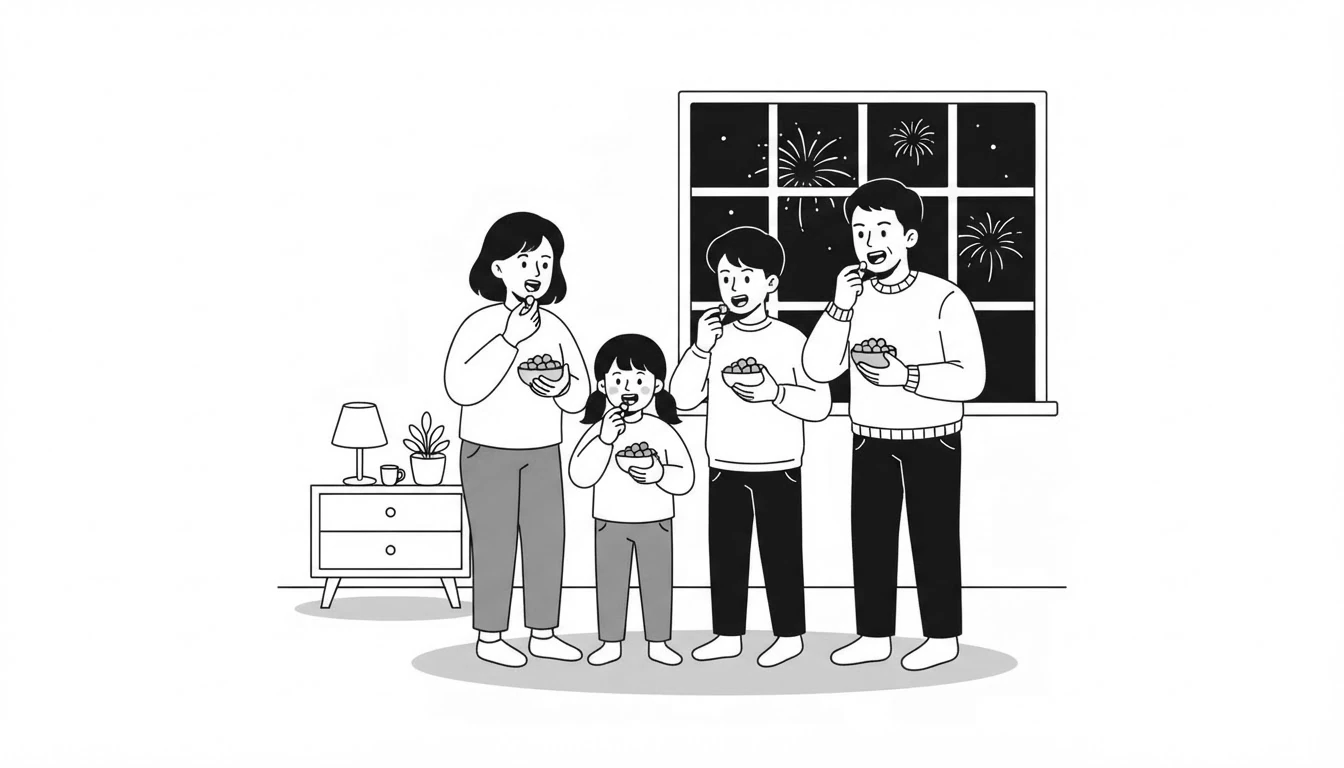
And here’s how to explain the grapes: On New Year’s Eve, we eat twelve grapes at midnight, one for each chime of the clock. It’s supposed to bring good luck for the next twelve months. For more vocabulary on the typical food at this time of year, take a look at my post on food vocabulary in English.
Other national and international celebrations
| 🇬🇧 English | Pronunciation | 🇪🇸 Spanish |
|---|---|---|
| Easter | /ˈiːstə/ | Pascua; las vacaciones de Semana Santa |
| Holy Week | /ˈhəʊli wiːk/ | Semana Santa |
| Carnival | /ˈkɑːnɪvl/ | Carnaval |
| Valentine’s Day | /ˈvæləntaɪnz deɪ/ | San Valentín |
| Mother’s Day / Father’s Day | /ˈmʌðəz deɪ/, /ˈfɑːðəz deɪ/ | día de la Madre / del Padre |
| Halloween | /ˌhæləʊˈiːn/ | Halloween (31 de octubre) |
| trick or treat | /ˌtrɪk ɔː ˈtriːt/ | truco o trato |
| Bonfire Night | /ˈbɒnfaɪə naɪt/ | Noche de Guy Fawkes (5 de noviembre, Reino Unido) |
| Thanksgiving | /ˌθæŋksˈɡɪvɪŋ/ | día de Acción de Gracias (Estados Unidos) |
| Independence Day | /ˌɪndɪˈpendəns deɪ/ | día de la Independencia (4 de julio, Estados Unidos) |
| National Day | /ˈnæʃnəl deɪ/ | fiesta nacional (12 de octubre en España) |
| St Patrick’s Day | /sənt ˈpætrɪks deɪ/ | San Patricio (17 de marzo, Irlanda) |
| patron saint’s day | /ˌpeɪtrən ˈseɪnts deɪ/ | fiesta del patrón, fiestas patronales |
Notice that the names of celebrations always take a capital letter in English (Easter, Christmas, Halloween), just like days of the week and months.
How to explain Spanish festivals in English
This section is gold for Speaking: sooner or later, someone is going to ask you about the festivals in your town. My advice is not to translate the name (say Las Fallas or the Feria, in italics if you’re writing) and to explain it in simple words: when it is, where, and what people do.
| 🇪🇸 Festival | 🇬🇧 How to explain it in English |
|---|---|
| Semana Santa | During Holy Week, religious brotherhoods carry huge floats with statues through the streets in long processions. |
| Feria de Abril | The April Fair in Seville lasts a week. People wear flamenco dresses, dance sevillanas and eat and drink in tents called casetas. |
| Las Fallas | Las Fallas takes place in Valencia in March. People build enormous figures and burn them on the night of 19 March. |
| San Fermín | San Fermín is held in Pamplona in July. It’s famous for the bull run, when people run in front of the bulls through the old town. |
| La Tomatina | In Buñol, thousands of people throw tomatoes at each other for an hour in a huge food fight. |
| Cabalgata de Reyes | On 5 January, the Three Wise Men arrive in a big parade and throw sweets to the children. |
| Noche de San Juan | On 23 June, people light bonfires on the beach and some jump over them for good luck. |
And these are the words you’ll need to describe them:
| 🇬🇧 English | Pronunciation | 🇪🇸 Spanish |
|---|---|---|
| brotherhood | /ˈbrʌðəhʊd/ | cofradía, hermandad |
| float | /fləʊt/ | paso (Semana Santa); carroza (desfile) |
| hooded penitent | /ˌhʊdɪd ˈpenɪtənt/ | nazareno |
| flamenco dress | /fləˈmeŋkəʊ dres/ | traje de flamenca |
| marquee / tent | /mɑːˈkiː/, /tent/ | caseta, carpa |
| paper lanterns | /ˈpeɪpə ˌlæntənz/ | farolillos |
| rides | /raɪdz/ | atracciones de feria, cacharritos |
| bonfire | /ˈbɒnfaɪə/ | hoguera |
| firecrackers | /ˈfaɪəkrækəz/ | petardos |
| bull run | /ˈbʊl rʌn/ | encierro |
| street party | /ˈstriːt ˌpɑːti/ | verbena, fiesta en la calle |
A note on the word fiesta: it does exist in English, but it’s used for a popular festival in a Spanish-speaking country, not for any party. For your friend’s birthday do, just say party.
Verbs for talking about celebrations
Knowing the names is great, but to tell the story of a celebration you need the verbs. These are the most useful ones:
| 🇬🇧 English | Pronunciation | 🇪🇸 Spanish |
|---|---|---|
| celebrate | /ˈselɪbreɪt/ | celebrar (una ocasión) |
| hold (held, held) | /həʊld/ | celebrar, organizar (un evento) |
| take place | /ˌteɪk ˈpleɪs/ | tener lugar, celebrarse |
| dress up (as) | /ˌdres ˈʌp/ | disfrazarse (de); arreglarse |
| decorate | /ˈdekəreɪt/ | decorar, adornar |
| wrap | /ræp/ | envolver |
| exchange presents | /ɪksˈtʃeɪndʒ ˈpreznts/ | intercambiar regalos |
| let off / set off fireworks | /ˌlet ˈɒf/, /ˌset ˈɒf/ | tirar fuegos artificiales |
| propose a toast | /prəˈpəʊz ə ˈtəʊst/ | hacer un brindis |
| mark | /mɑːk/ | conmemorar, marcar (una fecha) |
The key lies in the first three, which Spanish speakers tend to translate with the same verb, celebrar:
- Celebrate goes with the occasion: We celebrated my grandmother’s 90th birthday. What you don’t «celebrate» is the party itself: We celebrated a party ❌, We had a party or We threw a party ✅.
- Hold is used when someone organises an event: The town holds a fair every September. It’s very common in the passive: The festival is held in July.
- Take place means «happen» and has no passive: The parade takes place on 5 January. Never is taken place ❌.
And be careful with dress up: with as, it means putting on a costume (I dressed up as a pirate); without as, it usually means wearing smart clothes (Everyone dresses up for the Feria.). There’s more vocabulary like this in my post on clothes in English.
Collocations, idioms and phrasal verbs about celebrations
Key collocations
These combinations are what make you sound natural. Learn them as a chunk:
| 🇬🇧 English | 🇪🇸 Spanish |
|---|---|
| have / throw a party | hacer / montar una fiesta |
| go to a wedding / a party | ir a una boda / a una fiesta |
| attend a ceremony (formal) | asistir a una ceremonia |
| keep a tradition alive | mantener viva una tradición |
| a family get-together | una reunión familiar |
| a festive atmosphere | un ambiente festivo |
| the festive season | las fiestas navideñas |
| a long weekend | un puente |
| make a speech / give a speech | dar un discurso |
| wish someone a happy birthday | felicitar a alguien por su cumpleaños |
Notice festive: it’s an adjective (a festive atmosphere), so «tomorrow is a day off» isn’t Tomorrow is festive ❌, but Tomorrow is a holiday or a bank holiday ✅. And the Spanish puente is simply a long weekend.
Idioms about celebrations
| 🇬🇧 Idiom | 🇪🇸 Spanish | Example |
|---|---|---|
| a party animal | un fiestero | My brother is a real party animal. |
| the life and soul of the party | el alma de la fiesta | Laura is always the life and soul of the party. |
| let your hair down | soltarse la melena, desmelenarse | It’s the Feria, so let your hair down! |
| paint the town red | salir de juerga por todo lo alto | After the exams, we painted the town red. |
| a red-letter day | un día señalado | My graduation was a real red-letter day. |
| Christmas comes but once a year | una vez al año no hace daño | Have another mince pie, Christmas comes but once a year! |
Phrasal verbs about celebrations
- dress up (as): put on a costume; wear smart clothes. We dressed up as zombies for Halloween.
- get together: meet as a group. The whole family gets together at Christmas.
- put up / take down: hang / remove (decorations). We put up the Christmas tree on 8 December.
- blow out: put out a flame by blowing. Blow out the candles and make a wish!
- stay up: not go to bed. We stayed up until 5 a.m. on New Year’s Eve.
- turn up / show up: arrive, appear. Half the guests turned up late.
- look forward to: be excited about something in the future. I’m really looking forward to the summer festivals.
Typical mistakes made by Spanish speakers
- Celebrating a party: We celebrated a party ❌, We had a party ✅.
- Using «assist» for asistir: I assisted to the wedding ❌, I went to the wedding or I attended the wedding ✅. Assist means «help».
- Using «festive» as a noun: Monday is festive ❌, Monday is a holiday ✅.
- Using «disguise» for fancy dress: She disguised as a witch ❌, She dressed up as a witch ✅. Disguise yourself means hiding who you are, like a spy.
- Congratulations for: Congratulations for your wedding ❌, Congratulations on your wedding ✅.
- «In» with dates: My birthday is in 14 May ❌, My birthday is on 14 May ✅.
- Mixing up the days: Nochevieja is New Year’s Eve, not New Year’s Day (that’s 1 January).
- Putting «the» before next: I’ll celebrate it the next Saturday ❌, I’ll celebrate it next Saturday ✅.
- Everybody with a plural verb: Everybody were happy ❌, Everybody was happy ✅.
- Take place in the passive: The concert will be taken place ❌, The concert will take place ✅.
How to describe a celebration you remember
«Tell me about a special celebration» is one of the most common questions, in both Speaking and Writing. The key is to organise the story well and use past tenses. I always recommend this structure:
- What and when: One of the best celebrations I remember was my cousin’s wedding two years ago.
- Where and who: It took place in a small village near Granada and all my family was there.
- What happened, in order: First…, then…, after that…, at the end of the night…
- A special detail or something funny: The funniest moment was when…
- How you felt and why you remember it: It was a day to remember because…
To say what happened, your best friend is the past simple (we danced, we ate, it rained), and if you want to talk about what you always did as a child, use used to: We used to spend every Christmas at my grandparents’ house.
These expressions will help you bring the story to life:
- The atmosphere was amazing.
- The streets were packed.
- We had a great time.
- We danced until the early hours.
- I’ll never forget it.
Celebrations and traditions in the Cambridge exams
In my experience as an exam trainer, celebrations are one of the topics that come up most at A2 Key, B1 Preliminary and B2 First:
- Writing: it’s a perfect topic for the B1 Preliminary story (a story that begins with «It was the most exciting night of the year…») and for the B2 First article (Tell us about a festival in your country). It also appears in emails, when you have to invite someone or tell them about a party.
- Reading and Listening: texts about festivals around the world, unusual traditions or interviews with event organisers.
And if you’re preparing for the Spanish university entrance exam, bear in mind that celebrations and traditions often come up in the texts and writing tasks of the PAU English exam in Andalusia.
Typical Speaking questions
In Part 1 (personal questions), you might be asked things like these:
- What’s your favourite celebration of the year? Why?
- How do you usually celebrate your birthday?
- Tell us about a special celebration you remember.
And in B2 First Part 4 (opinion questions), others like these:
- Do you think traditional festivals are still important for young people?
- Some people say celebrations like Christmas have become too commercial. What do you think?
- Is it better to celebrate special occasions with family or with friends?
Sample Speaking answer
Here’s an answer to Tell us about a special celebration you remember, written to simulate a B1 level, without reaching B2:
I’d like to talk about the fair in my town. It takes place every year in August and it lasts for five days. Last summer I went with my friends every night. First, we had dinner in one of the tents, and then we danced until three in the morning. There were lots of rides and food stalls, and on the last night there were fireworks. It was amazing! I really like the fair because everybody is in the street and you meet a lot of people. Also, my grandparents always tell me stories about what the fair was like when they were young.
Here’s what makes it work: it answers the question directly from the first sentence, orders the story with simple linkers (first, and then, also), combines the present to talk about the fair in general (It takes place every year) with the past simple to say what the speaker did (we had dinner, we danced), uses topic vocabulary (take place, rides, food stalls, fireworks) and gives a personal reason with because. That’s exactly what’s expected at B1: clear, well-ordered ideas and accurate vocabulary. A B2 candidate would add more range (the atmosphere was incredible, it’s a tradition that has been kept alive for centuries) and more nuanced opinions.
Useful vocabulary for Writing
If you want to raise your level a little in a story or an article about a celebration, these expressions will come in very handy:
- a festive atmosphere: The whole town had a festive atmosphere.
- to look forward to something all year: Children look forward to the parade all year.
- to keep a tradition alive: Young people help to keep the tradition alive.
- a once-in-a-lifetime experience: Running with the bulls was a once-in-a-lifetime experience.
- to become commercialised: Many people feel that Christmas has become too commercialised.
- a night to remember: The last night of the fair was a night to remember.
Tips for learning this vocabulary
- Prepare your favourite festival: write five or six sentences in English explaining the festival in your town (when it is, what people do, what they eat). It’s almost certain to come in handy in an exam.
- Learn the verbs with their occasion: celebrate a birthday, have a party, hold a festival, go to a wedding. That way you won’t fall into «celebrating a party».
- Make the most of every celebration of the year: at Christmas, listen to carols in English; at Halloween, watch a horror film in English. If you’re looking for songs, you’ll find ideas in my post on music vocabulary in English.
- Tell the story of your last celebration out loud: record yourself for two minutes talking about your last birthday or the last wedding you went to. It’s a great exercise for Speaking.
Celebrations and traditions exercises
Time to practise. Below you have three interactive exercises that mark themselves, so you’ll know straight away how you’ve done. Try to do them without looking back at the post.
And if you prefer a version in text that you can copy and paste, you have it down here 👇
Exercise 1. Choose the correct option
Choose the correct word or expression in each sentence.
- My grandparents are going to (celebrate / party) their golden wedding anniversary next month.
- The festival (takes place / makes place) every year in March.
- The town (holds / does) a big fair every September.
- Did you (go to / assist) Marta’s wedding last Saturday?
- In Spain, children get presents from the (Three Wise Men / Three Magic Kings) on 6 January.
- We always (dress up / disguise) as zombies for Halloween.
- (Happy / Merry) birthday, Lucía! How old are you today?
- On New Year’s Eve, people (let off / throw out) fireworks at midnight.
- The best man (gave / said) a very funny speech at the wedding.
- Next Monday is a (bank holiday / festive), so the shops will be closed.
Show answers
- celebrate
- takes place
- holds
- go to
- Three Wise Men
- dress up
- Happy
- let off
- gave
- bank holiday
Exercise 2. Complete with the correct word
Complete each sentence with one of these words. Use each word only once: anniversary, candles, costume, fair, fireworks, guests, invitation, procession, toast, wrapped.
- She blew out all the _______________ on her birthday cake.
- There were more than 200 _______________ at my cousin’s wedding.
- Every Easter, a long _______________ goes through the old town with statues and music.
- My parents had a big party for their 25th wedding _______________.
- At midnight the sky was full of _______________.
- Let’s raise our glasses and make a _______________ to the happy couple!
- I wore a pirate _______________ to the fancy-dress party.
- In April, people in Seville go to the _______________ to dance sevillanas in big tents.
- We _______________ the presents in colourful paper.
- Did you get an _______________ to Pablo’s party?
Show answers
- candles
- guests
- procession
- anniversary
- fireworks
- toast
- costume
- fair
- wrapped
- invitation
Exercise 3. Correct the mistake
Each sentence has one mistake. Write it correctly.
- We celebrated a party for my birthday.
- The concert will be taken place in the main square.
- I assisted to my friend’s wedding last summer.
- We eat twelve grapes at midnight on New Year’s Day.
- My birthday is in 14 May.
- She disguised as a witch for Halloween.
- Everybody were very happy at the party.
- I’m going to celebrate my birthday the next Saturday.
- Tomorrow is festive, so I don’t have to work.
- Congratulations for your wedding!
Show answers
- We had a party for my birthday.
- The concert will take place in the main square.
- I went to my friend’s wedding last summer.
- We eat twelve grapes at midnight on New Year’s Eve.
- My birthday is on 14 May.
- She dressed up as a witch for Halloween.
- Everybody was very happy at the party.
- I’m going to celebrate my birthday next Saturday.
- Tomorrow is a holiday, so I don’t have to work.
- Congratulations on your wedding!
Conclusion
To sum up: in English you celebrate the occasion (celebrate a birthday), but you have the party (have a party); events are organised with hold and happen with take place; you go to a wedding rather than «assist» it; and to put on a costume, you dress up as something. With that and the vocabulary in this post, the next time a friend from abroad asks you about Las Fallas or the New Year’s grapes, you’ll explain it brilliantly.
Did you find this post useful? Share it with other English students and teachers. And if you’d like more content like this, subscribe to my newsletter and follow me on Facebook, Twitter, Pinterest, Instagram and YouTube.
See you in the next post. Until then, don’t forget to keep smiling! 🙂
