
Table of contents
If you’ve ever fallen ill on holiday in an English-speaking country, you’ll know what it’s like to explain to a doctor (or a pharmacist) what’s wrong with you using four words and a lot of gestures. And you don’t need to travel that far: health vocabulary in English comes up in everyday conversation (How are you feeling?), in the news and, above all, in the Cambridge exams, where healthy habits are one of the star topics in Speaking and Writing.
This topic also has a few traps for Spanish speakers: being constipated has nothing to do with having a cold (far from it!), a doctor’s prescription is not a recipe, and hurt, ache, pain and sore don’t work in the same way. Don’t worry, I’ll make it all clear in this post.
You’ll find the basic words (health, illness, disease, sick, ill), the most common symptoms and illnesses with their pronunciation, how to say that something hurts, the vocabulary of injuries, phrases for the doctor’s and the chemist’s, healthy habits (diet, exercise and sleep), mental health and stress, the most useful collocations, idioms and phrasal verbs, typical mistakes, how all this comes up in the Cambridge exams and, at the end, exercises with answers.
Let’s get started! 🙂
The basic words: health, illness, disease, sick and ill
Let’s start with the basics. Health /helθ/ is an uncountable noun: Smoking is bad for your health. The adjective is healthy and its opposite is unhealthy. Notice that healthy works for people (a healthy child) and also for food and habits (a healthy breakfast, a healthy lifestyle).
There are two main words for being ill:
- illness /ˈɪlnəs/: the state of being ill, often something not very serious or a period of being unwell. She missed two weeks of school because of illness.
- disease /dɪˈziːz/: a specific illness with a name, usually more serious or infectious. Heart disease is very common in older people.
The two most common adjectives are ill and sick. In British English, ill almost always goes after the verb (I’m ill, She feels ill), whereas sick can go before a noun (a sick child). Careful: in the UK, to feel sick usually means you think you’re going to vomit, and to be sick means to vomit. An important detail if you ever see a doctor in London! 😉
| 🇬🇧 English | Pronunciation | 🇪🇸 Spanish |
|---|---|---|
| health | /helθ/ | salud |
| healthy / unhealthy | /ˈhelθi/ /ʌnˈhelθi/ | sano, saludable / poco saludable |
| illness | /ˈɪlnəs/ | enfermedad (estar enfermo) |
| disease | /dɪˈziːz/ | enfermedad (concreta, con nombre) |
| ill / sick | /ɪl/ /sɪk/ | enfermo |
| to feel sick | /fiːl sɪk/ | tener náuseas (UK) |
| to be sick | /biː sɪk/ | vomitar (UK) |
| to get better | /ɡet ˈbetə/ | mejorar, ponerse bien |
| to recover (from) | /rɪˈkʌvə/ | recuperarse (de) |
| fit | /fɪt/ | en forma |
Symptoms and illnesses in English
The most common symptoms
These are the symptoms you’ll need most. Notice how many types of pain are formed with -ache /eɪk/ (it rhymes with cake):
| 🇬🇧 English | Pronunciation | 🇪🇸 Spanish |
|---|---|---|
| a headache | /ˈhedeɪk/ | dolor de cabeza |
| (a) stomach ache | /ˈstʌmək eɪk/ | dolor de estómago, de tripa |
| (a) toothache | /ˈtuːθeɪk/ | dolor de muelas |
| (an) earache | /ˈɪəreɪk/ | dolor de oídos |
| (a) backache | /ˈbækeɪk/ | dolor de espalda |
| a sore throat | /sɔː θrəʊt/ | dolor de garganta |
| a cough / to cough | /kɒf/ | tos / toser |
| to sneeze | /sniːz/ | estornudar |
| a runny nose | /ˈrʌni nəʊz/ | mucosidad, nariz que gotea |
| a blocked nose | /blɒkt nəʊz/ | nariz tapada, congestión |
| a temperature / a fever | /ˈtemprətʃə/ /ˈfiːvə/ | fiebre |
| dizzy | /ˈdɪzi/ | mareado |
| a rash | /ræʃ/ | sarpullido, erupción |
| itchy | /ˈɪtʃi/ | que pica |
| swollen | /ˈswəʊlən/ | hinchado |
| exhausted | /ɪɡˈzɔːstɪd/ | agotado |
Common illnesses
| 🇬🇧 English | Pronunciation | 🇪🇸 Spanish |
|---|---|---|
| a cold | /kəʊld/ | un resfriado, un constipado |
| (the) flu | /fluː/ | la gripe |
| an allergy / allergic (to) | /ˈælədʒi/ /əˈlɜːdʒɪk/ | una alergia / alérgico (a) |
| hay fever | /ˈheɪ fiːvə/ | alergia al polen |
| asthma | /ˈæsmə/ | asma |
| food poisoning | /fuːd ˈpɔɪzənɪŋ/ | intoxicación alimentaria |
| an infection | /ɪnˈfekʃn/ | una infección |
| a virus | /ˈvaɪrəs/ | un virus |
| a migraine | /ˈmiːɡreɪn/ | una migraña |
| high blood pressure | /haɪ blʌd ˈpreʃə/ | la tensión alta |
| diabetes | /ˌdaɪəˈbiːtiːz/ | diabetes |
| chickenpox | /ˈtʃɪkɪnpɒks/ | varicela |
| a heart attack | /hɑːt əˈtæk/ | un infarto |
Saying what’s wrong: «I have a headache», «I’ve got a cold»
To talk about symptoms and illnesses, English nearly always uses have or, in informal British English, have got. Both are correct:
- I have a headache. / I’ve got a headache.
- She has a cold. / She’s got a cold.
- He’s got a temperature.
Watch the article: Spanish says «tengo fiebre» or «tengo tos» with no article, but in English countable symptoms take a: a headache, a cold, a cough, a sore throat, a temperature. With flu you can say I’ve got flu or I’ve got the flu.
Other very useful phrases for saying how you feel:
- I don’t feel very well. / I’m not feeling well.
- I feel a bit under the weather.
- I think I’m coming down with something.
- I’m feeling much better, thanks.
Hurt, ache, pain and sore: how to say something hurts
This is the big question my students always ask, so let’s take it step by step. There are four words, and each one works differently:
- hurt /hɜːt/ is a verb. The body part is the subject: My leg hurts. My eyes hurt. It also means to injure yourself: I hurt my back lifting a box.
- ache /eɪk/ is a verb and a noun for a dull, continuous pain: My legs ache after the match. It also forms compounds: headache, toothache, backache.
- pain /peɪn/ is a noun, more general and often more intense: I’ve got a pain in my chest. She’s in a lot of pain. Careful: pain isn’t used as a verb in normal English, so my arm pains ❌.
- sore /sɔː/ is an adjective for something painful or irritated: a sore throat, sore eyes, My feet are sore after the walk.
| 🇬🇧 Word | Type | Example |
|---|---|---|
| hurt | verb | My knee hurts. |
| ache | verb / noun | My back aches. / I’ve got a stomach ache. |
| pain | noun | I’ve got a pain in my side. |
| sore | adjective | I’ve got a sore throat. |
And if you’d like to review the body parts that go with all these phrases, you’ll find them in my post on parts of the body in English.
Injuries and accidents in English
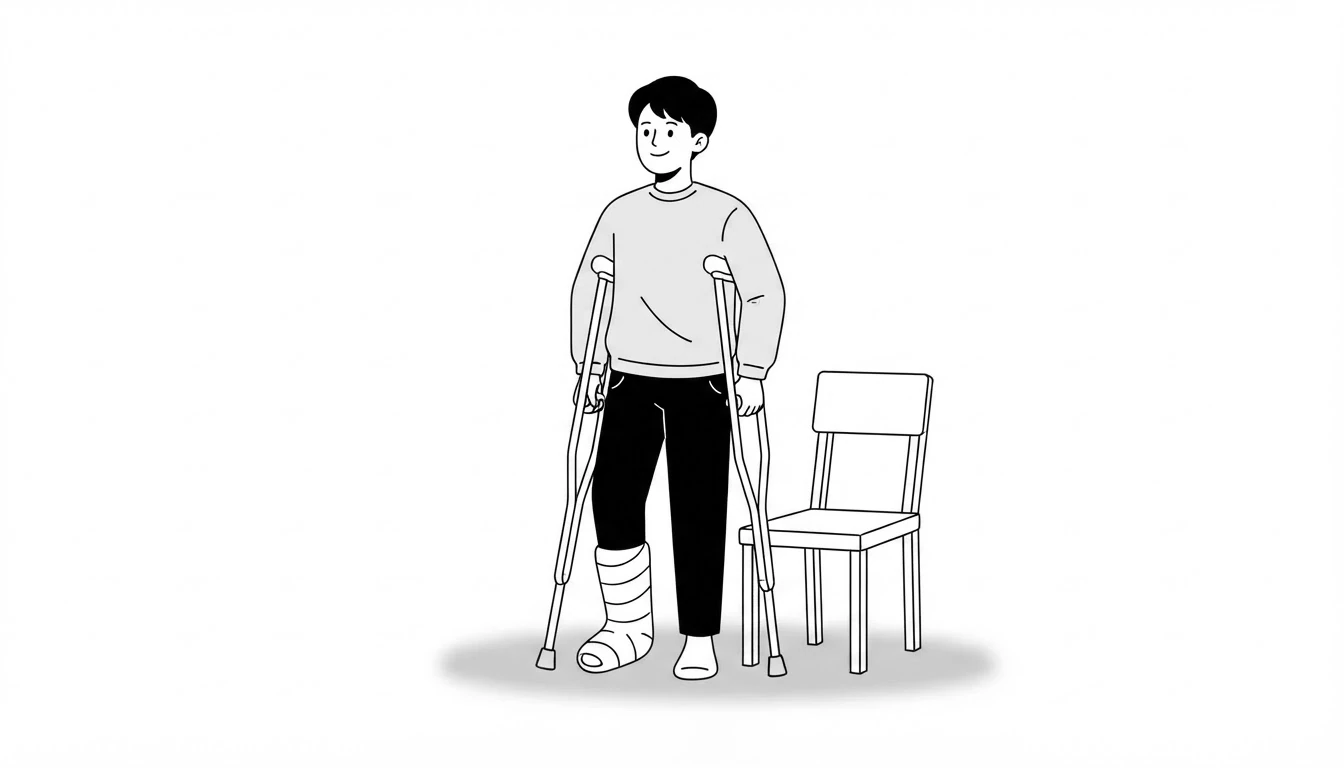
An injury /ˈɪndʒəri/ is the general word, and the verb is to injure (He injured his knee playing football). For injuries caused by a weapon (a knife, a gun), we use wound /wuːnd/, which you’ll mostly hear on the news.
| 🇬🇧 English | Pronunciation | 🇪🇸 Spanish |
|---|---|---|
| an injury / injured | /ˈɪndʒəri/ /ˈɪndʒəd/ | una lesión / lesionado, herido |
| to break your arm / leg | /breɪk/ | romperse el brazo / la pierna |
| to sprain your ankle | /spreɪn ˈæŋkl/ | hacerse un esguince en el tobillo |
| to twist your ankle | /twɪst/ | torcerse el tobillo |
| a cut / to cut yourself | /kʌt/ | un corte / cortarse |
| a bruise | /bruːz/ | un moratón, un cardenal |
| a burn / to burn yourself | /bɜːn/ | una quemadura / quemarse |
| to bleed | /bliːd/ | sangrar |
| a scar | /skɑː/ | una cicatriz |
| a plaster cast | /ˈplɑːstə kɑːst/ | una escayola |
| crutches | /ˈkrʌtʃɪz/ | muletas |
| a bandage | /ˈbændɪdʒ/ | una venda |
| stitches | /ˈstɪtʃɪz/ | puntos (de sutura) |
One detail that surprises Spanish speakers: in English you say I broke my arm, with a possessive, not I broke the arm. The same goes for I cut my finger or She sprained her ankle.
At the doctor’s and at the chemist’s
At the doctor’s
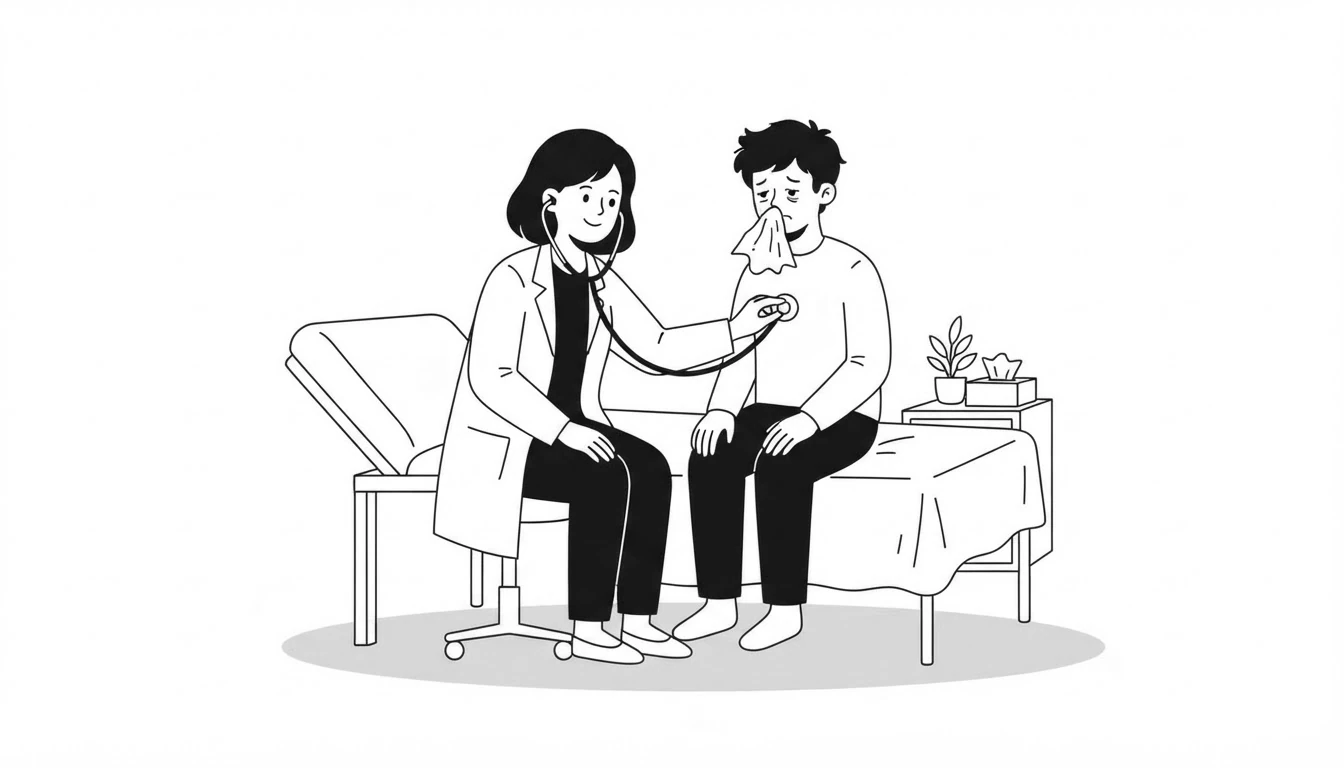
In the UK, your family doctor is your GP /ˌdʒiː ˈpiː/ (general practitioner), and their practice is called the surgery or the GP practice. Yes, surgery also means operations, but in this context it’s simply the place where you see your doctor. 😉
| 🇬🇧 English | Pronunciation | 🇪🇸 Spanish |
|---|---|---|
| a GP / a doctor | /ˌdʒiː ˈpiː/ /ˈdɒktə/ | un médico de cabecera / un médico |
| a nurse | /nɜːs/ | un enfermero, una enfermera |
| a specialist | /ˈspeʃəlɪst/ | un especialista |
| an appointment | /əˈpɔɪntmənt/ | una cita |
| the waiting room | /ˈweɪtɪŋ ruːm/ | la sala de espera |
| a check-up | /ˈtʃek ʌp/ | una revisión, un chequeo |
| to examine | /ɪɡˈzæmɪn/ | examinar, reconocer |
| a prescription | /prɪˈskrɪpʃn/ | una receta médica |
| a blood test | /blʌd test/ | un análisis de sangre |
| an X-ray | /ˈeks reɪ/ | una radiografía |
| an operation | /ˌɒpəˈreɪʃn/ | una operación |
| A&E (accident and emergency) | /ˌeɪ ənd ˈiː/ | urgencias (UK) |
| an ambulance | /ˈæmbjələns/ | una ambulancia |
Some phrases you’ll hear (and need) in the consulting room:
- The doctor: What seems to be the problem? / How long have you had these symptoms? / Where does it hurt? / I’ll give you a prescription.
- You: I’d like to make an appointment, please. / I’ve had a sore throat for three days. / It hurts when I swallow. / I’m allergic to penicillin.
At the chemist’s
In British English the shop is the chemist’s /ˈkemɪsts/, and the pharmacy /ˈfɑːməsi/ is the general word (in the US you’ll also hear drugstore). The person who works there is a pharmacist or a chemist.
| 🇬🇧 English | Pronunciation | 🇪🇸 Spanish |
|---|---|---|
| medicine | /ˈmedsn/ | medicina, medicamento |
| a painkiller | /ˈpeɪnkɪlə/ | un analgésico |
| a tablet / a pill | /ˈtæblət/ /pɪl/ | una pastilla |
| antibiotics | /ˌæntibaɪˈɒtɪks/ | antibióticos |
| cough syrup | /kɒf ˈsɪrəp/ | jarabe para la tos |
| a cream | /kriːm/ | una crema, una pomada |
| a plaster | /ˈplɑːstə/ | una tirita |
| side effects | /saɪd ɪˈfekts/ | efectos secundarios |
| over the counter | /ˈəʊvə ðə ˈkaʊntə/ | sin receta |
| a dose | /dəʊs/ | una dosis |
And the key sentence for instructions: Take two tablets three times a day after meals. As in Spanish, you take medicine in English.
Healthy habits: diet, exercise and sleep
This is the section you’ll use most in the exams, because questions about a healthy lifestyle come up all the time.
Diet
| 🇬🇧 English | Pronunciation | 🇪🇸 Spanish |
|---|---|---|
| a balanced diet | /ˈbælənst ˈdaɪət/ | una dieta equilibrada |
| to be on a diet / to go on a diet | /ˈdaɪət/ | estar / ponerse a dieta |
| junk food | /ˈdʒʌŋk fuːd/ | comida basura |
| processed food | /ˈprəʊsest fuːd/ | alimentos procesados |
| nutritious | /njuˈtrɪʃəs/ | nutritivo |
| fresh fruit and vegetables | /freʃ fruːt ənd ˈvedʒtəblz/ | fruta y verdura fresca |
| to cut down on (sugar) | /kʌt daʊn ɒn/ | reducir (el azúcar) |
| to lose / put on weight | /luːz/ /pʊt ɒn weɪt/ | adelgazar / engordar |
| to stay hydrated | /ˈhaɪdreɪtɪd/ | mantenerse hidratado |
If you want the names of all the foods, you’ll find them in my post on food vocabulary in English.
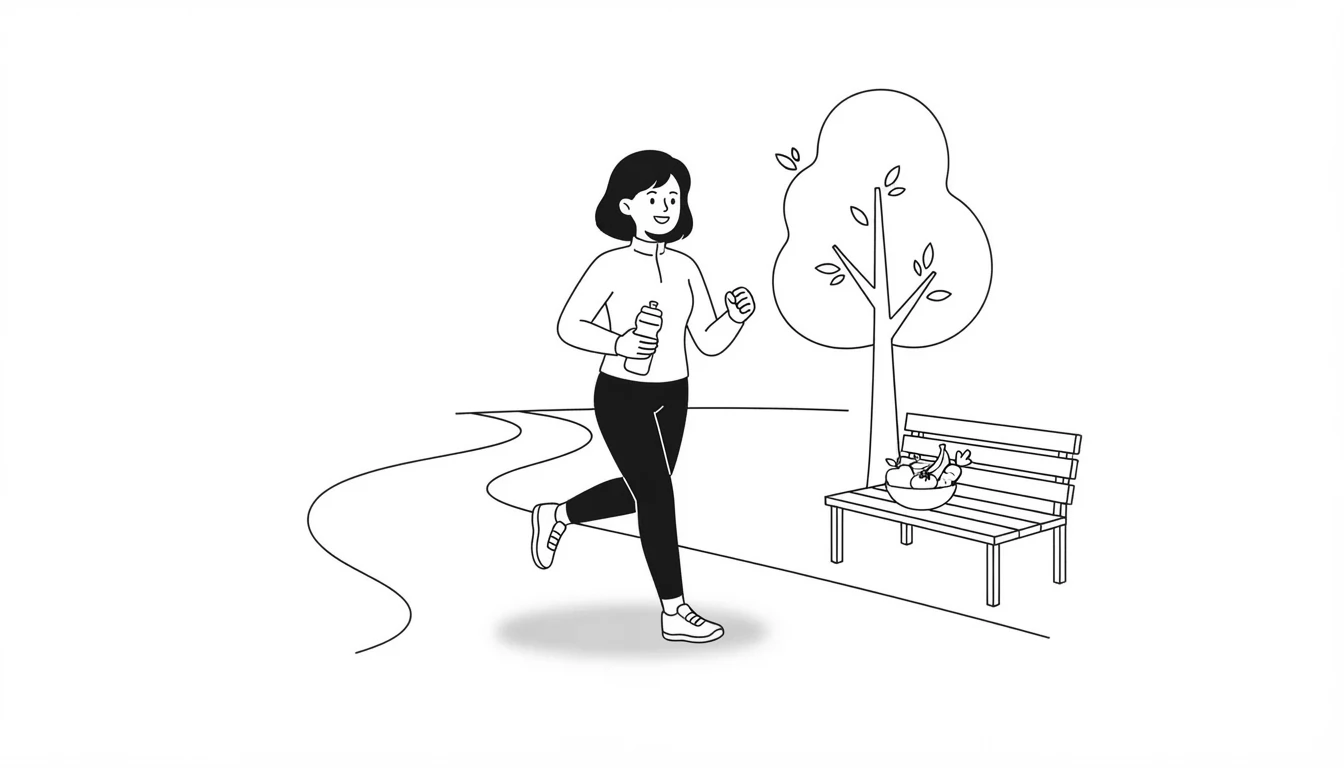
Exercise
| 🇬🇧 English | Pronunciation | 🇪🇸 Spanish |
|---|---|---|
| to do exercise | /ˈeksəsaɪz/ | hacer ejercicio |
| to work out | /wɜːk aʊt/ | entrenar (en el gimnasio) |
| to keep fit / to stay in shape | /kiːp fɪt/ /ʃeɪp/ | mantenerse en forma |
| to go for a run / a walk | /rʌn/ /wɔːk/ | salir a correr / a pasear |
| to warm up | /wɔːm ʌp/ | calentar |
| a sedentary lifestyle | /ˈsedntri ˈlaɪfstaɪl/ | un estilo de vida sedentario |
Watch the verb: you do exercise, never make it: I do exercise every day ✅. And if you’d like the vocabulary for each sport, have a look at my post on sports vocabulary in English.
Sleep
| 🇬🇧 English | Pronunciation | 🇪🇸 Spanish |
|---|---|---|
| to get enough sleep | /ɪˈnʌf sliːp/ | dormir lo suficiente |
| a good night’s sleep | /ɡʊd naɪts sliːp/ | una buena noche de descanso |
| to have trouble sleeping | /ˈtrʌbl ˈsliːpɪŋ/ | tener problemas para dormir |
| insomnia | /ɪnˈsɒmniə/ | insomnio |
| a nap / to have a nap | /næp/ | una siesta / echarse la siesta |
| a sleep routine | /sliːp ruːˈtiːn/ | una rutina de sueño |
To talk about your timetable and your day, my post on daily routines in English will come in very handy, and for more verbs about sleep, have a look at the phrasal verbs with SLEEP.
Mental health and stress
People talk about mental health more and more, and so do the exams: questions about stress, pressure at school or how to switch off are very common.
| 🇬🇧 English | Pronunciation | 🇪🇸 Spanish |
|---|---|---|
| mental health | /ˈmentl helθ/ | salud mental |
| wellbeing | /ˌwelˈbiːɪŋ/ | bienestar |
| stress / stressed | /stres/ /strest/ | estrés / estresado |
| stressful | /ˈstresfl/ | estresante |
| anxiety / anxious | /æŋˈzaɪəti/ /ˈæŋkʃəs/ | ansiedad / ansioso, nervioso |
| depression | /dɪˈpreʃn/ | depresión |
| to be under pressure | /ˈpreʃə/ | estar bajo presión |
| burnout | /ˈbɜːnaʊt/ | agotamiento, estar quemado |
| to cope with | /kəʊp wɪð/ | sobrellevar, hacer frente a |
| to relax / to unwind | /rɪˈlæks/ /ʌnˈwaɪnd/ | relajarse / desconectar |
| a therapist | /ˈθerəpɪst/ | un terapeuta, un psicólogo |
Notice the difference between stressed (how you feel: I’m stressed) and stressful (what causes stress: a stressful week). It’s the same pattern as bored and boring.
Collocations, idioms and phrasal verbs about health
Key collocations
These combinations are what make you sound natural. Learn them as chunks:
| 🇬🇧 English | 🇪🇸 Spanish |
|---|---|
| catch a cold | coger un resfriado |
| run a temperature | tener fiebre |
| see a doctor | ir al médico |
| make an appointment | pedir cita |
| take medicine / take a tablet | tomar medicina / una pastilla |
| have an operation | operarse |
| make a full recovery | recuperarse por completo |
| do exercise | hacer ejercicio |
| follow a healthy diet | seguir una dieta sana |
| give up smoking / quit smoking | dejar de fumar |
Health idioms
| 🇬🇧 Idiom | 🇪🇸 Spanish | Example |
|---|---|---|
| under the weather | pachucho, algo enfermo | I’m feeling a bit under the weather today. |
| as fit as a fiddle | sano como una manzana | My grandad is 85 and as fit as a fiddle. |
| on the mend | recuperándose, mejorando | She had flu last week, but she’s on the mend now. |
| back on your feet | recuperado, de nuevo en pie | After the operation, he was back on his feet in a month. |
| a clean bill of health | el visto bueno del médico | The doctor gave me a clean bill of health. |
| a splitting headache | un dolor de cabeza tremendo | I woke up with a splitting headache. |
| laughter is the best medicine | la risa es la mejor medicina | Watch a comedy tonight: laughter is the best medicine! |
Health phrasal verbs
- come down with: to start to become ill. I think I’m coming down with the flu.
- get over: to recover from something. It took me a week to get over my cold.
- throw up: to vomit (informal). He threw up after eating some bad fish.
- pass out: to faint. It was so hot that a man passed out on the train.
- fight off: to get rid of an illness or infection. Sleep helps your body fight off infections.
- wear off: to stop having an effect. The painkiller is starting to wear off.
- cut down on: to have less of something. I’m trying to cut down on coffee.
- work out: to train, to do exercise. She works out at the gym every morning.
- look after: to take care of. My mum looked after me when I was ill.
Typical mistakes and false friends
- Saying «constipated» for a cold: constipated means you can’t go to the toilet. If you’ve got a cold, say I’ve got a cold ✅. Just imagine the pharmacist’s face. 😅
- Asking the doctor for a «recipe»: a recipe is for cooking. What the doctor gives you is a prescription ✅.
- Saying «I’m embarrassed» for «estoy embarazada»: embarrassed means you feel ashamed. The word you want is pregnant ✅.
- Using «pain» as a verb: My arm pains ❌, My arm hurts ✅.
- Leaving out the article: I have headache ❌, I have a headache ✅. The same goes for a cold, a cough, a temperature.
- Making exercise: make exercise ❌, do exercise ✅.
- Saying «I operated myself»: in English the surgeon operates. You have an operation ✅: I had an operation on my knee.
- Using «sensible» for «sensible»: sensible means reasonable. Delicate skin is sensitive skin ✅.
- Saying «medicament»: it exists, but hardly anyone uses it. Say medicine or medication ✅.
- Taking a cold: I took a cold ❌, I caught a cold ✅.
If you want many more cases like these, there’s a full list in my post on Spanish-English false friends.
Health in the Cambridge exams
In my experience as an exam trainer, health and healthy habits come up at every level, from A2 Key to C1 Advanced:
- Speaking Part 1 (A2, B1 and B2): personal questions such as What do you do to keep fit?, How do you relax after a busy day? or Do you think you have a healthy diet?
- Speaking Part 4 (B1 and B2): opinion questions like Do you think people today are healthier than in the past?, Should schools teach children how to eat healthily? or Why do so many young people feel stressed? I explain each part in my guide to the B1 Preliminary Speaking.
- Writing: it’s a common topic in B1 articles and B2 essays (for example, whether the government should put a tax on junk food). I cover this in depth in my guide to the B2 First essay.
- Reading and Listening: articles about sleep, interviews with athletes or doctors and texts about student stress are very frequent.
And if you’re preparing for the Spanish university entrance exam, it’s worth knowing that health and healthy habits often come up in the PAU writing tasks and texts, as I explain in my guide to the PAU English exam in Andalusia.
A sample Speaking answer
Here’s an answer to What do you usually do to stay healthy? written to simulate a B1 level, without reaching B2:
Well, I try to have a healthy lifestyle, but it isn’t always easy. I usually go to the gym three times a week, and at weekends I go cycling with my friends. I also try to eat a lot of fruit and vegetables, because I think a balanced diet is very important. My big problem is sleep. During the exams I often go to bed very late, so I feel really tired the next day. I think I need to get more sleep and spend less time on my phone at night.
Look at what makes it work: it answers the question directly and then adds details (how often, what at weekends), uses simple linkers typical of B1 (and, also, because, so), includes topic collocations (a healthy lifestyle, a balanced diet, get more sleep) and adds a personal touch with a real problem and a solution. That’s exactly what a B1 examiner is looking for: clear ideas, accurate vocabulary and well-built sentences, without complex structures. To move up to B2, you’d need more variety (I’ve been trying to…, Not only… but also…) and more precise vocabulary, like the words in the next section.
Advanced vocabulary for Writing (B2 and C1)
If you’re taking B2 First or C1 Advanced, these words will help you raise the level of an essay or an article about health:
- a sedentary lifestyle: a way of life with very little physical activity. A sedentary lifestyle is one of the main causes of heart disease.
- life expectancy: how long people are expected to live. Life expectancy has risen dramatically in the last century.
- obesity: being very overweight. Childhood obesity is a growing problem in many countries.
- to raise awareness of: to make people know more about a problem. Schools should raise awareness of the dangers of junk food.
- prevention is better than cure: it’s better to stop a problem before it starts.
- to take a toll on: to have a bad effect on. Long working hours can take a toll on your mental health.
- the health service: the public healthcare system (in the UK, the NHS).
Tips for learning this vocabulary
- Learn symptoms in full sentences, not as single words: I’ve got a sore throat, My back hurts. That way your mind won’t go blank in front of the doctor.
- Practise a visit to the doctor out loud: invent a symptom and explain what’s wrong, how long you’ve had it and where it hurts. It’s a great exercise for Speaking.
- Read medicine boxes and leaflets in English whenever you can. They’re full of dose, tablets, side effects and twice a day.
- Talk about your habits every week: what you’ve eaten, how much exercise you’ve done and how much you’ve slept. It’s exactly the kind of question you’ll get in the exam.
Health vocabulary exercises
Time to practise. Below you have three interactive exercises that mark themselves, so you’ll know straight away how you’ve done. Try to do them without looking back at the post.
And if you prefer a version in text that you can copy and paste, you have it down here 👇
Exercise 1. Choose the correct option
Choose the correct word in each sentence.
- I’ve got a terrible (headache / head pain), so I’m going to take a painkiller.
- My back (hurts / pains) when I sit at my desk for a long time.
- I can’t talk much today because I’ve got a (sore / sick) throat.
- The doctor gave me a (prescription / recipe) for some antibiotics.
- I think I (caught / took) a cold at the swimming pool.
- She (injured / wounded) her knee playing football.
- You should (do / make) more exercise and eat less junk food.
- I’m feeling a bit under the (weather / rain), so I’m staying in bed.
- I need to make an (appointment / date) with the doctor.
- I’ve got a cold and a (runny / running) nose.
Show answers
- headache
- hurts
- sore
- prescription
- caught
- injured
- do
- weather
- appointment
- runny
Exercise 2. Complete with the correct word
Complete each sentence with one word from the list: appointment, check-up, diet, dizzy, plaster, recovery, sleep, sneezing, stressed, temperature.
- I cut my finger, so I put a _______________ on it.
- She’s got a high _______________, so she’s staying in bed today.
- I stood up too quickly and felt _______________.
- My hay fever is terrible in spring. I can’t stop _______________.
- The operation went well and he made a full _______________.
- I’m trying to eat less sugar and follow a balanced _______________.
- I always feel _______________ before exams, so I go for a run to relax.
- I’ve got an _______________ with the doctor at ten o’clock.
- You should get at least eight hours’ _______________ a night.
- I feel fine, but I go to the doctor once a year for a _______________.
Show answers
- plaster
- temperature
- dizzy
- sneezing
- recovery
- diet
- stressed
- appointment
- sleep
- check-up
Exercise 3. Health phrasal verbs and idioms
Complete each sentence with the missing word.
- I think I’m coming down _______________ the flu.
- It took me two weeks to get _______________ my cold.
- Something I ate was bad and I threw _______________ all night.
- It was so hot at the concert that a girl passed _______________.
- I’m trying to cut _______________ on coffee.
- My sister works _______________ at the gym every morning.
- The painkiller is starting to wear _______________, so my tooth hurts again.
- Vitamin C can help your body fight _______________ infections.
- Who looks _______________ your grandmother when she’s ill?
- She had flu last week, but she’s on the _______________ now.
Show answers
- with
- over
- up
- out
- down
- out
- off
- off
- after
- mend
Conclusion
To sum up: health is the general word, you talk about symptoms with have or have got, nearly always with an article (I’ve got a headache), to say something hurts you can use hurt (verb), ache, pain (noun) and sore (adjective), and remember that if you’ve got a cold, you’re not constipated. With all this, the next time you need to see a doctor or talk about your habits in an exam, you’ll feel much more confident.
Did you find this post useful? Share it with other English learners and teachers. And if you’d like more content like this, subscribe to my newsletter and follow me on Facebook, Twitter, Pinterest, Instagram and YouTube.
See you in the next post. Until then, don’t forget to keep smiling! 🙂
