
Table of contents
If I asked you right now to describe your day in English, chances are you’d start with I wake up at seven… and then run out of steam. Don’t worry, that’s completely normal: daily routine vocabulary is one of the first things we learn, and yet most learners never take it beyond the same four sentences.
Which is a shame, because it’s one of the topics you’ll use most in your life: in class, in any conversation with an English speaker and, above all, in Part 1 of the Cambridge Speaking exam, where questions like «Tell me about your typical day» come up again and again, from A2 Key right through to B2 First.
So in this guide I’m going to give you far more than a list of verbs. You’ll find the vocabulary organised by time of day with pronunciation, the grammar you need to use it properly, the phrasal verbs and collocations that make you sound natural, four model texts describing the same routine at A2, B1, B2 and C1 so you can see exactly what changes from one level to the next, and exercises with an answer key at the end.
Let’s get started! 🙂
Daily routine vocabulary in English
Let’s start with the basics, but properly organised. I’ve grouped the vocabulary by time of day, because that’s how you’ll need it when you describe your routine: from morning to night, in order. I’ve included IPA pronunciation (British English) so you don’t learn the words wrong from the start.
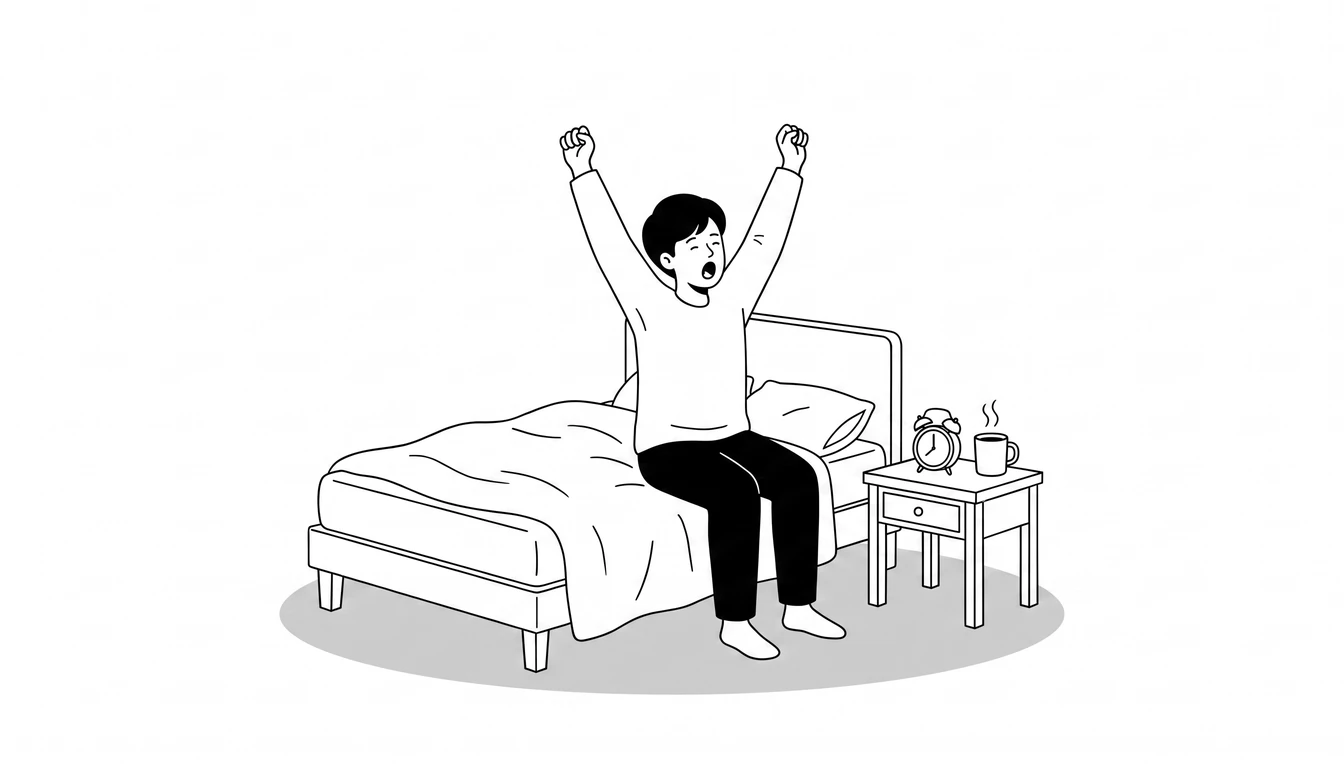
In the morning
| 🇬🇧 English | Pronunciation | 🇪🇸 Spanish |
|---|---|---|
| wake up | /ˌweɪk ˈʌp/ | despertarse |
| get up | /ˌɡet ˈʌp/ | levantarse |
| turn off the alarm | /ˌtɜːn ˈɒf ði əˈlɑːm/ | apagar el despertador |
| have a lie-in | /ˌhæv ə ˈlaɪ ɪn/ | quedarse un rato más en la cama |
| make the bed | /ˌmeɪk ðə ˈbed/ | hacer la cama |
| have a shower | /ˌhæv ə ˈʃaʊə/ | ducharse |
| brush your teeth | /ˌbrʌʃ jɔː ˈtiːθ/ | lavarse los dientes |
| wash your face | /ˌwɒʃ jɔː ˈfeɪs/ | lavarse la cara |
| get dressed | /ˌɡet ˈdrest/ | vestirse |
| do your hair | /ˌduː jɔː ˈheə/ | peinarse |
| put on make-up | /ˌpʊt ɒn ˈmeɪk ʌp/ | maquillarse |
| have breakfast | /ˌhæv ˈbrekfəst/ | desayunar |
| leave the house | /ˌliːv ðə ˈhaʊs/ | salir de casa |
| catch the bus | /ˌkætʃ ðə ˈbʌs/ | coger el autobús |
| get to work / school | /ˌɡet tə ˈwɜːk/ | llegar al trabajo / al colegio |
One thing worth noticing: we say have breakfast, with no article. I have the breakfast ✗ is one of the most persistent mistakes Spanish speakers make. The same goes for have lunch and have dinner.
In the afternoon
| 🇬🇧 English | Pronunciation | 🇪🇸 Spanish |
|---|---|---|
| have lunch | /ˌhæv ˈlʌntʃ/ | comer / almorzar |
| take a break | /ˌteɪk ə ˈbreɪk/ | hacer una pausa |
| go back to work | /ˌɡəʊ ˌbæk tə ˈwɜːk/ | volver al trabajo |
| have a coffee | /ˌhæv ə ˈkɒfi/ | tomarse un café |
| finish work | /ˌfɪnɪʃ ˈwɜːk/ | salir de trabajar |
| pick up the kids | /ˌpɪk ʌp ðə ˈkɪdz/ | recoger a los niños |
| do the shopping | /ˌduː ðə ˈʃɒpɪŋ/ | hacer la compra |
| run errands | /ˌrʌn ˈerəndz/ | hacer recados |
| go to the gym | /ˌɡəʊ tə ðə ˈdʒɪm/ | ir al gimnasio |
| do your homework | /ˌduː jɔː ˈhəʊmwɜːk/ | hacer los deberes |
| get home | /ˌɡet ˈhəʊm/ | llegar a casa |
In the evening and at night
| 🇬🇧 English | Pronunciation | 🇪🇸 Spanish |
|---|---|---|
| get changed | /ˌɡet ˈtʃeɪndʒd/ | cambiarse de ropa |
| cook dinner | /ˌkʊk ˈdɪnə/ | hacer la cena |
| have dinner | /ˌhæv ˈdɪnə/ | cenar |
| do the washing-up | /ˌduː ðə ˌwɒʃɪŋ ˈʌp/ | fregar los platos |
| tidy up | /ˌtaɪdi ˈʌp/ | ordenar / recoger |
| watch TV | /ˌwɒtʃ ˌtiː ˈviː/ | ver la tele |
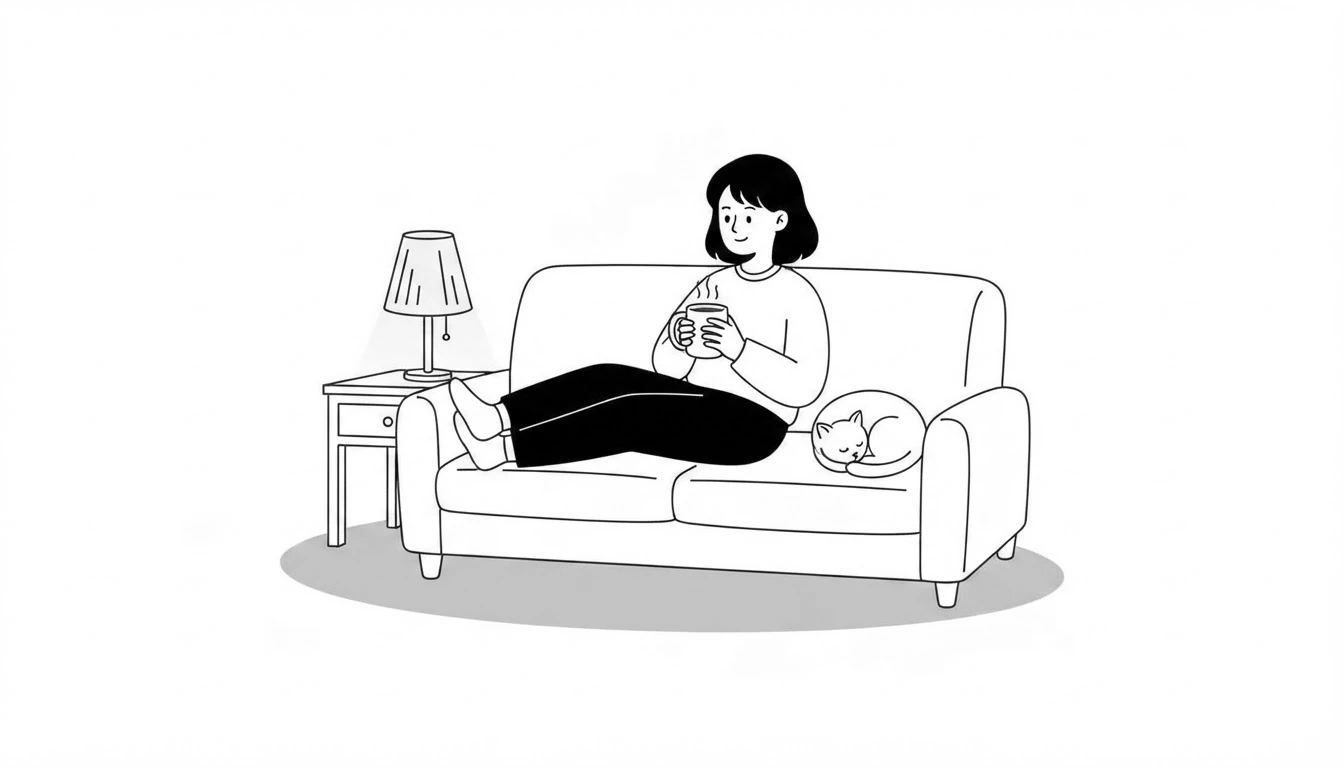
| relax on the sofa | /rɪˈlæks ɒn ðə ˈsəʊfə/ | relajarse en el sofá |
| have a bath | /ˌhæv ə ˈbɑːθ/ | darse un baño |
| set the alarm | /ˌset ði əˈlɑːm/ | poner el despertador |
| go to bed | /ˌɡəʊ tə ˈbed/ | irse a la cama |
| fall asleep | /ˌfɔːl əˈsliːp/ | quedarse dormido |
Here’s a distinction worth getting right. Spanish uses por la noche for everything, but English splits it in two:
- In the evening covers roughly 6 p.m. until you go to bed. It’s when you have dinner, watch television or meet friends.
- At night is the small hours, when people are asleep: I don’t sleep well at night.
That’s why I have dinner at night sounds odd, and I have dinner in the evening is what a native speaker would say. Notice the prepositions too: in the morning / in the afternoon / in the evening, but at night. There’s no logic to it, I’m afraid — it just has to be learnt.
Your weekly routine and the weekend
Your routine isn’t only what you do every day. To talk about the whole week you’ll need these:
| 🇬🇧 English | 🇪🇸 Spanish |
|---|---|
| on Mondays / on Fridays | los lunes / los viernes |
| on weekdays | entre semana |
| at the weekend (BrE) / on the weekend (AmE) | el fin de semana |
| every other day | un día sí y otro no |
| twice a week / three times a month | dos veces por semana / tres veces al mes |
| work from home | teletrabajar |
| have a day off | tener el día libre |
| sleep in | dormir hasta tarde |
| go out for dinner | salir a cenar |
| meet up with friends | quedar con amigos |
Household chores
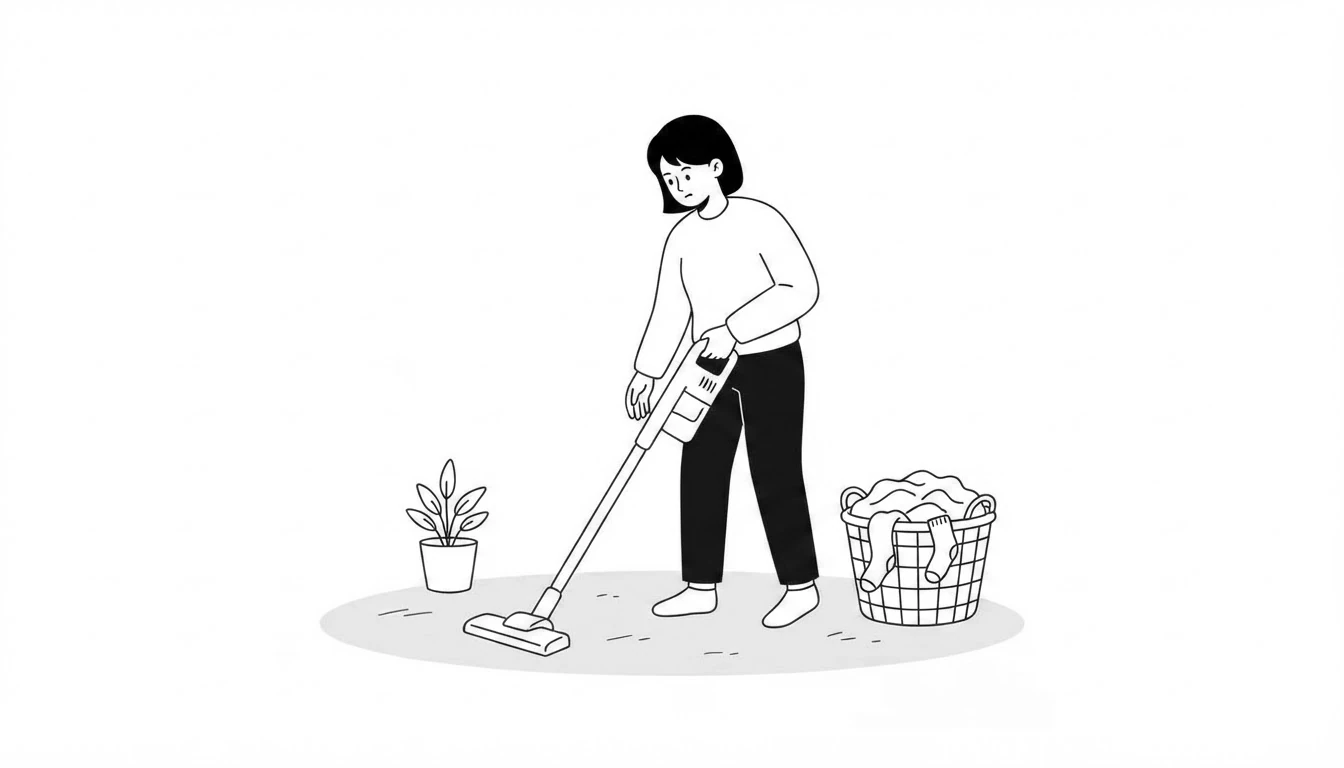
This is a set of vocabulary that comes up constantly in the Speaking exam, and hardly anyone prepares it:
| 🇬🇧 English | Pronunciation | 🇪🇸 Spanish |
|---|---|---|
| do the dishes | /ˌduː ðə ˈdɪʃɪz/ | fregar los platos |
| do the laundry | /ˌduː ðə ˈlɔːndri/ | poner una lavadora |
| do the ironing | /ˌduː ði ˈaɪənɪŋ/ | planchar |
| hoover / vacuum | /ˈhuːvə/ | pasar la aspiradora |
| mop the floor | /ˌmɒp ðə ˈflɔː/ | fregar el suelo |
| take out the rubbish | /ˌteɪk aʊt ðə ˈrʌbɪʃ/ | sacar la basura |
| water the plants | /ˌwɔːtə ðə ˈplɑːnts/ | regar las plantas |
| take the dog for a walk | /ˌteɪk ðə ˈdɒɡ fər ə ˈwɔːk/ | sacar al perro |
You’ll have noticed that do turns up everywhere here… and yet we say make the bed. It’s a classic source of confusion, and if it trips you up I’d recommend having a look at my post on the difference between DO and MAKE, where I go into it properly. The quick rule: do for tasks and obligations, make for when you create or produce something.
The grammar of routines: the present simple
Knowing fifty verbs won’t help you much if you then put them in the wrong place. The good news is that you only need one tense to talk about your routine: the present simple.
Why? Because the present simple is the tense of habits, routines and repeated actions. You’re not describing what you’re doing right now, but what you do as a rule. If you’d like the full explanation, it’s in my guide to the Present Simple. Here’s what matters for routines.
The third-person -s (and its traps)
With he, she and it, the verb takes an -s. It looks easy, and it’s where most people slip up:
| Rule | 🇬🇧 Example |
|---|---|
| Normally, add -s | He gets up at seven. |
| Verbs ending in -ch, -sh, -ss, -x, -o → -es | She watches TV. / He goes to the gym. |
| Consonant + -y → -ies | She studies in the evening. |
| Vowel + -y → just -s | He stays at home on Sundays. |
| Have is irregular → has | She has breakfast at eight. |
Negatives and questions
For negatives and questions you need the auxiliary do / does. And remember the golden rule: once the auxiliary appears, the main verb loses its -s.
- ✓ I don’t have breakfast during the week.
- ✓ She doesn’t work on Fridays. — ✗ She doesn’t works…
- ✓ Do you get up early?
- ✓ Does he go to the gym every day? — ✗ Does he goes…
If questions are giving you trouble, I covered how they work in my post on yes/no and wh- questions.
Present simple vs present continuous
This is the contrast that causes most confusion, and routines show it beautifully:
- I usually get up at seven. → your normal routine. Present simple.
- I‘m getting up at six this week because I’ve got exams. → something temporary, outside the routine. Present continuous.
The question to ask yourself is whether you’re talking about the usual or the exceptional. I go through it with many more examples in Present Simple vs Present Continuous.
Common mistakes Spanish speakers make
I see these constantly when I mark Speaking and Writing papers. Have a good look, because they’re easy to get rid of:
- ✗ I wake up me at seven. → ✓ I wake up at seven. (English has no reflexive verbs the way Spanish does.)
- ✗ Every day I go to gym. → ✓ …to the gym.
- ✗ I go to the bed at eleven. → ✓ I go to bed at eleven. (No article here — the exact opposite of the one above.)
- ✗ I do a shower. → ✓ I have a shower.
- ✗ I have 30 years. → ✓ I am 30 years old.
- ✗ I take breakfast. → ✓ I have breakfast.
- ✗ The Mondays I work from home. → ✓ On Mondays I work from home.
Adverbs of frequency and time expressions
This is where your routine stops being a robotic list of actions and starts sounding like a real person. There’s a world of difference between I go to the gym and I hardly ever go to the gym.
Adverbs of frequency
| 🇬🇧 Adverb | Frequency | 🇪🇸 Spanish |
|---|---|---|
| always | 100% | siempre |
| usually / normally | ~90% | normalmente |
| often / frequently | ~70% | a menudo |
| sometimes | ~50% | a veces |
| occasionally | ~30% | de vez en cuando |
| hardly ever / rarely / seldom | ~10% | casi nunca |
| never | 0% | nunca |
A word of warning: never and hardly ever are already negative on their own. That’s why ✗ I don’t never get up early is wrong, and ✓ I never get up early is what you want.
Where to put them in the sentence (mistake number one)
If you take away one thing from this section, make it this rule:
- Before the main verb: I always have breakfast. — ✗ I have always breakfast.
- After the verb to be: She is never late. — ✗ She never is late.
- Between the auxiliary and the verb: I don’t usually work at weekends.
Longer frequency expressions (every day, twice a week, once a month, from time to time) behave differently: they go at the end of the sentence, or at the beginning if you want to emphasise them.
- ✓ I go to the gym three times a week.
- ✓ Every morning, I take the dog for a walk.
Sequencing expressions to link your routine together
These are what turn four separate sentences into speech that flows. Use them and you’ll notice the difference straight away:
| 🇬🇧 Expression | 🇪🇸 Spanish | Example |
|---|---|---|
| first (of all) | primero | First, I have a shower. |
| then / next | luego / después | Then I get dressed. |
| after that | después de eso | After that, I have breakfast. |
| later on | más tarde | Later on, I check my emails. |
| before / after + -ing | antes de / después de | Before going to bed, I read. |
| as soon as | en cuanto | As soon as I get home, I get changed. |
| finally / in the end | por último | Finally, I set the alarm. |
And if you’re already at an intermediate or advanced level and want to move beyond then and after that, here are my lists of B2 connectors and C1 connectors.
Time prepositions: at, in, on
| Preposition | Used with | 🇬🇧 Examples |
|---|---|---|
| at | clock times and specific moments | at 7 o’clock, at midnight, at night, at lunchtime, at the weekend |
| in | parts of the day, months, seasons | in the morning, in the afternoon, in the evening, in summer |
| on | days and dates | on Mondays, on weekdays, on Christmas Day, on 5th May |
Phrasal verbs and collocations for daily routines
Now for the part almost nobody teaches you, and the one that really separates sounding like a textbook from sounding like a person.
Essential phrasal verbs
| 🇬🇧 Phrasal verb | Pronunciation | 🇪🇸 Spanish | Example |
|---|---|---|---|
| wake up | /ˌweɪk ˈʌp/ | despertarse | I wake up before my alarm goes off. |
| get up | /ˌɡet ˈʌp/ | levantarse de la cama | I get up as soon as I wake up. |
| get ready | /ˌɡet ˈredi/ | arreglarse | It takes me 20 minutes to get ready. |
| set off | /ˌset ˈɒf/ | ponerse en camino | I set off for work at half past eight. |
| drop off | /ˌdrɒp ˈɒf/ | dejar a alguien en un sitio | I drop the kids off at school. |
| pick up | /ˌpɪk ˈʌp/ | recoger | My partner picks them up at five. |
| wind down | /ˌwaɪnd ˈdaʊn/ | relajarse, desconectar | I need an hour to wind down before bed. |
| doze off / nod off | /ˌdəʊz ˈɒf/ | quedarse traspuesto | I always nod off in front of the TV. |
| stay up | /ˌsteɪ ˈʌp/ | quedarse despierto hasta tarde | I try not to stay up past midnight. |
| sleep in / lie in | /ˌsliːp ˈɪn/ | dormir hasta tarde | I sleep in at the weekend. |
If you like phrasal verbs (or if they terrify you, which is more common), I’ve put together a list of common phrasal verbs that should help.
Get up vs wake up, and other confusing pairs
This is the classic pair, and the difference is simpler than it looks:
- Wake up = to stop sleeping, to open your eyes. It’s what your brain does.
- Get up = to get out of bed. It’s what your body does.
Which is why this sentence makes perfect sense: I wake up at seven, but I don’t get up until half past. Sounds rather familiar, to be honest. 🙂
A few more pairs worth sorting out:
- Have a shower (British) / take a shower (American). Both are correct; pick one and be consistent.
- Make the bed ✓, never ✗ do the bed.
- Do the washing-up (wash the dishes) vs do the washing (do the laundry). One letter apart, two different chores.
Collocations that raise your level
A collocation is a word combination that native speakers use naturally. Learning them as whole chunks is what stops you translating from your own language:
| 🇬🇧 Collocation | 🇪🇸 Spanish |
|---|---|
| be a morning person | ser de mañanas |
| be a night owl | ser nocturno, trasnochador |
| be a creature of habit | ser muy de costumbres |
| get into a routine | coger una rutina |
| stick to a routine | mantener la rutina |
| have a hectic schedule | tener una agenda de locos |
| run late | ir con retraso |
| grab a coffee / grab a bite to eat | tomar algo rápido |
| be snowed under (with work) | estar hasta arriba de trabajo |
| call it a day | dar el día por terminado |
| hit the sack | irse al catre |
Since work creeps into almost everyone’s routine, here’s my post on collocations with WORK as well.
My daily routine in English: model texts by level
And now we get to the part that, honestly, is the reason I wanted to write this article. The problem with most vocabulary lists out there is that they abandon you right here: they hand you the words, but they never show you how the way you describe your routine changes with your level.
What follows is the same routine, belonging to the same person, told four times over: at A2, B1, B2 and C1. The facts don’t change. What changes is how they’re told.
One important note before we start: each text is written to simulate that exact level, without reaching the next one. Don’t look for literary brilliance in the A2 text, because then it wouldn’t be A2.
My daily routine at A2 Key level
I get up at seven o’clock every day. First, I have a shower and I get dressed. Then I have breakfast with my family. I usually eat toast and I drink coffee. I go to work by bus at eight o’clock. I finish work at five and I go home. In the evening, I cook dinner and I watch TV. I go to bed at eleven o’clock. I am very tired!
What makes it A2:
- Short, single-idea sentences, nearly all following subject + verb + object.
- Very basic connectors: first, then, and.
- High-frequency vocabulary: get up, have breakfast, go to work, watch TV.
- A single adverb of frequency (usually) and exact clock times.
- It completes the task perfectly. At A2, that’s precisely what’s being asked for.
My daily routine at B1 Preliminary level
I’m not really a morning person, so I usually get up at about seven, although I never get out of bed straight away. First, I have a quick shower and get dressed. After that, I have breakfast — normally toast and a strong coffee, because I really need it! I catch the bus to work at half past eight and I start at nine. I have lunch with my colleagues at two, and I finish at six. In the evening, I cook dinner and sometimes I go for a walk. Before I go to bed, I read for a while because it helps me relax.
What makes it B1:
- Subordinate clauses appear: so, although, because, before I go to bed. The sentences link up rather than simply sitting side by side.
- A wider range of sequencing: after that, first.
- Several adverbs of frequency, correctly placed: usually, never, normally, sometimes.
- Opinion and nuance start to appear, not just facts: I’m not really a morning person, because it helps me relax.
- Natural approximations: at about seven, for a while.
My daily routine at B2 First level
I’d say I’m quite an organised person, although my routine falls apart completely at the weekend. During the week I get up at seven and, even though I’m always tempted to have a lie-in, I force myself to get straight out of bed. I tend to have a light breakfast while I check the news, and then I set off for work at around half past eight. Work keeps me busy until six, with a proper break for lunch, which I always take away from my desk — otherwise I end up feeling completely drained by the evening. Once I get home, I cook something simple and I try to wind down before bed instead of scrolling through my phone, which never helps me sleep.
What makes it B2:
- More complex structures: even though, otherwise, once, instead of + -ing, plus a non-defining relative clause (which I always take away from my desk).
- Genuine lexical range: tempted, force myself, drained, proper break, rather than repeating the basic verbs.
- Phrasal verbs woven in naturally: set off, wind down, end up, fall apart, scroll through.
- Hedging typical of the level: I’d say…, I tend to…, at around….
- There’s personal evaluation and contrast (weekdays versus weekend), not a simple list.
My daily routine at C1 Advanced level
I’m very much a creature of habit, and I’ve come to realise that my routine is the only thing keeping me sane during the week. No sooner does my alarm go off at half past six than I’m out of bed — not because I’m particularly disciplined, but because I’ve learnt the hard way that hitting snooze ruins the rest of my morning. What I tend to do is spend the first half hour with a coffee and no screens, which sets me up for the day far better than rushing around ever did. I set off at eight and make a point of getting the most demanding tasks out of the way before lunch, when my concentration is at its peak. Evenings are deliberately unstructured: I cook, I catch up with my partner and I wind down properly. The only thing I’d change is how easily the whole thing collapses at the weekend — by Sunday night I’m invariably scrambling to get organised again.
What makes it C1:
- Advanced grammar: inversion (No sooner does my alarm go off… than…) and a cleft sentence (What I tend to do is…).
- Precise, idiomatic vocabulary: a creature of habit, come to realise, learn the hard way, set me up for the day, make a point of, get out of the way, at its peak, invariably, scramble.
- The text doesn’t list — it argues. It explains the reasoning behind each choice and takes a position.
- Controlled register, with self-criticism and nuance at the end (The only thing I’d change is…).
- Even so, it stays below C2: there are no sophisticated rhetorical flourishes or notably literary register.
What changes from one level to the next
| Feature | A2 Key | B1 Preliminary | B2 First | C1 Advanced |
|---|---|---|---|---|
| Sentence length | Short, one idea | Medium, with a subordinate clause | Long, several clauses | Varied, deliberately paced |
| Connectors | and, then, first | because, although, after that | even though, otherwise, once, instead of | Inversion, cleft sentences, implied contrast |
| Vocabulary | Basic and frequent | Frequent, plus a few expressions | Varied, with phrasal verbs | Precise and idiomatic |
| Stance | Facts only | Facts plus some opinion | Evaluation and contrast | Argument and self-criticism |
| Risk | None | Low | Occasional ambitious structures | Risk taken and handled well |
Pay particular attention to the «Stance» row, because in my experience it’s the one that raises your mark fastest. Going from listing to evaluating doesn’t require a thousand new words: it requires deciding to tell your routine rather than recite it.
Talking about your routine in the Cambridge Speaking exam
Now for the practical part: this comes up in the exam. Not «it might come up» — it’s one of the most recurrent topics there is.
Where daily routines appear in the exam
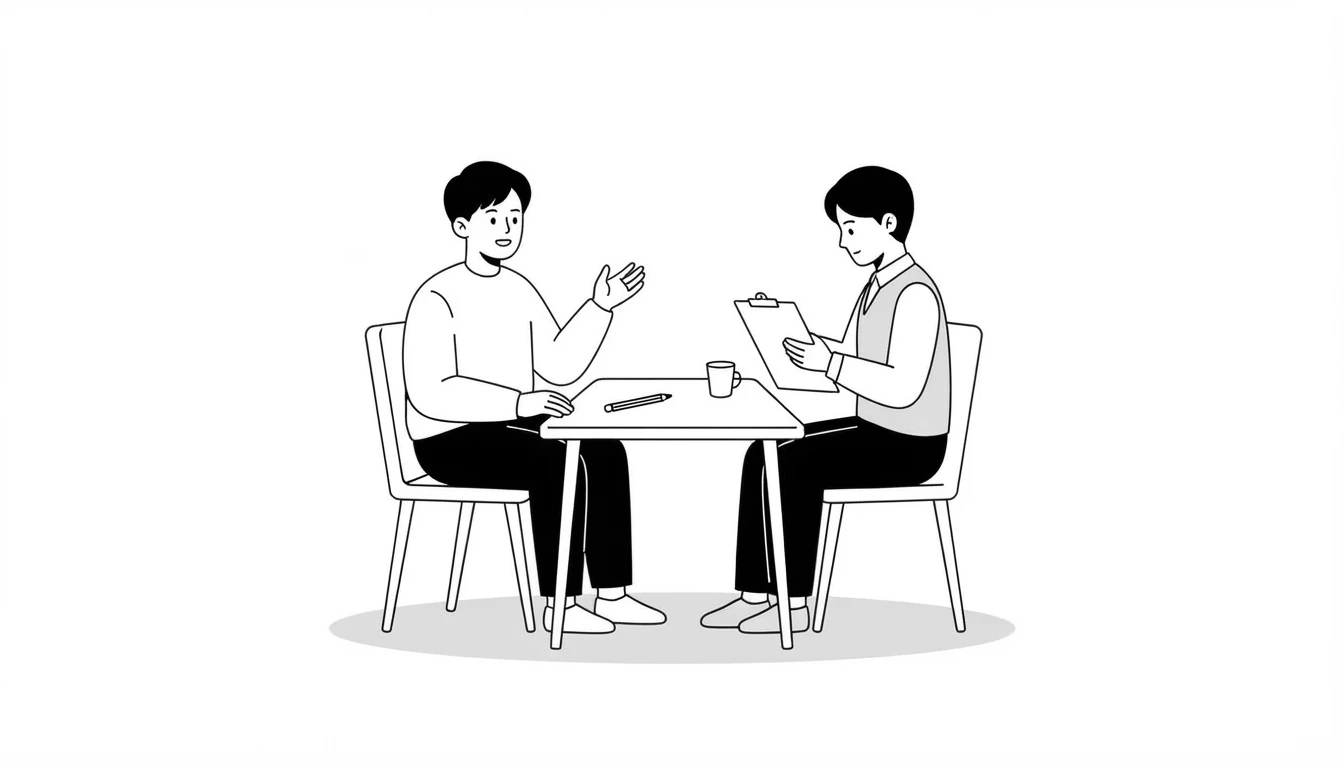
Daily routines belong to Part 1 of the Speaking exam, the opening section where the examiner asks you simple personal questions to break the ice and form a first impression of your level. You’ll find it in:
- A2 Key (KET) — very direct questions about your day-to-day life.
- B1 Preliminary (PET) — you’re expected to extend each answer a little.
- B2 First (FCE) — answering isn’t enough here; you need to develop your response.
And although the Part 1 questions at C1 Advanced are rather more abstract, you’ll often be asked how you organise your time or how your habits have changed.
Typical examiner questions
- Tell me about your typical day.
- What do you usually do in the mornings?
- Do you have the same routine every day?
- What’s the best part of your day? Why?
- Do you prefer weekdays or weekends? Why?
- Would you like to change anything about your daily routine?
- Do you think it’s important to have a routine?
How NOT to sound like an A2 candidate when you’re a B2
Pay attention to this one, because it’s the mistake I see most often as an exam preparer.
A candidate with a perfectly solid B2 reaches Part 1, gets asked about their routine, and answers: «I wake up, I have breakfast, I go to work.» Full stop. And in that moment they’ve just handed the examiner a language sample worth an A2, even though their English is capable of far more. Lexical Resource and Discourse Management both suffer, and that costs marks.
The problem is almost never that you don’t know enough. It’s that the question is so easy that you get complacent. Three rules to avoid it:
- Never answer with a single sentence. Give the fact, then add a reason, a detail or an exception. Two or three sentences, no more — this isn’t an invitation to monologue.
- Add evaluation, not just facts. Facts are A2. An opinion about the facts is B2.
- Swap the generic verb for the precise collocation. I go to bed late is not the same as I tend to stay up far later than I should.
Here’s how it looks in practice:
| Question | ❌ A2-level answer | ✅ B2-level answer |
|---|---|---|
| What do you do in the mornings? | I get up and I go to work. | I’m not a morning person at all, so I keep my mornings as simple as possible. I get up at seven, grab a coffee and set off without thinking too much about it. |
| Do you have the same routine every day? | Yes, every day the same. | More or less, yes, at least during the week. The weekend is a different story, though — I tend to have a lie-in and my whole routine falls apart. |
| Would you like to change anything? | Yes, I want to sleep more. | Definitely. I’d love to stop staying up so late, because I always end up feeling drained by Thursday. It’s a habit I keep saying I’ll break. |
An annotated model answer (B1 Preliminary)
Examiner’s question: Tell me about a typical day for you.
Well, my days are quite similar, to be honest. I get up at about seven and I have breakfast with my sister before I leave. Then I go to class, and I usually stay there until two o’clock. In the afternoon I do my homework, and after that I sometimes meet up with friends. I like the evenings best because I can finally relax.
Why it works at B1:
- It opens with a natural filler (Well…, to be honest) that buys a second of thinking time without sounding stuck.
- It orders the day with sequencing connectors: then, in the afternoon, after that.
- Adverbs of frequency are used and correctly placed: usually stay, sometimes meet up.
- It closes with a justified preference (I like the evenings best because…), which is exactly what lifts the answer above A2.
- It stays within B1: no advanced structures and no higher-level vocabulary.
Quick tips for the exam
- Don’t memorise a whole speech. It shows badly and examiners penalise it. Memorise chunks instead: two or three collocations and one way of giving an opinion.
- Prepare the exception. Have a sentence ready about how your weekend differs. It works for almost any routine question.
- If you don’t understand, ask. Sorry, could you repeat that? costs you nothing; freezing does.
- Don’t invent a life you don’t have. It’s far easier to speak fluently about your real routine than about a fictional one you’re building as you go.
How to learn and practise this vocabulary
Reading a list isn’t learning. These four things do work, and I’ve watched them work with a lot of students:
- Narrate your morning out loud. Literally, while you’re getting ready: I’m having a shower, now I’m getting dressed…. It’s free, it costs you no extra time, and it automates the vocabulary surprisingly fast.
- Learn in chunks, not single words. Don’t memorise bed; memorise make the bed, go to bed, get out of bed. Your brain retrieves chunks far better than isolated words.
- Record yourself for 60 seconds. Describe your routine, listen back, and compare it with the model text one level above yours in this post. You’ll see what’s missing with uncomfortable clarity.
- Label your house. A sticky note on the coffee machine, another on the mirror. It sounds like a cliché, but with household vocabulary it works very well.
Daily routine exercises
Your turn now. Do all five exercises below and check your answers as you go. 🙂
And if you prefer a version in text that you can copy and paste, you have it down here 👇
Exercise 1. Complete with the correct verb
get up • have • make • brush • catch • do • take • set • fall • go
- I always _______________ my teeth after breakfast.
- She _______________ the bed as soon as she gets up.
- We _______________ dinner at around nine o’clock.
- He _______________ the bus to work every morning.
- I _______________ at seven o’clock during the week.
- They _______________ the washing-up together after dinner.
- Don’t forget to _______________ the alarm tonight!
- My father _______________ the dog for a walk every evening.
- I _______________ to bed at about eleven.
- I often _______________ asleep on the sofa.
Show answers
- brush
- makes — remember: make the bed, never do the bed.
- have
- catches — third person, -ch → -es.
- get up
- do
- set — after to, the bare infinitive.
- takes
- go
- fall
Exercise 2. Put the adverb of frequency in the right place
- I have breakfast at home. (always)
- She is late for work. (never)
- We go to the gym after work. (sometimes)
- He doesn’t work at the weekend. (usually)
- They are tired on Monday mornings. (often)
- I go to bed before midnight. (hardly ever)
- My sister does the ironing. (rarely)
- You should set your alarm. (always)
Show answers
- I always have breakfast at home.
- She is never late for work. (after to be)
- We sometimes go to the gym after work. (also valid at the start or the end)
- He doesn’t usually work at the weekend. (between auxiliary and verb)
- They are often tired on Monday mornings.
- I hardly ever go to bed before midnight.
- My sister rarely does the ironing.
- You should always set your alarm. (between modal and verb)
Exercise 3. Choose the preposition: at, in or on
- I get up _______________ half past six.
- We have lunch _______________ the afternoon.
- She works from home _______________ Fridays.
- I don’t sleep well _______________ night.
- They go out for dinner _______________ the weekend.
- He goes to the gym _______________ the morning.
- I never work _______________ weekdays after six.
- We watch a film _______________ the evening.
Show answers
- at
- in
- on
- at — at night, the odd one out.
- at (British) / on (American)
- in
- on
- in
Exercise 4. Match the phrasal verb with its meaning
| Phrasal verb | Meaning |
|---|---|
| 1. wind down | a. to remain awake later than usual |
| 2. set off | b. to sleep later in the morning than you normally do |
| 3. nod off | c. to relax before going to sleep |
| 4. stay up | d. to collect someone from a place |
| 5. sleep in | e. to start a journey |
| 6. pick up | f. to prepare yourself before going out |
| 7. get ready | g. to fall asleep without meaning to |
| 8. drop off | h. to take someone somewhere and leave them there |
Show answers
1-c · 2-e · 3-g · 4-a · 5-b · 6-d · 7-f · 8-h
Exercise 5. Level up: rewrite from A2 to B2
Rewrite each sentence so that it means the same, using the word in capitals and the expressions from this post.
- I get up late at the weekend. (LIE-IN)
- I go to bed very late. (OWL)
- I have a lot of work at the moment. (SNOWED)
- I am very tired in the evening. (DRAINED)
- I do the same things every day. (CREATURE)
Show answers
- I have a lie-in at the weekend.
- I’m a night owl.
- I’m snowed under with work at the moment.
- I’m drained in the evening.
- I’m a creature of habit.
How did it go? If you slipped up on the adverbs of frequency or the prepositions, don’t worry: those are precisely the two areas where almost everyone struggles, and they come right with practice.
Conclusion
Talking about your daily routine in English looks like the easiest topic in the world, and in a sense it is: the vocabulary is manageable and the grammar comes down to the present simple. But it’s precisely because it’s easy that so many students give themselves away, producing A2-level answers when their English is capable of a great deal more.
So hold on to the essentials: learn the vocabulary in chunks, not as isolated words; put your adverbs of frequency in the right place; link your day with sequencing connectors; and above all, don’t just list. Add a reason, an exception, an opinion. That’s the jump in level.
If you’re preparing a Cambridge exam, I’d suggest carrying on with the Present Simple guide, B2 First Speaking Part 1 and, if you want to keep building vocabulary, my posts on food vocabulary and clothes vocabulary.
Did you find this post useful? Share it with other students and teachers of English who might need it. And if you’d like more content like this, subscribe to our newsletter and follow us on Facebook, Twitter, Pinterest, Instagram and YouTube.
See you in the next post. Until then, don’t forget to keep smiling! 🙂
