
Table of contents
Is it good in or good at? Married with or married to? Interested on or interested in? If you’ve ever stopped mid-sentence wondering which one is right, you’re not alone. Adjectives and prepositions (what grammar books call dependent prepositions) are one of the mistakes I see most often in class, even with students who have quite a high level.
The good news is that there’s no need to panic. There isn’t one magic rule that explains everything, but there are patterns that keep coming back, and once you learn each combination as a single chunk (keen on, proud of, good at), it starts coming out naturally. The trickiest part is usually your own language getting in the way: translating word for word and ending up with married with or depend of.
In this post I’ll give you a list of adjectives followed by prepositions, grouped by preposition (of, in, at, about, with, for, to, on and from) with a translation and an example, explain the preposition + -ing rule, go through the most common mistakes, show you how they come up in the Cambridge exams and, at the end, you’ll find exercises with answers. Let’s get started! 🙂
What are dependent prepositions?
Lots of English adjectives are followed by a fixed preposition when we want to say what, who or why: I’m afraid of dogs, She’s good at tennis, We’re worried about the exam. That preposition is called a dependent preposition because it depends on the adjective, not on the general meaning of the sentence.
And that’s exactly where the problem lies: it often doesn’t match the one in your language. In Spanish you are «bueno en» something, but in English you’re good at it. In Spanish you’re «casado con» someone, but in English you’re married to them. That’s why translating doesn’t work, and the best approach is to learn each adjective with its preposition attached, as if it were one word.
If you’d like to brush up on how adjectives work in general first (where they go, their order, and so on), have a look at my post on adjectives in English.
List of adjectives and prepositions in English
I’ve grouped them by preposition, which is the easiest way to memorise them. Don’t try to learn them all in one go: start with the ones you use most and keep adding.
Adjectives with OF
This is the most common preposition, especially with adjectives of fear and feelings.
| 🇬🇧 English | 🇪🇸 Spanish | Example |
|---|---|---|
| afraid of | tener miedo de | My little sister is afraid of the dark. |
| scared of | tener miedo de, asustarse de | He’s scared of spiders. |
| frightened of | tener miedo de | Some children are frightened of clowns. |
| terrified of | tener pánico a | I’m terrified of flying. |
| fond of | tener cariño a, gustar mucho | She’s very fond of her grandparents. |
| proud of | orgulloso de | We’re really proud of you. |
| tired of | harto de, cansado de | I’m tired of hearing the same excuses. |
| aware of | consciente de | Are you aware of the risks? |
| capable of | capaz de | She’s capable of doing much better. |
| jealous of | celoso de, envidioso de | He’s jealous of his brother’s success. |
| full of | lleno de | The fridge is full of food. |
| sure of | seguro de | Are you sure of the answer? |
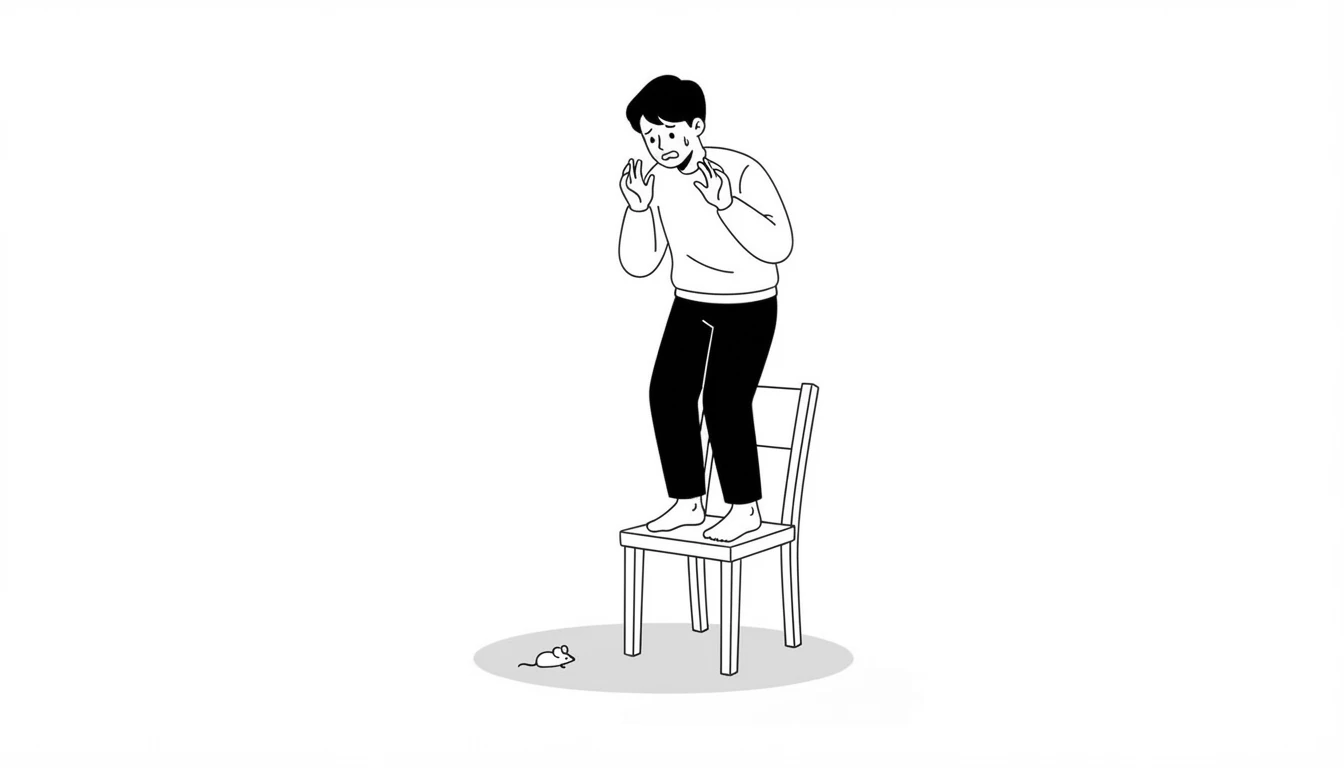
Notice that afraid, scared and frightened all take of. Never afraid to spiders ❌.
Adjectives with IN
| 🇬🇧 English | 🇪🇸 Spanish | Example |
|---|---|---|
| interested in | interesado en | I’m interested in history. |
| involved in | involucrado en, metido en | She’s involved in a charity project. |
| experienced in | con experiencia en | We need someone experienced in marketing. |
| rich in | rico en | Oranges are rich in vitamin C. |
| disappointed in | decepcionado con (una persona) | I’m disappointed in you. |
Adjectives with AT
At mainly goes with adjectives that describe how good or bad we are at something.
| 🇬🇧 English | 🇪🇸 Spanish | Example |
|---|---|---|
| good at | bueno en, que se le da bien | Paula is good at maths. |
| bad at | malo en, que se le da mal | I’m bad at remembering names. |
| brilliant at | buenísimo en | He’s brilliant at drawing. |
| terrible at | malísimo en | I’m terrible at cooking. |
| surprised at / by | sorprendido por | We were surprised at the price. |
Adjectives with ABOUT
About is the preposition of feelings about something: worry, excitement, nerves or anger about a situation.
| 🇬🇧 English | 🇪🇸 Spanish | Example |
|---|---|---|
| worried about | preocupado por | She’s worried about her exams. |
| excited about | ilusionado con, emocionado por | The kids are excited about the trip. |
| nervous about | nervioso por | I’m nervous about the interview. |
| angry about | enfadado por (algo) | He’s angry about the decision. |
| upset about | disgustado por | She was upset about the news. |
| sorry about | sentirlo por (algo) | I’m sorry about the noise last night. |
| happy about | contento con (algo) | Are you happy about the results? |
Adjectives with WITH
| 🇬🇧 English | 🇪🇸 Spanish | Example |
|---|---|---|
| angry with (someone) | enfadado con (alguien) | Mum is angry with me. |
| annoyed with | molesto con | He’s annoyed with his neighbours. |
| pleased with | contento con, satisfecho con | The teacher was pleased with our work. |
| bored with / of | aburrido de, cansado de | I’m bored with this game. |
| familiar with | familiarizado con | Are you familiar with this app? |
| crowded with | abarrotado de | The beach was crowded with tourists. |
Be careful with angry: with a person we say angry with (or angry at, which is more common in American English), and with a thing or situation, angry about.
Adjectives with FOR
| 🇬🇧 English | 🇪🇸 Spanish | Example |
|---|---|---|
| famous for | famoso por | Granada is famous for the Alhambra. |
| responsible for | responsable de | Who is responsible for this mess? |
| late for | llegar tarde a | Don’t be late for class. |
| ready for | listo para | Are you ready for the exam? |
| grateful for | agradecido por | I’m grateful for your help. |
| sorry for | sentir lástima por, sentirlo por | I feel sorry for him. / Sorry for being late. |
Adjectives with TO
| 🇬🇧 English | 🇪🇸 Spanish | Example |
|---|---|---|
| married to | casado con | She’s married to a doctor. |
| engaged to | prometido con | Tom is engaged to my cousin. |
| similar to | parecido a | Your phone is similar to mine. |
| used to (+ -ing) | acostumbrado a | I’m used to getting up early. |
| kind to / nice to | amable con | Be kind to animals. |
| rude to | maleducado con | He was rude to the waiter. |
| addicted to | adicto a, enganchado a | My brother is addicted to video games. |
Notice that kind and rude take to, not with. If you want more adjectives to describe people, have a look at my list of personality adjectives in English.
Adjectives with ON
| 🇬🇧 English | 🇪🇸 Spanish | Example |
|---|---|---|
| keen on | gustar mucho, ser aficionado a | I’m not very keen on football. |
| dependent on | dependiente de | The town is dependent on tourism. |
| based on | basado en | The film is based on a true story. |
Adjectives with FROM
| 🇬🇧 English | 🇪🇸 Spanish | Example |
|---|---|---|
| different from / to | diferente de | My school is very different from yours. |
| absent from | ausente de, faltar a | He was absent from class yesterday. |
| far from | lejos de | The hotel isn’t far from the beach. |
| safe from | a salvo de | Here you’re safe from the rain. |
With different, British English uses both from and to, and both are correct. Different than is more typical of American English, so in a Cambridge exam I’d stick to different from.
Preposition + -ing: the rule you need to know
This rule is really simple and it’ll save you a lot of marks: after a preposition, the verb always goes in the -ing form. Never the infinitive.
- I’m interested in learning Japanese. (not in learn ❌ or in to learn ❌)
- She’s good at solving problems.
- We’re tired of waiting.
- He’s excited about starting his new job.
The one that causes the most confusion is be used to. Here to is a preposition, so it’s followed by -ing too: I’m used to working at night (it’s normal for me, it isn’t strange any more). Don’t mix it up with used to + infinitive, which talks about past habits: I used to work at night (I did in the past, but not now).
And one small difference with afraid: afraid of + -ing is about something you fear might happen (I’m afraid of falling), whereas afraid to + infinitive means you don’t dare to do something (I was afraid to ask). If you want to master when to use each form, read my post on gerund or infinitive in English.
Common mistakes (and where they come from)
Almost every mistake with these prepositions comes from the same place: translating directly from another language. These are the ones I correct most often in Spanish-speaking students, and you’ll probably recognise a few of them:
| 🇪🇸 Spanish | ❌ Literal translation | ✅ Correct |
|---|---|---|
| casado con | married with | married to |
| depender de | depend of | depend on / dependent on |
| bueno en | good in | good at |
| interesado en | interested on | interested in |
| enamorado de | in love of | in love with |
| amable con | kind with | kind to |
| harto de | tired from | tired of |
| responsable de | responsible of | responsible for |
| preocupado por | worried for | worried about |
| ilusionado con | excited with | excited about |
And two more very common mistakes:
- Using the infinitive after the preposition: I’m good at speak English ❌, I’m good at speaking English ✅.
- Mixing up -ed and -ing adjectives: I’m interesting in music ❌, I’m interested in music ✅. Many of these adjectives (interested, bored, excited, worried) belong to the -ed family, which describes how you feel. I explain it in my post on -ed and -ing adjectives.
Adjectives and prepositions in the Cambridge exams
Dependent prepositions are a classic in the Cambridge exams, from B1 Preliminary up to C1 Advanced. In B2 First they appear above all in Use of English Part 4 (key word transformations), where the key word is very often the adjective itself. Have a look at these examples, written in exam style:
- Martin really enjoys cooking for his friends. KEEN
Martin ______ for his friends.
Answer: Martin is really keen on cooking for his friends. - I have liked this old jumper for years. FOND
I ______ this old jumper for years.
Answer: I have been fond of this old jumper for years. - My parents were very pleased with my exam results. PROUD
My parents ______ my exam results.
Answer: My parents were very proud of my exam results.
Notice what’s being tested: the key word doesn’t change, the answer has between two and five words, and the key is knowing which preposition goes with each adjective (and putting the -ing form after it, as in the first one).

But they don’t only appear in Part 4. In Part 1 (multiple-choice cloze) you sometimes have to choose the adjective that fits the preposition already in the text, and in Part 2 (open cloze) the gap is often the preposition itself: She has always been interested ___ art. If you know your chunks, those are easy marks.
If you’re taking the PAU in Spain, adjective + preposition is also one of the families in the PAU transformations, as I explain in my guide to the PAU English exam in Andalusia.
Frequently asked questions about adjectives and prepositions
Is there a rule for knowing which preposition each adjective takes?
Not a fixed rule, but there are tendencies: adjectives of fear go with of, adjectives of ability with at and feelings about something with about. Even so, the most effective approach is to learn each adjective with its preposition, as a chunk.
Is it angry with or angry at?
Both are correct with people: angry with is more British and angry at more American. With things or situations, we normally say angry about.
Different from, different to or different than?
In British English, different from and different to. Different than is mainly used in the US. For the exam, different from is the safest choice.
Why is it «used to + -ing» if «to» normally goes with the infinitive?
Because in be used to, to isn’t part of the infinitive: it’s a preposition. And after a preposition, the verb goes in the -ing form: I’m used to driving on the left.
Adjectives and prepositions exercises
Time to practise. Below you have three interactive exercises that mark themselves, so you’ll know straight away how you’ve done. Try to do them without looking back at the post.
And if you prefer a version in text that you can copy and paste, you have it down here 👇
Exercise 1. Choose the correct preposition
Choose the correct preposition in each sentence.
- My sister is very keen (in / on) photography.
- Are you afraid (of / from) spiders?
- Paul is really good (at / in) maths.
- I’m not interested (on / in) football at all.
- She’s married (with / to) a doctor.
- We’re all worried (about / for) the exam.
- This town is famous (for / of) its cheese.
- Your bag is very similar (with / to) mine.
- I’m tired (of / from) waiting for the bus.
- Who is responsible (of / for) cleaning the kitchen?
Show answers
- on
- of
- at
- in
- to
- about
- for
- to
- of
- for
Exercise 2. Complete with the preposition
Complete each sentence with the missing preposition. If more than one is possible, either is fine.
- My parents were very proud _______________ me when I passed my driving test.
- Lucy is very fond _______________ her grandmother.
- Don’t be angry _______________ me! It wasn’t my fault.
- Mark is jealous _______________ his older brother.
- Were you aware _______________ the problem?
- Her new flat is very different _______________ her old one.
- My little brother is scared _______________ the dark.
- My cousin is addicted _______________ video games.
- The film is based _______________ a true story.
- He’s always very kind _______________ his neighbours.
Show answers
- of
- of
- with / at
- of
- of
- from / to
- of
- to
- on
- to / towards
Exercise 3. Preposition + -ing
Complete each sentence with the correct preposition and the -ing form of the verb in brackets.
- I’m interested _______________ (learn) Japanese.
- She’s very good _______________ (draw) animals.
- We’re tired _______________ (eat) pasta every day.
- She’s capable _______________ (run) a marathon.
- Don’t worry, I’m used _______________ (work) at night.
- The kids are excited _______________ (go) on holiday.
- My uncle is famous _______________ (tell) terrible jokes.
- Who’s responsible _______________ (lock) the door at night?
- I’m worried _______________ (fail) my driving test.
- My mum is keen _______________ (try) new recipes.
Show answers
- in learning
- at drawing
- of eating
- of running
- to working
- about going
- for telling
- for locking
- about failing
- on trying
Conclusion
To sum up: adjectives and prepositions aren’t translated, they’re learnt as chunks. Remember the big groups (fear with of, ability with at, feelings about something with about), watch out for literal translations (married to, depend on, good at) and don’t forget that after the preposition the verb always goes in the -ing form. With that, you’ve got half the work done, both for everyday English and for the exam.
And if prepositions in general give you a headache, have a look at my post on prepositions of time: in, on and at.
Did you find this post useful? Share it with other English students and teachers. And if you’d like more content like this, subscribe to my newsletter and follow me on Facebook, Twitter, Pinterest, Instagram and YouTube.
See you in the next post. Until then, don’t forget to keep smiling! 🙂
