
Table of contents
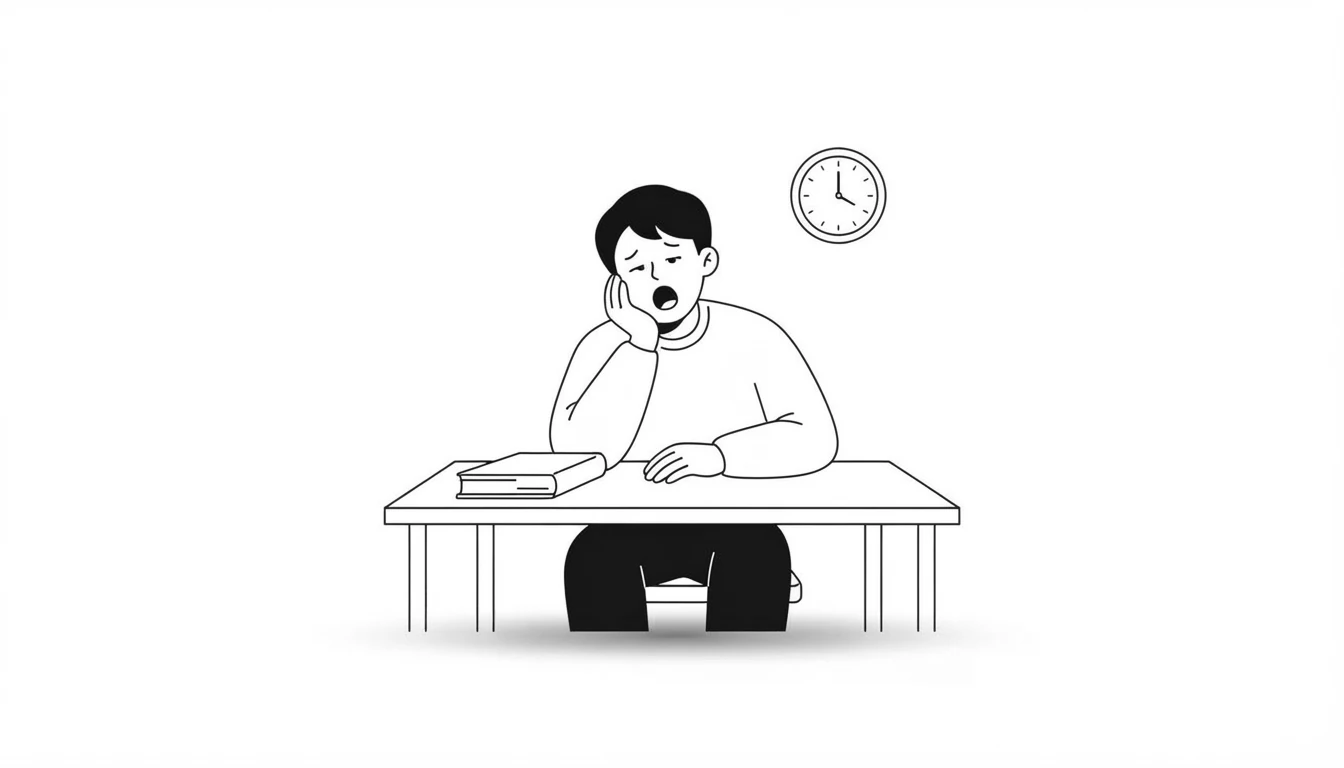
Would you rather be boring or bored? A lot of students have problems with this, but it isn’t as difficult to get right as it seems. I’m bored and I’m boring differ by a single ending and yet they say very different things: in the first you feel bored, and in the second you are the one who bores everybody else!
This difference affects dozens of very common adjectives: interested and interesting, excited and exciting, tired and tiring… In this guide I explain the rule with a trick so you never get it wrong, give you a table with the most important pairs, the prepositions that go with them, the most typical mistakes, the adjectives that don’t have a pair, how this helps you in the Cambridge exams and thirty sentences of exercises with answers. Let’s get started! 🙂
What are -ed and -ing adjectives?
Adjectives ending in -ed or -ing are regular adjectives derived from a verb. That is why they are written the same as the past participle (-ed) or the present participle (-ing) of that verb. Notice the difference between the verb and the adjective:
- He has surprised everyone with the news. → verb (present perfect).
- Everyone felt surprised by the news. → adjective (how they felt).
- He is surprising everyone with the news. → verb (present continuous).
- The news is very surprising. → adjective (what the news is like).
The rule: -ed for what you feel, -ing for what causes it
The rule is very simple:
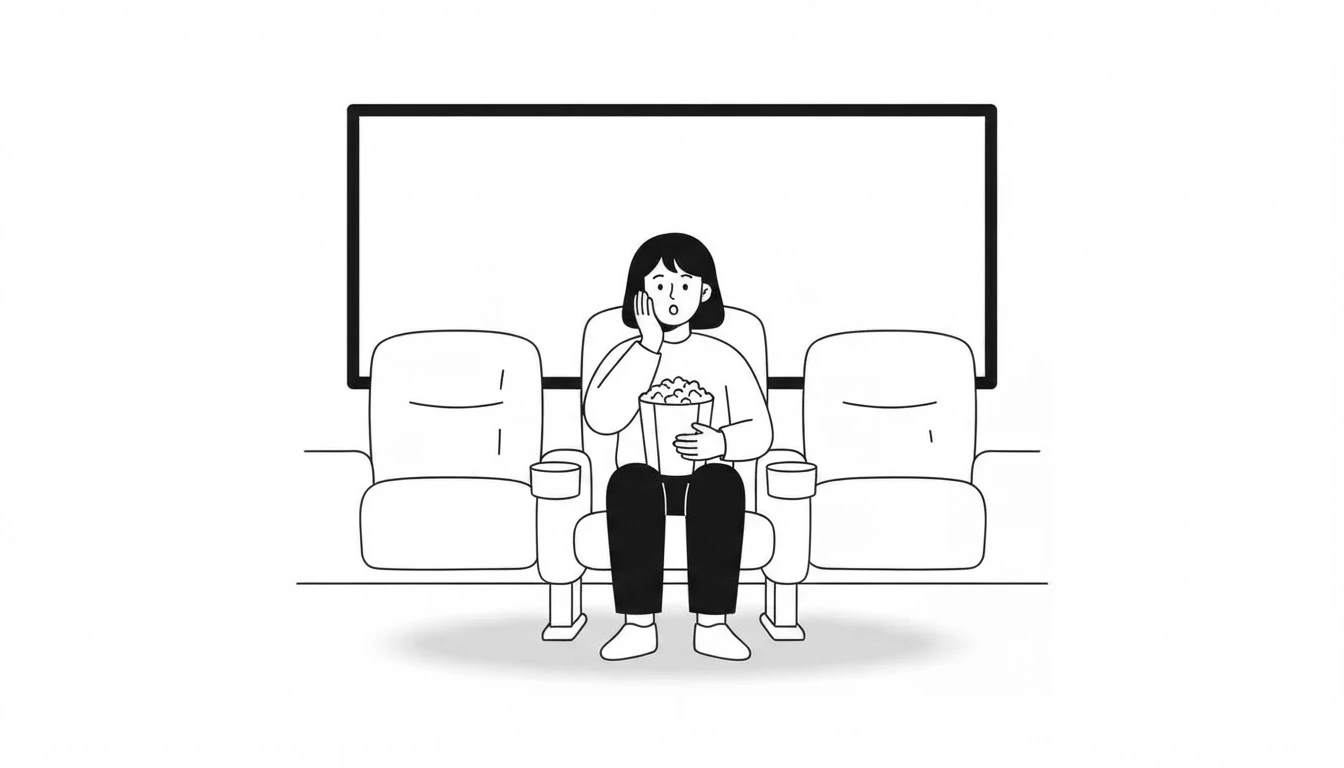
- -ed describes how someone feels (a person or an animal): the feeling they have. I was absolutely amazed! The show had been awesome.
- -ing describes what causes that feeling: the person or thing that produces it. The show was amazing. I really enjoyed it.
A trick to remember it: memorise this sentence.
I am bored because this book is boring.
I feel bored (-ed) because the book is boring (-ing). The book causes the boredom and I feel it.

If you speak Spanish, here is another trick that often works: when in English we use -ed (to be bored), it is usually translated as «estar aburrido»; if we use -ing (to be boring), it is usually translated as «ser aburrido». It is a quick guide, not a mathematical rule, but it will help you many times.
The most important pairs
| 🇬🇧 -ed (what you feel) | 🇬🇧 -ing (what causes it) | Example |
|---|---|---|
| amazed | amazing | I was amazed. The show was amazing. |
| annoyed | annoying | I’m annoyed. His voice is annoying. |
| bored | boring | I’m bored. This film is boring. |
| confused | confusing | I’m confused. The rules are confusing. |
| depressed | depressing | I feel depressed. The news is depressing. |
| disappointed | disappointing | We were disappointed. The result was disappointing. |
| embarrassed | embarrassing | I was embarrassed. It was an embarrassing mistake. |
| excited | exciting | I’m excited. The match is exciting. |
| exhausted | exhausting | I’m exhausted. The trip was exhausting. |
| frightened | frightening | She was frightened. The film was frightening. |
| frustrated | frustrating | I’m frustrated. This is frustrating. |
| interested | interesting | I’m interested. The book is interesting. |
| relaxed | relaxing | I feel relaxed. The music is relaxing. |
| satisfied | satisfying | I’m satisfied. It’s a satisfying job. |
| shocked | shocking | We were shocked. The news was shocking. |
| surprised | surprising | He was surprised. The ending was surprising. |
| tired | tiring | I’m tired. The journey was tiring. |
| worried | worrying | I’m worried. It’s a worrying sign. |
How to use them: with to be and before a noun
These adjectives work like any other: they go after to be (or verbs like feel and look) and also before a noun. You can strengthen them with very or really (if you want to review which adjectives take these adverbs, see my post on gradable and non-gradable adjectives):
- I felt really embarrassed.
- It was a very tiring day.
- She is an interested student, and he is an interesting teacher.
Prepositions that go with -ed adjectives
-ed adjectives usually take a fixed preposition, and this is another point where many mistakes are made:
| 🇬🇧 Adjective + preposition | Example |
|---|---|
| interested in | I’m interested in music. |
| bored with / bored of | She’s bored with her job. |
| excited about | We’re excited about the trip. |
| surprised at / by | I was surprised at the price. |
| worried about | He’s worried about his exam. |
| disappointed with / in | I’m disappointed with the service. |
| tired of / from | I’m tired of waiting. / I’m tired from the walk. |
| frightened of | She’s frightened of spiders. |
Adjectives that don’t have a pair
Careful! Not all -ed adjectives have an -ing form, and vice versa. Some examples that only exist in -ed are crowded, talented or stressed. For the last one, instead of stressing we use stressful, with a different suffix:
| 🇬🇧 What you feel | 🇬🇧 What causes it | Example |
|---|---|---|
| stressed | stressful | I’m stressed. My job is stressful. |
| crowded | (no pair) | The beach was crowded. |
| talented | (no pair) | She’s a talented singer. |
If you want to see how other adjectives are formed from verbs and nouns, have a look at my guide to forming adjectives in English. And for emotion adjectives in general, see my post on adjectives in English.
Common mistakes with -ed and -ing adjectives
| ❌ Incorrect | ✅ Correct | Why |
|---|---|---|
| I’m very boring. (meaning I feel bored) | I’m very bored. | I’m boring means «I am a boring person». |
| The film was very bored. | The film was very boring. | The film causes the boredom: -ing. |
| She is interesting in music. | She is interested in music. | She is the one who feels the interest: -ed. |
| It was a frightened experience. | It was a frightening experience. | The experience causes fear: -ing. |
| I’m exciting about the trip. | I’m excited about the trip. | I’m the one who feels the excitement: -ed. |
| I’m interested on football. | I’m interested in football. | The preposition is in. |
How -ed adjectives are pronounced
The -ed ending of these adjectives is pronounced just like the past tense ending: bored /bɔːd/, tired /taɪəd/, surprised /səˈpraɪzd/, interested /ˈɪntrəstɪd/. If you want to review when it sounds /t/, /d/ or /ɪd/, have a look at my guide to -ed pronunciation, which includes a section on adjectives ending in -ed.
-ed and -ing adjectives in the Cambridge exams
These pairs are very common in the Use of English paper of B2 First and C1 Advanced, especially in Part 3 (word formation), where you are given a word in capitals and have to form the right adjective. The key is always the same: who feels and who causes? For example:
- The film was so ______ that I fell asleep. BORE → boring
- I felt really ______ when I lost my keys. EMBARRASS → embarrassed
- It was a very ______ experience. FRIGHTEN → frightening
They are also useful in Writing and Speaking, to describe how you feel and what things are like: I was really disappointed with the service, which was extremely slow.
Summary table
| 🇬🇧 -ED | 🇬🇧 -ING | |
|---|---|---|
| Describes | how someone feels | what causes that feeling |
| Refers to | people (and animals) | people and things that cause the feeling |
| Trick | I am bored… | …because this book is boring. |
| Rough Spanish equivalent | estar + adjective | ser + adjective |
| Example | I’m interested. | It’s interesting. |
Can you say «I’m boring»?
Yes, but it means «I am boring» (a person who bores others). If you want to say that you feel bored, say I’m bored.
How do I know which ending to use?
Ask yourself: am I describing what someone feels (-ed) or what something or someone causes (-ing)? If in doubt, repeat the trick: I am bored because this book is boring.
Bored of or bored with?
Both are used and they mean the same: I’m bored with my job = I’m bored of my job.
-ed and -ing adjectives exercises
Thirty sentences to check that you’ve got it. Below you have three interactive exercises that mark themselves, so you will know straight away how you did.
And if you prefer a version in text that you can copy and paste, you have it down here 👇
Exercise 1: -ed or -ing?
Choose the correct adjective to complete each sentence.
- The film was really (bored / boring); I nearly fell asleep.
- I was so (embarrassed / embarrassing) when I forgot his name.
- Your news is very (shocked / shocking).
- We were (exhausted / exhausting) after the long walk.
- It was a very (tired / tiring) journey.
- She’s (interested / interesting) in modern art.
- The results were really (disappointed / disappointing).
- He looked (confused / confusing) when I explained the rules.
- This is the most (exciting / excited) match of the season.
- I’m (worried / worrying) about my exam tomorrow.
Show answers
- boring
- embarrassed
- shocking
- exhausted
- tiring
- interested
- disappointing
- confused
- exciting
- worried
Exercise 2: complete the sentences
Write the correct -ed or -ing adjective formed from the verb in brackets.
- I’m very _______________ (interest) in history.
- That was an _______________ (amaze) concert!
- The children were _______________ (frighten) by the storm.
- It’s _______________ (annoy) when people talk in the cinema.
- She was _______________ (satisfy) with her new job.
- What a _______________ (depress) film! I cried all night.
- I’m _______________ (confuse). Can you explain it again?
- The teacher gave us a really _______________ (challenge) task.
- He was _______________ (surprise) to see me there.
- Running a marathon is very _______________ (tire).
Show answers
- interested
- amazing
- frightened
- annoying
- satisfied
- depressing
- confused
- challenging
- surprised
- tiring
Exercise 3: correct or incorrect?
Decide whether each sentence is correct. If it is incorrect, rewrite it correctly.
- I’m very bored. The film is boring.
- She is very interesting in music.
- It was a frightened experience.
- We were really excited about the trip.
- The lesson was confused.
- I’m boring because there’s nothing to watch on TV.
- I was shocked by the news.
- It’s so tired to work on Sundays.
- She felt very embarrassing when she fell.
- This book is really interesting.
Show answers
- Correct
- She is very interested in music.
- It was a frightening experience.
- Correct
- The lesson was confusing.
- I’m bored because there’s nothing to watch on TV.
- Correct
- It’s so tiring to work on Sundays.
- She felt very embarrassed when she fell.
- Correct
Conclusion
To sum up in three ideas: -ed is what you feel and -ing is what something or someone causes; -ed adjectives take fixed prepositions (interested in, excited about, tired of); and not all of them have a pair (stressed / stressful). And remember the sentence: I am bored because this book is boring. Are you bored or boring? I hope neither!
Did you find this post useful? Share it with other students and English teachers. And if you want more content like this, subscribe to my newsletter and follow me on Facebook, Twitter, Pinterest, Instagram and YouTube.
See you in the next post. Until then, don’t forget to keep smiling! 🙂
