

Table of contents
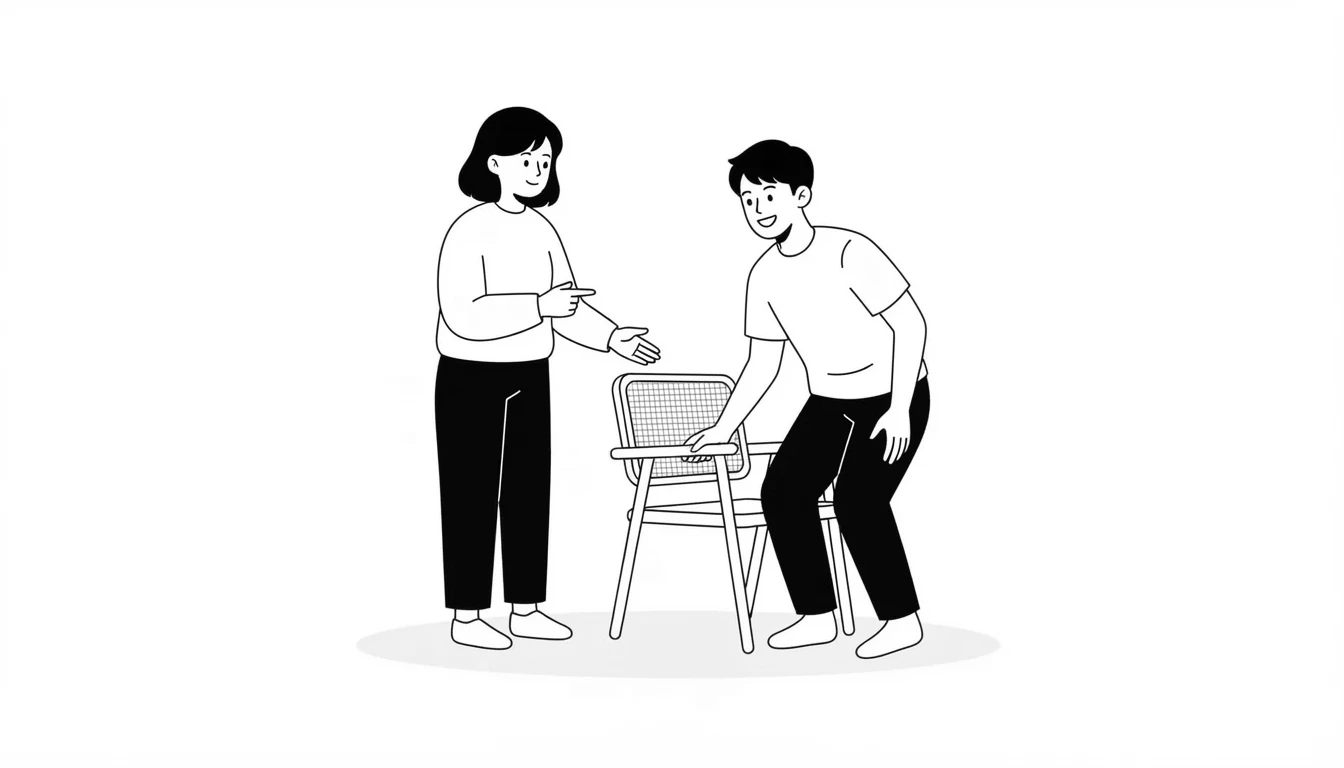
Sit down. Don’t worry. Let’s go. You’ve heard these sentences a thousand times. They’re imperatives, the form we use in English to give orders, instructions, advice or invitations. And here’s the good news: it’s probably the easiest structure in the whole of English grammar. There’s nothing to conjugate, it doesn’t change depending on who you’re talking to and you almost always just use the verb as it is.
The tricky part isn’t forming it, it’s using it well. Lots of learners sound rude without meaning to, because many languages give orders very naturally and in English that doesn’t always go down well. Coming up: how to form the imperative in English (affirmative and negative), how let’s, do and always/never work, how to sound polite, the typical mistakes learners make, how it can help you in the Cambridge exams and thirty exercise sentences with answers. 🙂
What is the imperative in English?
The imperative is the verb form we use to tell someone to do or not to do something. It isn’t only for giving orders; we also use it to:
- Give instructions: Turn left at the traffic lights.
- Give advice: Get some rest.
- Invite or offer: Have a biscuit.
- Warn: Be careful!
- Ask for something: Pass me the salt, please.
- Wish someone well: Have a nice weekend!
In other words, it often isn’t bossy at all. Whether a sentence sounds polite or rude depends more on the context, the tone and what you add to it than on the imperative itself.
How to form the imperative in English
Affirmative imperative
It’s formed with the base form of the verb, that is, the infinitive without to. And usually without a subject: we don’t say you, because it’s clear we’re talking to the person listening.
- Open the window.
- Listen to me.
- Be quiet.
Negative imperative
It’s formed with don’t + base form. In formal texts, signs or written instructions you’ll also see the full form do not.
- Don’t open the window.
- Don’t be late.
- Do not leave your bags unattended.
Look at the second example: with the verb be we also use don’t. We say Don’t be late, never Be not late or Not be late.
| Type | Structure | 🇬🇧 Example | 🇪🇸 Spanish |
|---|---|---|---|
| Affirmative | base form | Close the door. | Cierra la puerta. |
| Negative | don’t + base form | Don’t close the door. | No cierres la puerta. |
| With be | be / don’t be + adjective | Don’t be silly. | No seas tonto. |
| First person plural | let’s / let’s not + base form | Let’s go home. | Vámonos a casa. |
| Emphatic | do + base form | Do sit down. | Siéntate, por favor (de verdad). |
One form for everyone
English makes life easy here. Spanish has different forms for one friend, several friends or someone you speak to formally; in English it’s simply come. It doesn’t matter whether you’re talking to a friend, your boss or a whole class:
- Come in, Laura.
- Come in, everyone.
- Come in, Mr Davies.
Politeness, as you’ll see below, isn’t in the verb but in what surrounds it.
Let’s: the imperative with «we»
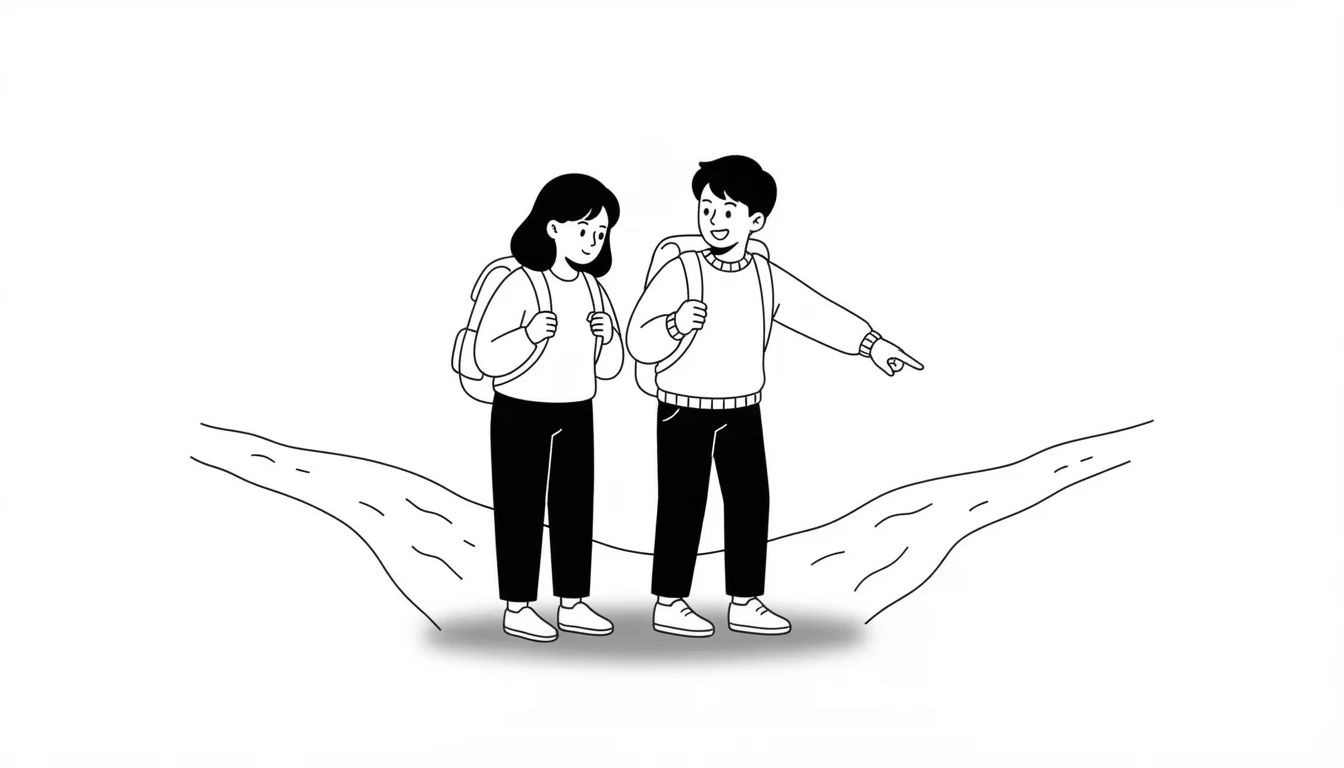
When the suggestion includes you, we use let’s + base form. It’s the most natural way to suggest something to a group you’re part of.
- Let’s have a break.
- Let’s watch a film tonight.
For the negative, the usual form is let’s not: Let’s not argue about it. In informal British English you’ll also hear don’t let’s, but it’s less common and you don’t need to use it.
Be careful not to mix up these three:
- Let’s (let us) = a suggestion: Let’s go.
- Let us, not contracted, is usually asking for permission: Let us go! (Allow us to leave!) It also appears in very formal or religious texts.
- Let me / let him / let them = allow me, him, them: Let me help you.
Other forms of the imperative
Do + imperative for emphasis
If you put do before an affirmative imperative, the sentence becomes stronger. It sounds insistent but friendly, and it’s very typical of British English when you invite someone:
- Do come in!
- Do help yourself to more cake.
Always and never with the imperative
With always and never we give general advice or rules. They go before the verb, and with never you don’t need don’t:
- Always check your answers.
- Never leave your passport in the car.
Saying Don’t never leave… is a mistake: it would be a double negative.
Imperative with a subject
Sometimes we do add a subject, usually you or a name, to contrast (who does what) or to make the order stronger:
- You sit here, and you sit over there.
- Somebody call an ambulance!
- Don’t you dare touch my phone!
You sit down! said in the wrong tone can sound quite aggressive, though.
Imperative + and / or
An imperative followed by and or or works almost like a conditional:
- Study every day and you’ll pass. (If you study every day, you’ll pass.)
- Hurry up, or we’ll miss the train. (If you don’t hurry up, we’ll miss the train.)
How to sound polite with the imperative
This is the most important point in the post. In some languages you can say «pass me the salt» to anyone and it’s fine. In English, a bare imperative with someone you don’t know well can sound abrupt or even rude. And no, adding please doesn’t always fix it: Give me a coffee, please still sounds quite blunt in a café.
What native speakers do is soften the request. From most direct to most polite:
| Level | 🇬🇧 Example | When to use it |
|---|---|---|
| Direct | Open the window. | Instructions, family, urgent situations. |
| With please | Open the window, please. | Friends, colleagues, simple requests. |
| With a question tag | Open the window, will you? | Informal, with people you know well. |
| With can / could | Could you open the window, please? | The safest option almost always. |
| Very polite | Would you mind opening the window? | Strangers, formal contexts. |
Other tricks native speakers use a lot are just (Just wait a second.) to make the request sound smaller, and starting with Sorry, could you…? If you’d like to go deeper into can, could and the rest, have a look at my post on can, could and be able to and the guide to modal verbs.
The imperative with question tags
A very natural way to soften an imperative is to add a question tag. With the affirmative we use will you? and, to sound friendlier, would you?, can you? or could you? With the negative, always will you? And with let’s, shall we?
- Help me with these bags, would you?
- Don’t tell anyone, will you?
- Let’s start, shall we?
To invite someone, we also use won’t you?: Have another drink, won’t you? If you want to see every case, I explain them in my post on question tags.
The imperative in instructions, recipes and signs
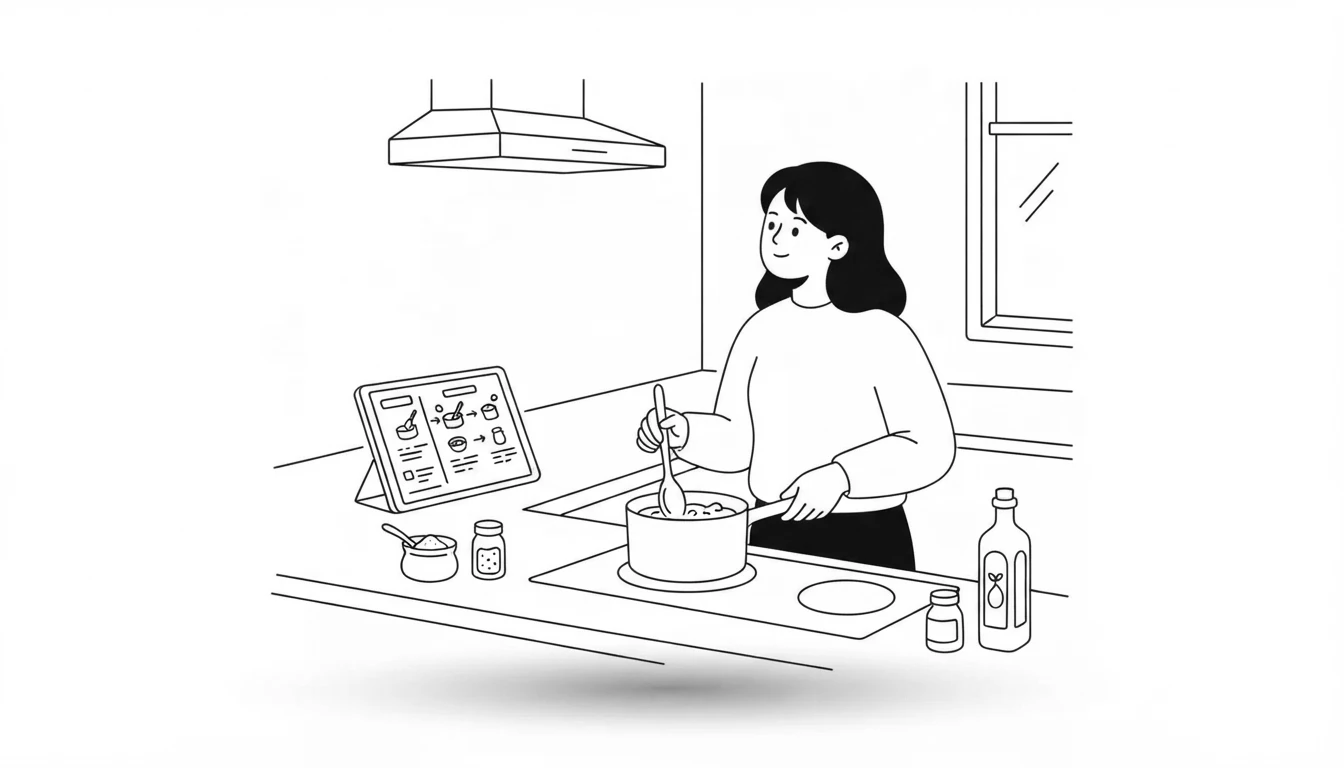
The imperative rules in instruction texts. In a recipe, a manual or a sign nobody uses could you: there, getting straight to the point is normal.
- Recipes: Chop the onions. Add the garlic and stir for two minutes. Don’t let it burn.
- Directions: Go straight on, take the second left and cross the bridge.
- Signs and notices: Keep off the grass. Do not disturb. Mind the gap. Please queue here.
- Exam instructions: Read the text. Choose the correct answer. Write between 100 and 120 words.
If you’d like the kitchen vocabulary to write your own recipes, have a look at my post on food vocabulary.
Common mistakes with the imperative
| ❌ Incorrect | ✅ Correct | Why |
|---|---|---|
| No touch the oven. | Don’t touch the oven. | The negative uses don’t, not no. |
| Not be late. | Don’t be late. | Be also takes don’t. |
| Don’t to worry. | Don’t worry. | After don’t the verb goes without to. |
| Let’s to go. / Let’s going. | Let’s go. | Let’s takes the base form. |
| Don’t let’s to argue. | Let’s not argue. | The most natural negative is let’s not + verb. |
| Don’t never do that. | Never do that. | Never is already negative; no don’t. |
| Sits down, please. | Sit down, please. | The imperative never takes the third-person -s. |
| Give me a coffee. (in a café) | Could I have a coffee, please? | Grammatically fine, but it sounds abrupt. |
The imperative in the Cambridge exams
The imperative turns up in more places than you might think:
- A2 Key and B1 Preliminary Reading. In Part 1 you read notices, signs and short messages full of imperatives (Please return books to the desk, Don’t park here), and you need to understand exactly what they’re asking you to do.
- Writing. In the notes and emails of A2 Key Writing and B1 Preliminary Writing it’s very useful for giving instructions or finishing with a request: Don’t forget to bring your swimming costume! Let me know if you can come.
- Speaking. When you give advice or make suggestions in B1 Preliminary Speaking, Let’s choose the museum, shall we? or Let’s not decide yet help you interact with your partner naturally.
Remember the politeness point, though: in a formal email, a bare imperative (Send me the information) can cost you marks for register. Better Could you send me…? or I would be grateful if you could…
Frequently asked questions about the imperative
How do you form the imperative in English?
With the base form of the verb and no subject for the affirmative (Wait here), and with don’t + base form for the negative (Don’t wait here).
Does the imperative change depending on the person?
No. The same form works for one person or many, informal or formal. The only different form is let’s, which includes you (we).
What’s the difference between «let’s» and «let us»?
Let’s is a suggestion (Let’s go). Let us without the contraction is usually asking for permission (Let us go = allow us to go) or a very formal use.
Is it rude to use the imperative in English?
Not in itself. For instructions, advice, offers or with people you know well it’s perfectly normal. But to ask a stranger for something, it’s better to use Could you…? or Would you mind…?
Can you put «you» before an imperative?
Yes, to contrast or for emphasis: You go first. But watch your tone, because it can sound bossy.
Imperative exercises
Put yourself to the test with these thirty sentences: orders, advice, let’s and the odd trap. Below you have three interactive exercises that mark themselves, so you’ll know straight away how you’ve done.
And if you’d like these exercises as text to copy, paste or adapt for your classes, here they are below with the answers 👇
Exercise 1: choose the correct option
Choose the correct option to complete each sentence.
- (Don’t touch / No touch) the oven. It’s very hot.
- (Not be / Don’t be) late for the exam tomorrow.
- (Let’s go / Let’s to go) to the cinema tonight.
- (Never leave / Don’t never leave) your bag on the train.
- Please (sit / sits) down and wait for your name.
- (Let’s not / Don’t let’s to) talk about work this weekend.
- Help me with this box, (will you / do you)?
- Let’s take a taxi, (shall we / will we)?
- (Do come / Come do) in! We’ve been waiting for you.
- Hurry up, (or / and) we’ll miss the bus.
Show answers
- Don’t touch
- Don’t be
- Let’s go
- Never leave
- sit
- Let’s not
- will you
- shall we
- Do come
- or
Exercise 2: complete with the imperative
Complete each sentence with the affirmative or negative imperative of the verb in brackets.
- _______________ (not / run) in the corridor, please.
- _______________ (be) careful with that knife, it’s sharp.
- _______________ (not / forget) to bring your passport.
- _______________ (turn) left at the traffic lights and the station is on your right.
- _______________ (not / be) silly, of course you can do it.
- _______________ (add) the eggs and mix everything for two minutes.
- _______________ (not / worry), I’ll help you with your homework.
- _______________ (have) a great time at the party!
- _______________ (not / open) the door to strangers.
- _______________ (call) me when you get home, please.
Show answers
- Don’t run
- Be
- Don’t forget
- Turn
- Don’t be
- Add
- Don’t worry
- Have
- Don’t open
- Call
Exercise 3: correct or incorrect?
Decide whether each sentence is correct. If it is incorrect, rewrite it correctly.
- No smoke in the building.
- Don’t be late for dinner.
- Let’s to have a coffee.
- Not touch my laptop, please.
- Always wear a helmet when you ride your bike.
- Don’t to forget your keys.
- Opens the window, please.
- Don’t never cross the road without looking.
- Let’s not watch that film again.
- Be not afraid of making mistakes.
Show answers
- Don’t smoke in the building.
- Correct
- Let’s have a coffee.
- Don’t touch my laptop, please.
- Correct
- Don’t forget your keys.
- Open the window, please.
- Never cross the road without looking.
- Correct
- Don’t be afraid of making mistakes.
Conclusion
To sum up: the imperative in English uses the base form for the affirmative and don’t + base form for the negative, with no subject and one single form for everyone. To include yourself, let’s; for emphasis, do; and for general rules, always and never. What really makes the difference is the tone: with strangers, soften it with could you, would you mind or a question tag.
If you’d like to carry on with grammar, I recommend my post on would rather and had better, which you can also use to give advice. Have you got questions about any imperative? Write to me and I’ll help.
Did you find this post useful? Share it with other English students and teachers. And if you want more content like this, subscribe to my newsletter and follow me on Facebook, Twitter, Pinterest, Instagram and YouTube.
See you in the next post. Until then, don’t forget to keep smiling! 🙂
