
Table of contents
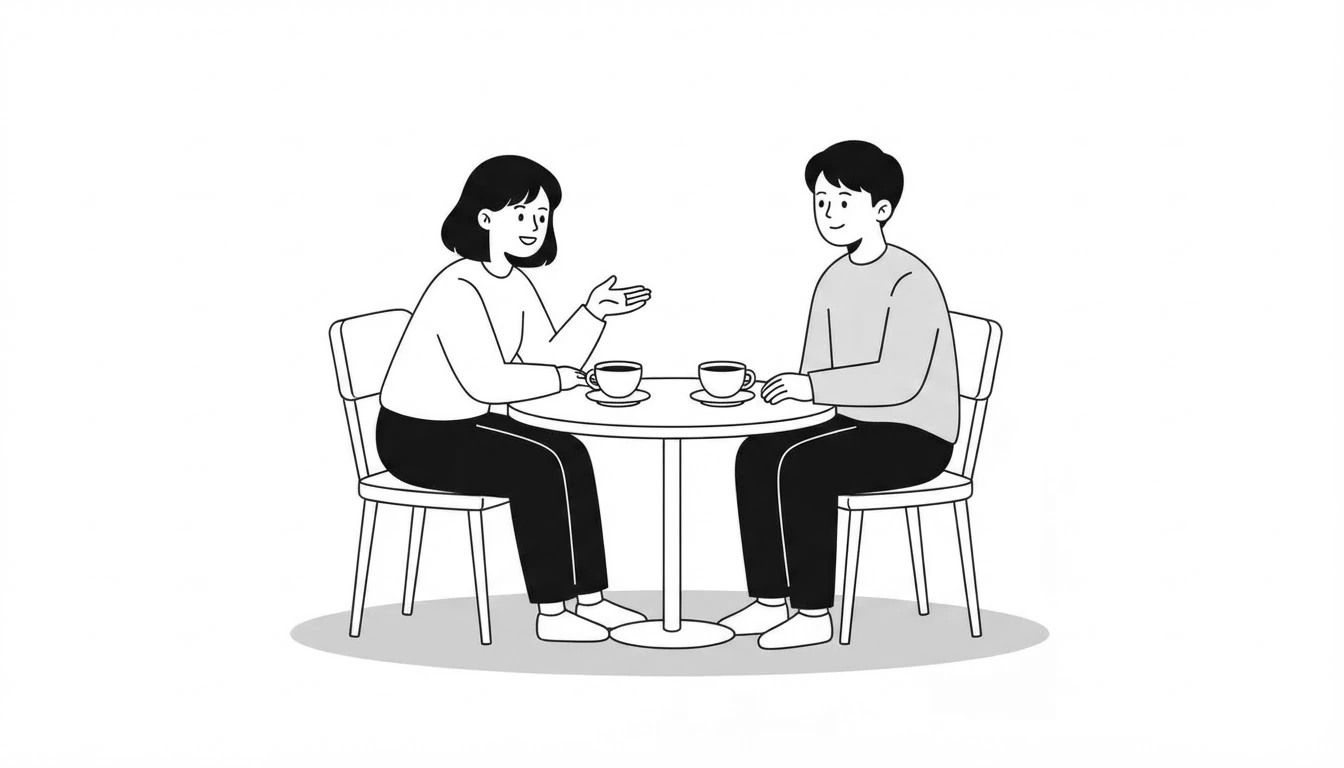
If you’ve ever watched a series in English, you’ve definitely heard sentences like It’s cold, isn’t it? or You don’t know him, do you? Those little questions at the end are question tags, and they’re the English equivalent of the Spanish «¿verdad?» or «¿no?». The difference is that Spanish uses the same tag every time, whereas in English… it changes with every sentence. That’s why many learners avoid them, or fall back on «right?» for everything.
Don’t worry, because they actually work with a couple of very clear rules. In this post I explain how to form question tags with every tense, the exceptions people ask about most (aren’t I, let’s, imperatives, nobody…), how the meaning changes with intonation, the typical mistakes Spanish speakers make, how tags help you in the Cambridge exams, and thirty sentences of exercises with answers. Let’s get started! 🙂
What are question tags?
A question tag (or tag question) is a short question added to the end of a sentence, after a comma. It doesn’t ask for new information: we use it to check something we think is true or to get the other person to agree with us.
- You’re Spanish, aren’t you?
- It was a great film, wasn’t it?
- She doesn’t eat meat, does she?
Spanish has «¿verdad?», «¿no?» or «¿a que sí?», which work with any sentence. In English, the tag is built from the auxiliary verb and the subject of the sentence, so you have to work it out each time. It’s tricky at first, but once you get the hang of it, it comes naturally.
How to form question tags
To form a question tag you only need three things:
- The auxiliary verb of the sentence (be, do, have, will, can…). If the sentence has no auxiliary, we use do, does or did.
- The subject pronoun, never the name: Sarah is tired, isn’t she?, not isn’t Sarah?
- The opposite polarity: if the sentence is positive, the tag is negative; if the sentence is negative, the tag is positive.
| Sentence | Question tag | Example |
|---|---|---|
| Positive (+) | Negative (−) | You like coffee, don’t you? |
| Negative (−) | Positive (+) | You don’t like coffee, do you? |
Negative tags are always contracted: isn’t it, don’t you, can’t she. The full form (is it not?) exists, but it sounds very formal or downright theatrical, so forget about it in conversation.
Question tags with every tense
This is the table I recommend keeping. Notice that the auxiliary of the sentence is always repeated:
| Tense | Positive sentence + tag | Negative sentence + tag |
|---|---|---|
| Present simple (be) | She’s a nurse, isn’t she? | They aren’t here, are they? |
| Present simple (other verbs) | You live in Granada, don’t you? He works at night, doesn’t he? | She doesn’t smoke, does she? |
| Present continuous | You’re joking, aren’t you? | It isn’t raining, is it? |
| Past simple (be) | It was expensive, wasn’t it? | You weren’t at home, were you? |
| Past simple (other verbs) | They won the match, didn’t they? | He didn’t call, did he? |
| Past continuous | You were sleeping, weren’t you? | She wasn’t listening, was she? |
| Present perfect | You’ve been to London, haven’t you? | He hasn’t finished, has he? |
| Past perfect | They had left, hadn’t they? | She hadn’t met him, had she? |
| Future (will) | You’ll help me, won’t you? | It won’t take long, will it? |
| Going to | It’s going to rain, isn’t it? | You aren’t going to tell her, are you? |
| Modals | She can drive, can’t she? We should go, shouldn’t we? | You couldn’t come, could you? I mustn’t forget, must I? |
| Conditional (would) | You’d like that, wouldn’t you? | He wouldn’t do that, would he? |
A practical tip: if you’re not sure, turn the sentence into a question. The auxiliary you’d put before the subject (Do you live…?, Has he finished…?) is the one that goes in the tag. If you want to review the auxiliaries of each tense, there’s a summary in my post on English verb tenses, and for modals, have a look at modal verbs.
Special cases and exceptions
This is where the questions usually start. The good news is that there aren’t many, and they’re always the same ones:
I am → aren’t I?
With I am, the negative tag is aren’t I?, not amn’t I? (which doesn’t exist in standard English). I’m late, aren’t I? In the negative there’s no problem: I’m not late, am I?
Let’s → shall we?
With suggestions using let’s, the tag is shall we?: Let’s have a break, shall we?
Imperatives: will you?, would you?, can you?
After an order or a request, the tag softens it and makes it more polite. The usual choice is will you?, and would you?, can you? or could you? sound even friendlier:
- Close the door, will you?
- Pass me the salt, could you?
- Don’t tell anyone, will you? (After a negative imperative, it’s always will you.)
And to invite someone very warmly, we use won’t you?: Sit down, won’t you? It sounds a bit formal, like a British host in a film.
Negative words: never, nobody, nothing, hardly
Words like never, nobody, no one, nothing, hardly, rarely or seldom make the sentence negative even though the verb is positive. That’s why the tag is positive:
- You never listen, do you? (Not don’t you.)
- Nothing happened, did it?
- She hardly ever goes out, does she?
Nobody, everyone, somebody → they
With everyone, everybody, someone, somebody, no one and nobody, the pronoun in the tag is they, even though the verb in the sentence is singular: Everyone is here, aren’t they? Nobody called, did they? With nothing, something and everything, however, we use it: Everything is ready, isn’t it?
This, that, these, those
This and that become it, and these and those become they: That’s your bag, isn’t it? These are new, aren’t they?
There is / there are
With there is and there are, there is repeated in the tag: There’s a bank near here, isn’t there? There weren’t many people, were there? If this structure gives you trouble, it’s explained in my post on there is and there are.
Have: auxiliary or main verb
If have is an auxiliary (in perfect tenses) or part of have got, we repeat have: You’ve got a car, haven’t you? But if have is the main verb (have breakfast, have a shower, have a good time), it works like any other verb and takes do: You had a great time, didn’t you? She has lunch at two, doesn’t she?
Used to
Used to behaves like a past simple verb, so the tag is didn’t: You used to live in Madrid, didn’t you?
I think…, I don’t think…
When the sentence starts with I think or I don’t think, the tag doesn’t go with I, but with the second part of the sentence, which is what we want to check: I think it’s going to rain, isn’t it? I don’t think she’s coming, is she? (The don’t in I don’t think counts as negative.)
What we use question tags for
Although they look like pure grammar in textbooks, in real life question tags are, above all, a tool for connecting with people. These are their most common uses:
- Checking something you think you know: The meeting is at ten, isn’t it?
- Getting the other person to agree and keeping the conversation going: That was a brilliant concert, wasn’t it?
- Softening a request or a criticism: You couldn’t lend me a pen, could you? (notice how a negative sentence with a positive tag sounds very polite) or You’re a bit late, aren’t you?
- Showing surprise or annoyance: You haven’t told her, have you?
Here’s how it sounds in a normal conversation:
- A: You’re Laura’s brother, aren’t you?
- B: Yes, I am. You were at her party last week, weren’t you?
- A: That’s right. It was great fun, wasn’t it?
None of those tags asks for new information: they keep the conversation flowing, just like the «¿no?» and «¿verdad?» that Spanish speakers sprinkle into their sentences.
Intonation changes everything
This is the point hardly anyone explains, and it’s what makes the difference between sounding natural and sounding like a textbook. The same tag can mean two different things depending on whether your voice goes up or down at the end:
| Intonation | What it means | Example |
|---|---|---|
| Falling ↘ | You’re fairly sure and just want the other person to agree. This is the most common one. | It’s a lovely day, isn’t it? ↘ |
| Rising ↗ | You’re not sure and you’re asking a real question. You expect an answer. | You’ve locked the door, haven’t you? ↗ (I’m not sure you have.) |
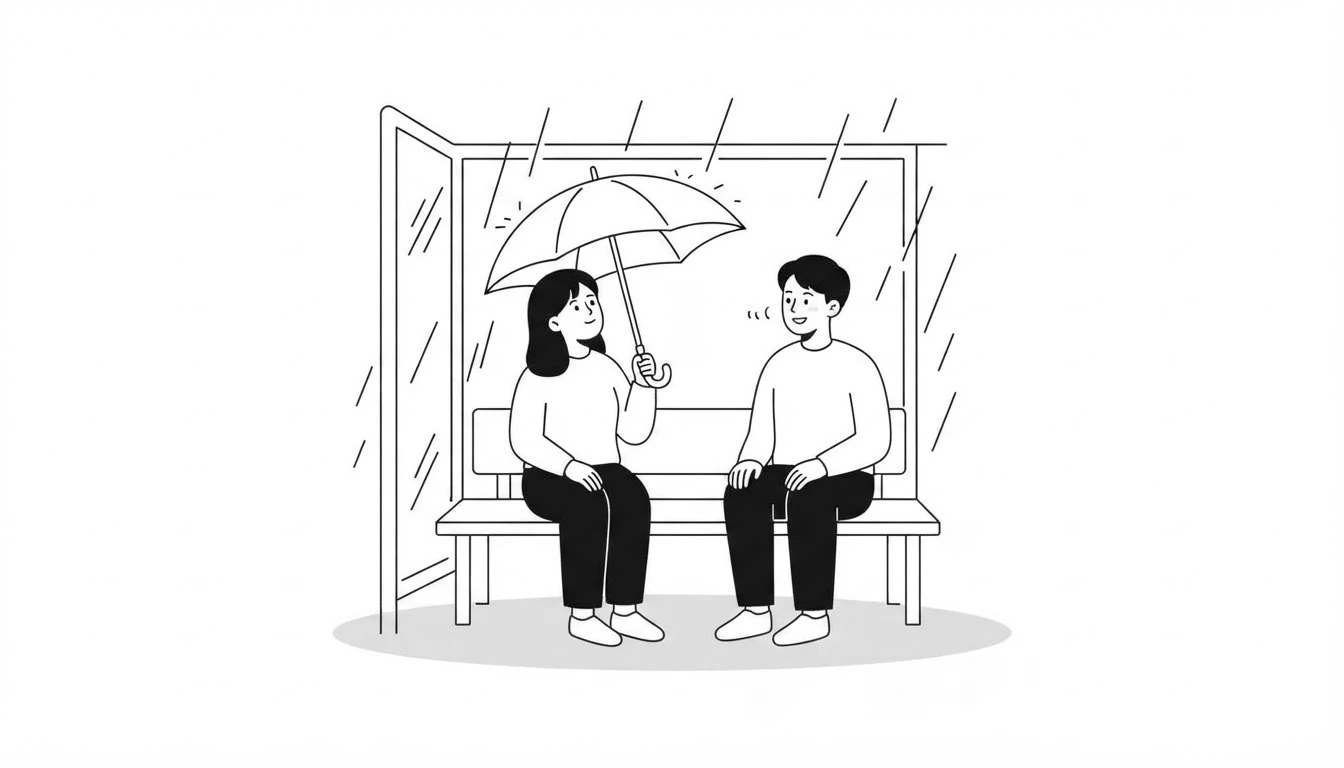
That’s why tags with falling intonation are perfect for making conversation (the famous British small talk about the weather: Terrible weather, isn’t it?), and those with rising intonation are for checking something you’re worried about.
Same-way tags: when the tag doesn’t switch
There’s a less common but very native-sounding use: the same-way tag, a positive tag after a positive sentence. It doesn’t ask anything: it shows surprise, interest or irony about something we’ve just found out:
- So you’re leaving, are you?
- You think you’re clever, do you?
You don’t need to use them, but it’s worth recognising them, because they come up a lot in series, films and higher-level Listening tasks, where they help you understand the speaker’s attitude.
How to answer a question tag
You answer the idea, not the tag: yes if it’s true and no if it isn’t, usually with a short answer. If you’d like to review short answers, they’re in my post on yes/no and wh- questions.
- You’re a teacher, aren’t you? → Yes, I am. / No, I’m not.
- You aren’t a teacher, are you? → Yes, I am. (I am one.) / No, I’m not. (I’m not.)
Be careful with the second one: Spanish speakers often get confused here. In English, if you are a teacher, the answer is yes, whatever the question.
Common mistakes with question tags
These are the mistakes I see most often in class. If you’ve got them under control, you’re on the right track:
| ❌ Incorrect | ✅ Correct | Why |
|---|---|---|
| She’s a doctor, isn’t it? | She’s a doctor, isn’t she? | The tag repeats the subject of the sentence. |
| You speak French, aren’t you? | You speak French, don’t you? | With no auxiliary in the sentence, use do. |
| Sarah is tired, isn’t Sarah? | Sarah is tired, isn’t she? | The tag takes a pronoun, not the name. |
| He never calls, doesn’t he? | He never calls, does he? | Never makes the sentence negative. |
| I’m right, amn’t I? | I’m right, aren’t I? | The correct form is aren’t I. |
| They had a great time, hadn’t they? | They had a great time, didn’t they? | Have as a main verb takes do. |
| There’s a park near here, isn’t it? | There’s a park near here, isn’t there? | With there is, repeat there. |
| Let’s go, don’t we? | Let’s go, shall we? | With let’s, it’s always shall we. |
| You’re coming, right? (for everything) | You’re coming, aren’t you? | Right? is fine in informal English, but if it’s all you use, your English sounds limited. |
Question tags in the Cambridge exams
Question tags give you extra points in several parts of the exam, especially from B1 upwards:
- Speaking. In the parts where you talk to your partner, such as Part 3 of the B2 First Speaking, using a tag to bring the other candidate in (This one would be really useful, wouldn’t it?) shows you can interact, which is exactly what examiners look for under Interactive Communication. They also work very well in the B1 Preliminary Speaking.
- Listening. The intonation of a tag tells you whether the speaker is sure, surprised or annoyed, and many Listening questions are precisely about the speakers’ attitude or opinion.
- Use of English and Writing. In Use of English they can appear as a one-word gap (You’ve met her before, ______ you? → haven’t). In Writing they’re rare, because they belong to spoken English, but one in an informal email or a chatty article sounds very natural.
Just don’t force them in: two or three well-placed tags in the Speaking are worth more than ten that sound forced.
Frequently asked questions about question tags
What are question tags in English?
They’re short questions added to the end of a sentence to check something or to get the other person to agree, like the Spanish «¿verdad?» or «¿no?». They’re formed with the auxiliary of the sentence and its subject pronoun: It’s late, isn’t it?
Why do we say «aren’t I» and not «amn’t I»?
Because amn’t isn’t used in standard English (only in some Scottish and Irish dialects). The accepted form for I am is aren’t I?: I’m next, aren’t I?
Which question tag goes with «let’s»?
Shall we?: Let’s start, shall we?
Which question tag goes with imperatives?
Usually will you?, and to sound friendlier, would you?, can you? or could you?: Help me with this, would you? After a negative imperative, it’s always will you?: Don’t be late, will you?
Can I use «right?» instead of a question tag?
Yes, it’s very common in informal English: You’re coming, right? But it doesn’t replace tags in every context, and in a Cambridge exam using the correct tags shows much more control of grammar.
Are question tags B1 or B2 level?
The basic ones (with be, do and the most common modals) are covered at B1. The special cases (aren’t I, nobody… they, have as a main verb), intonation and same-way tags belong to B2 and above.
Question tags exercises
Thirty sentences to check you’ve got it. Below you have three interactive exercises that mark themselves, so you’ll know straight away how you’ve done.
And if you’d like these exercises as text to copy, paste or adapt for your classes, here they are below with the answers 👇
Exercise 1: choose the correct question tag
Choose the correct question tag to complete each sentence.
- You’re from Madrid, (aren’t you / don’t you)?
- She doesn’t eat meat, (does she / doesn’t she)?
- They went to the concert, (didn’t they / weren’t they)?
- I’m late again, (aren’t I / am not I)?
- Let’s order a pizza, (shall we / will we)?
- Nobody called while I was out, (did they / didn’t they)?
- You’ve finished your homework, (haven’t you / didn’t you)?
- There’s a bank near here, (isn’t it / isn’t there)?
- He can swim, (can’t he / doesn’t he)?
- Pass me the salt, (will you / do you)?
Show answers
- aren’t you
- does she
- didn’t they
- aren’t I
- shall we
- did they
- haven’t you
- isn’t there
- can’t he
- will you
Exercise 2: complete with a question tag
Complete each sentence with the correct question tag.
- It’s really cold today, _______________?
- You don’t like horror films, _______________?
- Sarah has got two brothers, _______________?
- We should leave now, _______________?
- They won’t be late, _______________?
- Your parents live in Seville, _______________?
- Tom was at the party, _______________?
- You’ve never been to London, _______________?
- Everyone enjoyed the film, _______________?
- That’s your car, _______________?
Show answers
- isn’t it
- do you
- hasn’t she
- shouldn’t we
- will they
- don’t they
- wasn’t he
- have you
- didn’t they
- isn’t it
Exercise 3: correct or incorrect?
Decide whether each sentence is correct. If it is incorrect, rewrite it correctly.
- She’s a doctor, isn’t it?
- You speak French, aren’t you?
- Let’s go for a walk, shall we?
- I’m right, amn’t I?
- He never calls you, doesn’t he?
- They had a great time, hadn’t they?
- Close the window, will you?
- There aren’t any eggs left, aren’t there?
- You used to live in Granada, didn’t you?
- Nothing happened, didn’t it?
Show answers
- She’s a doctor, isn’t she?
- You speak French, don’t you?
- Correct
- I’m right, aren’t I?
- He never calls you, does he?
- They had a great time, didn’t they?
- Correct
- There aren’t any eggs left, are there?
- Correct
- Nothing happened, did it?
Conclusion
To sum up: a question tag repeats the auxiliary of the sentence with its pronoun, with the opposite polarity (positive → negative and vice versa). If there’s no auxiliary, use do, does or did. Learn the usual exceptions (aren’t I, shall we, will you, never… do you, nobody… they, there… there) and pay attention to intonation: falling, you want agreement; rising, you’re really asking.
If you’d like to carry on with grammar, I recommend my post on reported speech, which you’ll also need for B2. Have you got questions about any tag? Write to me and I’ll help.
Did you find this post useful? Share it with other English students and teachers. And if you want more content like this, subscribe to my newsletter and follow me on Facebook, Twitter, Pinterest, Instagram and YouTube.
See you in the next post. Until then, don’t forget to keep smiling! 🙂
