
Table of contents
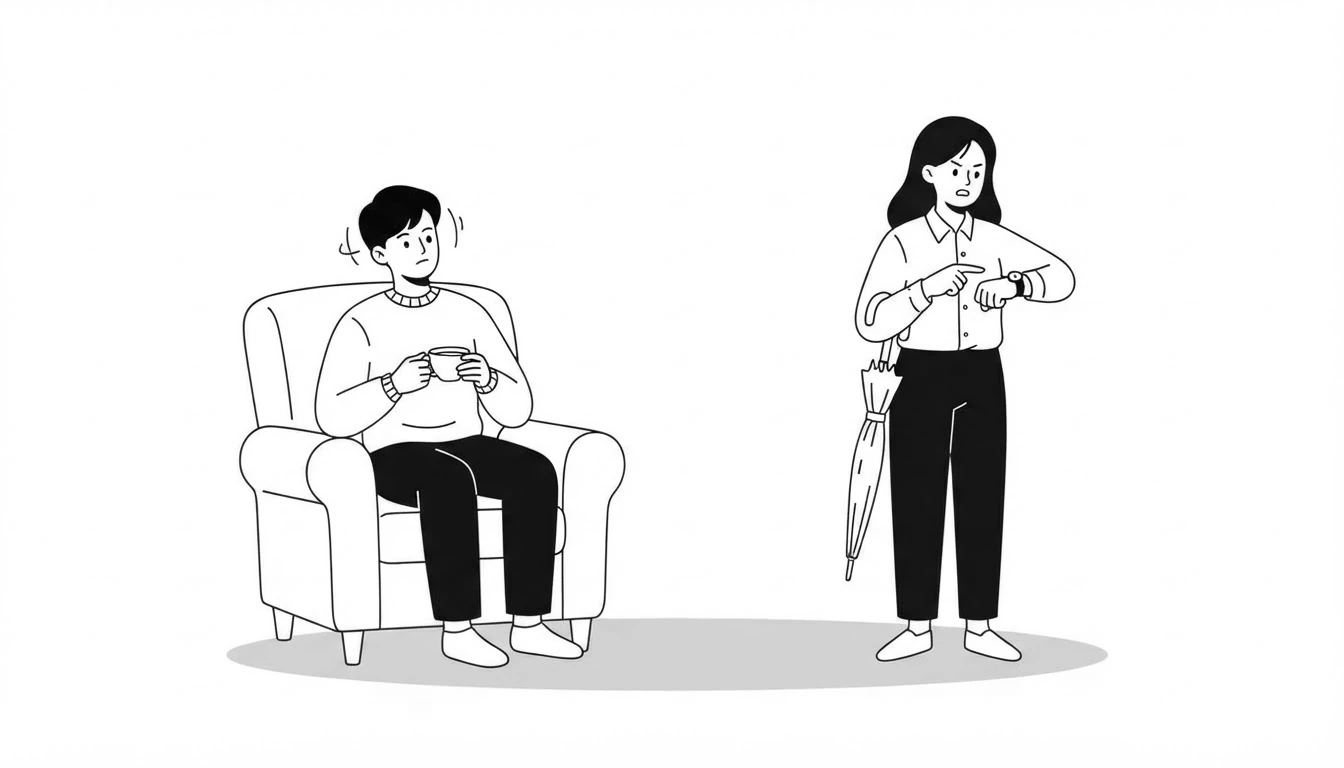
If you’ve ever hesitated between I’d rather go and I’d better go, or written You’d better to leave without knowing why it sounded wrong, you’re not alone. These two structures look so alike that almost every learner mixes them up: both contain ‘d, both are followed by an infinitive without to, and both seem to be about what you ought to do. But they mean very different things.
Don’t worry, because the difference is simpler than it looks. In this guide I explain when to use would rather (to say what you prefer) and when to use had better (to give urgent advice or a warning), how each one is built, how to tell the two ‘ds apart, the other uses of rather and the mistakes I see most often in class. At the end there are thirty practice sentences with answers. Let’s get started! 🙂
Would rather and had better: what they share and what sets them apart
The two structures have three things in common, and that’s where the confusion comes from:
- They contract in the same way: I’d rather and I’d better.
- They are followed by the bare infinitive (the infinitive without to): I’d rather stay, I’d better stay.
- They look like past forms (would, had), but they refer to the present or future.
What changes is the meaning, so you can’t swap one for the other:
| Would rather | Had better | |
|---|---|---|
| What it’s for | Expressing a preference | Giving urgent advice or a warning |
| The ‘d stands for… | would | had |
| Rough meaning | «I prefer to…» | «It would be wise to… (or else)» |
| Negative | would rather not + verb | had better not + verb |
| Example | I’d rather stay at home tonight. | You’d better take an umbrella. |
Would rather: saying what you prefer
Would rather expresses a preference in a particular situation. It’s very natural in conversation, so it will help you both in everyday life and in the Speaking paper of the Cambridge exams.
The basic structure: would rather + bare infinitive
When the person who prefers and the person who does the action are the same, we use would rather + bare infinitive. It doesn’t change with the subject:
- affirmative: I’d rather have tea.
- negative: She’d rather not go out tonight.
- question: Would you rather stay or go?
It’s also used all the time in short answers, especially to politely turn something down:
- «Shall we get a taxi?» «I’d rather walk, if you don’t mind.»
- «Would you like some more cake?» «I’d rather not, thanks.»
Remember that would rather is never followed by to: ❌ I’d rather to have tea → ✅ I’d rather have tea.
Would rather … than: comparing two options
To say you prefer one thing to another, add than and use the bare infinitive again:
- I’d rather walk than take the bus.
- He’d rather read a book than watch a film.
The typical mistake here is to put the second verb in -ing, by analogy with prefer: ❌ I’d rather stay at home than going out → ✅ I’d rather stay at home than go out.
Would rather + a different subject: the past simple
This is the part that surprises most learners. When you want somebody else to do something (or not to do it), the verb after would rather goes in the past simple, even though you’re talking about the present or the future:
- I’d rather you stayed here tonight.
- I’d rather you didn’t smoke in the house.
- Would you rather I called you later?
- She’d rather we came tomorrow.
This is an «unreal past»: the past form doesn’t point to past time, it signals that the situation isn’t real yet. It’s the same mechanism you find after I wish and in conditionals. With the verb be, use were or was: I’d rather you were here.
This structure is very useful for asking for something politely. I’d rather you didn’t sounds much softer than Don’t:
- «Do you mind if I open the window?» «I’d rather you didn’t, it’s freezing.»
It works like the conditionals, which I recommend revising if the unreal past feels strange.
Would rather in the past: regrets
To talk about something that already happened and that you wish had been different, use would rather + have + past participle (same subject) or would rather + subject + had + past participle (different subject):
- I’d rather have stayed at home. The party was boring.
- I’d rather you hadn’t told her about the surprise.
This form is more advanced, typical of B2 level and above, so if you’re at B1 it’s enough to recognise it.
Would rather, would prefer and prefer
These three forms mean almost the same, but they are built differently, and that difference in structure is exactly what the exams test:
| Structure | Example |
|---|---|
| would rather + bare infinitive | I’d rather have coffee. |
| would prefer + to + infinitive | I’d prefer to have coffee. |
| would rather … than + bare infinitive | I’d rather have coffee than tea. |
| would prefer … rather than + infinitive | I’d prefer to have coffee rather than tea. |
| prefer + -ing + to + -ing (general preference) | I prefer walking to driving. |
| would prefer + object + to + infinitive (another person) | I’d prefer you to stay. = I’d rather you stayed. |
One difference in meaning: I prefer talks about general tastes (I prefer tea to coffee), while I’d rather and I’d prefer talk about a particular situation (I’d rather have tea now).
And «had rather»?
If you got here searching for had rather, it isn’t a mistake on your part. I had rather used to be an older variant of I would rather and you can still find it in very formal or literary texts, but today it’s considered old-fashioned. The normal form is I’d rather, and that ‘d is would.
Had better: urgent advice and warnings
Had better tells someone what it’s wise to do in a particular situation, usually because there will be a problem if they don’t:
- You’d better take an umbrella. It’s going to rain.
- We’d better leave now, or we’ll miss the train.
- I’d better call my mum. She’s been waiting for an hour.
The structure of had better
The structure is had better + bare infinitive, for every person, almost always contracted to ‘d better:
- affirmative: You’d better hurry up.
- negative: You’d better not be late. (The negative goes after better.)
Three details worth knowing:
- It looks like a past form, but it talks about the present or the future. You’d better go now refers to now, not to yesterday.
- There’s no to. ❌ You’d better to go → ✅ You’d better go.
- Questions are rare. Had I better call him? exists, but it sounds very formal or old-fashioned. People say Should I call him? instead.
In informal English, especially American, many speakers drop the ‘d and say You better go. You’ll hear it in series and songs, but in an exam or in writing always use the full or contracted form.
Had better or should: which one do I use?
Both give advice, but with different strength. Should is general, mild advice; had better is for one particular situation and suggests a bad consequence if the advice isn’t followed:
- You should exercise more. (General advice, no urgency.)
- You’d better see a doctor about that cough. (Do it now: otherwise it may get worse.)
That’s why had better can also sound like a threat or a strong warning, depending on the tone: You’d better not tell anyone about this. If you want to soften it, use should. For more on how it compares with other modals, see my guide to modal verbs and the difference between must and have to.
One more thing: had better only works for the present and the future. To criticise something that already happened, use should have (You should have called me), not had better have.
How to tell the ‘d in would rather and had better apart
The ‘d causes almost all of the confusion, because it can stand for would or had. The practical rule: look at the word that comes next.
| What follows the ‘d | The ‘d is… | Example |
|---|---|---|
| rather | would | I’d rather go home. = I would rather go home. |
| better | had | You’d better go home. = You had better go home. |
| a past participle (finished, seen…) | had (past perfect) | I’d finished before she arrived. |
| a normal infinitive (go, like, love…) | would | I’d like a coffee. / She’d love it. |
And a trick to stop you mixing the two structures: think of rather = «I prefer» and better = «it’s wise to». If what you want to say is «I prefer», you need rather; if it’s «it’s wise to», you need better.
Other uses of rather
Rather doesn’t only appear in would rather. These are its most frequent uses, and probably the ones you were looking for if you arrived from a different search:
Rather meaning «quite»
It works like quite or fairly, but with a nuance: it suggests that something is more than expected, and it’s often used with negative adjectives or to show surprise:
- It’s rather cold today. (Colder than I expected.)
- The film was rather good, actually. (With a positive adjective it shows surprise: I wasn’t expecting that.)
- It was rather a surprise. (With a + noun, slightly formal and very British.)
Rather than
Rather than means «instead of». It’s followed by the bare infinitive or by -ing:
- I decided to walk rather than take the bus.
- Rather than wasting time, let’s start now.
It’s very similar to instead of, although you can’t always swap them. If you’re unsure, my post on instead of explains the difference in detail.
Or rather
Use it to correct yourself or be more precise: He’s my friend, or rather, my sister’s friend.
Common mistakes with would rather and had better
- ❌ You’d better to see a doctor. → ✅ You’d better see a doctor. (No to.)
- ❌ I would rather to stay. → ✅ I’d rather stay. (No to.)
- ❌ I’d rather stay than going out. → ✅ I’d rather stay than go out. (After than, the bare infinitive.)
- ❌ I’d rather you don’t smoke. → ✅ I’d rather you didn’t smoke. (With a different subject, the past simple. Native speakers sometimes say don’t in casual speech, but in an exam use didn’t.)
- ❌ You hadn’t better go. → ✅ You’d better not go. (The negative goes after better.)
- ❌ You’d better to not go. → ✅ You’d better not go.
- ❌ I’d better you stay. → ✅ I’d rather you stayed. (To say «I’d prefer you to», it’s rather, not better.)
- ❌ He had better went. → ✅ He’d better go. (An infinitive, even though had looks like a past form.)
Would rather and had better in the Cambridge exams
These two structures turn up mainly in three places, and it’s worth knowing how to make the most of them in each:
- Use of English (key word transformations). This is where they’re tested most, from B2 First upwards. Note that a contraction counts as one word. A couple of exam-style examples:
- Would you prefer me to open the window? RATHER → Would you rather I opened the window?
- I think it would be a good idea for you to ask for help. BETTER → You’d better ask for help.
- Speaking. I’d rather… is perfect for justifying a choice when you compare two options or two photographs: I’d rather live in the countryside than in a big city, because…
- Writing. You’d better… works in informal emails to a friend (You’d better bring a coat, it gets cold at night), but not in formal texts, where I would recommend that you… or should is a better choice.
Summary table
Structure Meaning Example would rather + infinitive Preference (same subject) I’d rather stay. would rather not + infinitive Negative preference I’d rather not go. would rather … than + infinitive Comparing two options I’d rather walk than drive. would rather + subject + past simple Preference about someone else (present or future) I’d rather you stayed. would rather + subject + had + past participle Regret (past) I’d rather you hadn’t come. had better + infinitive Urgent advice or warning You’d better hurry. had better not + infinitive Negative warning You’d better not be late. Frequently asked questions about would rather and had better
Do would rather and had better mean the same?
No. Would rather expresses what you prefer, and had better gives urgent advice or a warning. All they share is the contraction ‘d and the bare infinitive that follows.
Can you use «had better» in the past?
No. Although it looks like a past form, it only refers to the present and the future. To talk about advice that wasn’t followed, use should have: You should have taken an umbrella.
What is the negative of had better?
Had better not: You’d better not touch that. Hadn’t better isn’t used in standard English.
Why do we say «I’d rather you went» and not «I’d rather you go»?
Because with a different subject English uses the past simple to express a wish about the present or the future, just like in I wish you were here.
Would rather or would prefer?
They mean the same, but would rather takes the bare infinitive (I’d rather stay) and would prefer takes to (I’d prefer to stay). It’s one of the things the exams ask about most.
Are «better» and «rather» always contracted with ‘d?
In conversation, almost always. The full form (I would rather, You had better) is used for emphasis or in more formal texts.
Would rather and had better exercises
Thirty sentences to check you’ve got it. Below you’ll find three interactive exercises that mark themselves, so you’ll know straight away how you did.
And if you prefer a version in text that you can copy and paste, you have it down here 👇
Exercise 1: would rather or had better?
Choose the correct option in each sentence.
- You _______________ (had better / would rather) take an umbrella. It looks like rain.
- I’d _______________ (rather / better) stay at home tonight than go to the party.
- You’d better _______________ (not to leave / not leave) your bag there.
- She’d rather _______________ (to walk / walk) than wait for the bus.
- I’d rather you _______________ (don’t / didn’t) tell anyone about it.
- We _______________ (had better / would rather) hurry, or we’ll miss the train.
- «Do you mind if I open the window?» «I’d _______________ (rather / better) you didn’t. It’s freezing.»
- He’d better _______________ (is / be) on time tomorrow.
- I’d rather _______________ (go / went) to the cinema than watch TV.
- They’d rather we _______________ (come / came) tomorrow instead of today.
Show answers
- had better
- rather
- not leave
- walk
- didn’t
- had better
- rather
- be
- go
- came
Exercise 2: complete the sentences
Complete each sentence with the correct form of the verb in brackets.
- I’d rather you _______________ (not / smoke) in the house.
- You’d better _______________ (see) a doctor about that cough.
- Would you rather I _______________ (call) you tomorrow?
- She’d rather _______________ (eat) at home than go to a restaurant.
- We’d better _______________ (not / wait) any longer.
- I’d rather you _______________ (tell) me the truth yesterday.
- My boss would rather I _______________ (work) from home on Fridays.
- You’d better _______________ (not / forget) your passport.
- I’d rather _______________ (not / talk) about it now.
- It’s very late. I’d better _______________ (go).
Show answers
- didn’t smoke
- see
- called
- eat
- not wait
- had told
- worked
- not forget
- not talk
- go
Exercise 3: right or wrong?
Decide whether each sentence is correct. If it’s wrong, correct it.
- You had better to see a doctor.
- I’d rather stay at home than going out.
- She’d rather you didn’t tell him.
- You’d better not be late.
- I’d rather you stayed here tonight.
- We’d better to leave now.
- I would rather to have tea.
- He’d rather not to go.
- He’d rather you wouldn’t tell anyone.
- You’d better not miss the deadline.
Show answers
- Wrong: You’d better see a doctor.
- Wrong: I’d rather stay at home than go out.
- Right.
- Right.
- Right.
- Wrong: We’d better leave now.
- Wrong: I’d rather have tea.
- Wrong: He’d rather not go.
- Wrong: He’d rather you didn’t tell anyone.
- Right.
Conclusion
To sum up in three ideas: would rather is for preferences and, with another person, takes the past simple; had better is for urgent advice and warnings, and its negative is had better not; and both take the bare infinitive, so when you’re unsure about the ‘d, check whether rather (would) or better (had) comes next.
If you want to keep going with this topic, the natural next step is my guide to modal verbs and the difference between must and have to.
Did you find this post useful? Share it with other students and English teachers. And if you’d like more content like this, subscribe to my newsletter and follow me on Facebook, Twitter, Pinterest, Instagram and YouTube.
See you in the next post. Until then, don’t forget to keep smiling! 🙂
