
Table of contents
Must and have to point at the same thing: something is obligatory. They are so close that most learners treat them as interchangeable, and in the affirmative you usually get away with it. The trouble starts in the negative, because mustn’t and don’t have to mean opposite things, and that is where almost everyone slips.
In this guide you will see the difference between must and have to, when to use each one, how they work in every tense, what happens in the negative, how deduction works with must, the mistakes real learners make, and how all of it is tested in the Cambridge exams. At the end there are forty practice sentences with answers. This post is part of my guide to modal verbs in English. Let’s get started! 🙂
The difference between must and have to, in one line
The rule that covers 90% of cases: with must, the obligation comes from the speaker; with have to, it comes from outside.
| must | have to | |
|---|---|---|
| Where the obligation comes from | From you, the speaker | From a rule, a law, another person |
| Example | I must stop smoking. | I have to wear a uniform at work. |
| Register | More formal, more emphatic | More neutral and far more common in speech |
| Does it conjugate? | No: present only | Yes: in every tense |
| Negative | mustn’t = forbidden | don’t have to = not necessary |
Look at the two examples. I must stop smoking is said by someone who has made the decision: nobody is forcing them. I have to wear a uniform is said by someone whose company imposes it. Change who is in charge and you change the verb.
MUST: when to use it
1. Strong obligation, usually your own
- I must talk to you about the new project.
- I must try harder next time.
- Seat belts must be worn even in the back of the car.
2. Rules, signs and official texts
In written and official language, must and especially must not do most of the work when rules are set out:
- You must not park outside the entrance.
- You must not make noise after 9 o’clock.
- Passengers must show a valid ticket.
3. Deductions: when you are almost certain
This use has nothing to do with obligation. Here must means «I’m sure»:
- He’s so small. He must be no more than four years old.
- He falls asleep in class every morning. He must be out late every night.
- You must be exhausted after that flight.
And here is the detail that goes wrong most often: the negative of must in deductions is can’t, not mustn’t. You say That can’t be his sister, never «That mustn’t be his sister». For the past you use must have and can’t have plus a participle: You must have been out, That can’t have been easy for you. It is all set out in the deduction section of my guide to modal verbs.
The form of must: what it cannot do
Must is a modal verb, so it takes no -s, uses no do and is followed by the infinitive without to. Above all: it has no past and no future of its own. That is the gap have to exists to fill.
HAVE TO: when to use it
1. Obligation that comes from outside
- I have to wear a uniform at work. (the company says so)
- You have to be 18 to vote. (the law says so)
- I have to pay extra rent now because my friend has left the flat.
2. It works in every tense
This is where it wins: have to is an ordinary verb and behaves like one, so wherever must cannot go, have to can.
| Tense | Example |
|---|---|
| Present | I have to work on Saturdays. |
| Past | She had to work when she was a student. |
| Future | He‘ll have to wait five weeks for the operation. |
| Present perfect | I‘ve had to cancel three times. |
| After another modal | We might have to cancel the meeting. |
| Gerund | I hate having to get up early. |
| Infinitive | I don’t want to have to ask him again. |
3. Questions and negatives: with do, does and did
Watch out here, because this is where it gets mixed up with must. Have to is not a modal, so it needs the auxiliary:
- Do we have to take our shoes off?
- Does he have to do exams this year?
- We don’t have to pay for the food.
- I didn’t have to work last weekend.
HAVE GOT TO: the informal cousin
Have got to means the same as have to, but it is more informal and, in speech, more common than have to for talking about obligation.
- You‘ve got to press very hard on the doorbell.
- You‘ve got to drive more slowly! We’re in a 30-mile-an-hour zone.
Three things worth knowing about it, which hardly any article mentions:
- It only exists in the present. You do not say «I’d got to study» or «I’ll have got to study»: those are had to and will have to.
- Its negative takes no do: you add not after have: We haven’t got to pay for the food, not «We don’t have got to pay».
- Its question inverts: Have we got to take our shoes off?
Mustn’t or don’t have to: the biggest difference
If this is the only section that sticks, the post has already earned its keep. In the affirmative, must and have to are very close. In the negative they mean opposite things.
| Form | What it means | Example |
|---|---|---|
| mustn’t | Prohibition. You are not allowed to. | You mustn’t tell anyone. (it’s a secret) |
| don’t have to | No obligation. You can, but there is no need. | You don’t have to tell anyone. (up to you) |
| needn’t | The same as don’t have to, slightly more formal | You needn’t worry about it. |
| don’t need to | The same as don’t have to | You don’t need to worry about it. |
Compare these two sentences, which differ only in the verb:
- You mustn’t come to the meeting. → You are not allowed to come.
- You don’t have to come to the meeting. → Come or not, it is your call.
Think of it this way: mustn’t closes the door; don’t have to leaves it open. 🙂
The past and the future: had to and will have to
Since must has no past, past obligation is always had to, wherever it comes from:
- By the time we got back, it was dark and we had to cycle home without lights.
- Last year, teachers had to make a report on each child every week.
For the future, Cambridge points out a useful nuance: will have to is used for an obligation at a particular point in the future (He’ll have to wait five weeks for his operation), while must is kept for more general obligations coming from the speaker (I must try harder next time). To revise the whole future, see my guide to will, going to and the present continuous.
Common mistakes (documented, not invented)
The ones in this table come from Cambridge’s grammar pages, which flag incorrect forms drawn from the Cambridge English Corpus and from real candidate errors in their exams.
| ✘ Wrong | ✔ Right | Why |
|---|---|---|
| They musted sell their house. | They had to sell their house. | Must does not conjugate. |
| When she got home, she must cook dinner. | When she got home, she had to cook dinner. | Past obligation is had to. |
| I found a hotel which must be suitable for us. | I found a hotel which will be suitable for us. | Must does not predict the future. |
| That mustn’t be his sister. | That can’t be his sister. | Negative deduction is can’t. |
| This must can be your sister. | This must be your sister. | Two modals cannot sit together. |
| There doesn’t must be any rubbish left. | There mustn’t be any rubbish left. | Modals do not use do. |
| Do you must make that noise? | Must you make that noise? | Modal questions invert. |
| We’ve to must take the car to the garage. | We’ve got to take the car to the garage. | No modal after have (got) to. |
| We don’t have got to pay for the food. | We haven’t got to pay for the food. | Have got to takes no do in the negative. |
| I’d got to study for the exam. | I had to study for the exam. | Have got to exists only in the present. |
| I’ll have got to study for the exam. | I’ll have to study for the exam. | The same goes for the future. |
Must and have to in the Cambridge exams
B1 Preliminary
They come up as soon as rules are mentioned: rules at school, at work, at home. A typical speaking answer at that level: At my school we have to wear a uniform, and we mustn’t use our phones in class. That alone shows you have a firm grasp of the difference.
B2 First
This is standard material in Part 4 of the Reading and Use of English paper. Three examples in the exact exam format:
- Smoking is forbidden in the building. MUSTN’T → You mustn’t smoke in the building.
- It isn’t necessary to bring your laptop. HAVE → You don’t have to bring your laptop.
- It was necessary for me to work last Sunday. HAD → I had to work last Sunday.
C1 Advanced
At this level you are expected to use both naturally and to handle the nuances: needn’t have done for what you did unnecessarily, didn’t have to for what was not required, and must have done for deductions about the past.
Summary table
| Form | Meaning | Example |
|---|---|---|
| must | Speaker’s obligation, written rules, deduction | I must call my mother. |
| mustn’t | Prohibition | You mustn’t park here. |
| have to | External obligation, in any tense | I have to work late. |
| have got to | The same as have to, informal and present only | I’ve got to go. |
| don’t have to | No need | You don’t have to come. |
| needn’t / don’t need to | No need | You needn’t wait. |
| had to | Past obligation (the only option) | I had to leave early. |
| will have to | Obligation at a particular point in the future | You’ll have to ask him. |
| can’t | Negative deduction | She can’t be at home. |
Frequently asked questions
What is the difference between must and have to?
With must the obligation comes from the speaker; with have to, from a rule or an external circumstance. On top of that, have to works in every tense and must only has a present form.
Do mustn’t and don’t have to mean the same?
No, the opposite. Mustn’t forbids and don’t have to says there is no need.
What is the past of must?
Had to. Must has no past form, and «musted» does not exist.
Can you say «I will must»?
No. Two modals cannot follow one another: you say I will have to.
Have to or have got to?
They mean the same. Have got to is more informal, very common in speech, and only used in the present.
Is must used for deduction?
Yes, very often: She must be tired. But the negative deduction uses can’t, not mustn’t.
Must and have to exercises
Forty sentences to check that the difference has sunk in. Below you will find four interactive exercises that mark themselves, so you will know straight away how you did. The third one is special: every incorrect sentence is a real learner error documented by Cambridge.
And if you prefer a version in text that you can copy and paste, you have it down here 👇
Exercise 1: must, have to, mustn’t or don’t have to?
Choose the correct option in each sentence.
- I _______________ (have to / must) wear a uniform at work. It’s the company rule.
- You _______________ (mustn’t / don’t have to) touch that. It’s still wet.
- You _______________ (don’t have to / mustn’t) come with us if you don’t feel like it.
- I really _______________ (must / have to) stop eating so much chocolate.
- She _______________ (had to / musted) work on Saturdays when she was a waitress.
- Passengers _______________ (must not / don’t have to) smoke on board.
- We _______________ (will have to / must have to) book a table next week, so let’s decide the date.
- _______________ (Do / Have) you have to wear a suit in your new job?
- He _______________ (must / has to) be exhausted after that flight.
- You _______________ (needn’t / mustn’t) bring anything to the party, but a bottle would be nice.
Show answers
- have to
- mustn’t
- don’t have to
- must
- had to
- must not
- will have to
- Do
- must
- needn’t
Exercise 2: have to in every tense
Complete the sentences with the correct form of the verbs in brackets.
- Yesterday I _______________ (have to / work) late because of a meeting.
- She _______________ (have to / wear) her uniform every day since she started.
- If you want the job, you _______________ (have to / do) an interview next week.
- We _______________ (not have to / pay) for the tickets. They were free.
- I hate _______________ (have to / get up) early on Mondays.
- He _______________ (not have to / go) to the office today. He’s working from home.
- They _______________ (have to / write) the whole report again after the changes.
- You _______________ (not have to / do) anything. I’ve already done it.
- She’s lucky: she _______________ (not have to / work) on Fridays.
- We might _______________ (have to / cancel) the meeting if the train is late.
Show answers
- had to work
- has had to wear
- will have to do / ‘ll have to do
- didn’t have to pay / did not have to pay
- having to get up
- doesn’t have to go / does not have to go
- had to write
- don’t have to do / do not have to do
- doesn’t have to work / does not have to work
- have to cancel
Exercise 3: right or wrong?
Decide whether each sentence is correct or incorrect, and rewrite the incorrect ones.
- They musted sell their house.
- When she got home, she must cook dinner.
- We don’t have got to pay for the food.
- We’ve to must take the car to the garage.
- You must not park outside the entrance.
- I’d got to study for the exam.
- Do we have to take our shoes off?
- He must be no more than four years old.
- Don’t worry, I found a hotel which must be suitable for us.
- That mustn’t be his sister. She looks so different.
Show answers
- Incorrect → They had to sell their house.
- Incorrect → When she got home, she had to cook dinner.
- Incorrect → We haven’t got to pay for the food. / We have not got to pay for the food. / We don’t have to pay for the food. / We do not have to pay for the food.
- Incorrect → We’ve got to take the car to the garage. / We have got to take the car to the garage. / We have to take the car to the garage.
- Correct
- Incorrect → I had to study for the exam.
- Correct
- Correct
- Incorrect → Don’t worry, I found a hotel which will be suitable for us. / Don’t worry, I found a hotel that will be suitable for us.
- Incorrect → That can’t be his sister. She looks so different. / That cannot be his sister. She looks so different.
Exercise 4: key word transformations
Complete the second sentence so that it means the same as the first, using the word in capitals.
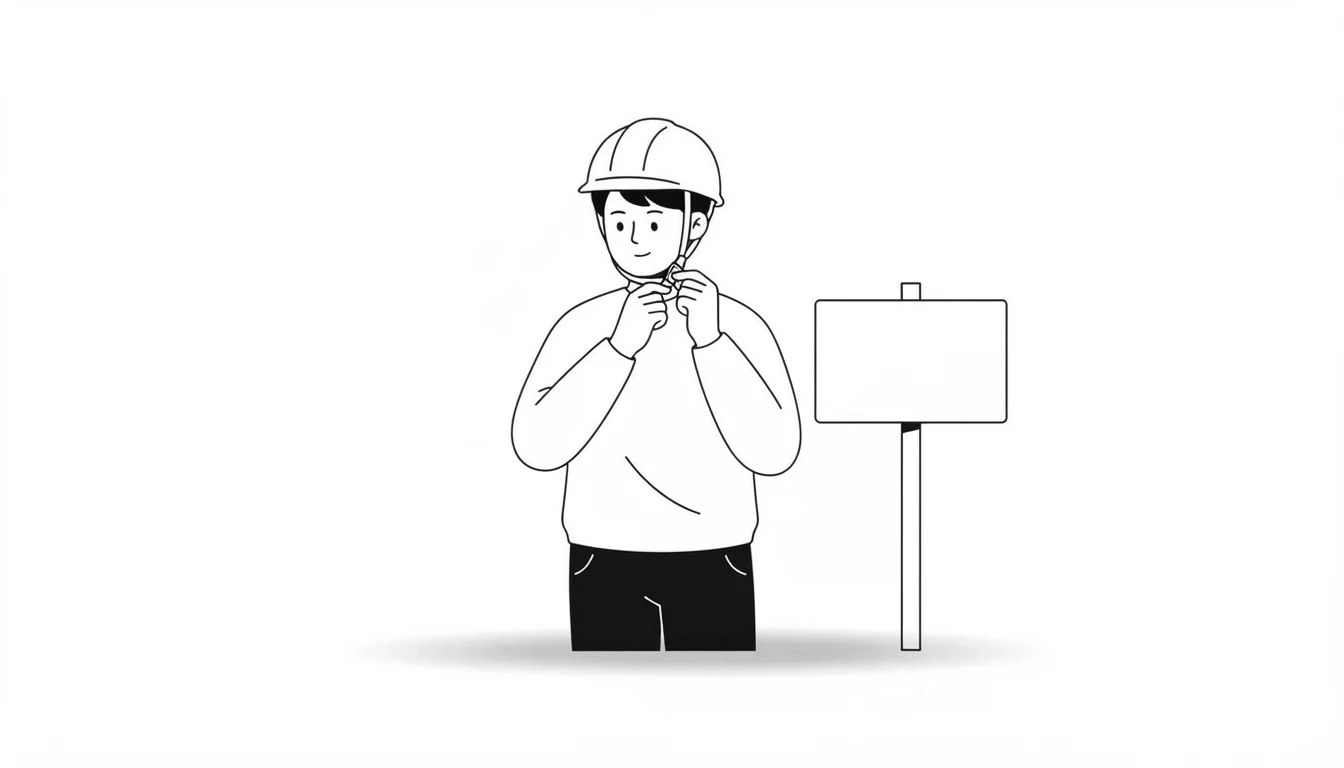
- It’s obligatory to wear a helmet on site. (HAVE)
You _______________ a helmet on site. - Smoking is forbidden in the building. (MUSTN’T)
You _______________ in the building. - It isn’t necessary to bring your laptop. (HAVE)
You _______________ your laptop. - It was necessary for me to work last Sunday. (HAD)
I _______________ last Sunday. - I’m sure that isn’t her brother. (CAN’T)
That _______________ her brother. - I’m sure he is very tired after the trip. (MUST)
He _______________ very tired after the trip. - It will be necessary for us to leave early tomorrow. (HAVE)
We _______________ early tomorrow. - There’s no need for you to wait for me. (NEED)
You _______________ for me. - Wearing a tie is not compulsory in this office. (HAVE)
You _______________ a tie in this office. - It’s essential that you arrive before nine. (MUST)
You _______________ before nine.
Show answers
- have to wear
- mustn’t smoke / must not smoke
- don’t have to bring / do not have to bring
- had to work
- can’t be / cannot be
- must be
- will have to leave / ‘ll have to leave
- needn’t wait / need not wait / don’t need to wait / do not need to wait
- don’t have to wear / do not have to wear
- must arrive
Conclusion
Three ideas to take away: must comes from you and have to comes from outside; in the past it is always had to, because must does not conjugate; and mustn’t forbids while don’t have to frees you. With that settled, this pair stops causing trouble.
This post is part of my series on modal verbs. For the full picture, start with the guide to modal verbs in English, and if ability is more your concern than obligation, there is can, could and be able to. Next will be should and the may and might pair.
Did you find this post useful? Share it with other students and teachers of English. And if you would like more content like this, subscribe to our newsletter and follow us on Facebook, Twitter, Pinterest, Instagram and YouTube.
See you in the next post. Until then, don’t forget to keep smiling! 🙂
