


Tabla de contenidos
Mucha gente llega al Speaking C1 de la EOI pensando que el reto es hablar más tiempo. En realidad, los minutos apenas cambian respecto al B2. Lo que cambia es lo que el tribunal espera oír: argumentos que se sostienen, matices, alguna expresión idiomática bien colocada y la capacidad de llevar una conversación, no solo de participar en ella.
En esta guía te explico cómo es la prueba en cada comunidad, qué tipos de monólogo y de interacción te pueden tocar y, sobre todo, tienes seis ejemplos resueltos, tres de monólogo y tres de interacción, con la tarjeta, la respuesta transcrita y lo que hace que suenen a C1. ¡Allá vamos! 🙂
Si quieres situarte antes en el examen completo, tienes mi guía general del C1 de la EOI.
Cómo es el Speaking C1 de la EOI
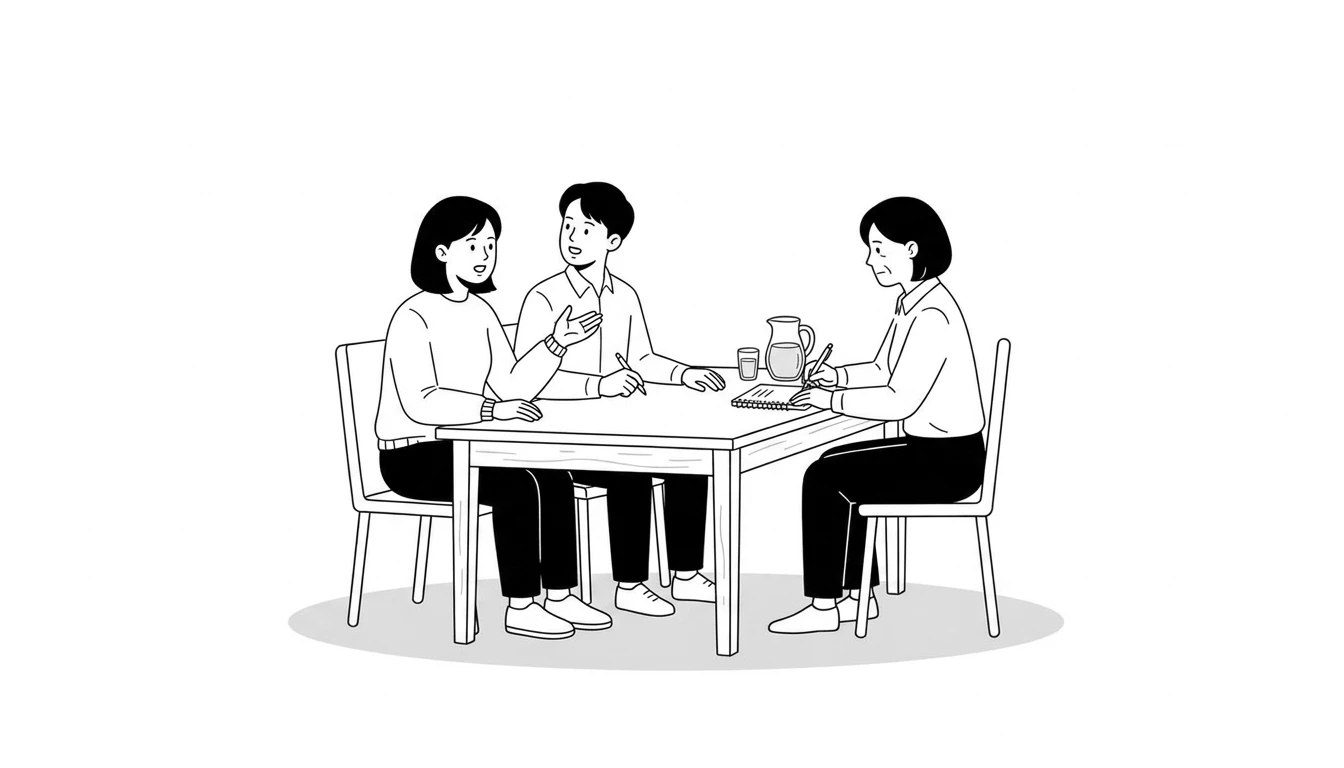
El oral se hace otro día, distinto de la parte escrita, casi siempre en pareja (en trío si sois impares) y delante de un tribunal. Tiene dos tareas que se puntúan juntas como «producción y coproducción oral»:
- Un monólogo: hablas tú solo, normalmente entre 3 y 4 minutos, a partir de una tarjeta.
- Una interacción: conversas con tu compañero, normalmente entre 5 y 6 minutos.
En la misma sesión se suele hacer también la mediación oral, que es otra parte del examen con su propia nota. Los tiempos cambian bastante según la comunidad:
| Comunidad | Monólogo: preparación · duración | Interacción |
|---|---|---|
| Andalucía | 20 min de preparación para todas las tareas orales | Pareja: unos 5 min (trío: 7) |
| Aragón | 3 min de preparación · 3 min | Pareja: 5 min (trío: 7) · 2 min de preparación |
| Asturias | Hasta 2 min · hasta 3 min | Pareja: 5-6 min (trío: 7-8) · hasta 2 min |
| Baleares | 4-5 min · 3-4 min + 2-3 min de preguntas | Pareja: 6-8 min |
| Canarias | 4 min · 5 min | Pareja: 7-8 min (trío: 8-9) · 3 min |
| Cantabria | Unos 10 min, compartidos con la mediación · 2-2,5 min | Pareja: 6-8 min |
| Castilla-La Mancha | 4 min · 3,5-4 min | Pareja: 4-4,5 min (trío: 5,5-6,5) · 1 min |
| Castilla y León | 5 min · hasta 4 min | Pareja: 4-5 min (trío: 5-7) |
| Cataluña | Tema propio, preparado en casa · hasta 5 min + preguntas | Pareja: 8-10 min |
| Comunidad Valenciana | No consta · 3,5-4 min | Pareja: 6-7 min (trío: 9-10,5) |
| Extremadura | 10-15 min · 3-5 min | Pareja: 6-7 min, sin preparación |
| Galicia | 4 min, compartidos con la mediación · 2-3 min | Pareja: 4-5 min (trío: 6-7) |
| La Rioja | 2 min · 4 min | Pareja: 6 min (trío: 9) · 1 min |
| Madrid | 5 min · 3-4 min + 1 min de preguntas | Pareja: 3-4 min · 2 min |
| Murcia | 3 min · unos 5 min | Pareja: unos 5 min · 1 min, sin notas |
| Navarra | 1 min · 3-4 min | Pareja: 5-6 min (trío: 8-9) · 2 min |
| País Vasco | 20 min, compartidos con la mediación · 4 min | Pareja: 5 min |
¿Puedo llevar notas?
Durante la preparación del monólogo puedes apuntar ideas en casi todas las comunidades, pero no leerlas: el tribunal quiere oírte hablar, no recitar. Para la interacción la preparación es más corta, de 1 a 3 minutos, y en algunas comunidades, como Murcia, ni siquiera puedes tomar notas. Mi consejo: escribe palabras clave y un par de conectores, nunca frases completas.
El monólogo del Speaking C1
Hay cinco formatos en los modelos oficiales, aunque uno domina claramente:
- Un tema con preguntas o puntos para desarrollar: en seis comunidades con modelo, más las guías de Andalucía y Cantabria. Es el formato por defecto.
- Una o dos fotos con puntos, que no hay que describir: Asturias, Canarias, Extremadura, Madrid y el País Vasco.
- Un texto breve o una cita como punto de partida: Galicia y Murcia.
- Un papel dentro de una situación: la Comunidad Valenciana.
- Un tema que preparas tú antes del examen: Cataluña.
En cuanto a los temas, los que más se repiten son la salud, la tecnología, la sociedad y la familia, y el trabajo: suman casi dos de cada tres tareas oficiales. Y en Baleares, Madrid y Cataluña el monólogo termina con preguntas del tribunal; en Navarra y Murcia también pueden hacerlas.
Monólogo C1 a partir de un tema con preguntas
El formato más extendido: una tarjeta con un tema y tres o cuatro preguntas que te sirven de guion. La trampa es contestarlas una tras otra como en un cuestionario; en C1 se espera que las enlaces en una exposición con hilo.
Tarjeta:
Are we sleeping enough?
- Why do so many people get less sleep than they need?
- How does a lack of sleep affect our health and the way we live?
- Should schools and employers take sleep into account, for example with later start times?
- What would you recommend to someone who sleeps badly?
Speak for about 3 or 4 minutes.
Respuesta modelo (482 palabras, unos 3,5 minutos):
I'd like to talk about sleep, which is one of those things we all take for granted until we stop getting enough of it. And judging by how many people I know who are permanently exhausted, I'd say it's become a real problem.
So, why are we sleeping less? I think there are several reasons, but if I had to pick one, it'd be our screens. Most of us end the day scrolling through our phones in bed, and before we know it, it's one in the morning. Then there's the way we live in Spain in particular. We have dinner late, prime time on television starts at ten or even later, and yet most offices and schools open at eight or nine, just like in the rest of Europe. Something has to give, and what gives is usually sleep. And of course, stress plays a part too. When you've got a lot on your plate, it's very hard to switch off.
As for the effects, they're much more serious than people tend to think. In the short term, you're irritable, you can't concentrate and you make silly mistakes. I remember a period when I was working and studying at the same time, and I was running on five hours a night. I once put the milk in the cupboard and the coffee in the fridge, which is funny now, but it wasn't funny when I nearly fell asleep driving home. In the long term, from what I've read, a chronic lack of sleep is linked to heart problems, weight gain and even depression. So it isn't just about feeling a bit tired.
Should schools and companies do something about it? I'd say yes, at least to some extent. There's quite a lot of research suggesting that teenagers' body clocks are genuinely different, so making them sit an exam at eight in the morning doesn't make much sense. Having said that, I'm not sure that simply starting later would work here, because families would just go to bed even later. What I think would make a real difference is flexible hours at work, so that people who are night owls aren't forced to live like early birds.
Finally, what would I recommend? Well, the advice is fairly obvious, but it's surprisingly hard to follow. Keep your phone out of the bedroom, try to go to bed at roughly the same time every day, and don't drink coffee after lunch. What worked for me was reading a paper book for twenty minutes before going to sleep. It sounds old-fashioned, but it does the trick.
So, all in all, I think sleep is the first thing we sacrifice when life gets busy, and it should really be the last. If we treated it as seriously as diet or exercise, I'm convinced we'd all be healthier and, frankly, a lot nicer to be around.
Por qué funciona a nivel C1:
- Una entrada con idea propia, no un simple «I’m going to talk about»: one of those things we all take for granted until we stop getting enough of it. En diez segundos ya has enganchado al tribunal.
- Expresiones idiomáticas y coloquiales bien colocadas, que es lo que piden las escalas de C1 y no las de B2: Something has to give, a lot on your plate, switch off, running on five hours a night, night owls, early birds, it does the trick.
- Una anécdota que pasa de lo gracioso a lo serio: which is funny now, but it wasn’t funny when I nearly fell asleep driving home. Suena espontáneo y, además, refuerza el argumento.
- Matizas tu propia opinión antes de que lo haga nadie: I’d say yes, at least to some extent y Having said that, I’m not sure that simply starting later would work here. En C1 no basta con estar a favor: tienes que poner límites.
- Estructuras complejas sin forzarlas: una frase escindida (What worked for me was reading a paper book), un segundo condicional (If we treated it as seriously as diet or exercise, I’m convinced we’d all be healthier) y un cierre con contraste: sleep is the first thing we sacrifice when life gets busy, and it should really be the last.
Expresiones para tu repertorio:
- one of those things we all take for granted until…
- judging by how many people I know who…
- if I had to pick one, it'd be…
- Something has to give, and what gives is usually…
- When you've got a lot on your plate, it's very hard to switch off.
- they're much more serious than people tend to think
- Having said that, I'm not sure that…
- It sounds old-fashioned, but it does the trick.
Monólogo C1 a partir de dos fotos
En Asturias, Canarias, Extremadura, Madrid y el País Vasco la tarjeta trae fotos. No te piden describirlas: son un punto de partida para hablar del tema, y queda mucho mejor usarlas para contrastar dos ideas que para contar qué se ve.
Tarjeta:
A change of career
Photo 1: a man in his forties, wearing an apron in a carpentry workshop, learning to use a tool while an instructor watches.
Photo 2: a woman in a smart suit at a desk covered in paperwork, looking up at the clock on the wall.
- Why do some people decide to change career halfway through their working lives?
- What risks and difficulties do they face?
- Is the idea of a "job for life" a thing of the past?
- Would you ever consider starting again in a different field? Why (not)?
Don't describe the photos: use them as a starting point. Speak for about 3 or 4 minutes.
Respuesta modelo (476 palabras, unos 3,5 minutos):
The photos made me think about something that's become surprisingly common: people who reach their forties and decide to start again from scratch in a completely different job.
Why would anyone do that? I think the main reason is that a lot of people realise, at some point, that they chose their career at eighteen, when they hardly knew who they were. You pick a degree because your parents think it's a safe bet, or because your grades were good enough, and twenty years later you find yourself, like the woman in the second photo, watching the clock and counting the hours until Friday. For some people, that feeling becomes unbearable. Others are pushed rather than pulled: they lose their job, or their sector disappears, and they're forced to reinvent themselves.
Of course, it's easier said than done. The most obvious risk is financial. If you've got a mortgage and children, going back to being a trainee on a much lower salary is a huge gamble. Then there's the psychological side. It must be quite humbling to go from being the person everyone asks for advice to being the beginner who doesn't know where anything is. A friend of my father's left a well-paid job in a bank to become a nurse, and he told me the hardest part wasn't the studying, it was being bossed around by people half his age. Not to mention that some employers are still reluctant to hire someone in their fifties for an entry-level post, which I think is a shame, because they bring a lot of experience.
As for the idea of a job for life, I'd say it's pretty much gone, at least for my generation. My grandfather worked for the same company for forty years and retired with a gold watch and a farewell dinner. I can't imagine that happening to anyone I know. And yet, in Spain at least, the dream hasn't completely disappeared. Look at how many people spend years studying for public sector exams, the famous oposiciones, precisely because they want that kind of security. Still, for most of us, contracts are shorter, companies restructure every few years, and technology keeps changing which jobs even exist. Whether that's a good or a bad thing is another question. On the one hand, it gives you more freedom; on the other, it's exhausting never to feel secure.
Personally, I find people like the man in the first photo quite inspiring. What matters, I think, isn't so much the job you end up doing as having the courage to admit that something isn't working. I mean, I'm happy with what I do now, but if I ever found myself in that position, I'd like to think I'd be brave enough to make the change, although I'd definitely want a plan B, and some savings, first.
Por qué funciona a nivel C1:
- Usas las fotos sin describirlas: aparecen solo para apoyar una idea (like the woman in the second photo, watching the clock and counting the hours until Friday). Eso es exactamente lo que pide la consigna.
- Vocabulario preciso y frases hechas: start again from scratch, a safe bet, reinvent themselves, easier said than done, a huge gamble, humbling, bossed around, an entry-level post.
- Ideas conceptualmente complejas dichas con pocas palabras: Others are pushed rather than pulled distingue a quien cambia por gusto de quien cambia por obligación. Es el tipo de matiz que separa un C1 de un B2.
- Equilibrio en el argumento: Whether that’s a good or a bad thing is another question. On the one hand, it gives you more freedom; on the other, it’s exhausting never to feel secure.
- Un cierre personal con estructuras de C1: What matters, I think, isn’t so much the job you end up doing as having the courage to admit that something isn’t working, y un condicional con ever: if I ever found myself in that position, I’d like to think I’d be brave enough to make the change.
Expresiones para tu repertorio:
- The photos made me think about something that's become surprisingly common:
- start again from scratch
- Others are pushed rather than pulled:
- Of course, it's easier said than done.
- It must be quite humbling to go from being… to being…
- Not to mention that…
- Whether that's a good or a bad thing is another question.
- What matters, I think, isn't so much… as…
Monólogo C1 sobre un tema propio, con preguntas del tribunal
Es el formato de Cataluña: eliges y preparas tú el tema antes del examen, hablas unos minutos y luego el tribunal te pregunta. En Baleares y Madrid también hay preguntas después del monólogo, y en Navarra y Murcia pueden hacerlas, así que este ejemplo te sirve para practicar esa parte.
Tarjeta:
A topic of your choice (prepared at home)
Choose a topic you know well and prepare your talk at home. Bring a one-page summary sheet with the title, why you chose the topic and an outline of your talk, and give a copy to the examiners.
Example summary sheet:
- <strong>Title:</strong> Giving things a second life: the repair café in my neighbourhood
- <strong>Why I chose it:</strong> I go every month, and it has changed the way I see the things I own.
- <strong>Outline:</strong> what a repair café is; how I got involved; what I have learnt; why it matters beyond fixing things.
Speak for up to 5 minutes. The examiners will then ask you a couple of questions.
Respuesta modelo (608 palabras, unos 4,5 minutos):
CANDIDATE: The topic I've chosen is the repair café in my neighbourhood, which, for anyone who hasn't heard of one, is basically a monthly get-together where people bring broken things, lamps, toasters, bikes, clothes, and fix them with the help of people who know what they're doing. I chose it because it's turned out to be one of the most rewarding things I do, and also because I think it says a lot about how we live now.
CANDIDATE: So, how did I get involved? To be honest, completely by chance. About two years ago my coffee machine stopped working, and the shop told me it would cost more to repair it than to buy a new one. I was about to throw it away when a neighbour mentioned this group that meets in the community centre on the first Saturday of the month. I went along, a bit sceptical, and a retired electrician called Ramón had it working again in twenty minutes. It was just a loose wire. I was so impressed that I came back the following month, and the month after that, and now I'm one of the regulars. I mostly do small electrical repairs, which I'd never have imagined myself doing.
CANDIDATE: What have I learnt? Well, the practical side, obviously. I can use a multimeter now, and I'm no longer afraid of opening things up. But what I didn't expect was the social side. You get people of all ages sitting at the same table: a teenager fixing a games console next to an eighty-year-old woman who's teaching someone to darn a jumper. People who would never cross paths otherwise end up chatting for hours. For some of the older people, I think it's the highlight of their month.
CANDIDATE: And finally, why does it matter? I'd say for two reasons. The first is environmental. We throw away a staggering amount of stuff that could easily be repaired, and every object we save is one less thing going to landfill. But the second reason is, if anything, more important to me. It changes the way you look at the things you own. Once you've fixed something yourself, you think twice before buying a cheap replacement. So, in a way, it's not really about repairing toasters at all. It's about slowing down a bit and taking care of what we've already got.
EXAMINER: Thank you. Do you think repair cafés will become more common, or will they remain a niche hobby?
CANDIDATE: That's a good question. I think they'll grow, but probably not as fast as I'd like. The problem is that a lot of products are designed so that you can't open them, or the spare parts simply aren't available. So unless the law changes and manufacturers are made to sell parts for longer, it'll always be a bit of an uphill struggle. Having said that, I've noticed that more and more young people are coming, partly because of the cost of living, so I'm fairly optimistic.
EXAMINER: Some people would say it's simply cheaper and easier to buy something new. What would you say to them?
CANDIDATE: Well, I'd say they've got a point, in the short term at least. If a toaster costs fifteen euros, it's hard to argue with that. But I'd ask them to think about how long that toaster is going to last, and what happens to it afterwards. And I'd also invite them to come along one Saturday. Nine times out of ten, people who turn up with that attitude leave with whatever they brought fixed and a smile on their face, and quite a few of them come back.
Por qué funciona a nivel C1:
- La charla sigue la hoja resumen y lo hace notar con preguntas retóricas: So, how did I get involved?, What have I learnt?, And finally, why does it matter? El tribunal tiene tu guion delante y ve que lo cumples.
- Piensas en quien escucha: for anyone who hasn’t heard of one, is basically a monthly get-together. Explicar el concepto antes de desarrollarlo es muy de C1.
- Expresiones idiomáticas que salen solas en un tema que dominas: completely by chance, cross paths, if anything, think twice, an uphill struggle, Nine times out of ten.
- Un final que va más allá del tema: it’s not really about repairing toasters at all. It’s about slowing down a bit and taking care of what we’ve already got. Así demuestras que has reflexionado, no solo memorizado.
- Respondes bien a las preguntas: ganas tiempo con That’s a good question, concedes antes de rebatir (they’ve got a point, in the short term at least) y usas una condición compleja: unless the law changes and manufacturers are made to sell parts for longer.
Expresiones para tu repertorio:
- The topic I've chosen is…, which, for anyone who hasn't heard of one, is basically…
- I chose it because it's turned out to be one of the most rewarding things I do
- To be honest, completely by chance.
- But what I didn't expect was…
- People who would never cross paths otherwise end up…
- But the second reason is, if anything, more important to me.
- it'll always be a bit of an uphill struggle
- Well, I'd say they've got a point, in the short term at least.
La interacción del Speaking C1
En la interacción hay más variedad. Estos son los formatos de los modelos oficiales, del más al menos frecuente:
- Intercambio de opiniones con la misma tarjeta, con puntos o enunciados para comentar: siete comunidades.
- Llegar a un acuerdo o tomar una decisión: Castilla y León, Galicia y Asturias, y lo prevén las guías de otras.
- Ideas distintas para cada candidato sobre el mismo tema: Canarias y Asturias.
- Un debate a partir de enunciados: Cataluña y Navarra.
- Posturas asignadas, a favor y en contra: muy habitual en Asturias.
- Un papel en una situación simulada: la Comunidad Valenciana. Ojo, en Madrid las guías dicen expresamente que no hay identidades ficticias.
Interacción C1: intercambiar opiniones
La interacción más habitual: los dos candidatos tenéis la misma tarjeta con varios puntos o enunciados y conversáis sobre ellos. No hay que llegar a nada, pero sí demostrar que escuchas, matizas y llevas la conversación hacia algún sitio.
Tarjeta:
Who are city streets for?
Discuss the statements below with your partner. Give and justify your opinions, react to what your partner says and ask each other questions. You don’t need to discuss all of them.
- Pedestrianising the city centre is the best thing a city can do.
- Cutting traffic in the centre only pushes it into other neighbourhoods.
- Cycle lanes benefit a small minority at everyone else's expense.
- Bars and shops are taking over public space that belongs to residents.
- A city that works for children and older people works for everyone.
Talk together for about 5 or 6 minutes.
Respuesta modelo (696 palabras, unos 5,5 minutos):
A: Shall we start with the first one? I have to say I'm quite a fan of pedestrianised centres. Whenever I go to Pontevedra, it's like a different world: kids playing in the street, people chatting, no car horns. What do you reckon?
B: I see the appeal, I really do, but I think it depends a lot on the city. Pontevedra's quite small. If you tried to do the same thing overnight in a big city without decent public transport, you'd have chaos. Which actually brings me to the second statement.
A: That the traffic just moves somewhere else?
B: Exactly. Where I live, they closed a couple of streets in the old town to cars, and now the ring road is gridlocked every morning. So the people in the centre are happier, but the people living by the ring road are breathing in all the fumes.
A: That's a fair point, and I suppose it's not the residents of the centre who pay the price. But from what I've read, a lot of that traffic eventually disappears, because people change their habits. It's a bit painful at first, but it settles down.
B: Maybe, but only if there's a real alternative. If the bus comes every twenty minutes, people aren't going to leave the car at home just because a street's been closed.
A: OK, I'll give you that. What about the cycle lanes, then? Do you think they're only for a minority?
B: Honestly? In my city, yes. You see these brand-new lanes and there's hardly anyone on them, while the buses are packed. It feels like money spent on a nice photo for the mayor.
A: Hmm, I'm not so sure. Isn't that a bit of a chicken-and-egg situation? People don't cycle because it isn't safe, and the lanes look empty because nobody's used to them yet. In Seville they built a proper network and the number of cyclists went through the roof.
B: Right, I'd forgotten about Seville. So perhaps the problem isn't the lanes themselves but building them in bits and pieces that don't connect. That I'd agree with.
A: Exactly. Half a lane that ends at a roundabout is worse than nothing. Shall we move on to the bars? Because that's a hot topic where I live.
B: Oh, same here. I'm all for having a drink outside, don't get me wrong, but in some squares there's literally nowhere to sit unless you pay. And the neighbours can't sleep until two in the morning.
A: I know what you mean, although I'll play devil's advocate here. Those terraces are what keep some neighbourhoods alive. Without them, the streets would be empty and, frankly, less safe at night.
B: True, but it's a question of balance. A square should have room for the bar and for the grandmother on a bench who doesn't want to spend three euros on a coffee.
A: Which leads nicely to the last one. I think that statement sums it up, actually. If a child can walk to school on their own and an older person can cross the road without running, the city's probably doing something right.
B: I couldn't agree more. And it isn't only about traffic. It's benches, shade, public toilets, all those little things nobody notices until they're missing. Would you say your city's getting better at that?
A: Slowly, I'd say. They've widened some pavements near the schools and put in a few benches, but there are still neighbourhoods where you'd have to be brave to push a pram, let alone a wheelchair. What about yours?
B: Much the same, to be honest. My grandmother uses a walking frame, and there's a crossing near her flat where the green light lasts about ten seconds. She simply doesn't go that way any more. So for her, the city's actually got smaller.
A: That's a really good way of putting it. Anyway, I think we've covered most of it. So, to sum up, we both like the idea of calmer streets, but you're more worried about the side effects than I am.
B: Yes, I think that's fair. I'm in favour, as long as it's done gradually and the people on the outskirts aren't left to pay for it.
Por qué funciona a nivel C1:
- Llevas la conversación de un punto a otro sin cortes bruscos: Which actually brings me to the second statement, Shall we move on to the bars?, Which leads nicely to the last one. Las escalas de C1 premian que gestiones el turno y el rumbo.
- Desacuerdo educado y concesiones: I see the appeal, I really do, but…, Hmm, I’m not so sure, OK, I’ll give you that, I’ll play devil’s advocate here. Ninguno se limita a decir «I don’t agree».
- Construyes sobre lo que dice el otro: B reformula la idea de A y la hace suya con una frase enfática (So perhaps the problem isn’t the lanes themselves but building them in bits and pieces that don’t connect. That I’d agree with.).
- Coloquialismos de C1: What do you reckon?, a bit of a chicken-and-egg situation, went through the roof, a hot topic, don’t get me wrong, I couldn’t agree more.
- Un cierre que resume las dos posturas, aunque la tarea no pida acuerdo: we both like the idea of calmer streets, but you’re more worried about the side effects than I am.
Expresiones para tu repertorio:
- What do you reckon?
- I see the appeal, I really do, but…
- Which actually brings me to the second statement.
- That's a fair point, and I suppose…
- OK, I'll give you that.
- Isn't that a bit of a chicken-and-egg situation?
- I know what you mean, although I'll play devil's advocate here.
- So, to sum up, we both…, but you're more… than I am.
Interacción C1: llegar a un acuerdo
Sale en Castilla y León, Galicia y Asturias, y la prevén las guías de Extremadura, La Rioja y Canarias. Tenéis una situación, varias opciones y alguna limitación (un presupuesto, un plazo), y tenéis que decidir juntos. Aquí se valora mucho cómo negociáis.
Tarjeta:
Spending the neighbourhood budget
Your neighbourhood association has been given 15,000 euros by the city council to improve the area. Discuss the advantages and disadvantages of each option and decide together how to spend the money. You cannot go over the budget.
- A community garden on the empty plot behind the market (9,000 euros)
- Trees, shade and new benches in the main square (6,000 euros)
- A free study room in the library, open in the evenings (8,000 euros for one year)
- Better lighting on the path along the river (12,000 euros)
Talk together for about 5 or 6 minutes and try to reach a decision.
Respuesta modelo (658 palabras, unos 5 minutos):
A: Right, so we've got fifteen thousand euros and four options. Before we get into the details, shall we rule anything out straight away?
B: Well, the obvious thing is that the lighting on its own eats up almost the whole budget. If we go for that, we can't do anything else.
A: True, but I wouldn't rule it out that quickly. That path is pitch black after seven in winter, and I know several people, my sister included, who simply won't walk along there at night. For me, safety comes first.
B: I take your point, and I'm not saying it isn't important. But is it really our job? Street lighting is something the council should be paying for anyway, out of its normal budget. If we use our money on it, they'll never have to.
A: Hmm, that's an interesting way of looking at it. So you'd rather we spent it on things the council wouldn't fund otherwise?
B: Exactly. Take the study room. A lot of kids round here live in small flats, often sharing a bedroom, and have nowhere quiet to study. Having the library open in the evenings could make a real difference to their grades.
A: I'm sure it would, but what worries me is that it's only for one year. What happens after that? We'd be giving them something and then taking it away.
B: That's a fair point. Although if it's a success, the council would find it very hard to close it. Sometimes you have to prove something works before anyone will pay for it.
A: OK, that's quite convincing. And it's cheaper than the lighting, which helps. And what about the garden? It's the one I keep coming back to, because it's something everyone could get involved in, from schoolchildren to pensioners.
B: I like it too, but nine thousand is a lot, and someone has to look after it every single week. I've seen community gardens turn into a jungle of weeds after six months because people lose interest.
A: I suppose that's true. Mind you, if we do the sums, the garden and the square together come to exactly fifteen thousand, so on paper that works too.
B: It does, but then the study room goes, and that's the one that helps the people who need it most. And to be honest, I'd rather keep a bit of money back than spend every last cent on something that might not last.
A: Fair enough. So if we go for the square and the study room instead, that comes to fourteen thousand, which leaves us a thousand euros.
B: And the square's a bit of a no-brainer, isn't it? In summer it's like a frying pan. There isn't a single tree, so nobody uses it between twelve and seven, and the few benches that are there are falling apart.
A: Absolutely. My parents would be there every evening if there was some shade. Right, so are we agreed on the square and the study room?
B: I think so. But I don't want to forget about your path. What if we used the thousand euros left over to do a proper survey of the neighbours, and then took the results to the council?
A: That's a great idea. If we can show them that hundreds of people feel unsafe there, it'll be much harder for them to ignore it.
B: And we could suggest the garden for next year's budget, once we know who'd be willing to look after it. Do you think people would sign up?
A: I'm sure some would, especially the retired people in my building. A couple of them already grow tomatoes on their balconies, so they'd jump at the chance. So, to sum up: shade and benches in the square, the study room in the library for a year, and the rest on a survey to put pressure on the council about the lighting.
B: Sounds like a plan. I think everyone gets something out of it, and nobody's been forgotten.
Por qué funciona a nivel C1:
- Organizas la tarea desde el principio: Before we get into the details, shall we rule anything out straight away? Empezar descartando es una forma muy eficaz de negociar con presupuesto.
- Negocias de verdad: concedes y planteas otra pregunta (I take your point, and I’m not saying it isn’t important. But is it really our job?), compruebas que has entendido (So you’d rather we spent it on things the council wouldn’t fund otherwise?) y te dejas convencer (OK, that’s quite convincing).
- Lenguaje coloquial y gráfico: eats up almost the whole budget, pitch black, a jungle of weeds, a bit of a no-brainer, like a frying pan, Sounds like a plan.
- Tienes en cuenta al compañero incluso cuando su opción no sale: But I don’t want to forget about your path. What if we used the thousand euros left over to do a proper survey. Esa es la cooperación que buscan las escalas de C1.
- Un resultado claro y resumido, con las cuentas hechas: shade and benches in the square, the study room in the library for a year, and the rest on a survey.
Expresiones para tu repertorio:
- Before we get into the details, shall we rule anything out straight away?
- True, but I wouldn't rule it out that quickly.
- I take your point, and I'm not saying it isn't important.
- So you'd rather we…?
- what worries me is that…
- Sometimes you have to prove something works before anyone will pay for it.
- if we do the sums, … come to exactly…
- Right, so are we agreed on…?
Interacción C1: debate con posturas asignadas
En Asturias es muy frecuente que la tarjeta os asigne una postura a cada uno, aunque no sea la vuestra. En la Comunidad Valenciana se trabaja con papeles en una situación simulada. Defender algo que no piensas tiene su gracia: te obliga a argumentar en lugar de opinar.
Tarjeta:
Should shops close on Sundays?
Candidate A: You think shops should close on Sundays. Defend this position.
Candidate B: You think shops should be free to open on Sundays if they want to. Defend this position.
React to your partner’s arguments and bring the debate to a close. You can use the ideas below.
- family life and rest
- small shops and big chains
- jobs and workers' rights
- tourism and the local economy
- what customers want
Talk together for about 5 or 6 minutes. You don't have to agree, but you must respect your partner's views.
Respuesta modelo (663 palabras, unos 5 minutos):
A: I'll start, if that's OK. I firmly believe that shops should stay closed on Sundays, and my main reason is that we need at least one day a week when life isn't all about consuming. Families need time together, and that's very hard when half of them are working on a till.
B: I understand where you're coming from, but I see it quite differently. Not everyone works Monday to Friday. Nurses, waiters, anyone who works shifts: for many of them, Sunday is the only day they can actually do their shopping. Why should we make life harder for them?
A: That's a fair point, but I'd argue it works the other way round. The more shops open on Sundays, the more people are forced to work on Sundays. You mention shift workers, but every shop that opens creates a few more of them, usually on low wages and with very little choice.
B: Well, I'm not sure about 'very little choice'. Lots of students actually prefer weekend work because it fits around their classes. And in most places Sunday shifts are paid extra. If the law protects workers properly, I don't see the problem.
A: If, that's the key word. In theory it's voluntary, but in practice, if your manager asks you to work every other Sunday and you say no, do you really think your contract's going to be renewed? And then there are the small shops. A family business can't open seven days a week, whereas a big chain can easily take on extra staff. So Sunday opening basically hands the market to the giants.
B: Hmm, I'd question that. In my town, the small shops in the old quarter do some of their best business on Sundays, precisely because that's when the tourists are walking around. If you forced them to close, it's the local economy that would suffer, not the chains. They'd just sell online.
A: Admittedly, tourist areas are a special case, and I wouldn't mind exceptions there. But what about the rest of the city? Do we really need a hypermarket on the outskirts open on a Sunday so that people can buy a new pair of trainers?
B: Maybe we don't need it, but people clearly want it, otherwise the shops wouldn't bother opening. Surely it's up to customers to decide when they shop, not the government. We don't tell restaurants or cinemas to close on Sundays.
A: That's true, but restaurants and cinemas are leisure. That's what Sunday is for, in a way. Queuing in a crowded shopping centre isn't exactly rest, is it?
B: For some people it is, believe it or not! A lot of couples both work long hours during the week, and Sunday morning is the only time they can do the big shop together without rushing.
A: I can see that, but then Sunday just becomes another day for errands, and the kids spend it being dragged round a supermarket. When I was little, Sunday meant lunch at my grandparents', and nobody had anything to buy. I think we lose something when every day looks the same.
B: That's a nice picture, but I'm not sure it's the shops' fault. People can still have lunch with their grandparents if the supermarket's open. Nobody's forcing them to go. Anyway, I see what you mean. I suppose we both agree that workers shouldn't be exploited. Where we disagree is on whether closing the shops is the best way to protect them.
A: Yes, I think that's a fair summary. And to be honest, you've convinced me that a total ban would be a bit heavy-handed, especially in tourist areas. I'd still limit it, though.
B: And you've made me think about the pressure on staff, which I'd probably underestimated. Maybe the answer is strict rules on how many Sundays someone can be asked to work.
A: That's something I could live with. We'll have to agree to disagree on the rest.
B: Fair enough. It's been a good debate, anyway. Thanks for keeping it civilised!
Por qué funciona a nivel C1:
- Defiendes la postura asignada con firmeza, aunque no sea la tuya: I firmly believe that, I’d argue it works the other way round. En Asturias te puntúan el argumento, no tu opinión real.
- Recoges las palabras del otro para rebatirlas: Well, I’m not sure about ‘very little choice’ y If, that’s the key word. Demuestra que escuchas y no solo esperas tu turno.
- Concedes sin cambiar de bando: Admittedly, tourist areas are a special case, and I wouldn’t mind exceptions there. But what about the rest of the city?
- Recursos retóricos de C1: Surely it’s up to customers to decide, la pregunta coletilla irónica isn’t exactly rest, is it? y la frase escindida Where we disagree is on whether closing the shops is the best way to protect them.
- Un cierre respetuoso, cada uno reconoce algo del otro: you’ve convinced me that a total ban would be a bit heavy-handed, That’s something I could live with, We’ll have to agree to disagree on the rest.
Expresiones para tu repertorio:
- I understand where you're coming from, but I see it quite differently.
- That's a fair point, but I'd argue it works the other way round.
- In theory…, but in practice…
- Hmm, I'd question that.
- Admittedly, … are a special case, and… But what about…?
- Surely it's up to… to decide…
- I suppose we both agree that… Where we disagree is on whether…
- We'll have to agree to disagree on the rest.
Cómo se corrige el Speaking C1
Las escalas de corrección se parecen mucho entre comunidades y casi todas miran lo mismo: si cumples la tarea, si tu discurso está organizado, tu fluidez y pronunciación, la variedad y la corrección de lo que dices y, en la interacción, cómo colaboras con tu compañero. Lo interesante es lo que añaden en C1:
- Expresiones idiomáticas y coloquiales, usadas con naturalidad: lo piden Baleares, Canarias, Castilla-La Mancha, Navarra, Madrid, Extremadura y Andalucía.
- Matices y temas complejos: no basta con dar tu opinión, tienes que poder graduarla.
- Calidad de la argumentación, que en el País Vasco aparece como criterio propio.
- Gestión del turno: saber cuándo intervenir, ceder la palabra o reconducir la conversación. Aragón, además, habla de un acento extranjero poco perceptible.
Errores que te pueden costar el aprobado
- Contestar la tarjeta como un cuestionario. Pregunta uno, respuesta; pregunta dos, respuesta. Funciona, pero no suena a C1.
- Llevarte el monólogo memorizado. Se nota en el ritmo y en que no encaja del todo con la tarjeta que te ha tocado.
- Describir las fotos. Si la tarjeta trae imágenes, úsalas para argumentar, no para contar lo que se ve.
- Monopolizar la interacción. Hablar mucho no puntúa si tu compañero no puede meter baza. Pregúntale, recoge lo que dice y construye sobre ello.
- Estar de acuerdo con todo. Una conversación en la que nadie matiza nada no le da al tribunal nada que evaluar.
- Pararte en seco cuando no sabes una palabra. Rodéala, explícala con otras palabras y sigue: eso también es nivel C1.
Un libro para preparar el monólogo del C1
Si el monólogo es tu punto débil, te recomiendo mi libro EOI C1 Monólogos: 30 monólogos completos de nivel C1, cada uno con su audio y su vídeo, y 120 tarjetas de temas para que practiques con el formato de tu comunidad. Los ejemplos de esta página son distintos de los del libro, así que puedes usar los dos.
¿Te ha sido útil? Compártela con quien esté preparando el oral del C1. Y si quieres más contenido como este, suscríbete a mi newsletter y sígueme en Facebook, Twitter, Pinterest, Instagram y YouTube.
¡Mucho ánimo con el oral y, hasta la próxima, don’t forget to keep smiling! 🙂
