

Table of contents
«La casa de mi hermano», «el coche de Laura», «el cumpleaños de mi madre»… In Spanish we say it all with de, which is why it’s so tempting for Spanish speakers to say the house of my brother in English. People will understand you, but it sounds very odd. A native speaker would say my brother’s house, and that little ‘s is what we call the Saxon genitive.
The good news is that there are only a few rules and they’re very logical. In this guide I explain what the Saxon genitive is, how to form it with singular nouns, plurals and names ending in s, when to use ‘s and when to use of, the uses hardly anyone explains (like at the doctor’s or a friend of mine), the typical mistakes Spanish speakers make and how it appears in the Cambridge exams. At the end you’ll find 30 exercises with answers.
What is the Saxon genitive?
The Saxon genitive (also called the possessive ‘s) is the way English expresses possession or a relationship between two nouns. You add an apostrophe and an s to the owner, and then comes the thing that is owned:
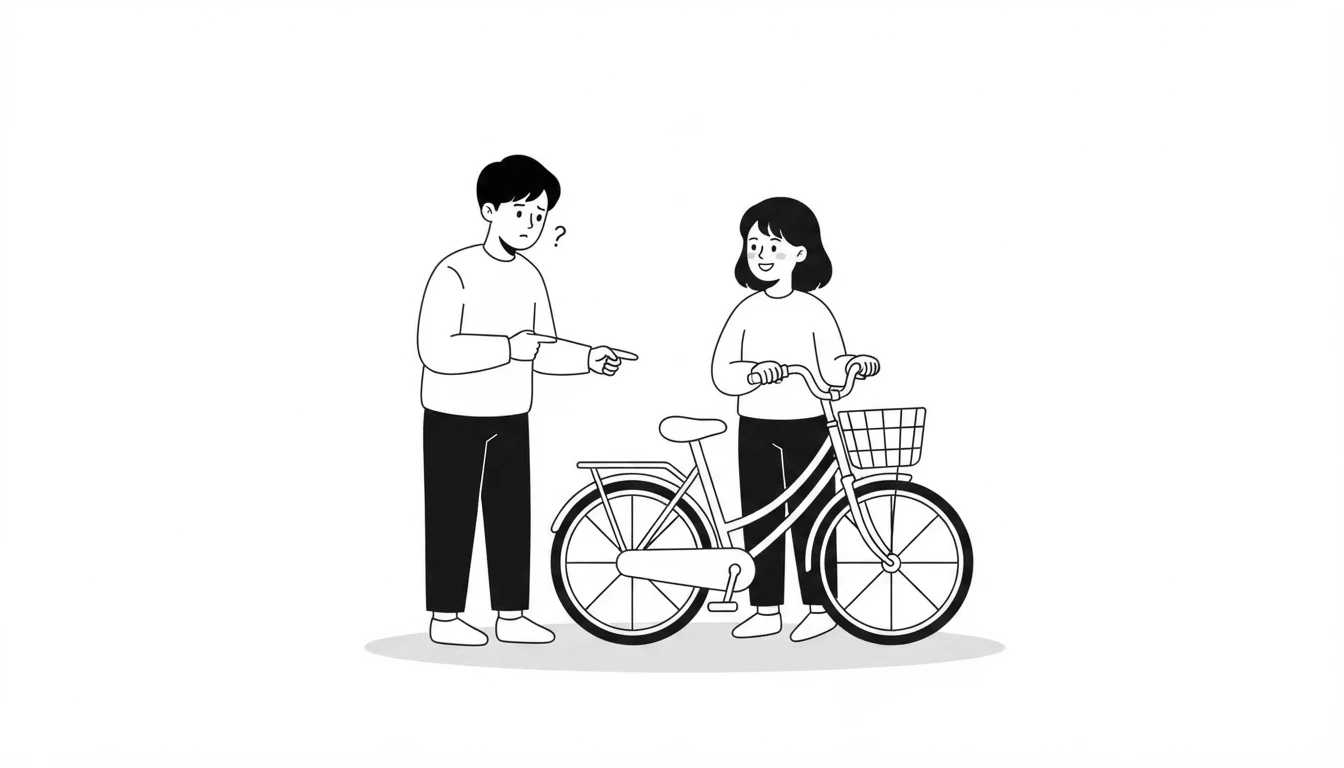
- Laura’s car (el coche de Laura)
- my mother’s birthday (el cumpleaños de mi madre)
- the dog’s bed (la cama del perro)
Notice that the order is the opposite of Spanish. In Spanish the thing comes first and the owner second («el coche de Laura»); in English the owner comes first (Laura’s car). It’s the same logic as possessive adjectives: my car, her car, Laura’s car. If you want to review them, they’re all in my post on pronouns in English.
Another important point: the thing owned has no article. You say Laura’s car, never Laura’s the car or the Laura’s car.
How to form the Saxon genitive
It all depends on how the owner ends. This table sums up the rules:
| Owner | Rule | 🇬🇧 Example | 🇪🇸 Translation |
|---|---|---|---|
| Singular | + ‘s | my brother’s room | la habitación de mi hermano |
| Regular plural (ends in -s) | + ‘ (apostrophe only) | my brothers’ room | la habitación de mis hermanos |
| Irregular plural (doesn’t end in -s) | + ‘s | the children’s toys | los juguetes de los niños |
| Name ending in -s | + ‘s or just ‘ | James’s car / James’ car | el coche de James |
Singular: ‘s
With one owner, just add ‘s:
- This is Peter’s laptop.
- My boss’s office is on the second floor.
- The cat’s food is in the kitchen.
Look at boss’s: even though boss already ends in s, it’s singular, so it takes the full ‘s. It’s pronounced /ˈbɒsɪz/, with an extra syllable.
Regular plural: apostrophe only
If the owner is a normal plural that already ends in s, you only add the apostrophe after that s:
- My parents’ house is near the beach.
- The students’ results will be ready on Friday.
- The teachers’ room is on the left.
Here’s one of the strangest traps in English: my sister’s room and my sisters’ room sound exactly the same. Only the apostrophe tells you whether there’s one sister or several, so in Writing it’s worth checking carefully where you put it.
Irregular plural: ‘s
Plurals that don’t end in s (children, men, women, people, mice…) behave like a singular and take ‘s:
- The children’s toys are everywhere.
- The women’s changing room is upstairs.
- Other people’s opinions are important too.
If you’re not sure what the plural of a word is, have a look at my post on irregular plurals in English. And remember: childrens’ doesn’t exist.
Names ending in -s
Here you have two options and both are correct: James’s car or James’ car, Charles’s wife or Charles’ wife. Today ‘s is the most common choice, and it also reflects the pronunciation (/ˈdʒeɪmzɪz/). Pick one and stick to it throughout your text.
With historical or classical names, people usually add only the apostrophe: Jesus’ teachings, Socrates’ ideas.
The Saxon genitive with more than one owner
When there are two owners, the key is whether they share the thing or each has their own:
- They share it: the ‘s goes only at the end. Emma and Jack’s flat (they live together).
- Each has their own: the ‘s goes on both. Emma’s and Jack’s phones (Emma’s phone and Jack’s phone).
If you need two genitives in a row, English simply lines them up: my brother’s wife’s car. It’s correct, but if it sounds too heavy you can rephrase it: the car that belongs to my brother’s wife.
‘s or of? When to use each one
This is the big question. The general rule is simple:
| Use ‘s with… | Use of with… |
|---|---|
| People: my friend’s party | Things and objects: the leg of the table |
| Animals: the dog’s tail | Parts of something: the top of the page, the end of the film |
| Time expressions: today’s news | Long owners: the house of the man who lives next door |
| Countries, cities and organisations: Spain’s economy, the company’s profits | Quantities and contents: a cup of tea, a piece of cake |
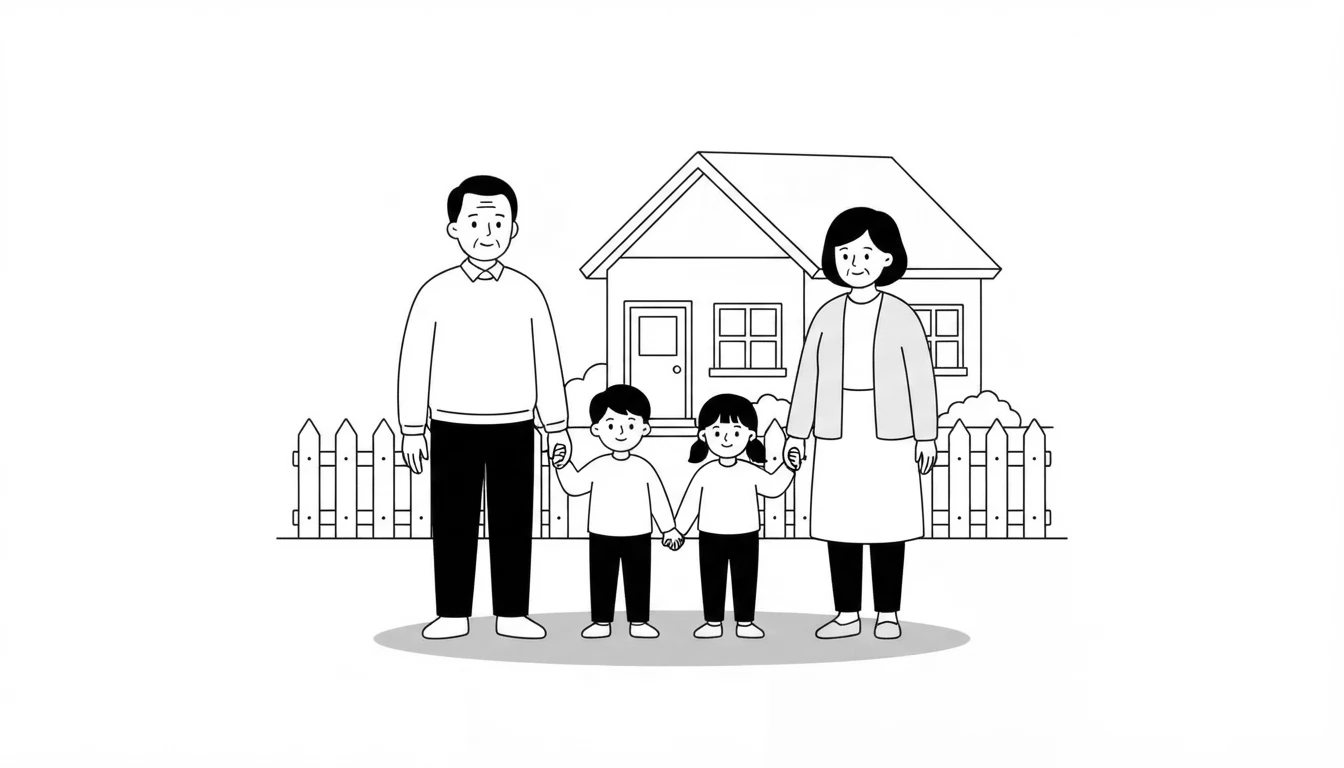
With people, of sounds very forced: the car of my father is understandable, but nobody says it. The natural option is my father’s car.
With things, on the other hand, ‘s sounds odd: the table’s leg isn’t a serious mistake, but the normal choice is the leg of the table or, even better, a compound noun: the table leg. The same goes for the door handle, the car keys or the kitchen window.
With countries, cities, companies and organisations both work, although ‘s is very common in the press: Spain’s capital or the capital of Spain, the government’s decision or the decision of the government.
And when the owner is very long, of is almost compulsory, because the ‘s would get lost: the house of the man who sold us the car sounds much better than the man who sold us the car’s house.
Special uses of the Saxon genitive
Time and distance
The genitive is very common with time words, even when there’s no real «possession»:
- today’s newspaper
- yesterday’s match
- last year’s holiday
- a week’s holiday
- two hours’ drive
- in a month’s time
Look at two hours’: since hours is a regular plural, it only takes an apostrophe. You can also say a two-hour drive, with no apostrophe and hour in the singular, because there it works as an adjective.
Places: at the doctor’s, at my aunt’s
This use confuses my students a lot. In English you can use the genitive without the noun after it when it’s clear we mean a shop, a surgery or someone’s home:
- I’m at the doctor’s. (at the doctor’s surgery)
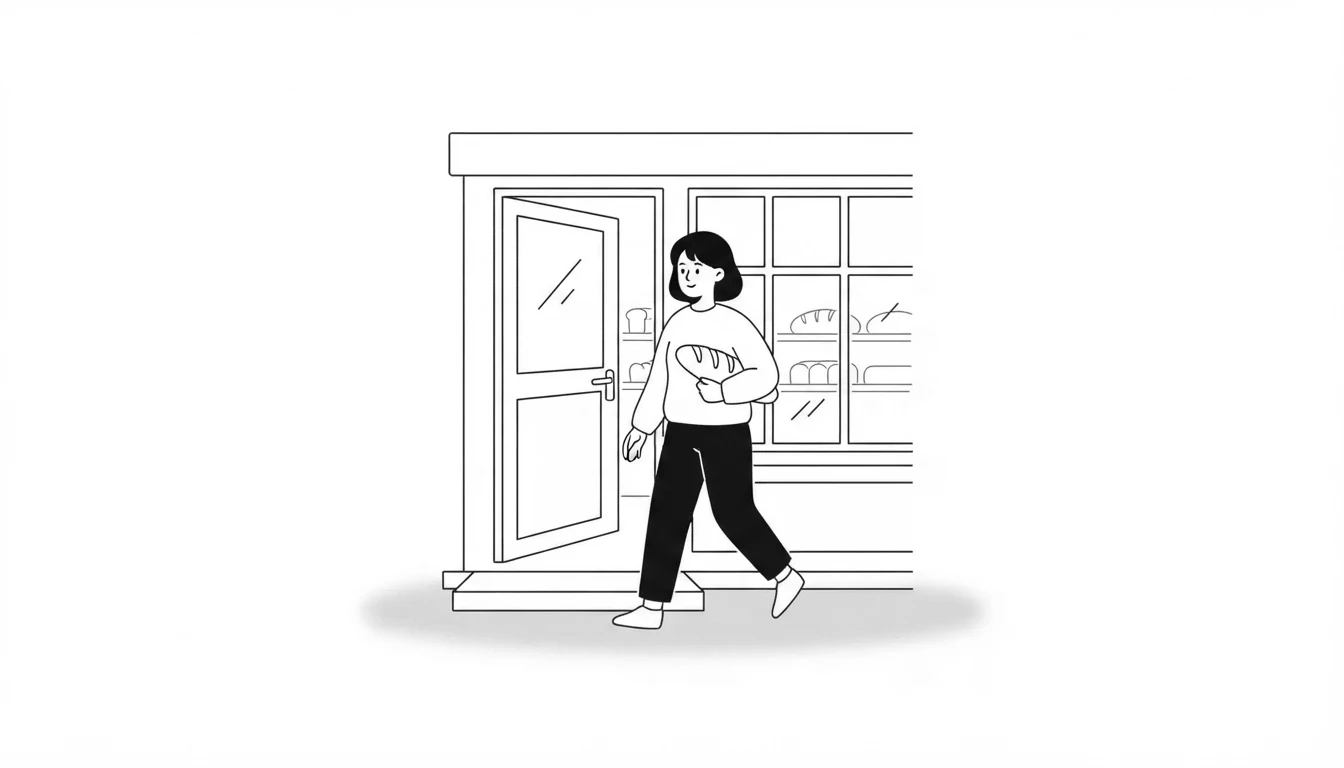
- I bought some bread at the baker’s.
- We’re staying at my aunt’s this weekend. (at my aunt’s house)
- Let’s meet at Laura and Dan’s.
That’s why so many shops and restaurants have a genitive in their name: McDonald’s, Sainsbury’s, Harrods (which lost its apostrophe over time). In British English it’s perfectly normal to say at the butcher’s, at the hairdresser’s or at the dentist’s.
The double genitive: a friend of mine
When you want to say «un amigo mío» or «una prima de mi hermana», English uses of and a possessive at the same time:
- She’s a friend of mine.
- He’s a colleague of my sister’s.
- Is Tom a friend of yours?
Careful: it’s a friend of mine, never a friend of me. With names you can use the double genitive (a friend of Tom’s) or not (a friend of Tom); in practice, the first is more common.
When ‘s isn’t a genitive: its, it’s and friends
Not every ‘s is a genitive. Sometimes it’s the short form of is or has, and that causes lots of mistakes in writing:
- Laura’s car is red. → genitive.
- Laura’s tired. → Laura is tired.
- Laura’s finished. → Laura has finished.
And the trickiest case of all: its and it’s. Its (no apostrophe) is the possessive of it; it’s (with an apostrophe) is it is or it has. It may seem illogical, but possessives never take an apostrophe: its, his, hers, ours, yours, theirs.
- The dog is wagging its tail.
- It’s my brother’s birthday tomorrow.
Something similar happens with your and you’re, which I explain in my post on the difference between your and you’re.
Common mistakes with the Saxon genitive
| ❌ Incorrect | ✅ Correct | Why |
|---|---|---|
| The car of my father is blue. | My father’s car is blue. | With people, ‘s is better than of. |
| This is the Maria’s book. | This is Maria’s book. | No article before the owner. |
| My friends’s house | My friends’ house | Regular plural: apostrophe only. |
| The childrens’ room | The children’s room | Irregular plural: ‘s. |
| The leg’s table | The table leg / the leg of the table | The owner comes first, and with things of or a compound is better. |
| She’s a cousin of me. | She’s a cousin of mine. | Double genitive with a possessive pronoun. |
| The dog wags it’s tail. | The dog wags its tail. | Possessive its has no apostrophe. |
| I bought it in the baker. | I bought it at the baker’s. | Genitive for places. |
| Emma’s and Jack’s flat (one shared flat) | Emma and Jack’s flat | If they share it, ‘s only at the end. |
| Apple’s are cheap today. | Apples are cheap today. | A normal plural has no apostrophe. |
That last mistake even has a name in English: the greengrocer’s apostrophe, because it was so common on greengrocers’ signs (potato’s, banana’s). If a word is simply plural and doesn’t own anything, it has no apostrophe.
The Saxon genitive in the Cambridge exams
The Saxon genitive is A1 and A2 grammar, so in A2 Key and B1 Preliminary it’s taken for granted. Where it shows most is in Writing: the house of my friend or a misplaced its won’t make you fail, but they cost marks on the Language scale and make your level look lower.
In B2 First and C1 Advanced it appears in Use of English, especially Part 4 (key word transformations), where you sometimes have to switch from a structure with of to one with ‘s, or use expressions like two hours’ drive, at my cousin’s or a friend of hers. And in Reading, telling Laura’s tired apart from Laura’s car saves you more than one misunderstanding.
Frequently asked questions about the Saxon genitive
Why is it called the Saxon genitive?
Because it comes from Old English, the language of the Anglo-Saxons, which had cases like Latin. The genitive case, which expressed possession, was often formed with the ending -es. Over time the e was lost and the apostrophe took its place: that’s where today’s ‘s comes from.
Can you use the Saxon genitive with things?
Yes, but carefully. With time expressions (today’s news), with countries, cities and organisations (London’s museums) and with some fixed expressions (the earth’s surface, for goodness’ sake) it’s completely normal. With concrete objects, of or a compound noun sounds better.
Is it James’s or James’?
Both are correct. James’s is the most common today and reflects the pronunciation. What matters is that you choose one and stick to it.
How do you pronounce ‘s?
Like the plural s: /s/ after voiceless sounds (Mark’s), /z/ after voiced sounds (John’s) and /ɪz/ after /s/, /z/, /ʃ/, /tʃ/ or /dʒ/ (George’s, the boss’s). The apostrophe of regular plurals isn’t pronounced: parents’ sounds the same as parents.
What’s the difference between whose and who’s?
Whose is the possessive of who (Whose bag is this?) and who’s is who is or who has. It’s the same problem as its and it’s. If you want to see how whose works in relative clauses, have a look at my post on relative clauses.
Saxon genitive exercises
Let’s see how you do: thirty sentences with apostrophes, plurals and the odd of. Below you have three interactive exercises that mark themselves, so you’ll know straight away how you’ve done.
And if you’d like these exercises as text to copy, paste or adapt for your classes, here they are below with the answers 👇
Exercise 1: choose the correct option
Choose the correct option to complete each sentence.
- This is (my sister’s / my sisters) bike.
- The (children’s / childrens’) toys are everywhere.
- I can’t come now. I’m at the (doctor’s / doctor).
- My (parents’ / parent’s) house is near the beach. They bought it in 1995.
- Have you read (today’s newspaper / the newspaper of today)?
- Write your name at the (top of the page / page’s top).
- Sarah is a friend of (Tom / Tom’s).
- The dog is wagging (its / it’s) tail.
- (Emma and Jack’s / Emma’s and Jack’s) flat is very big. They live together.
- It’s (two hours’ / two hour’s) drive from here.
Show answers
- my sister’s
- children’s
- doctor’s
- parents’
- today’s newspaper
- top of the page
- Tom’s
- its
- Emma and Jack’s
- two hours’
Exercise 2: complete with the possessive form
Complete each sentence with the possessive form of the word in brackets.
- This is _______________ (Peter) laptop.
- The _______________ (women) changing room is on the left.
- My _______________ (grandparents) farm is in Galicia.
- I’m staying at my _______________ (aunt) this weekend.
- Did you see _______________ (yesterday) match?
- _______________ (James) car is red.
- The _______________ (students) results will be ready on Friday.
- We had a _______________ (week) holiday in Italy.
- Is that your _______________ (brother) girlfriend?
- The _______________ (company) new office is in Madrid.
Show answers
- Peter’s
- women’s
- grandparents’
- aunt’s
- yesterday’s
- James’s / James’
- students’
- week’s
- brother’s
- company’s
Exercise 3: correct or incorrect?
Decide whether each sentence is correct. If it is incorrect, rewrite it correctly.
- The car of my father is blue.
- I bought some bread at the baker’s.
- This is the book of Maria.
- My friends’s house is very big.
- Today’s lesson was really interesting.
- The leg’s table is broken.
- She is a cousin of me.
- The childrens’ room is upstairs.
- We spent the night at Laura and Dan’s.
- Its my brother’s birthday tomorrow.
Show answers
- My father’s car is blue.
- Correct
- This is Maria’s book.
- My friends’ house is very big.
- Correct
- The table leg is broken.
- She is a cousin of mine.
- The children’s room is upstairs.
- Correct
- It’s my brother’s birthday tomorrow.
Conclusion
Three ideas to take away from this post: the owner comes first (my father’s car, not the car of my father); the apostrophe goes after the whole word, so with a regular plural you only add the apostrophe (my parents’ house) and with an irregular plural, ‘s (the children’s room); and possessives never take an apostrophe (its, yours, theirs). With that and a bit of practice, the Saxon genitive is nothing to worry about.
If you want to keep going with basic grammar, I recommend my post on articles in English or the one on family vocabulary, which is the perfect place to practise the genitive (my mother’s sister is my aunt). Any questions? Write to me and I’ll help you.
Did you find this post useful? Share it with other English students and teachers. And if you want more content like this, subscribe to my newsletter and follow me on Facebook, Twitter, Pinterest, Instagram and YouTube.
See you in the next post. Until then, don’t forget to keep smiling! 🙂
