
Table of contents
The phone rings and your flatmate shouts from the shower: «Get the phone!». You answer: I’ll get it! A while later, you tell your mother you already have plans for the weekend: I’m going to visit my grandma. Two futures, two different forms, and for a Spanish speaker both look like «voy a hacer algo». But in English they are not interchangeable: will and going to say different things, and choosing well is one of the keys to sounding natural.
In this guide I explain the difference with a simple rule (two questions), when each one is used, the cases where both work, what happens with the present continuous, the typical mistakes of Spanish speakers, how it helps you in Cambridge and a villain against a hero (yes, really). At the end there are thirty practice sentences with answers. Let’s get started! 🙂
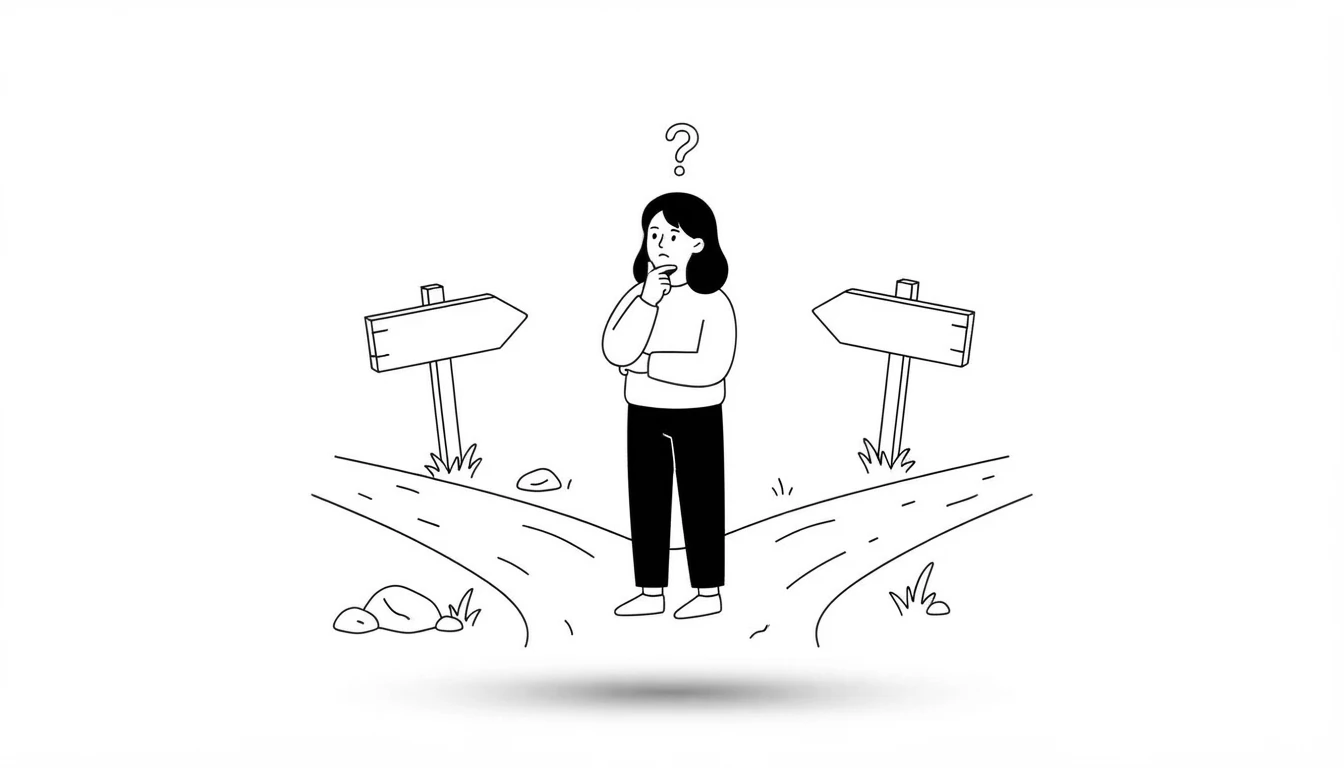
The difference in one sentence
| WILL | GOING TO | |
|---|---|---|
| The idea | I decide now, or it is an opinion or a promise | I decided before, or there is evidence that it is going to happen |
| Example | Oh, it’s cold. I’ll close the window. | I’ve bought the tickets. I’m going to travel on Friday. |
| Prediction | I think it will rain. (Opinion.) | Look at those clouds! It’s going to rain. (Evidence.) |
| Spanish | «iré», «cerraré» (futuro simple) | «voy a viajar», «va a llover» (ir a + infinitivo) |
The two-question rule
When in doubt, ask yourself these two questions, in this order:
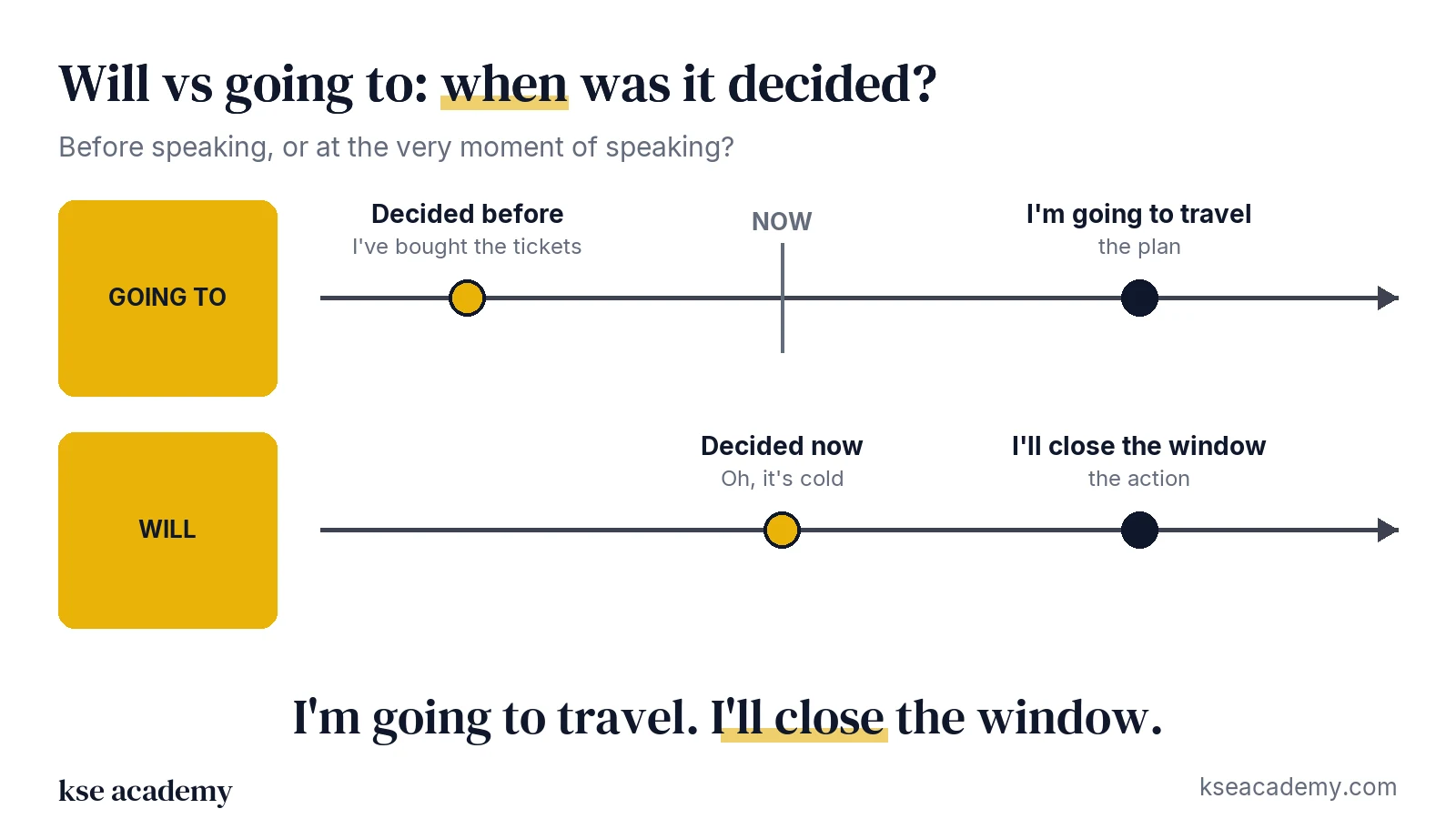
- Did I decide before speaking, or am I deciding right now? If you decided before → going to (or the present continuous). If you decide now → will.
- Is there something in front of me that shows it is going to happen? If there is (black clouds, a car out of control) → going to. If it is only your opinion or a guess (I think, probably) → will.
When WILL is used
- Spontaneous decisions, made at the moment of speaking: The phone’s ringing. I’ll answer it.
- Offers: That bag looks heavy. I’ll carry it for you.
- Promises: I promise I won’t tell anyone.
- Predictions based on an opinion or a guess: I think she will win. It will probably be sunny tomorrow.
- Future facts that do not depend on anyone: The sun will rise at 7:15.
- Requests: Will you help me with this, please?
- Refusal in the negative: The car won’t start. (It refuses to start.)
When GOING TO is used
- Plans and intentions decided before: I’m going to study medicine. We’re going to move next year.
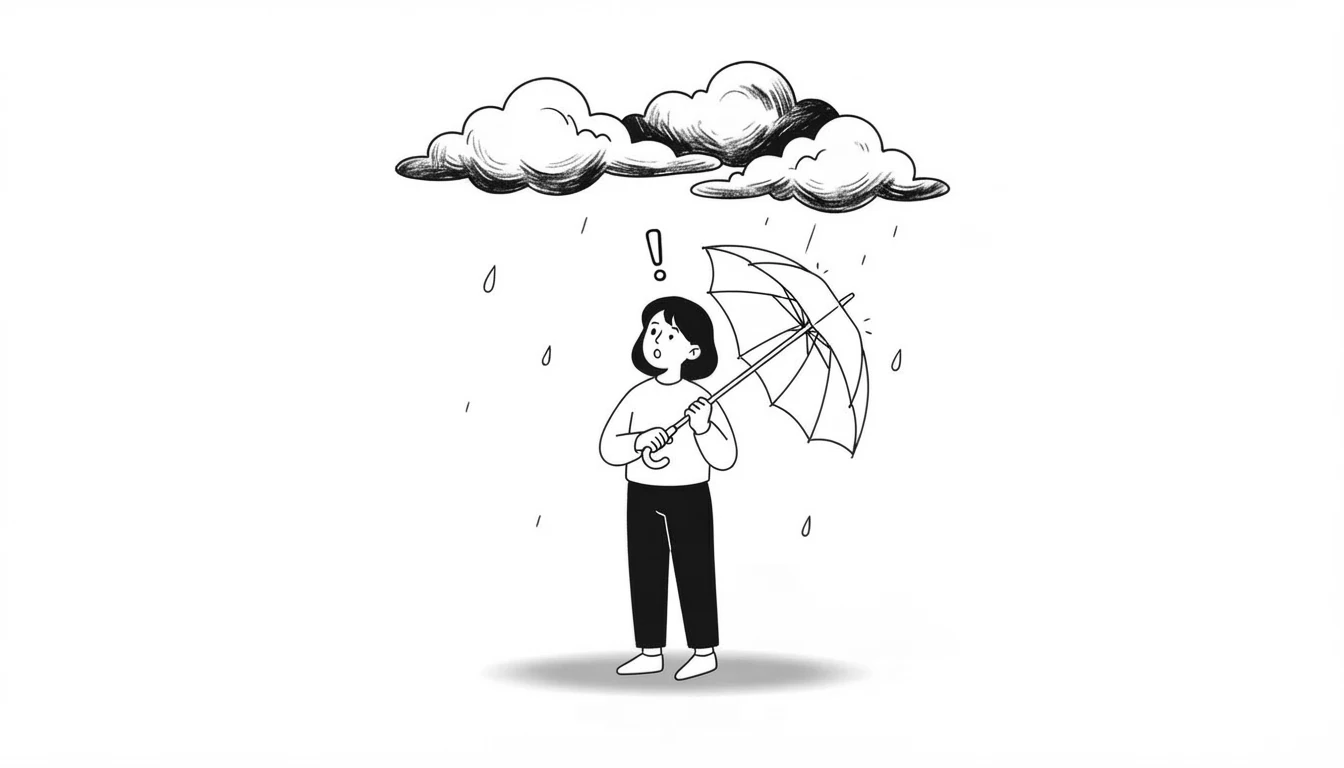
- Predictions based on what you see now: Watch out! You’re going to fall. / She’s pale. She’s going to faint.
- Things that are already under way: It’s going to be a long day. (You already know from how it started.)
Will or going to: pairs to compare
| Will (now) | Going to (before / with evidence) |
|---|---|
| «I’m hungry.» «I’ll make you a sandwich.» (I decide now.) | I’m going to make a cake for her birthday. (I had already thought about it.) |
| I think Spain will win the match. (Opinion.) | Spain are going to win. They’re 3-0 up. (Evidence.) |
| I’ll call you when I get there. (Promise.) | I’m going to call my mum later. (Intention.) |
| It will be cold tonight. (Opinion or general forecast.) | It’s going to be cold tonight: the sky is totally clear. (Evidence.) |
When both are fine
In many situations, above all in predictions without clear evidence, both forms are correct and the meaning hardly changes:
- I think it will be a great film. = I think it’s going to be a great film.
- Do you think they will win? = Do you think they’re going to win?
It is not true either that will is for the distant future and going to for the near future. What counts is what you express (decision, plan, evidence), not when it will happen.
And the present continuous, where does it fit?
For arrangements made with someone or with a date (an appointment, a ticket, a booking) the present continuous is often used: I’m meeting Ana at 8. We’re flying to Rome on Friday. With going to you talk about the intention; with the present continuous, about the fact that it is already organised. You have the three forms together in my guide to the future in English: will, going to and the present continuous.
Questions and negatives
| Will | Going to | |
|---|---|---|
| Affirmative | I will help. / I’ll help. | I am going to help. / I’m going to help. |
| Negative | I won’t help. | I’m not going to help. |
| Question | Will you help? | Are you going to help? |
| Nuance of the question | A request: Will you help me? | A question about the plan: Are you going to help me? |
Villain versus hero: will and going to in action
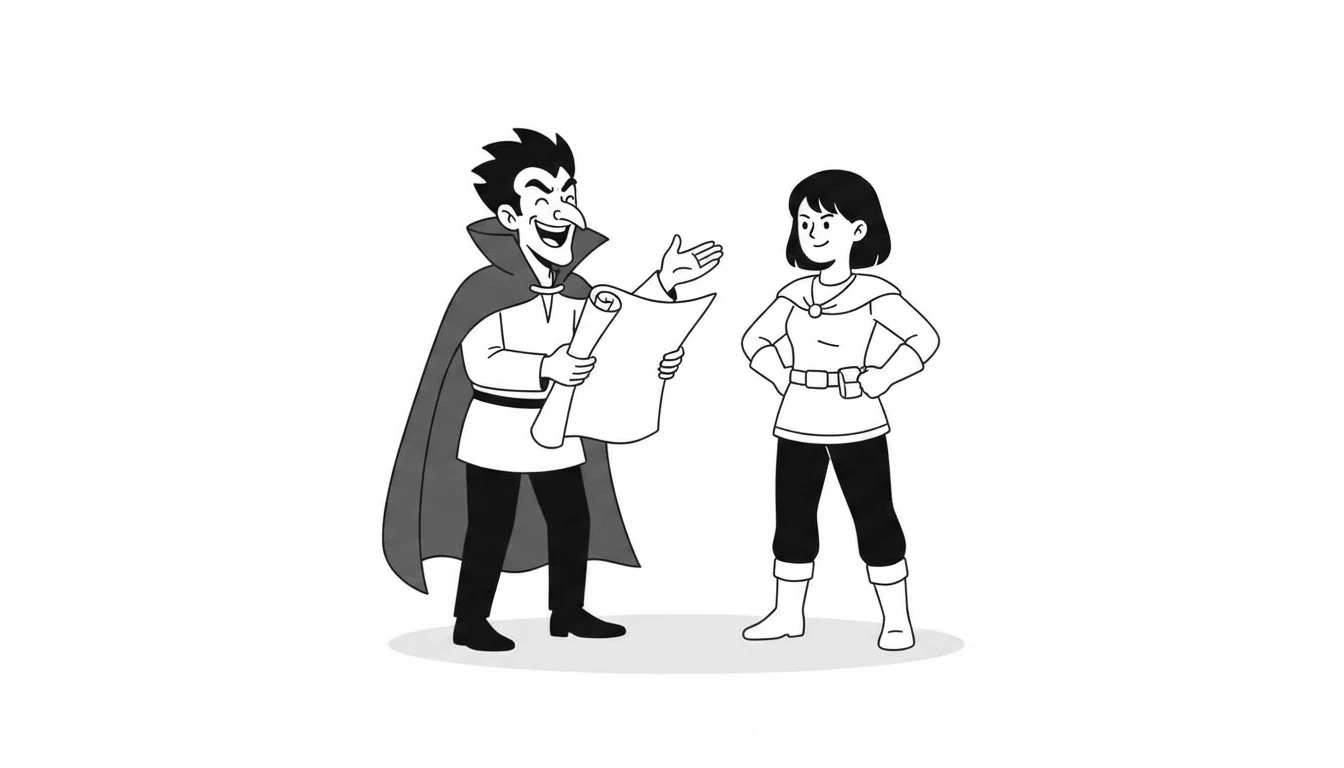
A fun way to remember it: the villain has a plan (going to) and the hero improvises (will):
| The villain (plan) | The hero (decision) |
|---|---|
| I’m going to take over the world. | Not if I can help it. I’ll stop you. |
| I’m going to steal the moon tonight. | I’ll call the police! |
| Look at my machine! It’s going to destroy the city. | Then I’ll switch it off. |
| Nobody is going to stop me. | I won’t let you. |
Common mistakes with will and going to
| ❌ Incorrect | ✅ Correct | Why |
|---|---|---|
| I have booked a hotel. I will go to Paris next week. | I have booked a hotel. I’m going to go to Paris next week. (or I’m going to Paris) | It is a plan already decided: going to or present continuous. |
| Look at that car! It will crash. | Look at that car! It’s going to crash. | There is evidence in front of you: going to. |
| I’m going to answer the phone. (the moment it rings) | I’ll answer the phone. | Spontaneous decision: will. |
| I will to help you. | I will help you. | After will, infinitive without to. |
| He will goes tomorrow. | He will go tomorrow. | After will, always the base verb. |
| When I will arrive, I’ll call you. | When I arrive, I’ll call you. | After when, if, as soon as: present. |
| She is going to goes to the party. | She is going to go to the party. | After going to, base verb. |
Will and going to in Cambridge exams
It is a pair that is tested from B1 Preliminary and keeps appearing at higher levels:
- Use of English (Part 4, key word transformations) in B2 First: with key words such as GOING or WILL.
- Speaking: talking about your plans and predictions («I think it will…», «I’m going to…») with the right form.
- Writing: in letters and emails (I’ll send it tomorrow, We’re going to visit…).
Two examples in the style of Use of English Part 4:
- I’ve decided to learn the guitar. GOING
I ______ learn the guitar. → am going to - Look at those black clouds. I’m sure it will rain soon. GOING
Look at those black clouds. It ______ rain soon. → is going to
Summary table: will or going to
| I want to… | I use | Example |
|---|---|---|
| Decide on the spot | will | I’ll get it. |
| Offer or promise | will | I’ll help you. I won’t be late. |
| Give an opinion about the future | will | I think it will be fine. |
| Talk about a plan already decided | going to | I’m going to move. |
| Predict with evidence in front of me | going to | It’s going to rain. |
| Talk about an arrangement already fixed | present continuous | I’m meeting her at 8. |
FAQ: will and going to
What is the difference between will and going to?
Will is for decisions at the moment, promises, offers and opinions about the future. Going to is for plans already decided and for predictions with evidence in front of you.
Can will be used for plans?
Better not, if the plan was already decided: going to or the present continuous is used. Will does work when you add an opinion: I think I’ll go to Rome.
Is it true that will is for the distant future and going to for the near future?
No. It does not depend on how far away the future is, but on what you express: a decision or an opinion (will) versus a plan or evidence (going to).
What does «gonna» mean?
It is the informal form of going to: I’m gonna call you. You hear it a lot, but it is not written in formal texts or in exams.
When is shall used?
Almost only in formal British English and in offers with I and we: Shall I open the window? In everyday English, will is the usual form.
Do you say «when I will arrive»?
No. After when, if, as soon as or before, the present: When I arrive, I’ll call you.
Will and going to exercises
Thirty sentences to check you have understood. Below you have three interactive exercises that mark themselves, so you will know straight away how you did.
And if you prefer a version in text that you can copy and paste, you have it down here 👇
Exercise 1: will or going to?
Choose the correct option to complete each sentence.
- «The phone’s ringing!» «I (will answer / am going to answer) it.»
- I’ve bought the tickets. We (will fly / are going to fly) to Rome on Friday.
- Look at those clouds! It (will rain / is going to rain).
- «I’m cold.» «I (will close / am going to close) the window.»
- She’s decided to study law. She (will be / is going to be) a lawyer.
- That bag looks heavy. I (will carry / am going to carry) it for you.
- Careful! You (will fall / are going to fall)!
- «What are your plans for tonight?» «I (will watch / am going to watch) a film with Sara.»
- I’m tired. I think I (will go / am going to go) to bed early.
- We’ve saved money for years: we (will buy / are going to buy) a house.
Show answers
- will answer
- are going to fly
- is going to rain
- will close
- is going to be
- will carry
- are going to fall
- am going to watch
- will go
- are going to buy
Exercise 2: complete the sentences
Complete each sentence with will (or won’t) or going to and the verb in brackets. Write only the missing words.
- «I’m thirsty.» «I _______________ (get) you some water.»
- Look at the sky! It _______________ (snow).
- He’s saved up for months. He _______________ (buy) a new bike.
- I promise I _______________ (not / be) late.
- «There’s no milk.» «I _______________ (go) to the shop.»
- They’ve booked a hotel. They _______________ (visit) Prague.
- I think the exam _______________ (be) easy.
- She’s wearing a wedding dress. She _______________ (get) married.
- «Can you help me?» «Of course, I _______________ (help) you.»
- We _______________ (not / move) house this year. We’ve changed our minds.
Show answers
- will get
- is going to snow
- is going to buy
- won’t be
- will go
- are going to visit
- will be
- is going to get
- will help
- aren’t going to move
Exercise 3: correct or incorrect?
Decide whether each sentence is correct. If it is incorrect, rewrite it correctly.
- Look at that car! It will crash.
- I’ll answer the phone!
- I have decided: I will study medicine.
- When I will arrive, I’ll call you.
- She is going to goes to the party.
- I think it will rain tomorrow.
- I will to help you.
- «It’s cold.» «I’ll close the window.»
- We are going to see the film tonight: we have already bought the tickets.
- He will goes tomorrow.
Show answers
- Look at that car! It’s going to crash.
- Correct
- I have decided: I’m going to study medicine.
- When I arrive, I’ll call you.
- She is going to go to the party.
- Correct
- I will help you.
- Correct
- Correct
- He will go tomorrow.
Conclusion
To sum up in three ideas: will is for decisions at the moment, offers, promises and opinions; going to is for plans already decided and predictions with evidence in front of you; and when in doubt, ask yourself two questions: did I decide it before? is there something in front of me that shows it?
If you want to continue with the future, see my guide to the future in English and the one on the future continuous. Do you have doubts about will and going to? Write to me and I will help.
Did you find this post useful? Share it with other English students and teachers. And if you want more content like this, subscribe to my newsletter and follow me on Facebook, Twitter, Pinterest, Instagram and YouTube.
See you in the next post. Until then, don’t forget to keep smiling! 🙂
