
Table of contents
If you’ve ever tried to describe your home in English, you’ve probably got stuck somewhere along the way. You start off well with kitchen and bedroom, but then you wonder whether the thing you keep your clothes in is a wardrobe or a cupboard, whether your flat is on the first floor or the second floor, or whether you should say house or home. And then there are the traps for Spanish speakers: a library isn’t a bookshop, a carpet isn’t a folder and a chalet isn’t what most Spaniards think it is.
Don’t worry, because in this post I’ll put it all in order for you. You’ll find how to say house and home in English (and when to use each one), the types of houses, the parts of the house, the rooms, the furniture and household objects in each room with their pronunciation, the differences between British and American English, the household chores, phrases to describe your home, the typical mistakes Spanish speakers make, how all this comes up in the Cambridge exams and, at the end, exercises with answers.
Let’s get started! 🙂
House or home? How to say «casa» in English
The first thing to know is that English has two words where Spanish has one, and they don’t mean exactly the same thing:
| 🇬🇧 English | Pronunciation | 🇪🇸 Spanish |
|---|---|---|
| house | /haʊs/ | casa (el edificio) |
| home | /həʊm/ | casa, hogar |
| flat | /flæt/ | piso |
| building | /ˈbɪldɪŋ/ | edificio |
| neighbour | /ˈneɪbə/ | vecino/a |
| neighbourhood | /ˈneɪbəhʊd/ | barrio |
The difference is simple: a house is the building, with its walls and its roof, while your home is the place where you live, whether it’s a house, a flat or a caravan. That’s why you can say I live in a flat, but it’s my home, but you can’t say I live in a house if you live in a flat.
And here comes the most useful part of the post, because it’s a mistake I hear in class all the time:
- Being at home: I’m at home (never in home or in house).
- Going home: I’m going home, with no to. The same goes for come home and get home: I got home at ten.
- Staying at home: I stayed at home, or simply I stayed in.
- At someone’s house: at my grandmother’s, at Laura’s (English usually drops the word house).
Types of houses in English
British English has a very precise vocabulary here, because most people in the UK live in houses rather than flats, which is the opposite of Spain:
| 🇬🇧 English | Pronunciation | 🇪🇸 Spanish |
|---|---|---|
| flat | /flæt/ | piso |
| block of flats | /ˌblɒk əv ˈflæts/ | bloque de pisos |
| studio flat | /ˈstjuːdiəʊ flæt/ | estudio |
| penthouse | /ˈpenthaʊs/ | ático (de lujo) |
| detached house | /dɪˈtætʃt haʊs/ | casa independiente, chalé |
| semi-detached house | /ˌsemidɪˈtætʃt haʊs/ | casa pareada |
| terraced house | /ˈterəst haʊs/ | casa adosada (en hilera) |
| bungalow | /ˈbʌŋɡələʊ/ | casa de una sola planta |
| cottage | /ˈkɒtɪdʒ/ | casita de campo |
| farmhouse | /ˈfɑːmhaʊs/ | cortijo, casa de labranza |
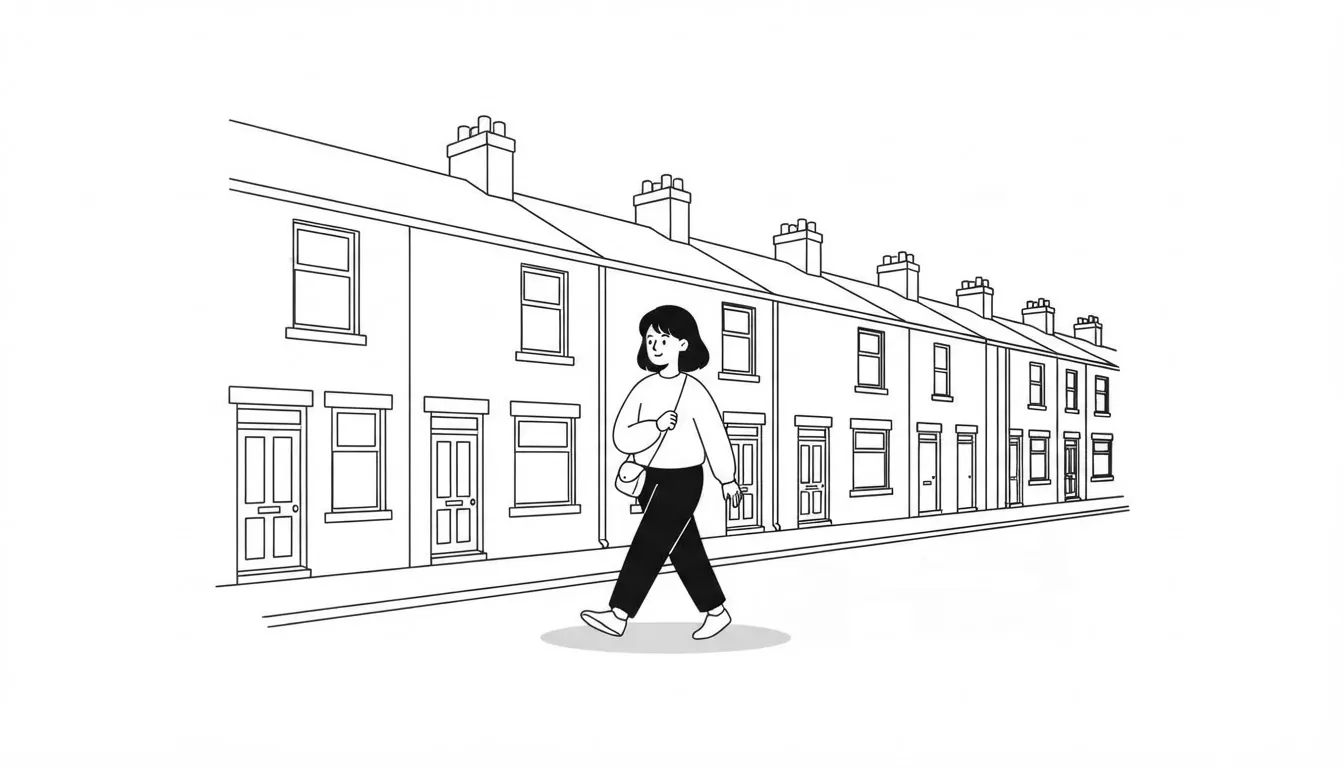
If you’ve seen any British film, terraced houses are those long rows of identical houses joined together, each with its own little front door and window. And a note for Spanish speakers: a Spanish chalé is a detached house in English. The word chalet does exist, but to a British person it’s a wooden house in the mountains, the kind you stay in on a skiing holiday. 🙂
Parts of the house in English
Now for the parts of the house: the things any home has inside and out.
| 🇬🇧 English | Pronunciation | 🇪🇸 Spanish |
|---|---|---|
| roof | /ruːf/ | tejado |
| wall | /wɔːl/ | pared, muro |
| floor | /flɔː/ | suelo; planta, piso |
| ceiling | /ˈsiːlɪŋ/ | techo (por dentro) |
| door | /dɔː/ | puerta |
| front door | /ˌfrʌnt ˈdɔː/ | puerta de la calle |
| window | /ˈwɪndəʊ/ | ventana |
| stairs | /steəz/ | escaleras |
| hall | /hɔːl/ | recibidor, entrada |
| corridor | /ˈkɒrɪdɔː/ | pasillo (at home, also hallway) |
| landing | /ˈlændɪŋ/ | rellano |
| lift | /lɪft/ | ascensor |
| basement | /ˈbeɪsmənt/ | sótano |
| attic | /ˈætɪk/ | desván, buhardilla (also loft) |
| chimney | /ˈtʃɪmni/ | chimenea (on the roof) |
| balcony | /ˈbælkəni/ | balcón |
| terrace | /ˈterəs/ | terraza |
| garden | /ˈɡɑːdn/ | jardín |
| garage | /ˈɡærɑːʒ/ | garaje |
| gate | /ɡeɪt/ | verja, cancela |
| fence | /fens/ | valla |
| doorbell | /ˈdɔːbel/ | timbre |
Two details cause a lot of confusion. First, Spanish has one word, techo, but English has two: the one inside is the ceiling and the one outside is the roof. Second, chimenea is also two words: the part on the roof where the smoke comes out is the chimney, and the place inside where you light the fire is the fireplace. Oh, and garage can also be pronounced /ˈɡærɪdʒ/: both are correct in British English.
Floors: ground floor, first floor…
You need to be crystal clear on this one, because it’s a mistake that changes the meaning:
- Street level: the ground floor in the UK, but the first floor in the US.
- One floor up: the first floor in the UK, but the second floor in the US.
- Above / below: upstairs / downstairs. My bedroom is upstairs.
- And with floors, the preposition is on: I live on the third floor.
In other words, the British system works like the Spanish one, and the American system is always one floor ahead. If you want to practise saying where things are, have a look at my post on there is and there are, which is exactly the structure you’ll need.
Rooms in the house in English
| 🇬🇧 English | Pronunciation | 🇪🇸 Spanish |
|---|---|---|
| room | /ruːm/ | habitación, cuarto (in general) |
| living room | /ˈlɪvɪŋ ruːm/ | salón (also lounge or sitting room) |
| kitchen | /ˈkɪtʃɪn/ | cocina |
| dining room | /ˈdaɪnɪŋ ruːm/ | comedor |
| bedroom | /ˈbedruːm/ | dormitorio |
| bathroom | /ˈbɑːθruːm/ | cuarto de baño |
| toilet | /ˈtɔɪlət/ | aseo; váter |
| study | /ˈstʌdi/ | despacho |
| spare room | /ˌspeə ˈruːm/ | habitación de invitados |
| utility room | /juːˈtɪləti ruːm/ | lavadero |
| storeroom | /ˈstɔːruːm/ | trastero (in a block of flats, storage room) |
| box room | /ˈbɒks ruːm/ | cuarto pequeño |
A quick note on room: Spanish speakers often use habitación to mean the bedroom, but in English a room is any room. If you mean the place where you sleep, say bedroom: My bedroom is small, but the living room is huge. And the box room deserves a mention: it’s that tiny extra bedroom so typical of British houses, often used as a study or for storing things.
Furniture and household objects in English
First of all, one key word: furniture /ˈfɜːnɪtʃə/. It’s uncountable, so it never takes an -s: a lot of furniture, some furniture. If you want to talk about just one item, say a piece of furniture. Now, room by room.
In the living room
| 🇬🇧 English | Pronunciation | 🇪🇸 Spanish |
|---|---|---|
| sofa | /ˈsəʊfə/ | sofá |
| armchair | /ˈɑːmtʃeə/ | sillón |
| coffee table | /ˈkɒfi ˌteɪbl/ | mesa baja, mesa de centro |
| bookcase | /ˈbʊkkeɪs/ | estantería, librería (el mueble) |
| shelf (plural shelves) | /ʃelf/ | estante, balda |
| carpet | /ˈkɑːpɪt/ | moqueta, alfombra grande |
| rug | /rʌɡ/ | alfombra (pequeña) |
| curtains | /ˈkɜːtnz/ | cortinas |
| cushion | /ˈkʊʃn/ | cojín |
| lamp | /læmp/ | lámpara |
| fireplace | /ˈfaɪəpleɪs/ | chimenea (inside) |
| radiator | /ˈreɪdieɪtə/ | radiador |
| plant | /plɑːnt/ | planta |
In the kitchen
| 🇬🇧 English | Pronunciation | 🇪🇸 Spanish |
|---|---|---|
| fridge | /frɪdʒ/ | nevera, frigorífico |
| freezer | /ˈfriːzə/ | congelador |
| cooker | /ˈkʊkə/ | cocina (el aparato) |
| oven | /ˈʌvn/ | horno |
| microwave | /ˈmaɪkrəweɪv/ | microondas |
| dishwasher | /ˈdɪʃwɒʃə/ | lavavajillas |
| washing machine | /ˈwɒʃɪŋ məˌʃiːn/ | lavadora |
| sink | /sɪŋk/ | fregadero |
| tap | /tæp/ | grifo |
| cupboard | /ˈkʌbəd/ | armario (de cocina) |
| worktop | /ˈwɜːktɒp/ | encimera |
| kettle | /ˈketl/ | hervidor de agua |
| toaster | /ˈtəʊstə/ | tostadora |
| frying pan | /ˈfraɪɪŋ pæn/ | sartén |
| saucepan | /ˈsɔːspən/ | cazo, cacerola |
Watch out for cupboard: the p is silent, so it sounds like /ˈkʌbəd/. And here’s a classic trap: the cooker is the appliance, while the person who cooks is a cook. Yes, the opposite of what you’d expect. 🙂 By the way, the kettle is sacred in any British home: no kettle, no tea. If you’d like to carry on with kitchen vocabulary, here’s my post on food in English.
In the bedroom
| 🇬🇧 English | Pronunciation | 🇪🇸 Spanish |
|---|---|---|
| bed | /bed/ | cama |
| pillow | /ˈpɪləʊ/ | almohada |
| sheets | /ʃiːts/ | sábanas |
| duvet | /ˈduːveɪ/ | edredón nórdico |
| blanket | /ˈblæŋkɪt/ | manta |
| wardrobe | /ˈwɔːdrəʊb/ | armario (de ropa) |
| chest of drawers | /ˌtʃest əv ˈdrɔːz/ | cómoda |
| drawer | /drɔː/ | cajón |
| bedside table | /ˈbedsaɪd ˌteɪbl/ | mesita de noche |
| mirror | /ˈmɪrə/ | espejo |
| alarm clock | /əˈlɑːm klɒk/ | despertador |
| desk | /desk/ | escritorio |
In the bathroom
| 🇬🇧 English | Pronunciation | 🇪🇸 Spanish |
|---|---|---|
| bath | /bɑːθ/ | bañera |
| shower | /ˈʃaʊə/ | ducha |
| washbasin | /ˈwɒʃbeɪsn/ | lavabo |
| toilet | /ˈtɔɪlət/ | váter, inodoro |
| towel | /ˈtaʊəl/ | toalla |
| toothbrush | /ˈtuːθbrʌʃ/ | cepillo de dientes |
| toothpaste | /ˈtuːθpeɪst/ | pasta de dientes |
| soap | /səʊp/ | jabón |
| shampoo | /ʃæmˈpuː/ | champú |
| toilet paper | /ˈtɔɪlət ˌpeɪpə/ | papel higiénico |
In everyday English, lots of people just call the washbasin the sink, the same word as in the kitchen. And notice that a bath is both the bathtub and the bath you have in it: I’m going to have a bath.
British and American English: the house
This is a topic where the two varieties differ quite a lot. My advice is to choose one and be consistent, but you should be able to recognise both:
| 🇬🇧 British English | 🇺🇸 American English | 🇪🇸 Spanish |
|---|---|---|
| flat | apartment | piso |
| ground floor | first floor | planta baja |
| garden | yard | jardín |
| tap | faucet | grifo |
| cooker | stove | cocina (aparato) |
| wardrobe | closet | armario (de ropa) |
| cupboard | cabinet | armario (de cocina) |
| lift | elevator | ascensor |
| bath | bathtub | bañera |
| rubbish | trash, garbage | basura |
| bin | trash can | cubo de la basura |
| hoover | vacuum cleaner | aspiradora |
| toilet | bathroom, restroom | aseo, servicio |
The last one deserves a comment: in the US, asking Where’s the toilet? sounds rather blunt, because toilet there mostly means the object itself. People usually say Where’s the bathroom?, even if there’s no bath in sight.
Household chores in English
To talk about housework (or household chores), you mainly need two verbs: do and make. And this is where almost everyone slips up, because Spanish uses hacer for both.
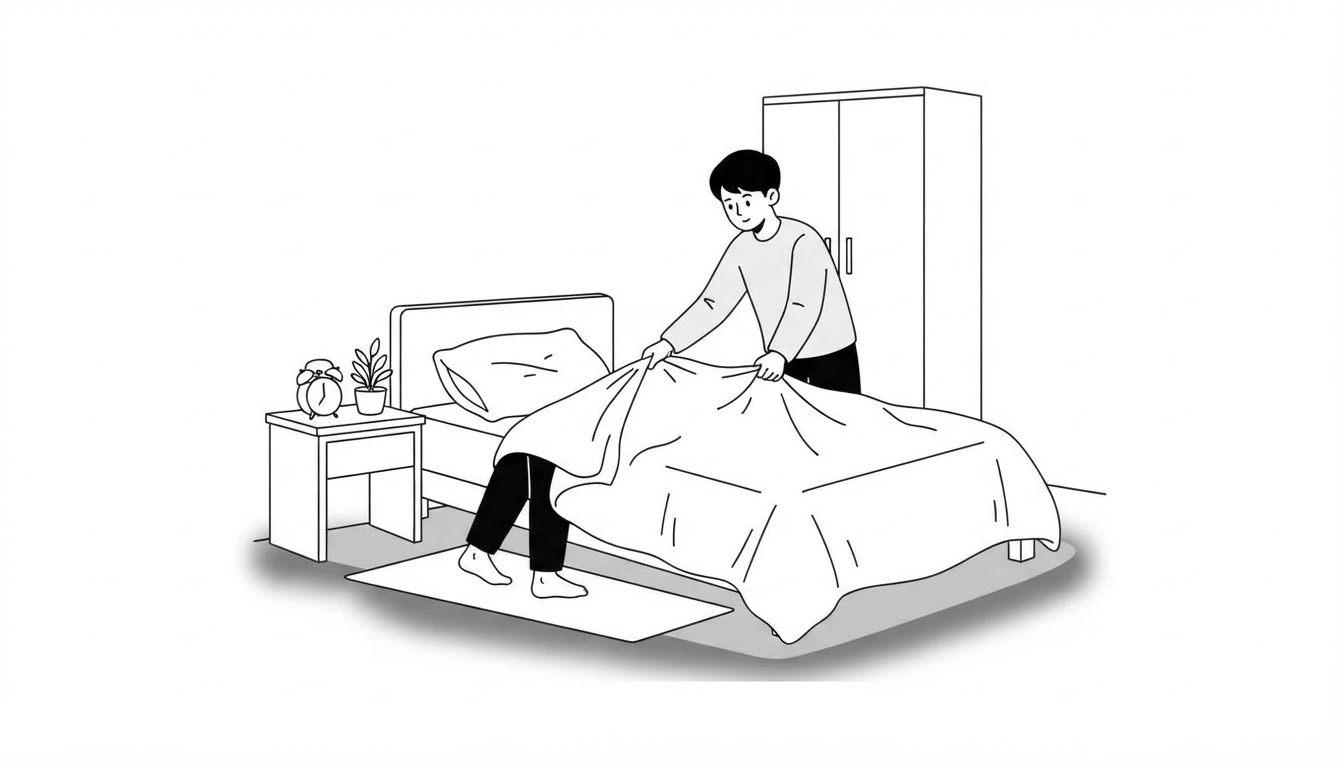
- do the washing-up: wash the dishes
- do the washing / do the laundry: wash the clothes
- do the ironing: iron the clothes
- do the cooking: cook the meals
- do the shopping: buy the food and things for the house
- do the hoovering / hoover: clean the floor with a vacuum cleaner
- make the bed: tidy the sheets and duvet after sleeping
- make dinner / make lunch: prepare a meal
- tidy (up) your room: put things back in their place
- clean the bathroom
- sweep / mop the floor: with a brush / with a mop and water
- dust: remove the dust from furniture
- take out the rubbish: put it in the big bin outside
- lay the table / clear the table: before and after a meal
- load / empty the dishwasher
- water the plants
Notice that washing the dishes is do the washing-up, not make, and that tidying your bed is make the bed, not do. There’s no perfect rule, so the best thing is to learn them as chunks. If you’d like many more, have a look at my posts on collocations with DO and collocations with MAKE. And to talk about your whole day, there’s my post on daily routines in English.
How to describe your home in English
With all the vocabulary above, all you need now is to put it together. These phrases will come in really handy:
- I live in a flat in the city centre.
- It’s on the fourth floor and there’s a lift.
- There are three bedrooms and two bathrooms.
- My favourite room is the living room because it’s very bright.
- We’ve got a small balcony with lots of plants.
- I share my bedroom with my sister.
- It’s a bit small, but it’s very cosy.
And some adjectives to describe it: big / small, spacious, bright / dark, cosy, modern / old, quiet / noisy, tidy / messy. And if you also want to talk about who lives with you, my post on family vocabulary in English has everything you need.
Typical mistakes Spanish speakers make
| ❌ Incorrect | ✅ Correct | Why |
|---|---|---|
| I’m in home. | I’m at home. | It’s always at home. |
| I go to home at six. | I go home at six. | Home takes no to after verbs of movement. |
| There are a lot of furnitures. | There’s a lot of furniture. | Furniture is uncountable. |
| We’ve got a library in the living room. | We’ve got a bookcase in the living room. | A library is a public building with books to borrow. |
| I keep my notes in a carpet. | I keep my notes in a folder. | A carpet covers the floor. |
| My kitchen is in the first floor. (meaning street level) | My kitchen is on the ground floor. | In the UK, street level is the ground floor, and floors take on. |
| I do the bed every morning. | I make the bed every morning. | It’s make the bed. |
| I make the washing-up. | I do the washing-up. | It’s do the washing-up. |
| Can you open the light? | Can you turn on the light? | Lights and appliances are turned on / off (or switched on / off). |
Library and carpet are textbook false friends. If you’re curious, my post on Spanish-English false friends has more than 60 of them.
The house in the Cambridge exams
In my experience as an exam trainer, the home is one of those topics that are almost guaranteed to come up at the lower levels, especially in A2 Key and B1 Preliminary:
- Speaking: in Part 1 of the A2 Key Speaking and the B1 Preliminary Speaking, it’s very common to be asked where you live or what your home is like. And the photos you have to describe often show kitchens, living rooms or people doing housework.
- Writing: in the A2 Key Writing, an email telling a friend about your new home or inviting them to visit is practically a classic. At B1, the topic also appears in emails and stories.
- Reading and Listening: adverts for flats to rent, conversations about moving house or someone explaining where things are in a home.
Typical Speaking questions
- Where do you live?
- Do you live in a house or a flat?
- Tell me about your home.
- What’s your favourite room in your home? Why?
- Do you help with the housework?
Sample Speaking answer
Here’s an answer to Tell me about your home, written to simulate an A2 level without reaching B1:
I live in a flat in Granada with my parents and my brother. It’s on the third floor and it’s quite big. There are three bedrooms, a bathroom, a kitchen and a living room. My favourite room is my bedroom because it’s very quiet and I can listen to music there. I’ve got a bed, a desk and a big wardrobe. At the weekend I help my mum: I make my bed and I do the washing-up.
Here’s why it works: it answers straight away (I live in a flat), uses on the third floor and there are correctly, names the rooms and furniture with simple, accurate vocabulary, gives a reason with because and gets make my bed and do the washing-up right, which is exactly where lots of candidates go wrong. For A2, it’s spot on. A B1 answer would go a step further, for example with a comparison or a past tense: We moved there two years ago and it’s bigger than our old flat.
Tips for learning house vocabulary
- Label your home. Stick notes with the English word on the fridge, the wardrobe or the mirror. You’ll see them twenty times a day and the words will stick without any effort.
- Learn room by room, as in this post, rather than from an alphabetical list.
- Describe your home out loud as you walk from one room to the next: This is the kitchen. There’s a fridge next to the window…
- Learn chores as chunks: do the washing-up, make the bed. Never the verb on its own.
- Watch property and home makeover programmes in English. British TV is full of them, and the vocabulary comes up again and again.
Frequently asked questions about the house in English
Is it a wardrobe, a cupboard or a closet?
It depends on what’s inside. Clothes go in a wardrobe (a closet in the US), while plates and food go in a cupboard (a cabinet in the US). One built into the wall is a built-in wardrobe.
Is it a flat or an apartment?
Both mean the same: flat is British and apartment is American. If you mean the level of a building, the word is floor: I live on the second floor.
What’s the difference between house and home?
A house is the building and your home is the place where you live. That’s why we say I’m at home or I’m going home, even if we live in a flat.
Is it a bookcase or a bookshelf?
A bookcase is the whole piece of furniture, and each level in it is a shelf. A bookshelf can be either. Never call it a library, which is a building where you borrow books.
Is it a bathroom or a toilet?
A bathroom has a bath or shower. A small room with just a toilet and a washbasin is a toilet (or, informally in the UK, the loo). In public places in the US, people say restroom.
House vocabulary exercises
Time to practise. Below you have three interactive exercises that mark themselves, so you’ll know straight away how you’ve done. Try to do them without looking back at the post.
And if you’d like these exercises as text to copy, paste or adapt for your classes, here they are below with the answers 👇
Exercise 1: choose the correct option
Choose the correct option to complete each sentence.
- I live in a (flat / floor) on the fourth floor.
- We keep the milk and the cheese in the (fridge / cooker).
- My clothes are in the (wardrobe / bookcase).
- Can you (do / make) the washing-up, please?
- I always (do / make) my bed before breakfast.
- In the UK, the (ground floor / first floor) is at street level.
- There’s a lot of (furniture / furnitures) in this room.
- I’m tired. I’m going (home / to home).
- Turn off the (tap / sink)! The water is running.
- Put your books on the (shelf / roof) above your desk.
Show answers
- flat
- fridge
- wardrobe
- do
- make
- ground floor
- furniture
- home
- tap
- shelf
Exercise 2: complete the sentences
Complete each sentence with one of these words. Use each word only once: attic, ceiling, curtains, dishwasher, garage, kettle, pillow, rubbish, stairs, towel.
- Dad always parks the car in the _______________.
- I boil some water in the _______________ to make a cup of tea.
- Can you close the _______________? The sun is too bright.
- After my shower, I dry myself with a big _______________.
- Our bedrooms are upstairs, so we go up the _______________ every night.
- Look! There’s a spider on the _______________, right above the bed!
- Don’t wash the plates by hand. Put them in the _______________.
- I can’t sleep without a soft _______________ under my head.
- We keep our old toys in boxes in the _______________, under the roof.
- Can you take out the _______________? The bin is full.
Show answers
- garage
- kettle
- curtains
- towel
- stairs
- ceiling
- dishwasher
- pillow
- attic
- rubbish
Exercise 3: correct or incorrect?
Decide whether each sentence is correct. If it is incorrect, rewrite it correctly.
- I’m at home now. Can I call you later?
- There are a lot of furnitures in my bedroom.
- We have a big library in the living room with all our books.
- My flat is on the third floor.
- Every Saturday I do the bed and tidy my room.
- I usually go to home by bus.
- My grandparents live in a small cottage in the country.
- My sister always makes the washing-up after dinner.
- Our kitchen is in the ground floor.
- Can you open the light, please?
Show answers
- Correct
- There is a lot of furniture in my bedroom.
- We have a big bookcase in the living room with all our books.
- Correct
- Every Saturday I make the bed and tidy my room.
- I usually go home by bus.
- Correct
- My sister always does the washing-up after dinner.
- Our kitchen is on the ground floor.
- Can you turn on the light, please?
Conclusion
As you can see, talking about your home in English is much more than knowing kitchen and bedroom. If you remember just the key points: you’re at home and you go home, with no to; furniture has no plural; street level in Britain is the ground floor; and you do the washing-up but make the bed. With that, and steering clear of the library and the carpet, you’ll describe your home better than most candidates.
Did you find this post useful? Share it with other English students and teachers. And if you want more content like this, subscribe to my newsletter and follow me on Facebook, Twitter, Pinterest, Instagram and YouTube.
See you in the next post. Until then, don’t forget to keep smiling! 🙂
