
Table of contents
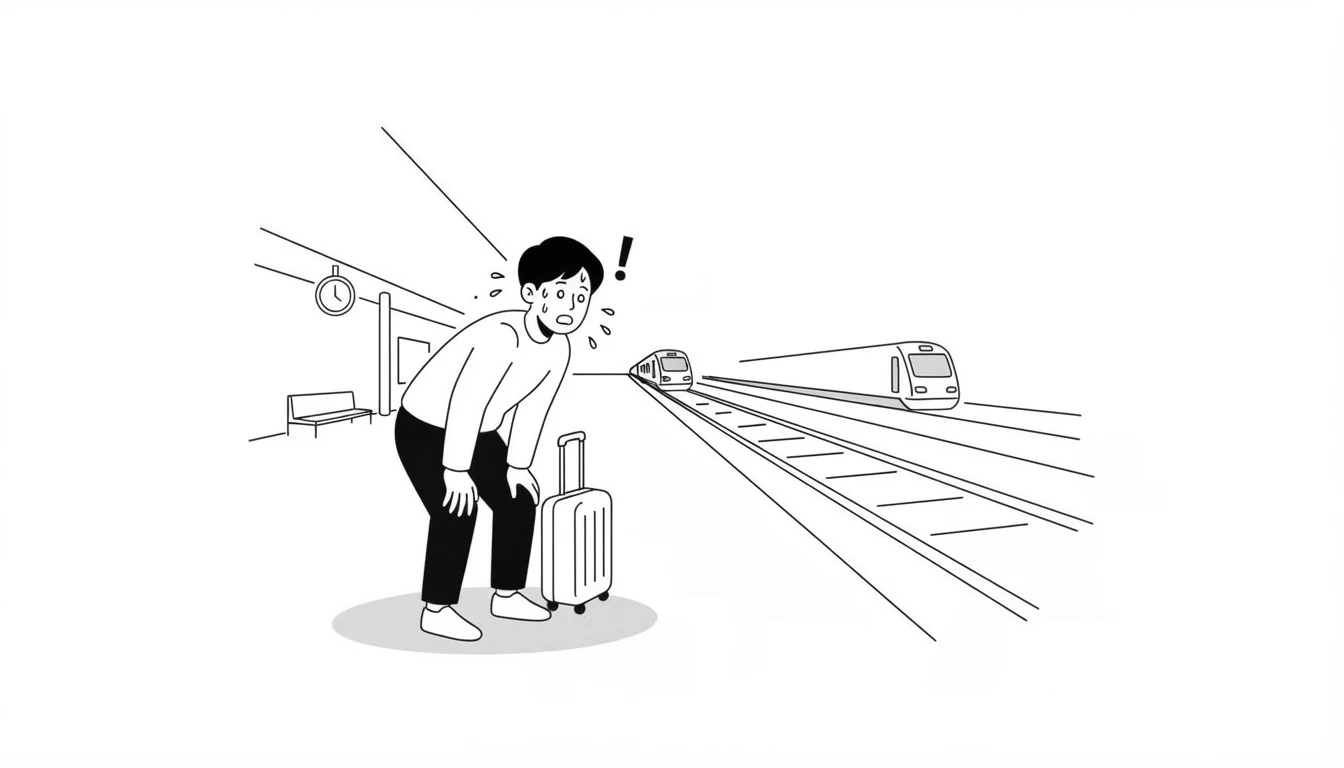
You arrive at the station running, suitcase dragging behind you and heart in your throat, and you watch the train pull out at the end of the platform. In English, that tragedy is told like this: The train had left when I arrived. That little word, had, is what makes the train leave before you got there. It is the past perfect, the tense we use to talk about the past of the past, and it is one of the most searched (and most feared) tenses in English grammar.
In Spanish you know it as the pretérito pluscuamperfecto («había salido», «habías comido»), and it is quite similar, but not quite the same. In this guide I explain how it is formed, when it is really used (and when it is not needed), how it differs from the past simple and the present perfect, the typical mistakes of Spanish speakers, how it helps you in Cambridge exams, and how to use it to tell stories and make excuses. There are also thirty practice sentences with answers. Let’s get started! 🙂
The past perfect at a glance
| Past perfect | |
|---|---|
| Form | had + past participle |
| What it is for | Talking about something that happened before another moment in the past |
| Example | When I arrived, the film had already started. |
| Spanish | pretérito pluscuamperfecto: «Cuando llegué, la película ya había empezado» |
| Words that go with it | already, just, yet, never, before, after, by the time, until, when |
What the past perfect is: the past of the past
Imagine you are telling a story in the past. Within that story, some things happened before others. To show which one came first, English uses two tenses: the past simple for the event that marks «the moment of the story» and the past perfect for the one that happened before that moment.
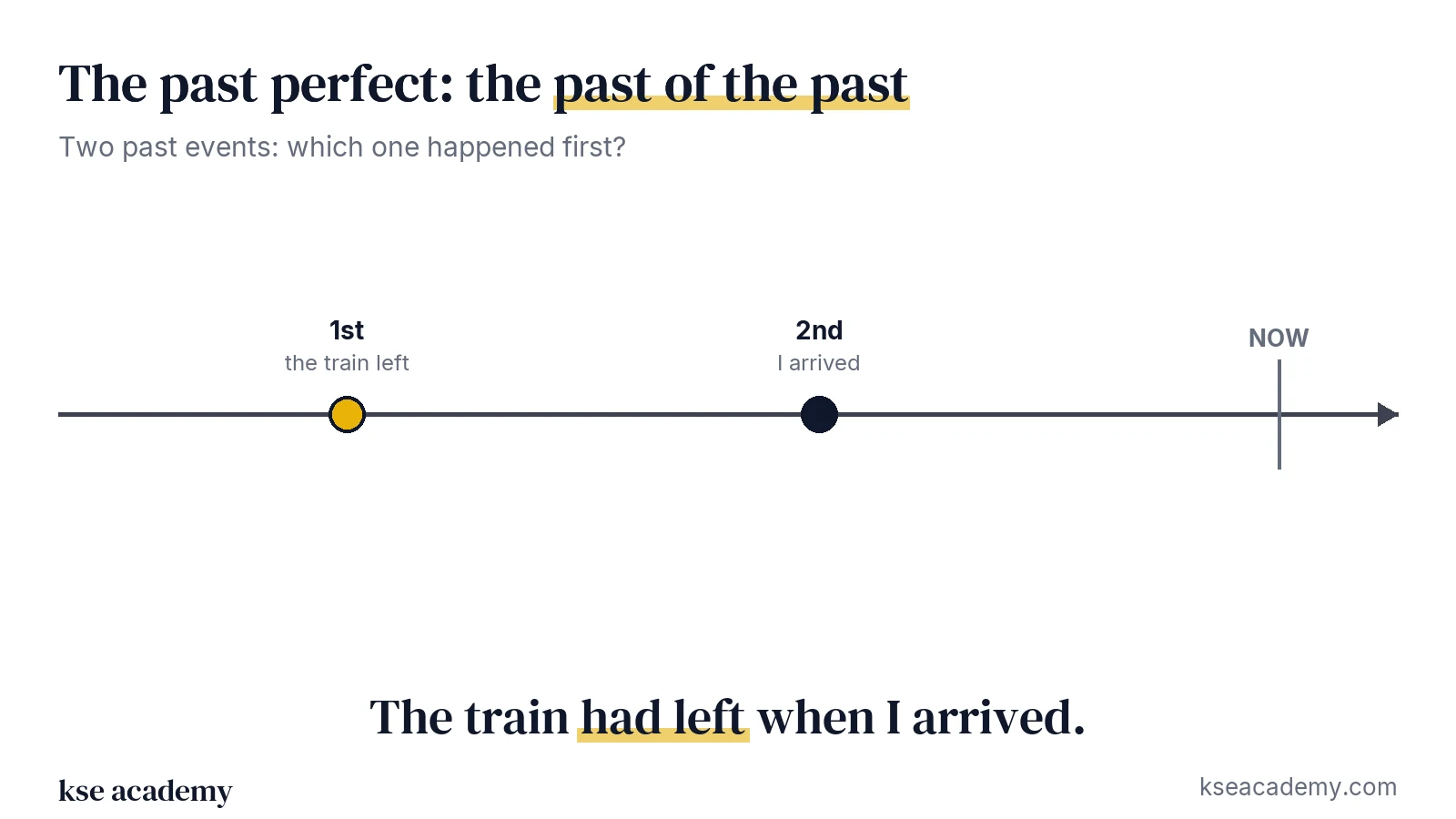
On the timeline, the past perfect always looks back from a point in the past (not from the present). That is why it is lovingly called «the past of the past».
How the past perfect is formed
The form is very easy: had + past participle. And had is the same for all persons (I, you, he, she, it, we, they), so there is nothing to conjugate.
Affirmative, negative and questions
| Form | Structure | Example |
|---|---|---|
| Affirmative | subject + had + participle | She had finished before I arrived. |
| Negative | subject + had not (hadn’t) + participle | She hadn’t finished when I arrived. |
| Question | Had + subject + participle…? | Had she finished when you arrived? |
| Question with a question word | question word + had + subject + participle…? | Why had she left so early? |
| Short answer | Yes, she had. / No, she hadn’t. | Had you seen it before? Yes, I had. |
Contractions: watch out for I’d
In spoken English and informal messages, had contracts to ‘d: I’d, you’d, she’d, they’d. Be careful, because ‘d can also be would. You will know from what comes next: if it is followed by a participle (I’d finished), it is had; if it is followed by an infinitive (I’d go), it is would.
| Full form | Contraction |
|---|---|
| I had finished | I’d finished |
| She had never been there | She’d never been there |
| They had not seen it | They hadn’t seen it |
In fast speech, had sounds weak, like /əd/ or /d/ (it is a function word: I explain it in the guide to the schwa and weak forms). That is why I had finished sounds almost like «aid finished».
The participle: regular and irregular
Regular verbs form the participle with -ed (worked, finished, arrived), just like their past simple. Irregular verbs have their own form, the third column of the list: go → gone, eat → eaten, see → seen, write → written, break → broken. If you do not know them, I have a list of irregular verbs with pronunciation and a downloadable PDF. One detail that confuses people: in some verbs the past and the participle are the same (had, made, found) and in others they are not (did / done, went / gone, saw / seen). In the past perfect you always use the participle.
| Infinitive | Past simple | Participle | Past perfect |
|---|---|---|---|
| finish | finished | finished | had finished |
| go | went | gone | had gone |
| eat | ate | eaten | had eaten |
| see | saw | seen | had seen |
| take | took | taken | had taken |
| be | was / were | been | had been |
When the past perfect is used
1. An action before another past action
This is the classic use. There are two past events and you want to make clear which one happened first:
- When I got to the cinema, the film had already started. (The film started first; then I arrived.)
- She was upset because her brother had eaten her sandwich. (He ate it first; then she got upset.)
- By the time we found a parking space, the concert had begun.
2. To explain a cause or a reason
We use it to say why something happened, by referring to what had happened before:
- He couldn’t get into his flat because he had lost his keys.
- I was exhausted. I hadn’t slept for two days.
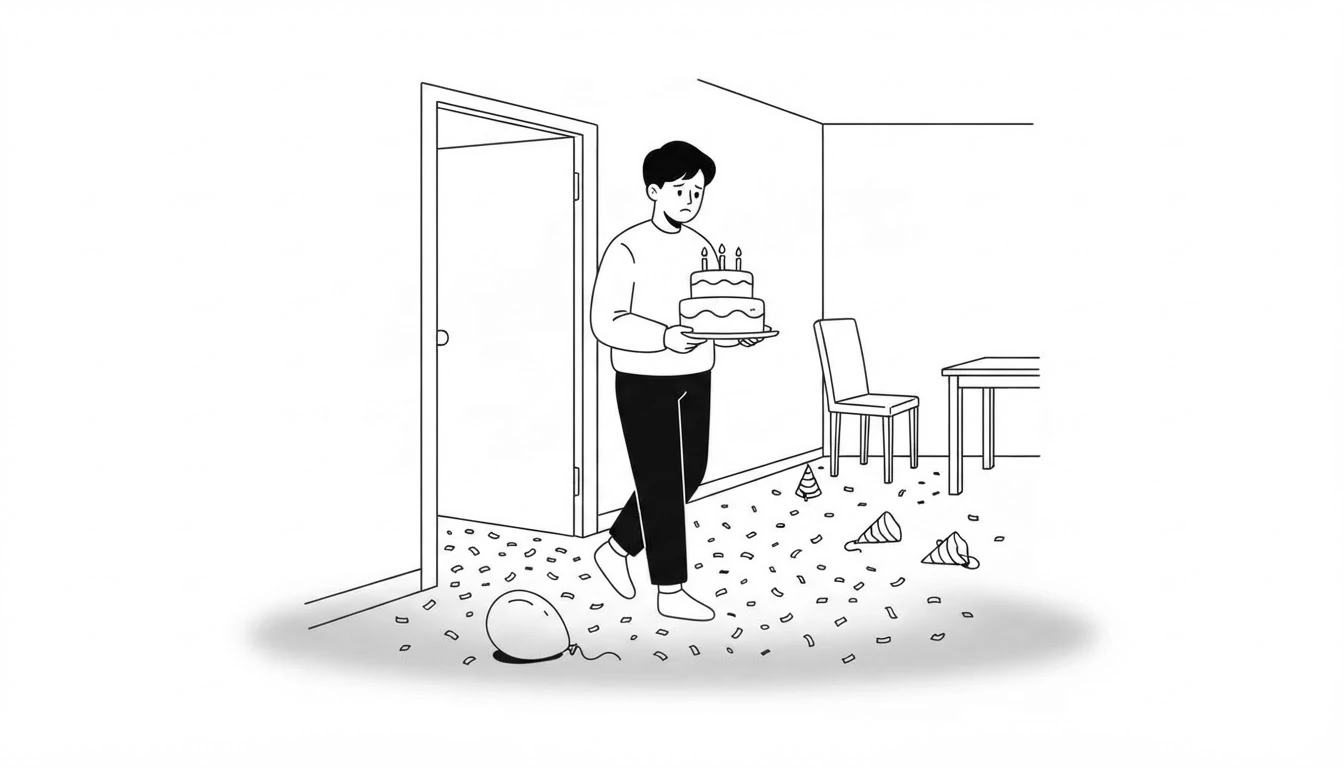
- The kitchen was a mess: someone had cooked a four-course meal and left everything on the counter.
3. In reported speech
When you report what someone said in the past, the present perfect and the past simple of their words «step back» to the past perfect:
- «I have finished.» → She said she had finished.
- «I saw him yesterday.» → He told me he had seen him the day before.
I cover it in depth in my guide to reported speech.
4. The third conditional and wish
To talk about past situations that can no longer be changed (what «would have» happened if…):
- If I had known, I would have come.
- If she had studied more, she would have passed.
- I wish I had taken that job.
- He talks as if he had been there.
See all the conditionals in the guide to conditional sentences.
5. To tell stories
In a narrative, the past simple carries the thread of what happens, and the past perfect gives the previous background: what had already happened when the scene begins. It is very useful in Writing and Speaking:
It was a cold night in December. Maria had been planning the trip for months, but when she got to the airport, she realised she had left her passport at home.
Words and expressions that go with the past perfect
| Word | What it shows | Example |
|---|---|---|
| already | by then (earlier than expected) | The shop had already closed. |
| just | only a moment before | I had just sat down when the phone rang. |
| yet | until then (in negatives and questions) | They hadn’t arrived yet. |
| never / ever | never / ever, up to that moment | I had never seen snow before. |
| before | earlier | I had met her before. |
| after | afterwards | After he had eaten, he went out. |
| by the time | at the point when | By the time we arrived, they had left. |
| until / till | up to the point when | He didn’t leave until he had finished. |
| when / as soon as | when / the moment that | When he had read the letter, he called her. |
| for / since | for how long, up to then | They had lived there for ten years when they moved. |
| no sooner… than, hardly… when (C1) | immediately after | No sooner had she sat down than the phone rang. |
Past perfect versus past simple: when it is NOT needed
Here is the opposite mistake to the usual one: using the past perfect everywhere. If the order of the actions is already clear, English uses the past simple. Compare:
| Situation | Sentence | Why |
|---|---|---|
| The order cannot be worked out | When I arrived, the train had left. | The train left before I arrived. With left you would understand it left at the moment I arrived. |
| The order is clear from before or after | After I finished my homework, I went out. / After I had finished… | Both are correct: after already makes the order clear. |
| Actions in sequence, one after the other | I got up, had breakfast and left. | It is a chain of actions: past simple for all. |
| A single past action | I visited Rome last year. | There is no «past of the past»: past simple. |
To review the past simple, see my guide to the Past Simple.
Past perfect versus present perfect
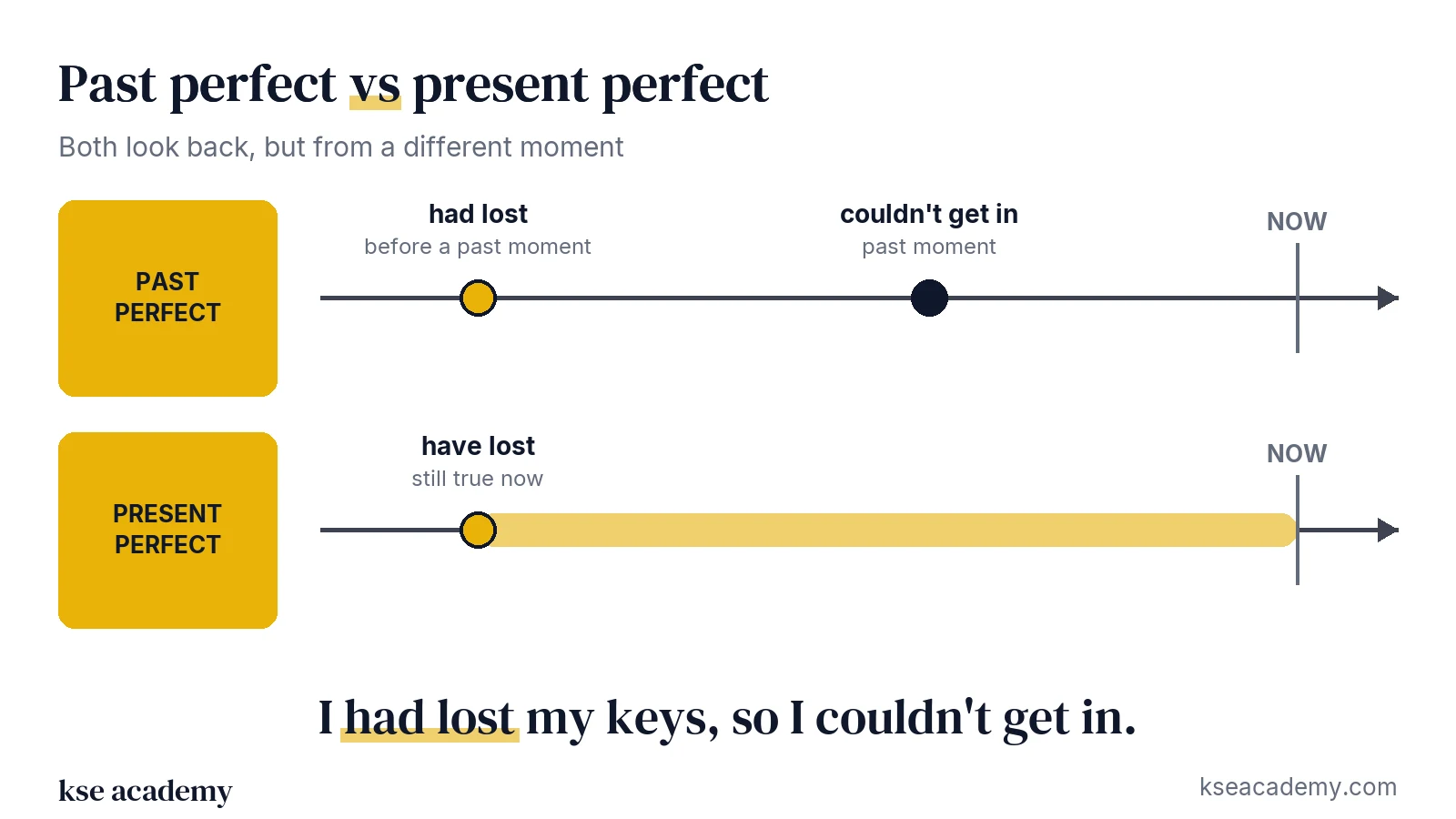
Both use a participle and both look back, but they do it from a different moment:
| Tense | Looks back from… | Example | Meaning |
|---|---|---|---|
| Present perfect | The present | I have lost my keys. | I have lost them (and I do not have them now). |
| Past perfect | A past moment | I had lost my keys, so I couldn’t get in. | I had lost them (before I tried to get in). |
To review the other one, see the guides to the Present Perfect Simple and the Present Perfect Continuous.
Spanish versus English: where we get confused
Spanish has the pretérito pluscuamperfecto («había comido»), so the concept is not new. What complicates things is that in spoken Spanish we mix tenses very easily, and in English that shows.
| 🇪🇸 Spanish | 🇬🇧 English | What happens |
|---|---|---|
| Cuando llegué, ya salió el tren. (colloquial) | When I arrived, the train had already left. | In spoken Spanish we use the indefinido; in English you must use the past perfect. |
| Ya habían comido cuando llegamos. | They had already eaten when we arrived. | Direct equivalent: had + participle. |
| Me dijo que ya lo había visto. | He told me he had already seen it. | Reported speech: backshift of tenses. |
| Si lo hubiera sabido, habría venido. | If I had known, I would have come. | Here Spanish uses «hubiera + participio»; English uses the past perfect. |
Common mistakes with the past perfect
| ❌ Incorrect | ✅ Correct | Why |
|---|---|---|
| When I arrived, the train left. (if it had already gone) | When I arrived, the train had left. | Without had, it sounds as if it left at that moment. |
| She had finish her homework. | She had finished her homework. | After had comes the participle, not the infinitive. |
| I had went to the shop. | I had gone to the shop. | Participle, not past simple. |
| The plane have left. | The plane had left. | In the past perfect, the auxiliary is always had. |
| Did you had seen it? | Had you seen it? | Had works as the auxiliary: did is not used. |
| I hadn’t went there. | I hadn’t gone there. | Same rule: hadn’t + participle. |
| I had visited Rome last year. (a single past action) | I visited Rome last year. | There is no «past of the past»: past simple. |
| She said she has finished. | She said she had finished. | In reported speech in the past, tenses step back. |
The past perfect in Cambridge exams
The past perfect is essential in Cambridge exams from B2 First onwards, and you are expected to use it fluently in C1 Advanced:
- Use of English (Part 4, key word transformations) in B2 First and C1 Advanced: with key words such as ALREADY, NEVER, BEFORE, SOONER or HARDLY.
- Writing in B2 First and C1 Advanced: in stories, the past perfect gives the earlier background and shows control of tenses.
- Speaking: telling an anecdote with the past simple and the past perfect sounds more natural and more precise.
Two examples in the style of Use of English Part 4:
- The film started before I got to the cinema. ALREADY
The film ______ when I got to the cinema. → had already started - She had only just sat down when the phone rang. SOONER
______ she sat down than the phone rang. → No sooner had
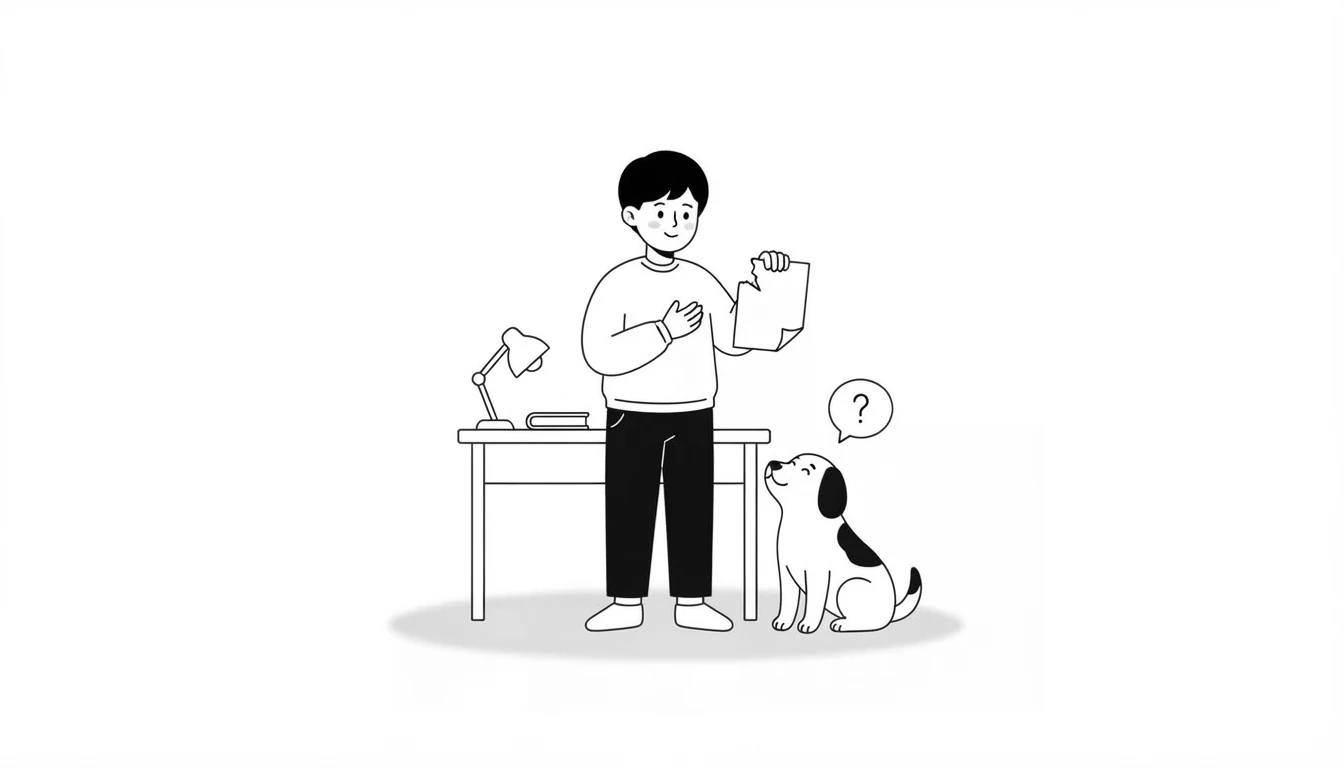
Fun uses: excuses with the past perfect
The past perfect is a perfect tense for making excuses: there is always something that «had happened» before. Here is a small catalogue, in case you need it:
| Excuse | Sentence |
|---|---|
| Being late | I was late because the bus had already left. |
| Not doing your homework | I couldn’t do my homework because my dog had eaten it. |
| Not replying to a message | I hadn’t seen your message. My phone had run out of battery. |
| Not going to a party | I would have gone, but I had already made other plans. |
| Forgetting something | I had completely forgotten. I had been so busy all week! |
| The surprise test | I hadn’t studied because nobody had told me about it. |
Past perfect summary table
| What | How | Example |
|---|---|---|
| Form | had + participle | She had left. |
| Negative | hadn’t + participle | She hadn’t left. |
| Question | Had + subject + participle | Had she left? |
| Main use | Action before another past moment | The train had left when I arrived. |
| Reported speech | Backshift of tenses | He said he had finished. |
| Conditional | If + past perfect, would have + participle | If I had known, I would have come. |
FAQ: the past perfect
When is the past perfect used in English?
When we talk about an event that happened before another moment in the past, to make the order clear, to explain a cause, to give background in a story, or in structures such as reported speech or the third conditional.
What is the difference between the past simple and the past perfect?
The past simple tells what happened; the past perfect marks that something happened before another point in the past. I ate is «comí»; I had eaten is «ya había comido» (before something).
Do you always have to use the past perfect with «before» and «after»?
No. If before or after already make the order clear, you can use the past simple: After I finished, I left is correct. With the past perfect you stress that the first action was complete.
What does «I’d» mean in a sentence?
It can be I had or I would. If it is followed by a participle (I’d finished), it is had. If it is followed by an infinitive (I’d go), it is would.
Is there such a thing as «had had»?
Yes. Had is also the past of have as a main verb: I had had breakfast (before leaving). The first had is the auxiliary and the second is the participle.
How is «had» pronounced in the past perfect?
Normally in its weak form, /əd/ or /d/: I had finished sounds like /aɪ əd ˈfɪnɪʃt/. It is pronounced strong, /hæd/, when it is emphasised, when it is the last word of a short answer (Yes, I had.) or when it is the main verb (I had a dog).
What is the past perfect continuous?
It is had been + -ing: I had been waiting for an hour. It is used when the duration of the earlier action matters. You will find it in the guide to the past perfect continuous.
Past perfect exercises
Thirty sentences to check you have understood. Below you have three interactive exercises that mark themselves, so you will know straight away how you did.
And if you prefer a version in text that you can copy and paste, you have it down here 👇
Exercise 1: choose the correct form
Choose the correct option to complete each sentence.
- When we arrived at the station, the train (left / had left).
- I couldn’t open the door because I (lost / had lost) my key.
- She (has / had) never seen the sea before that trip.
- By the time the police arrived, the thief (escaped / had escaped).
- «Why were you so tired?» «Because I (didn’t sleep / hadn’t slept) the night before.»
- I (have lost / had lost) my phone, so I can’t call you now.
- He said he (finished / had finished) the report.
- If I (knew / had known) you were ill, I would have visited you.
- They (just had left / had just left) when I called.
- The film (already started / had already started) when we sat down.
Show answers
- had left
- had lost
- had
- had escaped
- hadn’t slept
- have lost
- had finished
- had known
- had just left
- had already started
Exercise 2: complete the sentences
Complete each sentence with the past perfect of the verb in brackets. Write only the missing words.
- By the time I got home, my family _______________ (go) to bed.
- She _______________ (not / see) the film before, so she loved it.
- _______________ (you / finish) your homework before dinner?
- We _______________ (already / eat) when they arrived.
- He was angry because someone _______________ (take) his bike.
- I _______________ (never / be) to Scotland before last summer.
- When the teacher came in, the students _______________ (already / start) the exercise.
- She told me she _______________ (live) in Paris for five years.
- _______________ (they / leave) when you got there?
- I couldn’t send the email because I _______________ (forget) the password.
Show answers
- had gone
- hadn’t seen / had not seen
- Had you finished
- had already eaten
- had taken
- had never been
- had already started
- had lived
- Had they left
- had forgotten
Exercise 3: correct or incorrect?
Decide whether each sentence is correct. If it is incorrect, rewrite it correctly.
- When I arrived, the film had already started.
- She had finish her homework before dinner.
- They had went to bed when we called.
- Had you seen the film before?
- I hadn’t understood the question, so I asked for help.
- Did you had breakfast before leaving?
- He said he has lost his keys.
- By the time we got there, the shop closed.
- If she had known, she would have called.
- I had visited Rome last year.
Show answers
- Correct
- She had finished her homework before dinner.
- They had gone to bed when we called.
- Correct
- Correct
- Had you had breakfast before leaving?
- He said he had lost his keys.
- By the time we got there, the shop had closed.
- Correct
- I visited Rome last year.
Conclusion
To sum up in three ideas: the past perfect (had + participle) is the past of the past: what happened before another past moment; it is not needed when the order is already clear, and you will use it above all to give background, explain causes, in reported speech and in the third conditional; and it is not the same as the present perfect: the past perfect looks back from a moment in the past, not from now.
If you want to continue with verb tenses, see the guides to the Past Continuous and the Present Perfect Simple. Do you have doubts about the past perfect? Write to me and I will help.
Did you find this post useful? Share it with other English students and teachers. And if you want more content like this, subscribe to my newsletter and follow me on Facebook, Twitter, Pinterest, Instagram and YouTube.
See you in the next post. Until then, don’t forget to keep smiling! 🙂
