
Table of contents
Have you ever written I need an advice or Can you give me some informations? and had your teacher circle it in red without really knowing why? Don’t worry, you’re not the only one. In Spanish and many other languages, the words for «advice» and «information» can be counted and put in the plural, but in English they can’t. And that’s where all the confusion with much, many, a few, a little and friends begins.
Here you’ll see what countable and uncountable nouns in English are, how to tell which type a word is, the uncountable nouns that cause the most mistakes, how to «count» them with a piece of and similar expressions, and when to use much, many, a lot of, a few and a little. At the end you’ve got thirty exercise sentences with answers. Let’s get started! 🙂
What are countable and uncountable nouns?
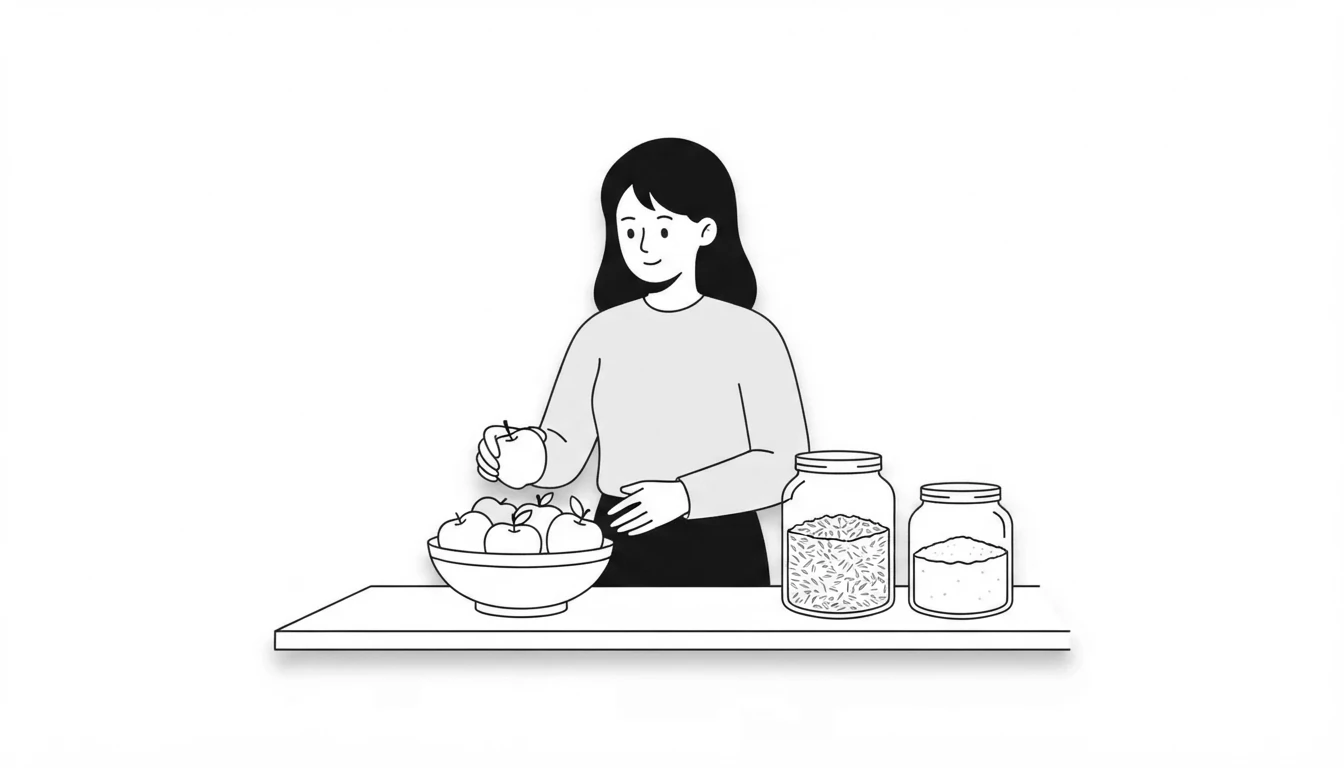
Countable nouns are the ones you can count one by one: one apple, two apples, three apples. They have a singular and a plural form, and in the singular they need an article or a determiner in front of them (an apple, my apple, this apple).
Uncountable nouns (also called mass nouns) are the ones English treats as a mass, a substance or an idea, with no separate units: water, rice, money, advice, music. They have no plural, they don’t take a or an, and the verb is always singular.
| 🇬🇧 Countable | 🇬🇧 Uncountable | |
|---|---|---|
| Plural | Yes: books, chairs, ideas | No: water, never waters (except in special cases) |
| a / an | Yes, in the singular: a book | No: advice, never an advice |
| Verb | Singular or plural: the book is / the books are | Always singular: the information is |
| Large amount | many, a lot of | much, a lot of |
| Small amount | a few, few | a little, little |
| Question | How many…? | How much…? |
| Examples | a car, three friends, an egg | money, furniture, bread |
Notice one important thing: being able to count something in real life doesn’t make the word countable. You can obviously count money, but money is uncountable. What you count are the coins and notes, or the euros and pounds. So the only reliable way to know is to look at how the word behaves in English, not at what seems logical.
How to tell if a noun is countable or uncountable
There’s no perfect rule, but these groups help a lot. They’re usually uncountable:
- Liquids and gases: water, milk, coffee, oil, air, smoke.
- Materials and substances: wood, glass, paper, plastic, gold, sand.
- Food seen as a mass: rice, bread, pasta, sugar, salt, butter, cheese, meat.
- Ideas and abstract things: love, happiness, freedom, help, fun, knowledge.
- Activities and school subjects: music, football, homework, maths, history.
- «Umbrella» words that group lots of different things: furniture, luggage, equipment, clothing, money, rubbish.
And if you’re not sure about a particular word, the quickest trick is to look it up in a learner’s dictionary such as the Cambridge or the Oxford Learner’s: next to each noun you’ll see [C] (countable), [U] (uncountable) or both.
The uncountable nouns that cause the most mistakes
This is the most important part of the post. These are words that are countable in many other languages, which is why learners add an -s or an a without realising. Learn them by heart:
| 🇬🇧 Uncountable | Pronunciation | 🇪🇸 Spanish | ✅ Correct | ❌ Incorrect |
|---|---|---|---|---|
| advice | /ədˈvaɪs/ | consejo(s) | She gave me some good advice. | an advice, advices |
| information | /ˌɪnfəˈmeɪʃn/ | información | I need more information. | informations |
| news | /njuːz/ | noticia(s) | The news is good. | a news, the news are |
| furniture | /ˈfɜːnɪtʃə/ | muebles | We bought some new furniture. | furnitures, a furniture |
| luggage / baggage | /ˈlʌɡɪdʒ/, /ˈbæɡɪdʒ/ | equipaje | How much luggage have you got? | luggages |
| homework | /ˈhəʊmwɜːk/ | deberes | I’ve got a lot of homework. | homeworks |
| work | /wɜːk/ | trabajo (the activity) | I’ve got too much work. | a work, works (with this meaning) |
| research | /rɪˈsɜːtʃ/ | investigación | She’s doing research on climate. | a research, researches |
| equipment | /ɪˈkwɪpmənt/ | equipo, material | The gym has new equipment. | equipments |
| accommodation | /əˌkɒməˈdeɪʃn/ | alojamiento | Accommodation is expensive here. | an accommodation |
| progress | /ˈprəʊɡres/ | progreso(s) | You’ve made a lot of progress. | a progress, progresses |
| knowledge | /ˈnɒlɪdʒ/ | conocimiento(s) | He has a good knowledge of history. * | knowledges |
| evidence | /ˈevɪdəns/ | prueba(s) | There isn’t enough evidence. | evidences |
| traffic | /ˈtræfɪk/ | tráfico | There was a lot of traffic. | a traffic |
| weather | /ˈweðə/ | tiempo (meteorológico) | What lovely weather! | What a lovely weather! |
| travel | /ˈtrævl/ | los viajes | Travel broadens the mind. | a travel (say a trip) |
| bread | /bred/ | pan | Can you buy some bread? | a bread, breads |
| toast | /təʊst/ | tostada(s) | I’ll have some toast. | two toasts (say two slices of toast) |
| money | /ˈmʌni/ | dinero | I haven’t got much money. | moneys, many money |
| hair | /heə/ | pelo (on your head) | She has long hair. | She has long hairs. |
* Knowledge has no plural, but it can take a when it goes with an adjective and means «an understanding of something»: a good knowledge of French. It’s an exception you’ll mainly see in formal texts.
Look closely at news too: it ends in -s, but it’s singular and uncountable. That’s why we say The news is on at nine and never a news. If you want to talk about a single item, say a piece of news.
And don’t mix uncountable nouns up with people: people isn’t uncountable, it’s the irregular plural of person. That’s why we say many people (not much people) and people are. The same goes for police, which is always plural: The police are coming. If you’re interested in these odd plurals, you’ll find them all in my post on irregular plurals in English.

How to «count» an uncountable noun: a piece of, a slice of, a bottle of…
If an uncountable noun can’t take a or a plural, how do you say «one piece of advice» or «two loaves of bread»? Easy: with a unit or container word in front. That’s the word you count, not the uncountable noun:
| 🇬🇧 Expression | 🇪🇸 Spanish | Examples |
|---|---|---|
| a piece of | un/una (general unit) | a piece of advice, a piece of information, a piece of news, a piece of furniture, a piece of cake |
| an item of | un artículo de (formal) | an item of clothing, an item of luggage |
| a slice of | una loncha, una rebanada | a slice of bread, a slice of ham, two slices of toast |
| a loaf of | una barra, un pan entero | a loaf of bread |
| a bottle of | una botella de | a bottle of water, a bottle of wine |
| a glass of / a cup of | un vaso de / una taza de | a glass of milk, a cup of tea |
| a carton of | un brik de | a carton of juice, a carton of milk |
| a bar of | una tableta, una pastilla de | a bar of chocolate, a bar of soap |
| a sheet of | una hoja de | a sheet of paper |
| a kilo of / a pound of | un kilo de / una libra de | a kilo of rice, a pound of butter |
| a drop of | una gota de | a drop of rain, a drop of milk |
| a spoonful of | una cucharada de | a spoonful of sugar |
So you say two pieces of advice (never two advices) and three pieces of furniture (never three furnitures). And if you’re learning food vocabulary, you’ll come across these expressions all the time in my post on food vocabulary in English.
Much, many and a lot of
To talk about large amounts, English uses one word for countable nouns and another for uncountable ones:
- Many + plural countable noun: How many friends have you got? I haven’t got many friends.
- Much + uncountable noun: How much time do we have? We haven’t got much time.
- A lot of / lots of + countable or uncountable: a lot of friends, a lot of time, lots of people, lots of money.
Now here’s a detail that’s hardly ever explained and that makes your English sound much more natural. In spoken English, much and many are mainly used in questions and negative sentences. In affirmative sentences they sound formal or odd, so the normal choice is a lot of or lots of:
- ✅ I’ve got a lot of homework today.
- ⚠️ I’ve got much homework today. (not completely wrong, but nobody would say it)
- ✅ There were lots of people at the concert.
- ✅ Many people believe that… (in a formal text or an essay, yes)
The exceptions are so much, too much, so many, too many and as much / as many, which work perfectly in affirmative sentences: I ate too much. There are too many cars in the city centre.
One more thing: a lot of has of before the noun, but when there’s no noun, the of disappears: Do you eat a lot of fruit? Yes, I eat a lot.
How much and How many
To ask about quantity, use How many with plural countable nouns and How much with uncountable ones:
- How many brothers and sisters have you got?
- How much water do you drink a day?
And watch out with prices: How much is also used to ask what something costs, even if the thing you’re buying is countable, because you’re really asking about money: How much is this jacket? How much are these shoes?
A few, a little, few and little
The same happens with small amounts: one word for countable nouns and another for uncountable ones.
- A few + plural countable noun: I’ve got a few questions. (some, a small number)
- A little + uncountable noun: Can I have a little milk in my tea? (a small amount)
But with or without a, the meaning changes:
| 🇬🇧 Expression | Meaning | Example |
|---|---|---|
| a few (countable) | some, a small number (enough, positive idea) | I’ve got a few friends here, so I’m not lonely. |
| few (countable) | not many, almost none (negative idea) | Few people came to the meeting. It was a disaster. |
| a little (uncountable) | some, a small amount (enough, positive idea) | I speak a little German, enough to order a coffee. |
| little (uncountable) | not much, almost nothing (negative idea) | There’s little hope of finding the keys now. |
Few and little without a sound rather formal. In conversation it’s much more common to say not many or not much: Not many people came. There isn’t much hope.
What about some and any?
Some and any work with both types of noun: some apples, some water, any questions, any money. As a general rule, some goes in affirmative sentences, offers and requests, and any in negatives and questions, although there are a few nuances. I explain them in detail in my post on the difference between some and any. And if you get confused about when to put a, the or nothing before an uncountable noun, have a look at my post on articles in English.
Nouns that can be countable and uncountable
Some words are countable with one meaning and uncountable with another. These are the most common:
| 🇬🇧 Word | Uncountable | Countable |
|---|---|---|
| time | time in general: I don’t have much time. | an occasion: I’ve been to Paris three times. |
| paper | the material: I need some paper. | a newspaper, an exam, an article: Have you read today’s paper? |
| glass | the material: The table is made of glass. | a container: Can I have a glass of water? |
| hair | the hair on your head: She’s got curly hair. | a single hair: There’s a hair in my soup! |
| room | space: Is there room for one more? | a part of a building: The flat has three rooms. |
| experience | knowledge or skill: She has a lot of experience. | something that happens to you: Living abroad was an amazing experience. |
| work | a job, effort: I’ve got a lot of work. | a piece of art or writing: the complete works of Shakespeare |
| chicken | the meat: We had chicken for lunch. | the animal: They keep three chickens. |
| coffee, tea, beer | the drink in general: I don’t drink coffee. | a cup or glass of it: Two coffees, please. |
That last one is really useful in a bar or a café: in everyday English, Two coffees, please or Three beers is completely normal, because «two cups» or «three glasses» is understood.
Typical mistakes
| ❌ Incorrect | ✅ Correct | Why |
|---|---|---|
| Can you give me an advice? | Can you give me some advice? / a piece of advice? | advice is uncountable |
| I need more informations. | I need more information. | no plural |
| The news are very bad. | The news is very bad. | news takes a singular verb |
| We bought new furnitures. | We bought some new furniture. | uncountable |
| I have many homeworks. | I have a lot of homework. | uncountable, and a lot of sounds better in affirmatives |
| There were much people. | There were a lot of people. | people is a plural countable noun |
| How much brothers have you got? | How many brothers have you got? | brothers is countable |
| What a bad weather! | What bad weather! | weather doesn’t take a |
| She has blonde hairs. | She has blonde hair. | the hair on your head is uncountable |
| I spent a lot money on clothes. | I spent a lot of money on clothes. | a lot needs of before a noun |
Countable and uncountable nouns in Cambridge exams
This topic comes up a lot in Cambridge exams, mainly in these ways:
- Use of English Part 2 (open cloze) in B2 First and C1 Advanced: gaps for much, many, few, little, a lot and of are classics. If you see ___ of the people or very ___ time, think about the type of noun.
- Use of English Part 1 (multiple choice): sometimes the only difference between options is whether the word is countable or not (luggage or suitcase, advice or suggestion).
- Writing: examiners notice mistakes like informations or an advice under the Language criterion. They’re «low-level» mistakes that cost you marks even when the rest of the text is good. If you’re preparing for B2 Writing, here’s my B2 First Writing guide.

Frequently asked questions about countable and uncountable nouns
Does advice have a plural?
No. Advice is uncountable: it has no plural and doesn’t take a. For one piece, say a piece of advice, and for several, some advice or a few pieces of advice. And don’t mix it up with the verb: advise /ədˈvaɪz/, with an s pronounced /z/.
Is news singular or plural?
Singular. Even though it ends in -s, news is uncountable and takes a singular verb: The news is on at nine. Is there any news about the exam?
Is it much people or many people?
Many people, because people is the plural of person, not an uncountable noun. And in an affirmative sentence, the most natural option is a lot of people.
Is money countable or uncountable?
Uncountable: How much money have you got? I haven’t got much money. What you can count are the coins, notes or units: three euros, two coins.
Can I use much in affirmative sentences?
Grammatically yes, but in spoken English it sounds formal or unnatural. Use a lot of or lots of: I’ve got a lot of work rather than I’ve got much work. The exceptions are so much, too much and as much.
What’s the difference between a few and few?
A few means «some, a small number» and has a positive feel (there are enough). Few means «not many, almost none» and has a negative feel. The same goes for a little and little, but with uncountable nouns.
Countable and uncountable nouns exercises
Ready? Thirty sentences to put everything you’ve seen to the test, without looking at the list of uncountable nouns. Below you have three interactive exercises that mark themselves, so you’ll know straight away how you’ve done.
And if you’d like these exercises as text to copy, paste or adapt for your classes, here they are below with the answers 👇
Exercise 1: choose the correct option
Choose the correct option to complete each sentence.
- I need some (advice / advices / an advice) about my CV.
- How (many / much / a lot) people came to your party?
- The news (is / are / were) on at nine o’clock.
- We haven’t got (much / many / a few) time, so let’s hurry.
- Can you buy a (loaf / piece / slice) of bread on your way home? We need a whole one.
- There’s (a little / a few / many) milk left in the fridge.
- I’ve got (a few / a little / much) questions about the homework.
- She has beautiful long (hair / hairs / a hair).
- How (much / many / few) is this jacket?
- We bought some new (furniture / furnitures / a furniture) for the living room.
Show answers
- advice
- many
- is
- much
- loaf
- a little
- a few
- hair
- much
- furniture
Exercise 2: much, many, a few or a little?
Complete each sentence with much, many, a few or a little.
- How _______________ brothers and sisters have you got?
- There isn’t _______________ traffic on Sunday mornings.
- Could I have _______________ sugar in my coffee, please?
- I’m going to the shops. I need to buy _______________ things for dinner.
- How _______________ money did you spend on holiday?
- Not _______________ students passed the exam; it was really difficult.
- Wait _______________ minutes, I’ll be ready soon.
- I don’t eat _______________ meat these days.
- She speaks _______________ Italian, enough to order in a restaurant.
- There were too _______________ cars on the road, so we were late.
Show answers
- many
- much
- a little
- a few
- much
- many
- a few
- much
- a little
- many
Exercise 3: correct or incorrect?
Decide whether each sentence is correct. If it is incorrect, rewrite it correctly.
- Can you give me an advice?
- I’ve got a lot of homework this weekend.
- The news are really surprising.
- There were much people at the beach.
- How many bottles of water do we need?
- We need more informations about the course.
- What a terrible weather!
- I’ve been to London three times.
- Our hotel had very comfortable furnitures.
- She gave me two good advices.
Show answers
- Can you give me some advice?
- Correct
- The news is really surprising.
- There were a lot of people at the beach.
- Correct
- We need more information about the course.
- What terrible weather!
- Correct
- Our hotel had very comfortable furniture.
- She gave me two good pieces of advice.
Conclusion
To sum up: countable nouns have a plural and take many and a few; uncountable nouns have no plural, don’t take a and go with much and a little. A lot of works with both and is the most natural choice in affirmative sentences. And above all, learn the list of «tricky» uncountable nouns (advice, information, news, furniture, luggage, homework), because that’s where most mistakes are.
If you want to keep practising, I recommend my post on there is and there are, which goes hand in hand with all this (there is some milk, there are some eggs), and the one on pronouns in English.
Did you find this post useful? Share it with other English learners and teachers. And if you’d like more content like this, subscribe to my newsletter and follow me on Facebook, Twitter, Pinterest, Instagram and YouTube.
See you in the next post. Until then, don’t forget to keep smiling! 🙂
