
Table of contents
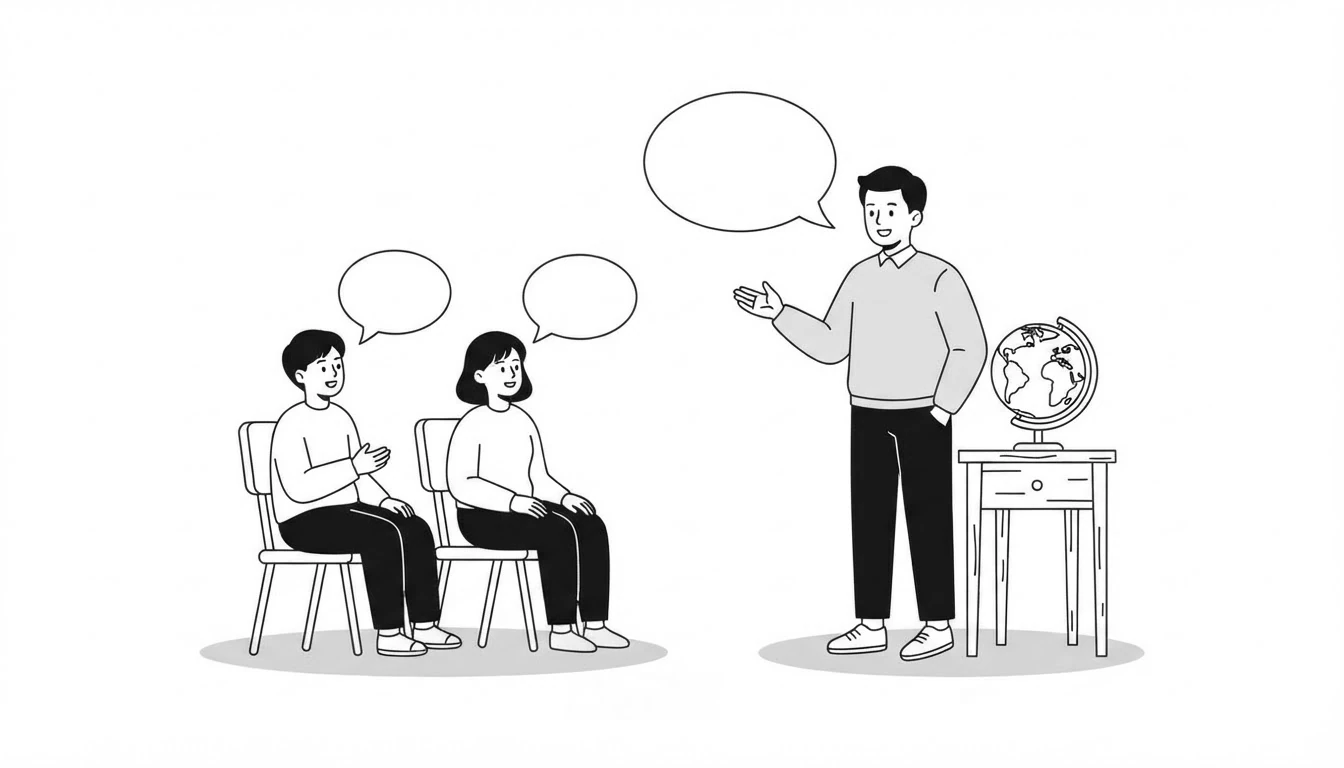
When I ran the academy in Granada, one of the questions new students asked most often was whether the English teacher was a native speaker or not. Sometimes the person asking hoped the teacher would be a native and, to many people’s surprise, sometimes the opposite. But why? What do native English teachers have that non-native ones don’t, and the other way round? In this post, although there is no single right answer, I tell you what I think and give you some guidelines for choosing a teacher.
The native English teacher
«Are the English teachers native?» or «But he’s a native, isn’t he?». If I got paid a euro every time I was asked that, my tax return would look very different. 🙂 And, as we say in English, it doesn’t grow old: it never goes out of fashion. A great many people still believe that having a native English teacher is much better than having a non-native one, when the reality is that everything depends on what the teacher is like as a professional, not on whether they are English, Irish, Australian, and so on.
But if we are going to generalise, let’s do it knowing what we are talking about. These are the positive points that a native teacher can generally bring:
- Knowledge of English. If you grew up in an English-speaking country, you probably know the language perfectly. A native teacher won’t have many problems with vocabulary, prepositions or idiomatic expressions. And their pronunciation, although it doesn’t have to be standard, will be natural, whatever their accent (as long as it isn’t so broad, or from such a remote area, that it can’t be understood).
- Knowledge of the culture. Just as the language is almost inherent in growing up in a country, so is knowledge of the culture, which is so important when learning a language. A native teacher will very probably know many cultural features of their own English-speaking country (though not of all of them, obviously).

But what else does a native bring to their students simply by being a native? If I have to answer, my answer is clear: absolutely nothing. The rest depends on their personal and academic characteristics. What is more, many English academies have hired native teachers without the right qualifications to teach English: you could have a chemist or a plumber teaching you English. So I ask myself: what should really come first, being able to speak and write English or being able, as well, to teach? In my view, the most important thing is to be a good teacher and to be qualified to be one.
If a native English teacher is good, great. But bear in mind that, simply by being native, they will be neither a better nor a worse teacher. Perhaps the only case in which I do recommend a native teacher (but a qualified one!) is at very high levels, such as C2.
The non-native English teacher
On the other hand, we have the non-native English teacher, who in Granada is usually Spanish. Unfortunately, this profile has been rather neglected in non-formal education, such as academies, because public pressure for native teachers has pushed them aside. However, my experience as a teacher and academy director with Spanish teachers teaching English was fantastic, both as their colleague and as their boss. Non-native teachers bring several things that a native teacher doesn’t usually have:
- Learning experience. When someone who has learnt English teaches you English, they know exactly what you are going through and what difficulties you are facing. What is more, they know how they overcame those difficulties themselves, so they can teach you in a very personalised way and develop techniques that are tailored to each student’s pace and level. I’m not saying natives don’t bring this, but it is usually less common.
- The mother tongue. The role of our first language in learning a foreign language is fundamental, and the authors agree on this. A Spanish teacher has something that a native, unfortunately, doesn’t have: knowledge of your own language. They can make linguistic analogies and solve doubts with quick translations that a native can hardly offer.
- Level of language and teaching studies. Non-native teachers are generally graduates in Translation and Interpreting, English Philology or English Primary Education. By contrast, many native teachers have certification courses of 100 hours or four weeks or, at most, of one academic year. A Spanish teacher’s linguistic knowledge about how English is used (grammar, linguistics, etc.) is usually far greater than a native teacher’s, as well as their knowledge of teaching techniques, simply because they have studied them in more depth.
Of course, if a teacher is teaching English, they should have a good level of English. In general, I recommend requiring at least a certified C1 to teach levels from B2 downwards, in private settings. That is why, in the selection process, I made sure the teacher’s level was more than adequate to work in an English academy.
The unknown option: the bilingual English teacher
Everybody asks about native or non-native teachers, but nobody asks: «do you have bilingual teachers?». Obviously, bilingualism from birth is not very common in Spain with languages such as English or French, so it is normal that nobody asks. 🙂 But what if you could have someone with these characteristics? You would surely prefer them:
- Knowledge of English. A person who has been born and raised in a bilingual environment usually knows both languages perfectly or almost perfectly, and their pronunciation is just as good.
- Knowledge of the culture. If someone has a Spanish family and an English family, they probably know both cultures quite well, although the culture of the country where they have lived longest will be more familiar to them.
- Mother tongue. Because they know both languages practically equally, a bilingual teacher is usually the perfect translator and will know how to make the foreign language easier for the student through their mother tongue.
- Level of studies. If it is a bilingual teacher born and raised in Spain, they probably have university studies like those mentioned above, so they will be just as qualified as any other Spanish teacher.
If you are lucky enough to have a bilingual teacher, you should feel fortunate, although being bilingual does not in itself make them a better teacher than an English or a Spanish one. As I said before, everything depends on what the teacher is like, not on their nationality.
Comparison: native, non-native and bilingual
| Native | Non-native | Bilingual | |
|---|---|---|---|
| Knowledge of English | natural, excellent | it depends (certified C1 at least) | natural, excellent |
| Culture | that of their English-speaking country | what they have learnt through study and travel | both |
| Your mother tongue | usually doesn’t speak it | yes, it is theirs | yes |
| Learning experience | less common | yes: they have learnt English like you | it depends |
| Training | very variable | usually university-level | usually university-level |
Notice that none of the three columns is «the good one»: what makes the difference is each teacher’s training and the way they teach, not their passport.
What to look at before choosing a teacher
Instead of only asking «are they a native?», these questions will tell you much more:
- What training do they have to teach? A university degree related to the language or to teaching, or a solid teaching certification.
- What level of English do they have certified? To teach up to B2, a C1 at least; for higher levels, C2 or a qualified native profile.
- Do they have experience with my level and my goal? Preparing for a conversation is not the same as preparing for an official exam. If you want to take an exam, see my guide to what B1 English is and which exams certify it.
- Do they explain clearly? A good teacher makes you understand, not feel lost.
- Do they correct you and give feedback? Well-corrected mistakes are what help you progress most.
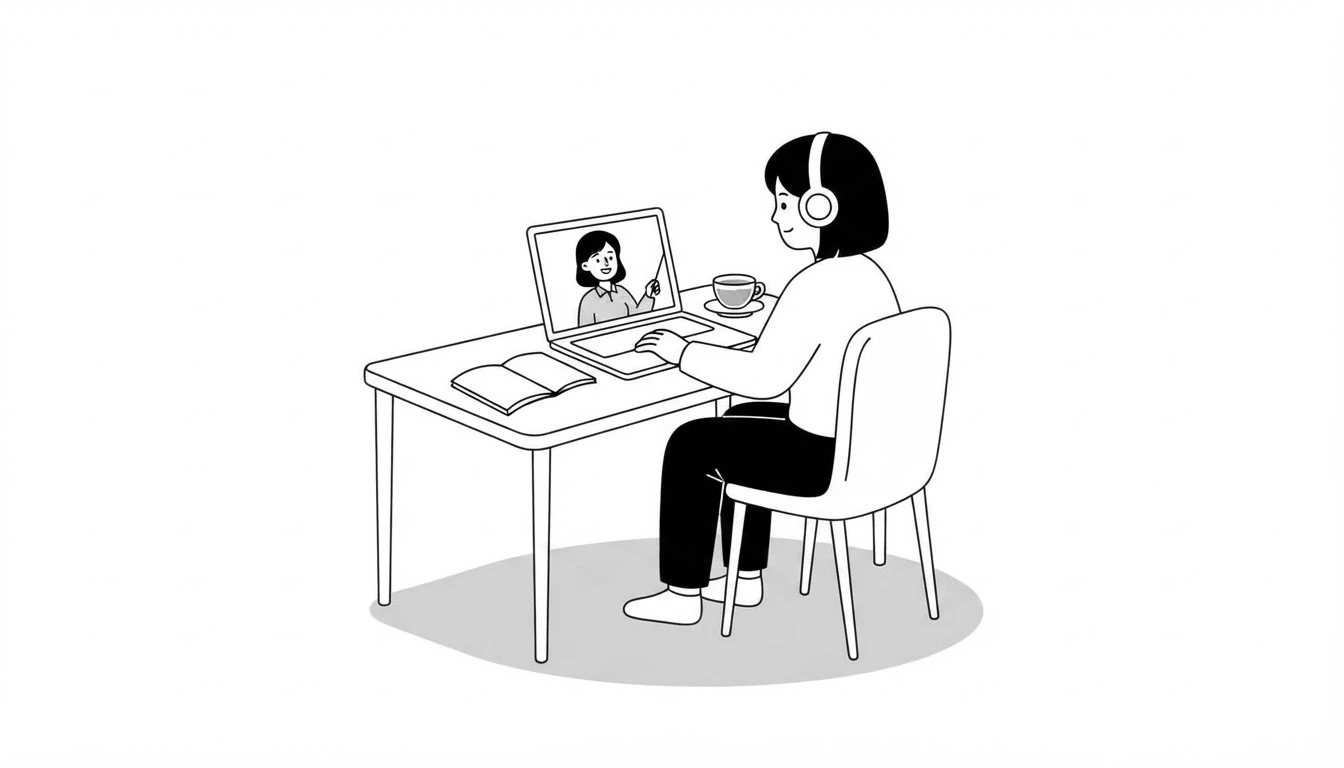
Today, with online classes, you are no longer limited to the teachers who live near you: you can choose the one who suits you best, wherever they come from. And to practise your English with native speakers outside class there are lots of ways: series, podcasts, language exchanges… Combining that with a good qualified teacher is a very powerful formula.
Frequently asked questions
Is a native teacher better for pronunciation?
A native has natural pronunciation, but that doesn’t mean they know how to teach it. What matters is that the teacher has clear pronunciation and can explain how each sound is made. If you want to practise on your own, you have my guide to English phonetics and the phonetic alphabet (IPA) and my post on the 12 most common pronunciation mistakes of Spanish speakers.
What level of English should a non-native teacher have?
In my opinion, a certified C1 at least to teach levels from B2 downwards. For higher levels, the teacher’s level should be higher still.
What if the native teacher has no teaching qualification?
Then everything depends on whether they are a good teacher or not. Being a native speaker is a great advantage as a speaker, but it doesn’t guarantee that they can explain grammar, adapt to your level or prepare an exam. Always ask about their training.
What is a bilingual teacher?
Someone who speaks English and Spanish almost equally well, normally because they grew up with both languages. If they also have teacher training, they combine the best of both profiles.
Conclusion
To sum up in three ideas: being a native doesn’t make you a better teacher by itself, just as being a non-native doesn’t make you a worse one; what matters is qualification, experience and the way of teaching; and, at very high levels such as C2, a qualified native teacher can be a great option.
And now tell me: what experiences have you had with native, non-native or bilingual English teachers? Do you agree with what I say in this article? I’ll read you in the comments.
Did you find this post useful? Share it with other students and English teachers. And if you want more content like this, subscribe to my newsletter and follow me on Facebook, Twitter, Pinterest, Instagram and YouTube.
See you in the next post. Until then, don’t forget to keep smiling! 🙂
