
Table of contents
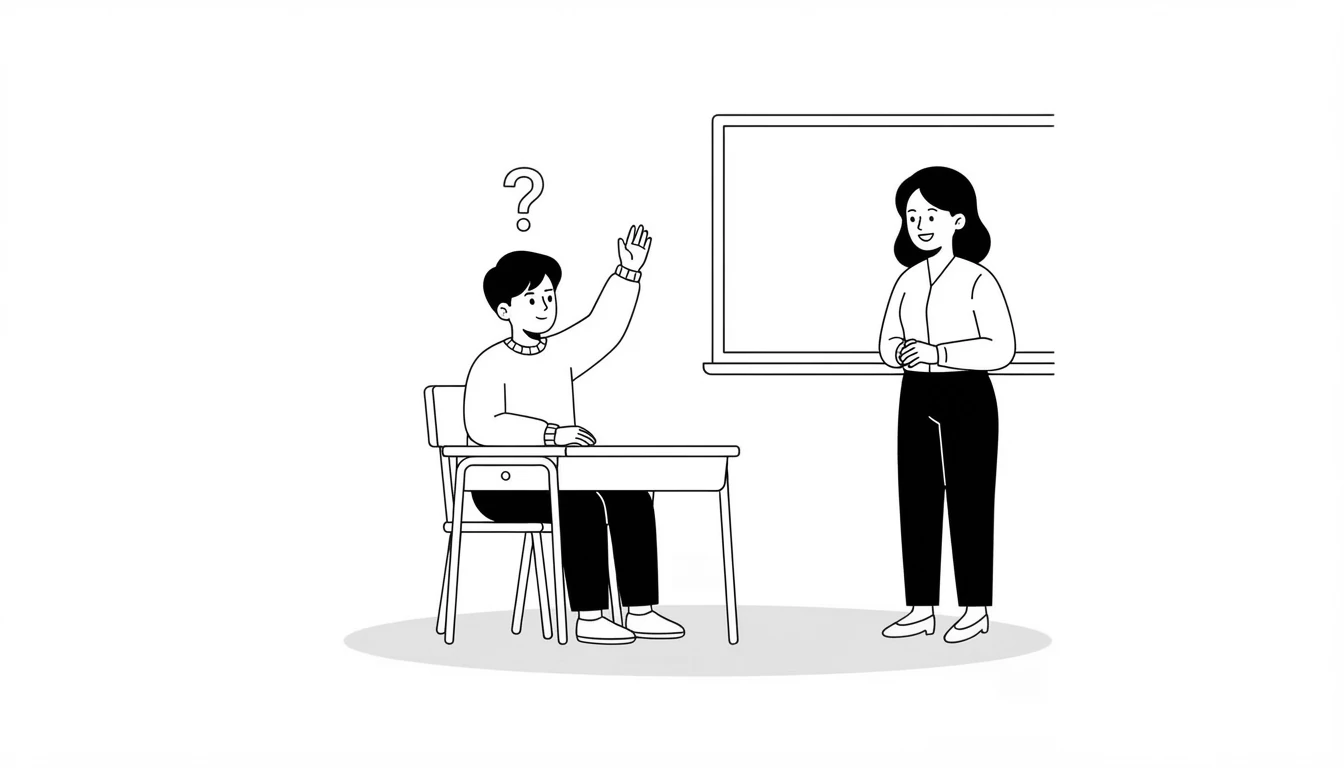
When we learn English, or any other language, there is one skill that hardly anyone practises and that saves you hours of study: knowing how to ask about the words you don’t know. It doesn’t matter whether you are in class, talking to an English-speaking friend or chatting with a language-exchange partner: if you can ask someone to explain a word, to spell it or to tell you how to say it, you will learn faster and with less embarrassment.
The problem is that most of us stop at How do you say… in English? and never go any further. It is a good question, but it isn’t the only one, and as soon as your level goes up it falls short. In this guide I show you the most useful phrases for asking about new words in English, with examples and the most typical mistakes, and I also explain when to use excuse me, sorry and pardon to ask people to repeat something. At the end there is a mini dialogue, a summary and thirty sentences of exercises with answers. Let’s get started! 🙂
How to ask how to say something in English
This is the star question, the one we ask the teacher when we want to know the exact way to say a word or expression:
| 🇬🇧 Question | Meaning | Example |
|---|---|---|
| How do you say… (in English)? | asking for the English word | How do you say «tenedor» in English? |
| What’s the English word for…? | asking for the English word | What’s the English word for «sobremesa»? |
| I know it in Spanish, but not in English. | explaining what you already know | I know it in Spanish, but not in English. How do I say it? |
At low and intermediate levels, How do you say…? is perfectly fine. However, if you want to make quick progress, you need to start using the questions below as well, because they give you much more information than a simple translation.
How to ask what a word means
When you read or hear a word you don’t understand, these are the two most common questions:
| 🇬🇧 Question | Meaning | Example |
|---|---|---|
| What does… mean? | asking for the meaning | What does «reluctant» mean? |
| What is the meaning of…? | asking for the meaning | What is the meaning of «overwhelmed»? |
But be careful, because there is a very common mistake: saying ❌ What means…?. It is completely incorrect, because questions with what need the auxiliary does. The correct form is ✅ What does… mean?, with does first and the verb mean in the infinitive at the end. If you want to review how these questions are formed, it is explained in my guide to yes/no and wh- questions in English.
How to ask about pronunciation and spelling
Sometimes we don’t ask about the meaning, but about how to say or write a word. For example, you may know that literature means «literatura» because the spelling is similar, and still not know how to pronounce it.
| 🇬🇧 Question | Meaning | Example |
|---|---|---|
| How do you pronounce… (in English)? | asking about pronunciation | How do you pronounce «literature» in English? |
| How do you pronounce this word? | asking about pronunciation | Sorry, how do you pronounce this word? |
| How do you spell… / it / that? | asking for the letters | How do you spell «necessary»? |
How do you spell that? is especially useful when the teacher is speaking or you are doing a listening activity and you understand a word but don’t know how to write it: if you want to note it down to learn it later, it is the perfect question. To understand the answer, it helps to know how each letter of the English alphabet is pronounced, and to read the pronunciations in a dictionary, my guide to English phonetics and the phonetic alphabet (IPA).
Excuse me: when to use it and when to use sorry or pardon
Here is the most famous phrase of all, and the one that causes the most doubts. Excuse me is pronounced /ɪkˈskjuːz miː/ and has several uses. The three most important are:
- Getting someone’s attention or interrupting politely: Excuse me, could you tell me the time?
- Asking to get past: Excuse me, can I get past?
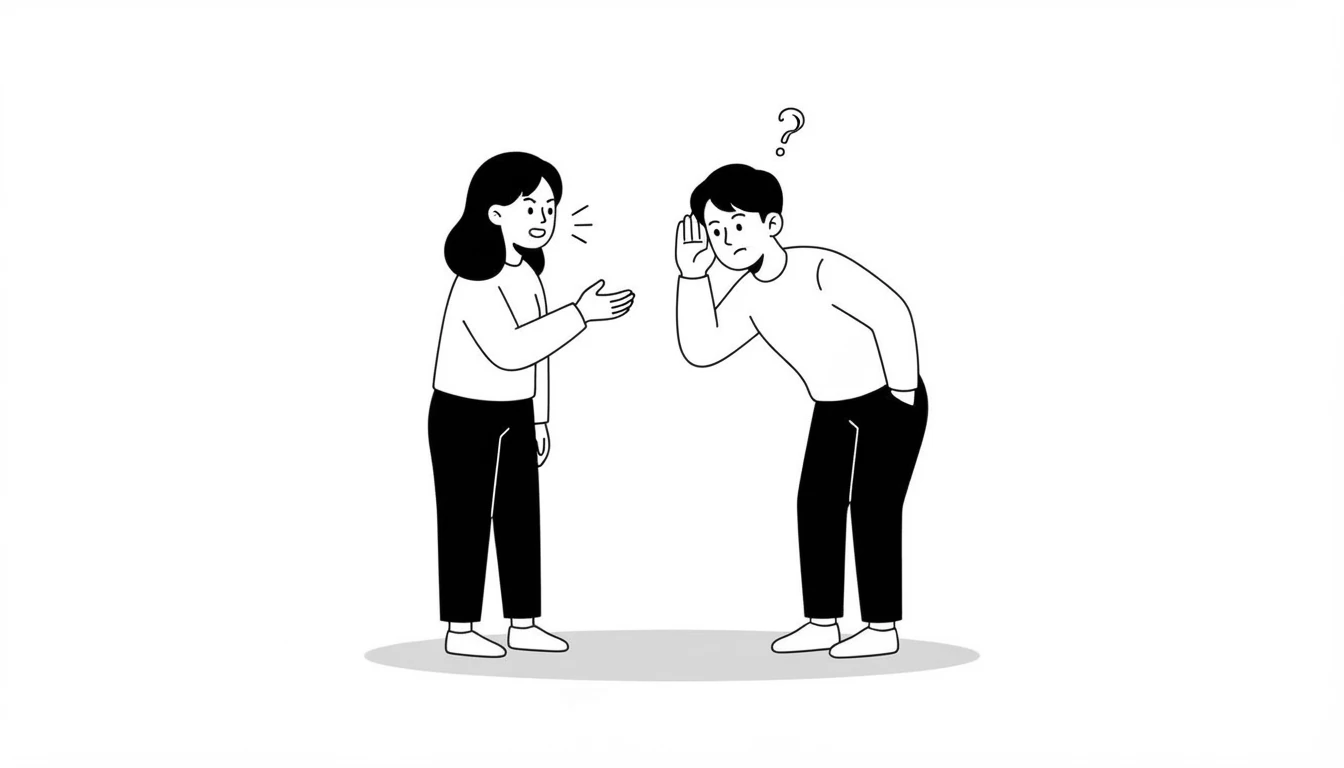
- Asking someone to repeat something you didn’t understand, with rising intonation: Excuse me?
Look at the last use. If you didn’t hear or understand what someone said, instead of saying something long like What did you say? I didn’t understand, you can simply say Excuse me? or add something: Excuse me? Can you repeat that, please?
And so you don’t mix it up with similar forms:
| 🇬🇧 Expression | When we use it | Example |
|---|---|---|
| Excuse me | to get attention, to get past or to ask for repetition | Excuse me, where’s the bus station? |
| Sorry | to apologise; also an informal «what?» | Sorry, I didn’t see you there. |
| Pardon? | to ask for repetition; more formal, very common in British English | Pardon? I didn’t catch that. |
| I beg your pardon? | very formal, or to show surprise or annoyance | I beg your pardon? What did you just say? |
More phrases for when you don’t understand what is said to you:
- Can you repeat that, please?
- Could you speak more slowly, please?
- Sorry, I didn’t catch that.
- What do you mean?
Notice that many of them are polite requests with can and could. If you want to understand the difference properly, have a look at my guide to modal verbs in English.
How to ask for synonyms and opposites
Sometimes, especially at more advanced levels, you want to know synonyms and opposites of a word, to enrich your vocabulary and avoid using the same words all the time. These are the questions:
| 🇬🇧 Question | Meaning | Example |
|---|---|---|
| What is a synonym of…? | a word with the same meaning | What is a synonym of «close»? |
| What is the opposite of…? | a word with the contrary meaning | What is the opposite of «cheap»? |
| Is there another word for…? | an alternative word | Is there another word for «big»? |
How to ask how a word is used
Finally, even if we know what a word means, it is not unusual to find one that we don’t know how to use in a sentence. For example, if you are not sure how to use the verb suggest, you can ask like this:

| 🇬🇧 Question | Meaning | Example |
|---|---|---|
| Can you use it in a sentence, please? | asking for an example sentence | Can you use «suggest» in a sentence, please? |
| When do we use this word? | asking about the context | When do we use «whereas»? |
| Is it formal or informal? | asking about register | Is «mate» formal or informal? |
| Is it rude to say…? | asking if it might offend | Is it rude to say «chick»? |
| What’s the difference between… and…? | asking about two similar words | What’s the difference between «lie» and «lay»? |
This last question will be very useful with pairs of words that get confused. If you want to see some solved examples, have a look at my posts on lie and lay and suggest and recommend.
Mini dialogue in class
This is how several of these questions fit together in a real conversation:
- Student: Excuse me, what does «reluctant» mean?
- Teacher: It means not wanting to do something. For example, «He was reluctant to speak in public».
- Student: Thank you. How do you spell it?
- Teacher: R-E-L-U-C-T-A-N-T.
- Student: And how do you pronounce it?
- Teacher: /rɪˈlʌktənt/. Listen again and repeat.
- Student: Is there another word for «reluctant»?
- Teacher: Yes: «unwilling» or «hesitant».
And if you don’t know the word: explain it with other words
Sometimes there is nobody to ask, and in a speaking exam, such as the Cambridge Speaking test, it makes no sense to ask the examiner for a word. At those moments, the most useful thing is to explain what you mean with other words. These phrases get you out of any trouble:
- It’s a kind of…
- It’s something you use to…
- It’s the opposite of…
- I can’t remember the word, but it’s a place where…
Asking someone to repeat a question naturally, with a Sorry, could you repeat the question, please?, is also much better than staying silent or answering something else. Practise it before the exam, along with the pronunciation of the words you use most.
Summary table
| I want to… | 🇬🇧 I ask… |
|---|---|
| know how to say something in English | How do you say… in English? |
| know what a word means | What does… mean? |
| know how to pronounce it | How do you pronounce…? |
| know how to spell it | How do you spell…? |
| ask someone to repeat | Excuse me? / Sorry? / Can you repeat that, please? |
| know a synonym or an opposite | What is a synonym of…? / What is the opposite of…? |
| know how to use it | Can you use it in a sentence, please? |
Is it correct to say «What means…?»
No. It is a very common mistake among Spanish speakers because in Spanish we say «¿qué significa?». In English you need the auxiliary: What does… mean?
Excuse me or sorry to ask someone to repeat?
Both work. Excuse me? and Sorry? are the most natural; Pardon? is a bit more formal and is heard a lot in the UK.
How do you ask «how do you say» in English?
You say How do you say…? or What’s the word for…?
Exercises to practise the questions
Thirty sentences to check that you’ve got it. Below you have three interactive exercises that mark themselves, so you will know straight away how you did.
And if you prefer a version in text that you can copy and paste, you have it down here 👇
Exercise 1: choose the correct word
Choose the correct option to complete each question.
- (What / How) does «likely» mean?
- How do you (pronounce / mean) «colonel» in English?
- (Excuse me / Thank you)? I didn’t hear what you said.
- I need a word that means the same as «big». What’s a (synonym / opposite) of «big»?
- Can you (use / do) «suggest» in a sentence, please?
- How do you (spell / mean) that? I want to write it down.
- What’s the English (word / say) for «sobremesa»?
- What (does / is) «overwhelmed» mean?
- Could you speak more (slowly / slow), please?
- Is this word formal (or / and) informal?
Show answers
- What
- pronounce
- Excuse me
- synonym
- use
- spell
- word
- does
- slowly
- or
Exercise 2: complete the questions
Write the missing word in each question.
- How do you _______________ «mesa» in English?
- What _______________ «reluctant» mean?
- How do you _______________ «reluctant»? I’d like to write it down.
- How do you _______________ «reluctant»? I can’t say it correctly.
- _______________ me? I didn’t catch what you said.
- Could you _______________ that, please?
- Can you use «suggest» _______________ a sentence?
- What’s the opposite _______________ «expensive»?
- What’s the English _______________ for «ayuntamiento»?
- What is the _______________ of this word? I don’t know it.
Show answers
- say
- does
- spell
- pronounce
- Excuse
- repeat
- in
- of
- word
- meaning
Exercise 3: correct or incorrect?
Decide whether each sentence is correct. If it is incorrect, rewrite it correctly.
- What means scared?
- How do you spell necessary?
- How say you tenedor in English?
- Can you use borrow in a sentence, please?
- What is the meaning of reluctant?
- How do you pronounce this word in English?
- What does mean reluctant?
- Excuse me? Can you to repeat, please?
- How you spell colour?
- What is opposite of cheap?
Show answers
- What does scared mean?
- Correct
- How do you say tenedor in English?
- Correct
- Correct
- Correct
- What does reluctant mean?
- Excuse me? Can you repeat, please?
- How do you spell colour?
- What is the opposite of cheap?
Conclusion
So now you know there are many ways to ask about the words you don’t know. Make sure you use all of them, and others if you know more, to enrich your vocabulary in an effective and natural way: how to say it, what it means, how to pronounce it, how to spell it, a synonym and how to use it. And remember that excuse me is not only for getting past: with rising intonation it is the simplest way to ask someone to repeat something.
If you want to carry on with vocabulary, have a look at my school vocabulary guide, where you will find many of the words used most in class.
Did you find this post useful? Share it with your classmates. And if you want more content like this, subscribe to my newsletter and follow me on Facebook, Twitter, Pinterest, Instagram and YouTube.
See you in the next post. Until then, don’t forget to keep smiling! 🙂
