
Table of contents
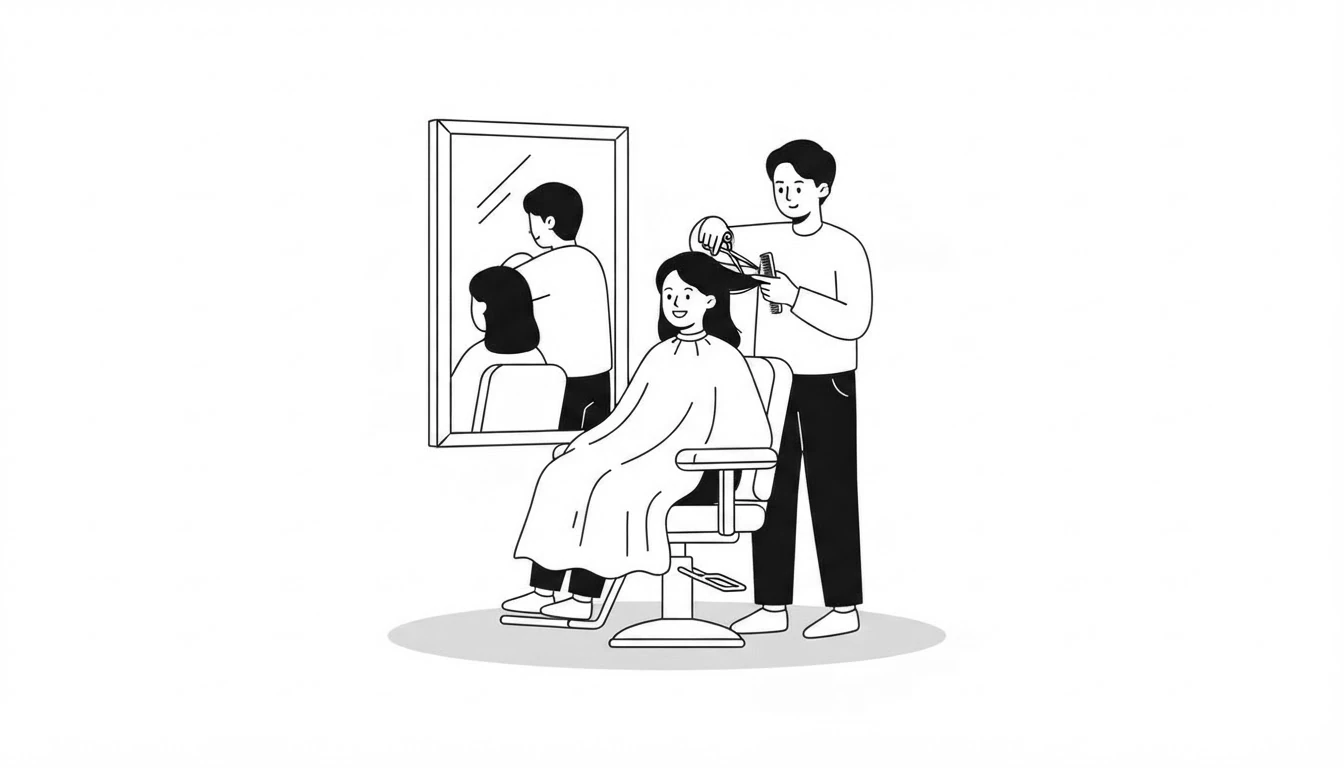
I recently had my hair cut, and the next day some students said to me: «Hey! You cut your hair!». And I answered: «No, I had my hair cut». I didn’t cut my hair, the hairdresser did. That small difference is exactly what explains a structure that many learners struggle with: the causative have, or have something done.
In many languages, Spanish included, we manage with something like «me he cortado el pelo» or «me han robado la cartera» without realising that the sentence doesn’t say who does it. In English, however, you need a specific structure, and if you say I cut my hair you are saying that you did it yourself. In this guide I explain how it is formed, the three contexts in which it is used, the difference with get, the most common mistakes, how it helps you in the Cambridge exams, a video of mine on the topic and thirty sentences of exercises with answers. Let’s get started! 🙂
What is the causative have?
We use the causative have to talk about something that someone else does for us (usually because we have asked them or paid them), or about something that happens to us and is done by someone else. The structure is always the same:
have + something + past participle (have something done)
Where done is the past participle of a transitive verb. Notice the difference with the normal sentence:
| I do it myself | Someone else does it | Meaning |
|---|---|---|
| I cut my hair. | I had my hair cut. | A hairdresser cut it for me. |
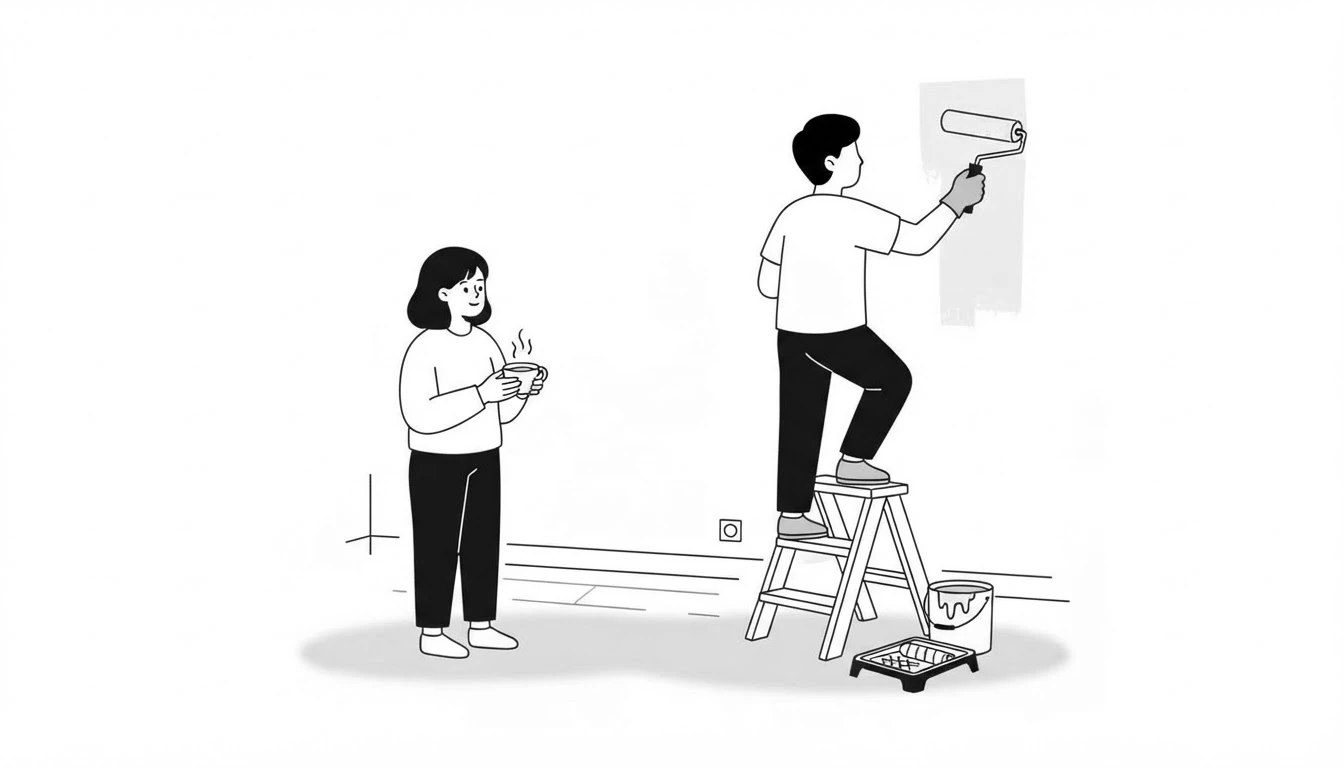
| She painted the house. | She had the house painted. | She paid someone to paint it. |
| We clean the windows. | We have the windows cleaned. | Someone cleans them for us. |
How to form the causative have
The verb have is the one that changes tense and form; the past participle doesn’t change. This table shows the structure in the most common tenses:
| Tense | Example |
|---|---|
| Present simple | I have my car washed every month. |
| Present continuous | We’re having the kitchen redone. |
| Past simple | I had my house painted last month. |
| Present perfect | I’ve had my hair cut. |
| Future | I’m going to have my eyes tested. / I’ll have it repaired. |
| With modals | You should have that checked by a doctor. |
| Infinitive and -ing | I need to have it fixed. / Having your teeth cleaned is important. |
For negatives and questions, have isn’t an auxiliary here, so you need do or did:
- I didn’t have my windows cleaned.
- Did you have your house painted?
- Where do you have your car serviced?
If you want to review how the tenses in the table are formed, have a look at my guide to the present perfect simple. And so you don’t mix this have up with the have of possession, see my post on have got and have.
The 3 contexts of the causative have
1. When we ask someone to do something for us
This is the most common use: we hire a service or ask for a favour.
- I had my house painted last month.
- I should go to the hairdresser’s to have my hair cut.
- I will probably get my passport renewed before the summer.
2. When something bad happens to us and someone else does it
Here the structure expresses something unpleasant that happens to us, and that we didn’t ask for. The meaning is passive: we weren’t the ones who did it.
- She had her wallet stolen in the train station.
- I had my car destroyed by some punks the other night.
3. When we have an accident for which we are responsible
In this case we usually use get, not have:
- I got my fingers trapped in the car door.
- He always gets his T-shirts stained with tomato sauce.
Have or get: which one do I use?
With the causative, have and get can almost always be used interchangeably: I had my hair cut = I got my hair cut. The difference is in register and nuance:
| 🇬🇧 HAVE | 🇬🇧 GET | |
|---|---|---|
| Register | more neutral and formal | more informal, very common in speech |
| Accidents | possible, but less natural | preferred: I got my fingers trapped. |
| Things to do | I need to have my eyes tested. | I need to get my eyes tested. (feels like it has to be done soon) |
My advice: in formal writing and in the exam, have is always safe; in conversation, get sounds very natural.
Have something done vs have someone do something
There is another similar structure, but with one difference: here you do say who does it, and after the object comes the infinitive without to:
| Structure | Example |
|---|---|
| have + something + participle | I had my brakes checked. |
| have + someone + infinitive | I had the mechanic check my brakes. |
| get + someone + to + infinitive | I got the mechanic to check my brakes. |
Notice that with get the infinitive does take to. If you want to know why have and make take the bare infinitive, it is explained in my guide to gerund or infinitive in English. And when you want to say who did it with the participle, you add it with by: I had my car repaired by a specialist.
Common mistakes with the causative have
| ❌ Incorrect | ✅ Correct | Why |
|---|---|---|
| I cut my hair at the hairdresser’s. | I had my hair cut at the hairdresser’s. | If the hairdresser does it, you need have + participle. |
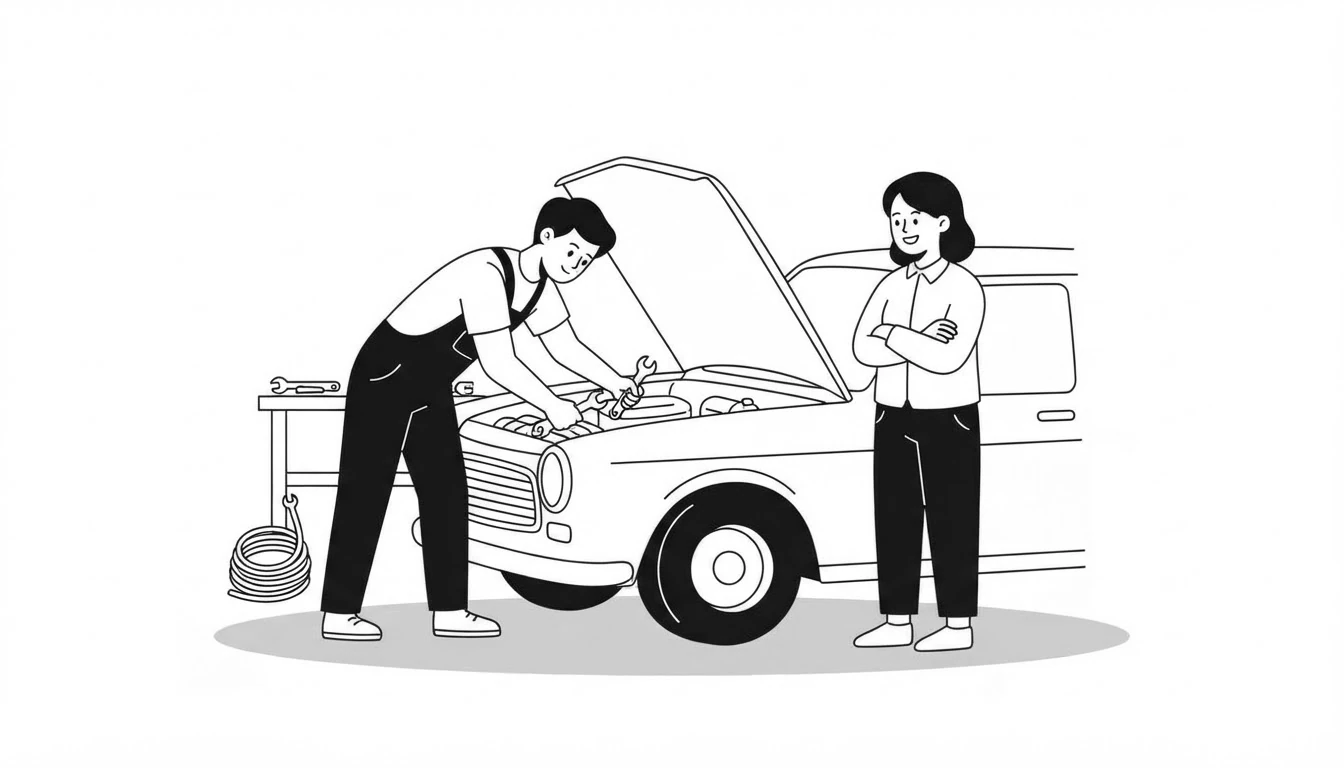
| I have repaired my phone at the shop. | I’ve had my phone repaired at the shop. | It is have + object + participle, not a normal present perfect. |
| She had stolen her wallet. | She had her wallet stolen. | The object goes between have and the participle. |
| I had my hair to cut. | I had my hair cut. | After the object comes the participle, not to + infinitive. |
| Did you had your car washed? | Did you have your car washed? | After did, the verb is in the infinitive. |
The causative have in the Cambridge exams
This structure is a classic of the Use of English paper in B2 First and C1 Advanced, especially in Part 4 (key word transformation), where you are asked to rewrite a sentence with the key word HAD or GET. For example:
- A mechanic repaired Tom’s car yesterday. HAD
Tom ______ yesterday. → had his car repaired - Someone stole my bike last week. HAD
I ______ last week. → had my bike stolen
In both you have to remember two things: the object goes between have and the participle, and the main verb becomes a past participle. It is also useful in Writing and Speaking: using it naturally (I’m having my kitchen redone) is a feature of a more advanced level.
Summary table
| Use | Example |
|---|---|
| A service or favour we ask for | I had my house painted. |
| Something bad that happens to us | She had her wallet stolen. |
| An accident that is our fault (get) | I got my fingers trapped. |
| With get (informal) | I need to get my passport renewed. |
| Saying who does it (have + someone + infinitive) | I had the mechanic check my brakes. |
Can you leave out who does the action?
Yes, and it is the usual thing: I had my hair cut doesn’t say who, because it doesn’t matter. We only mention it with by when it is important or surprising.
Is «I cut my hair» also correct?
Only if you really cut it yourself. If you went to the hairdresser’s, it is I had my hair cut.
Can it be used in the past, the future and with modals?
Yes, in any tense: what changes is the form of have. See the table of tenses above.
Watch the video: causative have and get
I recorded this explanation on video many years ago, so the quality of the recording and the visual style are nothing like what I do now, but what it explains is just as valid. If you prefer to watch and listen, here it is:
Video: «Causative have/get», by KSE Academy.
Causative have exercises
Thirty sentences to check that you’ve got it. Below you have three interactive exercises that mark themselves, so you will know straight away how you did.
And if you prefer a version in text that you can copy and paste, you have it down here 👇
Exercise 1: choose the correct form
Choose the correct option to complete each sentence.
- I need to have my passport (renew / renewed) before the summer.
- She had her house (painting / painted) last month.
- We’re having a new kitchen (install / installed).
- Did you (have / had) your car serviced?
- I’m not good with computers, so I always (have / do) my laptop repaired at the shop.
- I got my fingers (trap / trapped) in the door.
- They (have had / had have) their windows cleaned twice this year.
- I didn’t (have / had) my phone repaired.
- She has just had her hair (dyed / dyeing).
- You should have your eyes (test / tested).
Show answers
- renewed
- painted
- installed
- have
- have
- trapped
- have had
- have
- dyed
- tested
Exercise 2: complete the second sentence
Complete the second sentence so that it means the same as the first. Use have or get + something done, and write only the missing words.
- A hairdresser cut my hair yesterday.
I _______________ yesterday. - A decorator painted our house last year.
We _______________ last year. - A thief stole her bag on the train.
She _______________ on the train. - An optician is going to test my eyes tomorrow.
I’m going to _______________ tomorrow. - A mechanic repairs his car every year.
He _______________ every year. - Someone has cleaned our windows today.
We _______________ today. - A dentist took out his tooth last week.
He _______________ last week. - A plumber is fixing our sink at the moment.
We _______________ at the moment. - Someone broke into Tom’s car last night.
Tom _______________ last night. - Did a specialist check your laptop?
Did you _______________?
Show answers
- had my hair cut / got my hair cut
- had our house painted / got our house painted
- had her bag stolen / got her bag stolen
- have my eyes tested / get my eyes tested
- has his car repaired / gets his car repaired
- have had our windows cleaned / ‘ve had our windows cleaned
- had his tooth taken out / got his tooth taken out
- are having our sink fixed / are getting our sink fixed
- had his car broken into / got his car broken into
- have your laptop checked / get your laptop checked
Exercise 3: correct or incorrect?
Decide whether each sentence is correct. If it is incorrect, rewrite it correctly.
- I had my car repaired yesterday.
- She has cut her hair at the hairdresser’s.
- We had the kitchen painted last month.
- Did you had your teeth checked?
- He had his wallet stolen on holiday.
- I’m going to have cut my hair tomorrow.
- They had their house to be painted.
- She got her fingers trapped in the door.
- I have repaired my phone at the shop.
- We need to get our boiler checked.
Show answers
- Correct
- She has had her hair cut at the hairdresser’s.
- Correct
- Did you have your teeth checked?
- Correct
- I’m going to have my hair cut tomorrow.
- They had their house painted.
- Correct
- I have had my phone repaired at the shop.
- Correct
Conclusion
To sum up in three ideas: the causative is formed with have + something + past participle; it is used when someone else does something for us or when something unpleasant happens to us; and with get it sounds more informal and is the preferred form for accidents. If you are in doubt, ask yourself: did I do it myself, or did someone do it for me? If someone did it for you, you know which structure you need.
If you want to carry on with structures of this kind, have a look at my guides to reporting verbs and modal verbs.
Did you find this post useful? Share it with other students and English teachers. And if you want more content like this, subscribe to my newsletter and follow me on Facebook, Twitter, Pinterest, Instagram and YouTube.
See you in the next post. Until then, don’t forget to keep smiling! 🙂
