
Cómo escribir un Email Informal para el C1 Advanced (CAE) [Guía 2026]
Domina el Email Informal del Writing C1 Advanced (CAE). Aprende la estructura, vocabulario, phrasal verbs y lee ejemplos reales para asegurarte una buena nota.

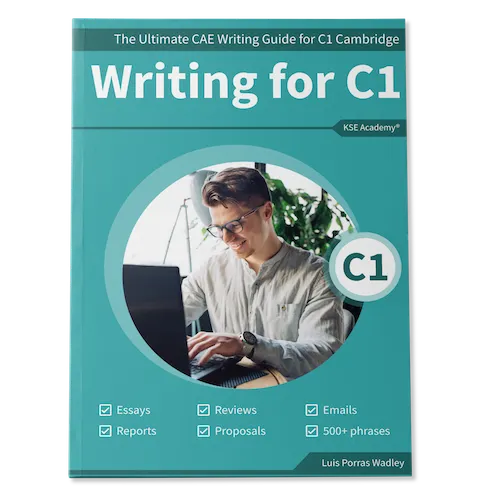
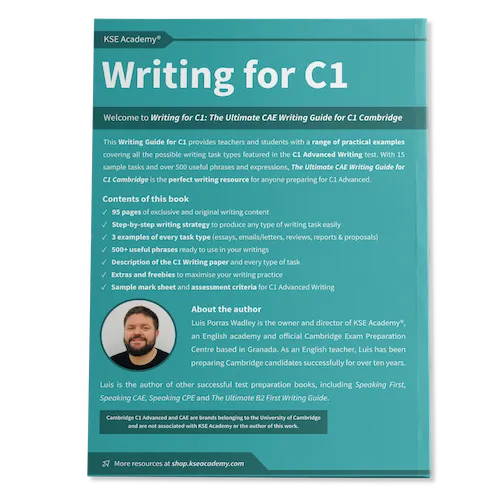
Tabla de contenidos
Si te estás preparando para el examen C1 Advanced de Cambridge, sabrás que la parte del Writing puede ser una de las más temidas, pero también una en las que es más fácil asegurar puntos si conoces bien las reglas del juego. En este artículo vamos a centrarnos en una de las opciones más populares de la Part 2 del Writing de C1: el email informal (o también carta informal).
Aunque escribimos emails a diario, hacerlo para un examen de nivel C1 requiere demostrar un dominio del idioma que va más allá del simple «Hello, how are you?». Necesitas vocabulario específico, phrasal verbs, idioms y una estructura sólida. ¿Listo para aprender a escribir un email de 10? Let’s go!
¿Qué es un email o carta informal en el C1 Advanced?
En el examen C1 Advanced, un email o carta informal es un texto dirigido a una persona con la que tienes una relación cercana o familiar. El objetivo principal suele ser responder a una carta previa de esa persona, en la que te pide consejo, información, o te cuenta alguna novedad.
A efectos del examen, un email y una carta son exactamente lo mismo. No hay diferencia en el formato ni en el contenido. Cambridge utiliza ambos términos indistintamente en esta parte, así que las reglas que veremos aquí aplican a ambos formatos.
¿Cuándo te pedirán escribir un email informal en el CAE?
Como ya sabrás, porque te lo he explicado unas cuantas veces 😅, el Writing del CAE tiene dos partes. La Parte 1 es obligatoria (un essay), pero en la Parte 2 tienes que elegir una tarea de entre tres opciones. Estas opciones pueden incluir: review, report, proposal, formal email/letter o informal email/letter.
Por lo tanto, no siempre aparecerá la opción de email informal, pero es igual de probable que aparezca que el resto de opciones. Y si aparece, ¡es una oportunidad fantástica para lucirte con un lenguaje natural y expresivo!
Características principales de un email informal para C1
Para conseguir la máxima puntuación, tu texto debe cumplir con ciertas expectativas de nivel y estilo:
- Propósito y contexto: Normalmente tendrás que aconsejar, persuadir, explicar una situación compleja o sugerir planes. El contexto siempre será responder a un amigo, familiar o colega cercano.
- Tono y registro informal: Aquí es donde debes demostrar calidez. Debes sonar como un amigo o un familiar, no como un robot. Se espera el uso de contracciones, exclamaciones, idioms, phrasal verbs y un tono conversacional.
- Diferencias entre email formal e informal: A diferencia de los textos formales, aquí puedes (y debes) usar phrasal verbs, modismos (idioms) y dirigirte al lector directamente (direct address).
Estructura de un email informal para el C1 Advanced
Aunque sea informal, el texto debe estar perfectamente organizado. El caos no puntúa bien en Cambridge. Esta es la estructura ideal:
- Saludo inicial: Una fórmula de apertura cariñosa o cercana.
- Párrafo de apertura: Reaccionas a las noticias de tu amigo o al motivo del email.
- Párrafos principales (cuerpo del email): Aquí desarrollas los puntos que te pide la tarea (consejos, explicaciones, etc.). Cada idea principal debe ir en un párrafo separado.
- Párrafo de cierre: Una excusa para terminar la conversación y mencionar el futuro contacto.
- Despedida y firma: Una fórmula final adecuada a la relación.
Cómo escribir un email informal paso a paso
Vamos a desglosar el proceso para que no te quedes en blanco ante la hoja de examen:
- Paso 1: Analiza la tarea y extrae la información clave. Subraya quién te escribe, qué relación tenéis y, sobre todo, los 3 puntos (generalmente son 3) que debes tratar obligatoriamente.
- Paso 2: Planifica tu respuesta. Decide qué vas a decir en cada punto. No improvises sobre la marcha o el texto perderá coherencia.
- Paso 3: Escribe el saludo apropiado. Algo simple como «Hi [name]», «Hello [name]», «Dear [name]» o «Dearest [name]» funciona bien. También, al tratarse de un email informal, si es para un amigo o colega, puedes usar «Hey [name]».
- Paso 4: Redacta la introducción. No entres en materia de golpe. Pregunta qué tal está y comenta, si tienes algo de información, algo sobre su email anterior («Great to hear from you!«).
- Paso 5: Desarrolla los puntos principales. Usa conectores informales para enlazar las ideas y asegúrate de responder a todo lo que te preguntan.
- Paso 6: Cierra el email de forma natural. No cortes el texto bruscamente. Usa una frase de transición («I’d better get going…«).
- Paso 7: Elige la despedida adecuada. «Best wishes«, «Hugs«, «Take care«, «Lots of love«, «Love«, seguido de tu nombre.
Ejemplo completo de email informal para el CAE
La teoría está muy bien, pero veamos cómo se aplica en la práctica con un ejemplo original creado específicamente para esta guía.
Instrucciones de la tarea
You have received an email from an English friend, Sarah, who is moving to your city next month for work.
«I’m so excited about moving to your city! The job offer came out of the blue, but I couldn’t say no. I need your advice, though. I’m looking for a place to live, but I don’t know which neighbourhoods are best for someone my age. Also, I’m a bit worried about making new friends since I won’t know anyone but you. Do you have any suggestions on how to meet people outside of work? Finally, I’d love to try the local food properly – where should we go for my first dinner there?»
Write your email in reply to Sarah. Write your answer in 220 – 260 words in an appropriate style.
Análisis de la tarea
En esta tarea, debemos responder a Sarah cubriendo estos tres puntos:
- Recomendar barrios adecuados para vivir.
- Sugerir formas de hacer amigos fuera del trabajo.
- Proponer un lugar o plan para probar la comida local.
Respuesta modelo comentada
Hi Sarah!
How’s it going? I was absolutely over the moon when I read your email! It’s fantastic news that you got the job. I honestly can’t wait to have you here in Madrid. It’s been ages since we last hung out!
Regarding your flat hunt, if I were you, I’d steer clear of the city centre. It’s ridiculously pricey and way too noisy. You might want to check out the Chamberí neighbourhood instead. It’s vibrant, full of young professionals, and just a stone’s throw from the centre. Plus, you’ll get more bang for your buck there.
As for meeting people, don’t fret! You’re super sociable, so you’ll fit right in. A great way to widen your circle is to join a hiking club or language exchange events. There are loads of them happening every week. It’s a win-win because you’ll meet locals and expats while doing something fun. And obviously, I’ll introduce you to my gang as soon as you land!
Finally, about that dinner… leave it to me! For a proper culinary experience, we simply have to go to Casa Lucio. They make the most mouth-watering broken eggs you’ll ever taste (like scrambled eggs, only better!). It’ll be on me, as a welcome gift!
Anyway, I’d better dash now. Keep me posted on your arrival dates so I can pick you up at the airport.
See you soon!
Alex
¿Por qué funciona bien este email informal para el C1? Te lo explico a continuación:
- Vocabulario idiomático (C1/C2): Utiliza expresiones como «over the moon» (muy feliz), «out of the blue» (en la tarea, respondemos a ello), «stone’s throw» (muy cerca) o «bang for your buck» (buena relación calidad-precio).
- Phrasal Verbs: Esenciales para el registro informal. Ejemplos: «hung out», «steer clear of», «fit in», «be on me», etc.
- Gramática avanzada integrada: Uso del condicional para consejos («If I were you, I’d…») y estructuras enfáticas («It’s a win-win because…»).
- Coherencia: Los párrafos están bien enlazados con marcadores informales como «Regarding…», «As for…», «Finally…».
Lenguaje y expresiones para emails informales de nivel C1
Para conseguir esa naturalidad propia de un nativo, necesitas nutrir tu texto con ciertos elementos lingüísticos:
Contracciones y lenguaje coloquial
No escribas «I am writing to tell you». En su lugar, usa «I’m writing to tell you». El uso de contracciones es obligatorio en este registro. Palabras como «stuff» (cosas), «reckon» (creer/pensar) o «fancy» (apetecer) son muy útiles.
Phrasal verbs esenciales
- Catch up: Ponerse al día. («We need to catch up soon!»)
- Make up for: Compensar. («I’ll make up for missing your party.»)
- Put up with: Soportar. («I don’t know how you put up with that boss.»)
- Turn out: Resultar. («It turned out to be a great day.»)
Expresiones idiomáticas apropiadas
Un par de idioms bien colocados demuestran un nivel alto, pero no abuses o sonará forzado.
- «To be in the same boat» (Estar en la misma situación).
- «To play it by ear» (Ir viendo sobre la marcha/improvisar).
- «To keep someone in the loop» (Mantener a alguien informado).
Conectores informales
Olvídate de «Therefore» o «Furthermore». Usa:
- Anyway, / Anyways, (para cambiar de tema o cerrar).
- Besides, / Plus, (para añadir información).
- Though (al final de la frase, como «sin embargo»). Ej: «It was expensive. The food was good, though.»
Frases útiles para cada parte del email informal
Saludos y aperturas
- Hi John, / Hey Mary,
- How’s life treating you?
- Thanks a million for your email / It was great to hear from you.
- Sorry I haven’t written for ages / for yonks, but I’ve been snowed under with work.
Reaccionar a buenas noticias
- I’m absolutely thrilled to hear that…
- What fantastic news! You must be over the moon.
- I’m so happy for you!
Reaccionar a malas noticias
- I was so sorry to hear about…
- It sounds like you’re having a tough time.
- Don’t let it get you down.
Dar consejos y sugerencias
- If I were in your shoes, I’d…
- You might want to try…
- Why don’t you…?
- Have you thought about…?
Hacer peticiones de forma informal
- Could you do me a massive favour?
- I was wondering if you could give me a hand with…
- Do you think you could…?
Introducir nuevos temas
- Oh, by the way…
- Speaking of [topic]…
- As for [topic]…
Despedidas y cierres
- I’d better get going / I’ve gotta dash.
- Can’t wait to see you.
- Drop me a line soon.
- All the best / Best wishes / Lots of love (solo muy íntimo).
Ejemplos adicionales de tareas de email informal
Para que tengas más referencias, aquí tienes otros dos ejemplos completos con sus respectivas respuestas modelo, cubriendo diferentes temáticas típicas del examen.
Ejemplo 2: Aconsejando sobre una decisión difícil
Instrucciones de la tarea:
You have received an email from your friend, Mark. He is thinking about quitting his stable job to travel the world for a year, but he is terrified that it might ruin his future career prospects. He has asked for your advice.
Reply to Mark’s email. Tell him what you think he should do, give reasons for your opinion, and suggest a possible compromise or alternative to calm his fears.
Write your email in 220 – 260 words.
Respuesta modelo:
Hey Mark,
Thanks for reaching out, mate! It’s always great to hear from you, even if you sound like you’re stuck between a rock and a hard place right now. Honestly, I’m not surprised you’re thinking about travelling; you’ve always had itchy feet!
Listen, if I were in your shoes, I wouldn’t think twice: go for it! You’re only young once, right? I understand your concerns about your career, but I honestly believe that taking a gap year won’t ruin your prospects. Quite the opposite, actually. Nowadays, employers really value the soft skills you pick up while travelling, like adaptability and problem-solving. It might even make your CV stand out from the crowd when you come back.
Besides, staying in a job you’re not passionate about just for the sake of stability is a recipe for disaster. You don’t want to burn out or look back in twenty years with regrets, do you? Taking a break to recharge your batteries could give you a fresh perspective on what you really want to do professionally.
However, if you’re still freaking out about quitting cold turkey, why don’t you ask for a sabbatical? Many companies are open to offering unpaid leave to retain talent. That way, you’d have the adventure of a lifetime but with a safety net waiting for you upon your return. It sounds like the best of both worlds, doesn’t it?
Anyway, let me know what you decide. Whatever you choose, I’m sure you’ll land on your feet!
Best,
David
Ejemplo 3: Invitación y puesta al día
Instrucciones de la tarea:
You are helping to organise a reunion for your old university class. Write an email to your former classmate, Julie, who now lives abroad.
In your email, you should invite her to the reunion giving details of the event, persuade her to come by mentioning who else will be there, and briefly update her on your own life (work/personal) since you last spoke.
Write your email in 220 – 260 words.
Respuesta modelo:
Hi Julie!
Long time no see! How is life treating you over there in Canada? I hope you’re keeping well and not freezing to death! I’ve been meaning to write to you for ages, but I’ve been snowed under with work lately.
I’m writing because we’re finally organising a class reunion next month! Can you believe it’s been five years since we graduated? We’ve booked the private room at The Golden Lion—that pub we used to love near campus—for Saturday the 15th. It’s going to be a proper trip down memory lane, and you simply have to be there. The party wouldn’t be the same without you; after all, you were always the life and soul of our nights out!
I know it’s a long way to travel, but pretty much everyone is coming. Even Sarah and Mike are flying in from London, and they’re dying to see you. We were talking about you just the other day, actually. It would be the perfect opportunity to catch up properly with the whole gang.
As for me, things are pretty hectic but exciting. I finally took the plunge and started my own graphic design business last year. It was scary at first, but it’s turning out really well. I’m working crazy hours, but being my own boss is priceless. I’m also engaged now—to Tom! Crazy, right?
Anyway, please say you’ll come! You can crash on my sofa if you need a place to stay.
Big hugs,
Laura
Errores comunes al escribir emails informales (y cómo evitarlos)
- Mezclar registros: No empieces con «Hi mate» y termines con «Yours sincerely». Mantén la coherencia.
- Ser demasiado simple: Informal no significa «nivel bajo». Debes demostrar que tienes un C1 usando vocabulario rico, aunque sea coloquial.
- No cubrir todos los puntos: Asegúrate de que has respondido a las 3 cosas que te pide la tarea.
- Pasarse de palabras (o quedarse corto): Intenta mantenerte en el rango de 220-260 palabras.
Diferencias entre emails formales e informales
Es vital no confundir estos dos tipos de escritos. Si quieres saber más sobre la otra cara de la moneda, echa un vistazo a nuestra guía sobre el email formal. Aquí tienes una comparativa detallada para que no cometas errores de registro:
| Aspecto | Email Informal (Amigo/Familiar) | Email Formal (Jefe/Institución) |
|---|---|---|
| Objetivo del tono | Cercano, emocional, subjetivo y relajado. Buscas conectar. | Distante, objetivo, cortés y profesional. Buscas informar o solicitar. |
| Saludo Inicial | Hi, Hey, Dear [Nombre de pila] | Dear Mr/Ms [Apellido], Dear Sir/Madam, To whom it may concern |
| Contracciones | Esenciales: I’m, don’t, won’t, can’t, it’s. | A evitar: Usar siempre la forma completa (I am, do not, will not). |
| Vocabulario y Verbos | Uso frecuente de Phrasal Verbs (go on, turn up) y palabras coloquiales (chat, ask for). | Preferencia por verbos de origen latino y vocabulario sofisticado (continue, attend, discuss, request). |
| Estructuras Gramaticales | Voz activa, frases más cortas, preguntas directas, exclamaciones (!). | Voz pasiva (para ser impersonal), frases complejas y largas, preguntas indirectas. |
| Conectores | Anyway, Besides, Plus, So, But. | Therefore, Furthermore, Additionally, However, Consequently. |
| Expresiones idiomáticas | Se valora mucho el uso de Idioms (over the moon, give a hand). | Se evitan los modismos coloquiales. El lenguaje debe ser literal y preciso. |
| Despedida | Best wishes, Take care, Hugs, All the best. | Yours sincerely (si sabes el nombre), Yours faithfully (si no lo sabes). |
Nota sobre la personalidad: En el email informal, los examinadores valoran que tu texto tenga «alma». Puedes hacer bromas, usar ironía (con cuidado) o mostrar entusiasmo genuino. ¡Eso hace que el lector se enganche!
Checklist: Revisa tu email informal antes de entregarlo
Antes de dar tu email por terminado, pásalo por este filtro. Hemos adaptado la lista de verificación oficial de Cambridge para el C1 específicamente para la tarea de Email Informal. Si marcas todas las casillas, tu aprobado está mucho más cerca.
1. Contenido (Content)
- ✅ ¿He cubierto los 3 puntos de la tarea? (Asegúrate de no haber olvidado ninguna pregunta de tu amigo).
- ✅ ¿He añadido detalles propios? (No respondas con monosílabos; expande tus ideas con razones o ejemplos breves).
- ✅ ¿Es la longitud adecuada? (El texto debe estar entre 220 y 260 palabras. Menos es insuficiente; mucho más puede incluir irrelevancias).
2. Propósito y registro (Communicative Achievement)
- ✅ ¿El tono es informal y cercano? (Debe parecer que escribes a un amigo, no a un profesor).
- ✅ ¿He usado personalidad y emoción? (Uso de exclamaciones, humor o frases empáticas como «I’m so happy for you!»).
- ✅ ¿He cumplido la función comunicativa? (Si piden consejo, ¿he aconsejado? Si piden sugerencias, ¿he sugerido?).
3. Organización (Organisation)
- ✅ ¿Hay párrafos claros? (Saludo + Apertura + Párrafo por idea + Cierre + Despedida).
- ✅ ¿He usado conectores informales? (Usa «Anyway», «So», «Plus», «By the way» en lugar de «However» o «Furthermore»).
- ✅ ¿Fluye el texto con naturalidad? (Las ideas deben estar conectadas lógicamente).
4. Lenguaje (Language)
- ✅ ¿He utilizado contracciones? (Imprescindible: I’m, don’t, won’t, it’s).
- ✅ ¿He incluido Phrasal Verbs? (Intenta incluir al menos 2 o 3, como catch up, look forward to, get along).
- ✅ ¿He usado alguna expresión idiomática (Idiom)? (Ej.: Over the moon, piece of cake, give a hand).
- ✅ ¿Hay variedad gramatical? (Mezcla frases simples con estructuras más complejas como condicionales, pasivas o inversiones, pero que suenen naturales).
Guía completa de Writing para el C1 Advanced
¿Quieres asegurarte el aprobado en el Writing del C1? Si te ha gustado esta explicación, te encantará mí guía completa para el Writing del C1: Writing C1: The Ultimate CAE Writing Guide for C1 Cambridge. Se trata del mejor recurso que encontrarás a la venta con ejemplos de todos los tipos de textos, listas de vocabulario avanzado, ejercicios de corrección de errores y plantillas paso a paso para que no tengas que improvisar el día del examen. Es la herramienta que usan miles de personas para triunfar en el Writing del C1 Advanced.
👉🏻 Consigue aquí el mejor libro de Writing para C1
Espero que esta guía te haya resultado útil para dominar el arte del email informal. Recuerda que puedes descargar este artículo en PDF haciendo clic en el botón de la parte superior de la página para repasarlo cuando quieras.
Y hasta el próximo artículo, don’t forget to keep smiling!