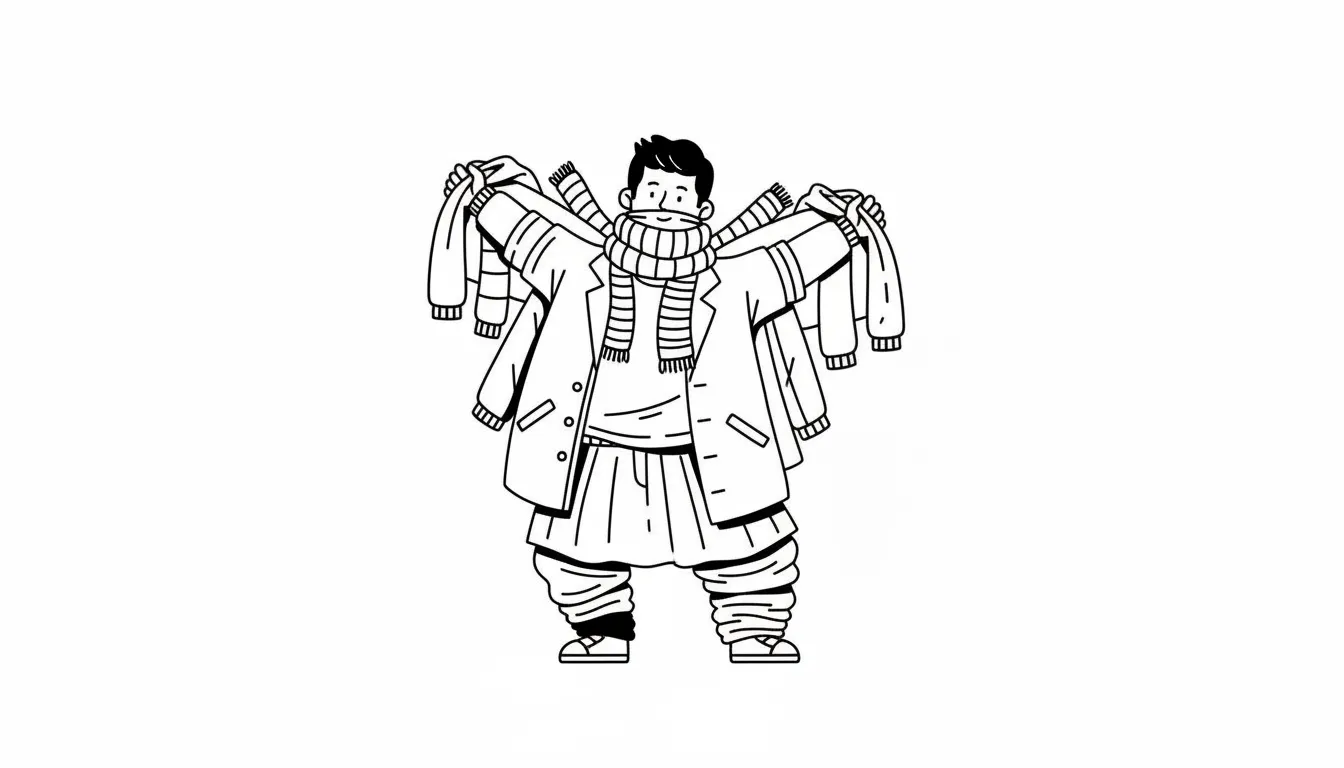
Vocabulario en inglés de la ropa
Aprende todo el vocabulario de la ropa en inglés: prendas, accesorios, verbos, frases para ir de compras e idioms. Guía completa con ejemplos prácticos para niveles A2 y B1.

Tabla de contenidos
¿Alguna vez te has quedado sin palabras al intentar describir lo que llevas puesto en inglés? ¿O has entrado en una tienda en Inglaterra y no sabías cómo pedir una talla o preguntar por un tipo de prenda? Tranquilo, le pasa a más gente de la que crees. El vocabulario de la ropa en inglés es uno de esos temas que parece sencillo sobre el papel, pero que en la práctica puede ponernos en apuros si no lo tenemos bien dominado.
En este artículo voy a dar un repaso a todo el vocabulario esencial relacionado con la ropa en inglés, desde las prendas básicas que usamos a diario hasta expresiones útiles para ir de compras o describir el estilo de alguien. Y lo haremos de forma amena, con ejemplos prácticos y situaciones reales, porque al fin y al cabo, aprender inglés tiene que ser útil y entretenido, y esto es Keep Smiling English. 😜
Vocabulario básico de la ropa en inglés
Empecemos por lo fundamental: las prendas de ropa que usamos en nuestro día a día. Vamos a organizarlo por categorías para que te resulte más fácil de recordar y puedas localizar rápidamente lo que necesitas. Recuerda que conocer este vocabulario no solo te ayudará a comunicarte mejor, sino que también es imprescindible para aprobar exámenes oficiales de nivel básico e intermedio.
Prendas superiores
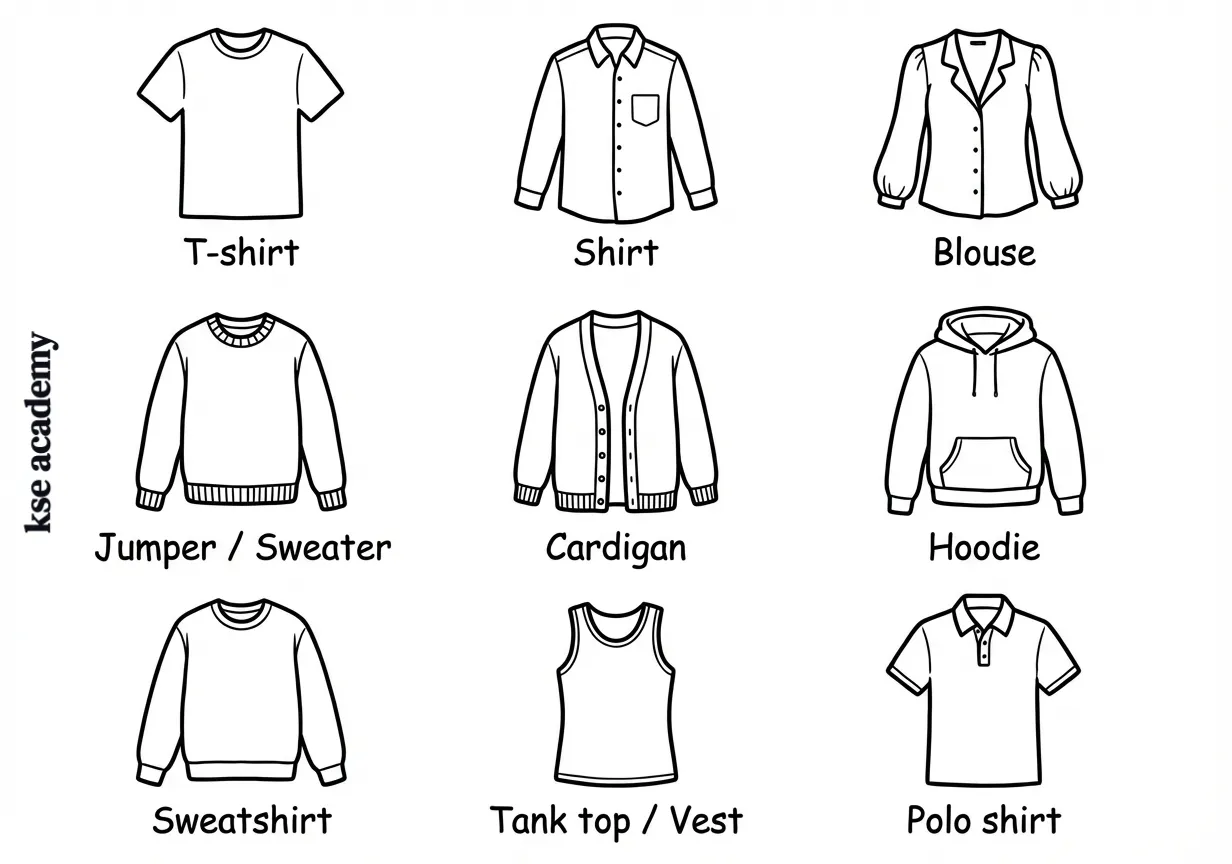
Las prendas superiores son aquellas que llevamos en la parte de arriba del cuerpo. Aquí tienes las más comunes con ejemplos de uso real:
| INGLÉS | ESPAÑOL | EJEMPLO |
|---|---|---|
| T-shirt | Camiseta | I usually wear a white T-shirt at the weekend. |
| Shirt | Camisa | He always wears a shirt to work. |
| Blouse | Blusa | She bought a beautiful silk blouse for the party. |
| Jumper / Sweater | Jersey | It’s cold today, so I’m wearing a warm jumper. |
| Cardigan | Rebeca / Chaqueta de punto | My grandmother loves wearing cardigans. |
| Hoodie | Sudadera con capucha | Teenagers often wear hoodies and trainers. |
| Sweatshirt | Sudadera | I bought a new sweatshirt for the gym. |
| Tank top / Vest | Camiseta sin mangas | In summer, I prefer wearing tank tops. |
| Polo shirt | Polo | He wore a navy blue polo shirt to the golf club. |
Nota importante: En inglés británico se usa «jumper», mientras que en inglés americano es más común decir «sweater». Ambas son correctas, pero recuerda adaptar tu vocabulario según el contexto.
Prendas inferiores
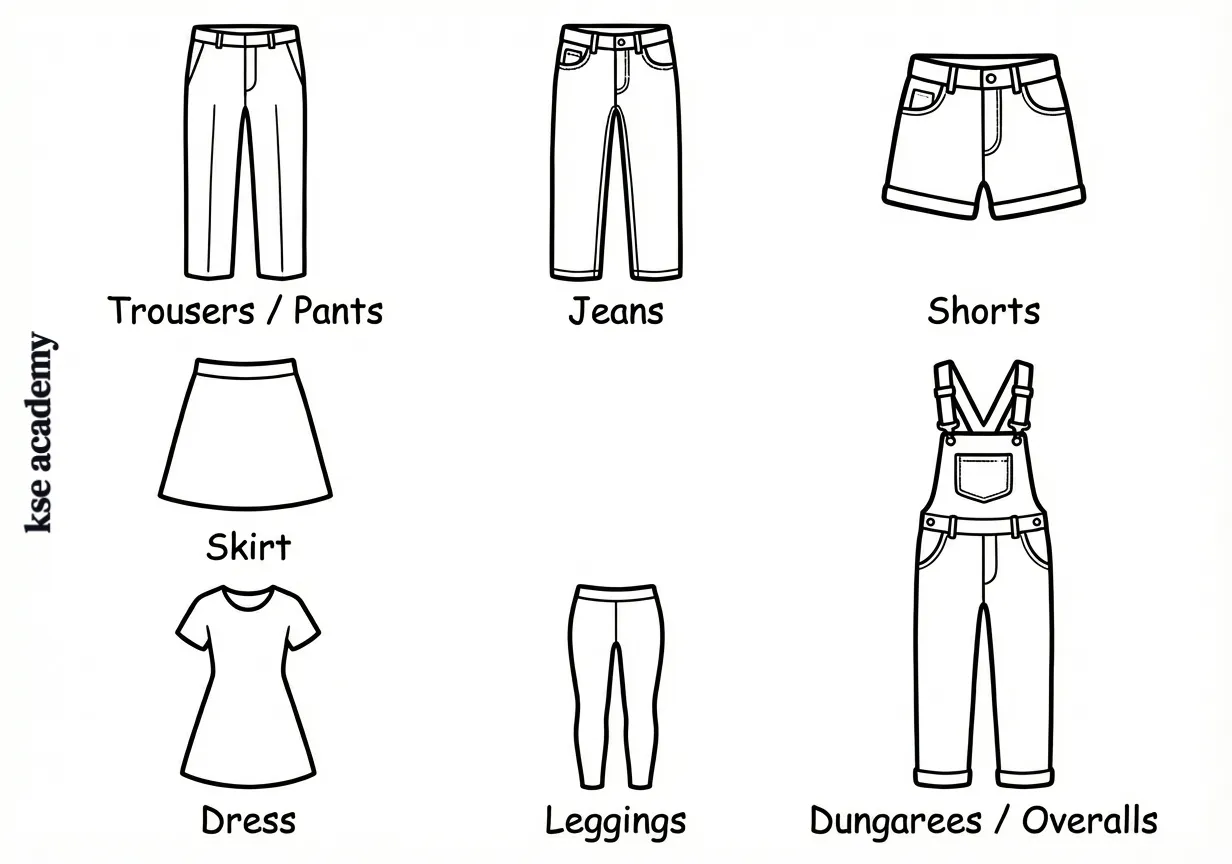
Ahora vamos con las prendas que llevamos en la parte inferior del cuerpo. Este vocabulario es súper útil cuando vas de compras o describes tu estilo personal:
| INGLÉS | ESPAÑOL | EJEMPLO |
|---|---|---|
| Trousers / Pants | Pantalones | I need to buy a new pair of trousers for work. |
| Jeans | Vaqueros | She’s wearing blue jeans and a white T-shirt. |
| Shorts | Pantalones cortos | It’s too hot to wear trousers, I’ll put on some shorts. |
| Skirt | Falda | She wore a long skirt to the wedding. |
| Dress | Vestido | That red dress looks amazing on you! |
| Leggings | Mallas / Leggings | I always wear leggings when I go to yoga class. |
| Dungarees / Overalls | Peto / Mono | Dungarees are back in fashion this year. |
Cuidado: «Trousers» es la palabra británica para pantalones, mientras que en Estados Unidos se dice «pants». Curiosamente, en inglés británico «pants» significa ropa interior, así que ojo con los malentendidos. 😅
Ropa de abrigo
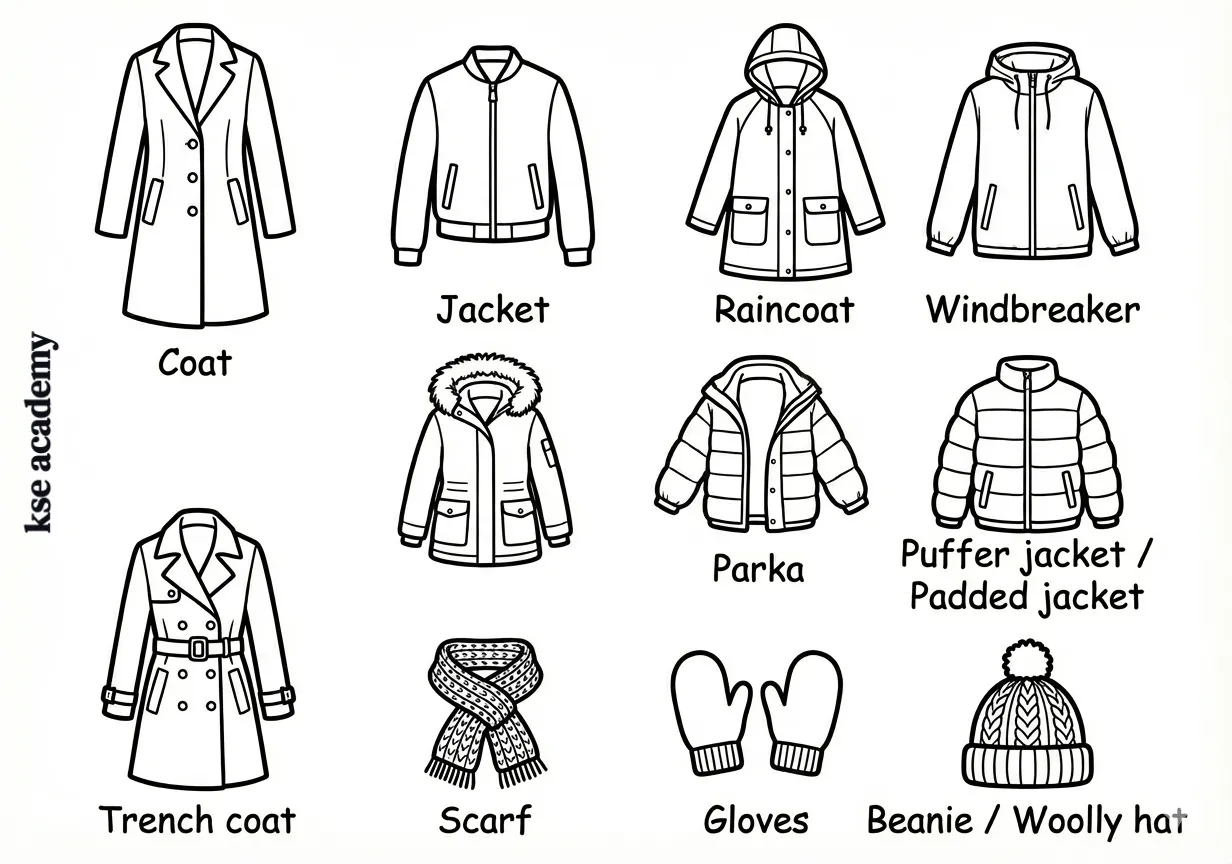
Cuando llega el frío o simplemente necesitas protegerte del viento y la lluvia, este vocabulario es imprescindible:
| INGLÉS | ESPAÑOL | EJEMPLO |
|---|---|---|
| Coat | Abrigo | Don’t forget your coat, it’s freezing outside! |
| Jacket | Chaqueta | I love my leather jacket. |
| Raincoat | Impermeable / Chubasquero | Take a raincoat with you, it might rain later. |
| Windbreaker | Cortavientos | A windbreaker is perfect for windy autumn days. |
| Parka | Parka | I need a warm parka for my trip to Norway. |
| Puffer jacket / Padded jacket | Plumífero / Chaqueta acolchada | Puffer jackets are very popular in winter. |
| Trench coat | Gabardina | She looks elegant in her beige trench coat. |
| Scarf | Bufanda | I can’t find my woollen scarf anywhere. |
| Gloves | Guantes | My hands are cold, I should have brought my gloves. |
| Beanie / Woolly hat | Gorro de lana | He always wears a beanie in winter. |
Ropa interior y pijamas
Aunque no es un tema del que hablemos constantemente, es importante conocer este vocabulario para situaciones cotidianas como hacer la compra o la colada:
| INGLÉS | ESPAÑOL | EJEMPLO |
|---|---|---|
| Underwear | Ropa interior | I need to buy some new underwear. |
| Bra | Sujetador | I can’t find a comfortable bra in my size. |
| Knickers / Panties | Bragas | She prefers cotton knickers because they’re more comfortable. |
| Underpants / Pants | Calzoncillos | He bought a pack of five underpants. |
| Boxers / Boxer shorts | Calzoncillos tipo bóxer | Most men prefer boxers to briefs. |
| Briefs | Slips | He always wears briefs for sports. |
| Socks | Calcetines | I always lose one sock in the washing machine. |
| Tights | Medias / Pantis | She wore black tights under her dress. |
| Stockings | Medias (hasta el muslo) | She prefers stockings to tights. |
| Pyjamas / Pajamas | Pijama | I bought new pyjamas for the winter. |
| Nightdress / Nightgown | Camisón | My grandmother always wears a nightdress to bed. |
| Dressing gown / Bathrobe | Bata / Albornoz | There’s a soft bathrobe in the hotel bathroom. |
Nota: «Knickers» es británico y «panties» es americano. Lo mismo ocurre con la forma de escribir «pyjamas» (UK) y «pajamas» (US), aunque la pronunciación es la misma.
Ropa elegante
Para ocasiones especiales, bodas, eventos formales o el mundo laboral, necesitas conocer este vocabulario más específico:
| INGLÉS | ESPAÑOL | EJEMPLO |
|---|---|---|
| Suit | Traje | He wore a grey suit to the job interview. |
| Tuxedo / Dinner jacket | Esmoquin | The groom looked handsome in his black tuxedo. |
| Blazer | Americana | You can wear a blazer with jeans for a smart-casual look. |
| Waistcoat / Vest | Chaleco | He completed his three-piece suit with a matching waistcoat. |
| Tie | Corbata | I can never remember how to tie a tie properly. |
| Bow tie | Pajarita | He looked very elegant with his bow tie. |
| Evening dress / Gown | Vestido de gala | She wore a stunning red evening dress to the gala. |
| Cocktail dress | Vestido de cóctel | A cocktail dress is perfect for semi-formal events. |
| Dress shirt | Camisa de vestir | He always wears a crisp white dress shirt to work. |
| Cufflinks | Gemelos | He received silver cufflinks as a wedding gift. |
Calzado y accesorios
Ningún outfit está completo sin el calzado y los accesorios adecuados. Aquí tienes el vocabulario esencial:
Calzado (Footwear)
| INGLÉS | ESPAÑOL | EJEMPLO |
|---|---|---|
| Shoes | Zapatos | I need to buy some new shoes for the wedding. |
| Trainers / Sneakers | Zapatillas deportivas | I wear trainers every day because they’re comfortable. |
| Boots | Botas | I bought some leather boots for the winter. |
| Ankle boots | Botines | Ankle boots look great with skinny jeans. |
| Sandals | Sandalias | She wore comfortable sandals to walk around the city. |
| Flip-flops | Chanclas | Don’t forget your flip-flops for the beach. |
| High heels / Heels | Tacones | I can’t walk in high heels for more than an hour. |
| Slippers | Zapatillas de casa | I put on my slippers as soon as I get home. |
| Loafers | Mocasines | He wore brown loafers with his suit. |
| Wellies / Wellington boots | Botas de agua | You’ll need your wellies if you’re going to the festival. |
Accesorios (Accessories)
| INGLÉS | ESPAÑOL | EJEMPLO |
|---|---|---|
| Hat | Sombrero | She wore a wide-brimmed hat to protect herself from the sun. |
| Cap | Gorra | He always wears a baseball cap backwards. |
| Belt | Cinturón | This belt matches my shoes perfectly. |
| Bag / Handbag | Bolso | I can’t find my keys in my handbag. |
| Backpack | Mochila | Students usually carry a backpack to school. |
| Clutch bag | Bolso de mano / Clutch | She carried a small clutch bag to the party. |
| Sunglasses | Gafas de sol | Don’t forget your sunglasses, it’s very sunny today. |
| Watch | Reloj | He got a new watch for his birthday. |
| Necklace | Collar | She wore a beautiful pearl necklace. |
| Bracelet | Pulsera | I bought a silver bracelet for my sister. |
| Earrings | Pendientes | Those gold earrings look lovely on you. |
| Ring | Anillo | She wears her engagement ring every day. |
Materiales, estampados y descripción de prendas
Saber nombrar las prendas está muy bien, pero si quieres describir ropa con detalle, necesitas conocer los materiales, estampados y adjetivos que te permitirán hacerlo. Esto es especialmente útil cuando vas de compras o quieres explicar qué tipo de ropa prefieres.
Materiales y tejidos
El material de una prenda puede cambiar completamente su apariencia, comodidad y uso. Aquí tienes los más comunes:
| INGLÉS | ESPAÑOL | EJEMPLO |
|---|---|---|
| Cotton | Algodón | I prefer cotton T-shirts because they’re comfortable. |
| Wool | Lana | This jumper is made of pure wool. |
| Silk | Seda | She wore a beautiful silk blouse to the dinner. |
| Leather | Cuero / Piel | He bought a leather jacket for his motorbike. |
| Denim | Tela vaquera | Denim jackets never go out of fashion. |
| Linen | Lino | Linen shirts are perfect for hot summer days. |
| Polyester | Poliéster | This dress is 100% polyester. |
| Velvet | Terciopelo | She wore a stunning velvet dress to the gala. |
| Corduroy | Pana | Corduroy trousers are back in style. |
| Suede | Ante | I love my suede boots, but they’re hard to clean. |
| Lycra / Spandex | Licra / Elastano | These leggings contain 15% lycra for extra stretch. |
Estampados y patrones
Cuando describes ropa, los estampados son clave. Aquí tienes los más habituales:
| INGLÉS | ESPAÑOL | EJEMPLO |
|---|---|---|
| Plain | Liso | I prefer plain T-shirts without any patterns. |
| Striped | De rayas | She’s wearing a blue and white striped shirt. |
| Checked / Checkered | De cuadros | He wore a checked shirt to the party. |
| Polka dot | De lunares | That polka dot dress is so cute! |
| Floral | De flores | Floral patterns are very popular in spring. |
| Patterned | Estampado | I love patterned scarves; they add colour to any outfit. |
| Tartan / Plaid | De cuadros escoceses | He wore a tartan kilt to the Scottish wedding. |
Adjetivos para describir ropa
Finalmente, aquí tienes algunos adjetivos útiles para describir el estilo, el estado o las características de las prendas:
| INGLÉS | ESPAÑOL | EJEMPLO |
|---|---|---|
| Tight | Ajustado / Estrecho | These jeans are too tight, I need a bigger size. |
| Loose | Holgado / Amplio | I prefer loose clothing in summer. |
| Baggy | Ancho / Holgado | Baggy jeans were very popular in the 90s. |
| Smart | Elegante / Formal | You need to wear smart clothes to the interview. |
| Casual | Informal / Casual | The dress code is smart casual. |
| Fashionable / Trendy | De moda / A la moda | She always wears fashionable clothes. |
| Old-fashioned | Anticuado / Pasado de moda | That style looks a bit old-fashioned now. |
| Scruffy | Desaliñado / Descuidado | You look a bit scruffy; maybe you should change your shirt. |
| Shabby | Gastado / Raído | I need to throw away this shabby old coat. |
| Smart-casual | Elegante informal | The restaurant has a smart-casual dress code. |
| Vintage | Vintage / De época | She loves buying vintage clothing from charity shops. |
| Brand new | Nuevo / A estrenar | These trainers are brand new; I only bought them yesterday. |
Expresiones y frases útiles para hablar de ropa en inglés
Vale, ya conoces el vocabulario básico de las prendas, pero ahora viene lo realmente interesante: saber cómo usar estas palabras en contextos reales. Porque una cosa es conocer la palabra «jacket» y otra muy distinta es poder decir «this jacket suits you perfectly» o «I need to try on these trousers». En esta sección vamos a ver expresiones prácticas, verbos específicos y hasta algunos idioms relacionados con la ropa que te harán sonar mucho más natural.
Verbos para hablar de cómo vestimos
Los verbos son fundamentales para construir frases naturales sobre la ropa. Aquí tienes una selección desde los más básicos hasta algunos más avanzados que te harán destacar:
| Verbo | Significado | Ejemplo |
|---|---|---|
| Wear | Llevar puesto | What are you wearing to the party tonight? |
| Put on | Ponerse (acción) | It’s cold outside, put on your coat! |
| Take off | Quitarse | Please take off your shoes before entering the house. |
| Try on | Probarse | Can I try on this dress, please? |
| Fit | Quedar bien (de talla) | These jeans don’t fit me anymore. |
| Suit | Favorecer, sentar bien | That colour really suits you! |
| Match | Combinar, hacer juego | Your shoes don’t match your handbag. |
| Get dressed | Vestirse | Hurry up and get dressed, we’re going to be late! |
| Change | Cambiarse de ropa | I need to change before we go out. |
| Dress up | Arreglarse, vestirse elegante | We need to dress up for the wedding. |
| Dress down | Vestir informal | It’s Friday, so we can dress down at work. |
| Suit up | Ponerse el traje (formal o informal) | Suit up, gentlemen! We have an important meeting. |
| Don | Ponerse (formal/literario) | The knight donned his armour before battle. |
Diferencia importante: Muchos estudiantes confunden «wear» y «put on». Recuerda: «wear» se refiere al estado de llevar algo puesto («I wear glasses»), mientras que «put on» es la acción de ponértelo («I put on my glasses»). Es como la diferencia entre estar sentado y sentarse.
También es clave entender la diferencia entre «fit» y «suit». «Fit» se refiere exclusivamente a la talla («these trousers are too small, they don’t fit»), mientras que «suit» tiene que ver con si algo te favorece en términos de estilo, color o aspecto general («red suits you better than blue»).
Frases para ir de compras
Si alguna vez has entrado en una tienda en el extranjero y te has quedado en blanco, esta sección te va a salvar la vida. Aquí tienes las frases más útiles para ir de compras:
| Frase en inglés | Traducción |
|---|---|
| Can I help you? | ¿Puedo ayudarle? |
| I’m just looking, thank you. | Solo estoy mirando, gracias. |
| Can I try this on? | ¿Puedo probarme esto? |
| Where are the changing rooms? | ¿Dónde están los probadores? |
| Do you have this in a different size? | ¿Tienen esto en otra talla? |
| Do you have this in a smaller/larger size? | ¿Tienen esto en una talla más pequeña/grande? |
| Do you have this in a different colour? | ¿Tienen esto en otro color? |
| What size are you? | ¿Qué talla usas? |
| I’m a size 10 / medium. | Uso la talla 10 / mediana. |
| It doesn’t fit. | No me queda bien. |
| It’s too tight/loose. | Me queda demasiado estrecho/holgado. |
| It’s too big/small. | Es demasiado grande/pequeño. |
| How much is this? | ¿Cuánto cuesta esto? |
| Is it on sale? | ¿Está en rebajas? |
| I’ll take it. | Me lo llevo. |
| Can I pay by card? | ¿Puedo pagar con tarjeta? |
| Can I have a receipt, please? | ¿Me da el recibo, por favor? |
| What’s your return policy? | ¿Cuál es su política de devoluciones? |
Consejo práctico: Si no estás seguro de tu talla en el sistema británico o americano, simplemente pruébate varias. Las tallas varían mucho según el país y la marca. En Reino Unido, las tallas de ropa de mujer van normalmente del 6 al 18, mientras que en Estados Unidos van del 2 al 14. Para los hombres, las camisas se miden por el cuello (en pulgadas) y los pantalones por cintura y largo.
Idioms de la ropa en inglés
Los idioms son expresiones fijas que no se pueden traducir literalmente y que dan mucha personalidad a tu inglés. En el mundo de la ropa tenemos unos cuantos muy útiles y divertidos. Aquí te dejo los más comunes:
| Idiom | Significado | Ejemplo |
|---|---|---|
| To be dressed to kill | Ir vestido espectacularmente | She was dressed to kill at the party last night. |
| To fit like a glove | Quedar perfecto | This jacket fits like a glove! |
| To be in someone’s shoes | Estar en el lugar de otra persona | I wouldn’t like to be in his shoes right now. |
| To roll up your sleeves | Ponerse manos a la obra | We need to roll up our sleeves and get this done. |
| To wear your heart on your sleeve | Mostrar abiertamente las emociones | John wears his heart on his sleeve; everyone knows when he’s upset. |
| To put yourself in someone’s shoes | Ponerse en el lugar de otro | Try to put yourself in her shoes before judging. |
| To tighten your belt | Apretarse el cinturón (ahorrar) | We’ll have to tighten our belts this month. |
| To wear the trousers | Llevar los pantalones (mandar) | In their relationship, she wears the trousers. |
| At the drop of a hat | Inmediatamente, sin pensar | He would travel to Japan at the drop of a hat. |
| To take your hat off to someone | Quitarse el sombrero ante alguien (admirar) | I take my hat off to you for finishing the marathon. |
| If the shoe fits, wear it | Si te viene el sayo, póntelo | He called me lazy. Well, if the shoe fits, wear it. |
| To dress for the occasion | Vestirse según la ocasión | Make sure you dress for the occasion; it’s a formal dinner. |
| To look like something the cat dragged in | Tener un aspecto horrible | You look like something the cat dragged in! Did you sleep in those clothes? |
| Dressed to the nines | Vestido de punta en blanco | They were dressed to the nines for the opera. |
Usar estos idioms en conversaciones te hace sonar más natural y demuestra un nivel más avanzado del idioma. No hace falta que los uses todos, pero tener algunos en tu arsenal siempre es útil.
¿Por qué es importante aprender el vocabulario de la ropa en inglés?
Quizá te estés preguntando: ¿realmente necesito dedicar tiempo a aprender el vocabulario de la ropa? La respuesta corta es: sí, absolutamente. Y aquí te explico por qué:
- Es vocabulario de la vida cotidiana: Todos los días te vistes, describes lo que llevas puesto, comentas la ropa de otras personas, o vas de compras. Es un tema que aparece constantemente en conversaciones informales, así que dominarlo te permitirá participar con naturalidad en situaciones del día a día.
- Es esencial para viajar: Si viajas a un país de habla inglesa y necesitas comprar ropa, preguntar por una talla, o describir algo que has perdido, este vocabulario es imprescindible. Imagínate intentar explicar que has perdido tu chaqueta de cuero marrón sin saber cómo decir «leather jacket».
- Es fundamental en exámenes oficiales: En los exámenes de Cambridge, especialmente en niveles A2 (Key) y B1 (Preliminary), el vocabulario de la ropa aparece con frecuencia tanto en el Speaking como en el Writing. Saber describir lo que lleva puesto alguien en una foto o hablar de tus preferencias de moda puede marcar la diferencia en tu puntuación.
- Mejora tu capacidad descriptiva: Aprender este vocabulario no solo te enseña nombres de prendas, sino también adjetivos, materiales, colores y expresiones que enriquecen tu capacidad general de describir cosas en inglés. Son habilidades transferibles a otros contextos.
- Te ayuda a entender mejor el inglés real: Películas, series, revistas, redes sociales… la ropa es un tema recurrente en la cultura popular. Si quieres entender conversaciones sobre moda, consejos de estilo o simplemente seguir a tus influencers favoritos en Instagram, necesitas este vocabulario.
En resumen, el vocabulario de la ropa no es un tema secundario o poco útil. Al contrario, es una de las áreas léxicas más prácticas y versátiles del inglés, y dominarla te dará mucha más confianza en multitud de situaciones reales.
Errores comunes con la ropa en inglés
Todos cometemos errores al aprender un idioma, y el vocabulario de la ropa no es una excepción. Aquí te dejo los errores más frecuentes que veo en mis alumnos (y cómo evitarlos):
1. Confundir «wear» y «put on»
❌ «I’m wearing my coat now» (cuando te lo estás poniendo en ese momento)
✅ «I’m putting on my coat now»
Recuerda: «wear» es el estado de llevar algo puesto, «put on» es la acción de ponértelo.
2. Usar «pants» en inglés británico para referirse a pantalones
En Reino Unido, «pants» significa ropa interior, no pantalones. Si dices «I need to buy new pants» en Londres, te estarán entendiendo que necesitas calzoncillos o bragas. Para pantalones, di «trousers».
3. Confundir «fit» y «suit»
❌ «This colour doesn’t fit you»
✅ «This colour doesn’t suit you»
«Fit» es solo para la talla, «suit» es para si algo te favorece.
4. Olvidar que algunas palabras son siempre plurales
Prendas como «jeans», «trousers», «shorts», «tights», «scissors» (vale, esto último no es ropa, pero es un error común) siempre van en plural. Decimos «these jeans are», no «this jean is». Y cuando hablamos de cantidad, usamos «a pair of»: «I bought two pairs of jeans».
5. Pronunciar mal «clothes»
Esta palabra es una pesadilla para los hispanohablantes. No se pronuncia «clodes» ni «clozez». La pronunciación correcta es /kləʊðz/, con un sonido «th» suave (como en «the») seguido de una «z». Practica: «close» + «th» = «clothes».
6. Decir «I have put» en vez de «I’m wearing»
❌ «I have put a blue shirt»
✅ «I’m wearing a blue shirt» o «I’ve got a blue shirt on»
7. No usar artículos correctamente
❌ «I’m wearing jeans» ✅ (correcto)
❌ «I’m wearing a jeans» ✗ (incorrecto)
Pero:
❌ «I’m wearing shirt» ✗ (incorrecto)
✅ «I’m wearing a shirt» ✓ (correcto)
Recuerda que las prendas en plural como «jeans», «trousers» no llevan artículo, pero las singulares como «shirt», «dress» sí necesitan uno.
8. Confundir «dress» (sustantivo) con «dress» (verbo)
❌ «I dress a beautiful dress»
✅ «I’m wearing a beautiful dress»
Como verbo, «dress» significa vestirse en general, no llevar puesto algo específico.
Consejos para memorizar el vocabulario de la ropa
Memorizar vocabulario no tiene por qué ser una tarea aburrida y mecánica. Al contrario, cuanto más creativo y personalizado sea tu método de aprendizaje, mejor se te quedará todo. Aquí te dejo algunos consejos prácticos que funcionan de verdad para retener el vocabulario de la ropa en inglés:
- Describe tu outfit diario en inglés: Cada mañana, mientras te vistes, di en voz alta (o mentalmente, si estás en el metro) qué llevas puesto. Por ejemplo: «Today I’m wearing blue jeans, a white T-shirt and my favourite trainers». Es un ejercicio súper sencillo que convierte tu rutina diaria en una clase de inglés gratuita.
- Etiqueta tu armario: Sí, puede parecer un poco excéntrico, pero funciona. Pon pequeñas etiquetas adhesivas en tus prendas con el nombre en inglés. Cada vez que abras el armario, estarás repasando vocabulario sin darte cuenta. Además, es una excusa perfecta para organizar ese caos que tienes ahí dentro.
- Usa flashcards con imágenes: Las tarjetas con imágenes son ideales para vocabulario visual como la ropa. Puedes usar aplicaciones como Anki o Quizlet, o hacerlas tú mismo con cartulina. En una cara pon la imagen de la prenda, en la otra el nombre en inglés y una frase de ejemplo. Repásalas en el bus, en la cola del súper, o antes de dormir.
- Crea historias absurdas: Nuestro cerebro recuerda mejor las cosas raras o divertidas. Inventa historias ridículas que conecten varias palabras. Por ejemplo: «My jumper fell in love with a cardigan, so they got married wearing matching scarves and gloves». Cuanto más absurda, mejor.
- Mira vídeos de moda en inglés: YouTube está lleno de canales de moda, hauls, outfits del día, y lookbooks en inglés. Ver este tipo de contenido te expone al vocabulario en contextos reales y te ayuda a familiarizarte con expresiones que realmente se usan. Además, es entretenido, así que no sentirás que estás estudiando.
- Juega a describir la ropa de la gente: Cuando estés en la calle, en una cafetería o esperando el autobús, practica mentalmente describiendo lo que lleva puesta la gente que te rodea: «That man is wearing a dark blue suit and brown leather shoes», «She’s got a red coat and black boots». Es una forma discreta y efectiva de practicar.
- Agrupa el vocabulario por temas: No aprendas las palabras sueltas de forma aleatoria. Agrúpalas por categorías (como hemos hecho en este artículo): prendas superiores, inferiores, de abrigo, accesorios, etc. Nuestro cerebro funciona mejor con información organizada y es más fácil recordar palabras cuando están conectadas entre sí.
- Practica con descripciones escritas: Escribe breves descripciones de outfits que te gusten, de personajes de series o películas, o incluso de fotos de Instagram. Por ejemplo: «In this photo, the actress is wearing an elegant black dress with high heels and a clutch bag». Escribir refuerza el aprendizaje de forma diferente a hablar o leer.
- Usa asociaciones mentales: Busca conexiones entre las palabras en inglés y español que te ayuden a recordarlas. Por ejemplo, «hoodie» contiene la palabra «hood» (capucha), o «raincoat» es literalmente un «abrigo de lluvia» (rain + coat). Estas asociaciones lógicas facilitan mucho la memorización.
- No te obsesiones con la perfección: Es normal olvidar palabras o confundirlas al principio. Lo importante es usarlas, aunque cometas errores. Cada vez que te equivocas y te corriges, tu cerebro refuerza ese aprendizaje. Así que relájate, disfruta del proceso y celebra cada pequeño avance.
Ejercicios del vocabulario de la ropa en inglés
Ahora que ya conoces todo el vocabulario, es hora de practicar. Aquí tienes tres ejercicios para poner a prueba lo que has aprendido. Completa cada frase con la palabra correcta de la caja. ¡Mucha suerte!
Y si prefieres una versión que puedas copiar, pegar y modificar fácilmente, aquí tienes una a continuación. 👇
Ejercicio 1: Prendas básicas y verbos
Complete the following sentences with the words below.
- It’s cold outside, you should __________ your coat before leaving.
- These jeans don’t __________ me anymore; I think I need a bigger size.
- That blue shirt really __________ you! You should buy it.
- Can I __________ this dress before I buy it?
- Please __________ your shoes when you enter the house.
- What are you going to __________ to the wedding?
- Hurry up and __________! We’re going to be late.
- Your belt __________ your shoes perfectly.
- This jacket __________ like a glove!
- Red really __________ her; she should wear it more often.
Ver respuestas
- put on
- fit
- suits
- try on
- take off
- wear
- get dressed
- matches
- fits
- suit
Ejercicio 2: Materiales, estampados y descripción
Complete the following sentences with the words below.
- I prefer __________ T-shirts because they’re comfortable and breathable.
- She wore a beautiful __________ blouse to the dinner party.
- He bought a __________ jacket for his new motorbike.
- These jeans are too __________; I can barely move in them!
- I love your __________ shirt; the blue and white lines look great.
- That __________ dress with the dots is so cute and retro!
- In winter, I always wear a __________ jumper to keep warm.
- I prefer __________ clothing in summer because it’s more comfortable.
- __________ jackets never go out of fashion.
- I don’t like patterns; I prefer __________ colours.
Ver respuestas
- cotton
- silk
- leather
- tight
- striped
- polka dot
- wool
- loose
- Denim
- plain
Ejercicio 3: Vocabulario de compras y situaciones reales
Complete the following sentences with the words below.
- Excuse me, where are the __________? I’d like to try this on.
- What __________ are you? I’m a medium.
- This dress is too big. Do you have it in a __________ size?
- I’m just __________, thank you.
- Is this jacket __________? It doesn’t have a price tag.
- These trousers are too small. Do you have them in a __________ size?
- This shirt __________ perfectly! I’ll take it.
- Can I have a __________, please?
- I’ll __________ it. How much is it?
- Can I pay by __________?
Ver respuestas
- changing rooms
- size
- smaller
- looking
- on sale
- larger
- fits
- receipt
- take
- card
¿Qué tal te han salido los ejercicios? Si has acertado la mayoría, ¡enhorabuena! Significa que ya dominas bastante bien el vocabulario de la ropa en inglés. Si has fallado en algunas, no te preocupes: repasa las secciones correspondientes y vuelve a intentarlo. La práctica hace al maestro.
Y hasta el próximo artículo, don’t forget to keep smiling!