
Cómo triunfar en el B2 First (FCE): Speaking Part 2
En el FCE Speaking Part 2, se te pide que compares dos imágenes y respondas a una pregunta. ¡Aquí tienes la mejor manera de hacerlo!

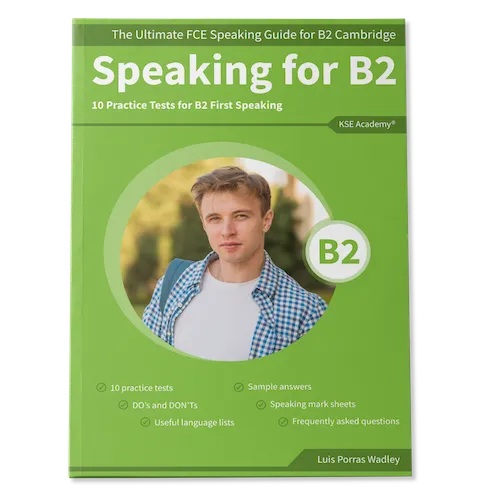
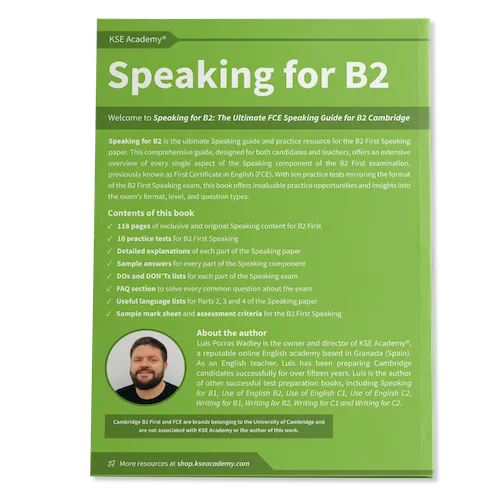
Tabla de contenidos
En este post, me voy a centrar en la Parte 2 del Speaking del FCE, la segunda parte del B2 First (FCE) Speaking Test, que es una de las partes más interesantes de este examen de nivel B2. Es una de las más fáciles de preparar pero también una de las partes que más pone nerviosos a los candidatos. Por eso estoy aquí, para enseñar exactamente lo que tienes que hacer y cómo hacer la Parte 2 del B2 First Speaking. ¡Así que sigue leyendo!
Descripción de la Parte 2 del Speaking del FCE
Esta parte del examen consta de 2 tareas. Primero, tú o tu compañero tendréis que comparar dos fotos y responder una pregunta durante el proceso. Segundo, tú o tu compañero recibiréis una pregunta de seguimiento después de la comparación. Cuando hagas la comparación, tu compañero responderá a la otra pregunta y viceversa.
Duración de la Parte 2 del Speaking del B2 First
Esta parte del examen se supone que dura 3 o 4 minutos, y los principales elementos cronometrados son los siguientes:
- Comparación + pregunta del Candidato A: 1 minuto
- Pregunta de seguimiento del Candidato B: 30 segundos
- Comparación + pregunta del Candidato B: 1 minuto
- Pregunta de seguimiento del Candidato A: 30 segundos
Instrucciones y Posible Respuesta del Candidato
Al enfrentarse a cualquier examen de speaking, es importante saber qué esperar, ya sea en términos de duración, tareas, instrucciones, contenido, etc. Por esta razón, creo que es esencial estar familiarizado con las instrucciones que recibirás durante la Parte 2 del Speaking del FCE. ¡Vamos allá!
Instrucciones iniciales del examinador
In this part of the test, I’m going to give each of you two photographs. I’d like you to talk about your photographs on your own for about a minute, and also to answer a question about your partner’s photographs.
(Candidate A), it’s your turn first. Here are your photographs. They show people who are helping other people in different situations.
(coloca las siguientes fotos delante del Candidato A)
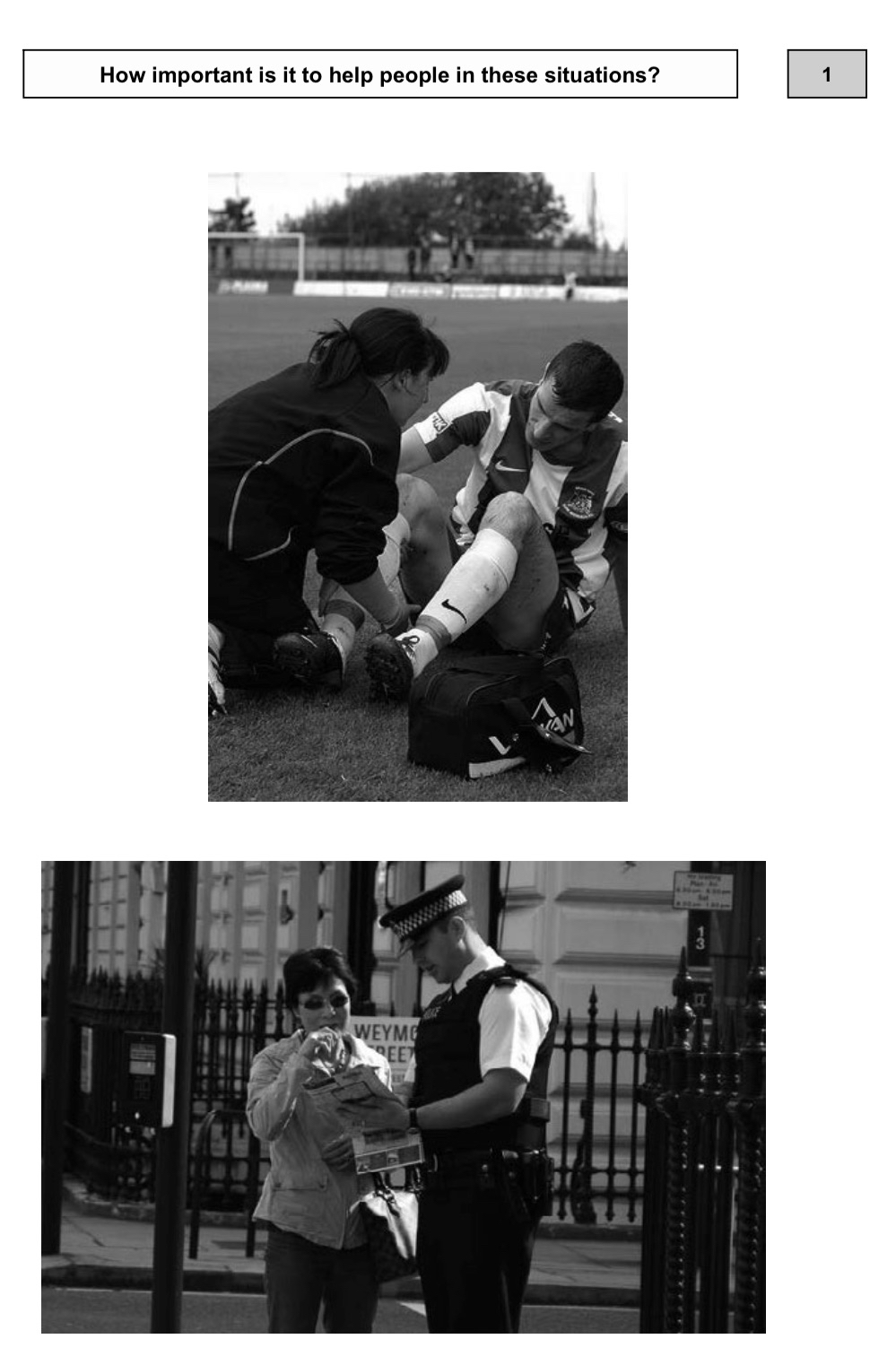
I’d like you to compare the photographs, and say how important it is to help people in these situations.
Respuesta del Candidato A
(introduction) Both of these pictures show people getting some help; the first one shows a football player who seems to be injured and the second one is an Asian tourist getting help from a policeman.
(similarities + differences) Although both situations involve someone helping a person, they are very different. In the first one, the football player needs help because he’s had an injury and, probably, he can’t walk properly. On the other hand, in the second picture, the tourist is probably asking for directions because he might be lost. Also, the footballer is likely to be in pain, while the tourist may only be a little nervous.
(question) As for how important it is to help these people, I’d say it’s important in both situations. However, I strongly believe that the footballer needs more help than the tourist, as his situation is obviously more serious.
Pregunta de seguimiento del examinador para el Candidato B
(Candidate B), do you find it easy to ask for help when you have a problem?
Respuesta del Candidato B
Well, it depends on the problem, but normally I do. Whenever I have a serious problem I ask my mum or my dad for advice. It’s not easy, but I do it. With other problems, I always ask my friends first, because they normally know what to do.
Observaciones Básicas para la Parte 2 del Speaking del B2
Si lees la tarea anterior con atención, notarás las siguientes características:
- Al Candidato A se le pide que compare dos fotos y que responda una pregunta sobre ellas.
- La pregunta que el examinador incluye en su explicación también está escrita encima de las fotos, así que no te preocupes por tener que memorizarla.
- El Candidato A tendrá que hablar más tiempo que el Candidato B, es decir, la persona que compara habla más tiempo que la persona que responde a la pregunta de seguimiento.
- El Candidato A ha comparado claramente ambas fotos y ha respondido a la pregunta.
- Las expresiones en negrita son palabras o frases útiles para usar en cualquier comparación.
- La comparación del Candidato A sigue un orden claro: introducción + similitudes, diferencias, pregunta. Aunque este orden en particular no es obligatorio, es recomendable.
Parte 2 del Speaking del FCE: Frases Útiles para Comparar Fotos
En esta sección, veremos expresiones útiles que puedes usar en cualquier comparación. Sin embargo, como consejo básico, te diré que para comparar, la mayoría de los conectores que tendrás que usar son conectores de contraste. Veamos.
- Para empezar tu comparación
- Both of these pictures show…
- These two pictures show…
- The two situations in these pictures are…
- Para hablar de similitudes
- These two pictures/situations are similar because/in that…
- In both pictures we can see…
- One similarity between these two pictures/situations is that…
- Another similarity might be that…
- One thing that these two pictures/situations have in common is that…
- One thing that these two pictures share is that…
- The most obvious similarity is that…
- These two pictures share the fact that…
- Both pictures (…) in the same way.
- Para hablar de diferencias
- One of the most obvious differences (between these two pictures) is that…
- Another difference is that…
- Something that makes these two pictures different is…
- What makes these two situations (so/completely) different is…
- While the first picture …, the second one…
- The first picture…. However, the second one…
- The first picture… whereas the second one…
- Although the first picture…., the second one…
- On the one hand, the first picture shows… . On the other hand, the second one…
- Para introducir la respuesta a la pregunta
- As for + pregunta parafraseada
- As to + pregunta parafraseada
- In relation to the question,…
- In response to the question, I’d say that…
- As regards the question,…
- Regarding the question of the task,
- With regard to + pregunta parafraseada
Caso Especial: Ventajas vs Desventajas
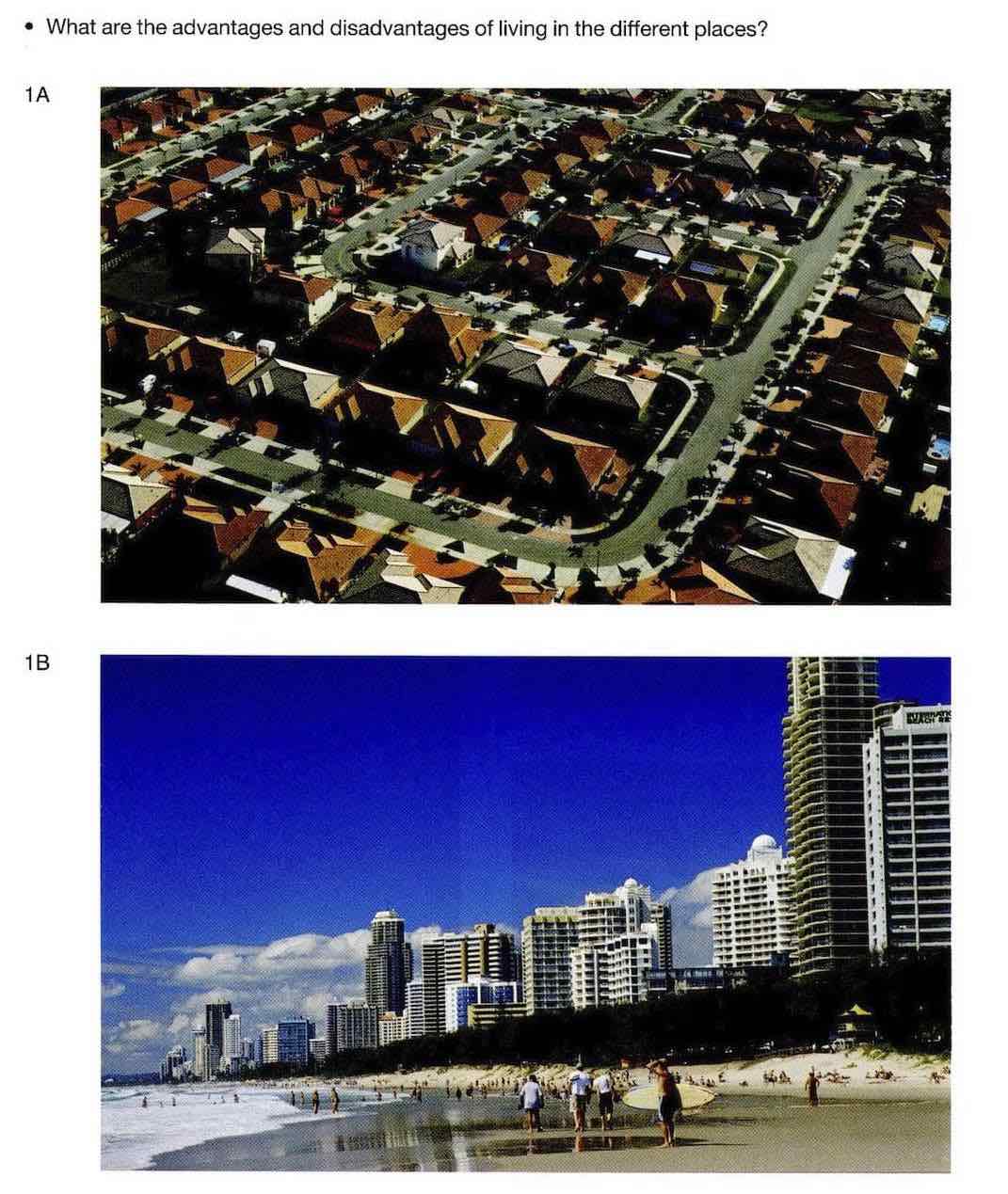
He decidido escribir esto como una sección separada porque encuentro que las tareas de speaking del FCE que implican ventajas y desventajas son algo especiales. El problema con estas tareas es que suelen implicar demasiadas ideas para seguir la estructura anterior (introducción + similitudes + diferencias + pregunta). En este caso, siempre recomiendo a mis alumnos que mezclen la pregunta con el resto de la tarea, es decir, que respondan a la pregunta al mismo tiempo que se realiza la comparación. Esto se puede hacer con cualquier tarea, en realidad, pero en este caso, diría que es especialmente importante. Veamos una comparación de este caso particular para la tarea siguiente:
Respuesta del Candidato
Both of these pictures show different places where people live; the first one is a neighbourhood of detached houses, while the second one is a coastal city with many skyscrapers.
(similarities + differences + question) One advantage of living in the first place is that you can have your own garden where you can relax with your family. Also, it’s a very quiet place. On the other hand, the obvious upside of living on the seaside is that the weather is usually mild and you can go swimming and sunbathing quite often.
As for the disadvantages, I believe that the neighbourhood in the first picture can be a little boring for young people as there isn’t much to do
Como puedes ver en la tarea anterior, la comparación se hace en torno a la pregunta de la tarea, es decir, ventajas y desventajas. De esta manera, estás ahorrando tiempo para hacer la tarea correctamente sin dejar nada fuera.
Parte 2 del Speaking del FCE: Frases Útiles para la Pregunta de Seguimiento
Aunque esta parte de la tarea no sigue una estructura particular, dado que depende del tema de las fotos, normalmente se te pide que recurras a tu propia experiencia en relación con el tema o que elijas una de las fotos y justifiques tu respuesta. Por ejemplo, en la tarea anterior, la pregunta para el Candidato B sería algo así como: «where would you prefer to live?«
Así que veamos algunas expresiones para responder a esta pregunta correctamente:
- As far as I’m concerned,…
- The way I see it,…
- If I had to choose one of these two (…), I would (definitely) go for…
- In my experience,…
- In my case,…
- Well, it’s not an easy choice, but I think I’d prefer to…
- I would (…) no doubt.
- I would definitely prefer/choose…
- I believe that it’s more important to…
No hay una fórmula específica para responder a esta pregunta de seguimiento, dado el amplio espectro que abarca, pero las expresiones anteriores definitivamente te ayudarán a responder de manera más apropiada.
Los 10 Mejores Consejos para la Parte 2 del Speaking del FCE
- Compara, no describas: es común que los candidatos pasen todo el minuto describiendo ambas fotos por separado en lugar de compararlas. Recuerda, el examinador te pide explícitamente que «compare these two pictures», ¡así que no olvides hacerlo!
- No abuses de «and»: he notado que mis alumnos tienden a usar la palabra «and» todo el tiempo para cambiar de la foto 1 a la foto 2. «And» es un conector para añadir ideas, no para expresar contraste. Y, dado que estás comparando, deberías usar otros tipos de conectores. Observa ambas tareas en este artículo y fíjate en las frases de conexión en negrita.
- No te centres demasiado en una foto: un minuto no es mucho tiempo, así que debes asegurarte de incluir en tu discurso las ideas más importantes sobre ambas fotos.
- Dedica suficiente tiempo a responder la pregunta: algunas personas pasan tanto tiempo hablando de las fotos que se olvidan de responder la pregunta, y el interlocutor las interrumpe. Aunque ser interrumpido no es ni bueno ni malo, no responder la pregunta tendrá un impacto negativo en tu puntuación.
- Dirígete al interlocutor: en esta tarea, no debes dirigirte a tu compañero. Esta es una tarea individual, así que simplemente concéntrate en lo que estás diciendo y dirige tus comentarios al interlocutor.
- Termina tus frases: es común que los candidatos empiecen una frase y luego se arrepientan y se detengan a mitad de camino. No dejes que tu discurso se desvanezca en medio de una frase; termina de expresar tus ideas.
- Concéntrate en las fotos y la pregunta: mientras comparas ambas fotos, no debes hablar de cosas relacionadas que te hayan sucedido. En esta parte, se supone que debes centrarte en las situaciones de las fotos, no en tus propias experiencias.
- Mantente en el tema: al responder la pregunta de seguimiento, asegúrate de ceñirte al tema y responder exactamente lo que preguntó el examinador.
- Pide que te repitan: está perfectamente bien pedir al interlocutor que repita las instrucciones o la pregunta de seguimiento si no las entendiste la primera vez.
- Utiliza vocabulario relacionado: si bien este artículo se ha centrado principalmente en expresiones para comparar y dar tu opinión, obviamente necesitas demostrar que tu vocabulario está en un nivel B2. Así que asegúrate de utilizar lo que has estudiado e introducir algunos términos avanzados que puedan impresionar a los examinadores.
Consejo Extra
- Sonríe: te sorprendería lo que los seres humanos pueden lograr con una sonrisa. Una actitud positiva y alegre hará que causes una mejor impresión a los examinadores, además de convertirte, hasta cierto punto, en un mejor comunicador.
Vídeo de una Parte 2 del Speaking del FCE Real
Siempre es útil ver un examen real, así que aquí tienes un vídeo de la segunda parte de esta prueba de speaking. Pero recuerda, estos candidatos no son perfectos, ¡así que intenta aprender de sus errores en lugar de cometer los tuyos!
Si te gustó este post, ¡comenta y compártelo! Sigue a KSE Academy en Facebook, Twitter & YouTube y mantente al día de las últimas noticias.
Ah, ¡y no olvides keep smiling!
Lucas says:
Me podrían enviar un examen oficial B2 completo, a este correo electrónico *******@gmail.com
Luis @ KSE Academy says:
Hola, Lucas. Puedes descargar varios en la web oficial de Cambridge o en la nuestra en esta página: https://u.pcloud.link/publink/show?code=XZSYCr7ZBmiAj1fz4Bh4Q2jdf27rI7ohOG3y&lang=es