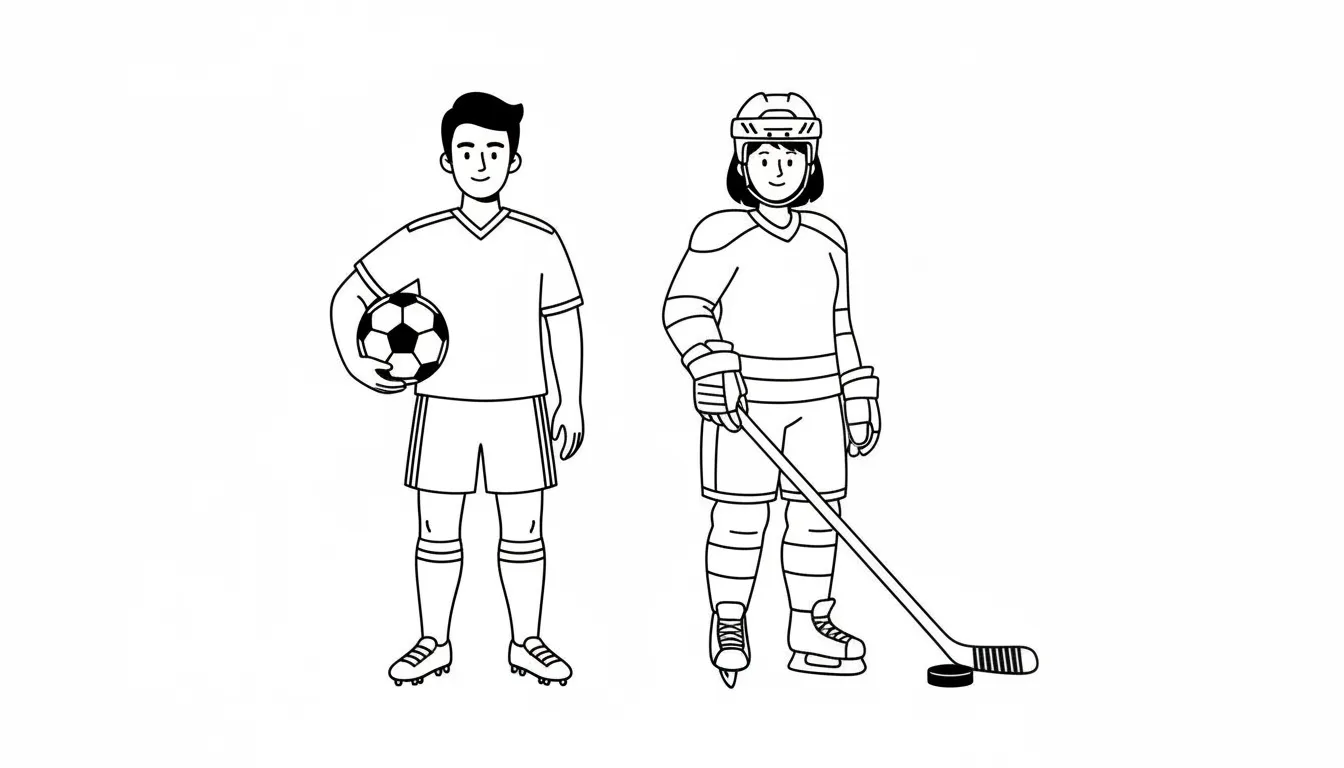
Vocabulario de deporte en inglés
Guía definitiva del vocabulario deportivo en inglés: deportes, equipamiento, phrasal verbs e idioms.

Tabla de contenidos
El deporte forma parte de nuestra vida diaria, y saber hablar de él en inglés es fundamental para desenvolverse en conversaciones cotidianas, ya sea comentando el partido del fin de semana, hablando de tus aficiones o siguiendo eventos deportivos internacionales. En este artículo encontrarás todo el vocabulario de deporte en inglés que necesitas para dominar este tema tan universal.
Por qué es importante conocer el vocabulario deportivo en inglés
El vocabulario relacionado con el deporte es uno de los temas más recurrentes en exámenes de inglés como el Speaking del B1 Preliminary o el Writing del B2 First, donde es frecuente que tengas que hablar sobre tus hobbies, describir actividades de tiempo libre o redactar textos sobre hábitos saludables o tus hobbies.
Además, el deporte es un tema ideal para romper el hielo en conversaciones informales, hacer nuevos amigos cuando viajas o participar en debates sobre eventos deportivos internacionales. Dominar este vocabulario te permitirá expresarte con naturalidad y confianza en situaciones reales de comunicación.
Verbos esenciales para hablar de deportes en inglés
Antes de adentrarnos en el vocabulario específico, es fundamental que conozcas los tres verbos principales que se utilizan para hablar de deportes en inglés. Elegir el verbo correcto marca la diferencia entre sonar natural o cometer errores típicos de estudiantes.
Play: para deportes de equipo y competitivos
El verbo play se utiliza principalmente con deportes de equipo, deportes con pelota o balón, y juegos competitivos donde hay ganadores y perdedores. Es el verbo más común cuando hablamos de deportes.
Ejemplos de uso:
- play football
- play basketball
- play tennis
- play rugby
- play volleyball
- play hockey
- play baseball
- play golf
🇬🇧 I play football every Saturday with my friends.
🇪🇸 Juego al fútbol todos los sábados con mis amigos.
🇬🇧 She plays tennis professionally.
🇪🇸 Ella juega al tenis profesionalmente.
Go: para actividades deportivas individuales y con desplazamiento
El verbo go se usa con deportes individuales y actividades que implican desplazamiento. Siempre va seguido del gerundio (verbo + -ing). Es especialmente común con deportes al aire libre y actividades recreativas.
Ejemplos de uso:
- go running / go jogging
- go swimming
- go cycling
- go skiing
- go skating
- go hiking
- go climbing
- go surfing
🇬🇧 We go swimming at the beach every summer.
🇪🇸 Vamos a nadar a la playa cada verano.
🇬🇧 He goes running before breakfast.
🇪🇸 Él sale a correr antes del desayuno.
Do: para disciplinas y artes marciales
El verbo do se utiliza principalmente con artes marciales, disciplinas de fitness y deportes que no suelen emplearse como verbos. Aunque es menos frecuente que play o go, es importante conocerlo para sonar preciso.
Ejemplos de uso:
- do karate
- do judo
- do taekwondo
- do yoga
- do aerobics
- do gymnastics
- do pilates
- do martial arts
🇬🇧 My sister does gymnastics three times a week.
🇪🇸 Mi hermana hace gimnasia tres veces por semana.
🇬🇧 I’ve been doing karate since I was ten.
🇪🇸 He estado haciendo kárate desde que tenía diez años.
Deportes más populares en inglés (clasificados por categorías)
A continuación encontrarás una lista completa de deportes organizados por categorías. Esta clasificación te ayudará a memorizar mejor el vocabulario y a entender las relaciones entre diferentes disciplinas deportivas.
Deportes de pelota (ball sports)
Muchos de los deportes más populares del mundo se juegan con algún tipo de pelota o balón. Fíjate en que muchos de estos deportes tienen la palabra ball en su nombre:
- football (UK) / soccer (US) = fútbol
- American football = fútbol americano
- basketball = baloncesto
- volleyball = voleibol
- handball = balonmano
- baseball = béisbol
- softball = sóftbol
- rugby = rugby
- tennis = tenis
- table tennis / ping pong = tenis de mesa
- badminton = bádminton
- golf = golf
- cricket = críquet
- squash = squash
- racquetball = racquetball
- paddle / padel = pádel
- bowling = bolos
Si quieres profundizar en el deporte más popular del mundo, no te pierdas mi artículo sobre vocabulario de fútbol en inglés, donde encontrarás términos específicos, posiciones de jugadores y expresiones típicas del mundo del balompié.
Deportes acuáticos (water sports)
Los deportes acuáticos son especialmente populares en verano y en zonas costeras. Aquí tienes los más importantes:
- swimming = natación
- diving = saltos / buceo
- water polo = waterpolo
- synchronized swimming / artistic swimming = natación sincronizada
- surfing = surf
- windsurfing = windsurf
- kitesurfing = kitesurf
- sailing = vela
- rowing = remo
- kayaking = piragüismo
- canoeing = canotaje
- water skiing = esquí acuático
- white water rafting = rafting
- scuba diving = buceo con escafandra
Deportes de invierno (winter sports)
Cuando llega el frío y la nieve, estos son los deportes que dominan la conversación:
- skiing = esquí
- alpine skiing = esquí alpino
- cross-country skiing = esquí de fondo
- snowboarding = snowboard
- ice skating = patinaje sobre hielo
- figure skating = patinaje artístico
- speed skating = patinaje de velocidad
- ice hockey = hockey sobre hielo
- curling = curling
- bobsleigh = bobsleigh
- luge = luge (trineo ligero)
- skeleton = skeleton
- ski jumping = saltos de esquí
- biathlon = biatlón
Deportes de combate (combat sports)
Las artes marciales y deportes de combate requieren disciplina, técnica y respeto. Recuerda que con estos deportes utilizamos el verbo do:
- boxing = boxeo
- wrestling = lucha
- judo = judo
- karate = kárate
- taekwondo = taekwondo
- kickboxing = kickboxing
- MMA (mixed martial arts) = artes marciales mixtas
- fencing = esgrima
- martial arts = artes marciales
- jiu-jitsu = jiu-jitsu
- muay thai = muay thai
Deportes individuales y de resistencia
Estos deportes se centran en el rendimiento personal y la superación individual:
- athletics / track and field = atletismo
- running / jogging = correr
- sprinting = esprint
- marathon = maratón
- hurdles = vallas
- long jump = salto de longitud
- high jump = salto de altura
- pole vault = salto con pértiga
- triple jump = triple salto
- shot put = lanzamiento de peso
- discus throw = lanzamiento de disco
- javelin throw = lanzamiento de jabalina
- hammer throw = lanzamiento de martillo
- cycling = ciclismo
- mountain biking = ciclismo de montaña
- triathlon = triatlón
- weightlifting = halterofilia
- gymnastics = gimnasia
- rhythmic gymnastics = gimnasia rítmica
- archery = tiro con arco
- shooting = tiro
Deportes extremos (extreme sports)
Para los más aventureros, estos deportes ofrecen adrenalina y emoción:
- skateboarding = monopatín
- BMX = BMX
- rock climbing / climbing = escalada
- mountaineering = alpinismo
- bungee jumping = puenting
- skydiving / parachuting = paracaidismo
- paragliding = parapente
- hang gliding = ala delta
- base jumping = salto base
- parkour = parkour
- motocross = motocross
- canyoning = barranquismo
Equipamiento y material deportivo en inglés
Conocer el vocabulario del equipamiento deportivo es esencial, especialmente si vas a comprar material en un país angloparlante o necesitas describir lo que llevas puesto para practicar deporte.
Ropa y calzado deportivo
- trainers (UK) / sneakers (US) = zapatillas deportivas
- running shoes = zapatillas para correr
- football boots = botas de fútbol
- hiking boots = botas de senderismo
- tracksuit = chándal
- jersey = camiseta de equipo
- shorts = pantalones cortos
- leggings = mallas
- sports bra = sujetador deportivo
- sweatband = muñequera / cinta para el sudor
- cap = gorra
- swimming costume / swimsuit (UK) = bañador de mujer
- swimming trunks = bañador de hombre
- wetsuit = traje de neopreno
- ski suit = traje de esquí
Accesorios y protecciones
- helmet = casco
- crash helmet = casco protector
- shin pads / shin guards = espinilleras
- knee pads = rodilleras
- elbow pads = coderas
- mouthguard = protector bucal
- goggles = gafas de natación / esquí
- boxing gloves = guantes de boxeo
- gloves = guantes
- wristband = muñequera
- headband = cinta para la cabeza
Material específico por deporte
- ball = pelota / balón (genérico)
- football = balón de fútbol
- basketball = balón de baloncesto
- tennis ball = pelota de tenis
- golf ball = pelota de golf
- racket / racquet = raqueta
- bat = bate / pala
- hockey stick = palo de hockey
- golf club = palo de golf
- net = red
- goal = portería
- goalpost = poste de la portería
- hoop = aro (baloncesto)
- puck = disco de hockey
- skates = patines
- skateboard = monopatín
- surfboard = tabla de surf
- snowboard = tabla de snowboard
- skis = esquís
- ski poles = bastones de esquí
- bicycle / bike = bicicleta
- weights = pesas
- dumbbells = mancuernas
- barbell = barra con pesas
- yoga mat = esterilla de yoga
- jump rope / skipping rope = comba
- punching bag = saco de boxeo
- fishing rod = caña de pescar
- chess board = tablero de ajedrez
Hablando de ajedrez, que me encanta aunque soy más malo que un dolor de muelas… Aunque es un deporte mental más que físico, tiene su propio vocabulario fascinante. Descubre más en mi artículo sobre vocabulario de ajedrez en inglés.
Instalaciones deportivas: dónde se practican los deportes
Cada deporte tiene su espacio característico. Conocer estos términos te ayudará a dar indicaciones, quedar con amigos para hacer deporte o entender noticias deportivas.
Espacios al aire libre
- pitch = campo (fútbol, rugby, cricket)
- football pitch = campo de fútbol
- rugby pitch = campo de rugby
- golf course = campo de golf
- tennis court = pista de tenis
- basketball court = cancha de baloncesto
- athletics track = pista de atletismo
- running track = pista para correr
- ski slope = pista de esquí
- skate park = parque de patinaje
- cycling track = pista de ciclismo
- velodrome = velódromo
- race track / circuit = circuito de carreras
- climbing wall = rocódromo
Instalaciones cubiertas
- sports centre / sports center (US) = polideportivo
- gym / gymnasium = gimnasio
- fitness centre = centro de fitness
- swimming pool = piscina
- indoor pool = piscina cubierta
- ice rink = pista de hielo
- boxing ring = ring de boxeo
- wrestling ring = cuadrilátero de lucha
- sports hall = pabellón deportivo
- stadium = estadio
- arena = recinto deportivo
- changing room / locker room (US) = vestuario
- dojo = dojo (artes marciales)
- bowling alley = bolera
Acciones y verbos relacionados con el deporte
Más allá de los verbos principales (play, go, do), existen muchos verbos específicos que describen acciones deportivas concretas.
Acciones con balón
- kick = patear, chutar
- throw = lanzar
- pass = pasar
- catch = coger, atrapar
- head = cabecear
- hit = golpear
- strike = golpear (con fuerza)
- shoot = disparar, tirar
- dribble = driblar, regatear
- bounce = botar
- serve = sacar (tenis, voleibol)
- volley = volear
- tackle = placar, hacer una entrada
- block = bloquear
- save = parar (portero)
🇬🇧 The goalkeeper made an incredible save in the last minute.
🇪🇸 El portero hizo una parada increíble en el último minuto.
Movimientos generales en el deporte
- run = correr
- sprint = esprintar
- jog = trotar
- walk = caminar
- jump = saltar
- leap = brincar
- dive = tirarse, zambullirse
- swim = nadar
- climb = escalar, trepar
- lift = levantar
- pull = tirar
- push = empujar
- bend = agacharse, doblarse
- stretch = estirar
- swing = balancear
- spin = girar
- slide = deslizarse
- skate = patinar
- ski = esquiar
- row = remar
- pedal = pedalear
- punch = dar puñetazos
- dodge = esquivar
🇬🇧 You need to stretch before and after exercising to avoid injuries.
🇪🇸 Necesitas estirar antes y después de hacer ejercicio para evitar lesiones.
Vocabulario para competiciones y eventos deportivos
Cuando asistes a un evento deportivo o sigues una competición por televisión, este vocabulario te resultará imprescindible.
Resultados y clasificaciones
- win = ganar
- lose = perder
- draw / tie = empatar
- beat = vencer, derrotar
- defeat = derrota
- victory = victoria
- score = resultado, puntuación, marcar
- scoreboard = marcador
- points = puntos
- goal = gol
- own goal = autogol
- nil (UK) / zero (US) = cero (en resultados)
- lead = ventaja, liderar
- be ahead = ir por delante
- be behind = ir por detrás
- comeback = remontada
- championship = campeonato
- tournament = torneo
- league = liga
- cup = copa
- trophy = trofeo
- medal = medalla
- gold/silver/bronze medal = medalla de oro/plata/bronce
- podium = podio
- world record = récord mundial
- personal best = mejor marca personal
🇬🇧 The match ended in a draw, two-nil to each team… wait, that doesn’t make sense! It was two-two.
🇪🇸 El partido terminó en empate, dos a cero para cada equipo… ¡espera, eso no tiene sentido! Fue dos a dos.
Personas involucradas (árbitros, espectadores, etc.)
- referee = árbitro (fútbol, rugby, baloncesto, boxeo)
- umpire = árbitro (tenis, béisbol, críquet)
- linesman / assistant referee = árbitro asistente, linier
- judge = juez
- coach = entrenador
- manager = entrenador (UK, fútbol)
- trainer = preparador físico
- captain = capitán
- player = jugador
- athlete = atleta
- competitor = competidor
- opponent = oponente, rival
- teammate = compañero de equipo
- spectator = espectador
- fan = aficionado, hincha
- supporter = seguidor
- crowd = multitud, público
- home team = equipo local
- away team = equipo visitante
- winner = ganador
- loser = perdedor
- champion = campeón
- runner-up = subcampeón
Expresiones útiles durante competiciones
- kick off = saque inicial, comenzar
- half-time = descanso (medio tiempo)
- full-time = final del partido
- extra time = prórroga
- penalty shootout = tanda de penaltis
- injury time = tiempo de descuento
- foul = falta
- free kick = tiro libre
- penalty = penalti
- corner = córner, saque de esquina
- offside = fuera de juego
- yellow card = tarjeta amarilla
- red card = tarjeta roja
- substitution = sustitución
- lap = vuelta
- round = ronda, asalto
- set = set (tenis)
- match point = punto de partido
- game point = punto de juego
- knockout = nocaut
- disqualification = descalificación
🇬🇧 The referee showed a red card and sent the player off.
🇪🇸 El árbitro mostró una tarjeta roja y expulsó al jugador.
Phrasal verbs de deporte en inglés
Los phrasal verbs son fundamentales para sonar natural en inglés. En el contexto deportivo, estos son los más comunes y útiles:
| Phrasal verb | Significado | Ejemplo |
|---|---|---|
| warm up | calentar | Always warm up before exercising. |
| cool down | enfriar (después del ejercicio) | Don’t forget to cool down after your run. |
| work out | hacer ejercicio, entrenar | I work out at the gym three times a week. |
| take up | empezar (un deporte/hobby) | I took up yoga last year. |
| give up | abandonar, dejar de hacer | Don’t give up! Keep trying! |
| get fit | ponerse en forma | I’m trying to get fit for the summer. |
| keep up | mantener el ritmo | I can’t keep up with the other runners. |
| drop out | retirarse (de una carrera/competición) | She had to drop out of the race due to injury. |
| train up | entrenar intensamente | He’s training up for the marathon. |
| knock out | dejar K.O., eliminar | The boxer knocked out his opponent in round three. |
| cheer on | animar, alentar | We went to the stadium to cheer on our team. |
| come back | remontar | They came back from 2-0 down to win 3-2. |
| send off | expulsar | The player was sent off for a bad tackle. |
| show off | presumir, lucirse | Stop showing off your new football skills! |
| limber up | calentar, hacer estiramientos | The athletes are limbering up before the race. |
🇬🇧 I decided to take up swimming because it’s good for my back.
🇪🇸 Decidí empezar a nadar porque es bueno para mi espalda.
🇬🇧 Don’t give up! You’re almost at the finish line!
🇪🇸 ¡No te rindas! ¡Casi estás en la línea de meta!
Idioms relacionados con el deporte
Los idioms o expresiones idiomáticas deportivas se usan constantemente en inglés cotidiano, incluso cuando no se está hablando de deporte. Conocerlas te hará sonar mucho más natural y nativo:
| Idiom | Significado | Ejemplo |
|---|---|---|
| the ball is in your court | te toca a ti decidir/actuar | I’ve made my offer, now the ball is in your court. |
| throw in the towel | tirar la toalla, rendirse | After months of trying, he finally threw in the towel. |
| move the goalposts | cambiar las reglas | They keep moving the goalposts every time we get close. |
| get the ball rolling | poner algo en marcha | Let’s get the ball rolling on this project. |
| on the ball | alerta, atento, eficiente | You need to be on the ball in this job. |
| a level playing field | igualdad de condiciones | We need a level playing field for all competitors. |
| par for the course | lo normal, lo habitual | Delays are par for the course with this airline. |
| jump the gun | precipitarse, adelantarse | Don’t jump the gun – wait for the official announcement. |
| hit it out of the park | hacerlo genial, triunfar | Your presentation really hit it out of the park! |
| saved by the bell | salvarse por los pelos | I didn’t finish the exam, but I was saved by the bell. |
| down for the count | fuera de combate, derrotado | After that flu, I was down for the count for a week. |
| take one for the team | sacrificarse por el equipo | I’ll take one for the team and work this weekend. |
| keep your eye on the ball | mantenerse concentrado | Keep your eye on the ball and don’t get distracted. |
| a long shot | muy poco probable | It’s a long shot, but we might win the lottery. |
| go the extra mile | esforzarse al máximo | She always goes the extra mile for her customers. |
| neck and neck | muy igualados | The two teams are neck and neck in the league. |
| blow by blow | con todo detalle | She gave me a blow by blow account of the match. |
| drop the ball | meter la pata, fallar | I really dropped the ball on that assignment. |
| out of your league | fuera de tu alcance/liga | That job is way out of my league. |
| couch potato | teleadicto, sedentario | Stop being a couch potato and go outside! |
🇬🇧 I’ve given you all the information you need. Now the ball is in your court.
🇪🇸 Te he dado toda la información que necesitas. Ahora te toca a ti decidir.
Diferencias entre inglés británico y americano en vocabulario deportivo
El inglés británico y el americano tienen algunas diferencias importantes cuando se trata de deportes. Aquí te señalo las más relevantes para que no te confundas:
| Inglés británico 🇬🇧 | Inglés americano 🇺🇸 | Español |
|---|---|---|
| football | soccer | fútbol |
| American football | football | fútbol americano |
| trainers | sneakers | zapatillas deportivas |
| pitch | field | campo de fútbol |
| kit | uniform | uniforme deportivo |
| nil | zero | cero (en resultados) |
| draw | tie | empate |
| athletics | track and field | atletismo |
| sports centre | sports center | polideportivo |
| Importante: En UK, «football» es el deporte que en US llaman «soccer». Lo que en US llaman «football», en UK se conoce como «American football». ¡Esta es probablemente la diferencia más importante que debes recordar! Pronunciación conflictiva: La palabra «height» (altura) se pronuncia /haɪt/ (como «jait»), no como «heit». Es un error muy común entre hispanohablantes. | ||
⚠️ False friend importante: La palabra «footing» no existe en inglés para referirse al deporte de correr. En español utilizamos «hacer footing», pero en inglés debes decir «go jogging» o «go running». Si dices «I do footing», un nativo no te entenderá. El término correcto es: «I go jogging» o «I go for a jog».
Ejercicios prácticos para memorizar el vocabulario deportivo
Ahora que has aprendido todo este vocabulario, es hora de ponerlo en práctica. A continuación encontrarás tres ejercicios que te ayudarán a consolidar lo aprendido. ¡Mucha suerte!
Y si prefieres una versión en texto que puedas copiar y pegar, la tienes aquí abajo 👇
Exercise 1: General sports vocabulary
Complete the sentences with the correct word from the box.
goalkeeper • pitch • trophy • draw • racket • helmet • referee • warm up • spectators • lap
- The _______________ blew the whistle to start the match.
- You should always _______________ before doing any intense exercise.
- The tennis player broke her _______________ during the final set.
- There were over 50,000 _______________ at the stadium last night.
- The _______________ made an incredible save in the last minute of the game.
- The match ended in a 2-2 _______________.
- The runners completed their final _______________ of the track.
- The winning team lifted the _______________ in celebration.
- The football _______________ was in terrible condition after all the rain.
- Don’t forget to wear a _______________ when you go cycling.
Show answers
- referee
- warm up
- racket
- spectators
- goalkeeper
- draw
- lap
- trophy
- pitch
- helmet
Exercise 2: Do, go or play?
Complete the sentences with do, go or play in the correct form.
- My brother _______________ football every Saturday morning.
- I _______________ swimming three times a week at the local pool.
- She has been _______________ karate since she was seven years old.
- Would you like to _______________ tennis with me this weekend?
- We _______________ skiing in the Alps every winter.
- He _______________ yoga to help with his back pain.
- They _______________ basketball for their school team.
- I’m thinking of _______________ running in the mornings before work.
- My daughter _______________ gymnastics twice a week.
- Do you fancy _______________ cycling in the countryside tomorrow?
- She _______________ golf with her colleagues every Sunday.
- I’ve started _______________ pilates at the gym.
Show answers
- plays
- go
- doing
- play
- go
- does
- play
- going
- does
- going
- plays
- doing
Exercise 3: Sports phrasal verbs
Complete the sentences with the correct phrasal verb from the box.
give up • work out • take up • keep up • cool down • cheer on • drop out • get fit • come back • knock out
- I’ve decided to _______________ a new sport this year – maybe tennis or swimming.
- Don’t _______________ ! You can finish the race if you keep trying.
- She goes to the gym to _______________ five times a week.
- The boxer managed to _______________ his opponent in the third round.
- I’m trying to _______________ for the summer, so I’ve joined a running club.
- The team managed to _______________ from 3-0 down to win 4-3.
- Thousands of fans came to the stadium to _______________ their team.
- I can’t _______________ with the other runners – they’re too fast for me!
- Remember to _______________ after your run by walking for a few minutes.
- He had to _______________ of the marathon because of an injury to his knee.
Show answers
- take up
- give up
- work out
- knock out
- get fit
- come back
- cheer on
- keep up
- cool down
- drop out
Final whistle: conclusión
Y con esto llegamos al pitido final de este completo recorrido por el vocabulario de deporte en inglés. Como habrás visto, dominar este tema no solo se trata de memorizar listas de palabras, sino de entender cómo se estructuran las expresiones, qué verbos usar con cada deporte y cómo aplicar este vocabulario en contextos reales de comunicación.
Recuerda que la mejor manera de interiorizar este vocabulario es usándolo activamente: habla sobre deportes con tus compañeros de clase o intercambio de idiomas, escribe sobre tus deportes favoritos, sigue noticias deportivas en inglés o simplemente comenta los partidos que veas en televisión usando el vocabulario que has aprendido aquí.
Y si quieres tener todo este vocabulario siempre a mano, no olvides que puedes descargar este artículo en PDF haciendo clic en el botón DESCARGAR EN PDF en la parte superior del artículo. Así podrás consultarlo cuando quieras, incluso sin conexión a internet, y tendrás todos los ejercicios prácticos organizados para repasar.
Y hasta el próximo artículo, don’t forget to keep smiling!