
Table of contents
If you have ever said «sink» instead of think, «dis» instead of this or «boat» instead of both, this guide is for you. TH is the most famous sound in English, and also one of the hardest, because it is not one thing: it is two different sounds, /θ/ (think) and /ð/ (this), that are spelled the same. And the question almost nobody answers well is: when do you use one and when the other?
Don’t worry, because there are rules, and they are simpler than they look. If you are from Spain, you also have a head start: /θ/ is the «z» of «zapato» and /ð/ is the «d» of «nada». In this guide I explain how both sounds are made, give you tables of words with IPA, the rules for telling voiceless from voiced, noun and verb pairs (breath and breathe), plurals that change sound, the hard cases, the most typical mistakes and some quick questions. At the end there are thirty practice sentences with answers. Let’s get started! 🙂
The two TH sounds: /θ/ and /ð/
TH is always pronounced with the tip of the tongue between your teeth (or resting very lightly against the upper teeth), letting the air out through the gap. The only thing that changes between the two sounds is whether the vocal cords vibrate:
| Sound | Vocal cords | What it sounds like | Examples |
|---|---|---|---|
| /θ/ | No vibration (voiceless) | like the «z» of «zapato» in Spain | think, three, bath |
| /ð/ | Vibration (voiced) | like the «d» of «nada», but with the tongue between the teeth | this, they, mother |
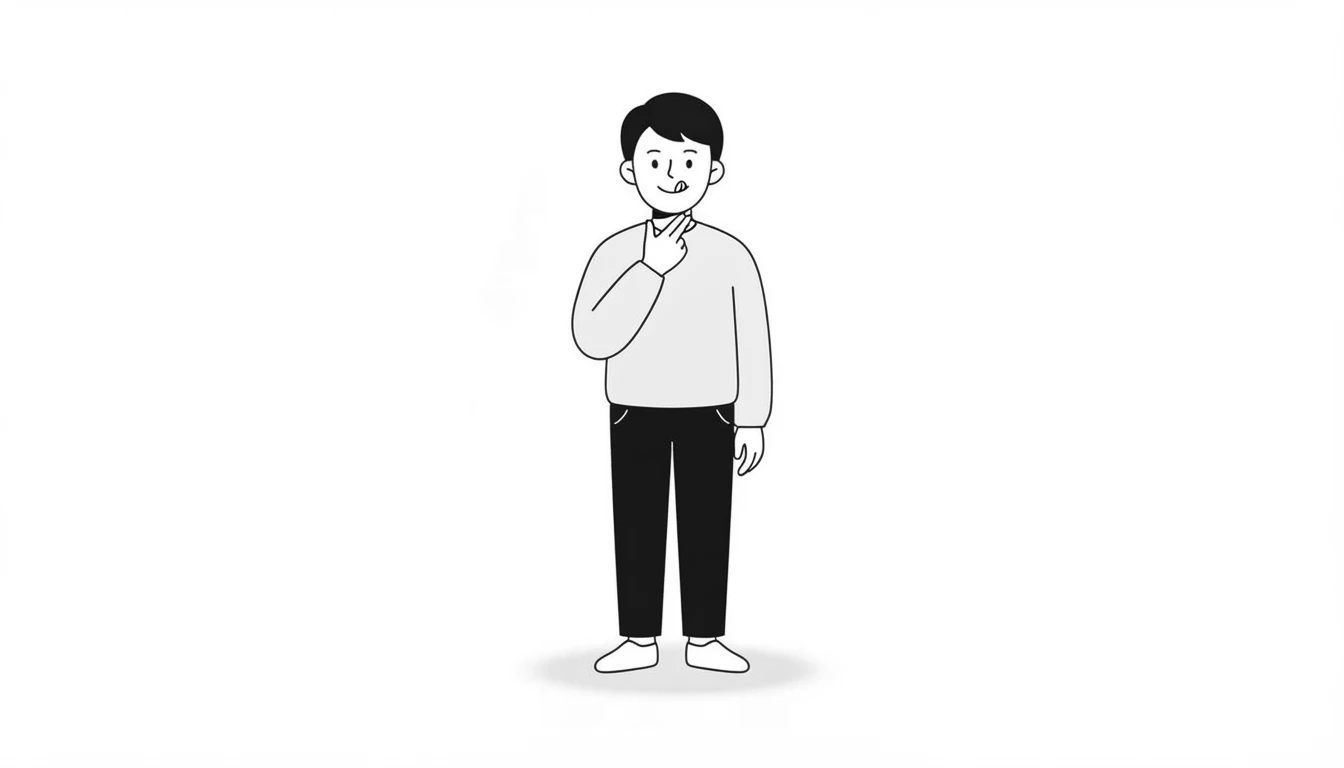
To check which one you are making, put two fingers on your throat: if you feel a vibration, it is /ð/; if not, it is /θ/. And if you cannot read these symbols yet, they are explained in my guide to English phonetics and the IPA.
A note for Spanish speakers: if you are from Spain, TH is nothing new and there is no excuse. If you are from Latin America or the Canaries, you may not often pronounce /θ/, but you have /ð/ in «nada». In both cases, the key is to make the sound at the start of a word too, as in this. There is more on this in the guide to pronunciation mistakes of Spanish speakers.
/θ/: voiceless TH (think)
It is the «whispered» TH: only air comes out. It appears mostly at the start of nouns, verbs and adjectives, and at the end of many nouns:
Listen to the words, one after another:
| 🇬🇧 Word | Pronunciation | 🇪🇸 Meaning |
|---|---|---|
| think | /θɪŋk/ | pensar |
| thing | /θɪŋ/ | cosa |
| three | /θriː/ | tres |
| thank | /θæŋk/ | agradecer |
| thick | /θɪk/ | grueso, espeso |
| thought | /θɔːt/ | pensé, pensamiento |
| thumb | /θʌm/ | pulgar |
| month | /mʌnθ/ | mes |
| bath | /bɑːθ/ | baño |
| tooth | /tuːθ/ | diente |
| mouth | /maʊθ/ | boca |
| author | /ˈɔːθə/ | autor |
/ð/: voiced TH (this)
It is the TH «with voice»: the vocal cords vibrate. It is the sound of the most frequent words in English (the, this, that, they) and of the mother, father, brother family:
Listen to the words, one after another:
| 🇬🇧 Word | Pronunciation | 🇪🇸 Meaning |
|---|---|---|
| the | /ðə/ | el, la |
| this | /ðɪs/ | esto |
| that | /ðæt/ | eso |
| they | /ðeɪ/ | ellos |
| them | /ðem/ | ellos (compl.) |
| then | /ðen/ | entonces |
| there | /ðeə/ | allí |
| those | /ðəʊz/ | esos |
| mother | /ˈmʌðə/ | madre |
| brother | /ˈbrʌðə/ | hermano |
| weather | /ˈweðə/ | tiempo (clima) |
| together | /təˈɡeðə/ | juntos |
Voiceless or voiced? The rules
There is no perfect rule, but these six guidelines will get you right almost every time:
| When | Sound |
|---|---|
| Function words at the start (the, this, that, they, them, then, there, these, those, though, than) | /ð/ voiced |
| Nouns, verbs and adjectives at the start (think, thing, three, thank, thick, thin, thumb) | /θ/ voiceless |
| Between vowels in the family words (mother, father, brother, other, weather, together, rather) | /ð/ voiced |
| Words of Greek origin (theory, theatre, method, Athens, athlete, ethic, mathematics) | /θ/ voiceless |
| Nouns ending in -th (bath, mouth, month, tooth, truth, birth) | /θ/ voiceless |
| Verbs ending in -the (breathe, bathe, clothe, soothe) | /ð/ voiced |
Noun and verb: breath and breathe
There are pairs of words that are spelled almost the same and change sound depending on whether they are nouns or verbs. The noun has /θ/ and the verb, which ends in -the, has /ð/:
Listen to each pair, from top to bottom:
| Noun (/θ/) | Verb (/ð/) |
|---|---|
| breath /breθ/ | breathe /briːð/ |
| bath /bɑːθ/ | bathe /beɪð/ |
| cloth /klɒθ/ | clothe /kləʊð/ |
| mouth (n.) /maʊθ/ | mouth (v.) /maʊð/ |
| teeth /tiːθ/ | teethe /tiːð/ |
Plurals that change sound
Some nouns with /θ/ change to /ð/ in the plural (bath and baths), but others do not (month and months). These are the most frequent:
Listen to each pair, from top to bottom:
| Singular | Plural |
|---|---|
| bath /bɑːθ/ | baths /bɑːðz/ |
| path /pɑːθ/ | paths /pɑːðz/ |
| mouth /maʊθ/ | mouths /maʊðz/ |
| youth /juːθ/ | youths /juːðz/ |
| month /mʌnθ/ | months /mʌnθs/ (no change) |
| myth /mɪθ/ | myths /mɪθs/ (no change) |
Hard cases
There are words in which TH sits next to other consonants and it is hard to link them. Practise slowly, one consonant after another:
Listen to the words, one after another:
| 🇬🇧 Word | Pronunciation | 🇪🇸 Meaning |
|---|---|---|
| months | /mʌnθs/ | meses |
| sixth | /sɪksθ/ | sexto |
| width | /wɪdθ/ | ancho |
| twelfth | /twelfθ/ | duodécimo |
| strengths | /streŋθs/ | puntos fuertes |
| clothes | /kləʊðz/ | ropa |
And one last oddity: in some words and names, th simply sounds /t/:
Listen to the words, one after another:
| 🇬🇧 Word | Pronunciation | 🇪🇸 Meaning |
|---|---|---|
| Thomas | /ˈtɒməs/ | Tomás |
| Thames | /temz/ | el Támesis |
| thyme | /taɪm/ | tomillo |
| Thailand | /ˈtaɪlænd/ | Tailandia |
| Esther | /ˈestə/ | Ester |
Minimal pairs to practise
Spanish speakers replace TH with /s/, /t/, /f/ or /d/. These words help you sharpen your ear and your mouth:
Listen to each triplet, from top to bottom:
| /θ/ | /t/ | /s/ or /f/ |
|---|---|---|
| thin /θɪn/ | tin /tɪn/ | sin /sɪn/ |
| thick /θɪk/ | tick /tɪk/ | sick /sɪk/ |
| three /θriː/ | tree /triː/ | free /friː/ |
| thought /θɔːt/ | taught /tɔːt/ | sort /sɔːt/ |
| thank /θæŋk/ | tank /tæŋk/ | sank /sæŋk/ |
| mouth /maʊθ/ | mouse /maʊs/ | mount /maʊnt/ |
Listen to each pair, from top to bottom:
| /ð/ | /d/ or /z/ |
|---|---|
| they /ðeɪ/ | day /deɪ/ |
| then /ðen/ | den /den/ |
| though /ðəʊ/ | dough /dəʊ/ |
| breathe /briːð/ | breeze /briːz/ |
| clothe /kləʊð/ | close (v.) /kləʊz/ |
Common mistakes with TH
- ❌ Saying «sink» or «tink» for think. → ✅ /θɪŋk/, with the tongue between the teeth.
- ❌ Saying «dis» or «zis» for this. → ✅ /ðɪs/, with vibration.
- ❌ Saying «tank you» for thank you. → ✅ /θæŋk/.
- ❌ Pronouncing mouth as «mouse». → ✅ /maʊθ/.
- ❌ Saying «boat» for both. → ✅ /bəʊθ/.
- ❌ Saying «broder» or «bro-zer» for brother. → ✅ /ˈbrʌðə/.
- ❌ Pronouncing birthday as «birs-day». → ✅ /ˈbɜːθdeɪ/.
Tips for practising
- Use a mirror. Check that you can see the tip of your tongue between your teeth.
- Do the throat test with two fingers to tell /θ/ and /ð/ apart.
- Exaggerate at first. Stick your tongue out quite far; later you will draw it back until it sounds natural.
- Practise with tongue twisters, starting slowly: The thirty-three thieves thought that they thrilled the throne throughout Thursday.
- Learn the rules in groups (function words, voiceless -th, voiced -the).
- Record yourself and compare with the audio of an online dictionary.
Frequently asked questions about TH
How many sounds does TH have?
Two: /θ/ (voiceless, think) and /ð/ (voiced, this). They are spelled the same and made with the tongue between the teeth.
How do I know if TH is voiceless or voiced?
Look at the word: function words (the, this, that, they) and the mother, father, brother family take /ð/; nouns, verbs and adjectives that begin with TH (think, three) and nouns that end in -th take /θ/.
Can I say /s/ or /f/ instead of TH?
People will understand you almost always, but you change words (thin and sin, three and free). For the Cambridge exams it is better to make the correct sound.
Why do many languages not have TH?
It is a rare sound worldwide, so many languages do not have it. In Spanish from Spain /θ/ exists (the «z» of «zapato»), and /ð/ appears in «nada».
Is TH pronounced the same in British and American English?
Generally yes. Some vowels and some plurals change, but /θ/ and /ð/ are the same.
TH pronunciation exercises
Thirty sentences to check you’ve got it. Below you’ll find three interactive exercises that mark themselves, so you’ll know straight away how you did.
And if you prefer a version in text that you can copy and paste, you have it down here 👇
Exercise 1: voiced or voiceless?
Choose the TH sound in each word.
- The TH in think is _______________ (/θ/ / /ð/).
- The TH in this is _______________ (/θ/ / /ð/).
- The TH in mother is _______________ (/θ/ / /ð/).
- The TH in bath is _______________ (/θ/ / /ð/).
- The TH in weather is _______________ (/θ/ / /ð/).
- The TH in thank is _______________ (/θ/ / /ð/).
- The TH in together is _______________ (/θ/ / /ð/).
- The TH in month is _______________ (/θ/ / /ð/).
- The TH in breathe is _______________ (/θ/ / /ð/).
- The TH in theatre is _______________ (/θ/ / /ð/).
Show answers
- /θ/
- /ð/
- /ð/
- /θ/
- /ð/
- /θ/
- /ð/
- /θ/
- /ð/
- /θ/
Exercise 2: odd one out
Choose the word whose TH sound is different.
- Odd one out:
a) thin
b) thick
c) they - Odd one out:
a) this
b) that
c) three - Odd one out:
a) mother
b) brother
c) mouth - Odd one out:
a) bath
b) breath
c) bathe - Odd one out:
a) thing
b) thanks
c) then - Odd one out:
a) father
b) other
c) thought - Odd one out:
a) teeth
b) tooth
c) those - Odd one out:
a) Thomas
b) think
c) thumb - Odd one out:
a) the
b) they
c) thumb - Odd one out:
a) clothe
b) breathe
c) cloth
Show answers
- c) they
- c) three
- c) mouth
- c) bathe
- c) then
- c) thought
- c) those
- a) Thomas
- c) thumb
- c) cloth
Exercise 3: choose the transcription
Choose the correct transcription for each word.
- The word «think» is transcribed _______________ (/θɪŋk/ / /sɪŋk/).
- The word «this» is transcribed _______________ (/ðɪs/ / /dɪs/).
- The word «mouth» is transcribed _______________ (/maʊθ/ / /maʊs/).
- The word «brother» is transcribed _______________ (/ˈbrʌðə/ / /ˈbrʌdə/).
- The word «three» is transcribed _______________ (/θriː/ / /friː/).
- The word «breathe» is transcribed _______________ (/briːð/ / /briːθ/).
- The word «both» is transcribed _______________ (/bəʊθ/ / /bəʊt/).
- The word «weather» is transcribed _______________ (/ˈweðə/ / /ˈwezə/).
- The word «thumb» is transcribed _______________ (/θʌm/ / /tʌm/).
- The word «they» is transcribed _______________ (/ðeɪ/ / /zeɪ/).
Show answers
- /θɪŋk/
- /ðɪs/
- /maʊθ/
- /ˈbrʌðə/
- /θriː/
- /briːð/
- /bəʊθ/
- /ˈweðə/
- /θʌm/
- /ðeɪ/
Conclusion
To sum up in three ideas: TH is two sounds, voiceless /θ/ (think) and voiced /ð/ (this), made with the tongue between the teeth and told apart by the vibration of the throat; there are rules for which one applies (function words and the mother family with /ð/, nouns and verbs with /θ/, verbs in -the with /ð/); and if you are from Spain, you already have both sounds: you only need to use them at the start of a word too.
If you want to keep going, my next suggestion is to look at the 12 most common pronunciation mistakes of Spanish speakers, where TH is only the first.
This guide is part of the KSE Academy pronunciation series. You will find the complete map, with all the guides, in the complete guide to English pronunciation.
Did you find this post useful? Share it with other students and English teachers. And if you want more content like this, subscribe to my newsletter and follow me on Facebook, Twitter, Pinterest, Instagram and YouTube.
See you in the next post. Until then, don’t forget to keep smiling! 🙂
