Take your Cambridge exam on computer [Updated 2022]
Did you know that you can take your Cambridge exam on a computer? It’s called the Computer-based test option, and in this article, I’ll explain what you need to know.

Table of contents
Computers, and technology in general, have infiltrated all aspects of life, and this includes the field of English language learning. In this case, I’m here to tell you about something that all good online English academies know very well: the Cambridge computer-based exam format. In case you didn’t know, for a few years now it has been possible to take your Cambridge English exam on a computer, with all the advantages (and a few drawbacks) that this entails.
That is precisely why I have decided to write this post, to update you on this option which, without a doubt, you should consider before taking your A2, B1, B2, C1 or C2 exam.
What is a Cambridge Computer-based exam?
A Cambridge computer-based exam, called Computer-based exams, is a normal exam where, instead of using paper to read the exercises and write your answers, you use a computer: screen, mouse, keyboard, and headphones.
What is the format of a Computer-based test?
The format of any Cambridge English computer-based exam is exactly the same as its paper counterpart. It is true that visually, for obvious reasons, it is somewhat different from the paper exam, but in terms of the number of items, parts, etc., it is exactly the same. That is, if the B2 First (FCE) on paper has 8 parts of Reading & Use of English and 52 questions, the computer-based one is exactly the same. Likewise, the difficulty of the computer-based exam is exactly the same as that of the paper exam. You must bear in mind that it would be very unfair if one were more difficult than the other. In addition, the times allowed for each part remain the same for both exam formats.
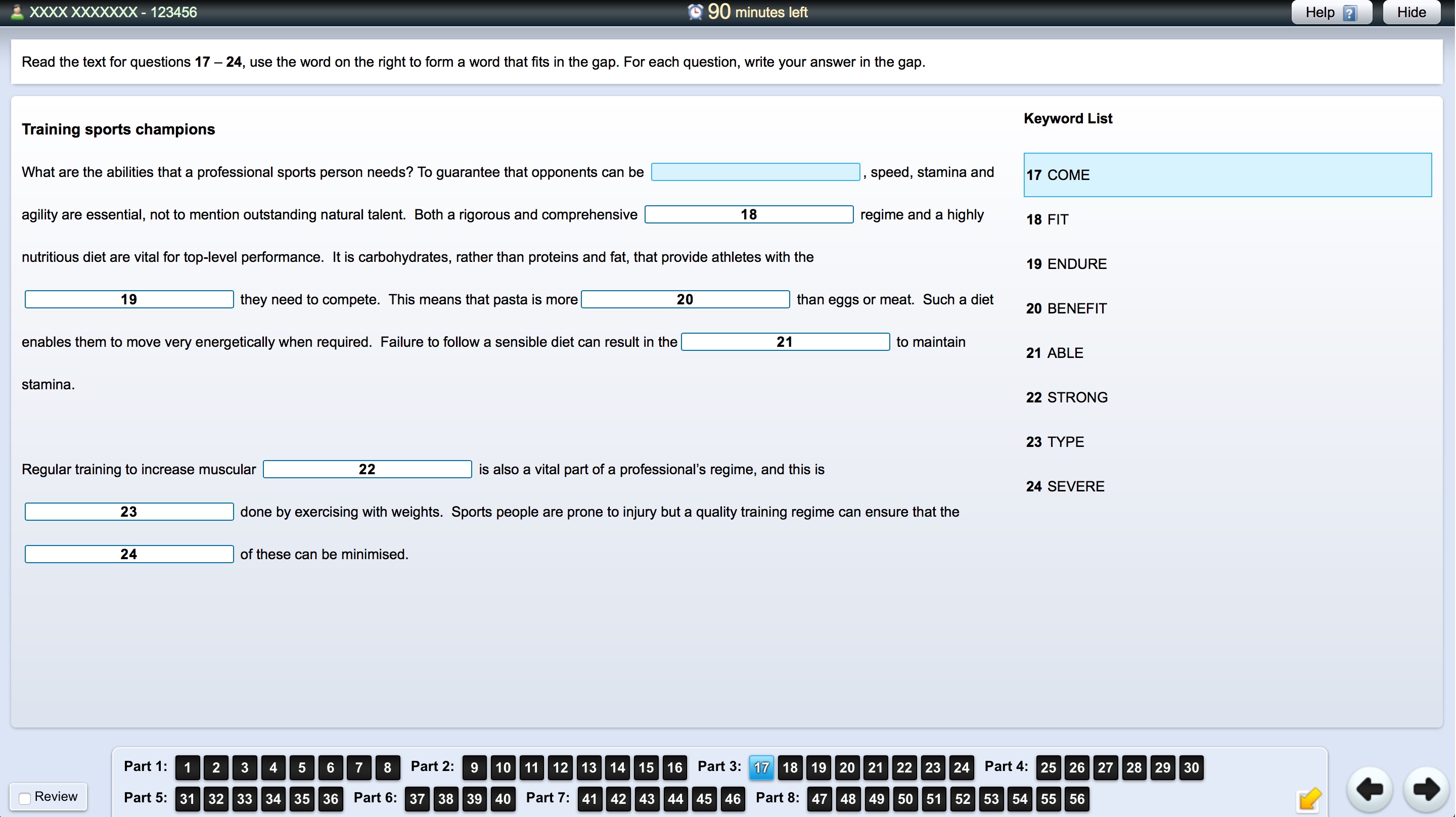
Which parts of the Cambridge exam are computer-based?
The main Cambridge English exams always have the following parts: Reading, Writing, Use of English (FCE, CAE, CPE), Listening, and Speaking. Currently, except for Speaking, all parts of these exams can be taken on a computer. The obvious reason why the Speaking cannot be done on a computer is because for the oral part of these exams, Cambridge English uses two oral examiners to evaluate candidates, and it is a live interaction. Although with other international exams like TOEFL, the Speaking is done by recording the candidate with the computer microphone, Cambridge English still maintains a more personal format and, from my point of view, a much more effective and realistic one.
Where do you take a Cambridge Computer-based exam?
The location for computer-based or paper-based exams depends on the exam centre with which the candidate is registered. In the case of Granada, paper-based exams usually take place in large rooms, either academy classrooms, university faculties, or hotel rooms rented for the occasion. In the case of computer-based exams, these usually take place in smaller venues, due to the need to have a specific number of computers. Therefore, they usually take place in academies that have a computer room.
How do I register for a computer-based exam?
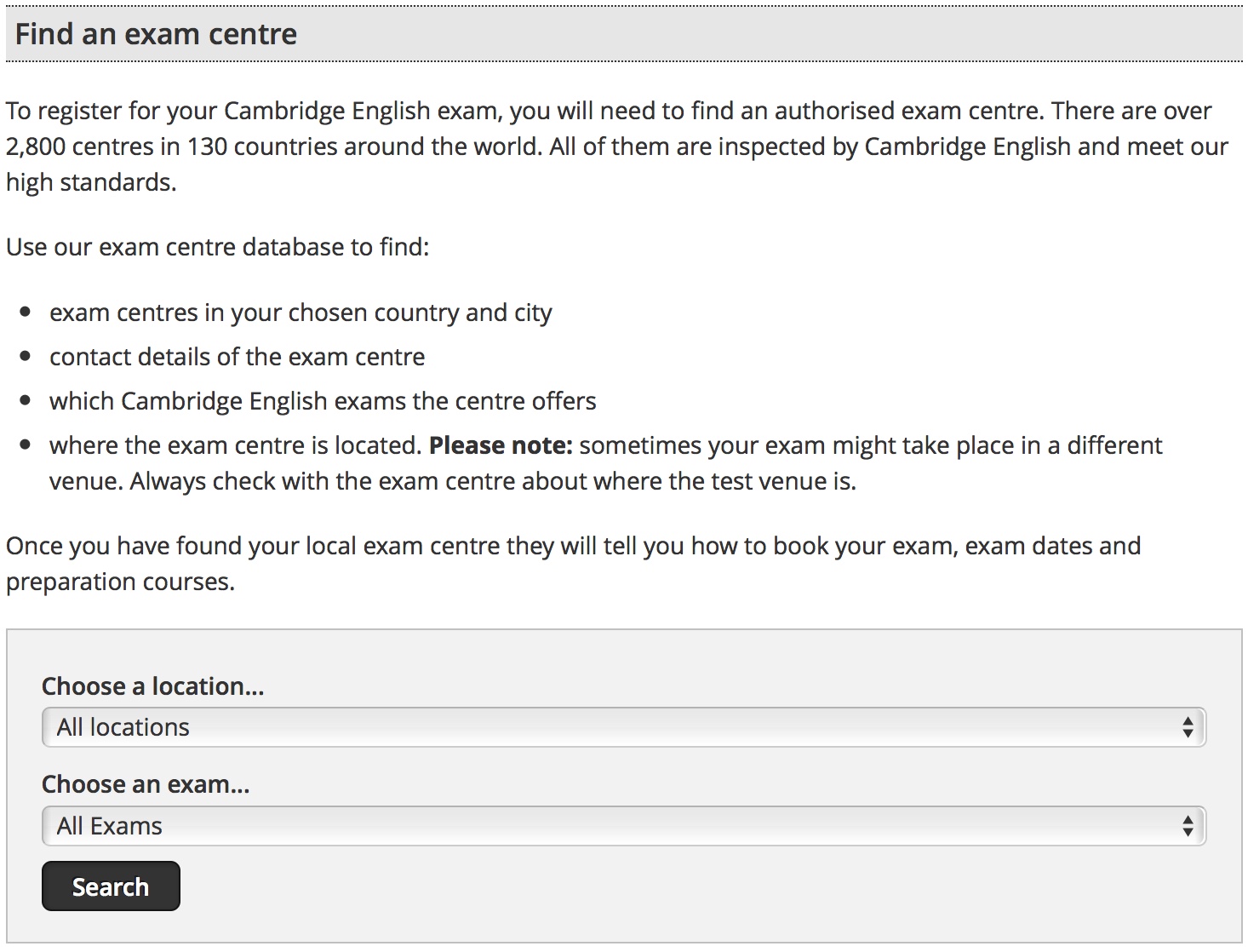
To register for any exam, whether computer-based or paper-based, you should first consult your English academy, and if you are not enrolled in any academy, I encourage you to contact us with any questions you may have. A good academy will be able to advise you and answer all your questions regarding how to register for this type of exam. If you are enrolled in an English academy, you can surely register with them. If you are not in an academy, you can search here to find the nearest exam centre. Once you find it, you can contact them to see what dates they offer and which one suits you best.
How much does the computer-based Cambridge exam cost in 2022?
Just like the location where the exams are held, the price of the exams depends on the exam centre. In Granada, as of today (November 2022), the prices are the same for computer-based and paper-based exams. Here is the list:
- A2 Key (KET): 92€
- B1 Preliminary (PET): 118€
- B2 First (FCE): 194€
- C1 Advanced (CAE): 199€
- C2 Proficiency (CPE): 215€
Differences between Cambridge computer-based and paper-based exams
Listening

One of the main advantages of computer-based exams over paper-based exams is the way the Listening comprehension is done. When taking a paper-based exam, a sound system with speakers is set up at strategic points in the room to optimise audio quality and ensure it reaches all candidates. However, not all sound systems are perfect, nor are all candidates’ seats perfectly placed. For this reason, sometimes some candidates complain about being too close or too far from the speaker, that the speaker was «making noise», that there was reverberation, etc. This does not happen when you take the exam on a computer, as in this case headphones are used whose volume you can adjust at any time during the exam.
Writing
From my point of view, the Writing part is another reason why I always recommend taking any Cambridge exam on a computer. The main reason in this case is that writing by hand, although it may sound bad to say it, is a hassle if you can type well on a computer.
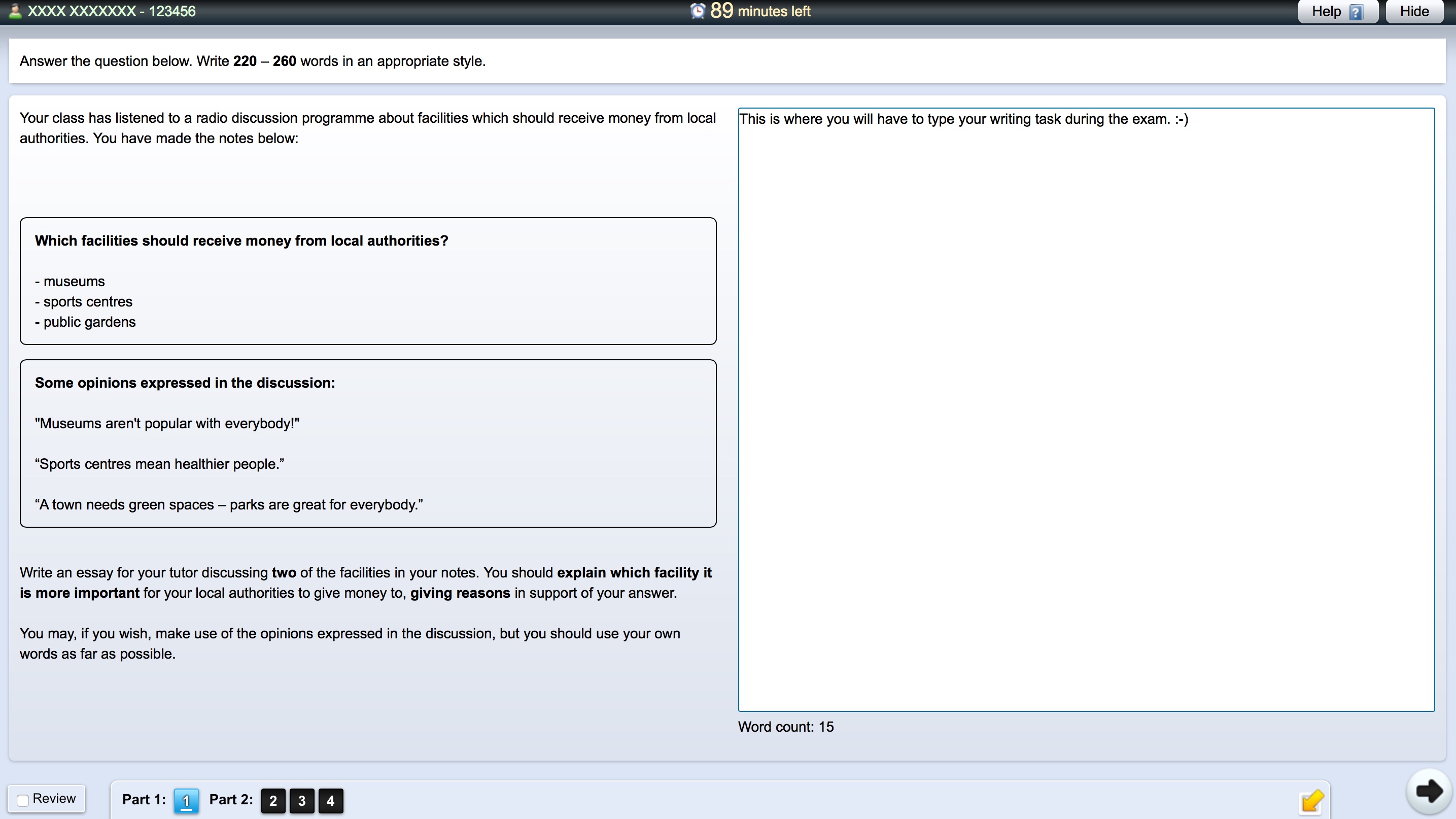
When doing a Writing on a computer, you avoid crossings out and problems understanding handwriting; you don’t have to do drafts, as you can delete, modify, and correct as much as you want. Furthermore, and this is also very important, Cambridge English computer-based exams show you the number of words you have written, so you don’t have to count them manually. For me, it is undoubtedly a great advantage over paper-based exams.
Technical problems
Here I present the only drawback of the computer-based exam: technical issues. While the only technical issue you might encounter during paper exams is the Listening failing at some point or sounding bad, on a computer you depend exclusively on your computer, the exam software, the internet connection, and Cambridge English servers. If any of these 3 elements fail, there might be problems saving and uploading your answers, or you might even have to be moved to another computer. However, these problems concern the invigilators and supervisors of your exam, so you don’t need to worry too much, as they are usually easily resolved. From my point of view, although technical issues can occur, they are neither that common nor a sufficient reason to discard the computer-based option.
Annotations and underlining
In this case, it is a difference whose consequence depends practically on your preference when working with a text. If you are someone who enjoys underlining and writing on a text to understand it better, you will probably prefer the paper option, as it gives you more freedom. On a computer, you can underline and even make annotations on some sentences, but it does not offer the freedom of doing the exam on paper. On the other hand, in both options you are provided with blank paper for making notes, if requested, so you can compensate for the rigidity of a computer text with the sheet provided.
Publication of results
Finally, here we have another of the main differences between computer-based and paper-based exams. The answer sheet for paper-based exams must be sent by registered postal mail to a Cambridge Assessment English base, where the candidates’ answer sheets are corrected. However, the answers for computer-based exams are uploaded to Cambridge English servers almost instantly upon finishing each part of the exam. For this reason, although some parts must be corrected manually in both cases, the difference in the time taken to send the answer sheets translates into a substantial difference in the time taken to publish the results. In the case of Cambridge English computer-based exams, the results take between 2 and 3 weeks to be published. However, paper-based exams involve a wait of at least 5 weeks.
Where can I find computer-based practice tests?
Unfortunately, Cambridge English does not yet offer computer-based practice tests, or at least not openly to the public. However, they do have an example of each exam that you can view on their website to familiarise yourself with the format, interface, and usability. Like everything Cambridge English offers, it is available on their website, but as usual, it is not so easy to find if you don’t know the website well. Therefore, here are the links below:
B1 Preliminary – B2 First – C1 Advanced
In those links you can compare the paper exam (available for download) and the computer-based exam, for which I recommend using the Firefox browser. In addition, I also encourage you to download these documents where they give you tips for taking this type of exam:
Computer-based exam day tips – Paper-based exam day tips
Have you already decided which exam format convinces you more? Tell me in the comments. And if you have any questions, leave them in the comments or write me an email or fill out the contact form.
Don’t forget to share and, until the next article, don’t forget to keep smiling!