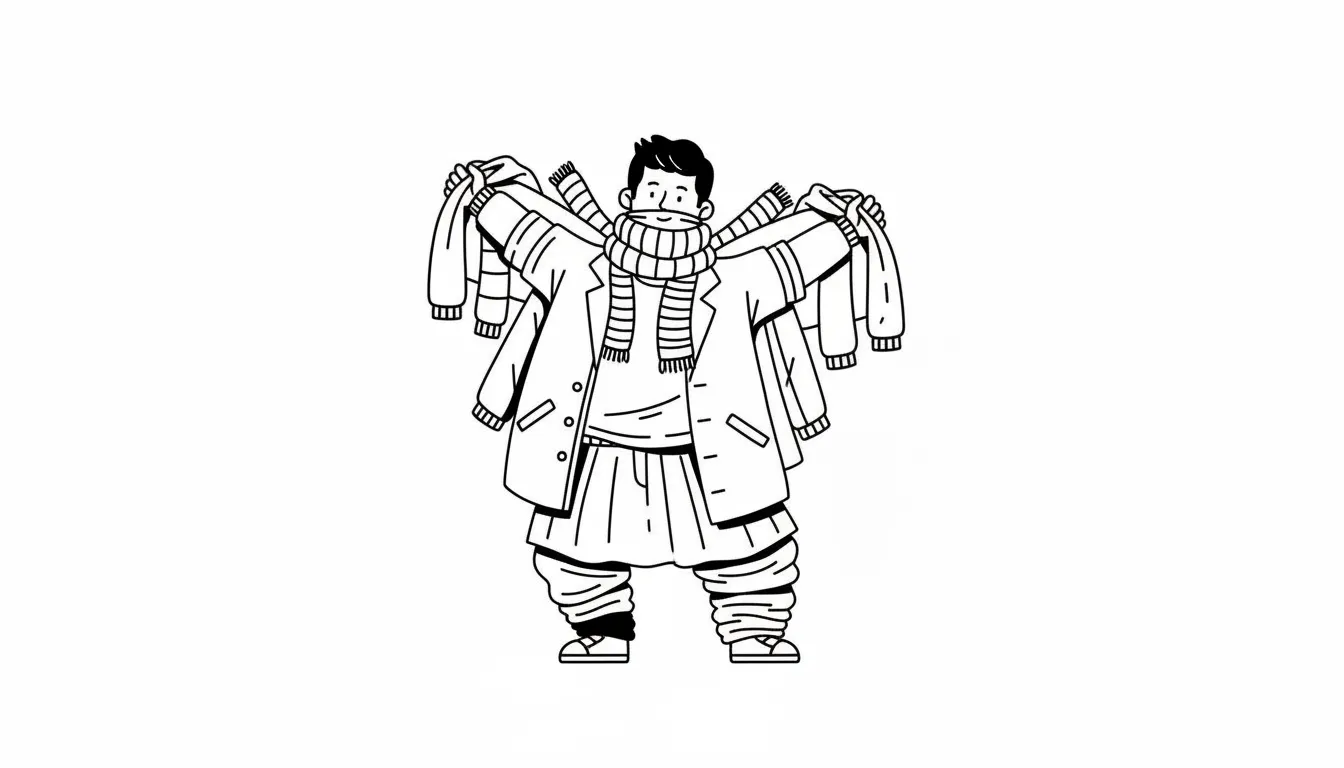
Clothes Vocabulary in English
Learn all the clothing vocabulary in English: garments, accessories, verbs, shopping phrases, and idioms. A complete guide with practical examples for A2 and B1 levels.

Table of contents
Have you ever been left speechless when trying to describe what you are wearing in English? Or have you walked into a shop in England and didn’t know how to ask for a size or inquire about a type of garment? Don’t worry, it happens to more people than you think. Clothes vocabulary in English is one of those topics that seems simple on paper, but in practice, it can put us in a tight spot if we haven’t quite mastered it.
In this article, I am going to review all the essential clothes vocabulary in English, from the basic garments we use every day to useful expressions for going shopping or describing someone’s style. And we’ll do it in an enjoyable way, with practical examples and real-life situations, because after all, learning English has to be useful and entertaining, and this is Keep Smiling English. 😜
Basic clothes vocabulary in English
Let’s start with the basics: the items of clothing we use in our daily lives. We are going to organise it by categories to make it easier for you to remember and so you can quickly find what you need. Remember that knowing this vocabulary will not only help you communicate better but is also essential for passing official basic and intermediate level exams.
Upper garments
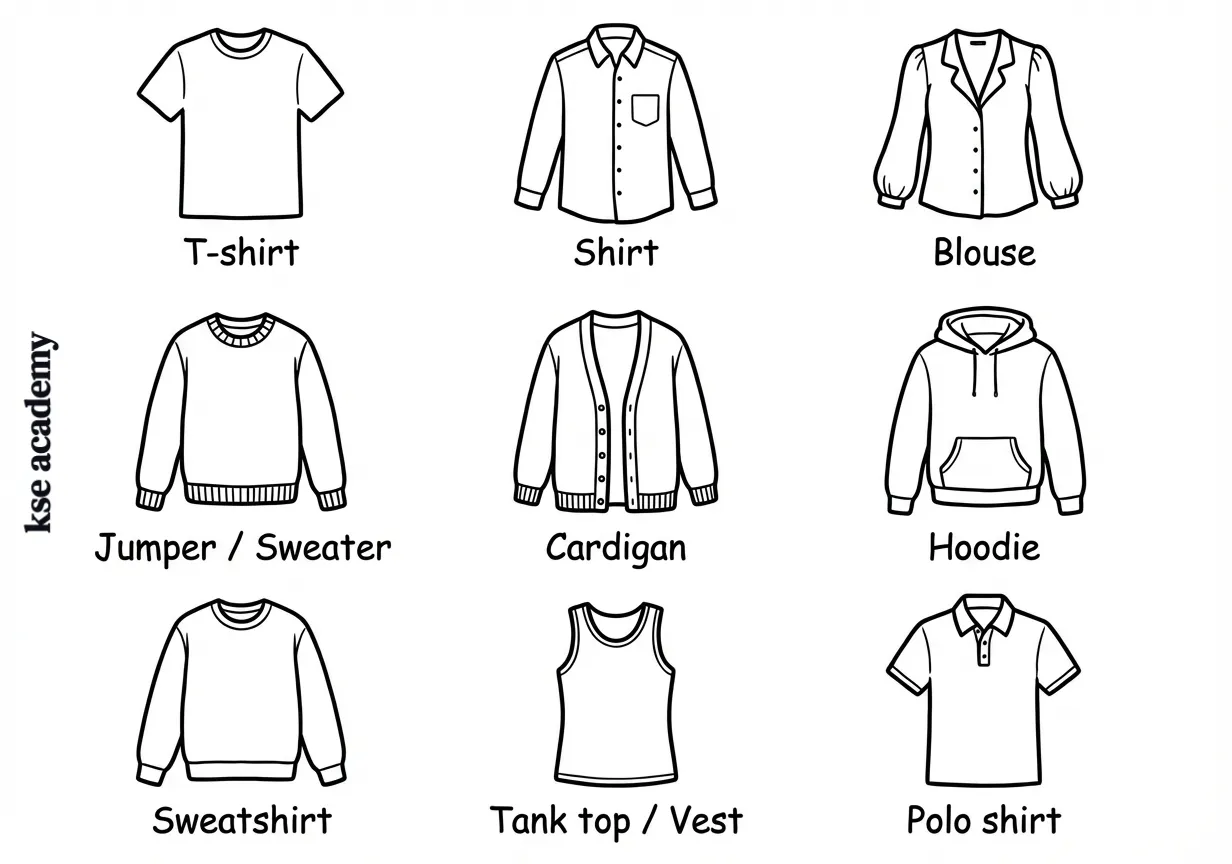
Upper garments are those that we wear on the top part of the body. Here are the most common ones with real examples of use:
| ENGLISH | SPANISH | EXAMPLE |
|---|---|---|
| T-shirt | Camiseta | I usually wear a white T-shirt at the weekend. |
| Shirt | Camisa | He always wears a shirt to work. |
| Blouse | Blusa | She bought a beautiful silk blouse for the party. |
| Jumper / Sweater | Jersey | It’s cold today, so I’m wearing a warm jumper. |
| Cardigan | Rebeca / Chaqueta de punto | My grandmother loves wearing cardigans. |
| Hoodie | Sudadera con capucha | Teenagers often wear hoodies and trainers. |
| Sweatshirt | Sudadera | I bought a new sweatshirt for the gym. |
| Tank top / Vest | Camiseta sin mangas | In summer, I prefer wearing tank tops. |
| Polo shirt | Polo | He wore a navy blue polo shirt to the golf club. |
Important note: In British English, «jumper» is used, whereas in American English, «sweater» is more common. Both are correct, but remember to adapt your vocabulary depending on the context.
Lower garments
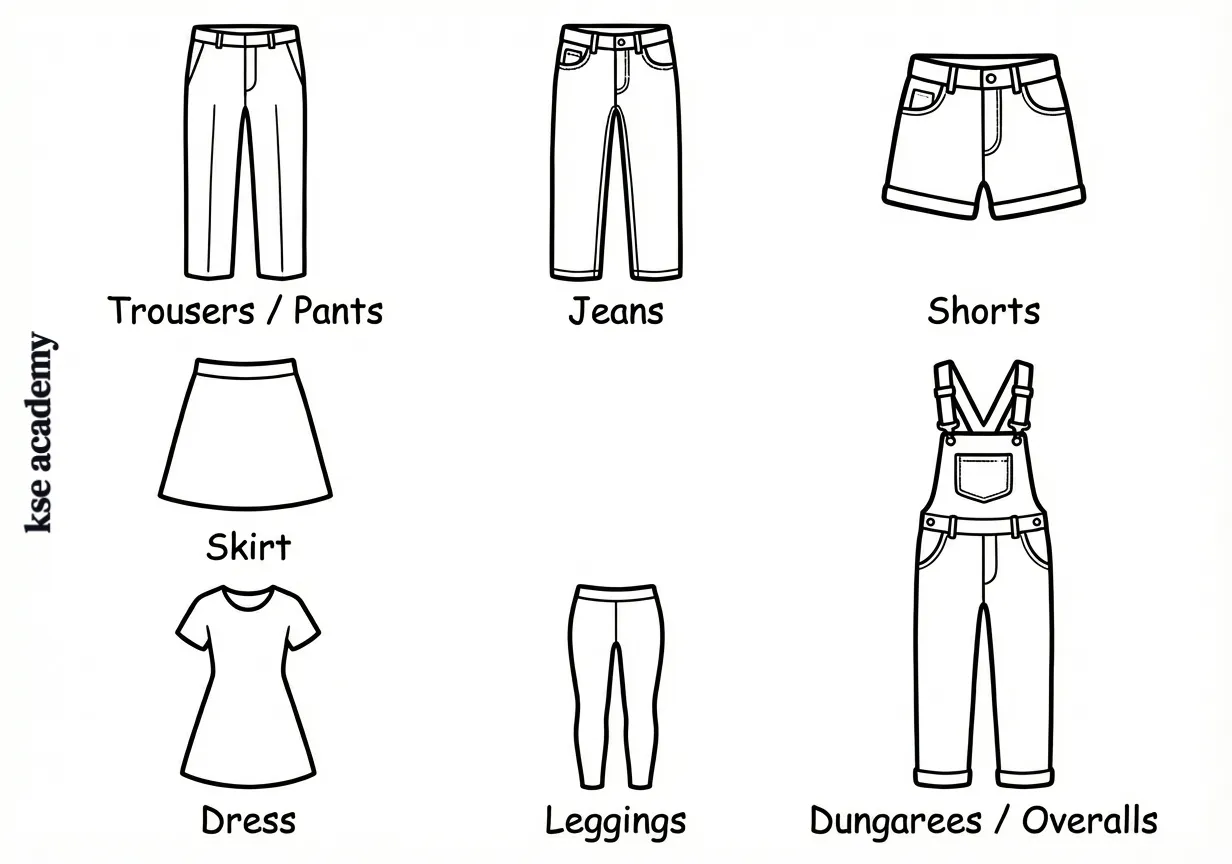
Now let’s look at the garments we wear on the lower part of the body. This vocabulary is super useful when you go shopping or describe your personal style:
| ENGLISH | SPANISH | EXAMPLE |
|---|---|---|
| Trousers / Pants | Pantalones | I need to buy a new pair of trousers for work. |
| Jeans | Vaqueros | She’s wearing blue jeans and a white T-shirt. |
| Shorts | Pantalones cortos | It’s too hot to wear trousers, I’ll put on some shorts. |
| Skirt | Falda | She wore a long skirt to the wedding. |
| Dress | Vestido | That red dress looks amazing on you! |
| Leggings | Mallas / Leggings | I always wear leggings when I go to yoga class. |
| Dungarees / Overalls | Peto / Mono | Dungarees are back in fashion this year. |
Be careful: «Trousers» is the British word for pants, while in the United States, they say «pants». Interestingly, in British English, «pants» means underwear, so watch out for misunderstandings. 😅
Outerwear
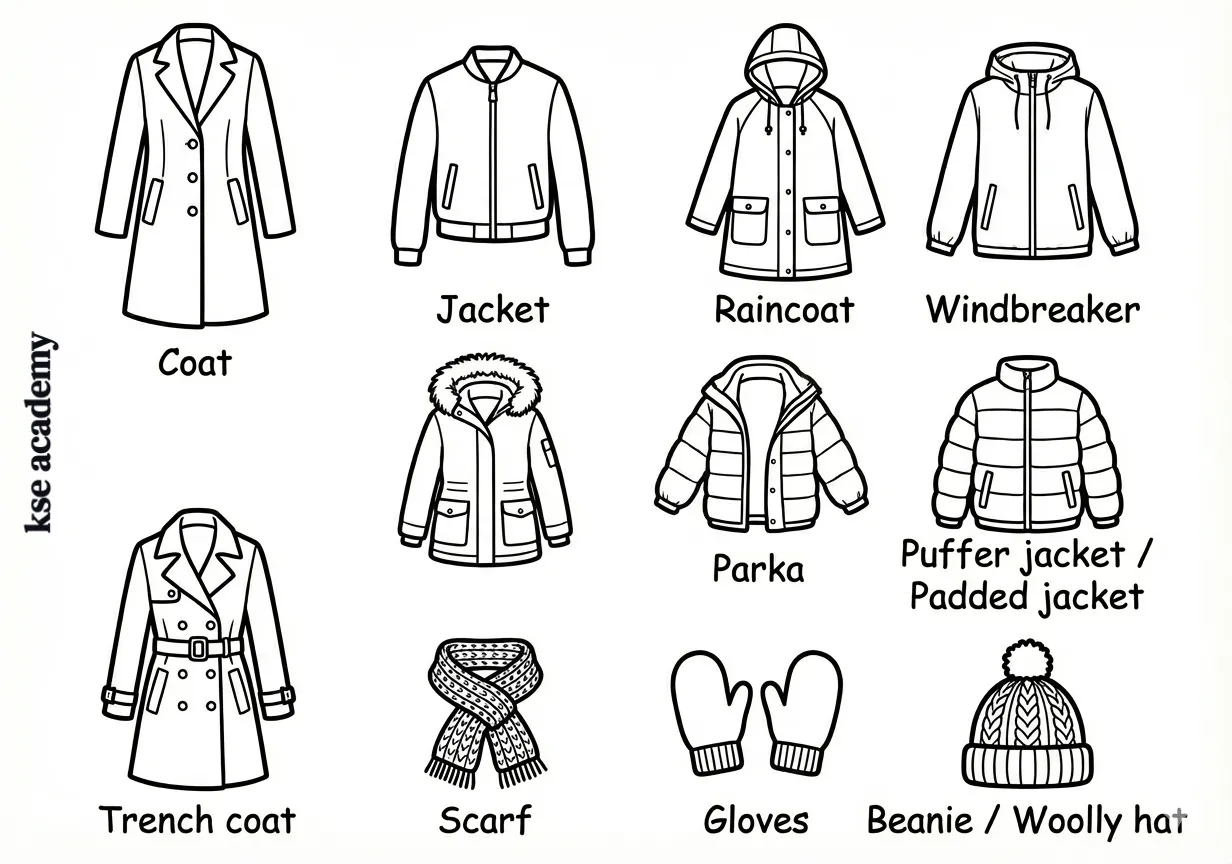
When the cold arrives or you simply need to protect yourself from the wind and rain, this vocabulary is essential:
| ENGLISH | SPANISH | EXAMPLE |
|---|---|---|
| Coat | Abrigo | Don’t forget your coat, it’s freezing outside! |
| Jacket | Chaqueta | I love my leather jacket. |
| Raincoat | Impermeable / Chubasquero | Take a raincoat with you, it might rain later. |
| Windbreaker | Cortavientos | A windbreaker is perfect for windy autumn days. |
| Parka | Parka | I need a warm parka for my trip to Norway. |
| Puffer jacket / Padded jacket | Plumífero / Chaqueta acolchada | Puffer jackets are very popular in winter. |
| Trench coat | Gabardina | She looks elegant in her beige trench coat. |
| Scarf | Bufanda | I can’t find my woollen scarf anywhere. |
| Gloves | Guantes | My hands are cold, I should have brought my gloves. |
| Beanie / Woolly hat | Gorro de lana | He always wears a beanie in winter. |
Underwear and pyjamas
Although it’s not a topic we talk about constantly, it is important to know this vocabulary for everyday situations like shopping or doing the laundry:
| ENGLISH | SPANISH | EXAMPLE |
|---|---|---|
| Underwear | Ropa interior | I need to buy some new underwear. |
| Bra | Sujetador | I can’t find a comfortable bra in my size. |
| Knickers / Panties | Bragas | She prefers cotton knickers because they’re more comfortable. |
| Underpants / Pants | Calzoncillos | He bought a pack of five underpants. |
| Boxers / Boxer shorts | Calzoncillos tipo bóxer | Most men prefer boxers to briefs. |
| Briefs | Slips | He always wears briefs for sports. |
| Socks | Calcetines | I always lose one sock in the washing machine. |
| Tights | Medias / Pantis | She wore black tights under her dress. |
| Stockings | Medias (hasta el muslo) | She prefers stockings to tights. |
| Pyjamas / Pajamas | Pijama | I bought new pyjamas for the winter. |
| Nightdress / Nightgown | Camisón | My grandmother always wears a nightdress to bed. |
| Dressing gown / Bathrobe | Bata / Albornoz | There’s a soft bathrobe in the hotel bathroom. |
Note: «Knickers» is British and «panties» is American. The same applies to the way «pyjamas» (UK) and «pajamas» (US) are written, although the pronunciation is the same.
Smart clothes
For special occasions, weddings, formal events, or the professional world, you need to know this more specific vocabulary:
| ENGLISH | SPANISH | EXAMPLE |
|---|---|---|
| Suit | Traje | He wore a grey suit to the job interview. |
| Tuxedo / Dinner jacket | Esmoquin | The groom looked handsome in his black tuxedo. |
| Blazer | Americana | You can wear a blazer with jeans for a smart-casual look. |
| Waistcoat / Vest | Chaleco | He completed his three-piece suit with a matching waistcoat. |
| Tie | Corbata | I can never remember how to tie a tie properly. |
| Bow tie | Pajarita | He looked very elegant with his bow tie. |
| Evening dress / Gown | Vestido de gala | She wore a stunning red evening dress to the gala. |
| Cocktail dress | Vestido de cóctel | A cocktail dress is perfect for semi-formal events. |
| Dress shirt | Camisa de vestir | He always wears a crisp white dress shirt to work. |
| Cufflinks | Gemelos | He received silver cufflinks as a wedding gift. |
Footwear and accessories
No outfit is complete without the right footwear and accessories. Here is the essential vocabulary:
Footwear
| ENGLISH | SPANISH | EXAMPLE |
|---|---|---|
| Shoes | Zapatos | I need to buy some new shoes for the wedding. |
| Trainers / Sneakers | Zapatillas deportivas | I wear trainers every day because they’re comfortable. |
| Boots | Botas | I bought some leather boots for the winter. |
| Ankle boots | Botines | Ankle boots look great with skinny jeans. |
| Sandals | Sandalias | She wore comfortable sandals to walk around the city. |
| Flip-flops | Chanclas | Don’t forget your flip-flops for the beach. |
| High heels / Heels | Tacones | I can’t walk in high heels for more than an hour. |
| Slippers | Zapatillas de casa | I put on my slippers as soon as I get home. |
| Loafers | Mocasines | He wore brown loafers with his suit. |
| Wellies / Wellington boots | Botas de agua | You’ll need your wellies if you’re going to the festival. |
Accessories
| ENGLISH | SPANISH | EXAMPLE |
|---|---|---|
| Hat | Sombrero | She wore a wide-brimmed hat to protect herself from the sun. |
| Cap | Gorra | He always wears a baseball cap backwards. |
| Belt | Cinturón | This belt matches my shoes perfectly. |
| Bag / Handbag | Bolso | I can’t find my keys in my handbag. |
| Backpack | Mochila | Students usually carry a backpack to school. |
| Clutch bag | Bolso de mano / Clutch | She carried a small clutch bag to the party. |
| Sunglasses | Gafas de sol | Don’t forget your sunglasses, it’s very sunny today. |
| Watch | Reloj | He got a new watch for his birthday. |
| Necklace | Collar | She wore a beautiful pearl necklace. |
| Bracelet | Pulsera | I bought a silver bracelet for my sister. |
| Earrings | Pendientes | Those gold earrings look lovely on you. |
| Ring | Anillo | She wears her engagement ring every day. |
Materials, prints, and describing garments
Knowing how to name garments is all well and good, but if you want to describe clothes in detail, you need to know the materials, prints, and adjectives that will allow you to do so. This is especially useful when you go shopping or want to explain what kind of clothes you prefer.
Materials and fabrics
The material of a garment can completely change its appearance, comfort, and use. Here are the most common ones:
| ENGLISH | SPANISH | EXAMPLE |
|---|---|---|
| Cotton | Algodón | I prefer cotton T-shirts because they’re comfortable. |
| Wool | Lana | This jumper is made of pure wool. |
| Silk | Seda | She wore a beautiful silk blouse to the dinner. |
| Leather | Cuero / Piel | He bought a leather jacket for his motorbike. |
| Denim | Tela vaquera | Denim jackets never go out of fashion. |
| Linen | Lino | Linen shirts are perfect for hot summer days. |
| Polyester | Poliéster | This dress is 100% polyester. |
| Velvet | Terciopelo | She wore a stunning velvet dress to the gala. |
| Corduroy | Pana | Corduroy trousers are back in style. |
| Suede | Ante | I love my suede boots, but they’re hard to clean. |
| Lycra / Spandex | Licra / Elastano | These leggings contain 15% lycra for extra stretch. |
Prints and patterns
When describing clothes, prints are key. Here are the most habitual ones:
| ENGLISH | SPANISH | EXAMPLE |
|---|---|---|
| Plain | Liso | I prefer plain T-shirts without any patterns. |
| Striped | De rayas | She’s wearing a blue and white striped shirt. |
| Checked / Checkered | De cuadros | He wore a checked shirt to the party. |
| Polka dot | De lunares | That polka dot dress is so cute! |
| Floral | De flores | Floral patterns are very popular in spring. |
| Patterned | Estampado | I love patterned scarves; they add colour to any outfit. |
| Tartan / Plaid | De cuadros escoceses | He wore a tartan kilt to the Scottish wedding. |
Adjectives to describe clothes
Finally, here are some useful adjectives to describe the style, condition, or characteristics of garments:
| ENGLISH | SPANISH | EXAMPLE |
|---|---|---|
| Tight | Ajustado / Estrecho | These jeans are too tight, I need a bigger size. |
| Loose | Holgado / Amplio | I prefer loose clothing in summer. |
| Baggy | Ancho / Holgado | Baggy jeans were very popular in the 90s. |
| Smart | Elegante / Formal | You need to wear smart clothes to the interview. |
| Casual | Informal / Casual | The dress code is smart casual. |
| Fashionable / Trendy | De moda / A la moda | She always wears fashionable clothes. |
| Old-fashioned | Anticuado / Pasado de moda | That style looks a bit old-fashioned now. |
| Scruffy | Desaliñado / Descuidado | You look a bit scruffy; maybe you should change your shirt. |
| Shabby | Gastado / Raído | I need to throw away this shabby old coat. |
| Smart-casual | Elegante informal | The restaurant has a smart-casual dress code. |
| Vintage | Vintage / De época | She loves buying vintage clothing from charity shops. |
| Brand new | Nuevo / A estrenar | These trainers are brand new; I only bought them yesterday. |
Useful expressions and phrases for talking about clothes in English
Okay, you already know the basic vocabulary for garments, but now comes the really interesting part: knowing how to use these words in real contexts. Because it’s one thing to know the word «jacket» and quite another to be able to say «this jacket suits you perfectly» or «I need to try on these trousers». In this section, we’re going to see practical expressions, specific verbs, and even some idioms related to clothes that will make you sound much more natural.
Verbs to talk about how we dress
Verbs are fundamental for building natural sentences about clothes. Here is a selection from the most basic to some more advanced ones that will make you stand out:
| Verb | Meaning | Example |
|---|---|---|
| Wear | Llevar puesto | What are you wearing to the party tonight? |
| Put on | Ponerse (acción) | It’s cold outside, put on your coat! |
| Take off | Quitarse | Please take off your shoes before entering the house. |
| Try on | Probarse | Can I try on this dress, please? |
| Fit | Quedar bien (de talla) | These jeans don’t fit me anymore. |
| Suit | Favorecer, sentar bien | That colour really suits you! |
| Match | Combinar, hacer juego | Your shoes don’t match your handbag. |
| Get dressed | Vestirse | Hurry up and get dressed, we’re going to be late! |
| Change | Cambiarse de ropa | I need to change before we go out. |
| Dress up | Arreglarse, vestirse elegante | We need to dress up for the wedding. |
| Dress down | Vestir informal | It’s Friday, so we can dress down at work. |
| Suit up | Ponerse el traje (formal o informal) | Suit up, gentlemen! We have an important meeting. |
| Don | Ponerse (formal/literario) | The knight donned his armour before battle. |
Important difference: Many students confuse «wear» and «put on». Remember: «wear» refers to the state of carrying something on you («I wear glasses»), while «put on» is the action of dressing yourself («I put on my glasses»). It’s like the difference between being seated and sitting down.
It’s also key to understand the difference between «fit» and «suit». «Fit» refers exclusively to the size («these trousers are too small, they don’t fit»), while «suit» has to do with whether something is flattering for you in terms of style, colour, or general appearance («red suits you better than blue»).
Phrases for shopping
If you’ve ever walked into a shop abroad and your mind went blank, this section is going to be a lifesaver. Here are the most useful phrases for shopping:
| Phrase in English | Translation |
|---|---|
| Can I help you? | ¿Puedo ayudarle? |
| I’m just looking, thank you. | Solo estoy mirando, gracias. |
| Can I try this on? | ¿Puedo probarme esto? |
| Where are the changing rooms? | ¿Dónde están los probadores? |
| Do you have this in a different size? | ¿Tienen esto en otra talla? |
| Do you have this in a smaller/larger size? | ¿Tienen esto en una talla más pequeña/grande? |
| Do you have this in a different colour? | ¿Tienen esto en otro color? |
| What size are you? | ¿Qué talla usas? |
| I’m a size 10 / medium. | Uso la talla 10 / mediana. |
| It doesn’t fit. | No me queda bien. |
| It’s too tight/loose. | Me queda demasiado estrecho/holgado. |
| It’s too big/small. | Es demasiado grande/pequeño. |
| How much is this? | ¿Cuánto cuesta esto? |
| Is it on sale? | ¿Está en rebajas? |
| I’ll take it. | Me lo llevo. |
| Can I pay by card? | ¿Puedo pagar con tarjeta? |
| Can I have a receipt, please? | ¿Me da el recibo, por favor? |
| What’s your return policy? | ¿Cuál es su política de devoluciones? |
Practical advice: If you’re not sure of your size in the British or American system, simply try a few on. Sizes vary a lot depending on the country and the brand. In the UK, women’s clothing sizes usually go from 6 to 18, while in the United States, they go from 2 to 14. For men, shirts are measured by the neck (in inches) and trousers by waist and length.
Clothes idioms in English
Idioms are fixed expressions that cannot be translated literally and give a lot of personality to your English. In the world of clothes, we have a few very useful and fun ones. Here are the most common ones:
| Idiom | Meaning | Example |
|---|---|---|
| To be dressed to kill | Ir vestido espectacularmente | She was dressed to kill at the party last night. |
| To fit like a glove | Quedar perfecto | This jacket fits like a glove! |
| To be in someone’s shoes | Estar en el lugar de otra persona | I wouldn’t like to be in his shoes right now. |
| To roll up your sleeves | Ponerse manos a la obra | We need to roll up our sleeves and get this done. |
| To wear your heart on your sleeve | Mostrar abiertamente las emociones | John wears his heart on his sleeve; everyone knows when he’s upset. |
| To put yourself in someone’s shoes | Ponerse en el lugar de otro | Try to put yourself in her shoes before judging. |
| To tighten your belt | Apretarse el cinturón (ahorrar) | We’ll have to tighten our belts this month. |
| To wear the trousers | Llevar los pantalones (mandar) | In their relationship, she wears the trousers. |
| At the drop of a hat | Inmediatamente, sin pensar | He would travel to Japan at the drop of a hat. |
| To take your hat off to someone | Quitarse el sombrero ante alguien (admirar) | I take my hat off to you for finishing the marathon. |
| If the shoe fits, wear it | Si te viene el sayo, póntelo | He called me lazy. Well, if the shoe fits, wear it. |
| To dress for the occasion | Vestirse según la ocasión | Make sure you dress for the occasion; it’s a formal dinner. |
| To look like something the cat dragged in | Tener un aspecto horrible | You look like something the cat dragged in! Did you sleep in those clothes? |
| Dressed to the nines | Vestido de punta en blanco | They were dressed to the nines for the opera. |
Using these idioms in conversations makes you sound more natural and demonstrates a more advanced level of the language. You don’t need to use them all, but having a few in your arsenal is always useful.
Why is it important to learn clothes vocabulary in English?
You might be wondering: do I really need to spend time learning clothes vocabulary? The short answer is: yes, absolutely. And here’s why:
- It’s everyday vocabulary: Every day you get dressed, describe what you’re wearing, comment on other people’s clothes, or go shopping. It’s a topic that constantly appears in informal conversations, so mastering it will allow you to participate naturally in day-to-day situations.
- It’s essential for travel: If you travel to an English-speaking country and need to buy clothes, ask for a size, or describe something you’ve lost, this vocabulary is essential. Imagine trying to explain that you’ve lost your brown leather jacket without knowing how to say «leather jacket».
- It’s fundamental in official exams: In Cambridge exams, especially at A2 (Key) and B1 (Preliminary) levels, clothes vocabulary frequently appears in both the Speaking and Writing sections. Knowing how to describe what someone is wearing in a photo or talking about your fashion preferences can make the difference in your score.
- It improves your descriptive ability: Learning this vocabulary doesn’t just teach you the names of garments, but also adjectives, materials, colours, and expressions that enrich your general ability to describe things in English. These are transferable skills to other contexts.
- It helps you understand real English better: Films, series, magazines, social media… clothes are a recurring theme in popular culture. If you want to understand conversations about fashion, style tips, or simply follow your favourite influencers on Instagram, you need this vocabulary.
In summary, clothes vocabulary is not a secondary or unhelpful topic. On the contrary, it is one of the most practical and versatile lexical areas of English, and mastering it will give you much more confidence in a multitude of real-life situations.
Common errors with clothes in English
We all make mistakes when learning a language, and clothes vocabulary is no exception. Here are the most frequent errors I see in my students (and how to avoid them):
1. Confusing «wear» and «put on»
❌ «I’m wearing my coat now» (when you’re putting it on at that moment)
✅ «I’m putting on my coat now»
Remember: «wear» is the state of carrying something on you, «put on» is the action of putting it on.
2. Using «pants» in British English to refer to trousers
In the UK, «pants» means underwear, not trousers. If you say «I need to buy new pants» in London, they will understand that you need underpants or knickers. For trousers, say «trousers».
3. Confusing «fit» and «suit»
❌ «This colour doesn’t fit you»
✅ «This colour doesn’t suit you»
«Fit» is only for size, «suit» is for whether something is flattering for you.
4. Forgetting that some words are always plural
Items like «jeans», «trousers», «shorts», «tights», «scissors» (okay, the last one isn’t clothes, but it’s a common mistake) always go in the plural. We say «these jeans are», not «this jean is». And when we talk about quantity, we use «a pair of»: «I bought two pairs of jeans».
5. Mispronouncing «clothes»
This word is a nightmare for Spanish speakers. It is not pronounced «clodes» or «clozez». The correct pronunciation is /kləʊðz/, with a soft «th» sound (as in «the») followed by a «z». Practice: «close» + «th» = «clothes».
6. Saying «I have put» instead of «I’m wearing»
❌ «I have put a blue shirt»
✅ «I’m wearing a blue shirt» or «I’ve got a blue shirt on»
7. Not using articles correctly
❌ «I’m wearing jeans» ✅ (correct)
❌ «I’m wearing a jeans» ✗ (incorrect)
But:
❌ «I’m wearing shirt» ✗ (incorrect)
✅ «I’m wearing a shirt» ✓ (correct)
Remember that plural items like «jeans», «trousers» don’t take an article, but singular ones like «shirt», «dress» do need one.
8. Confusing «dress» (noun) with «dress» (verb)
❌ «I dress a beautiful dress»
✅ «I’m wearing a beautiful dress»
As a verb, «dress» means to get dressed in general, not to wear something specific.
Tips for memorising clothes vocabulary
Memorising vocabulary doesn’t have to be a boring and mechanical task. On the contrary, the more creative and personalised your learning method is, the better everything will stick. Here are some practical tips that really work for retaining clothes vocabulary in English:
- Describe your daily outfit in English: Every morning, while you get dressed, say out loud (or mentally, if you’re on the Tube) what you’re wearing. For example: «Today I’m wearing blue jeans, a white T-shirt and my favourite trainers». It’s a super simple exercise that turns your daily routine into a free English class.
- Label your wardrobe: Yes, it might seem a bit eccentric, but it works. Put small sticky labels on your garments with the name in English. Every time you open the wardrobe, you’ll be reviewing vocabulary without even realising it. Plus, it’s a perfect excuse to organise that mess you have in there.
- Use flashcards with images: Image cards are ideal for visual vocabulary like clothes. You can use apps like Anki or Quizlet, or make them yourself with card. On one side put the image of the garment, on the other the name in English and an example sentence. Review them on the bus, in the supermarket queue, or before going to sleep.
- Create absurd stories: Our brain remembers weird or funny things better. Invent ridiculous stories that connect several words. For example: «My jumper fell in love with a cardigan, so they got married wearing matching scarves and gloves». The more absurd, the better.
- Watch fashion videos in English: YouTube is full of fashion channels, hauls, outfits of the day, and lookbooks in English. Watching this type of content exposes you to the vocabulary in real contexts and helps you familiarise yourself with expressions that are actually used. Plus, it’s entertaining, so you won’t feel like you’re studying.
- Play at describing people’s clothes: When you’re in the street, in a café, or waiting for the bus, practice mentally describing what the people around you are wearing: «That man is wearing a dark blue suit and brown leather shoes», «She’s got a red coat and black boots». It’s a discreet and effective way to practice.
- Group vocabulary by theme: Don’t learn isolated words at random. Group them by category (as we have done in this article): upper garments, lower garments, outerwear, accessories, etc. Our brain works better with organised information and it’s easier to remember words when they are connected to each other.
- Practice with written descriptions: Write brief descriptions of outfits you like, characters from series or films, or even Instagram photos. For example: «In this photo, the actress is wearing an elegant black dress with high heels and a clutch bag». Writing reinforces learning in a different way to speaking or reading.
- Use mental associations: Look for connections between words in English and Spanish that help you remember them. For example, «hoodie» contains the word «hood» (capucha), or «raincoat» is literally a coat for rain (rain + coat). These logical associations make memorisation much easier.
- Don’t obsess over perfection: It’s normal to forget words or confuse them at first. The important thing is to use them, even if you make mistakes. Every time you make a mistake and correct yourself, your brain reinforces that learning. So relax, enjoy the process and celebrate every small step forward.
Clothes vocabulary exercises in English
Now that you know all the vocabulary, it’s time to practice. Here are three exercises to test what you’ve learned. Complete each sentence with the correct word from the box. Good luck!
And if you prefer a version that you can copy, paste and modify easily, here’s one below 👇
Exercise 1: Basic garments and verbs
Complete the following sentences with the words below.
- It’s cold outside, you should __________ your coat before leaving.
- These jeans don’t __________ me anymore; I think I need a bigger size.
- That blue shirt really __________ you! You should buy it.
- Can I __________ this dress before I buy it?
- Please __________ your shoes when you enter the house.
- What are you going to __________ to the wedding?
- Hurry up and __________! We’re going to be late.
- Your belt __________ your shoes perfectly.
- This jacket __________ like a glove!
- Red really __________ her; she should wear it more often.
See answers
- put on
- fit
- suits
- try on
- take off
- wear
- get dressed
- matches
- fits
- suit
Exercise 2: Materials, prints, and description
Complete the following sentences with the words below.
- I prefer __________ T-shirts because they’re comfortable and breathable.
- She wore a beautiful __________ blouse to the dinner party.
- He bought a __________ jacket for his new motorbike.
- These jeans are too __________; I can barely move in them!
- I love your __________ shirt; the blue and white lines look great.
- That __________ dress with the dots is so cute and retro!
- In winter, I always wear a __________ jumper to keep warm.
- I prefer __________ clothing in summer because it’s more comfortable.
- __________ jackets never go out of fashion.
- I don’t like patterns; I prefer __________ colours.
See answers
- cotton
- silk
- leather
- tight
- striped
- polka dot
- wool
- loose
- Denim
- plain
Exercise 3: Shopping vocabulary and real situations
Complete the following sentences with the words below.
- Excuse me, where are the __________? I’d like to try this on.
- What __________ are you? I’m a medium.
- This dress is too big. Do you have it in a __________ size?
- I’m just __________, thank you.
- Is this jacket __________? It doesn’t have a price tag.
- These trousers are too small. Do you have them in a __________ size?
- This shirt __________ perfectly! I’ll take it.
- Can I have a __________, please?
- I’ll __________ it. How much is it?
- Can I pay by __________?
See answers
- changing rooms
- size
- smaller
- looking
- on sale
- larger
- fits
- receipt
- take
- card
How did you do in the exercises? If you got most of them right, congratulations! It means you already master clothes vocabulary in English quite well. If you missed a few, don’t worry: review the corresponding sections and try again. Practice makes perfect.
And until the next article, don’t forget to keep smiling!