
Oxford Test of English: Oxford’s English Exam
The Oxford Test of English exam is the new exam developed by Oxford University Press to compete with Cambridge and Trinity, among others.

Table of contents
Cambridge Assessment English, Trinity College, the Escuela Oficial de Idiomas… Up until now, these three entities have dominated the official or recognised English exams in most academic and professional fields. However, it was surprising 🤔 that one of the world’s most prestigious publishers, with such an important role in teaching English as a foreign language, was missing from that short list. This is where Oxford University Press comes in, which finally, after several years of delay (in my opinion!), makes a grand entrance into the world of official or recognised English exams with its Oxford Test of English. But what exactly does this exam consist of and what is it for?
Oxford Test of English
The Oxford Test of English is an English exam developed by Oxford University Press, and externally recognised by various educational institutions.
This English exam consists of four distinct parts. Each part corresponds to one of the basic language competences or skills: Reading, Listening, Speaking and Writing. Furthermore, as they state on their website, these modules «can be taken in any order and combination.»
Generally speaking, this Oxford English exam will assess the candidate’s ability to function using everyday, real-life language, in social scenarios as well as in work or academic contexts.
What recognition does the Oxford Test of English currently have?
This is undoubtedly one of the issues that most concerns all candidates. And it’s not surprising, because what’s the point of taking an exam and getting a certificate if it’s not going to be valued when applying for a scholarship, in a job interview or when applying for a place on a university programme.
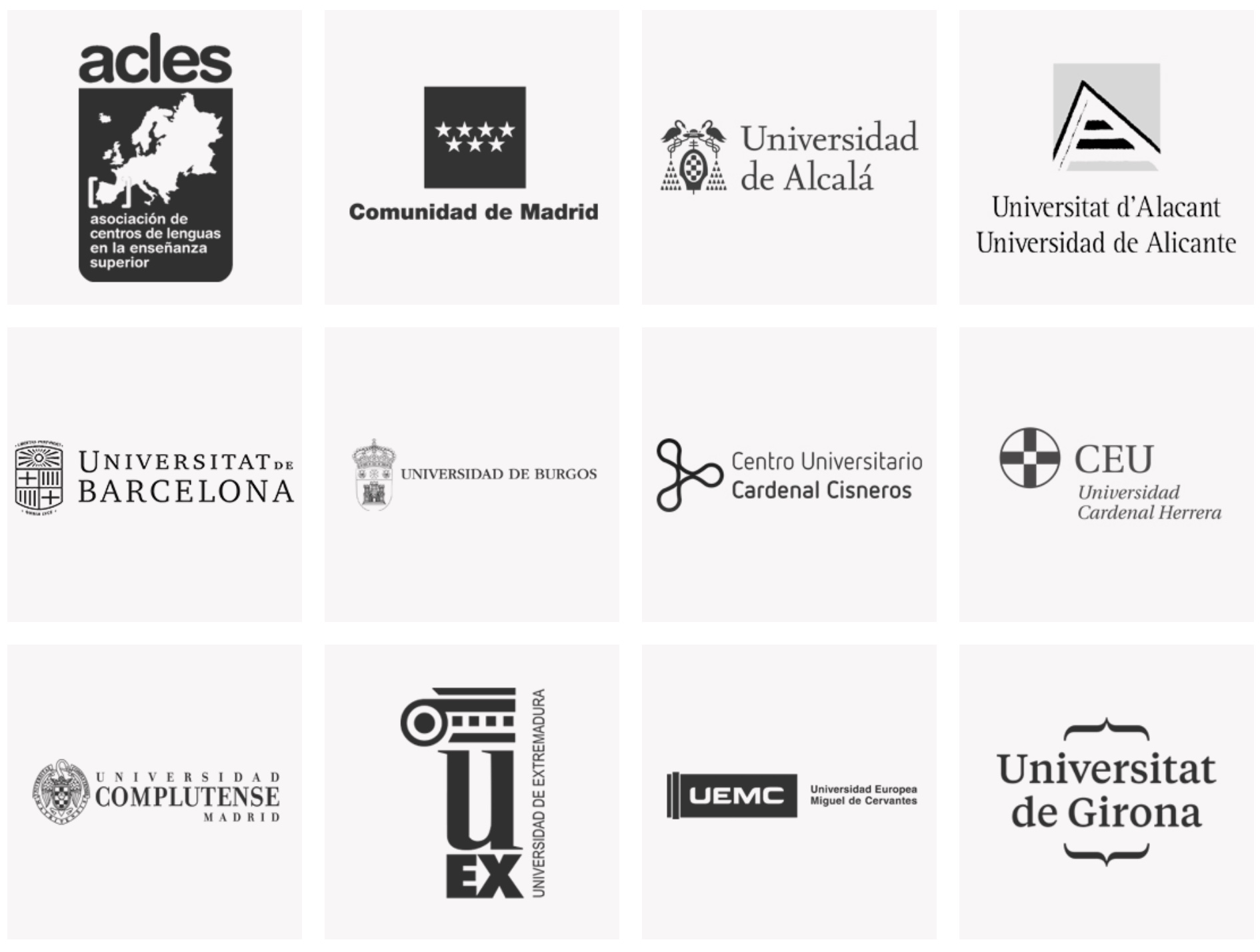
As it is a completely new English exam, surely many people won’t even know that this exam exists yet. However, we have to keep one thing in mind, and that is that we are talking about Oxford University Press, which is no small matter. Oxford University Press is a market leader in foreign language teaching in Spain and many other countries, so undoubtedly everyone will soon be aware of the existence of this exam.
Among the entities that recognise this exam are the University of Granada, the University of Jaén, the Community of Madrid, the Complutense University of Madrid, and dozens of other Spanish public bodies and universities. If you want to take a look at the full list, visit this page and click on «VER MÁS» (SEE MORE).
Characteristics of the Oxford English Exam
While we know a lot, a great deal, about Cambridge English exams, and something, although less, about Trinity exams, about the Oxford Test of English we still know (almost) nothing at all. However, here I reveal exactly what this English exam is like on the inside 🤓:
- It consists of 4 modules: Reading, Writing, Listening and Speaking.
- Each part has a limited duration.
- The reading and listening tests adapt to the candidate’s answers, making each test «unique and motivating», as stated by its creators. This is very interesting.
- It is done exclusively on computer, and online.
- It can only be taken at authorised examination centres. Currently there are only 60 authorised centres, but I suppose there will be many more soon.
- There are no specific dates to take the test. You simply need to contact an authorised examination centre to arrange your exam.
- The writing and speaking modules are individual tests, reviewed by professional and experienced examiners.
What is each part of the exam like?
Below I bring you some screenshots of the questions from the demo that you yourself can do here.
Oxford Test of English: Reading
The Reading module of the Oxford Test of English consists of 4 parts that assess different micro-skills. Below you can see an example of each task:
Reading Part 1
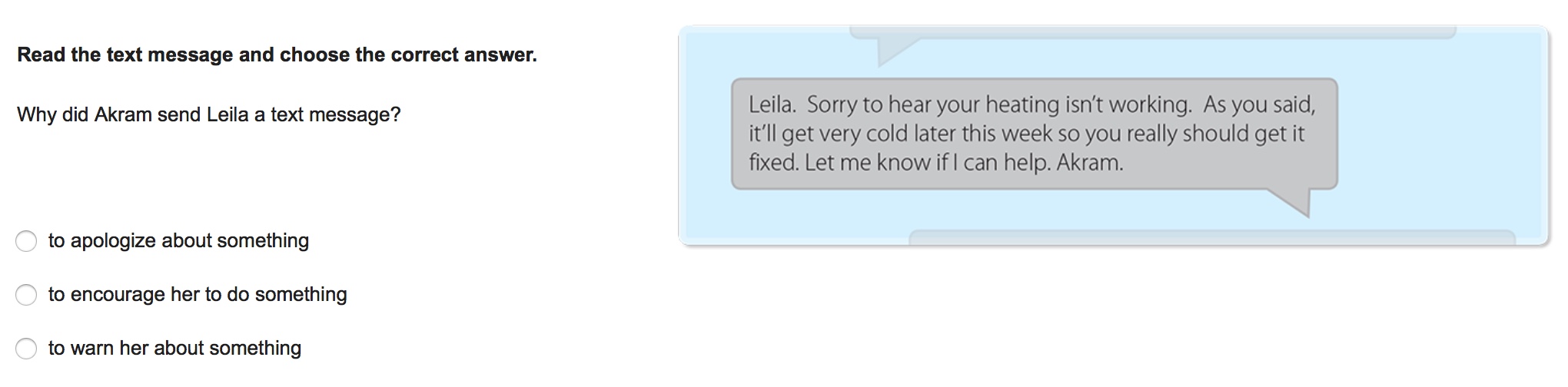
In this part, you are asked questions about 6 short messages, practically identical to Reading Part 1 of the Preliminary (PET). Here is an example:
Reading Part 2
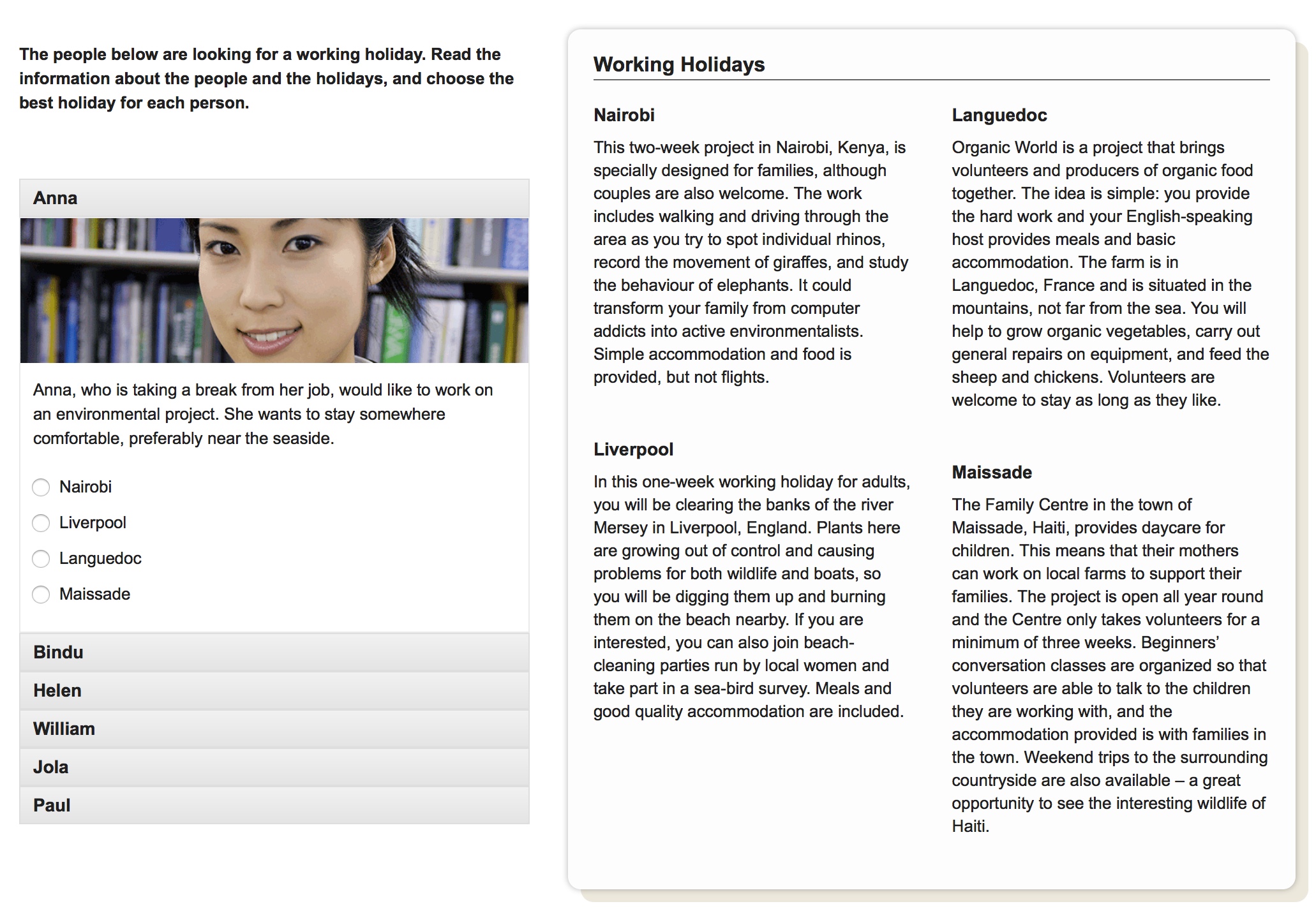
In the second part of the Reading, you have several descriptions of people who want to do something. You will have to read short extracts from places, films, books, etc., and choose the one that best suits each person. This part is very similar to Reading Part 2 of the Preliminary (PET).
Reading Part 3
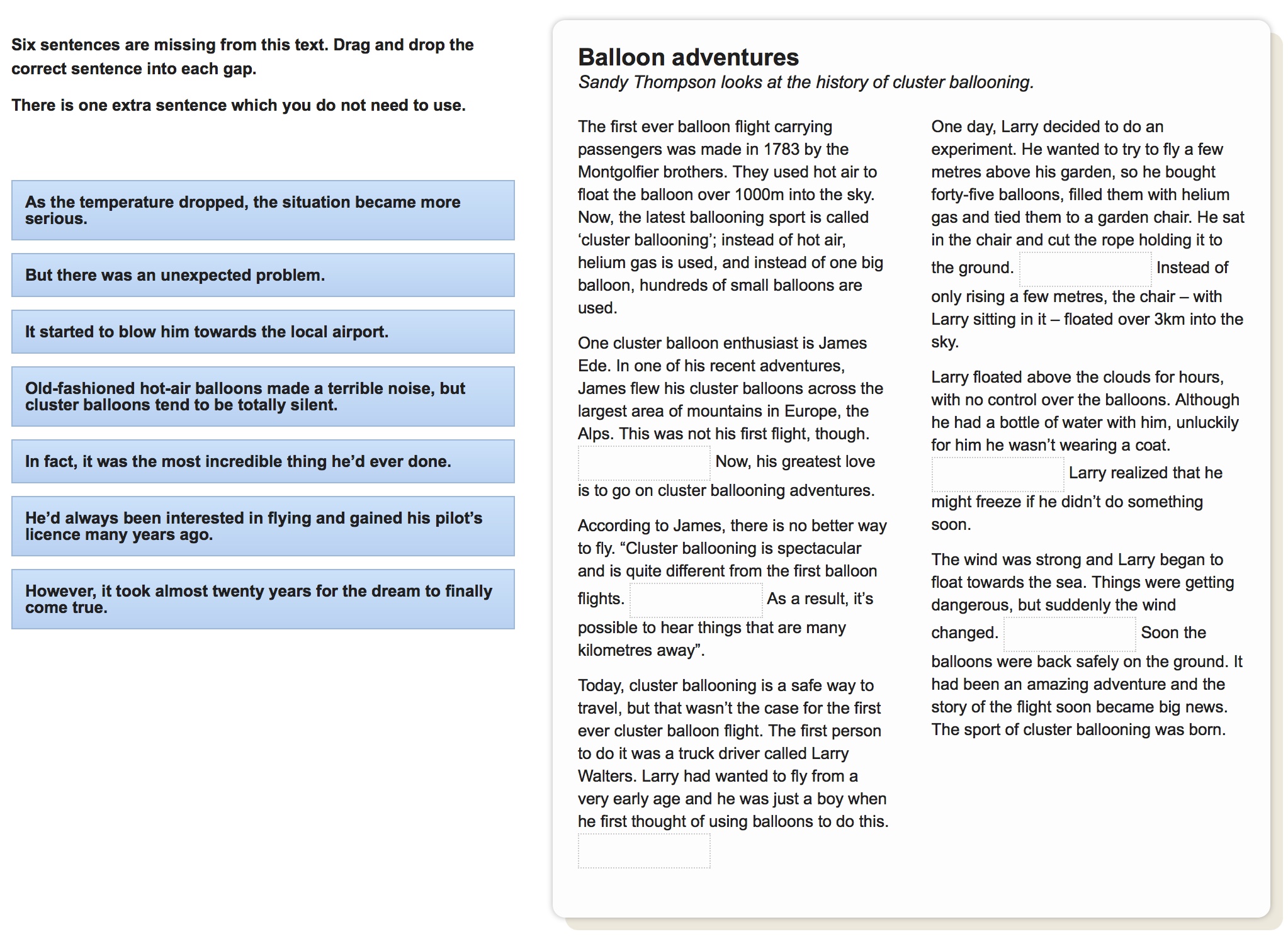
In this part, you will have a text with 6 gaps that you have to fill with paragraphs provided separately. There is one paragraph that you should not use. Exactly the same as one of the parts of the Reading module of the First (FCE).
Reading Part 4
In the last part of the Reading, you must answer several multiple-choice questions about a long text, just like in this part of the First or this part of the Preliminary from Cambridge English.
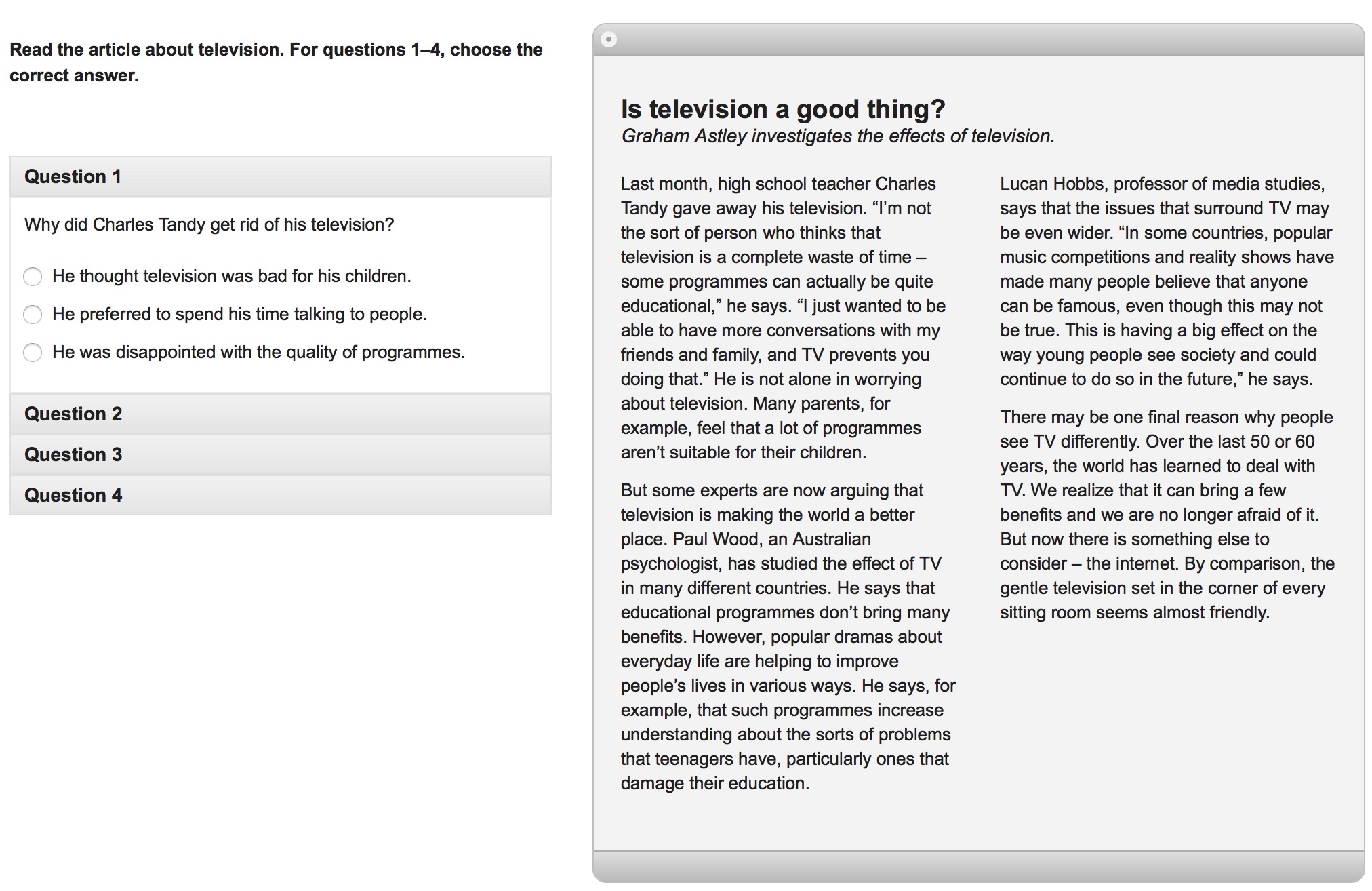
As you can see, these tasks are not at all innovative, as Cambridge English already conducts its Reading tests with very similar, if not identical, formats. However, this does not mean that they are not effective. Quite the opposite, in fact.
Oxford Test of English: Writing
The Writing module of the Oxford Test of English consists of 2 parts:
Writing Part 1
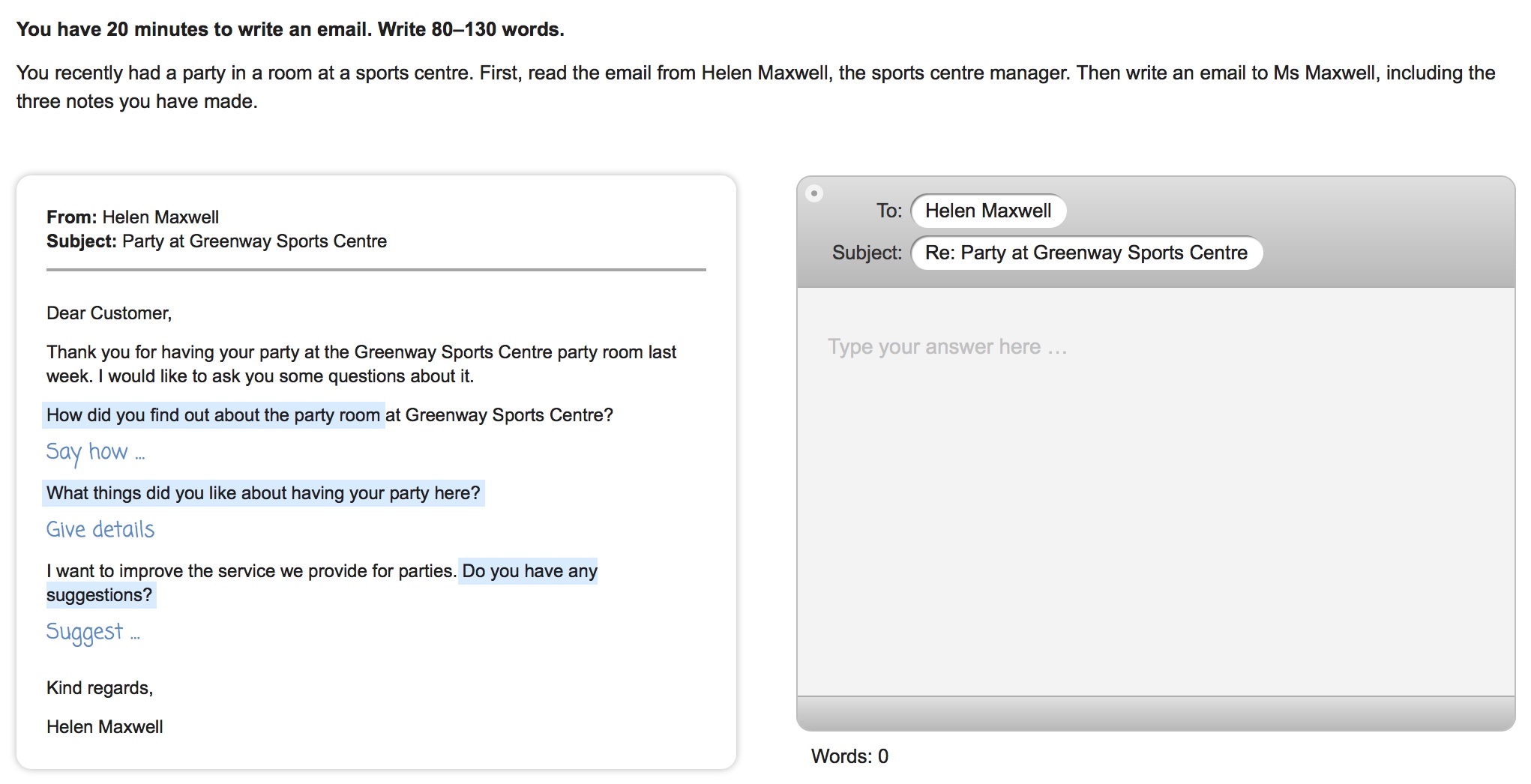
In the first part of the Writing, you have to reply to an email in 20 minutes. This assesses your reading comprehension and your ability to respond to everything asked in the email that you have, in theory, received.
Writing Part 2
To pass this second test, you must choose between 2 types of Writing. In the demo, the two types offered are an essay and a review. In this case, you have 2 minutes to choose the task and 25 minutes to complete it.
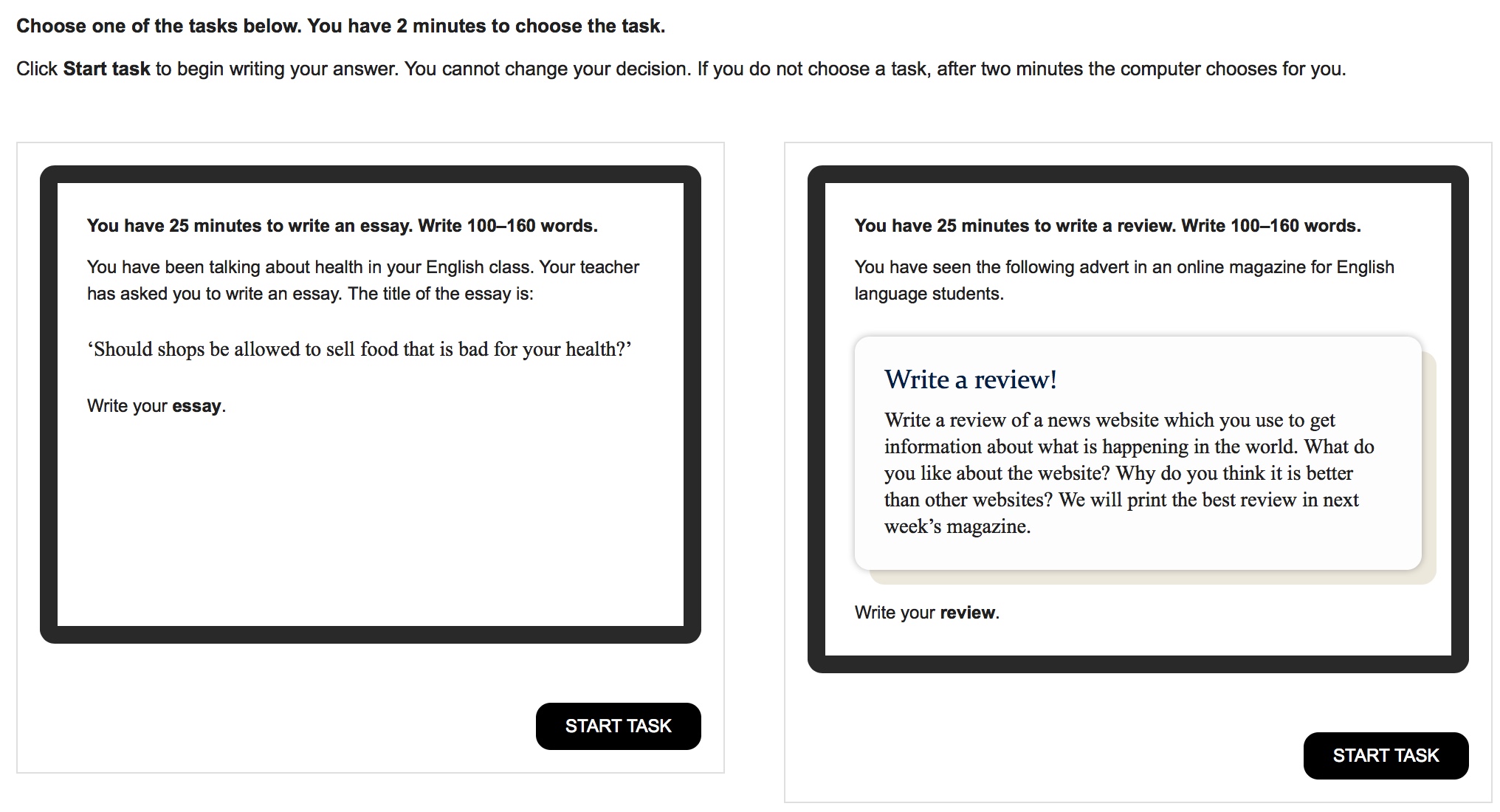
As with the Reading, the format of Oxford’s Writing tasks is very similar to that used by Cambridge English, i.e., the traditional writing tasks we have been working on all our lives.
Oxford Test of English: Listening
The Listening module consists of 4 parts, which have the following characteristics:
Listening Part 1
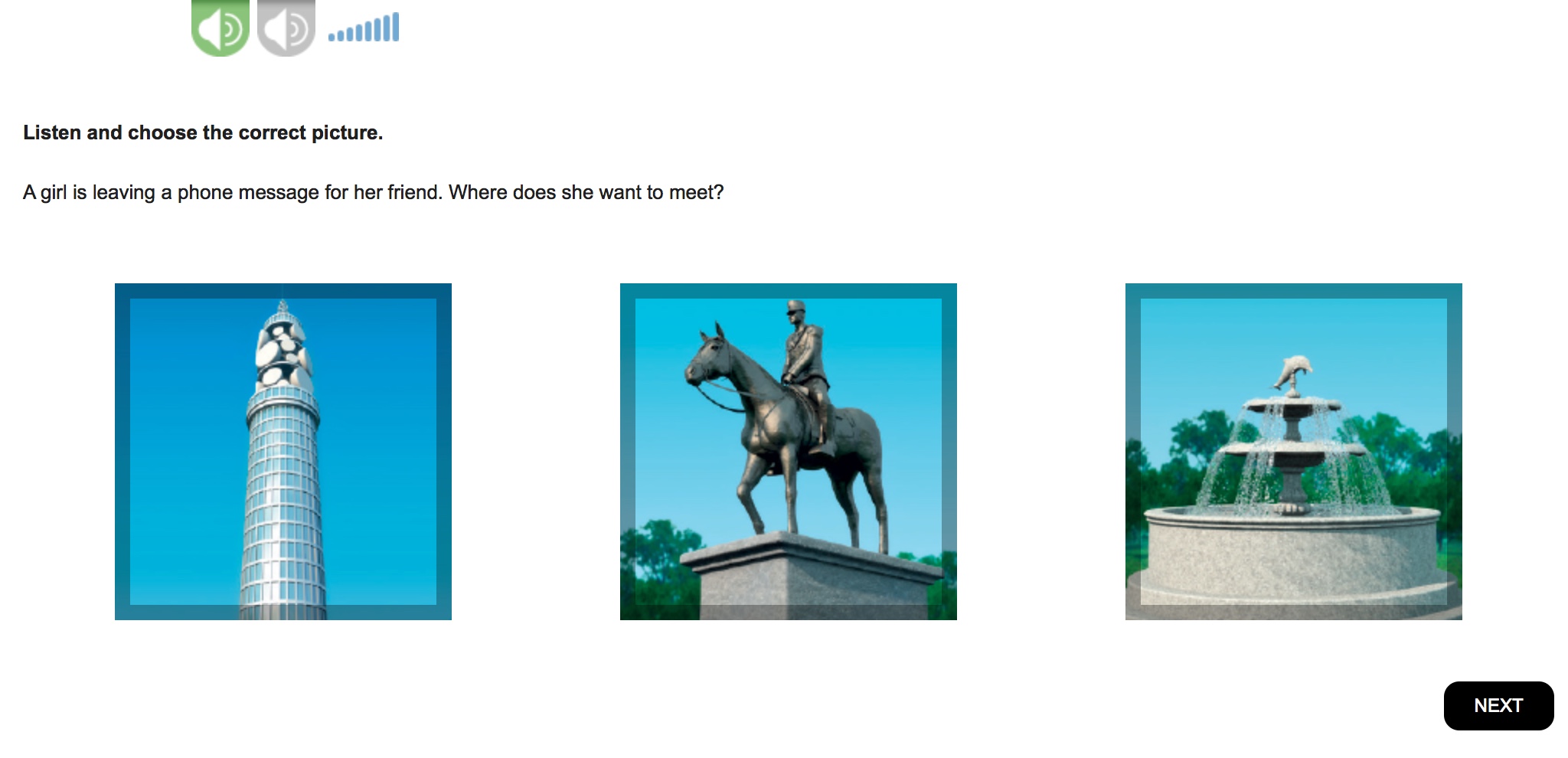
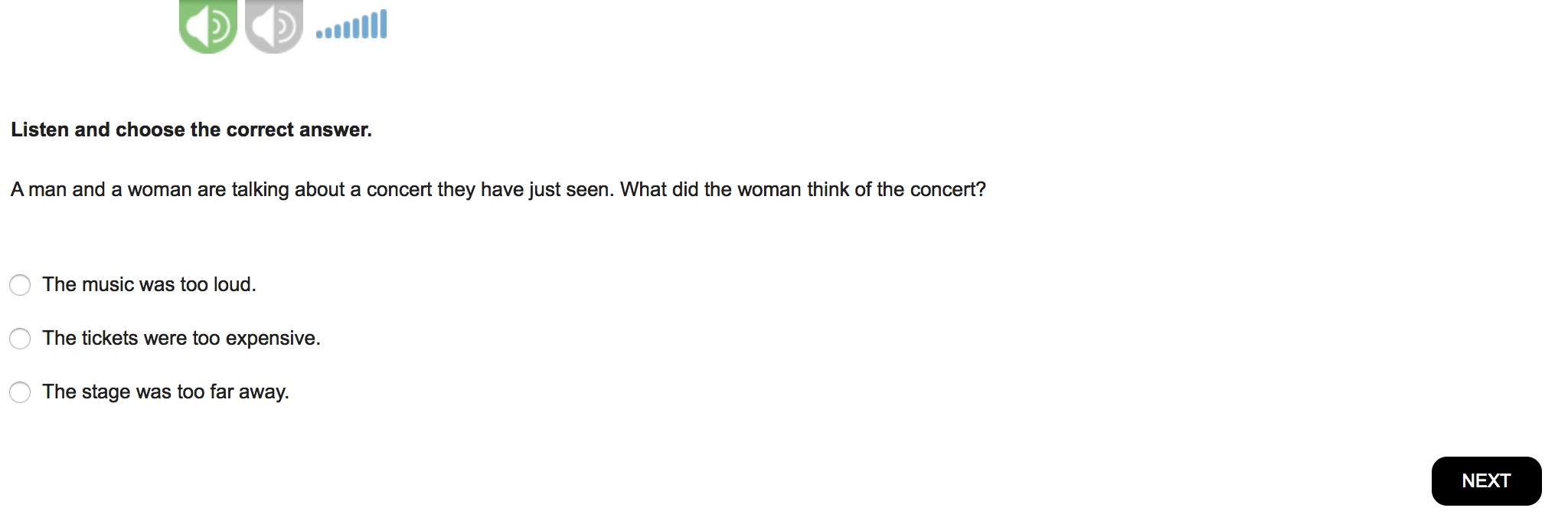
In this part of the Listening, you will hear 5 extracts of different situations that you will have to answer by choosing an option in the form of an image or photo. This is a task with a format identical to that of Part 1 of the Preliminary English Test from Cambridge English.
Listening Part 2
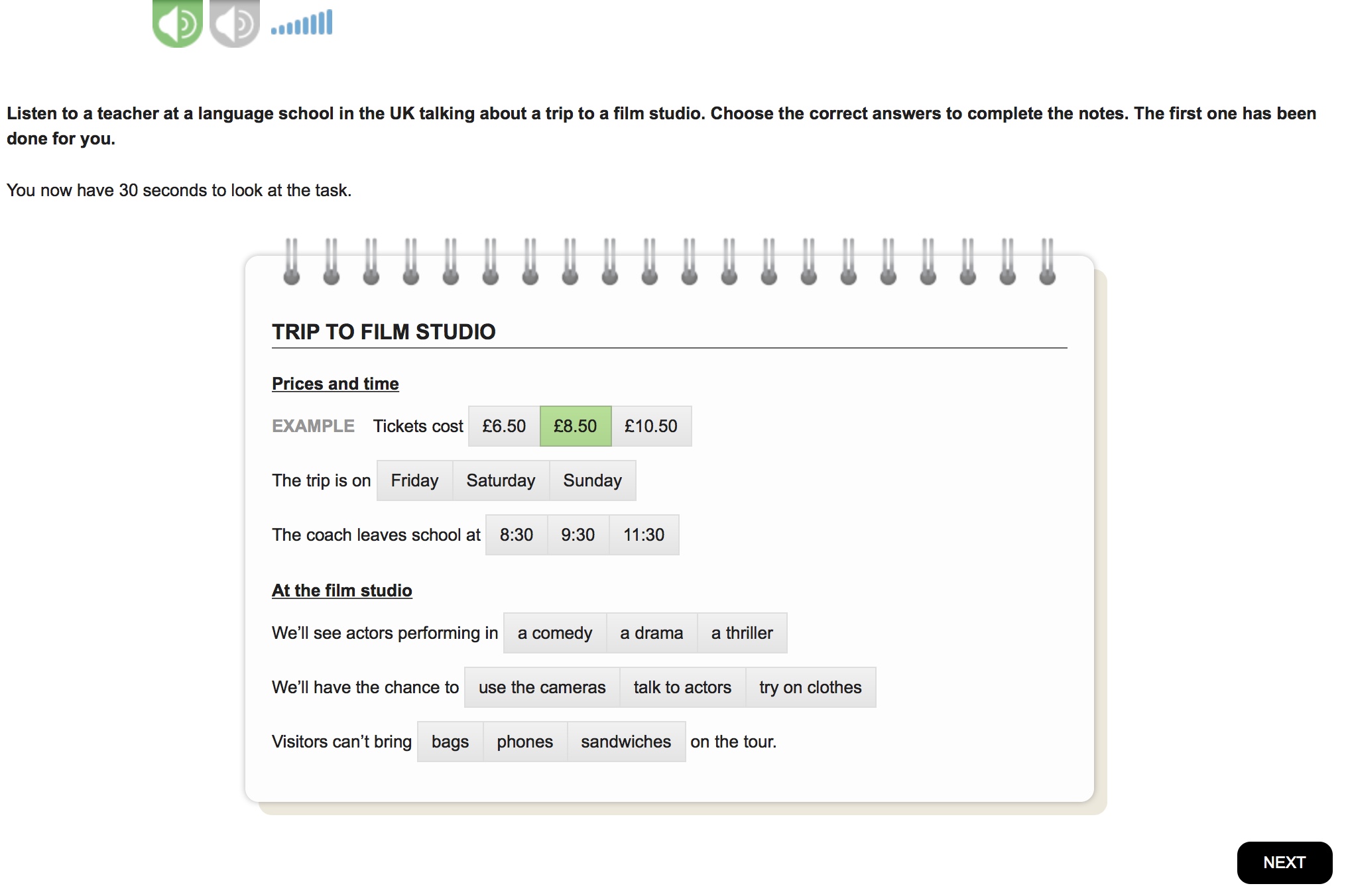
In the second part, you will listen to someone giving a talk. Your exercise will consist of a summary of the talk with certain «gaps» where you can choose from 3 options. This is a kind of multiple-choice but without specific questions.
Listening Part 3
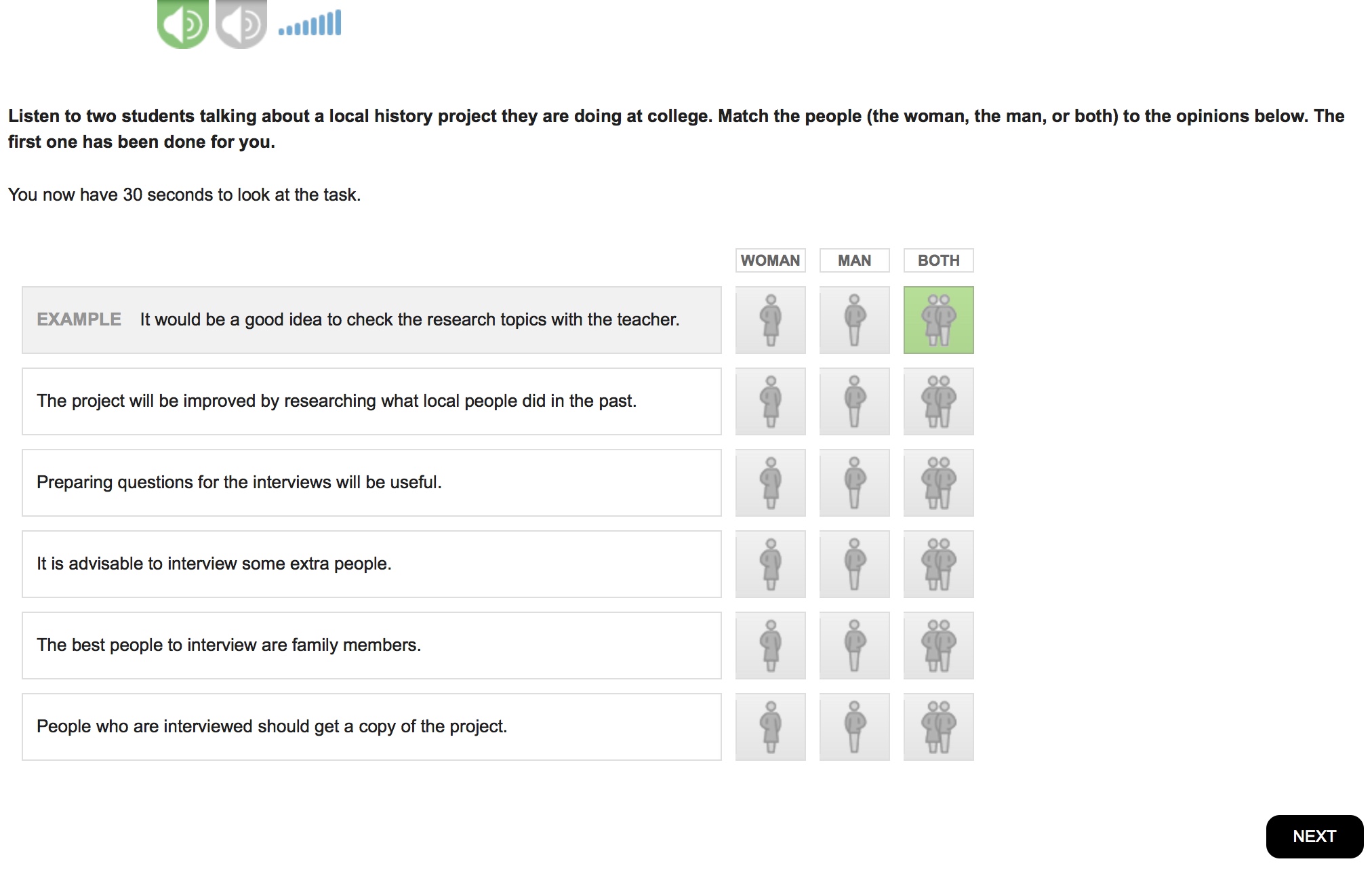
The third part of the Listening consists of a conversation between two people; in the case of the demo, it is a man and a woman. To answer, instead of choosing «true» or «false», you must choose who said it: the woman, the man, or both.
Listening Part 4
In the last part of the Oxford Test of English Listening, you will have to listen to 5 different situations and choose one answer from 3 options. It is exactly the same as the first part of the First (FCE) Listening, but with 5 questions instead of 8.
Oxford Test of English: Speaking
The Speaking module of the Oxford English exam is undoubtedly the one that differs most from exams like those of Cambridge English, Trinity or the Escuela Oficial de Idiomas. This is because, like the TOEFL, the Speaking is done on the computer, recording the candidate’s oral responses. In this way, the candidate will have to complete the following 4 tasks:
Speaking Part 1
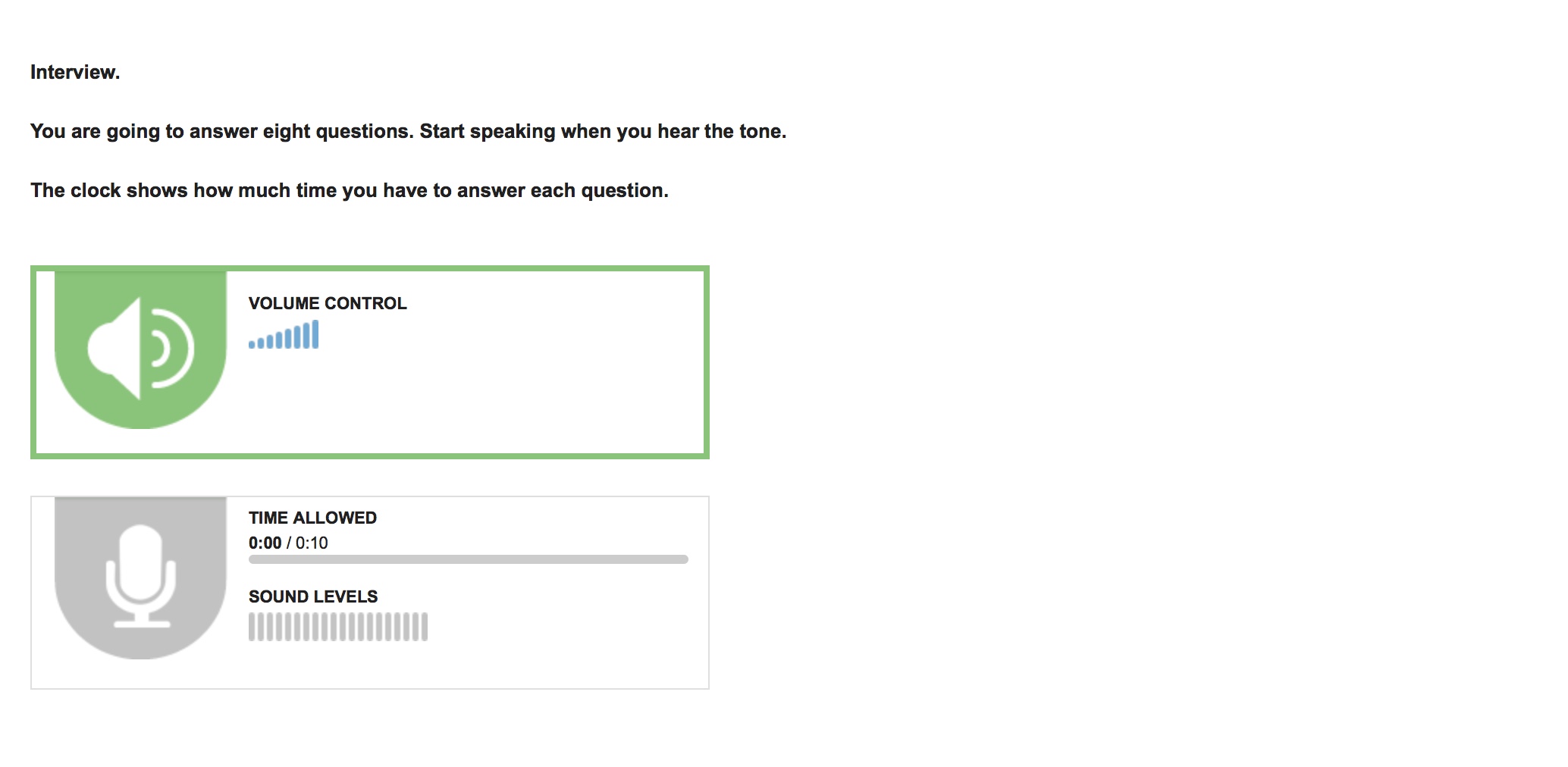
During the first part of the Speaking, you will hear 8 questions that you will have to answer in 10 or 20 seconds, depending on the type of question. Below the image are the questions asked in the demo. This part is the same as the first part of the Speaking module of the First (FCE) or Preliminary (PET) from Cambridge English.
1. What’s your name? (10 seconds)
2. Which country do you come from? (10 seconds)I’m going to ask you some questions about learning languages:
3. Can you describe an English lesson that you really enjoyed? (20 seconds)
4. Tell me what you do to practise English outside the classroom. (20 seconds)
5. What other languages, apart from English, would you like to learn and why? (20 seconds)I’m going to ask you some questions about friends:
6. What do you like doing with your friends? (20 seconds)
7. Tell me how you met your best friend. (20 seconds)
8. When do you prefer to be with friends and when do you prefer to be with your family? (20 seconds)
As you can see, in this case, it is divided into 3 mini-blocks: name and where you are from, first topic (learning languages) and second topic (friends & family). I would dare to say that the first two questions will always be those, while the other topics will change depending on the exam.
Speaking Part 2
In this second part, you will have to record a voice message as if you were leaving it for someone you know. The message can last up to 40 seconds, while you have 20 seconds to think about what you are going to say.
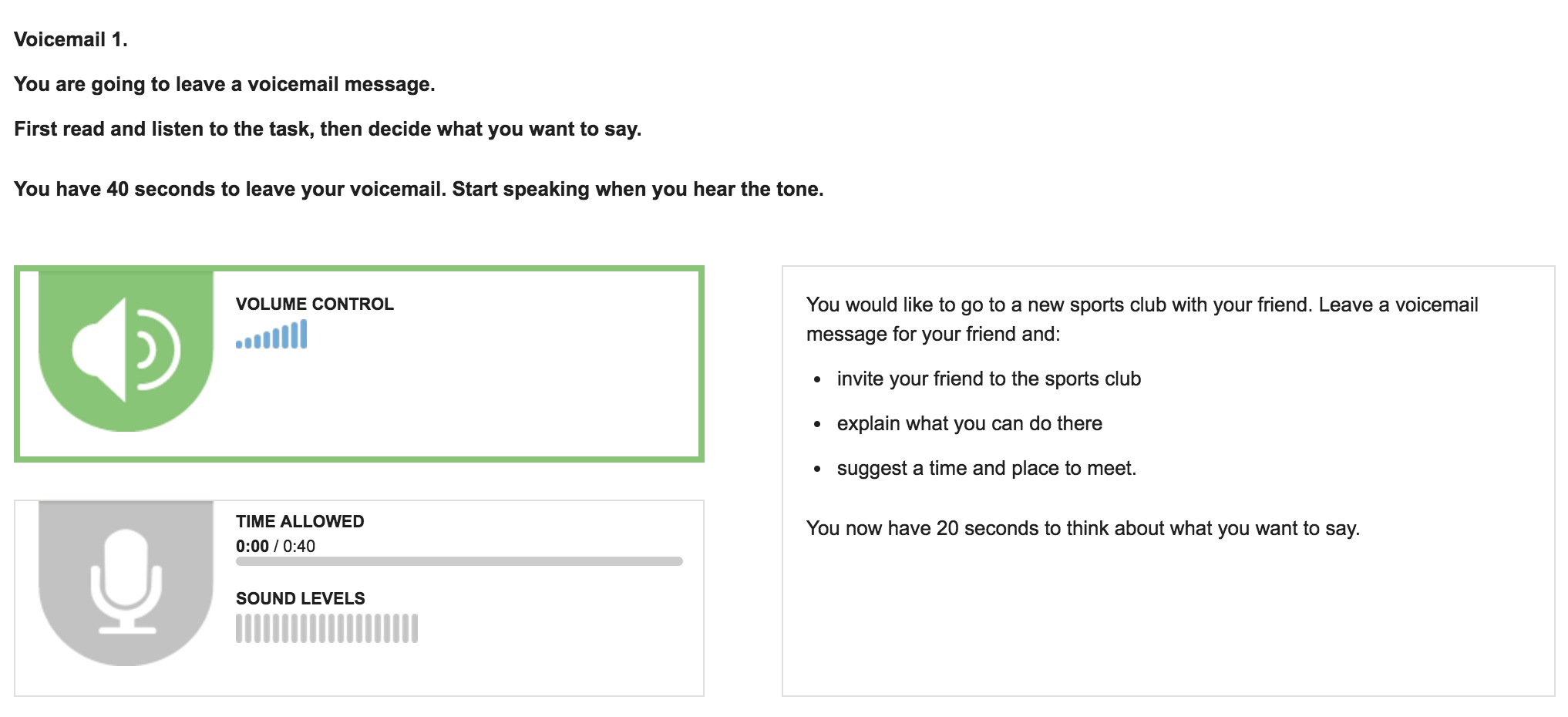
I love this part of the Speaking. I really like it because it seems very useful and realistic. Moreover, it is practically identical to Writing Part 1 of the Preliminary (PET), but in oral format, which I think is a very intelligent idea.
Speaking Part 3
During Part 3 of the Speaking, you will have to speak for 1 minute. You are given 4 photos and 30 seconds to choose 2 images and think about what to say. Afterwards, you have to talk about the two images. In this case, they ask about the advantages and disadvantages of living in different types of homes.
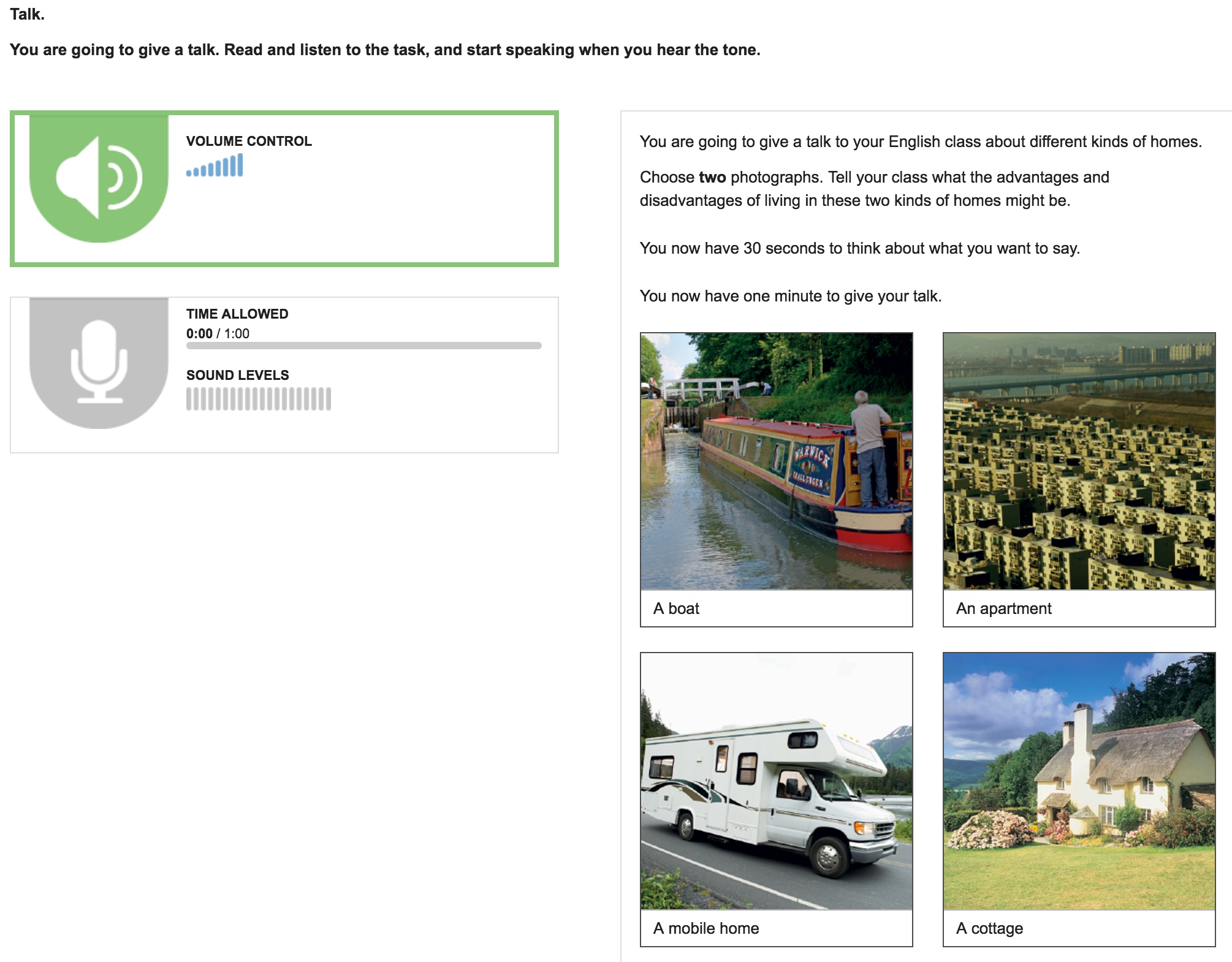
This part is very similar to Part 2 of the First (FCE) Speaking, where you have to compare 2 images and answer a question.
Speaking Part 4
Finally, you have to answer 6 questions about the topic from Part 3, just like in the last part of the First (FCE) Speaking. In the case of the demo, the questions are as follows:
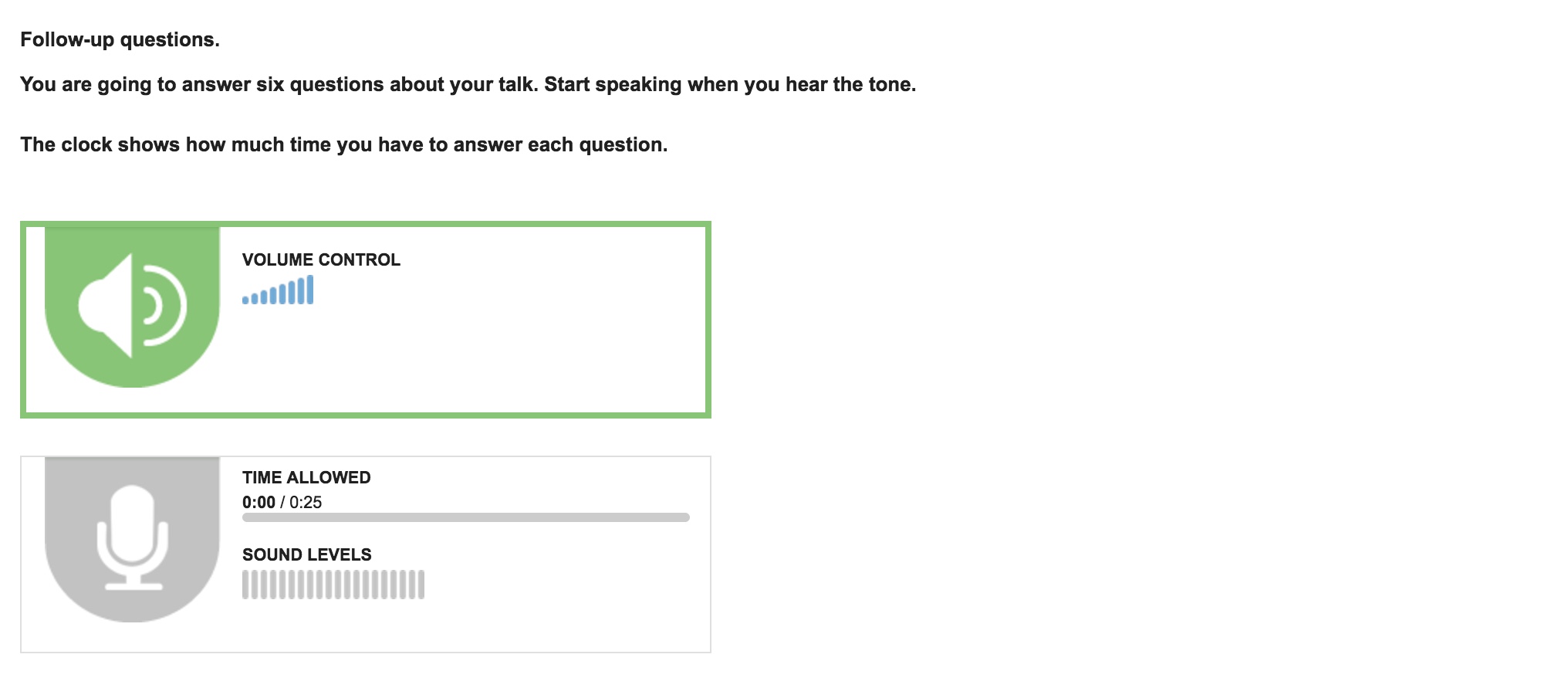
Your talk was about places where people live:
1. Tell me what your home is like.
2. Why is it important to have good neighbours?
3. What do you think are the advantages of living with friends?
4. Some people live in the same place all their lives. Is this a good thing or a bad thing?
5. What advice would you give to someone who is moving to the area where you live?
6. How do you think homes in the future will be different from homes today?
What levels does the Oxford Test of English certify?
Currently, the Oxford Test of English serves to certify the most common and requested levels today: B1 and B2, according to the Common European Framework of Reference. So if you already have a B2 from Cambridge, LanguageCert, Trinity or the EOI, you’d better continue on the path you’re on, because the OTE won’t be useful for you for now. When will they release another exam for higher or lower levels? That remains to be seen. They have surely grouped two levels into the same exam because, as I mentioned before, the exam becomes more difficult or easier depending on whether you answer the questions correctly or incorrectly, although obviously you will not know if your answers are correct or incorrect at the time.
Conclusions
What I like about the Oxford Test of English:
- It is a very flexible exam and, from what I’ve read, quite a bit more affordable than Cambridge English exams, although this will depend on the authorised examination centre.
- It serves for 2 levels, as your answers determine the level of your exam. And you don’t «fail» as such.
- It does not have fixed official dates; instead, the student requests the date and the centre organises the exam for them.
- It lasts only 2 hours.
- Results take 2 weeks to be released.
What I do NOT like:
- Many parts are a copy of other existing exams, although this does not mean that the quality is worse.
- The Speaking on a computer is something that doesn’t completely convince me, as there is no real interaction, which also happens in some parts of the Cambridge English speaking exams. In this regard, Trinity is much better designed today.
- It is only useful for candidates interested in a B1 or B2 certificate, no higher levels for now.
- Unfortunately, it will probably take quite some time until private companies take this exam seriously.
- There is very little specific material for this exam, although, honestly, as the parts are so similar to Cambridge exams, any B1 or B2 material from other exams will serve to prepare you well.
- There are still few examination centres.
What do you think?
Now that you know my impressions of the Oxford English exam, called the Oxford Test of English (OTE), I would love to know what you think of this new initiative by Oxford University Press. Leave me a comment and tell me if you would like to try this exam or not.
And if you found this post useful, share it with other English students and teachers.
And don’t forget to Keep Smiling!