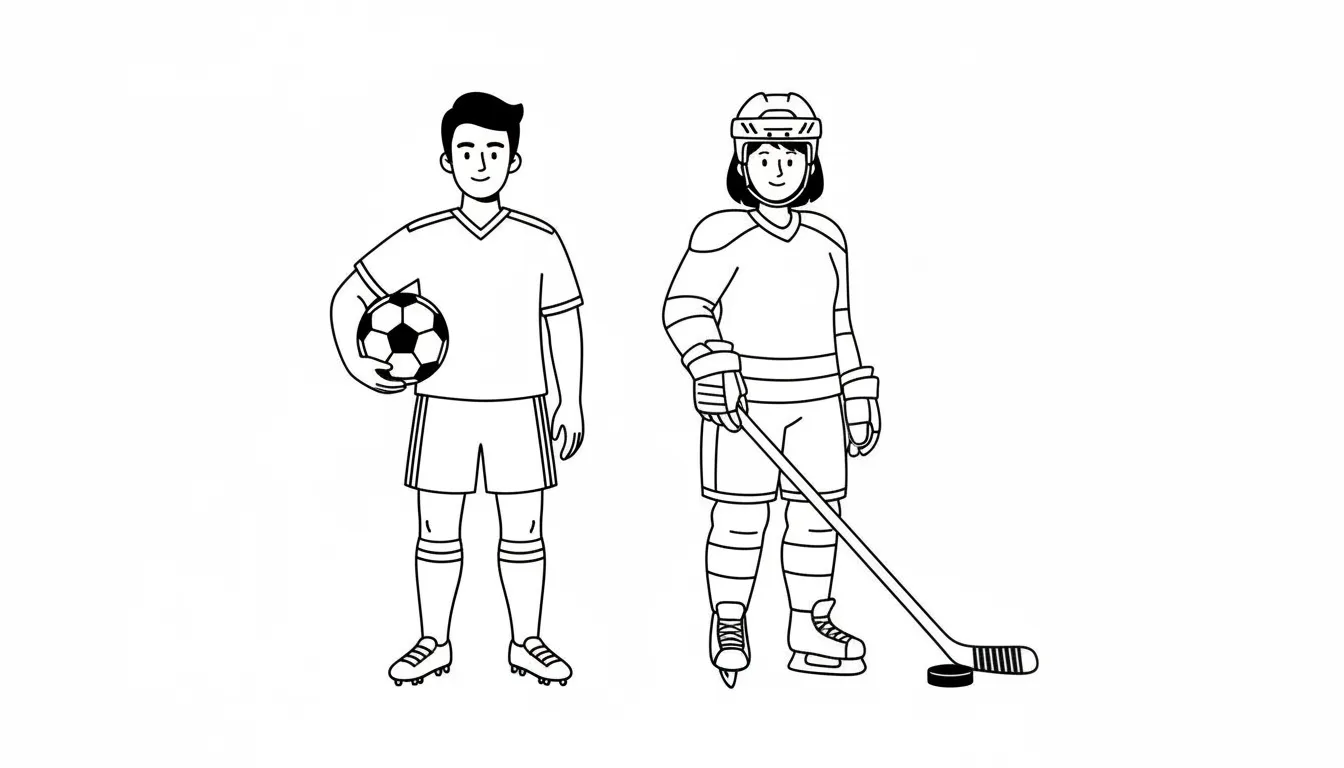
Sports vocabulary in English
The ultimate guide to sports vocabulary in English: sports, equipment, phrasal verbs, and idioms.

Table of contents
Sport is part of our daily lives, and knowing how to talk about it in English is essential for getting by in everyday conversations, whether you are discussing the weekend’s match, talking about your hobbies, or following international sporting events. In this article, you will find all the sports vocabulary in English you need to master this universal topic.
Why it Is Important to Know Sports Vocabulary in English
Vocabulary related to sport is one of the most common topics in English exams such as the B1 Preliminary Speaking or the B2 First Writing, where you often have to talk about your hobbies, describe free-time activities, or write texts about healthy habits and your interests.
Furthermore, sport is an ideal topic to break the ice in informal conversations, make new friends when you travel, or participate in debates about international sporting events. Mastering this vocabulary will allow you to express yourself naturally and confidently in real communication situations.
Essential Verbs for Talking About Sports in English
Before diving into specific vocabulary, it is fundamental that you know the three main verbs used to talk about sports in English. Choosing the correct verb makes the difference between sounding natural or making typical student mistakes.
Play: For Team and Competitive Sports
The verb play is mainly used for team sports, sports involving a ball, and competitive games where there are winners and losers. It is the most common verb when we talk about sports.
Examples of use:
- play football
- play basketball
- play tennis
- play rugby
- play volleyball
- play hockey
- play baseball
- play golf
🇬🇧 I play football every Saturday with my friends.
🇪🇸 Juego al fútbol todos los sábados con mis amigos.
🇬🇧 She plays tennis professionally.
🇪🇸 Ella juega al tenis profesionalmente.
Go: For Individual Sporting Activities Involving Movement
The verb go is used with individual sports and activities that imply movement. It is always followed by the gerund (verb + -ing). It is especially common with outdoor sports and recreational activities.
Examples of use:
- go running / go jogging
- go swimming
- go cycling
- go skiing
- go skating
- go hiking
- go climbing
- go surfing
🇬🇧 We go swimming at the beach every summer.
🇪🇸 Vamos a nadar a la playa cada verano.
🇬🇧 He goes running before breakfast.
🇪🇸 Él sale a correr antes del desayuno.
Do: For Disciplines and Martial Arts
The verb do is mainly used with martial arts, fitness disciplines, and sports that are not usually used as verbs themselves. Although it is less frequent than play or go, it is important to know it to sound precise.
Examples of use:
- do karate
- do judo
- do taekwondo
- do yoga
- do aerobics
- do gymnastics
- do pilates
- do martial arts
🇬🇧 My sister does gymnastics three times a week.
🇪🇸 Mi hermana hace gimnasia tres veces por semana.
🇬🇧 I’ve been doing karate since I was ten.
🇪🇸 He estado haciendo kárate desde que tenía diez años.
Most Popular Sports in English (Classified by Category)
Below you will find a complete list of sports organised by category. This classification will help you memorise the vocabulary better and understand the relationships between different sporting disciplines.
Ball Sports
Many of the most popular sports in the world are played with some kind of ball. Notice that many of these sports have the word ball in their name:
- football (UK) / soccer (US) = football
- American football = American football
- basketball = basketball
- volleyball = volleyball
- handball = handball
- baseball = baseball
- softball = softball
- rugby = rugby
- tennis = tennis
- table tennis / ping pong = table tennis
- badminton = badminton
- golf = golf
- cricket = cricket
- squash = squash
- racquetball = racquetball
- paddle / padel = padel
- bowling = bowling
If you want to delve deeper into the most popular sport in the world, don’t miss my article on football vocabulary in English, where you will find specific terms, player positions, and typical expressions from the world of football.
Water Sports
Water sports are especially popular in summer and in coastal areas. Here are the most important ones:
- swimming = swimming
- diving = diving
- water polo = water polo
- synchronized swimming / artistic swimming = synchronized swimming
- surfing = surfing
- windsurfing = windsurfing
- kitesurfing = kitesurfing
- sailing = sailing
- rowing = rowing
- kayaking = kayaking
- canoeing = canoeing
- water skiing = water skiing
- white water rafting = white water rafting
- scuba diving = scuba diving
Winter Sports
When the cold and snow arrive, these are the sports that dominate the conversation:
- skiing = skiing
- alpine skiing = alpine skiing
- cross-country skiing = cross-country skiing
- snowboarding = snowboarding
- ice skating = ice skating
- figure skating = figure skating
- speed skating = speed skating
- ice hockey = ice hockey
- curling = curling
- bobsleigh = bobsleigh
- luge = luge
- skeleton = skeleton
- ski jumping = ski jumping
- biathlon = biathlon
Combat Sports
Martial arts and combat sports require discipline, technique, and respect. Remember that with these sports, we use the verb do:
- boxing = boxing
- wrestling = wrestling
- judo = judo
- karate = karate
- taekwondo = taekwondo
- kickboxing = kickboxing
- MMA (mixed martial arts) = MMA
- fencing = fencing
- martial arts = martial arts
- jiu-jitsu = jiu-jitsu
- muay thai = muay thai
Individual and Endurance Sports
These sports focus on personal performance and individual improvement:
- athletics / track and field = athletics
- running / jogging = running / jogging
- sprinting = sprinting
- marathon = marathon
- hurdles = hurdles
- long jump = long jump
- high jump = high jump
- pole vault = pole vault
- triple jump = triple jump
- shot put = shot put
- discus throw = discus throw
- javelin throw = javelin throw
- hammer throw = hammer throw
- cycling = cycling
- mountain biking = mountain biking
- triathlon = triathlon
- weightlifting = weightlifting
- gymnastics = gymnastics
- rhythmic gymnastics = rhythmic gymnastics
- archery = archery
- shooting = shooting
Extreme Sports
For the most adventurous, these sports offer adrenaline and excitement:
- skateboarding = skateboarding
- BMX = BMX
- rock climbing / climbing = rock climbing
- mountaineering = mountaineering
- bungee jumping = bungee jumping
- skydiving / parachuting = skydiving
- paragliding = paragliding
- hang gliding = hang gliding
- base jumping = base jumping
- parkour = parkour
- motocross = motocross
- canyoning = canyoning
Sports Equipment and Gear in English
Knowing the vocabulary for sports equipment is essential, especially if you are going to buy gear in an English-speaking country or need to describe what you are wearing to practise sport.
Sports Clothing and Footwear
- trainers (UK) / sneakers (US) = trainers
- running shoes = running shoes
- football boots = football boots
- hiking boots = hiking boots
- tracksuit = tracksuit
- jersey = team shirt / jersey
- shorts = shorts
- leggings = leggings
- sports bra = sports bra
- sweatband = sweatband
- cap = cap
- swimming costume / swimsuit (UK) = swimming costume
- swimming trunks = swimming trunks
- wetsuit = wetsuit
- ski suit = ski suit
Accessories and Protection
- helmet = helmet
- crash helmet = crash helmet
- shin pads / shin guards = shin pads
- knee pads = knee pads
- elbow pads = elbow pads
- mouthguard = mouthguard
- goggles = goggles
- boxing gloves = boxing gloves
- gloves = gloves
- wristband = wristband
- headband = headband
Sport-Specific Gear
- ball = ball (generic)
- football = football
- basketball = basketball
- tennis ball = tennis ball
- golf ball = golf ball
- racket / racquet = racket
- bat = bat
- hockey stick = hockey stick
- golf club = golf club
- net = net
- goal = goal
- goalpost = goalpost
- hoop = hoop (basketball)
- puck = puck (hockey)
- skates = skates
- skateboard = skateboard
- surfboard = surfboard
- snowboard = snowboard
- skis = skis
- ski poles = ski poles
- bicycle / bike = bicycle / bike
- weights = weights
- dumbbells = dumbbells
- barbell = barbell
- yoga mat = yoga mat
- jump rope / skipping rope = skipping rope
- punching bag = punching bag
- fishing rod = fishing rod
- chess board = chess board
Speaking of chess, which I love although I’m terrible at it… Even though it is a mental sport rather than a physical one, it has its own fascinating vocabulary. Discover more in my article on chess vocabulary in English.
Sporting Facilities: Where Sports Are Practised
Every sport has its characteristic space. Knowing these terms will help you give directions, meet up with friends to play sport, or understand sports news.
Outdoor Spaces
- pitch = pitch (football, rugby, cricket)
- football pitch = football pitch
- rugby pitch = rugby pitch
- golf course = golf course
- tennis court = tennis court
- basketball court = basketball court
- athletics track = athletics track
- running track = running track
- ski slope = ski slope
- skate park = skate park
- cycling track = cycling track
- velodrome = velodrome
- race track / circuit = race track / circuit
- climbing wall = climbing wall
Indoor Facilities
- sports centre / sports center (US) = sports centre
- gym / gymnasium = gym
- fitness centre = fitness centre
- swimming pool = swimming pool
- indoor pool = indoor pool
- ice rink = ice rink
- boxing ring = boxing ring
- wrestling ring = wrestling ring
- sports hall = sports hall
- stadium = stadium
- arena = arena
- changing room / locker room (US) = changing room
- dojo = dojo
- bowling alley = bowling alley
Actions and Verbs Related to Sport
Beyond the main verbs (play, go, do), there are many specific verbs that describe concrete sporting actions.
Actions with a Ball
- kick = to kick
- throw = to throw
- pass = to pass
- catch = to catch
- head = to head
- hit = to hit
- strike = to strike (with force)
- shoot = to shoot
- dribble = to dribble
- bounce = to bounce
- serve = to serve (tennis, volleyball)
- volley = to volley
- tackle = to tackle
- block = to block
- save = to save (goalkeeper)
🇬🇧 The goalkeeper made an incredible save in the last minute.
🇪🇸 El portero hizo una parada increíble en el último minuto.
General Movements in Sport
- run = to run
- sprint = to sprint
- jog = to jog
- walk = to walk
- jump = to jump
- leap = to leap
- dive = to dive / plunge
- swim = to swim
- climb = to climb
- lift = to lift
- pull = to pull
- push = to push
- bend = to bend
- stretch = to stretch
- swing = to swing
- spin = to spin
- slide = to slide
- skate = to skate
- ski = to ski
- row = to row
- pedal = to pedal
- punch = to punch
- dodge = to dodge
🇬🇧 You need to stretch before and after exercising to avoid injuries.
🇪🇸 Necesitas estirar antes y después de hacer ejercicio para evitar lesiones.
Vocabulary for Competitions and Sporting Events
When you attend a sporting event or follow a competition on television, this vocabulary will be indispensable.
Results and Standings
- win = to win
- lose = to lose
- draw / tie = to draw
- beat = to beat
- defeat = defeat
- victory = victory
- score = score / to score
- scoreboard = scoreboard
- points = points
- goal = goal
- own goal = own goal
- nil (UK) / zero (US) = nil
- lead = lead / to lead
- be ahead = to be ahead
- be behind = to be behind
- comeback = comeback
- championship = championship
- tournament = tournament
- league = league
- cup = cup
- trophy = trophy
- medal = medal
- gold/silver/bronze medal = gold/silver/bronze medal
- podium = podium
- world record = world record
- personal best = personal best
🇬🇧 The match ended in a draw, two-nil to each team… wait, that doesn’t make sense! It was two-two.
🇪🇸 El partido terminó en empate, dos a cero para cada equipo… ¡espera, eso no tiene sentido! Fue dos a dos.
People Involved (Referees, Spectators, etc.)
- referee = referee
- umpire = umpire (tennis, baseball, cricket)
- linesman / assistant referee = linesman
- judge = judge
- coach = coach
- manager = manager
- trainer = trainer / fitness coach
- captain = captain
- player = player
- athlete = athlete
- competitor = competitor
- opponent = opponent / rival
- teammate = teammate
- spectator = spectator
- fan = fan
- supporter = supporter
- crowd = crowd
- home team = home team
- away team = away team
- winner = winner
- loser = loser
- champion = champion
- runner-up = runner-up
Useful Expressions During Competitions
- kick off = kick-off / to begin
- half-time = half-time
- full-time = full-time
- extra time = extra time
- penalty shootout = penalty shootout
- injury time = injury time
- foul = foul
- free kick = free kick
- penalty = penalty
- corner = corner
- offside = offside
- yellow card = yellow card
- red card = red card
- substitution = substitution
- lap = lap
- round = round
- set = set (tennis)
- match point = match point
- game point = game point
- knockout = knockout
- disqualification = disqualification
🇬🇧 The referee showed a red card and sent the player off.
🇪🇸 El árbitro mostró una tarjeta roja y expulsó al jugador.
Sports Phrasal Verbs in English
Phrasal verbs are fundamental to sounding natural in English. In a sporting context, these are the most common and useful:
| Phrasal verb | Meaning | Example |
|---|---|---|
| warm up | to prepare for exercise | Always warm up before exercising. |
| cool down | to relax after exercise | Don’t forget to cool down after your run. |
| work out | to exercise, train | I work out at the gym three times a week. |
| take up | to start (a sport/hobby) | I took up yoga last year. |
| give up | to quit, stop doing | Don’t give up! Keep trying! |
| get fit | to become healthy/strong | I’m trying to get fit for the summer. |
| keep up | to maintain the pace | I can’t keep up with the other runners. |
| drop out | to withdraw from a race | She had to drop out of the race due to injury. |
| train up | to train intensively | He’s training up for the marathon. |
| knock out | to make K.O., eliminate | The boxer knocked out his opponent in round three. |
| cheer on | to encourage, shout support | We went to the stadium to cheer on our team. |
| come back | to recover from losing | They came back from 2-0 down to win 3-2. |
| send off | to expel from the game | The player was sent off for a bad tackle. |
| show off | to boast, display skills | Stop showing off your new football skills! |
| limber up | to warm up / stretch | The athletes are limbering up before the race. |
🇬🇧 I decided to take up swimming because it’s good for my back.
🇪🇸 Decidí empezar a nadar porque es bueno para mi espalda.
🇬🇧 Don’t give up! You’re almost at the finish line!
🇪🇸 ¡No te rindas! ¡Casi estás en la línea de meta!
Idioms Related to Sport
Sports idioms or idiomatic expressions are used constantly in everyday English, even when not talking about sport. Knowing them will make you sound much more natural and native-like:
| Idiom | Meaning | Example |
|---|---|---|
| the ball is in your court | it’s your turn to decide/act | I’ve made my offer, now the ball is in your court. |
| throw in the towel | to give up, surrender | After months of trying, he finally threw in the towel. |
| move the goalposts | to change the rules | They keep moving the goalposts every time we get close. |
| get the ball rolling | to set something in motion | Let’s get the ball rolling on this project. |
| on the ball | alert, attentive, efficient | You need to be on the ball in this job. |
| a level playing field | equal conditions | We need a level playing field for all competitors. |
| par for the course | the normal or expected situation | Delays are par for the course with this airline. |
| jump the gun | to act too soon | Don’t jump the gun – wait for the official announcement. |
| hit it out of the park | to succeed brilliantly | Your presentation really hit it out of the park! |
| saved by the bell | rescued from a difficult situation last minute | I didn’t finish the exam, but I was saved by the bell. |
| down for the count | beaten, defeated | After that flu, I was down for the count for a week. |
| take one for the team | to sacrifice oneself for the group | I’ll take one for the team and work this weekend. |
| keep your eye on the ball | to stay focused | Keep your eye on the ball and don’t get distracted. |
| a long shot | very unlikely | It’s a long shot, but we might win the lottery. |
| go the extra mile | to make a special effort | She always goes the extra mile for her customers. |
| neck and neck | very close in a race/competition | The two teams are neck and neck in the league. |
| blow by blow | in great detail | She gave me a blow by blow account of the match. |
| drop the ball | to make a mistake, fail | I really dropped the ball on that assignment. |
| out of your league | beyond your reach/capacity | That job is way out of my league. |
| couch potato | a sedentary person | Stop being a couch potato and go outside! |
🇬🇧 I’ve given you all the information you need. Now the ball is in your court.
🇪🇸 Te he dado toda la información que necesitas. Ahora te toca a ti decidir.
Differences Between British and American English in Sports Vocabulary
British and American English have some important differences when it comes to sports. Here I point out the most relevant ones so you don’t get confused:
| British English 🇬🇧 | American English 🇺🇸 | Spanish |
|---|---|---|
| football | soccer | fútbol |
| American football | football | fútbol americano |
| trainers | sneakers | zapatillas deportivas |
| pitch | field | campo de fútbol |
| kit | uniform | uniforme deportivo |
| nil | zero | cero (en resultados) |
| draw | tie | empate |
| athletics | track and field | atletismo |
| sports centre | sports center | polideportivo |
| Important: In the UK, «football» is the sport that they call «soccer» in the US. What they call «football» in the US, is known as «American football» in the UK. This is probably the most important difference you must remember! Conflicting pronunciation: The word «height» is pronounced /haɪt/ (like «jait»), not like «heit». It is a very common error among Spanish speakers. | ||
⚠️ Important false friend: The word «footing» does not exist in English to refer to the sport of running. In Spanish, «hacer footing» is used, but in English, you must say «go jogging» or «go running». If you say «I do footing», a native speaker will not understand you. The correct term is: «I go jogging» or «I go for a jog».
Practical Exercises to Memorise Sports Vocabulary
Now that you have learned all this vocabulary, it’s time to put it into practice. Below you will find three exercises that will help you consolidate what you have learned. Good luck!
And if you prefer a version in text that you can copy and paste, you have it down here 👇
Exercise 1: General Sports Vocabulary
Complete the sentences with the correct word from the box.
goalkeeper • pitch • trophy • draw • racket • helmet • referee • warm up • spectators • lap
- The _______________ blew the whistle to start the match.
- You should always _______________ before doing any intense exercise.
- The tennis player broke her _______________ during the final set.
- There were over 50,000 _______________ at the stadium last night.
- The _______________ made an incredible save in the last minute of the game.
- The match ended in a 2-2 _______________.
- The runners completed their final _______________ of the track.
- The winning team lifted the _______________ in celebration.
- The football _______________ was in terrible condition after all the rain.
- Don’t forget to wear a _______________ when you go cycling.
Show answers
- referee
- warm up
- racket
- spectators
- goalkeeper
- draw
- lap
- trophy
- pitch
- helmet
Exercise 2: Do, Go or Play?
Complete the sentences with do, go or play in the correct form.
- My brother _______________ football every Saturday morning.
- I _______________ swimming three times a week at the local pool.
- She has been _______________ karate since she was seven years old.
- Would you like to _______________ tennis with me this weekend?
- We _______________ skiing in the Alps every winter.
- He _______________ yoga to help with his back pain.
- They _______________ basketball for their school team.
- I’m thinking of _______________ running in the mornings before work.
- My daughter _______________ gymnastics twice a week.
- Do you fancy _______________ cycling in the countryside tomorrow?
- She _______________ golf with her colleagues every Sunday.
- I’ve started _______________ pilates at the gym.
Show answers
- plays
- go
- doing
- play
- go
- does
- play
- going
- does
- going
- plays
- doing
Exercise 3: Sports Phrasal Verbs
Complete the sentences with the correct phrasal verb from the box.
give up • work out • take up • keep up • cool down • cheer on • drop out • get fit • come back • knock out
- I’ve decided to _______________ a new sport this year – maybe tennis or swimming.
- Don’t _______________ ! You can finish the race if you keep trying.
- She goes to the gym to _______________ five times a week.
- The boxer managed to _______________ his opponent in the third round.
- I’m trying to _______________ for the summer, so I’ve joined a running club.
- The team managed to _______________ from 3-0 down to win 4-3.
- Thousands of fans came to the stadium to _______________ their team.
- I can’t _______________ with the other runners – they’re too fast for me!
- Remember to _______________ after your run by walking for a few minutes.
- He had to _______________ of the marathon because of an injury to his knee.
Show answers
- take up
- give up
- work out
- knock out
- get fit
- come back
- cheer on
- keep up
- cool down
- drop out
Final Whistle: Conclusion
And with that, we reach the final whistle of this complete journey through sports vocabulary in English. As you will have seen, mastering this topic is not just about memorising lists of words, but about understanding how expressions are structured, which verbs to use with each sport, and how to apply this vocabulary in real communication contexts.
Remember that the best way to internalise this vocabulary is by using it actively: talk about sports with your classmates or language exchange partners, write about your favourite sports, follow sports news in English, or simply comment on the matches you watch on television using the vocabulary you have learned here.
And if you want to keep all this vocabulary at hand, don’t forget that you can download this article as a PDF by clicking the DOWNLOAD PDF button at the top of the article. That way, you can consult it whenever you want, even without an internet connection, and you will have all the practical exercises organised for review.
And until the next article, don’t forget to keep smiling!