Difference between DO and MAKE
The difference between DO and MAKE is tricky for learners of English. But don’t worry, here I teach you the difference between do and make without beating around the bush. 😄

Table of contents
The difference between do and make is quite tricky, especially for beginner English learners. The truth is, the difference between do and make is not really semantic. That is, both verbs have a very similar, if not identical, meaning. Both do and make translate to «hacer» in Spanish. And that’s where the real problem lies, just like with the difference between for and during. To help you understand better, here are some examples:
🇬🇧 Could you make your bed, please?
🇪🇸 ¿Podrías hacer la cama, por favor?
🇬🇧 Could you do me a favour?
🇪🇸 ¿Podrías hacerme un favor?
As I said before, both words are usually translated as «hacer», so there is no logical explanation to know what the difference between do and make is. But then, how do we differentiate them? Well, there’s no specific way. We simply have to learn which words go with make and which words go with do, that is, the collocations of do and make. If by chance you don’t know what collocations are, I encourage you to read this article.
The difference between do and make
Collocations with do
The verb do usually refers to actions (do sport), obligations (do homework) and repetitive tasks (do the washing-up). But this is merely indicative. To learn when to use do, you will simply have to memorise the different expressions. For this, it is a good idea to use visual elements like those I present below:
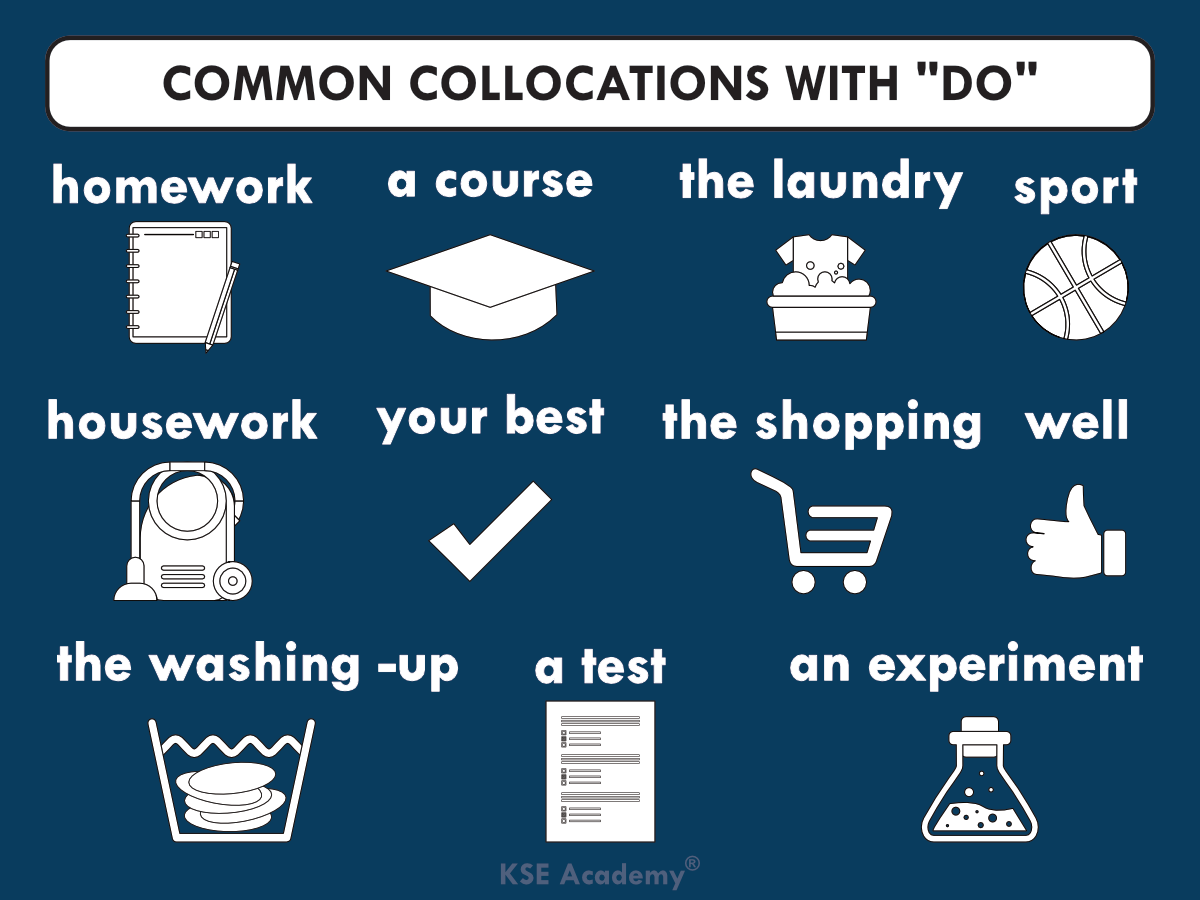
More examples of collocations with do include:
- do work (in general all words ending in -work go with do)
- do a good / great / terrible job
- do a report
- do well
- do badly
- do your nails
- do business
- do your hair
- do exercise
- do nothing anything / something / everything
- do good
- do the right thing
- do your best
Collocations with make
The verb make normally refers to something we create or produce (make a cake), but not always. Furthermore, while do usually refers to the action itself, with make we put more emphasis on the result. But similarly, the best way to know when to use make is with visual elements and a lot of repetition. Moreover, it is important to note that there are many more collocations with make than with do:

Apart from these, there are many more collocations with make:
- make breakfast / lunch / dinner
- make a sandwich
- make a profit
- make a promise
- make an observation
- make a fortune
- make a salad
- make a cup of tea
- make progress
- make a joke
- make a comment
- make plans
- make an effort
- make an attempt
- make a point
- make a reservation / a booking
- make a choice
- make a mistake
- make a pass at someone
- make a prediction
- make a bet
- make a complaint
- make fun of someone
- make a phone call
- make sure
- make a difference
- make an exception
- make a confession
- make a suggestion
- make up your mind
- make a discovery
- make a list
As you can see, the difference between do and make basically lies in the words or expressions with which we use these verbs, no more, no less. Therefore, I recommend that you use exercises like the following to practise a lot and automate the combinations with do and make.
Do you have any doubts about the difference between do and make? Ask in the comments! 👇
Did you find this post useful? Share it with other students, academies and English teachers. And subscribe to our news blog newsletter to stay up to date with everything.