
How to Write an Informal Letter for the C2 Proficiency (CPE) [2026 Guide]
Learn how to write a perfect informal letter for the C2 Proficiency (CPE) with real examples, useful phrases, and all the secrets to achieve the highest score possible.

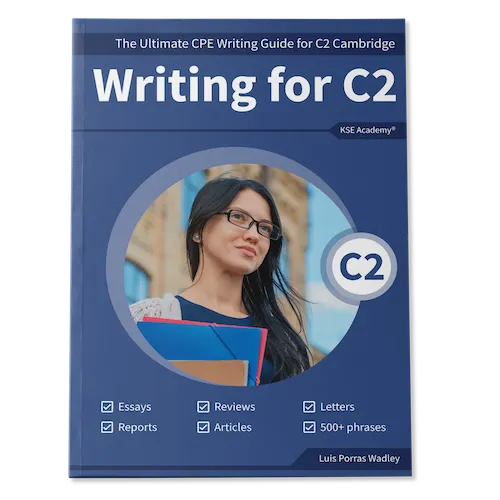
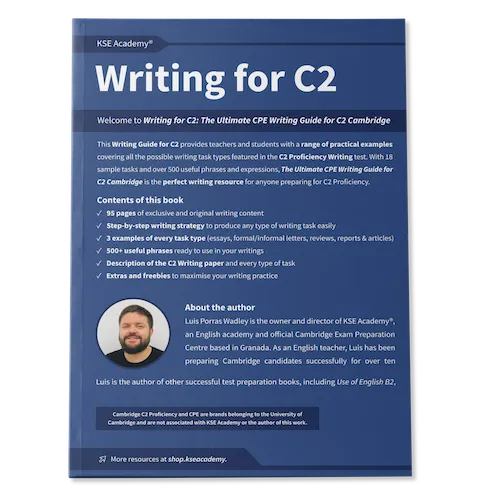
Table of contents
Writing an informal letter for the C2 Proficiency might seem straightforward at first—after all, isn’t it just writing to a friend like you normally would? Well, not exactly. Although the tone should be relaxed and natural, you are in a C2 level exam, Cambridge’s highest, and examiners expect to see a near-native command of English even when writing informally. In this complete guide, I am going to explain exactly how to write an informal letter for C2 Proficiency, with original examples, high-level expressions, and all the tricks you need to achieve the maximum score. Ready to master this type of task? Let’s go!
What is an Informal Letter in C2 Proficiency?
An informal letter (or informal email, which is essentially the same for our purposes) in C2 Proficiency is a text addressed to someone with whom you have a close relationship: a friend, a family member, a university classmate, or a colleague with whom you share a friendship. Unlike formal letters, where you must maintain a certain professional distance, here you are expected to show warmth, closeness, and naturalness.
But beware, natural does not mean basic. At C2 level, examiners want to see that you are capable of handling an informal register with the same sophistication you would use in a formal text. This means using advanced phrasal verbs, expressive vocabulary, varied grammatical structures, and a tone that sounds genuinely like a native speaker writing to a friend.
The purpose of these letters is usually to respond to news you have been given, give advice on a personal situation, make suggestions, share experiences, or simply stay in touch. The important thing is that everything you write sounds authentic and appropriate for the context.
When Will You Be Asked to Write an Informal Letter in the CPE?
As you may already know, the C2 Proficiency Writing paper has two parts. Part 1 is compulsory and always consists of an essay. In Part 2, however, you must choose one task from three available options. These options may include: article, letter/email (formal or informal), report or review.
Therefore, the informal letter does not appear in every exam, but it has the same probability of appearing as any other type of task. When it does appear, it will be an excellent opportunity to demonstrate your ability to use English naturally and expressively, something that many candidates may find more comfortable than the ultra-formal register of other texts.
The key lies in quickly identifying who the letter is addressed to. If the instructions mention a friend, family member, former classmate, or someone with whom you clearly have a rapport, then you know you must adopt an informal register from the first word to the last.
Main Characteristics of a C2 Level Informal Letter
To achieve a high score in your C2 informal letter, your text must meet certain specific expectations for this level. Let’s look at what they are:
Purpose and Context
The purpose of your letter will depend entirely on the task instructions. The most common scenarios include:
- Responding to news: Your friend tells you they have moved, got a new job, are going through a difficult time, etc.
- Giving advice: Someone asks for your opinion on an important decision they have to make (changing careers, moving to another country, resolving a personal conflict).
- Making suggestions: A friend is going to visit your city and asks for recommendations, or wants to know how to learn a language, how to stay in shape, etc.
- Sharing experiences: Sharing details about a trip you’ve taken, a work experience, or an important event in your life.
- Persuading: Convincing your friend to come to an event, encouraging them to do something, or changing their mind about a topic.
Whatever the specific purpose, your letter must address all the points requested in the instructions (usually three) and do so in a complete and natural way.
Informal Register and Tone
This is where many candidates go wrong. An informal register does not mean writing with a low level of English or using grammatical errors to «sound more natural». Quite the opposite. At C2, you are expected to demonstrate sophistication even when writing in a relaxed manner.
The informal tone is achieved through:
- Compulsory contractions: Always use I’m, you’re, don’t, can’t, won’t, etc. Writing I am or do not in a letter to a friend will sound robotic and formal.
- Expressive and colloquial vocabulary: Words like brilliant, gutted, chuffed, knackered, mate, reckon are perfect for this type of letter.
- Phrasal verbs instead of formal verbs: Say catch up instead of meet, put up with instead of tolerate, turn up instead of arrive.
- Direct questions: «How’s it going?», «What do you reckon?», «Fancy coming along?»
- Exclamations (in moderation): You can use exclamation marks to show enthusiasm, but don’t overdo it. A couple throughout the letter is enough.
- Emotional expressions: Show empathy, joy, surprise, or concern depending on the context.
Key Differences Between Formal and Informal Letters
It is essential that you do not confuse these two registers. Here is a quick comparison table to help you differentiate them:
| Aspect | Formal Letter | Informal Letter |
|---|---|---|
| Recipient | Unknown person or professional relationship (editor, director, employer) | Friend, family member, close acquaintance |
| Greeting | Dear Mr Thompson, Dear Sir or Madam, Dear Editor | Hi Sarah, Hey Mike, Dear Tom, Hello Emma |
| Contractions | Prohibited (I am, do not, cannot) | Compulsory (I’m, don’t, can’t) |
| Verbs | Sophisticated vocabulary of Latin origin (enquire, establish, obtain) | Frequent phrasal verbs (ask about, set up, get) |
| Tone | Distant, objective, professional | Close, personal, warm |
| Connectors | Furthermore, Moreover, Nevertheless, Consequently | Anyway, Plus, Besides, By the way, So |
| Exclamation marks | Never | In moderation (Yes!) |
| Closing | Yours sincerely, Yours faithfully | Best wishes, Take care, Cheers, Love, All the best |
Structure of an Informal Letter for C2 Proficiency
Although the tone is relaxed, the structure of your letter must be perfectly organised. Good organisation is one of the assessment criteria, so you cannot write a chaotic text even if it is informal. This is the ideal structure:
Opening Greeting
The greeting should reflect your relationship with the recipient. Some appropriate options:
- Hi [name],
- Hello [name],
- Dear [name],
- Hey [name]! (for very close friends)
- Dearest [name], (for very close family members)
Important: In informal letters, you always use the first name, never the surname. And remember to put a comma after the greeting, not a colon.
Opening Paragraph
Your first paragraph should set the tone of the letter and respond to the reason you are writing. Do not jump straight into the subject matter without greeting naturally first. Some typical formulas include:
- «How’s everything going?» or «How are things on your end?»
- «It was brilliant to hear from you!» or «Thanks so much for your email!»
- «I’m so sorry I haven’t written for ages, but I’ve been absolutely swamped with work.»
- If reacting to news: «I was over the moon to hear about your new job!» or «I was gutted to hear what happened.»
In this first paragraph, you can also briefly establish the purpose of your letter: «I thought I’d drop you a line to give you some advice about…» or «I wanted to tell you all about my recent trip to…»
Main Paragraphs (Body of the Letter)
Here you develop the specific points requested in the task. Normally, there will be 2 or 3 body paragraphs, each dedicated to a different aspect of the instructions. Each paragraph should:
- Have a clear focus: One main idea per paragraph. Do not mix several different topics in the same paragraph.
- Be well-developed: Do not limit yourself to responding with one sentence. Expand your ideas with details, examples, or reasons.
- Use informal connectors: «Anyway», «Plus», «Besides», «By the way», «Speaking of which».
- Maintain a close tone: Use rhetorical questions («You know what I mean, right?»), references to shared experiences («Remember when we…»), or personal comments.
Closing Paragraph
Your final paragraph should close the letter naturally. Do not end the text abruptly. Some typical functions of the closing include:
- Giving an excuse to finish: «Anyway, I’d better dash now», «Well, I’ve got to run», «I should get going».
- Expressing a desire for future contact: «Drop me a line soon!», «I can’t wait to hear what you decide», «Let me know how it goes!»
- Making plans: «Let’s catch up properly when you’re back in town», «Hope to see you soon!»
- Offering more help: «If you need any more advice, just give me a shout», «I’m always here if you want to chat about it».
Farewell and Signature
The farewell formula should be appropriate for an informal letter. Some options:
- Best wishes, (versatile, works for most situations)
- Take care, (close and kind)
- All the best, (versatile)
- Cheers, (informal, for friends)
- Love, or Lots of love, (for family or very close friends)
- Hugs, (very informal, only for very close relationships)
After the farewell, include your name on the next line. You can use your real name or a made-up one, as you prefer.
How to Write a C2 Informal Letter Step by Step
Now that you know the theory, let’s look at the specific process you should follow when facing this task in the exam:
- Step 1: Read the instructions carefully (2-3 minutes)
Identify: (a) who you are writing to and what your relationship is; (b) why you are writing (the general purpose); (c) the specific points you must address (usually three); (d) the appropriate tone. Underline or mentally mark these key elements. - Step 2: Plan your content (3-4 minutes)
Decide exactly what you are going to say for each point. Think about which phrasal verbs or colloquial expressions you can include. Mentally organise your structure: greeting + opening + 2-3 body paragraphs + closing + farewell. Do not start writing until you have a clear plan. - Step 3: Write the appropriate greeting
Choose an opening formula that reflects your relationship with the recipient. Use their first name and a comma. - Step 4: Draft a natural opening paragraph
Greet them in a close manner, ask how your friend/family member is, and react to their news if applicable. Establish the reason for your letter naturally, not as if you were reading an instruction manual. - Step 5: Develop the main paragraphs
Address each required point in a separate paragraph. Use phrasal verbs, expressive vocabulary, and informal connectors. Be specific and develop your ideas with details and examples. Maintain a close and personal tone at all times. - Step 6: Write a natural closing
Give an excuse to finish, express a desire for future contact, or offer more help. Make the closing sound like a natural conclusion to the conversation, not abrupt. - Step 7: Add the correct farewell and signature
Choose a closing formula appropriate for your relationship with the recipient. Sign with your name. - Step 8: Review and refine (3-5 minutes)
Check: grammar, spelling, and punctuation; that you have used contractions throughout the letter; that you have included phrasal verbs and expressive vocabulary; that you have addressed all required points; that the tone is consistently informal; that your letter is between 280-320 words.
Full Example of an Informal Letter for the CPE
Nothing beats seeing the theory applied in practice. Here is a complete and original example created specifically for this guide.
Task Instructions (Example 1)
You have received an email from your best friend, James, who has just been offered an exciting job opportunity in Singapore. However, he’s worried about leaving his family and friends behind and adapting to life in such a different culture.
Write an email to James. In your email you should:
- React to his news and express your feelings about his potential move
- Offer advice on how to deal with the challenges he mentioned
- Suggest ways to stay connected despite the distance
Write your email.
Write your answer in 280-320 words in an appropriate style.
Task Analysis
Before jumping into writing, let’s identify the key elements:
- Text type: Informal email.
- Recipient: Best friend (clearly informal register).
- Topic: Job offer in Singapore; concerns about moving.
- Purpose: Responding to news, giving advice, making suggestions.
- Points to address:
- React to the news and express feelings about the potential move.
- Advise on how to deal with the challenges (leaving family/friends, cultural adaptation).
- Suggest ways to stay connected despite the distance.
Annotated Model Answer
Hi James,
How’s it going, mate? I just got your email and honestly, I’m not quite sure whether to be absolutely thrilled for you or completely gutted that you might be moving halfway across the world! But seriously, what an incredible opportunity – congratulations!
Look, I totally get why you’re feeling torn about this. Leaving everyone behind is scary, no two ways about it. But here’s the thing – if you don’t give it a shot, you’ll always wonder «what if?», won’t you? My advice? Go for it. You’re one of the most adaptable people I know, and I reckon you’d absolutely smash it over there. As for the cultural adjustment, just throw yourself into it. Join some expat groups, try the local food, learn a bit of the language – you’ll be amazed how quickly you settle in once you start putting yourself out there.
And listen, just because you’re in Singapore doesn’t mean we’ll drift apart. We’ve got so many ways to stay connected these days! Weekly video calls are a must – we can even have our virtual pub nights like we did during lockdown, remember? Plus, Singapore’s only a few hours’ flight away. I’m already planning my first visit – I’ve heard the food scene there is mind-blowing!
Whatever you decide, I’ve got your back 100%. But between you and me, I think you’d regret not taking this chance. Life’s too short to play it safe all the time, right?
Let me know what you’re thinking. And hey, if you do go, I’m expecting regular updates and plenty of photos!
Take care, mate,
Alex
Why This Letter Reaches C2 Level
Let’s analyse the specific elements that make this informal letter exemplary for C2 Proficiency:
- Consistently informal and natural register: From the greeting («Hi James», «mate») to the farewell («Take care, mate»), the tone is appropriately close without falling into vulgarity or simplicity.
- Expressive C2 level vocabulary: «absolutely thrilled», «completely gutted», «halfway across the world», «no two ways about it», «you’d absolutely smash it», «throw yourself into it», «drift apart», «mind-blowing», «I’ve got your back», «play it safe». These are all natural and high-level expressions.
- Naturally integrated advanced phrasal verbs: «give it a shot», «go for it», «settle in», «putting yourself out there», «drift apart». These are not basic phrasal verbs, but more sophisticated expressions that demonstrate a native-like command of colloquial English.
- Contractions throughout the text: «How’s», «I’m», «you’re», «don’t», «won’t», «You’ll», «doesn’t», «you’d», «I’ve». This is essential for sounding natural in informal English.
- Varied and sophisticated grammatical structures: Although the tone is informal, the text includes advanced structures: rhetorical questions («won’t you?», «right?»), conditionals («if you don’t give it a shot, you’ll always wonder»), complex sentences with natural subordination, and the use of emphasis with colloquial inversion.
- Appropriate informal connectors: «But seriously», «Look», «But here’s the thing», «As for», «And listen», «Plus», «Whatever you decide», «But between you and me», «And hey». These connectors make the text flow naturally and conversationally.
- Emotional and personal tone: The letter shows genuine empathy («I totally get why you’re feeling torn»), support («I’ve got your back 100%»), enthusiasm («what an incredible opportunity»), and references to shared experiences («like we did during lockdown, remember?»).
- Full coverage of all points: The letter systematically addresses: (1) reaction to the news in the first paragraph; (2) advice on challenges in the second paragraph; (3) suggestions for staying connected in the third paragraph; and closes with a supportive summary.
- Clear but natural organisation: Although it has a clear structure (opening + 3 body paragraphs + closing), the text does not sound mechanical but fluid and conversational.
- Appropriate length: The text contains approximately 295 words, perfectly within the required 280-320 range.
Language and Expressions for C2 Level Informal Letters
To reach C2 level in your informal letter, you need to master certain linguistic elements that distinguish an exceptional candidate from a merely competent one. Let’s look at them in detail:
Contractions and Colloquial Vocabulary
Contractions are absolutely compulsory in informal letters. Not using contractions in a letter to a friend will make you sound like a robot. These are the main ones:
- Contractions with auxiliary verbs: I’m, you’re, he’s, she’s, we’re, they’re, I’ve, you’ve, we’ve, they’ve, I’d, you’d, he’d, she’d, we’d, they’d, I’ll, you’ll, he’ll, she’ll, we’ll, they’ll
- Negative contractions: don’t, doesn’t, didn’t, won’t, wouldn’t, can’t, couldn’t, shouldn’t, mustn’t, haven’t, hasn’t, hadn’t, aren’t, isn’t, wasn’t, weren’t
- Other informal contractions: gonna (going to), wanna (want to), gotta (have got to). These are very informal, so use them only if writing to a very close friend and in moderation.
Regarding colloquial C2 level vocabulary, here are some words and expressions that demonstrate sophistication even in an informal register:
- To express happiness/enthusiasm: chuffed, over the moon, thrilled, absolutely delighted, buzzing, stoked
- To express sadness/disappointment: gutted, devastated, heartbroken, down in the dumps, blue
- To express tiredness: knackered, shattered, wiped out, dead on my feet, running on empty
- To express being busy: snowed under, swamped, up to my eyes/ears in work, flat out, rushed off my feet
- Versatile colloquial words: brilliant, fantastic, awesome, mate, pal, reckon, fancy (= feel like), proper (= true/authentic)
Essential Phrasal Verbs for C2 Level
Phrasal verbs are the backbone of informal English. At C2 level, you must go beyond the basics and demonstrate that you know more sophisticated expressions. Here is a selection organised by function:
To talk about communication and relationships:
- Catch up (with someone) – To get up to date with someone
- Get on/along (with someone) – To have a good relationship
- Fall out (with someone) – To have an argument/disagreement
- Make up (with someone) – To reconcile
- Drop someone a line – To write a quick message
- Keep in touch – To stay in contact
- Drift apart – To gradually lose contact
To give advice and make suggestions:
- Go for it – To be bold, to dare
- Give it a shot/go – To try
- Think it over/through – To consider carefully
- Sleep on it – To wait until the next day to decide
- Weigh up (the options) – To consider the pros and cons
- Look into – To investigate, to consider
- Check out – To take a look
To talk about situations and experiences:
- Turn out – To result
- Work out – To end well, to function
- Come up – To arise (a problem, an opportunity)
- Put up with – To tolerate, to endure
- Get through – To overcome (a difficult situation)
- Settle in/down – To adapt, to establish oneself
- Throw yourself into – To commit fully to something
To talk about plans and actions:
- Sort out – To resolve, to organise
- Figure out – To find out, to discover
- Put off – To postpone
- Call off – To cancel
- Set up – To organise, to establish
- Get away – To escape, to go on holiday
- Pop round/over – To drop by someone’s house
Informal Connectors
Connectors in an informal register are different from those you would use in a formal letter. Forget «Furthermore», «Moreover» or «Nevertheless». Instead, use these:
- To add information: Plus, Besides, And, Also, What’s more, On top of that
- To contrast: But, Though (at the end of a sentence), Mind you, Having said that, Then again
- To change the subject: Anyway, By the way, Oh, Speaking of which, That reminds me, Changing the subject
- To give examples: Like, For instance, Say
- To show a result: So, That’s why, As a result
- To introduce ideas: Look, Listen, Here’s the thing, The thing is
How to Balance Informality and Sophistication
This is the true challenge of C2: sounding natural and informal without lowering the linguistic level. Here are some strategies:
- Combine phrasal verbs with advanced vocabulary: Don’t use only basic phrasal verbs. For example, instead of simply saying «I’m really happy», say «I’m absolutely chuffed» or «I’m over the moon».
- Use varied but natural grammatical structures: Include conditionals («If I were you, I’d…»), rhetorical questions («You know what I mean, right?»), and complex subordination, but without it sounding forced.
- Add idiomatic expressions in moderation: One or two well-placed idiomatic expressions («hit the nail on the head», «pull yourself together», «the ball’s in your court») demonstrate a high level, but don’t overdo them or it will sound artificial.
- Vary the length and structure of your sentences: Alternate between short, direct sentences («Go for it.») and longer, more complex ones. This creates a natural rhythm.
- Show personality without being vulgar: You can be enthusiastic, empathetic, or even use gentle humour, but avoid foul language, overly youthful slang, or very specific cultural references that might not be understood.
Formal vs Informal Language: How to Sound Natural
One of the most common mistakes in C2 informal letters is using overly formal language that makes the text sound stiff and unnatural. Here is a table with examples of phrases that sound excessively formal and their appropriate informal equivalents:
| ❌ Too Formal (Inappropriate for friends) |
✅ Informal and Natural (Appropriate for C2) |
|---|---|
| I am writing to inform you that I have arrived safely. | Just wanted to let you know I got here safely! |
| I would be most grateful if you could provide me with some advice. | I’d really appreciate your advice on this. / What do you reckon I should do? |
| I was extremely pleased to hear about your promotion. | I was absolutely thrilled to hear about your promotion! / That’s brilliant news about your promotion! |
| I regret to inform you that I will be unable to attend. | I’m really sorry, but I won’t be able to make it. / Gutted to say I can’t come. |
| I would recommend that you consider all available options. | I reckon you should weigh up all your options. / Why don’t you think it over before deciding? |
| I wish to enquire about the possibility of visiting you. | I was wondering if I could pop round sometime? / Fancy meeting up soon? |
| Thank you for your correspondence. | Thanks so much for your email! / Great to hear from you! |
| I trust you are in good health. | Hope you’re doing well! / How are things with you? |
| I apologise for not responding sooner. | Sorry I haven’t written for ages! / Sorry it’s taken me so long to get back to you. |
| I would appreciate receiving your response at your earliest convenience. | Let me know what you think! / Drop me a line when you can. |
| Should you require further information, please do not hesitate to contact me. | If you need anything else, just give me a shout! / Let me know if you want to know more. |
| I look forward to hearing from you. | Can’t wait to hear what you think! / Looking forward to catching up soon! |
Key Principle: If you wouldn’t say something like that to your best friend in real life, don’t write it in an informal letter. Naturalness is fundamental, but remember that naturalness does not mean simplicity—you can sound colloquial and sophisticated at the same time using the right vocabulary and expressions.
Useful Phrases for Every Part of a C2 Informal Letter
Below you will find a complete bank of expressions organised by function. Familiarise yourself with them and practice incorporating them into your letters:
Greetings and Openings
- Hi [name],
- Hello [name],
- Hey [name]!
- Dear [name],
- Dearest [name],
- How’s it going?
- How are things on your end?
- How’s life treating you?
- Hope you’re doing well!
- Hope everything’s brilliant with you!
- It was great to hear from you!
- Thanks so much for your email/letter!
- Lovely to hear from you after so long!
- Long time no see!
- Sorry I haven’t written for ages, but I’ve been absolutely swamped.
- I’m really sorry it’s taken me so long to get back to you.
- Just thought I’d drop you a line to…
Reacting to Good News
- That’s absolutely brilliant news!
- I’m so chuffed for you!
- I was over the moon to hear that…
- I’m absolutely thrilled about…
- What fantastic news – congratulations!
- I couldn’t be happier for you!
- That’s amazing – you must be delighted!
- I’m so glad things worked out for you!
- Hearing that really made my day!
Reacting to Bad News
- I’m so sorry to hear about…
- I was gutted to hear that…
- That’s really tough – I’m here if you need to talk.
- I can’t imagine how difficult that must be.
- That must be really hard for you.
- I totally get why you’re feeling down about this.
- If there’s anything I can do to help, just let me know.
- My thoughts are with you.
- Don’t let it get you down – things will get better.
Giving Advice and Suggestions
- If I were you, I’d…
- If I were in your shoes, I’d…
- My advice would be to…
- Why don’t you…?
- Have you thought about…?
- You might want to consider…
- I reckon you should…
- It might be worth…
- How about…?
- What if you…?
- You could always…
- Whatever you decide, I’ve got your back.
Making Informal Requests
- Could you do me a huge favour?
- I was wondering if you could help me out with…
- Would you mind…?
- I’d really appreciate it if you could…
- Do you think you could possibly…?
- Any chance you could…?
- If it’s not too much trouble, could you…?
Introducing New Topics
- Anyway,
- By the way,
- Oh, I almost forgot…
- Speaking of which,
- That reminds me,
- Changing the subject,
- On a different note,
- And hey,
- Listen,
- Oh, one more thing –
Farewells and Closings
- Anyway, I’d better dash now.
- Well, I’ve got to run.
- I should get going.
- I’d better shoot off.
- Time to call it a day!
- Drop me a line soon!
- Let me know how it goes!
- Can’t wait to hear from you!
- Looking forward to catching up soon!
- Hope to see you soon!
- Keep me posted!
- Stay in touch!
- Take care of yourself!
- Final formulas: Best wishes, / All the best, / Take care, / Cheers, / Love, / Lots of love, / Hugs,
Additional Examples of C2 Informal Letters
To provide more references and show the variety of possible approaches, here are two other full examples with completely original content.
Example 2: Letter to a Friend About a Personal Dilemma
Task Instructions:
Your friend Emily has written to you about a difficult situation at work. She’s been offered a promotion that would involve managing her current colleagues, some of whom are her close friends. She’s worried that accepting the role might damage these friendships and create tension in the team.
Write an email to Emily. In your email you should:
- Acknowledge her concerns and show understanding
- Discuss both the potential benefits and challenges of accepting the promotion
- Offer practical advice on how to handle the situation if she decides to take the role
Write your email.
Write your answer in 280-320 words in an appropriate style.
Model Response:
Hi Emily,
Thanks for your email – sounds like you’re in quite a pickle! I totally get why you’re torn about this. It’s a tricky situation, no doubt about it.
Look, I understand you’re worried about how your mates at work might react, but here’s the thing – if they’re genuine friends, they’ll be chuffed for you, won’t they? This is a massive opportunity for your career, and turning it down just because you’re scared of rocking the boat might be something you’d regret later on. Plus, the extra money and experience would be brilliant for you in the long run.
That said, I’m not going to pretend it’ll all be plain sailing. Managing people you used to be on the same level with can definitely get awkward. Some of your colleagues might feel a bit weird about it at first, and there’s always the risk that a couple of people might get their noses out of joint. But honestly, Em, that’s their problem to deal with, not yours. You can’t put your career on hold just because other people might struggle with change.
If you do decide to go for it – which I reckon you should – my advice would be to have proper conversations with your closest work friends before you officially accept. Be upfront about your concerns and ask for their support. Once you’re in the role, keep things professional at work but make sure you still make time for your friendships outside the office. Set clear boundaries from day one, and don’t play favourites just because you’re mates with some of the team.
Whatever you decide, I’m behind you 100%. But between you and me, I think you’d be mad to turn this down!
Let me know what you’re thinking. Fancy a proper catch-up over coffee this weekend?
Take care,
Sophie
Example 3: Letter to a Family Member Describing Experiences
Task Instructions:
You’ve just completed a three-month volunteering project in a rural community abroad. Write a letter to your cousin describing your experience.
In your letter you should:
- Describe the project and the community you worked with
- Explain what you learned from the experience and how it changed you
- Share one memorable moment or challenge you faced
Write your letter.
Write your answer in 280-320 words in an appropriate style.
Model Response:
Dear Marcus,
How’s uni going? Hope you’re not getting too bogged down with assignments! I’m finally back home after my volunteering stint in Nepal, and I’ve been meaning to tell you all about it.
The project was based in this tiny mountain village about six hours from Kathmandu – absolutely stunning but ridiculously remote. We were working with a local school, teaching English to kids aged 5 to 15. The community itself was incredibly tight-knit, with everyone knowing everyone else’s business, which took some getting used to! The people there had next to nothing in terms of material wealth, but honestly, I’ve never met happier or more generous folks.
I won’t lie, it was tough going at first. The language barrier was massive, the accommodation was pretty basic (think cold showers and dodgy WiFi), and I really struggled with feeling homesick. But pushing through all that taught me so much about resilience and adaptability. It sounds clichéd, but it genuinely made me realise how privileged we are and how little we actually need to be content. I’ve come back with a completely different perspective on what really matters in life.
The moment that’ll stick with me forever was when one of my students, this brilliant 12-year-old girl called Anjali, told me that I’d inspired her to become a teacher herself one day. I was absolutely choked up – I’d spent three months thinking I wasn’t making any real difference, and then she came out with that. It was a proper reminder that even small actions can have a massive impact on someone’s life.
Anyway, I could go on forever about this! Fancy meeting up soon? I’ve got about a million photos to bore you with!
Lots of love,
Rachel
Common Errors in C2 Informal Letters (and How to Avoid Them)
Even highly competent candidates sometimes make mistakes that can cost them valuable points. Here are the most frequent ones and how to avoid them:
- Not using contractions: This is the number one error. If you write «I am», «do not», «cannot» in a letter to a friend, you are immediately telling the examiner that you don’t understand the conventions of the informal register. Always use «I’m», «don’t», «can’t», etc.
- Mixing registers: Do not start with «Hi mate!» and then write «I am writing to inform you that…». The register must be consistent from start to finish. If it’s informal, everything should be informal.
- Being too simple or using poor English: Informal does not mean basic. You must demonstrate C2 level by using rich vocabulary, advanced phrasal verbs, and varied grammatical structures, all within a natural tone.
- Overusing slang or overly colloquial expressions: Occasionally using words like «mate», «brilliant», or «chuffed» is fine, but if every sentence looks like it came from an episode of EastEnders, you have gone too far with the informality.
- Not developing points sufficiently: Even if the tone is relaxed, you must address all task points with sufficient detail. One-sentence responses to each point are not enough.
- Using formal closings: Never close an informal letter with «Yours sincerely» or «Yours faithfully». These formulas are exclusive to formal letters. Use «Best wishes», «Take care», «Cheers», etc.
- Going over (or staying under) the word count: The range is 280-320 words. Writing significantly less suggests insufficient development; writing much more indicates you are including irrelevant information or rambling.
- Poor organisation: Although informal, your letter must have a clear structure with well-defined paragraphs. Do not write a block of text without organisation.
- Sounding robotic or artificial: If your letter sounds as if it were written by a grammar manual, something is wrong. It should sound like a natural conversation in writing.
- Not showing personality: Informal letters are the perfect place to show enthusiasm, empathy, (gentle) humour, and warmth. Do not be cold or distant.
Essential Checklist for Your C2 Informal Letter
Before finishing your letter, whether during practice or in the real exam, use this comprehensive checklist based on official Cambridge assessment criteria:
1. Content
- ✅ Have I addressed the 2-3 points specified in the instructions? (Check them one by one).
- ✅ Is all my content relevant to the task? (Have I avoided rambling?).
- ✅ Have I developed each point with sufficient detail? (One-sentence answers are not enough).
- ✅ Is my reader fully informed?
2. Communicative Achievement
- ✅ Have I demonstrated total command of informal letter conventions? (Greeting, structure, closing).
- ✅ Is the register consistently informal at all times? (No lapses into formality).
- ✅ Is the tone appropriate for the relationship with the recipient? (Close, warm, personal).
- ✅ Does my letter communicate complex ideas effectively but naturally?
- ✅ Have I shown appropriate personality and emotion? (Enthusiasm, empathy, warmth).
3. Organisation
- ✅ Is my letter well-organised and coherent? (Clear progression of ideas).
- ✅ Have I used an appropriate paragraph structure? (Greeting + opening + 2-3 body paragraphs + closing + farewell).
- ✅ Does each paragraph have a clear focus? (One main idea per paragraph).
- ✅ Have I used appropriate informal connectors? (Anyway, Plus, By the way, etc.).
- ✅ Does the text flow naturally? (Ideas are logically connected).
4. Language
- ✅ Have I used contractions throughout the letter? (I’m, don’t, can’t, won’t, etc.).
- ✅ Have I included advanced phrasal verbs? (At least 3-4 throughout the text).
- ✅ Have I used expressive C2 level colloquial vocabulary? (chuffed, gutted, brilliant, etc.).
- ✅ Is there grammatical variety? (Mix of simple and complex structures).
- ✅ Does my vocabulary demonstrate sophistication despite being informal?
- ✅ Are any errors present only slips and not systematic errors?
- ✅ Is my spelling and punctuation correct?
5. Specific Informal Letter Conventions
- ✅ Have I used the correct greeting? (Hi/Hello/Hey + first name + comma).
- ✅ Does my opening paragraph set the tone naturally?
- ✅ Have I used the correct farewell? (Best wishes, Take care, Cheers, etc.).
- ✅ Have I included my name after the farewell?
- ✅ Is the tone close and personal at all times?
6. Length and Presentation
- ✅ Is my letter between 280 and 320 words? (Count them to verify).
- ✅ Is my handwriting legible? (If the exam is on paper).
- ✅ Have I left appropriate space between paragraphs?
Complete Writing Guide for C2 Proficiency
If you have found this article valuable and want to take your C2 Proficiency Writing preparation to the next level, I highly recommend my comprehensive book Writing C2: The Ultimate CPE Writing Guide for C2 Cambridge.
This extensive guide of over 90 pages is a complete resource covering all types of C2 Proficiency writing: essays, formal letters, informal letters, reviews, reports and articles. Inside, you will discover:
- 3 full examples of each task type, all written at an authentic C2 level, showing exactly what each text should look like.
- Over 500 useful expressions organised by task type and communicative function, ready to incorporate into your own writing.
- Complete descriptions of each text type with specific characteristics, recommended structures, and practical tips.
- A step-by-step strategy to tackle any writing task with confidence, from initial analysis to final review.
- Explanation of the assessment process with detailed information on how examiners mark your work.
- Additional resources and extras to maximise your writing practice.
This guide is designed for both students preparing independently and English teachers looking for quality materials for their C2 students. All examples are original, authentic, and faithfully represent the level of sophistication expected in C2 Proficiency.
If you practice regularly using this guide, you will be much better prepared to face any C2 Proficiency writing task with confidence and achieve the marks you need. Get your copy here and elevate your writing to the next level.
I sincerely hope that this complete guide on how to write an informal letter for C2 Proficiency has been very useful to you. If it has helped you, don’t forget to share it with friends and family who are also preparing for this exam.
And until the next article, don’t forget to keep smiling!