
The origin of the months of the year in English
Don’t you know the origin of the months of the year in English yet? Taking advantage of the New Year, in this article I tell you everything about the months of the year in English.

Table of contents
2021 has ended and we begin 2022 with new energy and full bellies (At least I have! 😂). There are 12 new months ahead of us to face with joy and, above all, with lots of English, which amounts to the same thing in my case. Therefore, in today’s post I would like to talk to you about the origin of the months of the year in English. Even though you probably know how to say and write them, you surely don’t know the origin of the months of the year in English, which we use so often in our daily vocabulary. So here we go!
The origin of the months in English
The origin of January
January /ˈdʒanjʊ(ə)ri/ obtained its name from the Roman god Janus, god of doors and beginnings. Indeed, it is very appropriate that of the 12 months of the year in English, January starts the calendar. Furthermore, Janus is frequently represented with two faces, one looking forward and the other backward, marking not only the beginning of something but also the end, as in this case, of a year.

The origin of February
February, which unlike January does resemble its Spanish counterpart, febrero, comes from the Latin word februarius. This, in turn, descends from februa, which refers to a festival of purification and raininess that takes place on 15 February. Regarding its pronunciation, there is some division between those who pronounce it /ˈfɛbrʊəri/ and others who say /ˈfɛbjʊəri/, without the r between the b and the u.

The origin of March
March /mɑːtʃ/ comes from the god and planet Mars. This name was probably attributed because in ancient Rome several festivals were held to prepare for the war campaign, as it so happens that Mars was the god of war.

The origin of April
The fourth month of the Roman calendar was Aprilis, from which the name April /ˈeɪpr(ɪ)l/ comes. Aprilis derives from the Latin verb aperire, which means “to open”. This verb referred to the opening of flowers that would later bear fruit. Furthermore, sometimes this month was also called Eastermonab, which meant Easter month. Interestingly, the word has maintained most of its spelling in English and Spanish, despite its different pronunciation.

The origin of May
This month of the year in English, pronounced /meɪ/, is connected with the goddess Maia, who according to Greek mythology was the daughter of Atlas and mother of Hermes. She was a goddess protecting the earth, which probably explains the connection of this month with spring.

The origin of June
June /dʒuːn/ comes from the Roman goddess Juno, wife of Jupiter and goddess of marriage and childbirth. As we can see, most of the names of the months of the year in English, and also in Spanish, come from the Roman calendar.

The origin of July
Interestingly, this is the first of the months of the year in English named in honour of a real person, not a deity. July /dʒʊˈlʌɪ/ was given this name in 44 BC in honour of Julius Caesar, as this was the month of his birth. Until then it was called Quintilis, which meant “fifth”, having been, until a certain point, the fifth month of the year.

The origin of August
Just as Quintilis was renamed in honour of Julius Caesar, Sextilis (sixth) was renamed August /ɔːˈɡʌst/ after Augustus, the first Roman emperor, who had died 6 years earlier. This name, adopted by Augustus himself, previously called Octavian, comes from Latin and meant “respected and impressive”. In fact, in English that meaning is still maintained when august is used as an adjective.

The origin of September
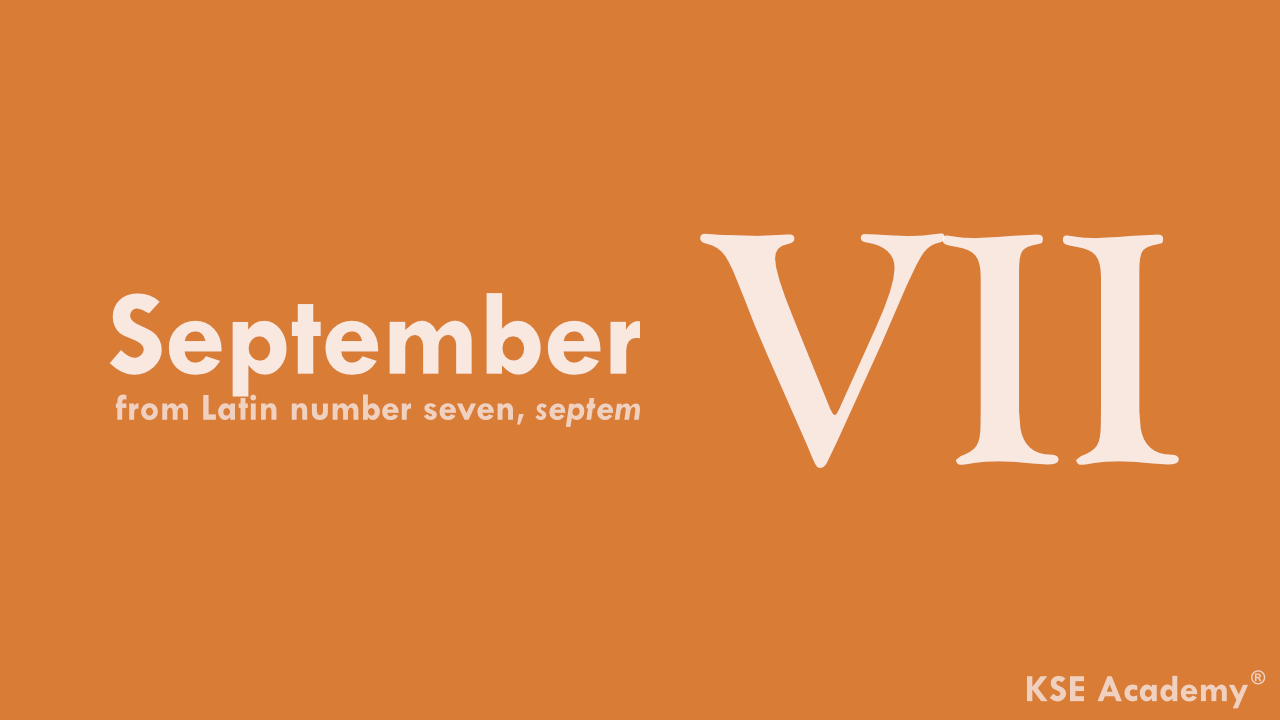
September /sɛpˈtɛmbə/ comes from the Latin word septem, which means “seven”. Originally, September was the seventh month of the ancient Roman calendar, which had 10 months, starting with March.
The origin of October
The same applies to October /ɒkˈtəʊbə/, the tenth month of the year, but the eighth in the ancient Roman calendar. In fact, October comes from the Latin word octo, which meant “eight”. The problem, so to speak, is that around 713 BC two more months were added to the Roman calendar, and later, in 153 BC, the beginning of the year was moved to 1 January.

The origin of November
As with September and October, November /nə(ʊ)ˈvɛmbə/ also comes from a number, nine, from the Latin novem, as it was formerly the ninth month of the year.

The origin of December
And, at the risk of repeating myself, the last month of the year also comes from a number, even though it doesn’t make much sense today. December /dɪˈsɛmbə/ comes from the Latin number ten, decem.

Summary: Origin of the months of the year in English
- January, from the god Janus
- February, from februa, festival of purification and raininess
- March, from the god of war Mars
- April, from the Latin verb aperire
- May, from the goddess Maia
- June, from the goddess Juno
- July, in honour of Julius Caesar
- August, in honour of the Roman emperor Augustus
- September, from the Latin number seven, septem
- October, from the Latin number eight, octo
- November, from the Latin number nine, novem
- December, from the Latin number ten, decem
What do you think of that? Did you know the origin of the months in English? 😂 If you found it useful, give that share button a click and tell everyone why the months in English have these beautiful names.